
Key Takeaways
- Post-surgical nausea and vomiting may be caused by anesthesia, pain medications, or anxiety.
- Acupressure effectively alleviates postoperative nausea and vomiting by applying pressure to specific points such as PC6, ST36, and SP4.
- Apply gentle pressure to acupressure points for 1-2 minutes each, steering clear of incisions and IV sites, to achieve the best results.
- Consider combining acupressure with prescribed medication and additional recovery tips to boost healing.
- Seek medical attention if nausea continues, fluids cannot be retained, or if other worrying symptoms appear.
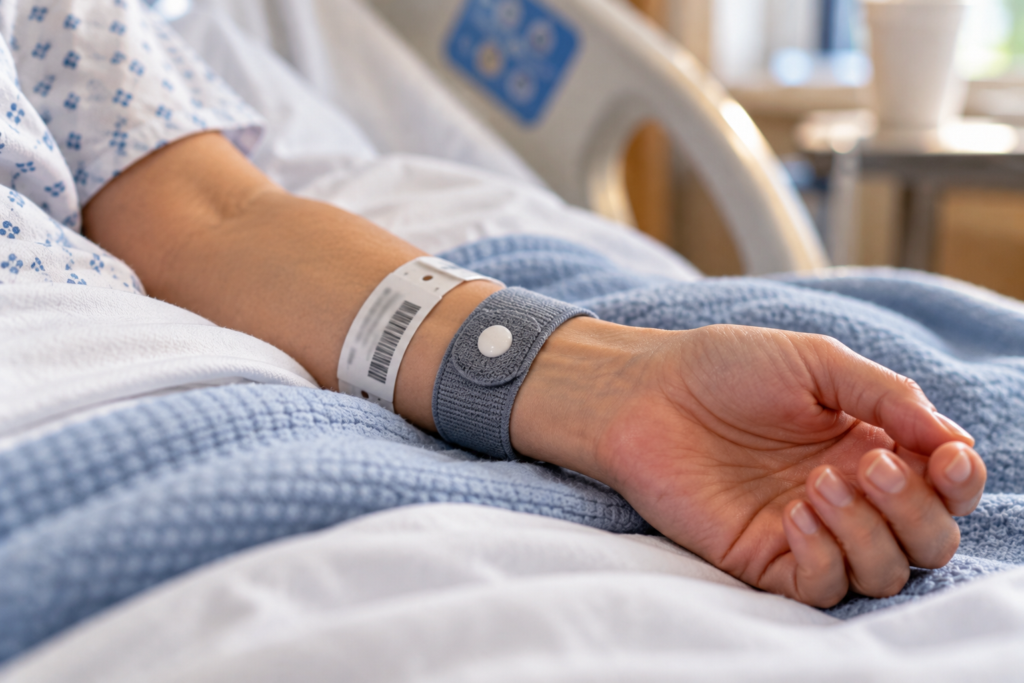
Nausea and vomiting after surgery are common and uncomfortable. Anesthesia, pain medication, stress, or fasting can cause them. Vomiting stresses your incisions, complicates eating and drinking, and may delay recovery. Acupressure is a proven, natural, and simple method suitable for hospital or home use.
Before you begin, keep these simple guidelines in mind. Avoid pressing on or near any incision, bruise, IV site, or drain. If you have an IV in one arm, use the points on the opposite arm or press gently away from the IV. Combine acupressure with any anti-nausea medication your care team provides, and inform your nurses or surgeon if you’re using acupressure. If you feel like vomiting while lying down, turn onto your side.
In Traditional Chinese Medicine, post-surgery nausea occurs when Stomach Qi, which normally moves downward, shifts upward, causing nausea and vomiting. Anesthesia and pain medications may slow the body, while the stress related to surgery and pre-procedure worry can disturb the system and impact the Liver Qi, putting additional pressure on the stomach. The following acupressure points promote proper movement of Stomach Qi, aid digestion, reduce the effects of anesthesia, and soothe anxiety that can worsen nausea.
Here are nine acupressure points to help soothe your stomach and reduce nausea during healing.
What Acupressure Points to Press and Why
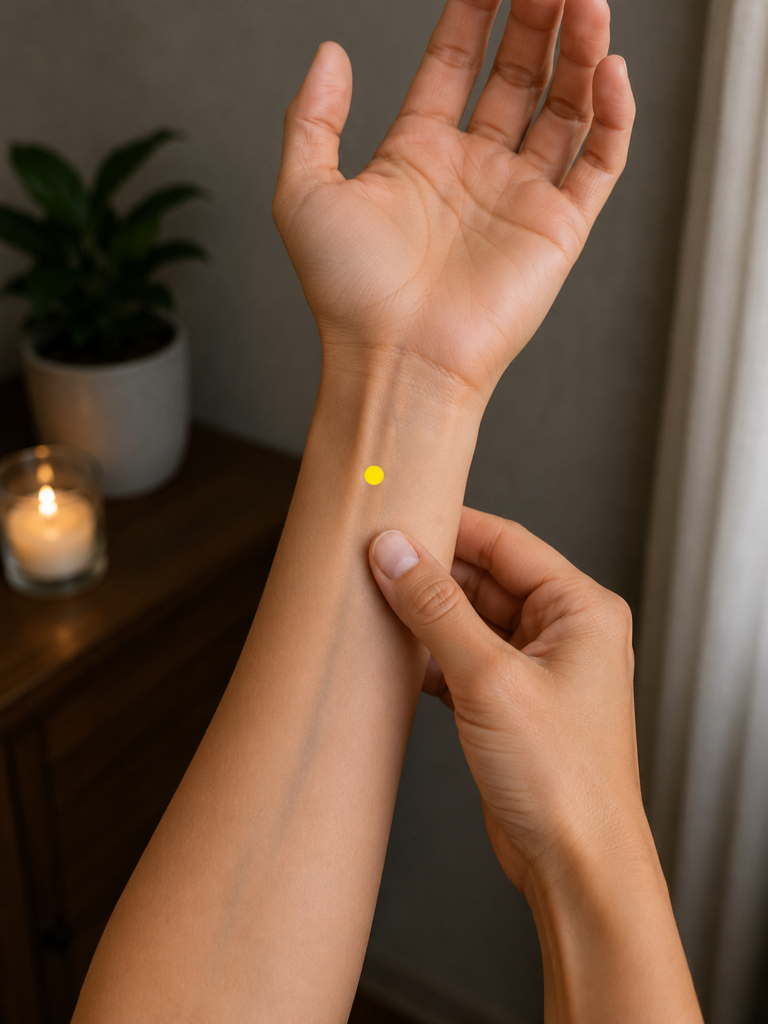
1. Press on PC6 on the inner forearm, the most studied point for postoperative nausea. PC6 sits three finger-widths above the inner wrist crease, in the center of the forearm between the two tendons. Press firmly with your thumb for two to three minutes on each arm, and repeat as often as needed. PC6 is called “Neiguan,” the “Inner Pass,” and it is the single most important point for nausea and vomiting.
A comprehensive Cochrane review of multiple trials demonstrated that stimulating PC6 reduces postoperative nausea and vomiting, as well as the need for anti-nausea medication, compared to a sham treatment. Additionally, consensus guidelines for managing postoperative nausea include acupoint stimulation as a recommended non-drug remedy. This point calms the stomach, helps quell rebellious Stomach Qi, and soothes the nervous system. It is the same point used by anti-nausea wristbands, so wearing them before and after surgery offers continuous, hands-free stimulation. If you use only one point, it’s best to target this point on both wrists.
2. Press on ST36 below the knee to restore the stomach and get digestion moving. ST36 sits four finger-widths below the lower edge of the kneecap and one finger-width to the outside of the shinbone, on the muscle that rises when you flex your foot. Press firmly with your thumb for one to two minutes on each leg. ST36 is called “Zusanli,” the “Leg Three Miles,” and it is the master point for the stomach and digestion.
Anesthesia and pain medications can slow down digestion, which often causes nausea after surgery. ST36 supports the Stomach and Spleen, helping to balance the stomach and restore normal digestive movements. Studies have shown it alongside PC6 to support post-surgical recovery. Additionally, it helps replenish energy lost during the procedure. Located on the leg, ST36 is easy to access while in bed, making it safe to press firmly during recovery.

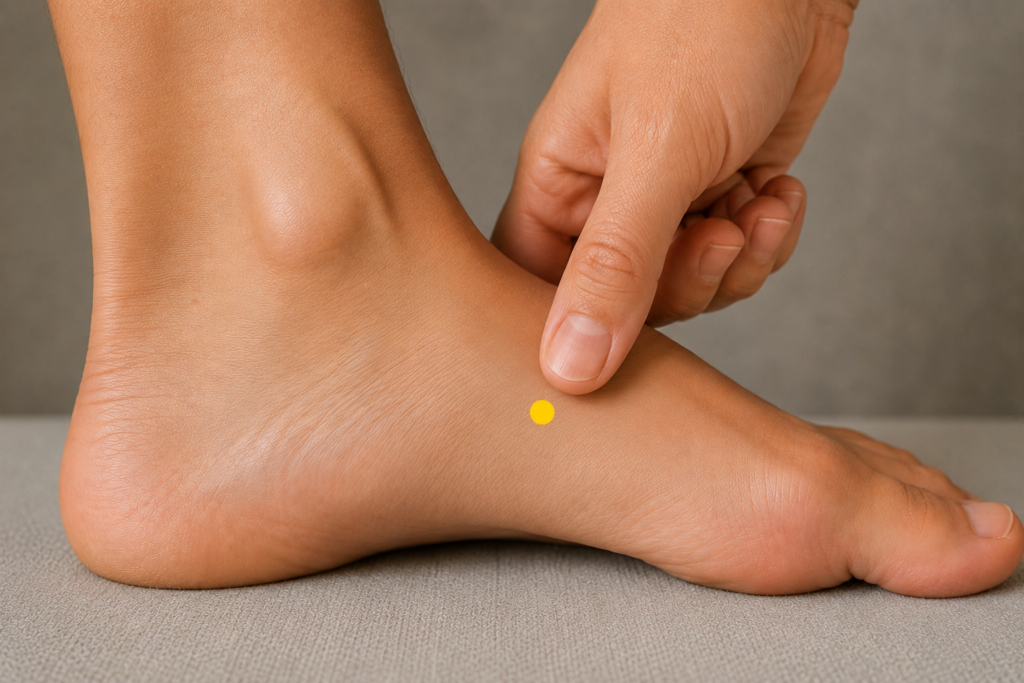
3. Press on SP4 on the arch of the foot, PC6’s classic partner. SP4 sits on the inner arch of the foot, in the depression just below and ahead of the bony bump behind the big-toe joint. Press firmly with your thumb for one to two minutes on each foot. SP4 is called “Gongsun,” and it is traditionally paired with PC6 for the stomach.
The combination of SP4 and PC6 is highly reliable for acupressure treatment of upset stomachs, with one point at the wrist and the other at the foot, targeting the body’s center from both ends. SP4 helps relieve nausea, cramping, and abdominal discomfort while also strengthening the Spleen and Stomach. When nausea is severe, pressing SP4 with PC6 is recommended, and a helper can easily reach these points while you rest.
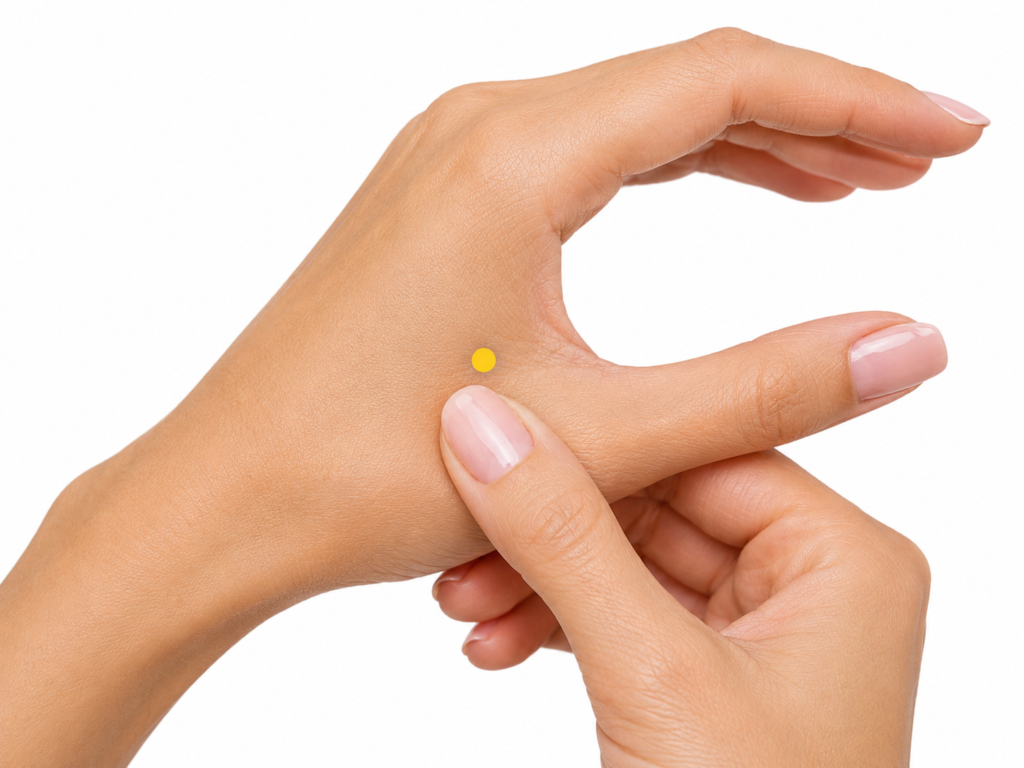
4. Press on LI4 in the hand to ease nausea, headache, and pain. LI4 sits in the webbing between the thumb and index finger, at the highest point of the muscle when you bring the thumb and finger together. Press firmly with the thumb of your other hand for one to two minutes on each hand. LI4 is called “Hegu,” and it is one of the great points for pain and for moving Qi. LI4 is avoided during pregnancy.
LI4 stimulates Qi circulation, helping relieve nausea, headache, and discomfort after anesthesia. It is a highly effective pain-relief point that can lessen post-surgery aches. Located on the hand, it is easy to press when lying in a hospital bed, as long as the IV on that hand is bypassed.
5. Press on CV12 above the navel, only if your abdomen has not been operated on. CV12 sits on the midline of the abdomen, halfway between the navel and the lower end of the breastbone, about four finger-widths above the belly button. Press gently for one to two minutes. CV12 is called “Zhongwan,” the gathering point of the Stomach. Skip this point entirely after any abdominal, pelvic, or chest surgery, or if there is any tenderness, dressing, or incision nearby.
CV12 sits directly above the stomach and is a key point for calming the stomach, harmonizing its functions, and easing the queasy, churning sensation in the center of the body. After surgery on the arms, legs, head, or other areas away from the torso, gently pressing this point for a few minutes can help soothe the stomach at its source. However, for any abdominal surgery, it is better to use the points on the wrist, hand, leg, and foot.

6. Press on Ear Shenmen for quick, gentle calm. Ear Shenmen sits in the upper part of the ear, in the triangular hollow near the top, at its apex. Press gently with your fingertip or squeeze between your finger and thumb for about a minute on each ear. Ear Shenmen shares its name, “Spirit Gate,” with the Heart point HT7.
Ear Shenmen is a highly effective point for promoting calmness and has been studied as a treatment for postoperative nausea. It quickly calms the nervous system and reduces feelings of anxiety and restlessness that can worsen nausea. Its accessibility means you don’t have to move much while lying down. This point offers fast, gentle relief when nausea is triggered by anxiety or discomfort.

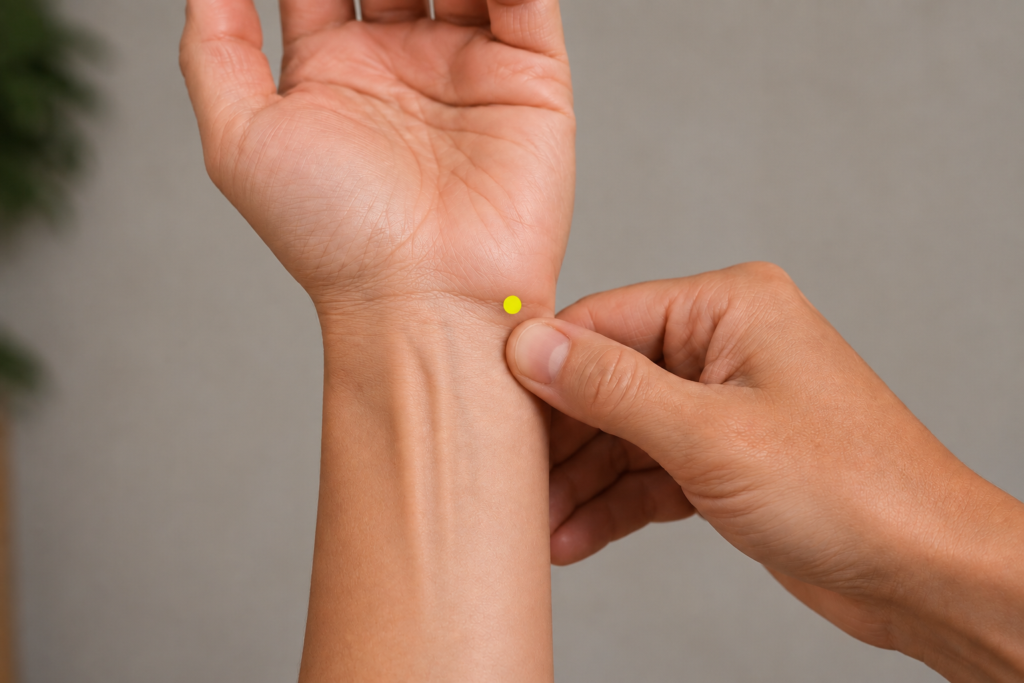
7. Press on HT7 at the wrist to calm anxiety before and after surgery. HT7 sits on the inner wrist crease, on the pinky side, in the small hollow just inside the tendon. Press firmly with your thumb for one to two minutes on each wrist. HT7 is called “Shenmen,” the “Spirit Gate,” and it is the most important point for calming the Shen.
Feeling anxious before and after surgery is common, and this can tighten the stomach, causing nausea. The HT7 point helps calm the Heart and mind, reducing worry, restlessness, and sleep issues often associated with surgery. Applying pressure to HT7 before and during recovery can foster a more relaxed state, aiding stomach comfort. Since HT7 sits next to PC6, you can use these points together easily.
8. Press on Yintang between the eyebrows to settle and rest. Yintang sits in the small hollow directly between the two eyebrows. Press gently and hold, or make small, slow circles with your fingertip for one to two minutes. Yintang is an extra point and one of the most calming points in the body.
Yintang, calming the mind and soothing the nervous system, helps relieve the disoriented, drowsy, and unsettled feelings that follow anesthesia, while also reducing nausea. It encourages rest, which is essential for a body recovering from surgery, and is gentle enough to use by simply lying down with your eyes closed. To counteract nausea, you can gently press on it while maintaining steady breathing.

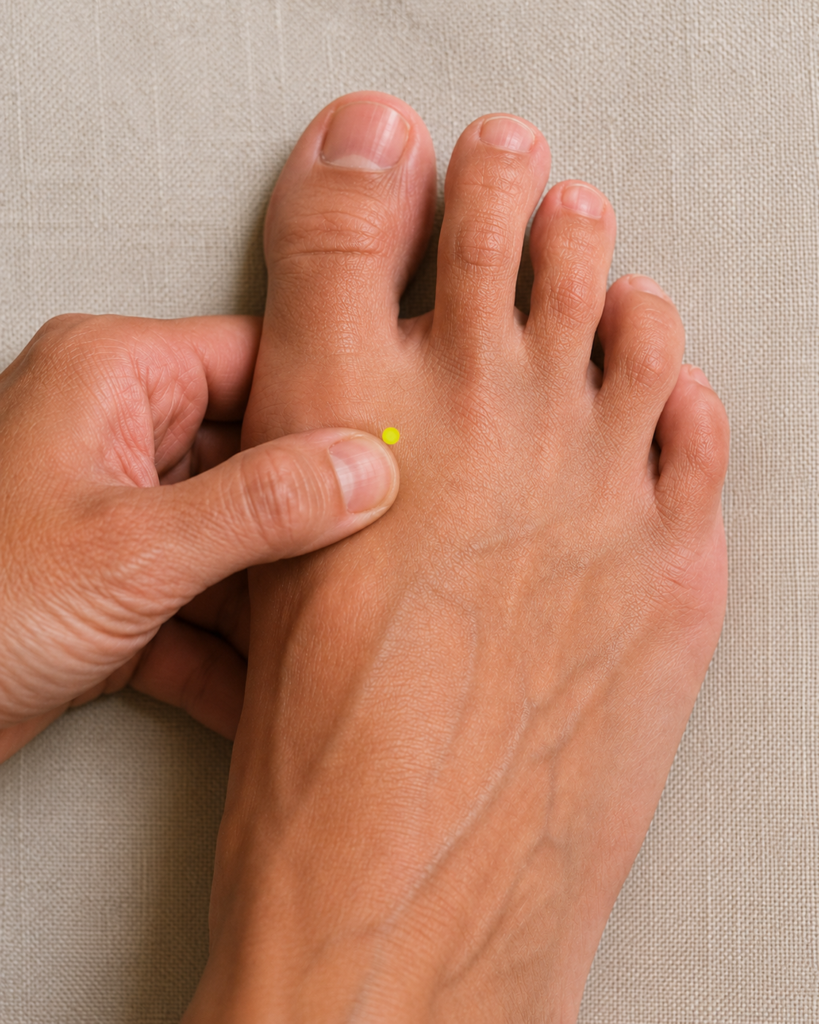
9. Press on LR3 on the top of the foot to release the tension that presses on the stomach. LR3 sits on the top of the foot, in the webbing between the big toe and second toe, about two finger-widths back where the bones meet in a small hollow. Press firmly with the thumb for one to two minutes on each foot. LR3 is called “Taichong,” and it is the primary point for moving stuck Liver Qi.
In Traditional Chinese Medicine, stress and worry can block Liver Qi, pressuring the Stomach and causing nausea as its Qi rises. The LR3 point helps release this stagnant Qi, eases situation-related tension, and anchors the body’s energy by directing it downward toward the feet. When nausea results from stress, tension, or a knotted stomach, this point addresses the core issue and can be easily pressed by a helper during rest.
Why These Acupressure Points Work
In Traditional Chinese Medicine, postoperative nausea is seen as Stomach Qi rebelling upward instead of descending. This condition results from the effects of anesthetics and painkillers, the shock of surgery, and related anxiety. The nine points target all these factors.
- Core nausea points (PC6, SP4, CV12) calm the stomach and help rebellious Qi descend, with PC6 having the most evidence and SP4 its classic partner.
- The digestive-restoring point (ST36) strengthens the stomach and helps reactivate the gut when slowed by anesthesia.
- LI4 point, related to pain and movement, relieves headaches, post-surgery aches, and nausea.
- The points with a calming effect (Ear Shenmen, HT7, Yintang, LR3) help alleviate anxiety, drowsiness, and tension that worsen nausea.
The research primarily supports PC6, making it the most reliable, while the others serve as secondary support.
How to Properly Use These Acupressure Points
If feasible, start it before surgery and continue through the recovery phase.
- To soothe your stomach and nerves before surgery, press the points PC6 and HT7 on both wrists or wear anti-nausea wristbands. Check with your care team to see whether the bands can stay on during the procedure.
- After surgery, regularly stimulate PC6 by applying pressure for two to three minutes each time. When possible, include SP4, ST36, and LI4, along with Ear Shenmen, Yintang, and LR3, to enhance relaxation.
- Use CV12 unless the surgery involved your abdomen, pelvis, or chest.
- When working on the IV sites, dressings, and drains, press on the opposite side if needed. Have a family member or friend press the leg and foot points while you take a break.
- Hold each point for one or two minutes, breathe slowly, and practice the points at home for the initial days, as nausea from pain medication often continues.
A few simple steps can aid recovery alongside the points mentioned. Sip clear fluids slowly instead of gulping, and switch to small, bland meals as your team advises. When permitted, get up and move gently, as activity can help restart digestion. Take pain medication with a small amount of food if your care team approves, and discuss adjusting the dose if it causes nausea. Ginger tea or ginger chews may help settle your stomach once you can eat and drink.
When to Get Medical Help
Postoperative nausea is common and usually clears up within a day or two. Nevertheless, certain symptoms demand immediate medical attention. Contact your surgeon or seek care if you cannot keep fluids down for more than a few hours, if vomiting persists or is forceful, or if you observe signs of dehydration such as minimal urine output, dizziness when standing, or a very dry mouth. Promptly seek care if vomit contains blood or resembles coffee grounds, if your abdomen becomes swollen, hard, or increasingly painful, if you cannot pass gas or have a bowel movement, if you develop a fever, or if there is any strain or opening at the incision after vomiting. Continue taking your prescribed anti-nausea medication and notify your care team if nausea continues.
Acupressure is an effective, low-risk complement to your postoperative care that can be used alongside the treatment provided by your surgical team.
Above and Beyond Acupuncture offers acupuncture, cupping, and lifestyle coaching at the North Frank Lloyd Wright Boulevard location in Scottsdale.
Schedule an appointment online to start your healing journey.
The points above are only as effective as the technique used to apply them. Where to press, how firmly, and for how long all affect the result. For a full breakdown of how to perform acupressure properly at home, read Performing Acupressure in 3 Easy Steps.
To address nausea from various causes, acupressure offers a broad range of relief options. Clinically, acupuncture’s role in treating nausea is also explored, highlighting how it is incorporated into treatment plans.

About the Publisher
Paul Kerzner, L.Ac., is a licensed acupuncturist and board-certified herbalist, as well as the founder of Above and Beyond Acupuncture in Scottsdale. His own journey from chronic patient to practicing acupuncturist shapes his commitment to providing honest, clinically grounded information about acupuncture and Traditional Chinese Medicine. Learn more about Paul and his clinical approach on the About Us page.