Key Takeaways
- Osteoarthritis leads to joint stiffness, pain, and discomfort, which often worsen in cold weather.
- Acupressure may ease osteoarthritis pain and stiffness by applying pressure to specific points linked to the condition.
- Nine effective acupressure points include BL11, GB34, and KI3, targeting bones, sinews, and nourishment.
- Regularly using these points, along with gentle movement and proper care, supports joint health and function.
- Seek professional help if symptoms are severe or pain worsens despite home treatment.
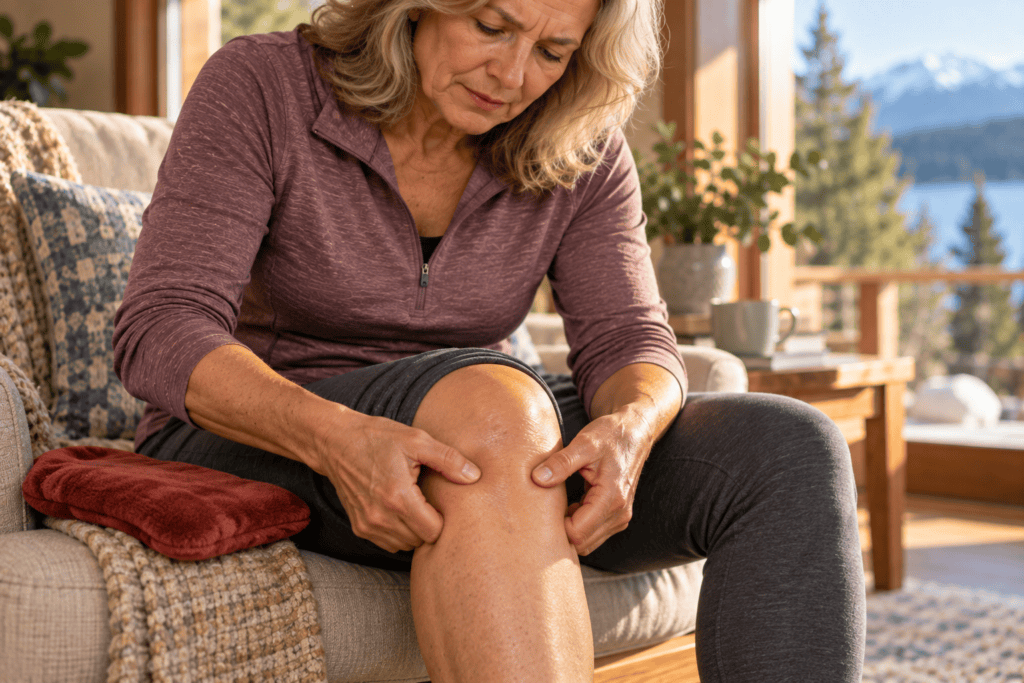
Do your joints feel stiff when you wake up, become sore after walking, or ache in cold weather?
Osteoarthritis is the most common form of arthritis. It develops gradually as the cartilage at the ends of your bones wears down. The condition most often affects the knees, hips, hands, and spine. You may notice a familiar pattern: stiffness after resting that eases with movement, pain that worsens with activity and improves with rest, and increased aching in cold, damp weather. Although acupressure cannot restore lost cartilage, it may help relieve pain and stiffness, improve circulation around your joints, and support the bones and tissues affected by osteoarthritis.
Traditional Chinese Medicine views osteoarthritis in two main ways. First, it considers it a form of Bi syndrome, or painful blockage, in which Qi and Blood become stuck in the joints. In osteoarthritis, cold and damp usually cause this blockage, making the joints feel heavy and stiff and worsening symptoms in cold weather, while warmth brings relief. Second, osteoarthritis involves depletion. The Kidney is believed to support the bones, while the Liver supports the sinews. With age or joint overuse, these organs weaken, and bones and tissues lose the nourishment they need to stay healthy. This helps explain osteoarthritis’s connection to aging and why treatment focuses on both clearing blockages and nourishing the bones and tissues. The points below address both concerns: some move Qi and Blood and dispel cold and damp, while others nourish the Kidney and Liver to support the bones and sinews.
Here are nine acupressure points that target the joints most commonly affected, along with the underlying patterns associated with the condition.
What Acupressure Points to Press and Why
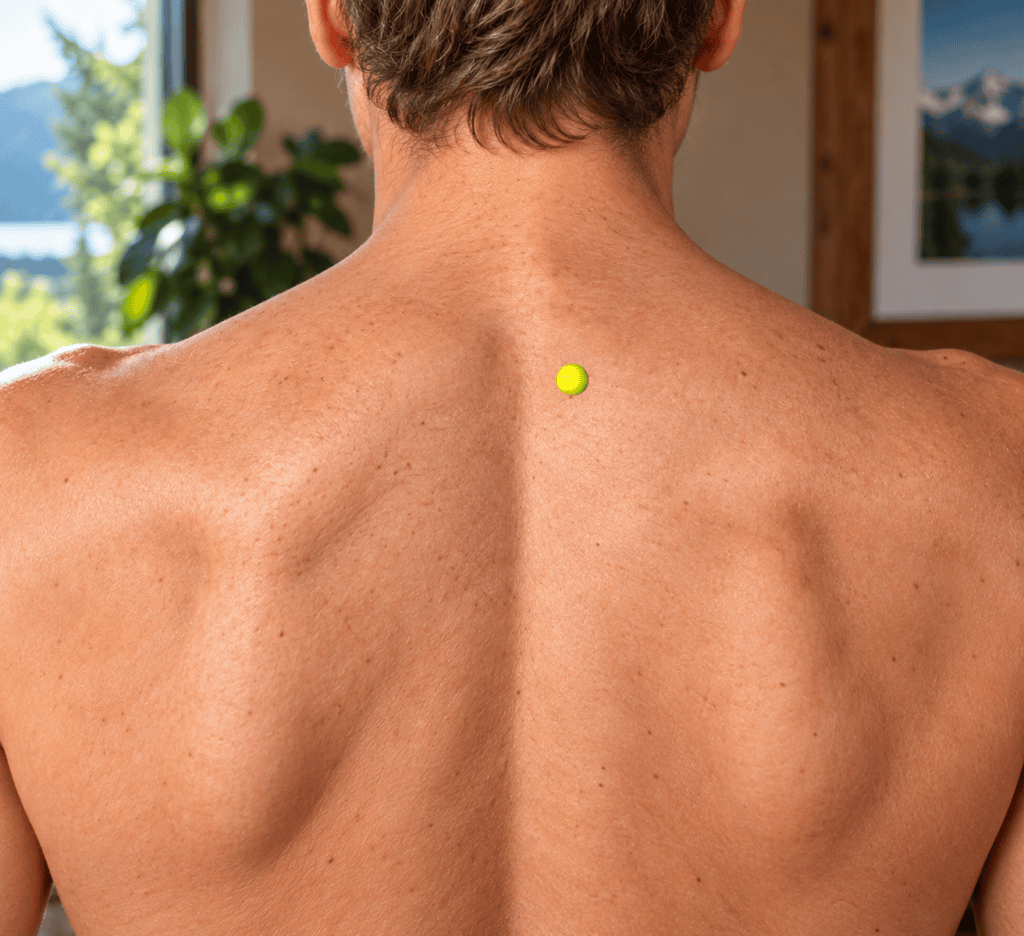
1. Press on BL11 on the upper back, the influential point for bone. BL11 sits on the upper back, about two finger-widths out to each side of the spine, level with the space just below the prominent bone at the base of the neck. Because it is hard to reach, lean a tennis ball against a wall and press into it for one to two minutes on each side, or have someone press it for you. BL11 is called “Dazhu,” the “Great Shuttle,” and it is the influential point for the bones.
In Traditional Chinese Medicine, certain points strongly affect specific tissues, and BL11 is considered the main point for bone. This makes it particularly useful for osteoarthritis, which involves the breakdown of bone ends and cartilage. BL11 supports bones throughout the body, helps reduce joint stiffness and pain, and is often used for bone and joint problems. Warming the area with a heat pack before pressing it may make it even more effective.
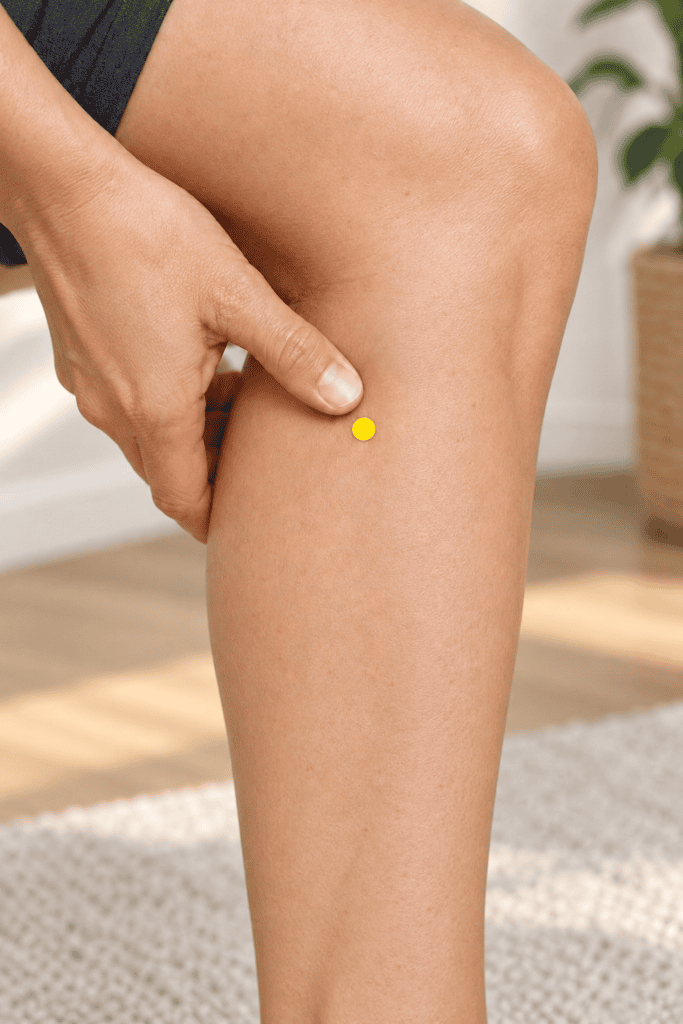
2. Press on GB34 below the outer knee, the influential point for sinew. GB34 sits on the outer lower leg, in the hollow just below and in front of the head of the fibula, the bony knob below the outer side of the knee. Press firmly with your thumb for one to two minutes on each leg. GB34 is called “Yanglingquan,” and it is the influential point for the sinews, tendons, and ligaments.
While BL11 focuses on the bone, GB34 is the key point for the sinews, including the tendons, ligaments, and connective tissue that support and move the joints. In osteoarthritis, these tissues can become stiff and tight, making movement more difficult and increasing pain. GB34 helps relax and nourish the sinews, reduce stiffness, and improve flexibility. Located near the knee, which is often affected by osteoarthritis, GB34 complements BL11 by supporting both the bone and the surrounding tissue.
3. Press on GB39 above the outer ankle, the influential point for marrow. GB39 sits on the outer lower leg, about four finger-widths above the tip of the outer ankle bone, just in front of the fibula. Press firmly with your thumb for one to two minutes on each leg. GB39 is called “Xuanzhong,” and it is the influential point for marrow.
In Traditional Chinese Medicine, marrow is thought to fill and nourish the bones from within, relying on Kidney energy, which declines with age. GB39 is the primary point for marrow and helps supply this deep nourishment. For this reason, it works with BL11 and GB34 to address the bones, sinew, and marrow. GB39 also helps ease aching and stiffness in the lower legs and is particularly useful for osteoarthritis of the knees and other weight-bearing joints.
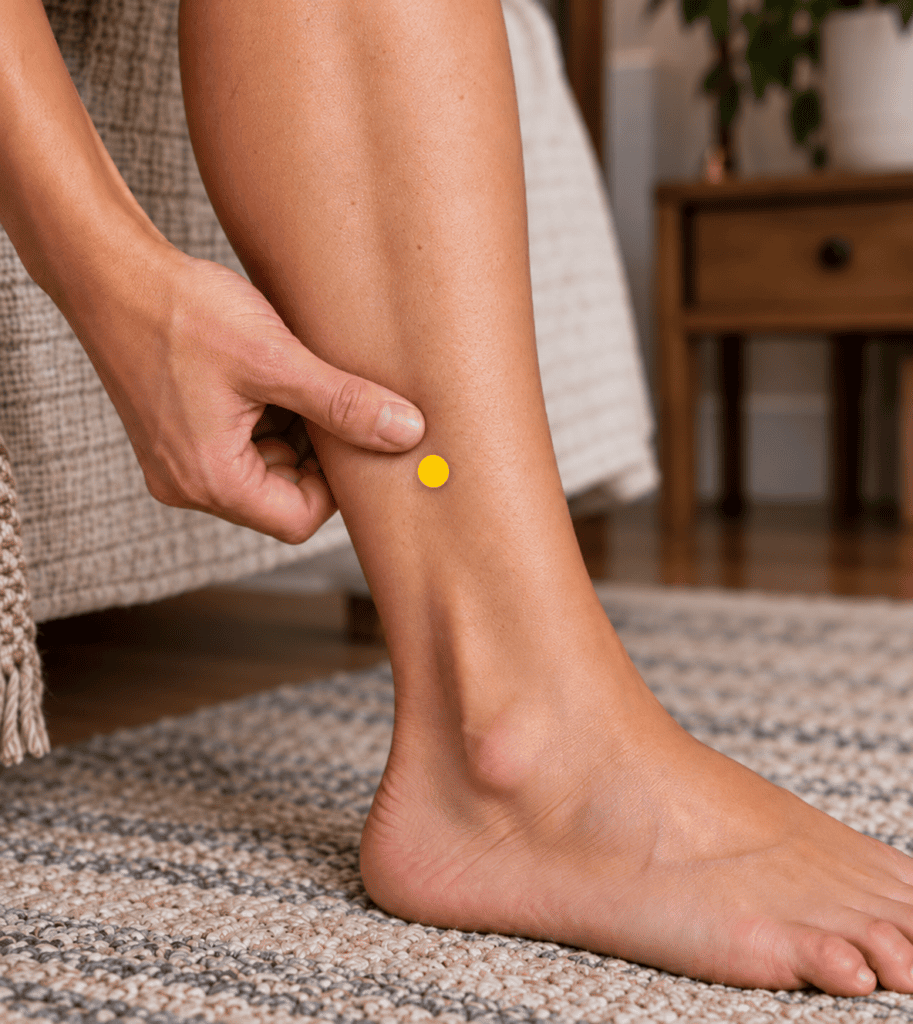
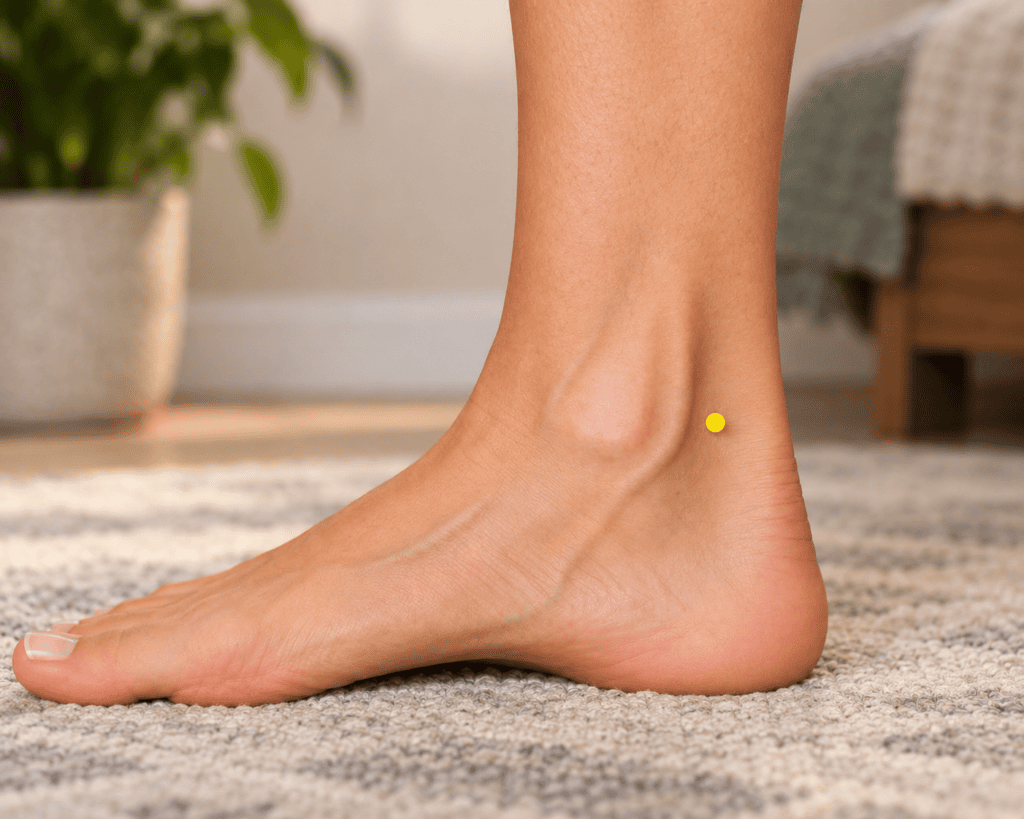
4. Press on KI3 above the inner ankle to nourish the Kidney that governs bone. KI3 sits in the hollow between the inner ankle bone and the Achilles tendon, level with the tip of the ankle bone. Press firmly with your thumb for one to two minutes on each ankle. KI3 is called “Taixi,” the source point of the Kidney.
Because the Kidney governs the bones, and its age-related decline is considered the deep root of osteoarthritis in Chinese medicine, KI3 is one of the most important constitutional points for this condition. As the Kidney’s source point, it helps rebuild the reserves that nourish the bones and joints and is especially suited to the long-standing, age-related aching associated with a weak lower back and tired knees. Work with this point every day, since nourishing the foundation is a slow, steady process.
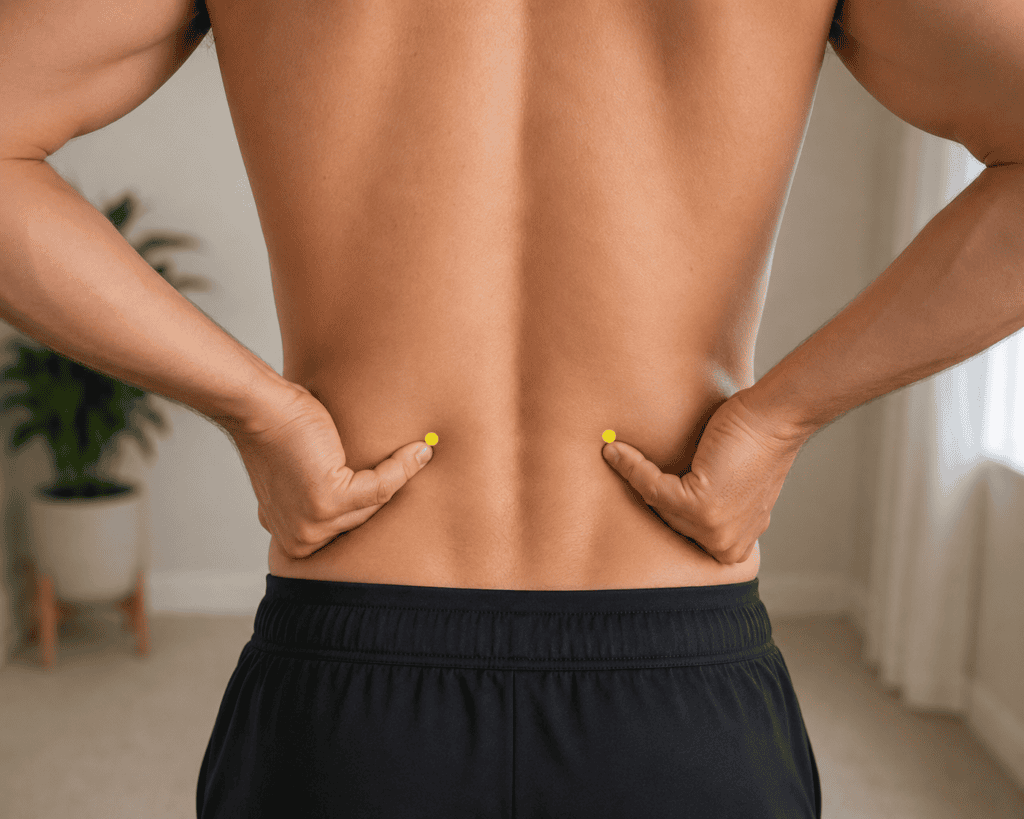
5. Press on BL23 on the lower back for the spine and the Kidney. BL23 sits on the lower back, at about waist level, roughly two finger-widths out to each side of the spine. Press firmly with your thumbs or knuckles, or rub the area briskly until it feels warm, for one to two minutes. BL23 is called “Shenshu,” the Kidney’s back point.
Osteoarthritis often affects the spine, particularly the lower back. BL23 directly addresses this area while also supporting the Kidney from the back. It helps ease lower-back stiffness and aching, warms the area, and replenishes the body’s deeper reserves. Rubbing this spot briskly until it feels warm is a traditional way to strengthen the Kidney and loosen a stiff back, making it especially useful in the morning.
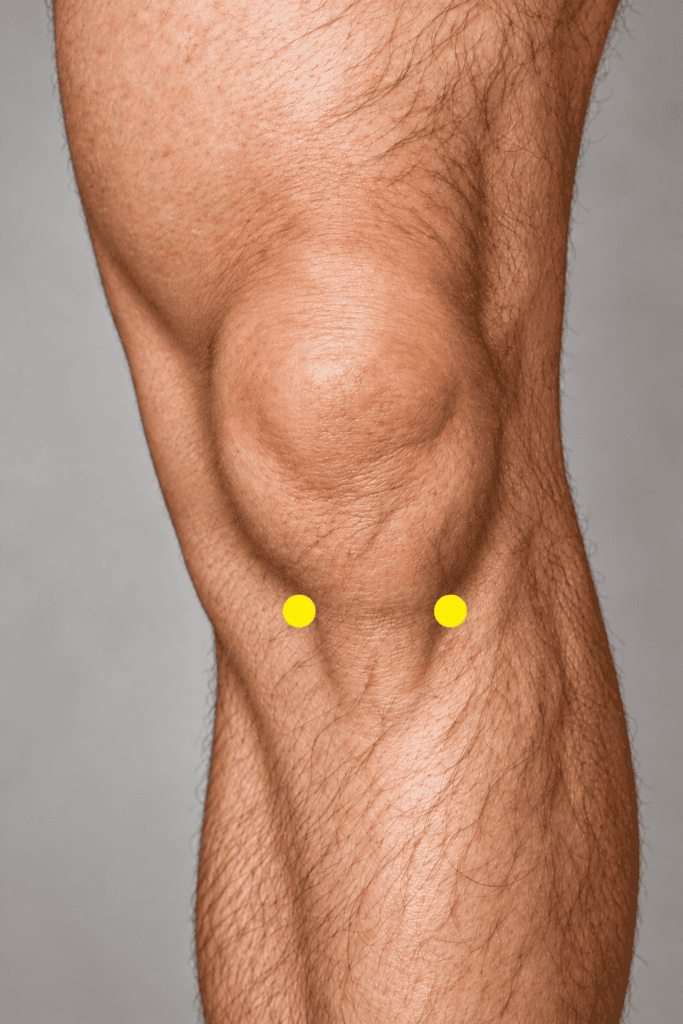
6. Press on Xiyan, the Knee Eyes, for knee osteoarthritis. The Knee Eyes are the two hollows on either side of the tendon just below the kneecap, visible when the knee is slightly bent. Sit with your knee bent, and press both hollows at once with your thumb and index finger for 1 to 2 minutes on each knee. Xiyan means “Knee Eyes,” and the outer eye is also known as ST35.
The knee is the joint most commonly affected by osteoarthritis, and the Knee Eyes are the primary points used to treat it. Located along the joint line, these points help move Qi and Blood through the knee, dispel cold and dampness, and relieve pain when standing, climbing stairs, or walking. Warming the knee before and after pressing these points may enhance the benefits. Spending a few minutes on this practice each day, together with gentle movement, is one of the best things you can do for knee osteoarthritis.
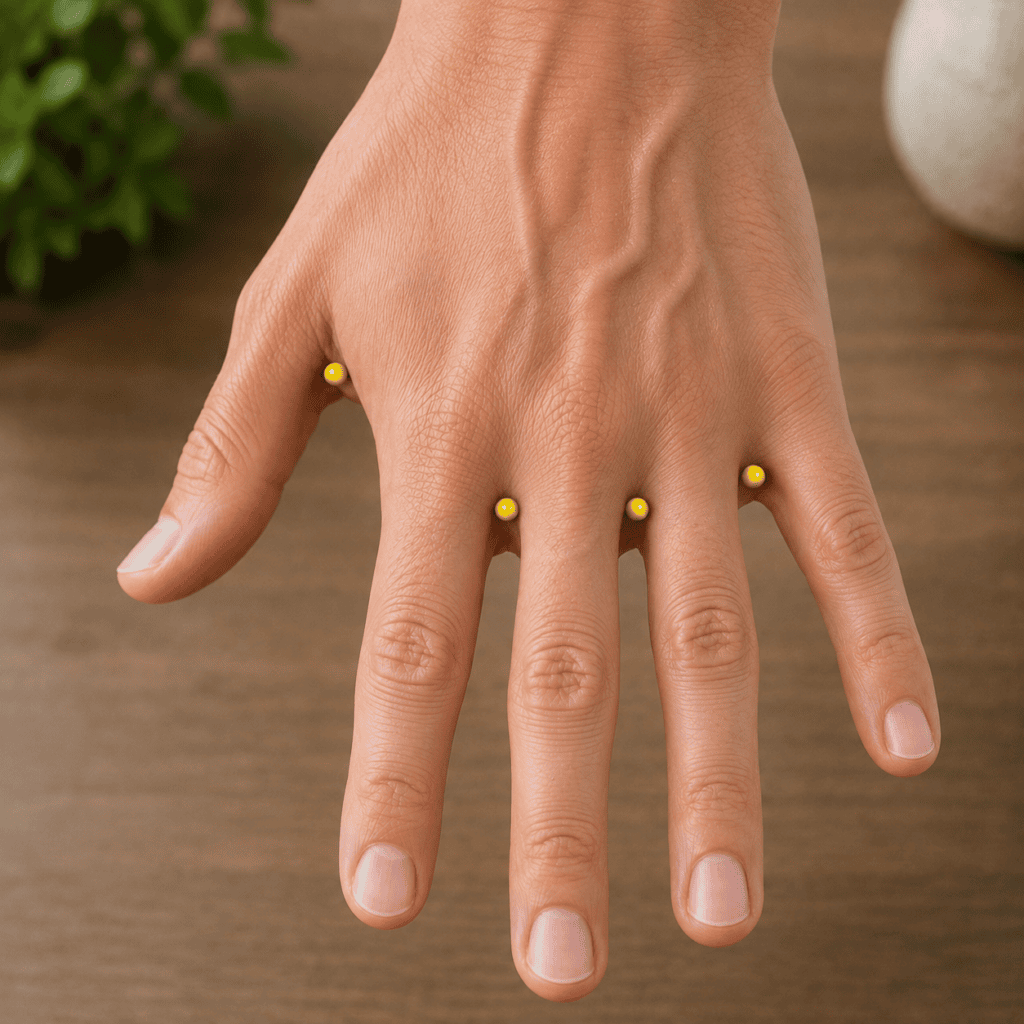
7. Press on Baxie between the knuckles for hand osteoarthritis. Baxie are four points on the back of each hand, in the webbing between each pair of fingers, just behind where the fingers meet the hand. Press each one with your thumb and index finger for about thirty seconds to a minute, working across the hand. Baxie means “Eight Evils,” and it is the classic point group for the finger joints.
Hand osteoarthritis, which causes stiff, achy knuckles, bony bumps at the finger joints, and difficulty gripping, is very common, particularly among women after midlife. Baxie points lie between the finger joints and are traditionally used to relieve pain, stiffness, and swelling in the hands and fingers. Gently working these points regularly, soaking your hands in warm water, and moving your fingers through their full range of motion can help keep your hands more comfortable and flexible.
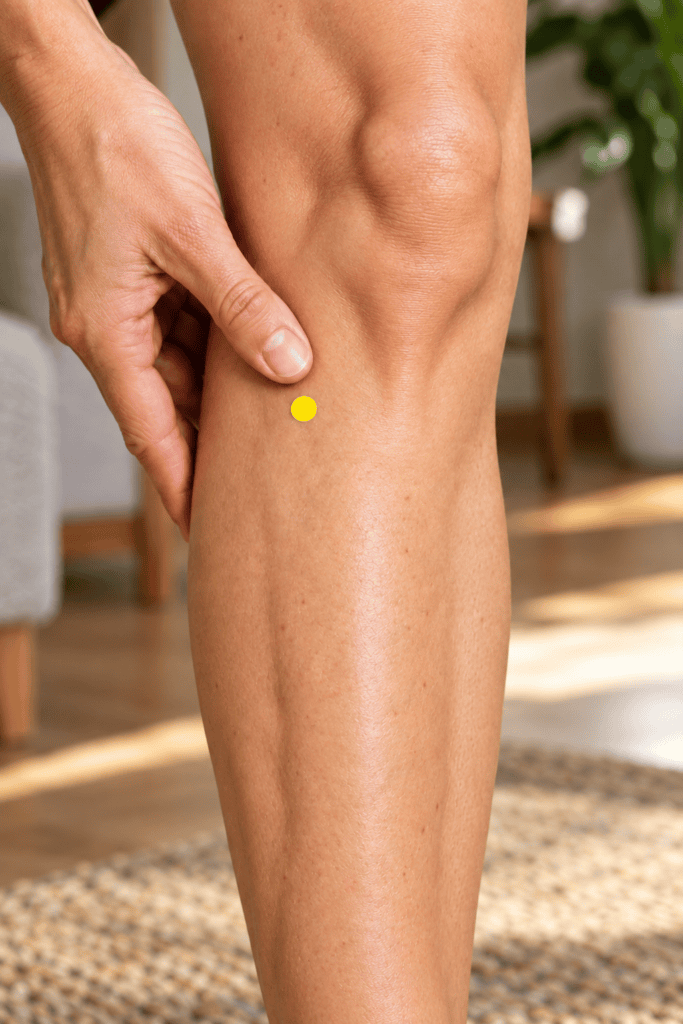
8. Press on ST36 below the knee to build strength around the joints. ST36 sits four finger-widths below the lower edge of the kneecap and one finger-width to the outside of the shinbone, on the muscle that rises when you flex your foot. Press firmly with your thumb for one to two minutes on each leg. ST36 is called “Zusanli,” the “Leg Three Miles,” and it is the master point for building Qi and Blood.
Strong muscles help protect arthritic joints, and ST36 helps build Qi and Blood to nourish these muscles and tissues. It improves circulation in the legs, supports the knee from below, and helps the body meet the ongoing demands of a chronic condition. ST36 is also a traditional point for knee pain and weakness, making it especially useful for knee osteoarthritis. Use this point daily along with KI3.
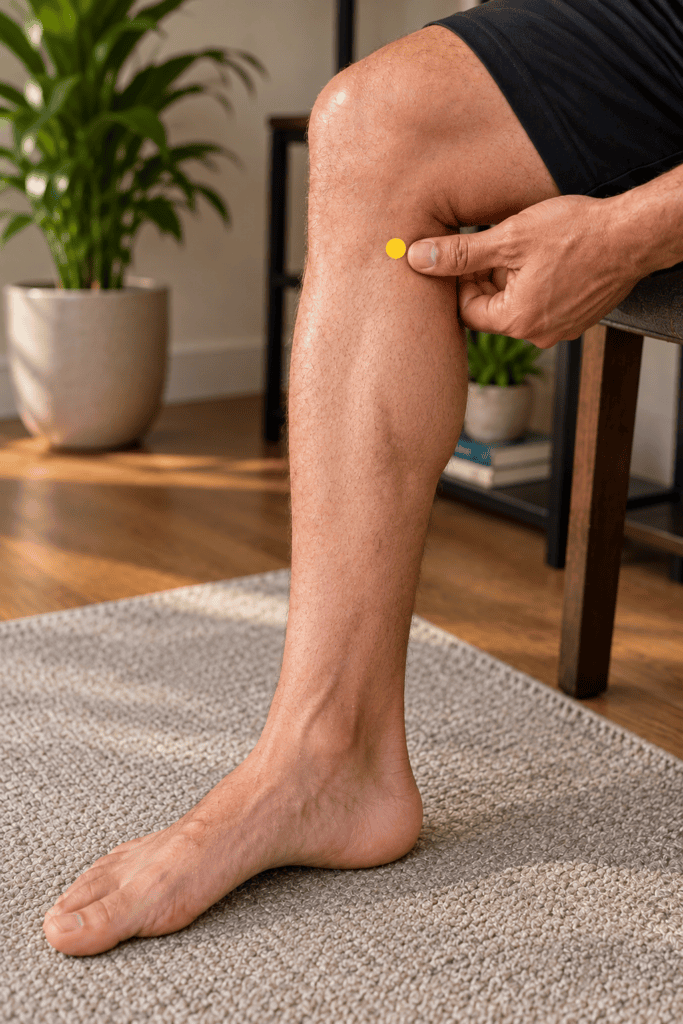
9. Press on SP9 below the inner knee to drain dampness and swelling. SP9 sits on the inner lower leg, in the hollow just below the bulge at the top of the shinbone, under the inner side of the knee. Press firmly with your thumb for one to two minutes on each leg. SP9 is called “Yinlingquan,” the main point for draining dampness.
When osteoarthritis causes heaviness, puffiness, or swelling around a joint, especially the knee, Traditional Chinese Medicine interprets it as dampness in the joint. SP9 is the primary point for clearing this dampness. It helps drain fluid and ease the heaviness that makes a joint feel thick and stiff. SP9 works well with the Knee Eyes and GB34, addressing the knee from several angles.
Why These Acupressure Points Work
In Traditional Chinese Medicine, osteoarthritis is understood as a combination of joint blockage, often caused by cold and damp, and weakness in the Kidney and Liver, which nourish the bones and sinews. The nine points above address both factors.
- The influential points for bone, sinew, and marrow (BL11, GB34, GB39) support the tissues that osteoarthritis wears down.
- The Kidney points (KI3, BL23) nourish the deep reserves that govern the bones and treat the lower spine.
- The local joint points (Xiyan, Baxie) move Qi and Blood through the knees and hands, the joints osteoarthritis affects most.
- The strengthening and damp-clearing points (ST36, SP9) build the strength that protects the joints and clear the heaviness and swelling around them.
The American College of Rheumatology recommends acupuncture for osteoarthritis of the knee, hip, and hand. Small studies of self-applied acupressure for knee osteoarthritis have also shown encouraging improvements in pain and function.
How to Properly Use These Acupressure Points
Because osteoarthritis is a chronic condition, consistent care is more important than intense effort.
- Every day, work the constitutional points, KI3, ST36, GB34, and GB39, along with BL23 for the back, since nourishing bone and sinew is a slow process.
- For knee osteoarthritis, add the Knee Eyes and SP9. For the hands, work Baxie. For the spine, focus on BL23 and BL11. For the hip, see the hip guidance in the arthritis piece linked above.
- Warm the joint first. Use a heat pack, warm shower, or hand soak to loosen it and improve circulation, clearing cold and damp, the warmth favored in Traditional Chinese Medicine for osteoarthritis.
- Press firmly around the joint, but be gentle with any joint that is hot, red, or unusually swollen that day; press around it instead of directly on it.
- Hold each point for one to two minutes, then gently move the joint through its comfortable range of motion.
Acupressure works best alongside other important steps for managing osteoarthritis. Regular movement is the most important, since joints need motion to stay healthy and muscles need strength to protect them. Activities such as walking, swimming, cycling, tai chi, and strength exercises can all help, especially with guidance from a physical therapist. For knee and hip osteoarthritis, maintaining a healthy weight reduces stress on the joints. Keep joints warm in cold weather, pace activities to prevent pain flare-ups, and wear supportive shoes or, when needed, use a cane or brace.
When to Get Professional Help
See your doctor if you have persistent joint pain without a diagnosis. A proper diagnosis can confirm osteoarthritis and rule out other causes. Get medical help right away if a joint suddenly becomes hot, red, and swollen, especially with a fever, as this could indicate an infection or gout. Also seek care if a joint locks, gives way, cannot bear weight, or if pain wakes you at night. Contact your doctor if you lose weight without explanation or develop swelling in several small joints on both sides of your body, with morning stiffness lasting more than half an hour. These signs may indicate inflammatory arthritis, which requires a rheumatologist. If osteoarthritis continues to make daily life difficult despite your best efforts, discuss all available options with your doctor, from physical therapy and injections to joint replacement in severe cases.
Alongside other treatments, acupressure can provide a helpful, low-risk option for managing daily pain and stiffness.
Above and Beyond Acupuncture offers acupuncture, cupping, and lifestyle coaching at the North Frank Lloyd Wright Boulevard location in Scottsdale.
Schedule an appointment online to start your healing journey.
The points above are only as effective as the technique used to apply them. Where to press, how firmly, and for how long all affect the result. For a full breakdown of how to perform acupressure properly at home, read Performing Acupressure in 3 Easy Steps.
For a broader look at all types of arthritis, including rheumatoid arthritis, acupressure for arthritis covers more ground, while how acupuncture treats arthritis explains the clinical side.

About the Publisher
Paul Kerzner, L.Ac., is a licensed acupuncturist and board-certified herbalist, as well as the founder of Above and Beyond Acupuncture in Scottsdale. His own journey from chronic patient to practicing acupuncturist shapes his commitment to providing honest, clinically grounded information about acupuncture and Traditional Chinese Medicine. Learn more about Paul and his clinical approach on the About Us page.