Key Takeaways
- Persistent itching can greatly interfere with everyday life and is linked to causes such as dry skin and stress.
- Acupressure for itching provides relief by stimulating specific points that dispel heat, soothe wind, and nourish the skin.
- Important acupressure points are LI11 to clear heat, SP10 to cool the Blood, and HT7 to soothe the mind.
- Consistent acupressure practice can effectively lessen itchiness and break the cycle of scratching and stress.
- Consult a healthcare professional if you experience ongoing itching, particularly when accompanied by other serious symptoms.
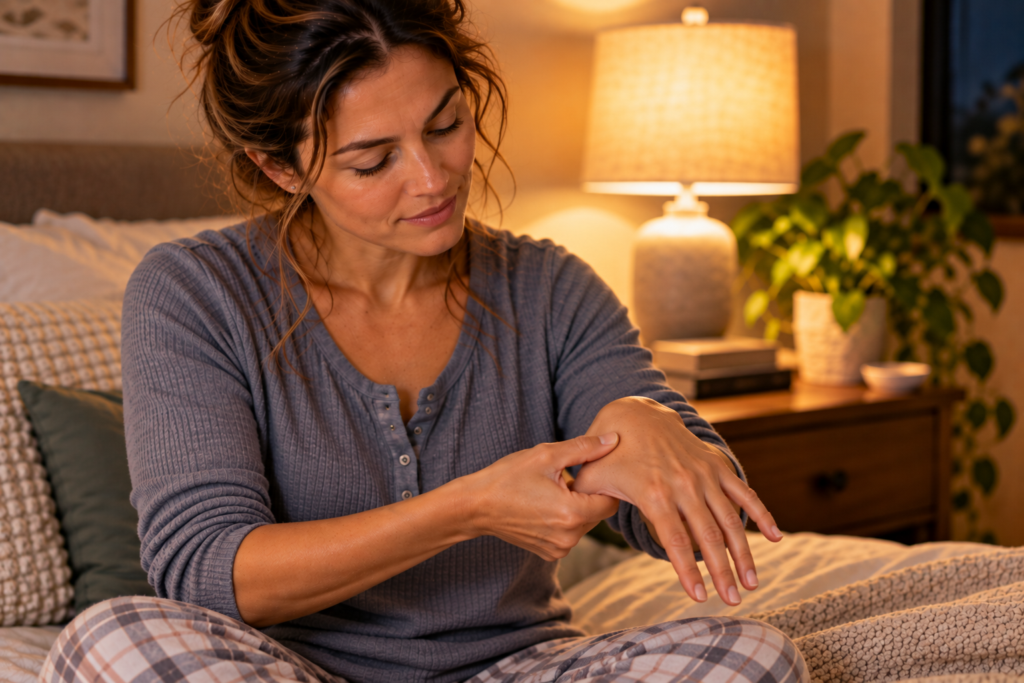
Itching might seem minor until you experience it firsthand. Persistent itching can dominate your thoughts, disrupt your sleep, and lead to scratching that damages your skin and makes the problem worse. Causes include dry skin, eczema, hives, insect bites, allergies, heat, stress, certain medications, or internal health conditions. Acupressure offers a straightforward method to relieve itching and prevent scratching by keeping your hands occupied.
Traditional Chinese Medicine views itching through a unique lens. It associates itchiness with wind, which is restless and moves unpredictably, causing the sensation to shift or suddenly appear. Wind often interacts with other factors: when combined with heat in the Blood, it can cause red, hot, intensely itchy skin, often triggered by heat, spicy foods, alcohol, or stress. If wind combines with dampness, the skin may ooze, blister, or become thick, swollen, and inflamed. When Blood deficiency occurs, the skin tends to be dry and thin, and the itch persists longer, is worse at night, and becomes more common with aging. An old saying states: to treat wind, first focus on the Blood. When the Blood is healthy and circulating well, wind calms down. The following points aim to soothe wind, cool Blood heat, clear dampness, nourish dry skin, and relax the nervous system affected by stress and scratching.
Here are nine acupressure points that can help:
What Acupressure Points to Press and Why
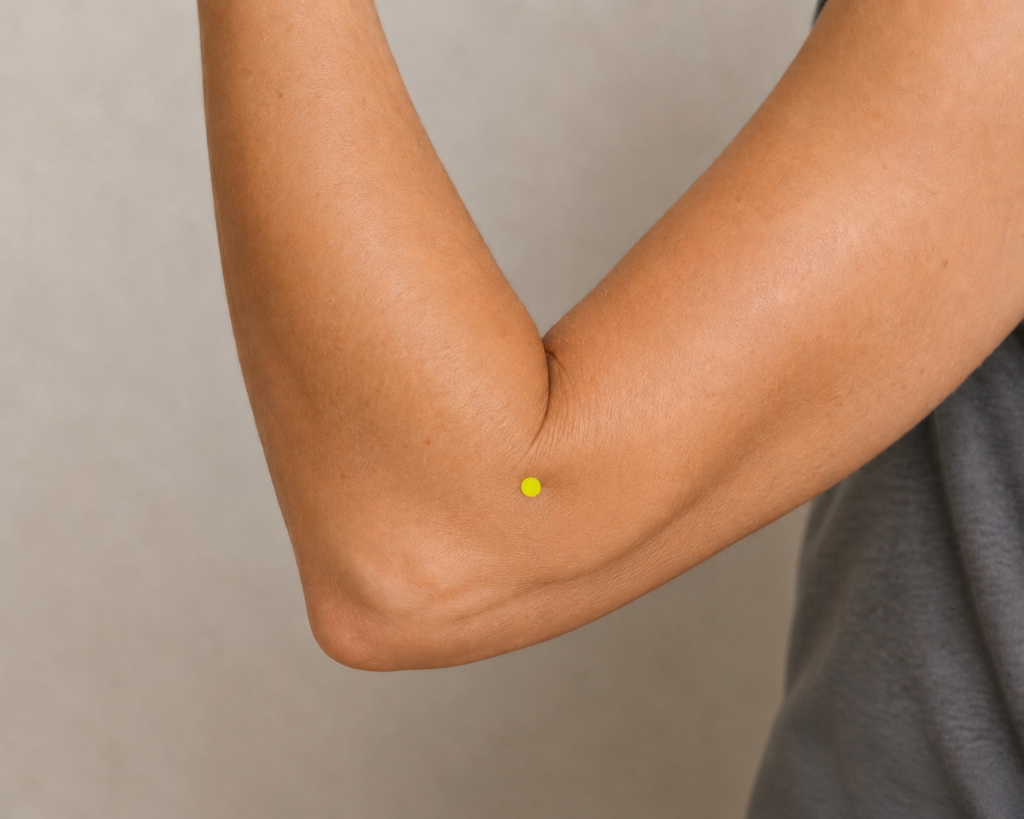
1. Press on LI11 at the elbow, the key point for itching. LI11 sits at the outer end of the elbow crease, in the hollow that forms when you bend your elbow, between the end of the crease and the bony point on the outside. Press firmly with your thumb for one to two minutes on each arm, and return to it whenever the urge to scratch rises. LI11 is called “Quchi,” the “Pool at the Crook,” and it is one of the most important points in the body for clearing heat and relieving itch.
This point is most closely linked to itching. It helps clear heat, cool the Blood, and soothe the skin. Research supports its use: a small study found that people with eczema who pressed LI11 regularly experienced less itching, and animal studies show it reduces scratching. Use this point instead of scratching whenever you feel the urge. Some people tape a small bead or seed over the spot so they can press it throughout the day.
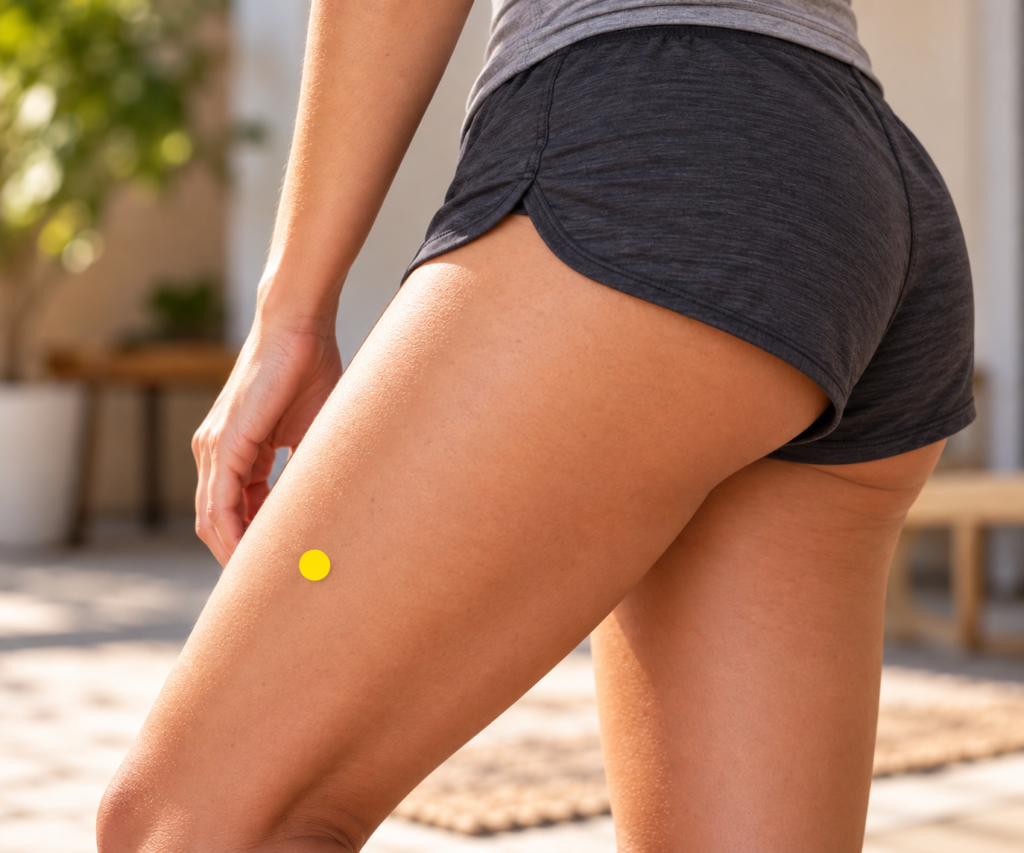
2. Press on SP10 above the knee to cool and move the Blood. SP10 sits on the inner thigh, about three finger-widths above the inner upper corner of the kneecap, on the muscle bulge there. Press firmly with your thumb for one to two minutes on each leg. SP10 is called “Xuehai,” the “Sea of Blood.”
SP10 is a traditional point used for skin issues connected to the Blood. It cools and promotes Blood flow, helping to soothe the wind that triggers itching. This point is especially effective for redness, warmth, and inflammation in itching, such as eczema flare-ups and hives. It pairs well with LI11 as a traditional combination for itchy skin. If your itch appears red and irritated, this point is particularly important to apply.
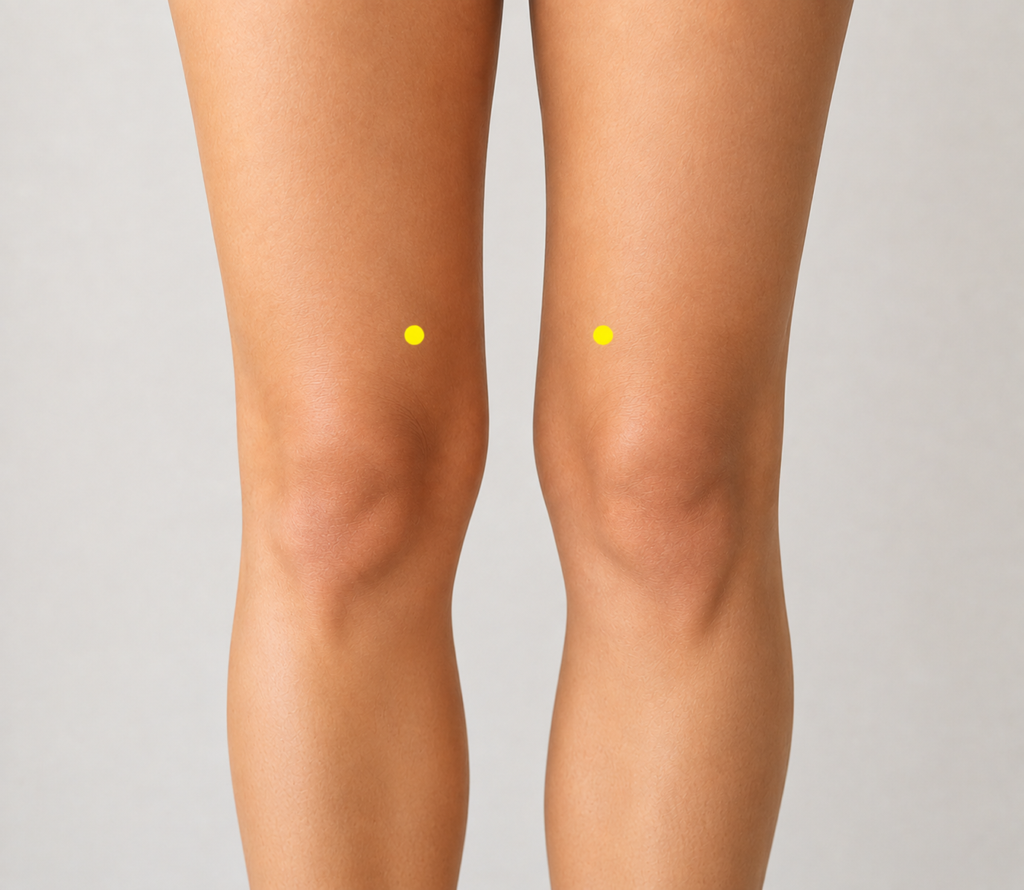
3. Press on BL40 behind the knee to clear heat from the Blood. BL40 sits in the center of the crease at the back of the knee, in the hollow midway across. Press gently to moderately with your fingers for one to two minutes on each leg, avoiding the area if the skin there is broken or inflamed. BL40 is called “Weizhong,” and it is traditionally used to clear heat from the Blood.
Eczema frequently worsens in the creases of the elbows and knees. The points LI11 and BL40 are a traditional duo used to treat hot, itchy skin. BL40 helps clear heat from the Blood, easing redness, warmth, and itchiness, especially on the legs. If the skin behind your knee becomes irritated, gently press around the area or choose alternative points.
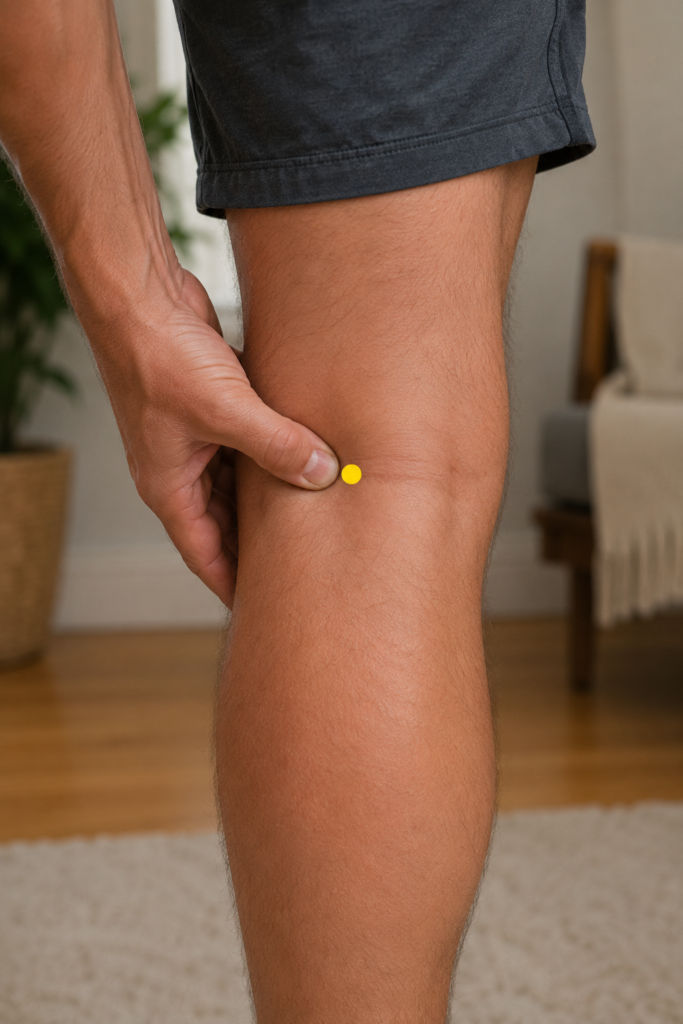
4. Press on GB31 on the outer thigh to calm wind and itch. GB31 sits on the outer thigh, where the tip of your middle finger lands when you stand with your arms hanging straight at your sides. Press firmly with your thumb or knuckles for one to two minutes on each leg. GB31 is called “Fengshi,” the “Wind Market.”
GB31 is recognized as a key point for wind and is a traditional spot for body-wide itching. It is particularly effective when the itch shifts location, appears suddenly, or affects large areas, such as with hives. Since it’s easily accessible whether sitting or standing, it’s convenient to press when an itch starts to spread.
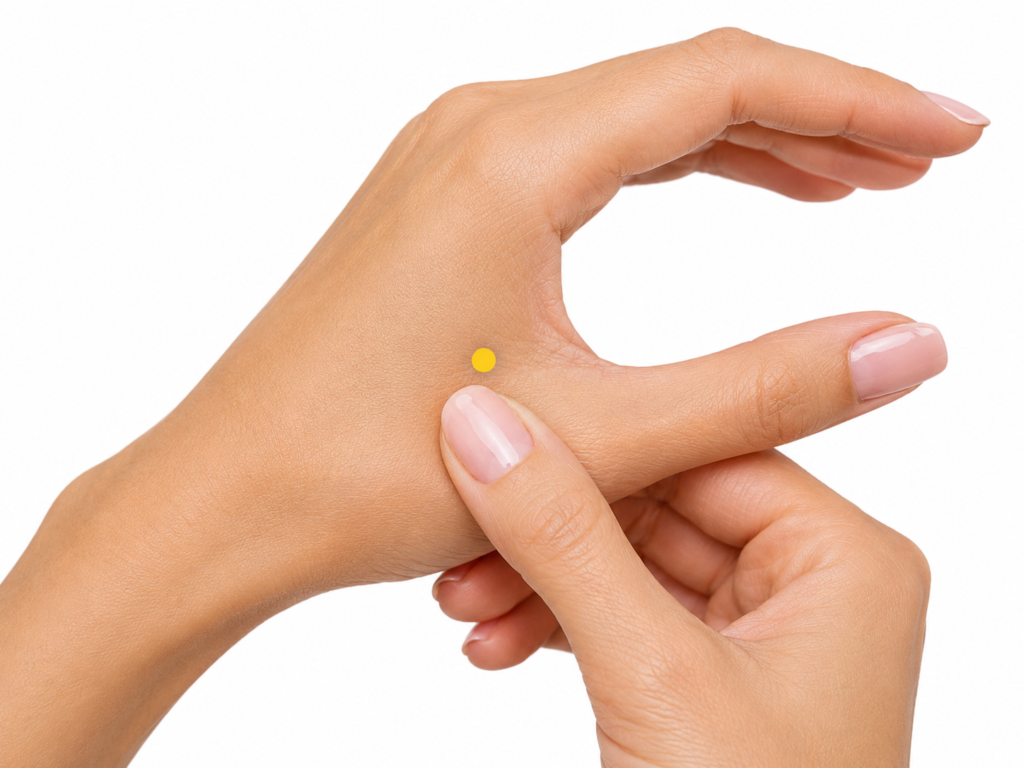
5. Press on LI4 in the hand to release wind and clear heat. LI4 sits in the webbing between the thumb and index finger, at the highest point of the muscle when you bring them together. Press firmly with the thumb of your other hand for one to two minutes on each hand. LI4 is called “Hegu,” and it is one of the great points for releasing wind and clearing heat. It should be avoided during pregnancy.
LI4 shares a channel with LI11, forming a well-known pair used to clear heat and wind from the skin, especially on the face and upper body. Additionally, LI4 helps soothe you and reduce discomfort overall. Because it’s located on your hand, it offers an easy alternative to scratching, whether you’re at your desk or in bed.
6. Press on BL17 on the mid-back to nourish and move the Blood. BL17 sits on the mid-back, about two finger-widths out to each side of the spine, roughly level with the bottom tips of the shoulder blades. Lie on your back with a tennis ball under each point, or have someone press both sides with their thumbs, for one to two minutes. BL17 is called “Geshu,” and it is the influential point for the Blood.
BL17 is based on the principle of soothing the Blood to calm the wind and is a key point for persistent itching. It nourishes and moves the Blood, helping with both the red, hot itching caused by Blood heat and the dry, ongoing itching from Blood deficiency. If you experience long-lasting or recurring itching, this point targets the underlying cause.
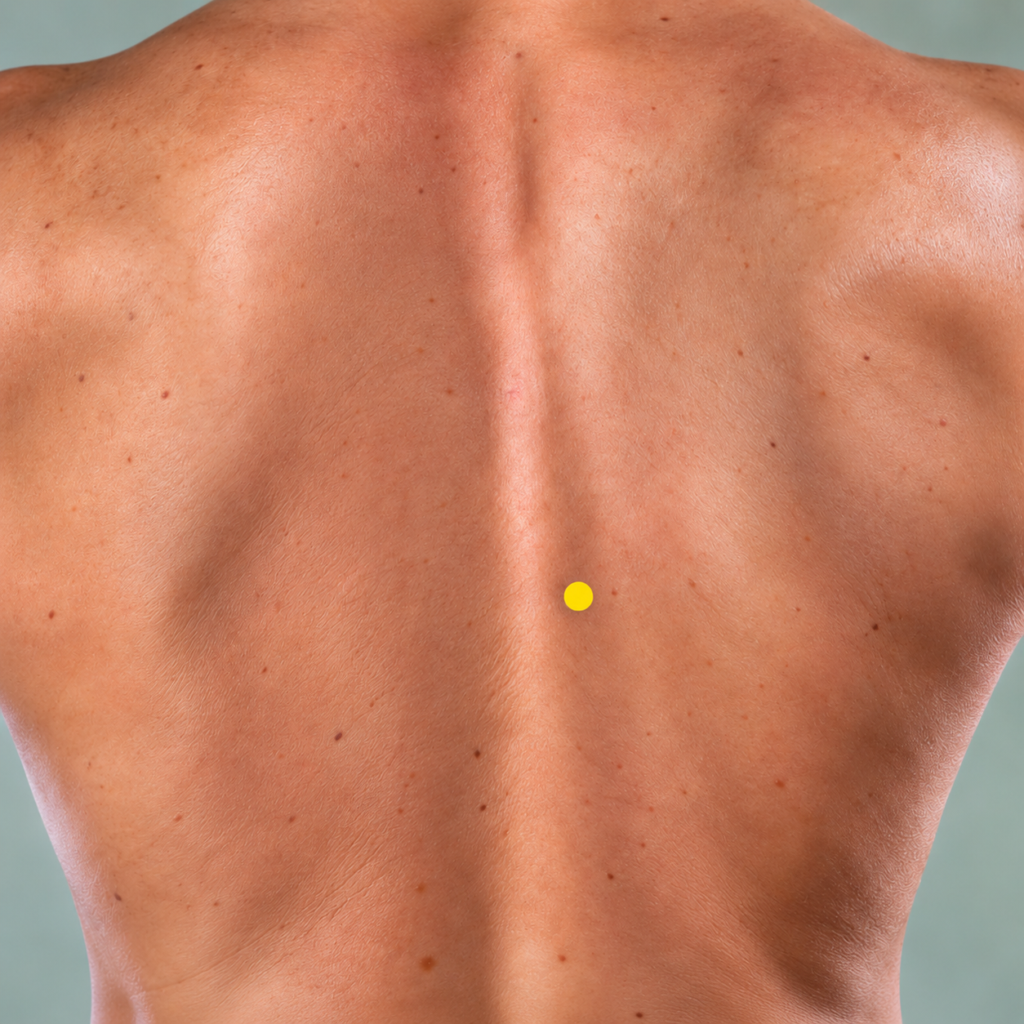
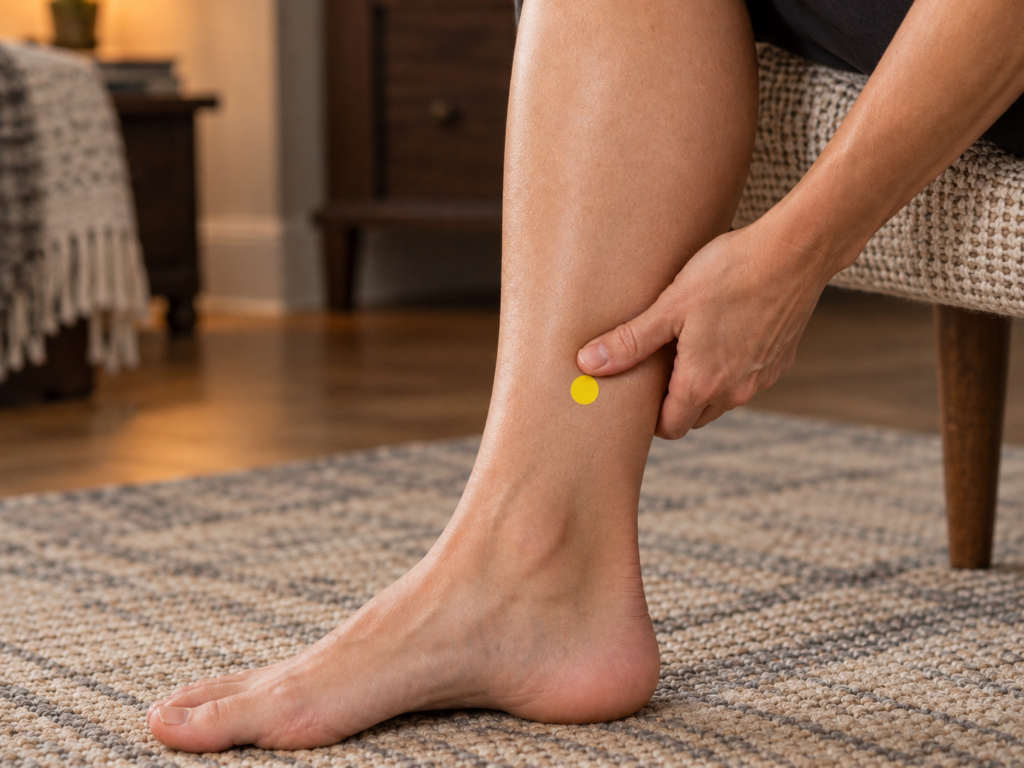
7. Press on SP6 above the inner ankle to nourish dry skin. SP6 sits four finger-widths up from the tip of the inner ankle bone, just behind the back edge of the shinbone. Press firmly for one to two minutes on each leg. SP6 is called “Sanyinjiao,” the “Three Yin Intersection,” where the Spleen, Liver, and Kidney channels meet. SP6 is avoided during pregnancy.
If your itching results from dry, thin skin, especially if it worsens at night or with age, Chinese medicine attributes this to a deficiency of Blood and Yin that moisturize the skin. SP6 helps nourish both and supports skin health from the inside. Additionally, it calms the mind and promotes sleep. Use this point daily to address persistent dry itchiness.
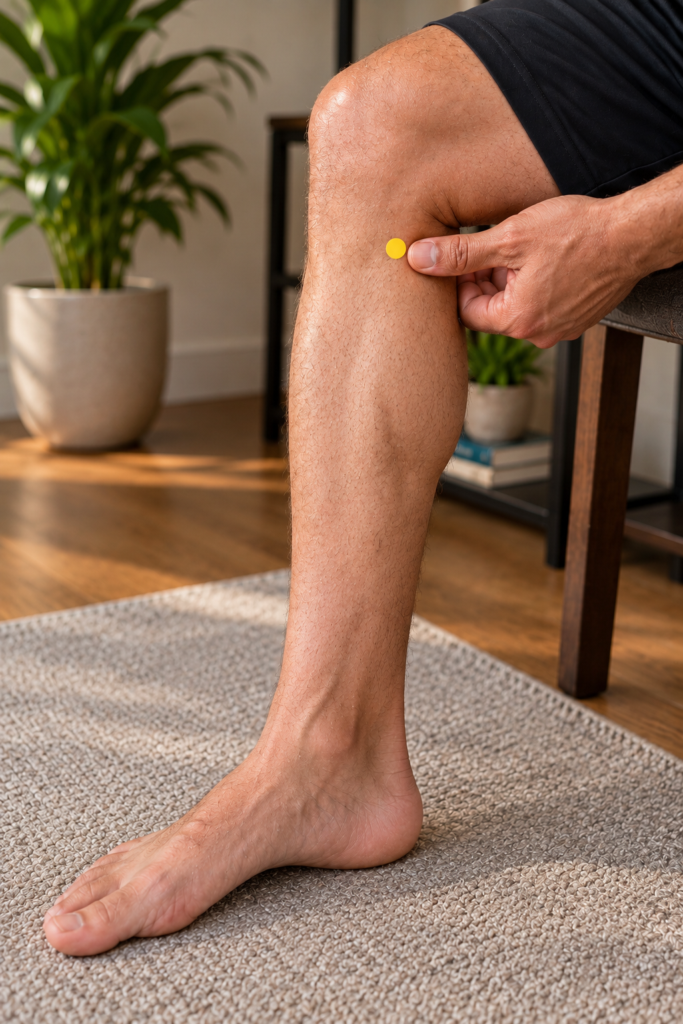
8. Press on SP9 below the inner knee to clear dampness. SP9 sits on the inner lower leg, in the hollow just below the bulge at the top of the shinbone, under the inner side of the knee. Press firmly with your thumb for one to two minutes on each leg. SP9 is called “Yinlingquan,” the main point for draining dampness.
If your itching is accompanied by weeping, oozing, blisters, or thick, swollen skin, Chinese medicine interprets this as dampness. SP9 is the primary point for resolving dampness. It effectively dries out stubborn, damp skin and is often used together with SP10 and LI11 when the skin appears red and weepy.
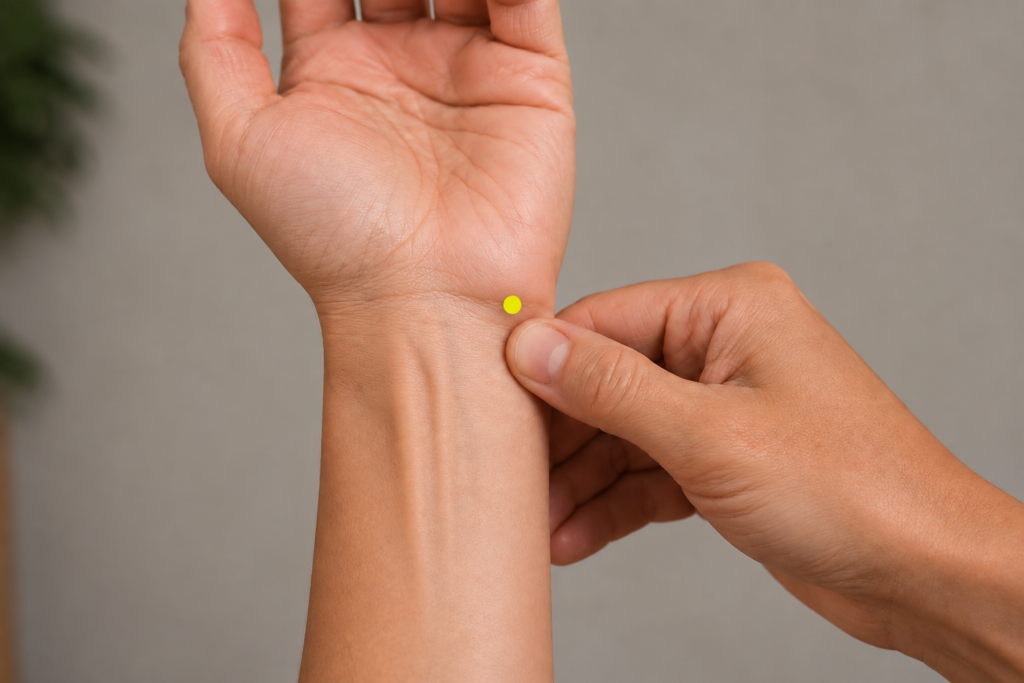
9. Press on HT7 at the wrist to break the itch-stress cycle. HT7 sits on the inner wrist crease, on the pinky side, in the small hollow just inside the tendon. Press firmly with your thumb for one to two minutes on each wrist. HT7 is called “Shenmen,” the “Spirit Gate,” and it is the most important point for calming the Shen.
Stress can intensify itching, and scratching can increase stress and disrupt sleep, forming a difficult cycle. HT7 helps relax the Heart and calm the Shen, reducing restlessness, frustration, and sleep issues that trigger scratching. This point is especially helpful at night, when itching peaks, especially for those whose itch worsens with stress.
Why These Acupressure Points Work
In Traditional Chinese Medicine, itching is considered wind in the skin, often combined with heat in the Blood, dampness, or dryness caused by low Blood. Stress and scratching can prolong the itch. These nine points target all these factors.
- The heat-clearing points (LI11, LI4, BL40) clear heat and wind from the skin, with LI11 being the best-studied point for itching.
- The Blood points (SP10, BL17, SP6) cool, move, and nourish the Blood, following the principle that treating the Blood settles wind.
- The wind and damp points (GB31, SP9) calm moving, spreading itch and dry up weeping skin.
- The calming point (HT7) settles the nervous system and the stress and sleeplessness that feed scratching.
Research indicates that acupuncture can reduce itch intensity and alter the brain’s processing of itch signals. Additionally, self-applied acupressure at LI11 has been shown to reduce itch in individuals with eczema.
How to Properly Use These Acupressure Points
Use these points to soothe the itch and prevent scratching.
- When the urge to scratch hits, press LI11, LI4, or HT7 instead to interrupt the scratch and calm the itch at the same time.
- For red, inflamed itch, focus on LI11, SP10, and BL40. For weeping or blistering skin, add SP9. For dry, chronic itch, focus on SP6 and BL17. For moving or widespread itch, add GB31.
- Work the full set once or twice a day for ongoing itch, and add HT7 and SP6 at bedtime to help with night itching and sleep.
- Never press directly on broken, raw, weeping, or infected skin. Work the points away from any affected area, or use the points on the opposite side.
- Hold each point for one to two minutes with steady pressure, breathing slowly.
A few simple habits can significantly improve skin comfort. Use lukewarm water instead of hot water when bathing, gently pat your skin dry, and apply a fragrance-free moisturizer right away to lock in moisture. Wear soft, breathable cotton fabrics and steer clear of wool or harsh detergents. Keep your nails trimmed and consider sleeping with cotton gloves if you tend to scratch during sleep. Applying a cool, damp cloth to itchy, hot areas for a few minutes can soothe irritation. Watch for triggers such as certain soaps, fabrics, foods, heat, and stress. Additionally, reducing spicy foods and alcohol intake can help, as they can raise internal heat.
When to Get Professional Help
If you have itching along with hives, swelling of the lips, face, tongue, or throat, difficulty breathing, or dizziness, call emergency services immediately, as these could signal a severe allergic reaction. Visit a doctor if your itching persists beyond two weeks, interferes with sleep, or affects your entire body. Seek medical attention if you have widespread itching without a visible rash, which could indicate liver, kidney, or thyroid problems; iron deficiency; medication reactions; or, less commonly, blood cancer. Seek urgent care if your itching occurs with yellowing skin or eyes, unexplained weight loss, fever, night sweats, or signs of infection such as spreading redness, warmth, yellow crust, or pus. If you’re pregnant and experiencing intense itching, especially on your palms and soles, contact your healthcare provider promptly, as this may indicate a liver condition that needs treatment.
Acupressure is a safe, low-risk method to soothe minor itching but should complement medical care for persistent or unexplained symptoms.
Above and Beyond Acupuncture offers acupuncture, cupping, and lifestyle coaching at the North Frank Lloyd Wright Boulevard location in Scottsdale.
Schedule an appointment online to start your healing journey.
The points above are only as effective as the technique used to apply them. Where to press, how firmly, and for how long all affect the result. For a full breakdown of how to perform acupressure properly at home, read Performing Acupressure in 3 Easy Steps.
About the Publisher
Paul Kerzner, L.Ac., is a licensed acupuncturist and board-certified herbalist, as well as the founder of Above and Beyond Acupuncture in Scottsdale. His own journey from chronic patient to practicing acupuncturist shapes his commitment to providing honest, clinically grounded information about acupuncture and Traditional Chinese Medicine. Learn more about Paul and his clinical approach on the About Us page.