
Key Takeaways
- Psoriatic arthritis is an inflammatory disorder associated with psoriasis that leads to joint pain and skin problems.
- Nine acupressure points can help reduce symptoms by clearing heat, promoting blood flow, and easing inflammation.
- Daily practices like acupressure, regular exercise, and dietary adjustments can enhance the management of psoriatic arthritis.
- Seek medical advice promptly if you experience joint pain or swelling associated with psoriasis, since early treatment is vital.
- Acupressure can support medical treatment for psoriatic arthritis but should not be used as a substitute.
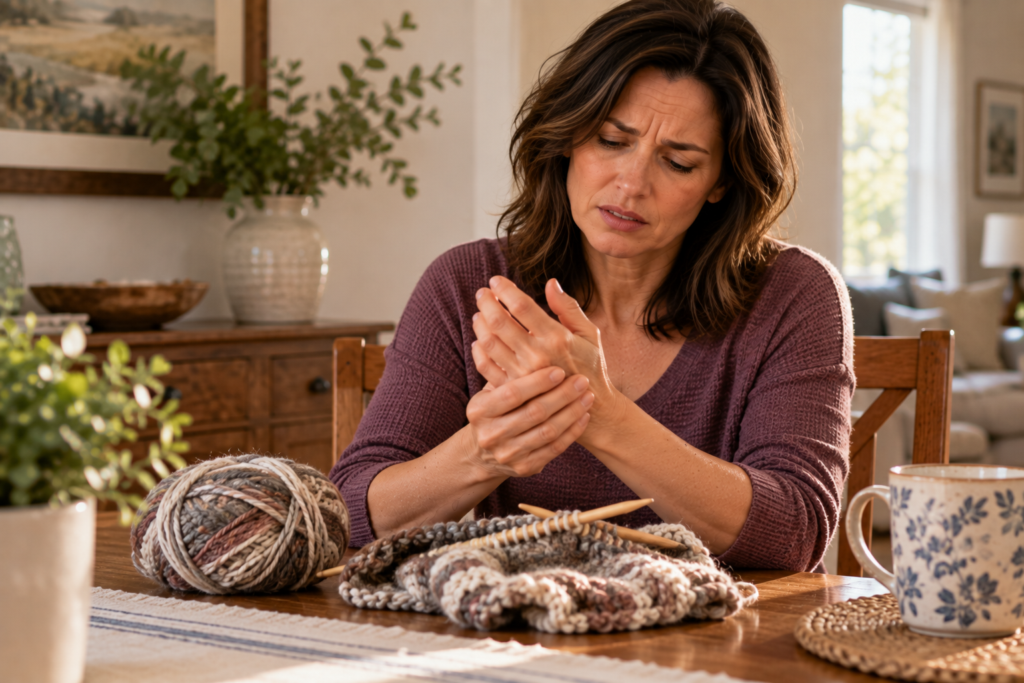
Do your joints ache and swell while your skin battles with red, scaly patches from psoriasis? If so, you’re not alone.
Psoriatic arthritis is a form of inflammatory arthritis that can develop if you have psoriasis, a skin condition characterized by persistent, itchy plaques. In this condition, your immune system becomes confused and attacks not only your skin but also your joints and the points where tendons and ligaments connect to bones. What does this feel like? You might experience swollen, painful joints, sometimes more on one side than the other. Your fingers or toes can swell like sausages, a condition known as dactylitis, or you may have pain at tendon attachment sites especially at the back of your heel or the bottom of your foot. You may also have stiffness in the lower back and buttocks, prolonged morning stiffness, pitted or crumbly nails, and deep fatigue that feels like bone exhaustion. Symptoms tend to flare up and then subside. Medical treatment is essential because current medicines can help prevent joint damage. Alongside your doctor’s guidance, you can also support your body holistically. Acupressure is a natural, holistic, at-home practice that can help reduce pain, soothe inflammation, and support overall well-being; think of it as a natural addition to your daily routine.
Traditional Chinese Medicine considers psoriatic arthritis as two main patterns: heat in the Blood, which appears on the skin as red, inflamed, and scaly patches, and Bi syndrome, characterized by pain and joint obstruction. In this condition, affected joints are usually red, swollen, warm, and painful, sometimes with dampness that causes swelling and heaviness. Over time, heat can dry out and deplete the Blood and Yin, leading to cracked skin and tight sinews, while stagnant old Blood can lodge in joints and tendons, causing ongoing pain. Common triggers include stress, alcohol, spicy or fatty foods, and poor sleep, which can increase heat and provoke flare-ups.
Here are nine acupressure points to help remove heat from the Blood and joints, drain dampness, move stagnant Blood, replenish resources, and relieve pain in fingers, heels, and back.
What Acupressure Points to Press and Why
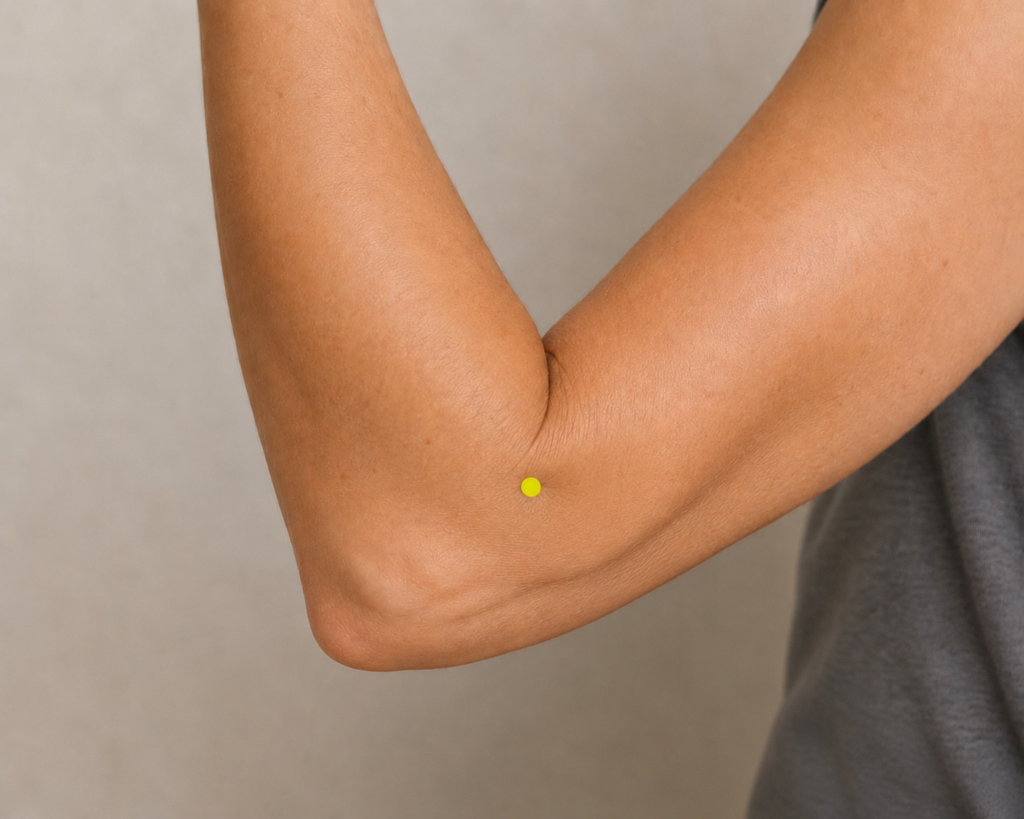
1. Press on LI11 at the elbow, the key point for clearing heat. LI11 sits at the outer end of the elbow crease, in the hollow that forms when you bend your elbow. Press firmly with your thumb for one to two minutes on each arm, unless the elbow itself is swollen or covered by a psoriasis patch. LI11 is called “Quchi,” the “Pool at the Crook.”
LI11 is a key point in the body for dissipating heat. It is traditionally used to treat hot, inflamed joints and red, itchy skin, making it a natural choice for psoriatic arthritis. It helps cool internal heat during flares, relieves pain and stiffness in the elbow and arm, and also benefits the skin. Show Image
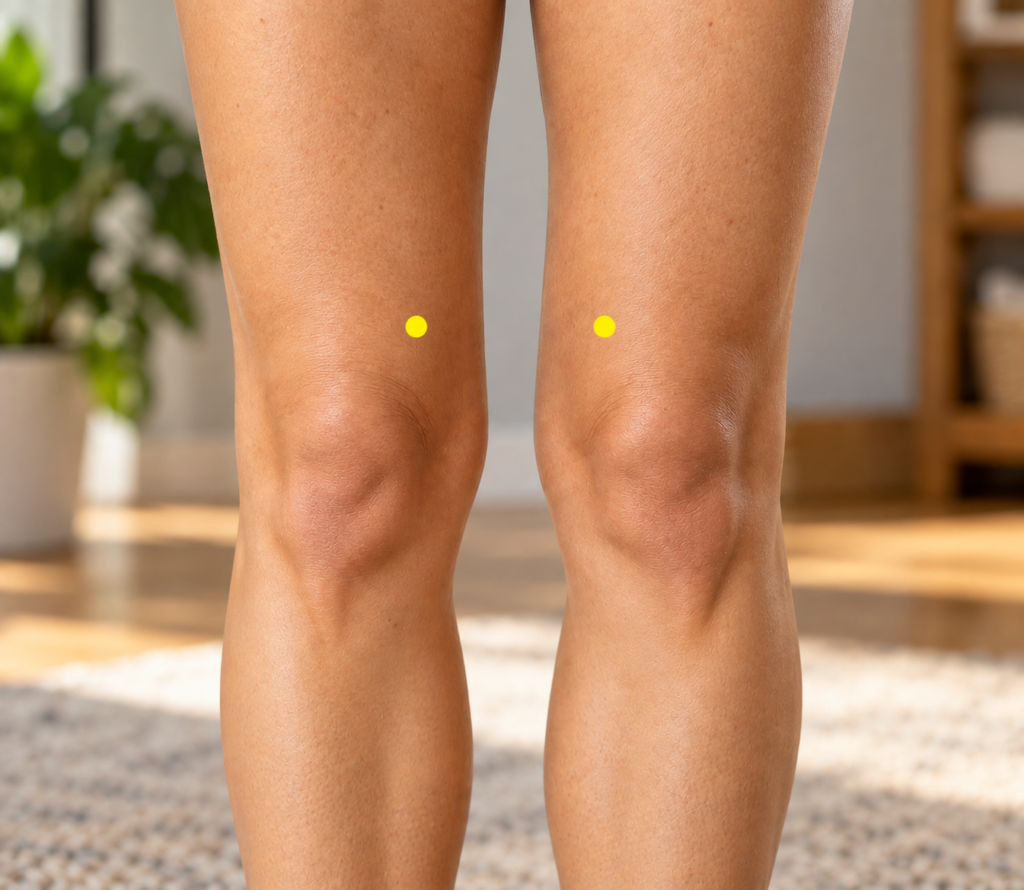
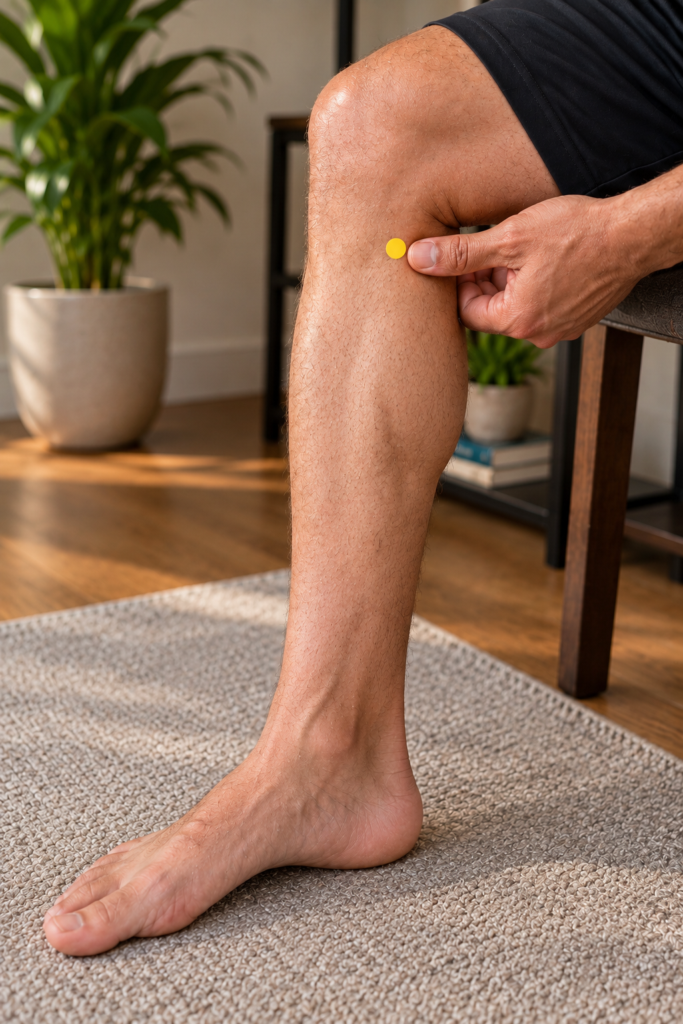
2. Press on SP10 above the knee to cool and move the Blood. SP10 sits on the inner thigh, about three finger-widths above the inner upper corner of the kneecap, on the bulge of the muscle there. Press firmly with your thumb for one to two minutes on each leg. SP10 is called “Xuehai,” the “Sea of Blood.”
SP10 is the primary point used to treat heat in the Blood, linked to psoriasis in Traditional Chinese Medicine. It also alleviates stagnant Blood, which can cause ongoing joint pain. When paired with LI11, it forms a classic combination for reducing inflammation in the skin and joints at the same time, effectively targeting both aspects of psoriatic arthritis.
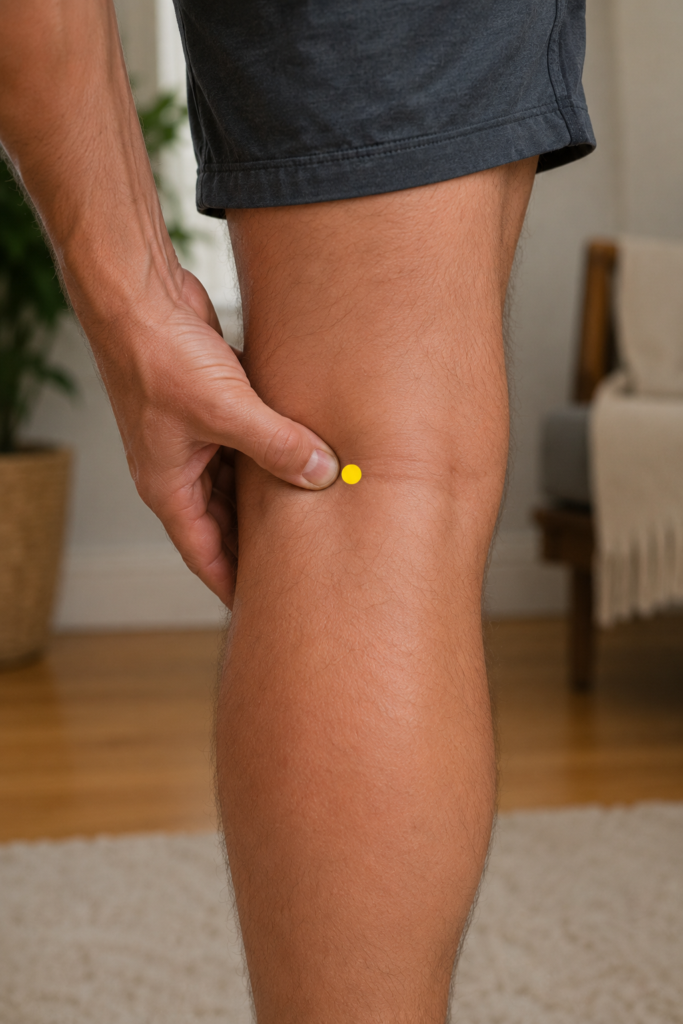
3. Press on BL40 behind the knee to clear heat from the Blood. BL40 sits in the center of the crease behind the knee. Press gently to moderately with your fingers for 1 to 2 minutes on each leg, avoiding the area if the skin is inflamed. BL40 is called “Weizhong,” the command point for the back.
BL40 draws heat away from the Blood and is typically recommended for red, inflamed skin. It is also a key point for the lower back and legs. For psoriatic arthritis impacting the lower back, buttocks, knees, or legs, it helps reduce both heat and pain.
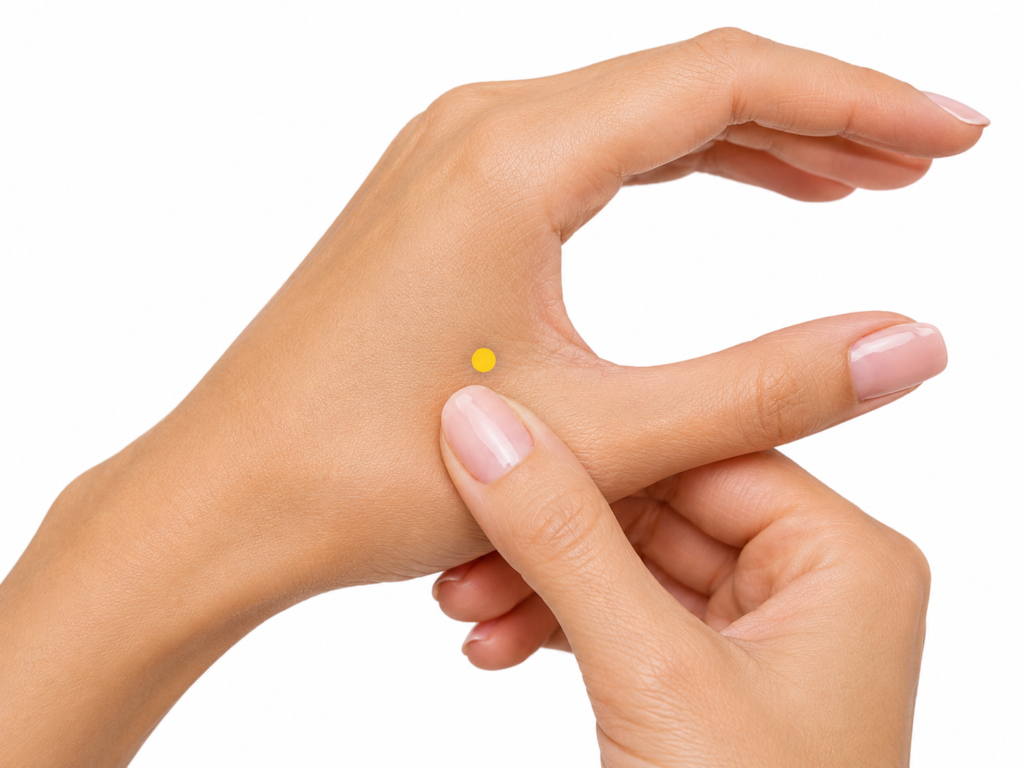
4. Press on LI4 in the hand to relieve pain throughout the body. LI4 sits in the webbing between the thumb and index finger, at the highest point of the muscle when you bring them together. Press firmly with the thumb of your other hand for 1 to 2 minutes on each hand; press gently if the hand is swollen. LI4 is called “Hegu.” LI4 is contraindicated during pregnancy.
LI4 is a key point in the body for pain relief and shares the same meridian as LI11. It helps dispel heat and decrease inflammation. For psoriatic arthritis in the hands, it directly affects that area. When combined with LR3, it forms the Four Gates.
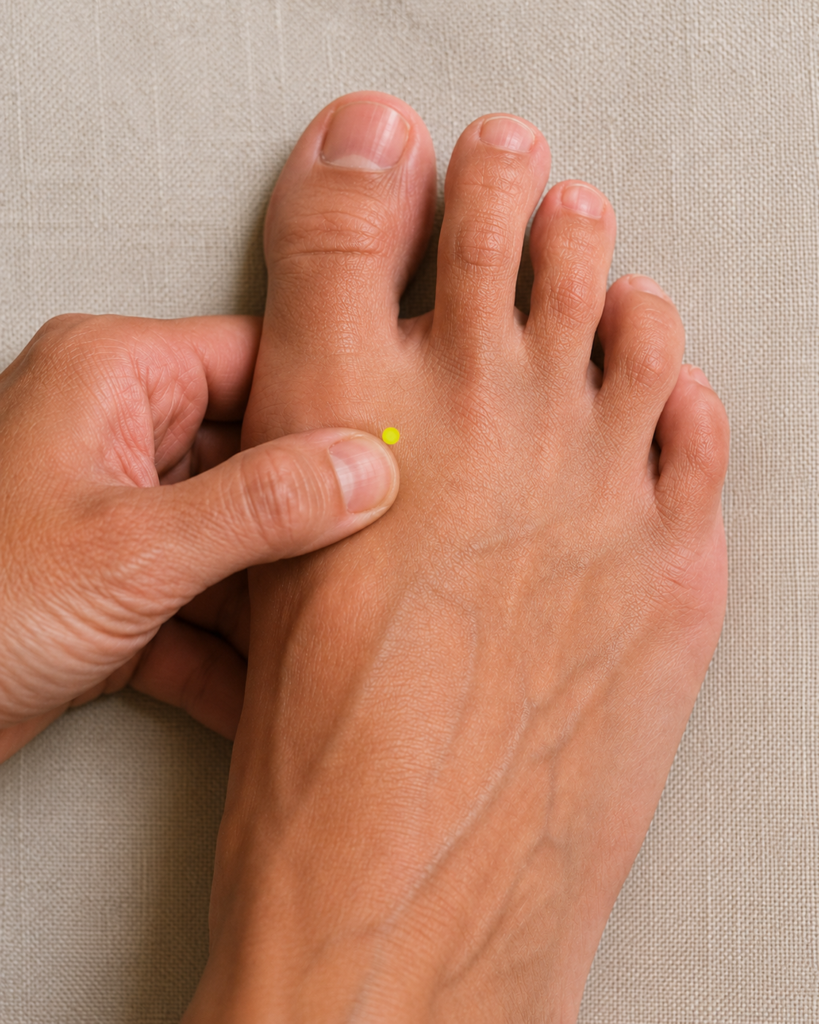
5. Press on LR3 on the top of the foot to release stress and heat. LR3 sits on the top of the foot, in the webbing between the big toe and second toe, about two finger-widths back where the bones meet in a small hollow. Press firmly with your thumb for one to two minutes on each foot, gently if the foot or toes are swollen. LR3 is called “Taichong.”
Stress greatly influences flare-ups in psoriasis and psoriatic arthritis. In Traditional Chinese Medicine, stress is believed to cause Liver Qi stagnation, resulting in heat accumulation. LR3 aids by dispersing this stuck Qi, lowering heat levels, and calming tension that trigger flare-ups. When paired with LI4, forming the Four Gates, it promotes the flow of Qi and alleviates pain across the body.
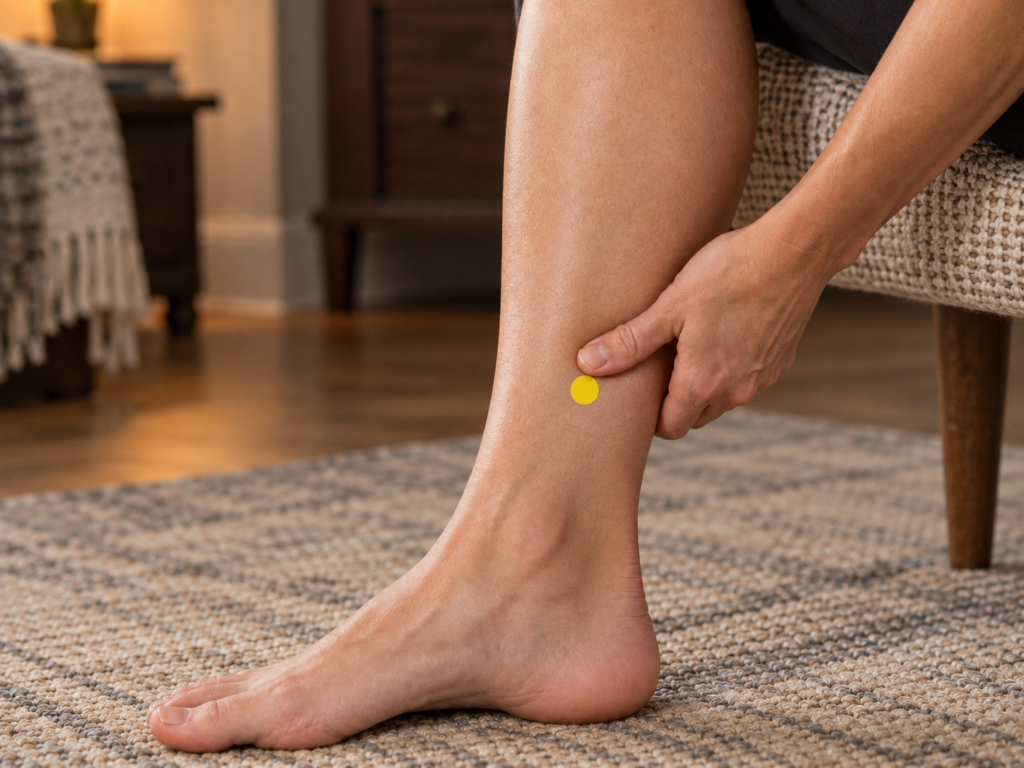
6. Press on SP6 above the inner ankle to nourish the Blood and Yin. SP6 sits four finger-widths up from the tip of the inner ankle bone, just behind the back edge of the shinbone. Press firmly for one to two minutes on each leg. SP6 is called “Sanyinjiao,” the “Three Yin Intersection.” SP6 is avoided during pregnancy.
Extended heat exposure drains the Blood and Yin, leading to dry, cracked skin and tense, painful sinews. The SP6 point is especially effective for chronic, dry psoriatic arthritis because it nourishes Blood and Yin, moistens the body internally, and encourages Blood flow. It also helps with sleep, which is often disturbed in these cases.
7. Press on SP9 below the inner knee to drain dampness and swelling. SP9 sits on the inner lower leg, in the hollow just below the bulge at the top of the shinbone, under the inner side of the knee. Press firmly with your thumb for one to two minutes on each leg. SP9 is called “Yinlingquan.”
In Traditional Chinese Medicine, puffy, swollen, and heavy joints are thought to result from dampness combined with heat. SP9 is considered the key acupoint for draining dampness, making it particularly effective for swollen knees and ankles, as well as the heavy, sluggish sensation that commonly occurs during a flare.
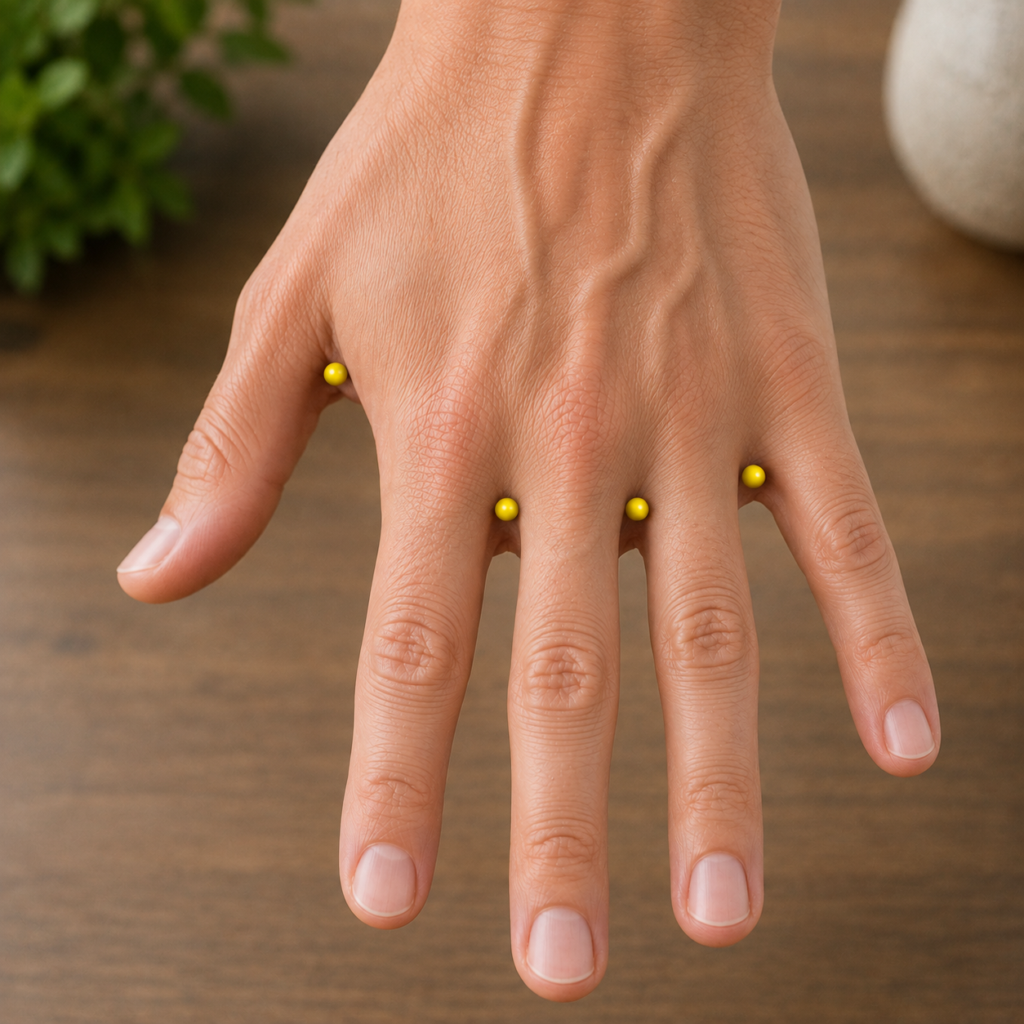
8. Press on Baxie between the knuckles for swollen fingers. Baxie are four points on the back of each hand, in the webbing between each pair of fingers, just behind where the fingers meet the hand. Press each gently with your thumb and index finger for thirty seconds to a minute, working around any swollen or tender joints rather than on them. Baxie means “Eight Evils.”
Psoriatic arthritis typically affects the small finger joints, sometimes leading to swelling of the entire finger. Baxie points can help ease pain, stiffness, and swelling in the fingers by stimulating the areas between the joints and promoting the flow of Qi and Blood throughout the hand. Use gentle pressure, especially during flare-ups.
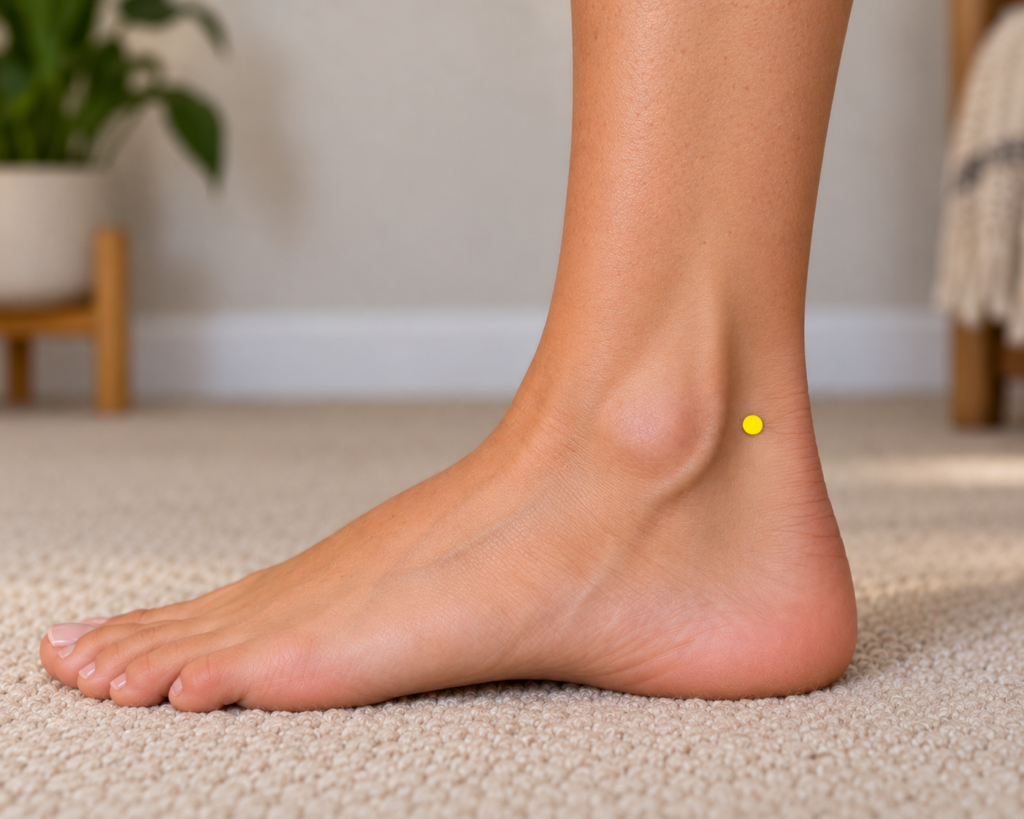
9. Press on BL60 behind the outer ankle for heel and back pain. BL60 sits in the hollow between the outer ankle bone and the Achilles tendon, level with the tip of the ankle bone. Press moderately with your thumb for one to two minutes on each ankle, avoiding direct pressure on an inflamed Achilles tendon. BL60 is called “Kunlun.”
Back heel pain and tenderness along the lower foot, where tendons connect to bones, are typical symptoms of psoriatic arthritis, along with stiffness in the lower back and buttocks. BL60 addresses both issues by reducing heel and ankle pain and easing lower back stiffness along the Bladder channel. Because of its common use for back pain relief, it is often called an aspirin point.
Why These Acupressure Points Work
In Traditional Chinese Medicine, psoriatic arthritis involves heat in the Blood, visible through the skin, along with a hot, damp obstruction that causes joint pain. It often includes stagnant Blood and, over time, depleted Blood and Yin. The nine points cover all these aspects.
- The heat-clearing points (LI11, SP10, BL40) help cool the Blood and joints, targeting both skin and joint health.
- The pain and stress points (LI4, LR3) help reduce pain across the body and soothe the stress that triggers flares, creating the Four Gates.
- The nourishing and draining points (SP6, SP9) replenish Blood and Yin while reducing swelling.
- The local points (Baxie, BL60) are used on the fingers, heels, and lower back, areas often affected by psoriatic arthritis.
Research on acupuncture for psoriatic arthritis is developing; acupressure should complement rather than replace medical treatment.
How to Properly Use These Acupressure Points
- Do not apply pressure directly to hot, red, swollen joints, fingers, toes, inflamed tendons, psoriasis patches, or broken skin. Instead, press nearby points or the opposite side of the body.
- Perform the heat-clearing points daily: LI11, SP10, BL40, and the Four Gates: LI4 and LR3.
- Add SP9 when joints are swollen, SP6 for dry and depleted skin and joints, Baxie for the fingers, and BL60 for heels and lower back.
- A warm shower in the morning can help reduce stiffness, but do not apply heat directly to a joint that is hot and swollen during a flare.
- Maintain each point for one to two minutes using steady, comfortable pressure, and apply lighter pressure during a flare.
- Continue taking your prescribed medications, as acupressure complements them.
Daily habits significantly impact managing psoriatic arthritis. Gentle, consistent activities like walking, swimming, or tai chi help keep joints flexible without causing strain. Keeping a healthy weight minimizes inflammation and eases joint pressure. Managing stress is crucial, as it frequently triggers flare-ups. Following Chinese medicine advice, limit alcohol, spicy foods, and greasy, fried items that increase heat and can worsen skin and joint issues. Instead, choose fresh vegetables, whole grains, and fish. Protect your sleep, avoid smoking, and moisturize your skin daily. Keeping a journal of flare-ups, foods, and stress levels can help identify your personal triggers.
When to Get Professional Help
If you have psoriasis and experience joint pain, swelling, heel pain, or swollen fingers and toes, it’s important to see a doctor promptly, preferably a rheumatologist, as early treatment can prevent lasting joint damage. Seek urgent care if you notice a painful, red eye, blurred vision, or sensitivity to light, since these may indicate eye inflammation related to psoriatic arthritis needing immediate action. If you suddenly develop a hot, red, swollen joint, especially with fever, seek medical attention quickly, as this could be an infection. If you’re taking immune-suppressing medications and develop a fever or infection symptoms, contact your healthcare provider. For uncontrolled flares, new or spreading symptoms, back pain with numbness or weakness, or chest pain, see your doctor due to increased cardiovascular risks linked with psoriatic disease.
Acupressure may serve as a safe complementary therapy alongside standard treatments for psoriatic arthritis.
Above and Beyond Acupuncture offers acupuncture, cupping, and lifestyle coaching at the North Frank Lloyd Wright Boulevard location in Scottsdale.
Schedule an appointment online to start your healing journey.
The points above are only as effective as the technique used to apply them. Where to press, how firmly, and for how long all affect the result. For a full breakdown of how to perform acupressure properly at home, read Performing Acupressure in 3 Easy Steps.

About the Publisher
Paul Kerzner, L.Ac., is a licensed acupuncturist and board-certified herbalist, as well as the founder of Above and Beyond Acupuncture in Scottsdale. His own journey from chronic patient to practicing acupuncturist shapes his commitment to providing honest, clinically grounded information about acupuncture and Traditional Chinese Medicine. Learn more about Paul and his clinical approach on the About Us page.