Key Takeaways
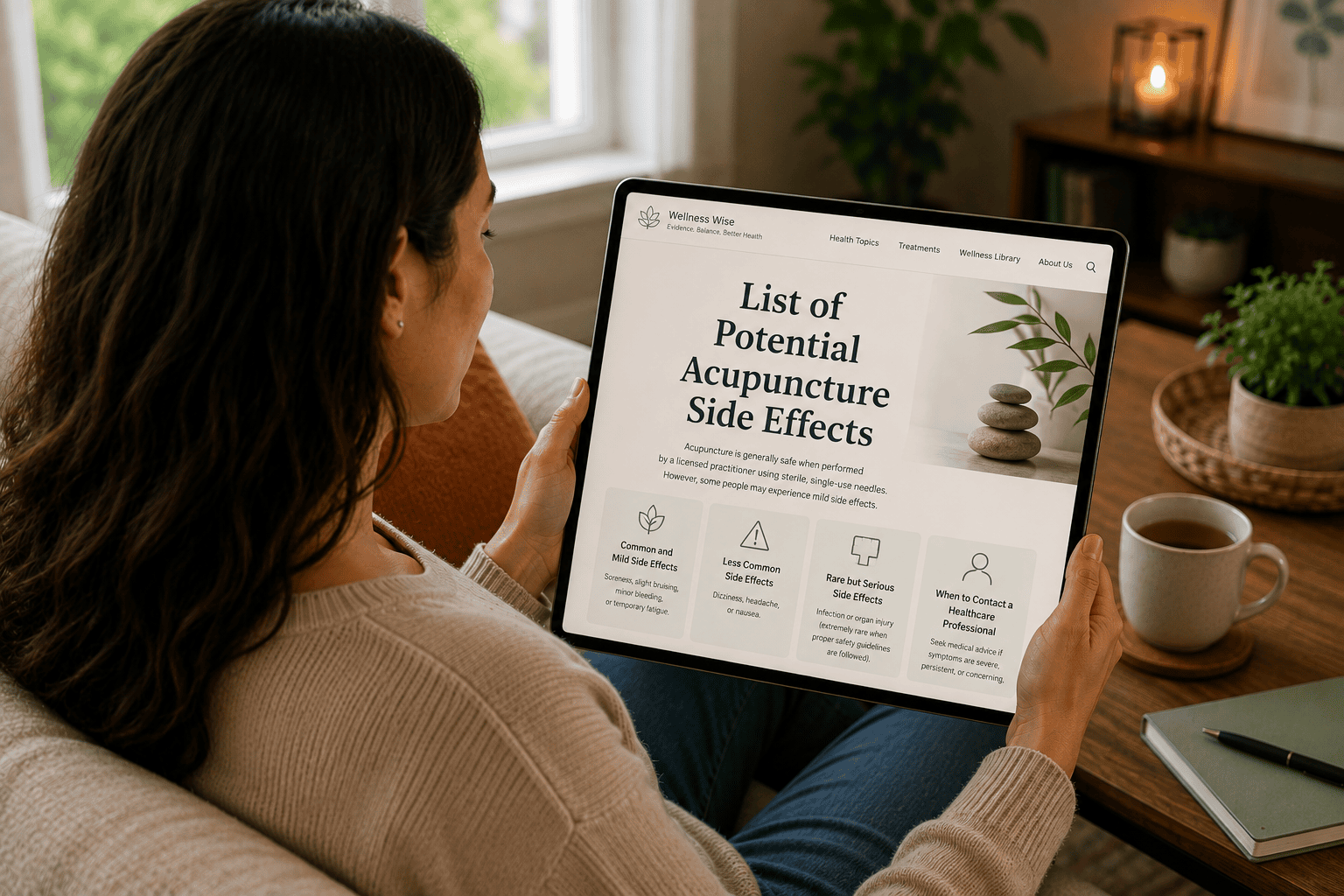
- Acupuncture has an excellent safety record when performed by licensed practitioners, with serious side effects occurring extremely rarely.
- Recent studies show adverse events rate as low as 0.04 to 0.08 per 10,000 treatments, much lower than most medications.
- Most patients experience mild side effects like bruising or tiredness, which are short-lived and not serious.
- Licensed acupuncturists undergo extensive training, making acupuncture one of the safest treatments available.
- The use of sterile, single-use needles further enhances safety during acupuncture treatments.
“Is acupuncture safe??” It is a common questions new patients ask at Above and Beyond Acupuncture in Scottsdale. They are interested in the treatment, they have heard it might help, and they want to know if anything bad has ever happened to anyone who has tried it.
The honest answer is that acupuncture has one of the strongest safety records of any clinical treatment available when performed by a properly trained and licensed acupuncturist. The recent research backs this up clearly. The risks that do exist are well understood, mostly minor, and dramatically reduced by working with someone who has the training to do the work properly.
What Most Recent Research Shows
A 2024 review published in the American Journal of Chinese Medicine analyzed safety data across systematic reviews and meta-analyses of acupuncture treatments. The review found that serious side effects occur at a rate of approximately 0.04 to 0.08 per 10,000 treatments. That works out to roughly one serious event for every 125,000 to 250,000 sessions.
A separate large-scale safety study published in Medical Acupuncture examined data from Taiwan’s National Health Insurance Research Database to analyze real-world risk metrics. Mild bleeding occurred in 0.08 percent of treatments, severe bleeding in 0.004 percent, minor temporary nerve irritation in 0.05 percent, and the rate of pneumothorax, which is a partial collapse of a lung from a needle penetrating too deeply, came in at less than one case per million treatments. That is roughly one isolated case for every 1.15 million sessions.
For context, those numbers are dramatically lower than the side effect rates seen with most prescription pain medications, surgical procedures, or even common over-the-counter drugs.
What Most Patients Actually Experience
For the overwhelming majority of patients, acupuncture produces either no side effects at all or only minor and short-lived ones. The most common minor effects include small bruises at the needle sites, brief lightheadedness, mild soreness at one or two points, or a wave of tiredness immediately after the session.
These are not signs that something has gone wrong. The bruising happens because needles occasionally pass through a small surface blood vessel. The lightheadedness is the body shifting into a deep state of rest, which can feel disorienting for a moment. The post-session tiredness is the body finally getting the chance to recover from sustained stress it has been carrying for a long time. None of these effects last more than a day or two, and most patients see them as a small price for the benefits the treatment provides.
The much rarer serious complications include partial lung collapse, nerve injury, infection, or a broken needle. These show up in case reports but at such low rates that the average patient is more likely to be injured driving to the appointment than by anything that happens during it.
Why Working with a Licensed Acupuncturist Matters
The reason the safety record is so strong is that licensed acupuncturists complete extensive training before being allowed to insert needles into patients. Licensed acupuncturists in the United States complete between 1,905 and 2,600 hours of clinical and didactic training, including cadaver anatomy, point location, needling depth and safety angles, sterile technique, and supervised clinical practice on real patients. They then sit for rigorous national board examinations and meet state-specific licensing requirements before treating anyone unsupervised.
This is the training that prevents the rare complications from happening. Knowing exactly how deep to needle in the upper back to avoid the lung, exactly which points to avoid during pregnancy, and exactly how to insert needles without damaging nerves or blood vessels is what hundreds of hours of anatomy and clinical practice produce.
By contrast, providers offering needling under other credentials, such as physical therapists performing what is called dry needling, may complete as little as 24 to 80 hours of training before being allowed to insert needles. The published case-report literature on serious complications from non-acupuncturist needling has grown substantially over the past decade. The comprehensive comparison in Dry Needling vs Acupuncture covers this distinction in detail.
The licensed practitioner training is the difference between needling being one of the safest treatments available and needling carrying meaningful preventable risk.
Sterile, Single-Use Needles
Every needle used at Above and Beyond Acupuncture is sterile, individually packaged, and used only one time. The needle is opened from its sealed package at the moment of insertion and disposed of in a medical waste container immediately after the session. Under no circumstances are needles ever reused. This is the standard of care across licensed acupuncture practice in the United States, and it eliminates the infection risk that was a concern in earlier eras of the profession.
Pregnancy and Special Situations
Acupuncture is generally considered safe during pregnancy when performed by a licensed practitioner. There are specific points that should be avoided during pregnancy, and licensed acupuncturists are trained to know exactly which ones to protect. Treatment during pregnancy is commonly used for morning sickness, low back pain, breech presentation, and labor preparation, with strong safety records when performed properly.
Patients on blood thinners, patients with certain bleeding disorders, and patients with severely compromised immune systems should let the practitioner know during the intake so the treatment plan can be adjusted accordingly. These conditions do not necessarily rule out acupuncture, but they do require informed adjustments to how the treatment is performed.
The Bottom Line
The recent research is clear. Acupuncture performed by a properly trained licensed practitioner is one of the safest clinical treatments available.
The serious complications that do exist are rare to the point of being statistically negligible. The minor side effects that occasionally occur are short-lived and clinically insignificant. The risk-benefit ratio compared to most prescription medications, surgical procedures, and even common over-the-counter pain medications is dramatically favorable.
The National Center for Complementary and Integrative Health acknowledges acupuncture as safe when practiced by qualified practitioners using sterile single-use needles, and the published safety data continues to support that position.
Where to Start
If safety concerns have been holding you back from trying acupuncture, the actual data should put most of those concerns to rest. The next step is a clinical consultation that addresses your specific situation and any questions you have before treatment begins.
Reach out to Above and Beyond Acupuncture on North Frank Lloyd Wright Boulevard in Scottsdale to schedule a consultation and find out what acupuncture can do for what you have been dealing with.
Schedule an appointment online or call us today to start your journey to relief.