Key Takeaways
- Jaw clenching, or bruxism, occurs in two forms: awake bruxism during stress and sleep bruxism during sleep.
- Ongoing tension in the jaw relates to stress, which can lead to headaches, TMJ problems, and poor sleep quality.
- Dental solutions like night guards protect teeth but do not address the underlying causes of jaw clenching.
- Traditional Chinese Medicine views jaw tension as energy stagnation, linking it to stress and digestive issues.
- Acupuncture targets both muscle tension and nervous system activation, offering relief from chronic jaw clenching.
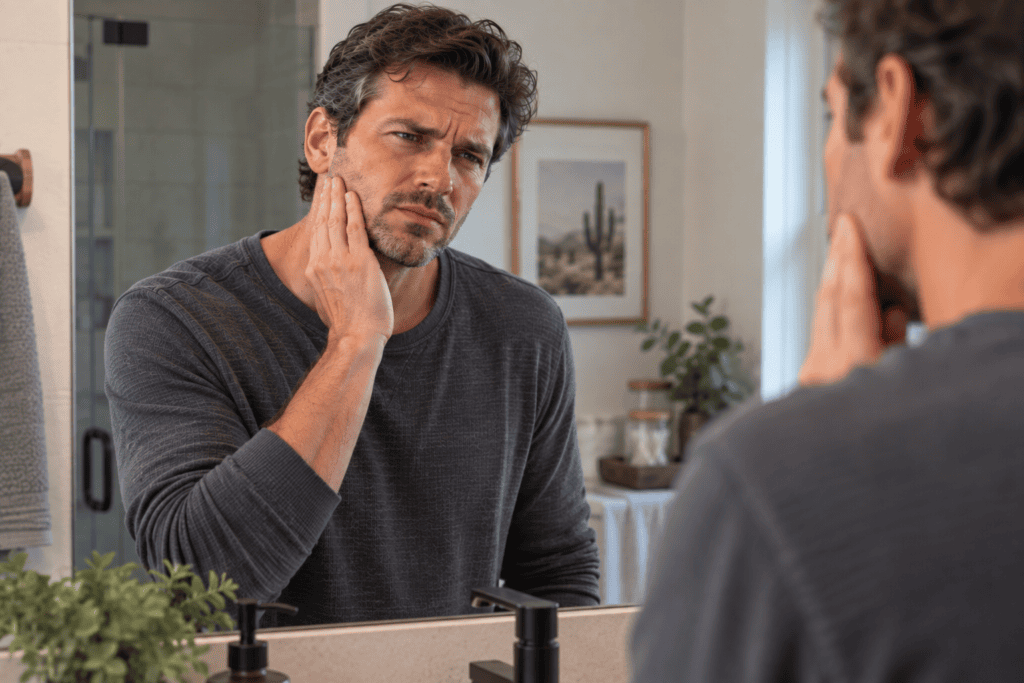
Jaw pain is a common complaint, and patients describe it in many ways: an aching jaw by mid-afternoon at work, a tight face after a tough conversation, morning soreness that hints at nighttime clenching, headaches starting at the temples or base of the skull, and teeth wearing down in patterns noticed by their dentist.
Jaw clenching is a common way the body shows stress, but it is not always well understood. Most patients are told to relax or wear a night guard.
Neither suggestion explains why clenching happens, so many people keep clenching even after following this advice.
This pattern has real physical and clinical causes. Learning what causes it is the first step to making a change.
The Pattern Most Patients Recognize

Bruxism, the clinical term for clenching and grinding of the teeth, occurs in two distinct forms.
Awake bruxism is the daytime clenching that often happens during concentration, stress, or emotional intensity. Sleep bruxism is the nighttime version, which happens during sleep and often goes unnoticed until a partner mentions it or a dentist identifies the wear pattern.
About ten percent of adults clench or grind their teeth at night, and even more do it during the day at least sometimes. Both habits can lead to jaw pain, headaches, worn teeth, TMJ problems, and tension in the upper body from tight jaw muscles.
Many patients have one form. Many patients have both. The mechanisms are slightly different, but the underlying driver is largely the same.
The Nervous System Component

The jaw is one of the main places where the body holds stress. When you are on high alert, the muscles in your jaw, neck, and shoulders tense up as part of the body’s fight-or-flight response. The masseter muscle, which runs along the side of your jaw, is very strong for its size. When it tightens from stress, it puts a lot of pressure on your teeth, jaw joint, and nearby muscles.
During short-term stress, this tension usually goes away quickly. But with ongoing stress, the tension becomes constant. The jaw stays slightly tight all day. At night, stress not released during the day can show up as sleep bruxism, especially during lighter sleep when the body is more alert.
Research has shown a strong link between stress, anxiety, and TMJ problems. Studies confirm what acupuncturists see every day: people with ongoing jaw tension usually have an underlying pattern of nervous system activation that shows up in the jaw.
The Cascade That Follows
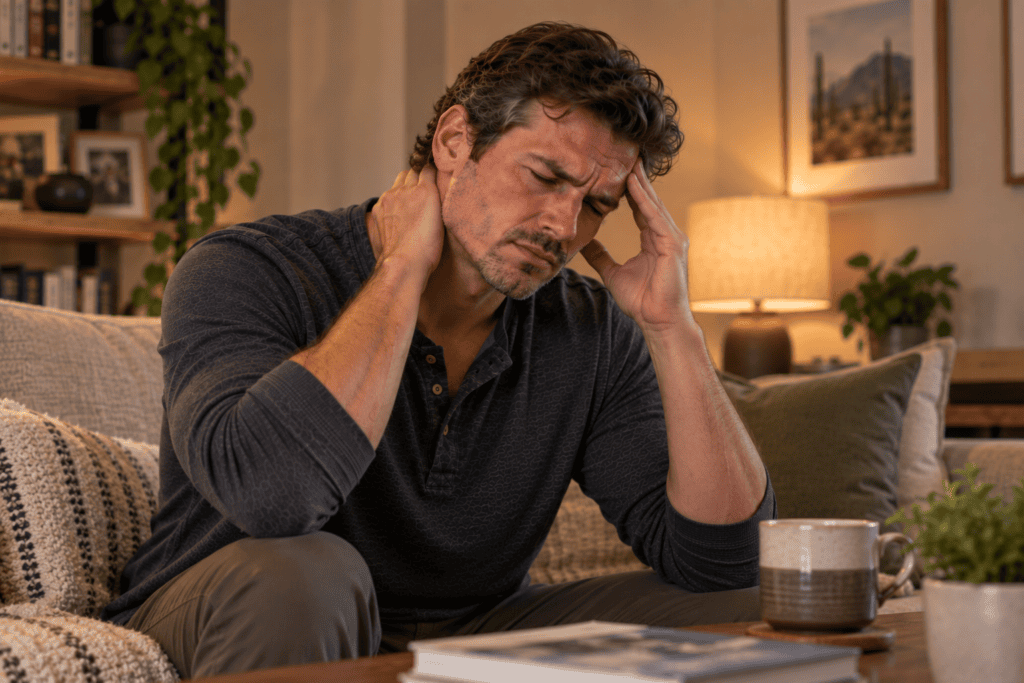
Jaw clenching affects more than just the jaw. It leads to a series of other symptoms that cause much of the pain people feel.
The jaw muscles are connected to the neck and the base of the skull. When the jaw muscles stay tight, they pull on the neck and shoulders, leading to ongoing tightness. This tension at the base of the skull can cause regular headaches that do not respond well to usual treatments because the real cause, the jaw, has not been treated.
The trigeminal nerve, which innervates the face and jaw, is a major contributor to headache and facial pain syndromes. When the muscles it controls are chronically tight, the trigeminal system becomes hyperactive, amplifying pain signals and contributing to the migraine and tension headache patterns explored in the headache post.
Jaw clenching at night worsens sleep, which increases stress and leads to more clenching. People wake up tired; their bodies don’t fully recover, and their nervous systems start the next day already worn out and ready for more clenching.
This is why people with chronic jaw clenching often have several symptoms at once: sore jaws, tension headaches, tight neck and shoulders, poor sleep, and general tiredness from a body that is always on alert. These are not separate issues; they are all signs of the same problem.
The Joint Itself
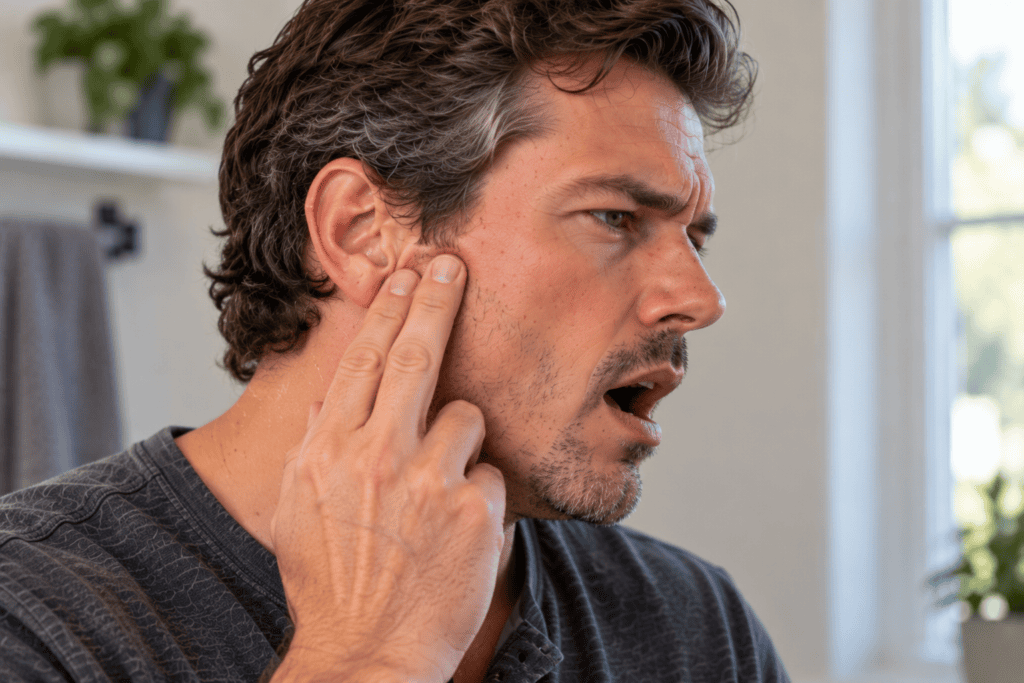
When the muscles around the jaw joint stay tight for a long time, the joint itself starts to have problems. Temporomandibular disorders (TMD) cover many issues with the jaw joint and its muscles. Clicking, popping, locking, and pain, often called TMJ problems, usually result from long-term muscle tension pulling the joint out of place.
If you treat the joint but not the muscle tension causing it, the results are limited. The problem comes back because the muscle pattern remains.
Where the Dental Approach Helps and Where it Falls Short
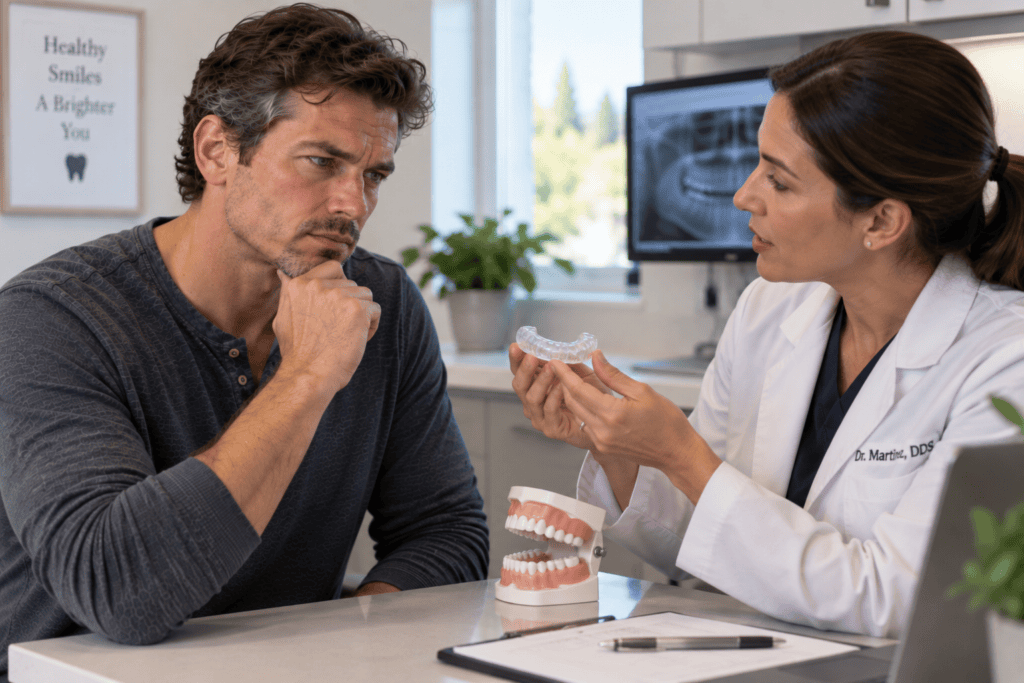
Most people with serious jaw clenching have seen a dentist. Many have night guards or splints. Dentists play an important role in managing bruxism, especially in protecting teeth from damage.
A good night guard absorbs the force of clenching, protecting teeth from wear, cracks, and long-term damage from grinding. For people who clench at night, this protection helps, and dental care is important.
A night guard does not address why someone clenches in the first place. The night guard protects the teeth, but it does not stop clenching. The jaw muscles still tighten, and the nervous system pattern behind the clenching stays the same. People still wake up with sore jaws, get tension headaches, feel tightness in their upper body, and lose sleep quality because of nighttime clenching.
This gap is why many people with jaw clenching visit an acupuncture clinic. Dental care helps protect the teeth, but the root cause is still there, along with pain, tension, and other problems. A full solution needs to address both the symptoms and the cause.
The Traditional Chinese Medicine Perspective

Traditional Chinese Medicine has seen jaw tension as a stress-related issue for thousands of years. It is based on two main patterns.
Liver Qi stagnation is the most important pattern. In TCM, the Liver controls the smooth flow of energy and emotions. When stress and frustration build up and aren’t released, Liver Qi gets stuck and doesn’t flow smoothly.
This stagnation shows up in the upper body as neck and jaw tension, irritability, trouble sleeping, and other stress-related symptoms. In TCM, someone who clenches their jaw is seen as having Liver Qi that doesn’t flow well through the upper body.
The Stomach channel also runs through the face and jaw. When the Stomach system is affected by prolonged stress, dietary factors, or gut-brain issues, it can lead to tension in the jaw muscles. That’s why many people who clench their jaws also experience digestive problems—the two are connected through the same energy pathway.
TCM treats these patterns by focusing on the whole body, not just the symptoms. The aim is not just to stop clenching, but to clear the stagnation and restore smooth energy flow so the jaw and upper body can relax naturally.
How Acupuncture Addresses Jaw Clenching
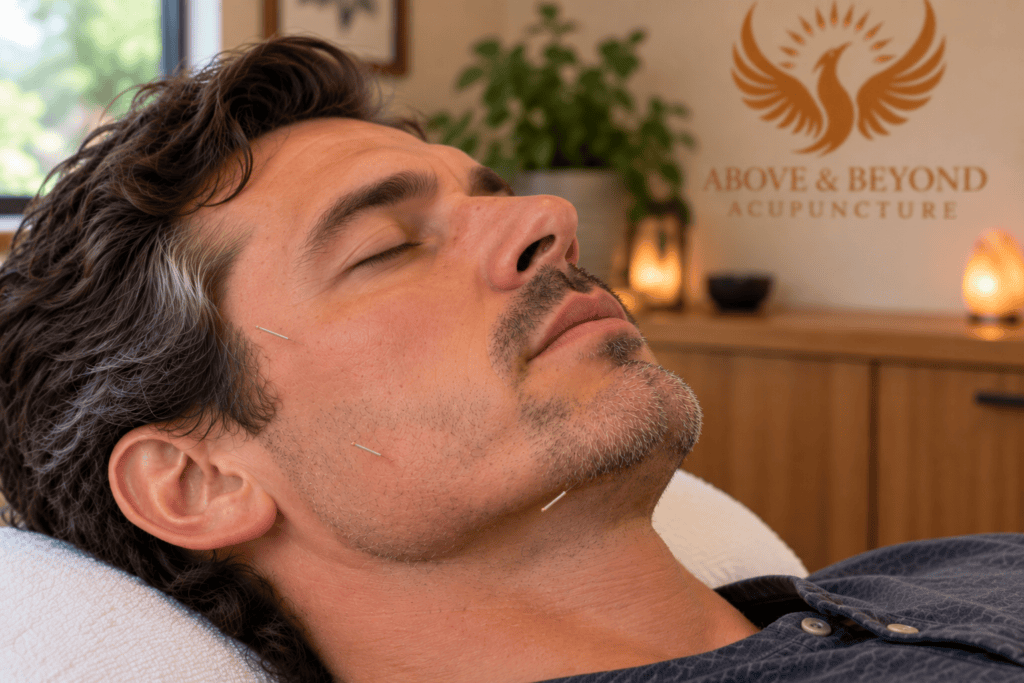
Acupuncture is a good fit for jaw clenching because it works on the root of the problem, the nervous system, and the body’s energy flow.
Treatment uses both local and distant acupuncture points. Points around the jaw, masseter, and temporalis muscles help release built-up muscle tension.
Distant points along the Liver, Stomach, and Gallbladder channels help clear stagnation that causes upper-body tension. Ear acupuncture can extend the benefits for hours or days after treatment. This helps the nervous system calm down, letting the jaw finally relax.
For people who have used a night guard for years but still have jaw tension, acupuncture offers a different approach. A night guard protects the teeth, but acupuncture aims to address the root cause.
Schedule an appointment online to start your healing journey.

About the Publisher
Paul Kerzner, L.Ac., is a licensed acupuncturist and board-certified herbalist, as well as the founder of Above and Beyond Acupuncture in Scottsdale. His own journey from chronic patient to practicing acupuncturist shapes his commitment to providing honest, clinically grounded information about acupuncture and Traditional Chinese Medicine. Learn more about Paul and his clinical approach on the About Us page.