
Key Takeaways
- Social anxiety affects daily life for approximately 15 million Americans, and traditional therapies often do not provide sufficient relief.
- Acupressure offers immediate calming techniques that can complement standard care but should not replace it.
- Seven key acupressure points help alleviate symptoms of social anxiety, including Yintang, HT7, and PC6, which calm the mind and body.
- Using acupressure before, during, and after social situations can significantly reduce anxiety and improve daily functioning.
- It’s crucial to seek professional help if social anxiety severely impacts your life or leads to other troubling symptoms.

If you have social anxiety you already know how limiting it becomes to your daily life. The intense fear before events that begins hours or days ahead. The racing heart and sweating during social interactions. The blushing that everyone seems to notice. The post-event rumination that keeps you awake at night reviewing every awkward moment. Social anxiety affects roughly 15 million American adults, and standard Western care often falls short of providing the relief patients actually want and need.
Standard Western care with therapy and medications helps a lot of people, but many are still left dealing with symptoms that get in the way of work, relationships, and simple daily activities like making phone calls or going to the store. Acupressure offers a supportive practice you can use anytime, including discreetly during actual social situations when you need immediate calming.
An important note before starting. Acupressure does not treat social anxiety disorder as a primary intervention. It cannot replace therapy, medications when appropriate, or the mental health care that social anxiety often requires. What acupressure can do is address the physical and nervous system patterns while you continue the deeper work of managing anxiety through appropriate care.
For patients wanting to include acupuncture in their healing regimen, Can Acupuncture Treat Social Anxiety? covers the Traditional Chinese Medicine perspective on this condition and how to treat it naturally.
Here are seven acupressure points that can help ease social anxiety:
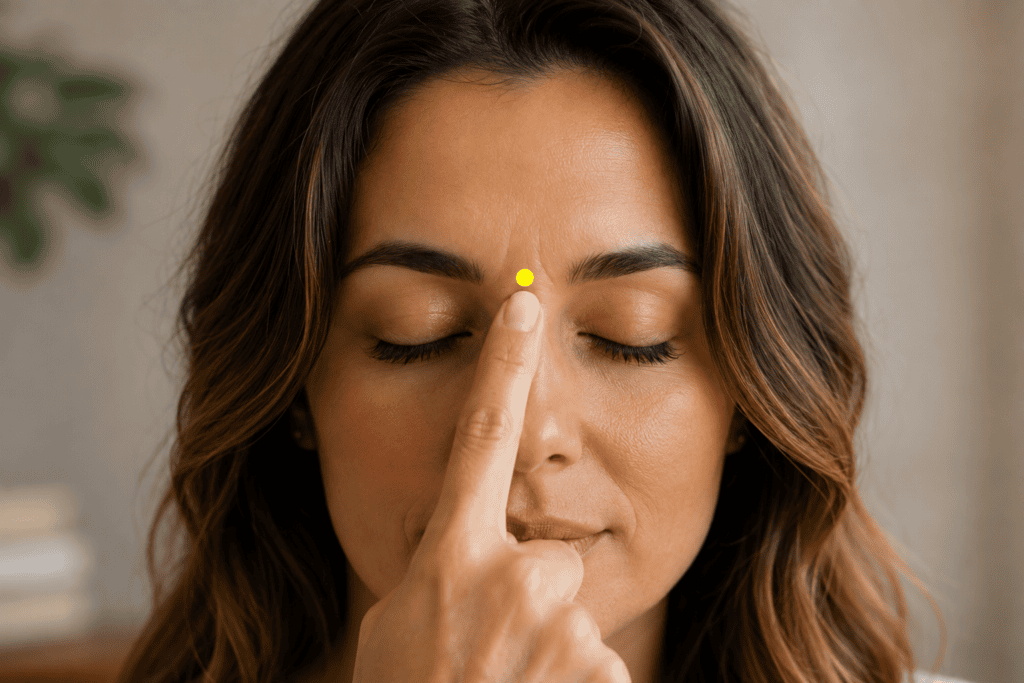
1) Press Yintang Between the Eyebrows for Calming the Mind
Yintang sits in the small hollow directly between the eyebrows, above the bridge of the nose. Press gently with your fingertip for one to two minutes. Yintang is often called the “third eye” point and is one of the fastest ways to actually activate the parasympathetic nervous system. The point calms the mind and decreases the nervous system activation being amplified by anticipatory anxiety.
This is one of the most useful points for the moments before entering a challenging social situation. The gesture of touching between the eyebrows reads as thoughtful rather than anxious, so you can use it discreetly.
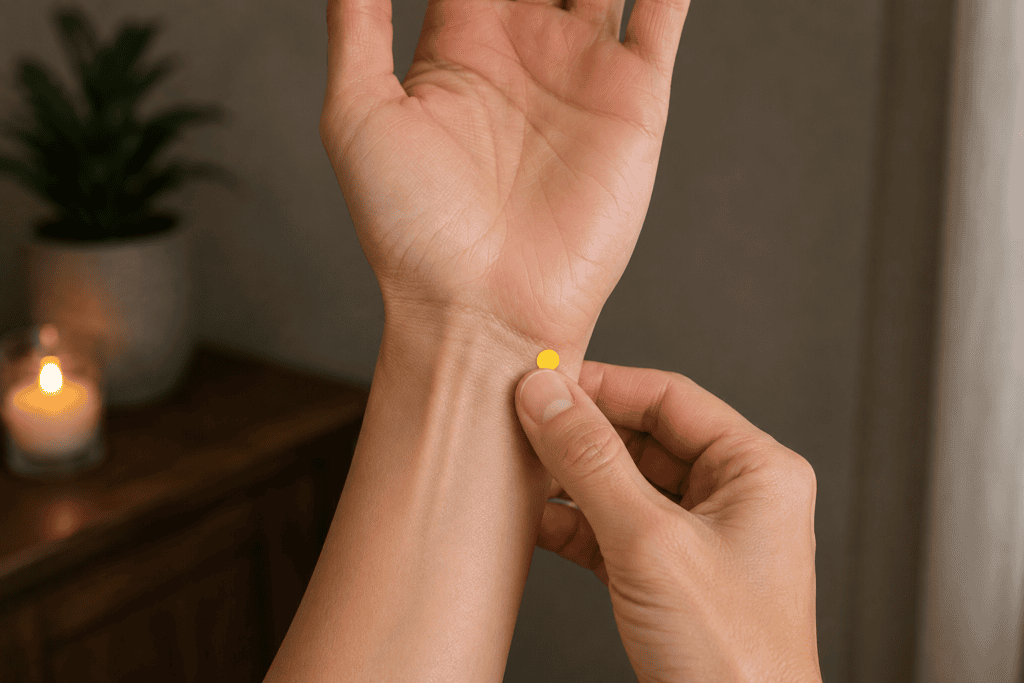
2) Press HT7 at the Pinky-Side Wrist Crease for Calming the Spirit
HT7 sits at the wrist crease on the pinky side, in the small depression just above the wrist bone. Press gently with your thumb for one to two minutes on each hand. HT7 is called “Shenmen” or “Spirit Gate” in Chinese medicine and directly calms the Shen, which refers to the mind and spirit.
The point works particularly well for the emotional intensity of chronic social anxiety. HT7 can be pressed discreetly during actual social situations by simply holding one wrist with the opposite hand. Others read the gesture as casual rather than anxious.
3) Press PC6 on the Inner Forearm for Calming the Heart
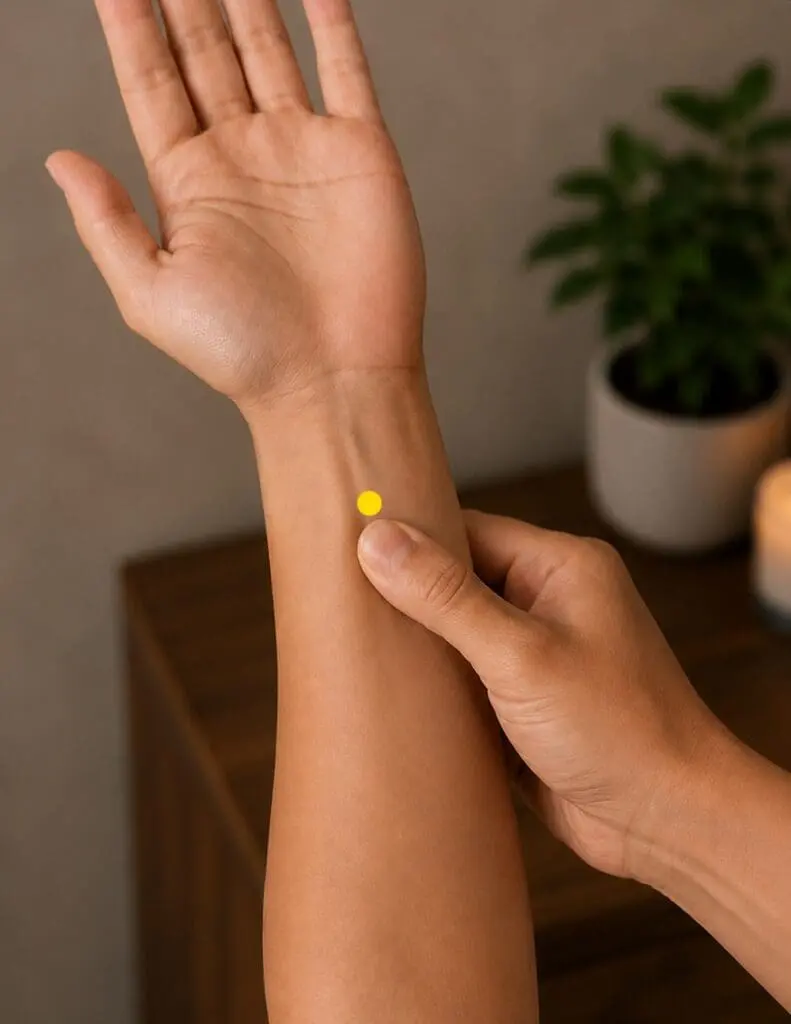
PC6 sits about three finger-widths above the inner wrist crease, between the two tendons in the center of the forearm. Press firmly with your thumb for one to two minutes on each arm. PC6 is called “Neiguan” or “Inner Pass” and directly calms the Heart.
The racing heart and chest tightness that social anxiety produces respond directly to PC6. This is one of the strongest points for immediate relief when the physical symptoms of anxiety are peaking. PC6 can be pressed inconspicuously with the opposite hand during social situations.
4) Press GV20 at the Crown of Your Head for Mental Clarity
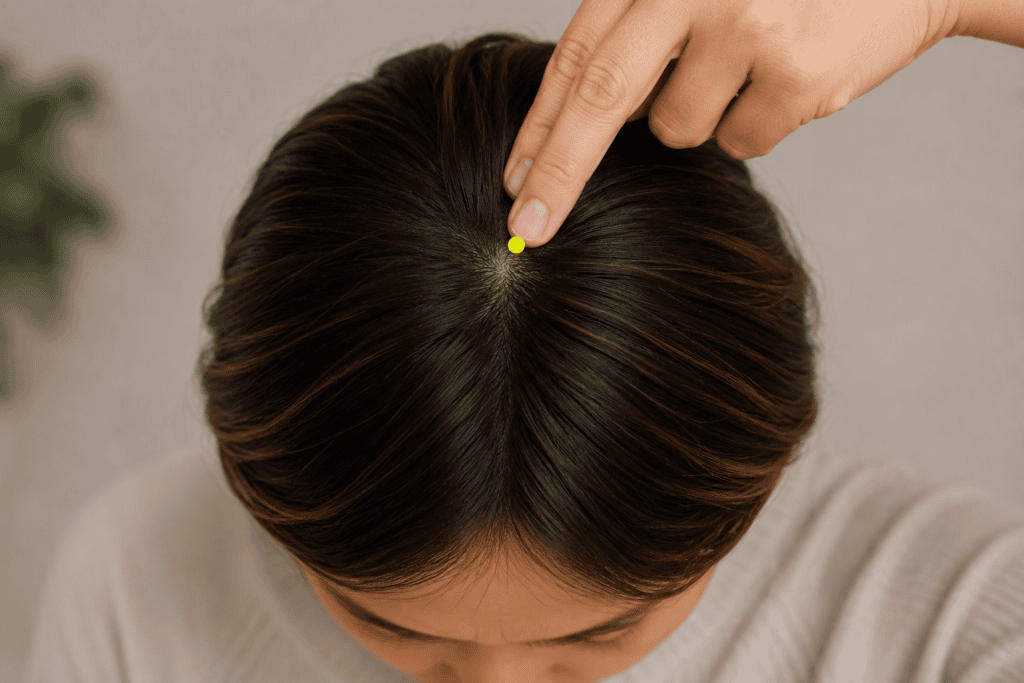
GV20 sits at the crown of the head, in the small hollow at the top of the head roughly midway between the ears. Press gently with your fingertips for one to two minutes. GV20 is called “Baihui” or “Hundred Meetings” and is where many meridians converge.
The point clears the mind, decreases the mental fog that anticipatory anxiety produces, and grounds the nervous system. GV20 works well for the pre-event mental spiral of “what will I say” and “how will I look” that many patients with social anxiety experience.
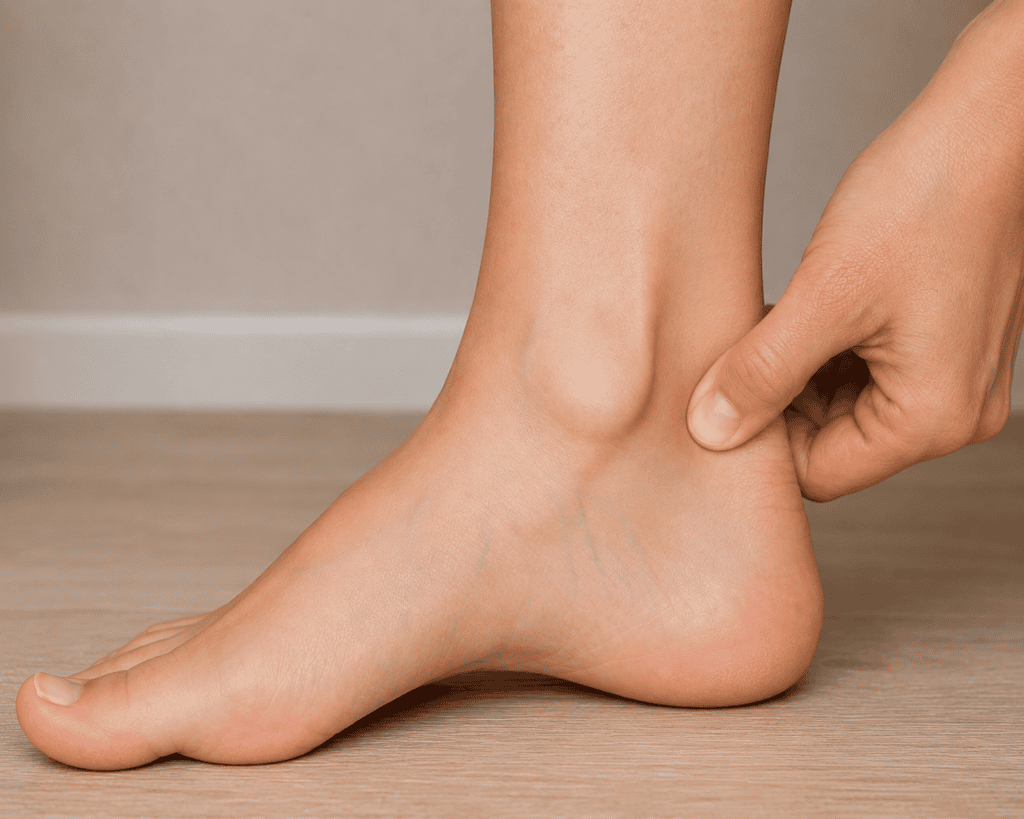
5) Press KI3 Behind Your Inner Ankle for Supporting Kidney Energy
KI3 sits in the depression behind the inner ankle bone, between the ankle bone and the Achilles tendon. Press firmly with your thumb for one to two minutes on each leg. KI3 tonifies Kidney essence.
In Chinese medicine, chronic anxiety and worry actually deplete the Kidneys over time. KI3 addresses the constitutional pattern that separates patients who have long dealt with social anxiety from those experiencing more recent onset. Regular use supports the deep reserves that chronic anxiety depletes.
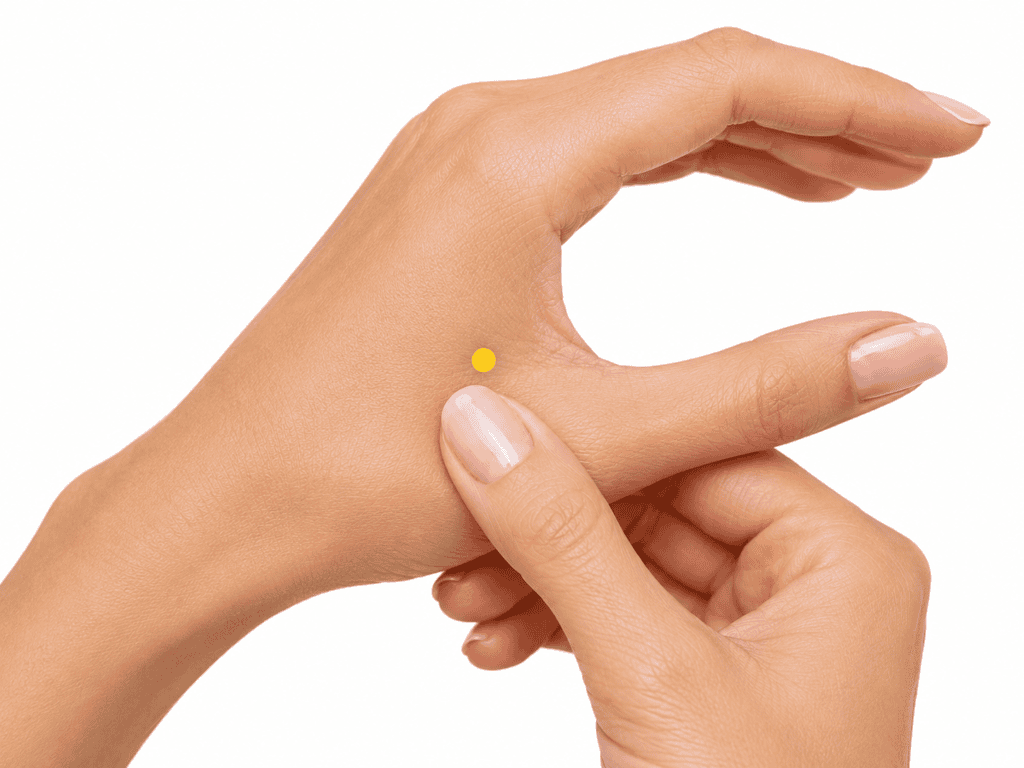
6) Press LI4 in the Webbing Between Thumb and Index Finger to Activate the Command Point
LI4 sits in the soft tissue webbing between the thumb and index finger, in the muscle that bulges when the thumb is pressed against the side of the index finger. Press firmly with the thumb of the opposite hand for one to two minutes on each hand. LI4 is the classical command point for the face and head.
The point provides general calming effects and can help with the tension headaches that often accompany chronic social anxiety. LI4 can be pressed under a table or in your pocket during social situations without anyone noticing. LI4 is contraindicated during pregnancy.
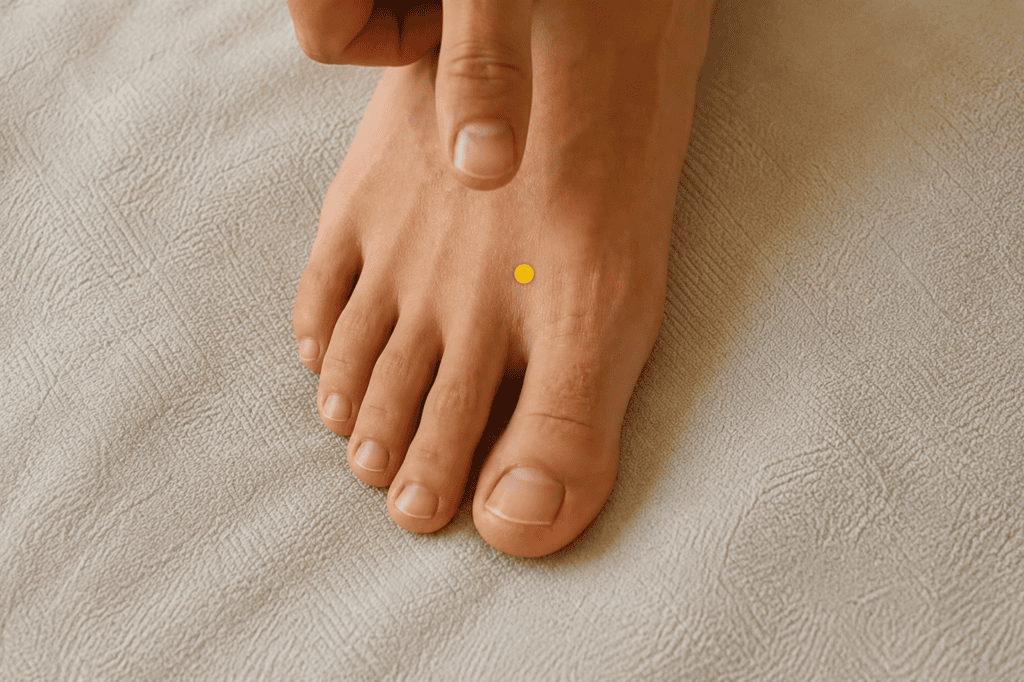
7) Press LR3 on Top of Your Foot to Smooth Liver Qi Energy
LR3 sits on the top of the foot in the webbing between the first and second toes, about two finger-widths back from the web. Press firmly with your thumb for one to two minutes on each foot. LR3 is called “Great Rushing” and moves Liver Qi.
The Liver in Chinese medicine governs the smooth flow of Qi and Blood and the emotional patterns of frustration and stagnation. Social anxiety often produces the Liver Qi Stagnation pattern from chronic emotional suppression and the frustration of feeling limited by anxiety. LR3 addresses this pattern directly.
Why These Acupressure Points Work
Social anxiety involves several overlapping patterns and imbalances. The nervous system stays in a sustained sympathetic stress response particularly around anticipated events. The Heart carries the physical intensity of anticipation and social pressure. The chronic worry and rumination deplete the constitutional reserves over time. The emotional suppression that social anxiety often involves creates stagnation patterns.
Acupressure works on several of these patterns at once.
- The calming points (Yintang, GV20) activate the parasympathetic nervous system directly and clear the mental patterns of anticipatory anxiety.
- The Spirit and Heart points (HT7, PC6, LI4) address the emotional and cardiac symptoms of chronic social anxiety.
- The constitutional point (KI3) supports the deep patterns that chronic anxiety has actually depleted over time.
- The Liver Qi moving point (LR3) addresses the emotional suppression and stagnation patterns.
Cortisol from ongoing stress contributes directly to the patterns exacerbating social anxiety.
How to Use These Acupressure Points
- For pre-event anticipation anxiety, Yintang, GV20, and HT7 pressed in the hour before events provide the fastest response. Even five minutes of practice before entering a challenging social situation produces meaningful shifts.
- For acute anxiety during actual social interactions, the discreet points work best. HT7 pressed while holding the wrist. PC6 pressed inconspicuously with the opposite hand. LI4 pressed under a table or in a pocket. Yintang pressed as a thoughtful-looking gesture.
- For post-event rumination, HT7 and Yintang before bed support the sleep patterns that anxiety disrupts and reduce the mental replay of the day’s interactions.
- For daily maintenance, working through the full seven-point protocol once a day supports the underlying patterns over time. Consistency matters more than intensity. Even a few minutes daily produces meaningful changes.
Firm sustained pressure works well for the wrist, forearm, hand, ankle, and foot points. Gentle pressure works better for the head and face points.
Pairing acupressure with foundational anxiety practices amplifies the results. Consistent therapy work. Regular movement. Nutrition that supports blood sugar stability. Reduced caffeine and alcohol. Direct nervous system practices including breath work and meditation. Community and connection.
When to Get Professional Help
The tools above support the physical patterns of chronic social anxiety. They are not the answer for serious warning signs.
If you are experiencing severe social anxiety that limits daily functioning, panic attacks in social situations, suicidal thoughts, alcohol or substance use that has begun or worsened as a coping approach, or symptoms that are not responding to any approach, please reach out for professional mental health support.
If you are experiencing suicidal thoughts, please contact the 988 Suicide and Crisis Lifeline (call or text 988) or reach out to a mental health professional immediately.
For patients whose social anxiety needs additional support, Can Acupuncture Treat Social Anxiety? covers the Traditional Chinese Medicine perspective on this condition and how to treat it naturally.
Many patients living with chronic social anxiety also experience depression and stress patterns that require additional focus and attention.
Above and Beyond Acupuncture offers acupuncture, cupping, and lifestyle coaching at the North Frank Lloyd Wright Boulevard location in Scottsdale.
Schedule an appointment online or call us today to start your healing journey.
The points above are only as effective as the technique used to apply them. Where to press, how firmly, and for how long all affect the result. For a full breakdown of how to perform acupressure properly at home, read Performing Acupressure in 3 Easy Steps.

About the Publisher
Paul Kerzner, L.Ac., is a licensed acupuncturist and board-certified herbalist, as well as the founder of Above and Beyond Acupuncture in Scottsdale. His own journey from chronic patient to practicing acupuncturist shapes his commitment to providing honest, clinically grounded information about acupuncture and Traditional Chinese Medicine. Learn more about Paul and his clinical approach on the About Us page.