Key Takeaways
- Acupressure supports fertility by applying pressure to specific points and can be practiced at home.
- Nine key acupressure points around the abdomen, ankles, and legs enhance reproductive health and help to regulate menstrual cycles.
- Consistency is key: practice daily, align with your menstrual cycle, and incorporate warmth for optimal results.
- While beneficial, acupressure can’t diagnose fertility issues; consult a fertility specialist if trying to conceive for over a year.
- Managing stress through acupressure is essential, as increased cortisol levels can negatively impact fertility.

Acupressure is a practical self-care method to aid your fertility journey, allowing you to use your hands between appointments, on your own schedule, and at no cost. It targets the same points as a licensed acupuncturist but employs steady finger pressure instead of needles. While gentler than acupuncture, its main benefit is achieved through consistent daily practice. These points help promote reproductive health by balancing your cycle, enhancing blood flow to the pelvic area, and lowering stress levels that can silently impede conception.
Please note that acupressure can enhance your body’s natural reproductive functions and is most effective when used alongside your current medical treatments, not as a replacement. If you are seeing a fertility specialist or undergoing IVF, view acupressure as a complementary support within your overall treatment plan. For additional information, refer to: Top Acupuncture Points for Fertility.
Here are nine acupressure points that support fertility, where to find them on your own body, and how to activate them:
The Lower Abdomen: Stimulating the Reproductive Organs
Three acupressure points are located on the lower abdomen, directly above the uterus and ovaries. Since this area is delicate and near reproductive organs, apply gentle, steady pressure instead of deep force: rest your fingertips on the point and press softly for one to two minutes. Avoid using deep pressure after ovulation if you’re trying to conceive.
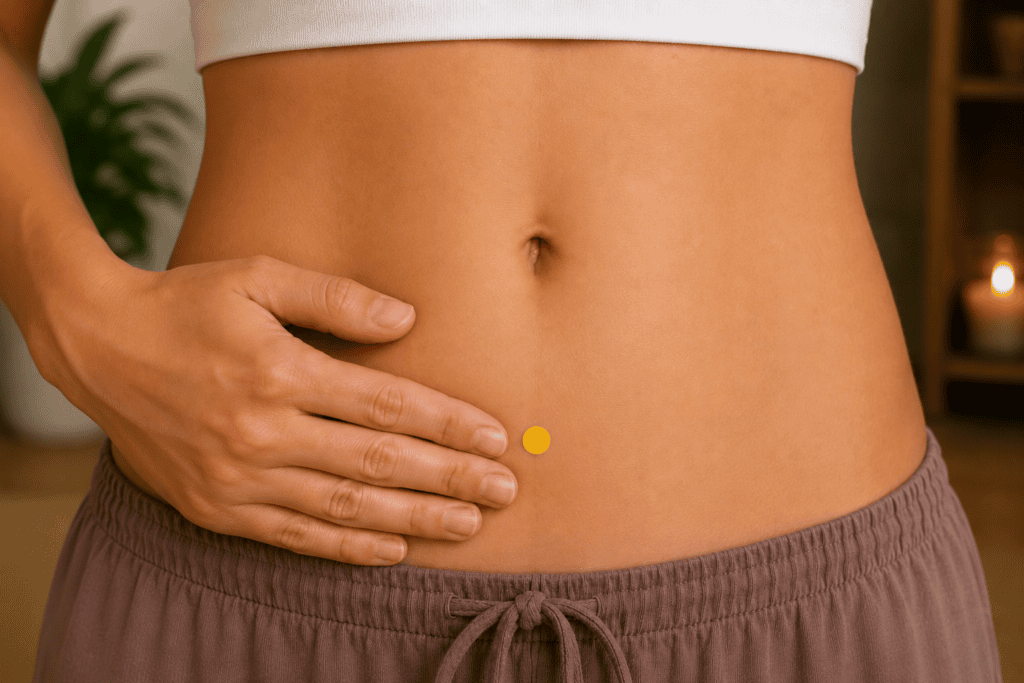
1. CV4, four finger-widths below the navel. Find the midline of your lower abdomen and measure roughly four finger-widths straight down from the belly button. CV4 sits right there on the midline. Rest two or three fingertips on the point and press gently, breathing slowly. This is the anchor point for reproductive vitality, and warming it, with your hand or a warm compress, suits the point’s warming nature.
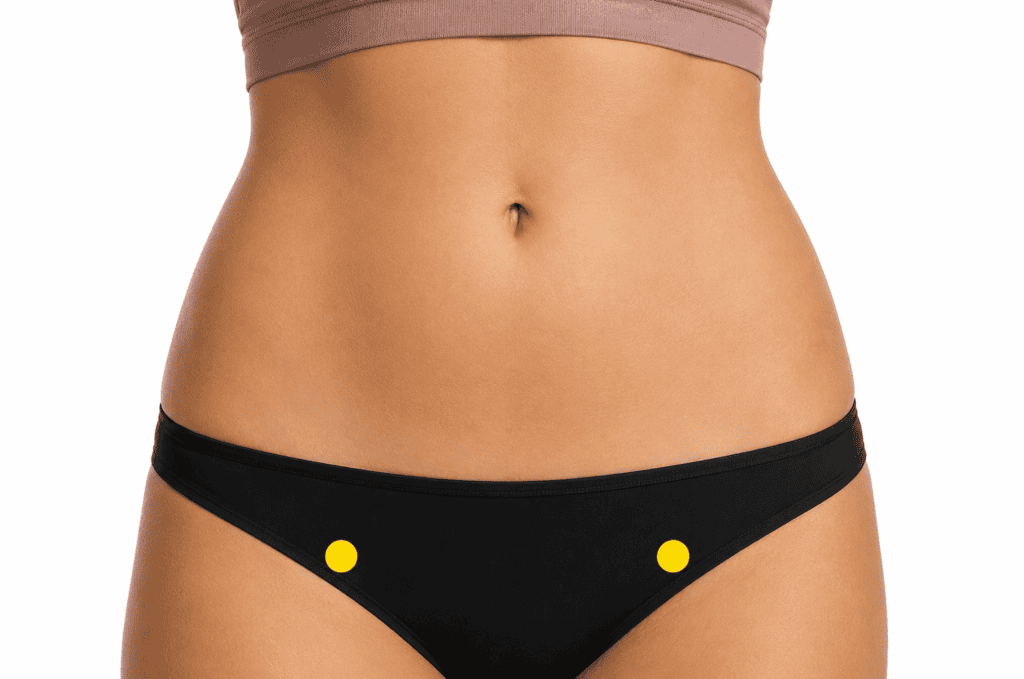
2. Zigong, located on either side of CV4, is a key point. From CV4, shift approximately three finger-widths outward on each side to find the two “uterus” points, which are situated over the ovaries. Gently press both points simultaneously with your fingertips or focus on one side at a time. Among all the points listed, these are the most directly related to the reproductive organs.
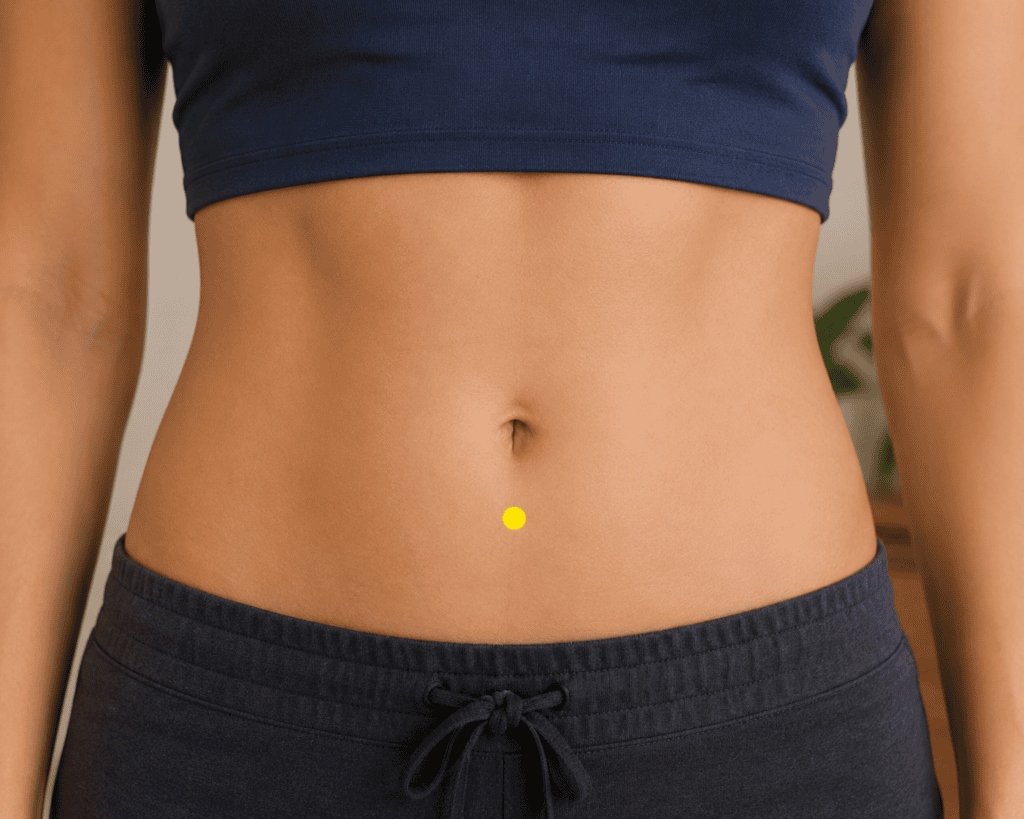
3. CV6, just below the navel. About two finger-widths below the belly button on the midline sits CV6, the “Sea of Qi.” Press gently with the fingertips. Where CV4 tends the reproductive core, CV6 supports the general energy the whole body draws on, and the two sit close enough to work in sequence in one pass down the midline.
The Ankles and Lower Legs: The Kidney and Spleen Points
The points near the inner ankle and lower leg are crucial in Traditional Chinese Medicine for fertility because they connect to the Kidney and Spleen systems, which govern reproduction and blood health. Apply firmer pressure here than on the abdomen. Use your thumb to press until you feel a deep, slightly tender ache, then hold for 1 to 2 minutes per side.
4. KI3, between the ankle bone and the tendon. On the inside of your ankle, feel for the hollow between the knob of the ankle bone and the Achilles tendon behind it. KI3 sits in that dip. Press your thumb in and hold. This is the foundational Kidney point, and since the Kidneys govern reproduction, it belongs in every fertility routine.
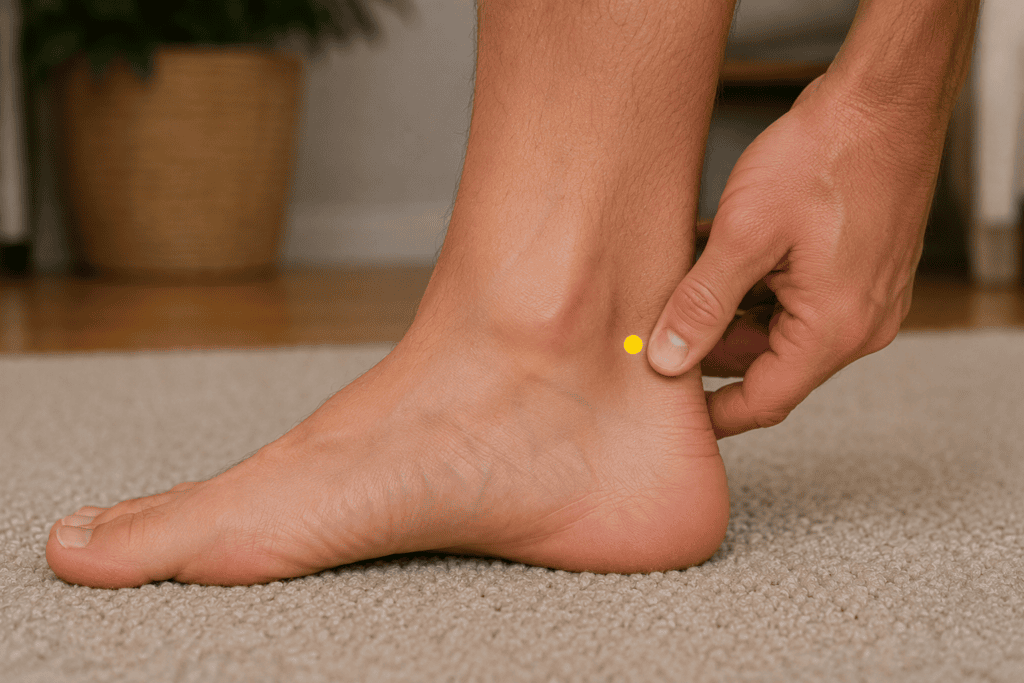
5. KI6, below the ankle bone. Drop about a thumb-width straight down from the tip of the inner ankle bone. KI6 sits just below it. It supports the moistening, building side of the reproductive system, the fluids and lining the cycle depends on, and it pairs naturally with KI3 in the same pass around the ankle.
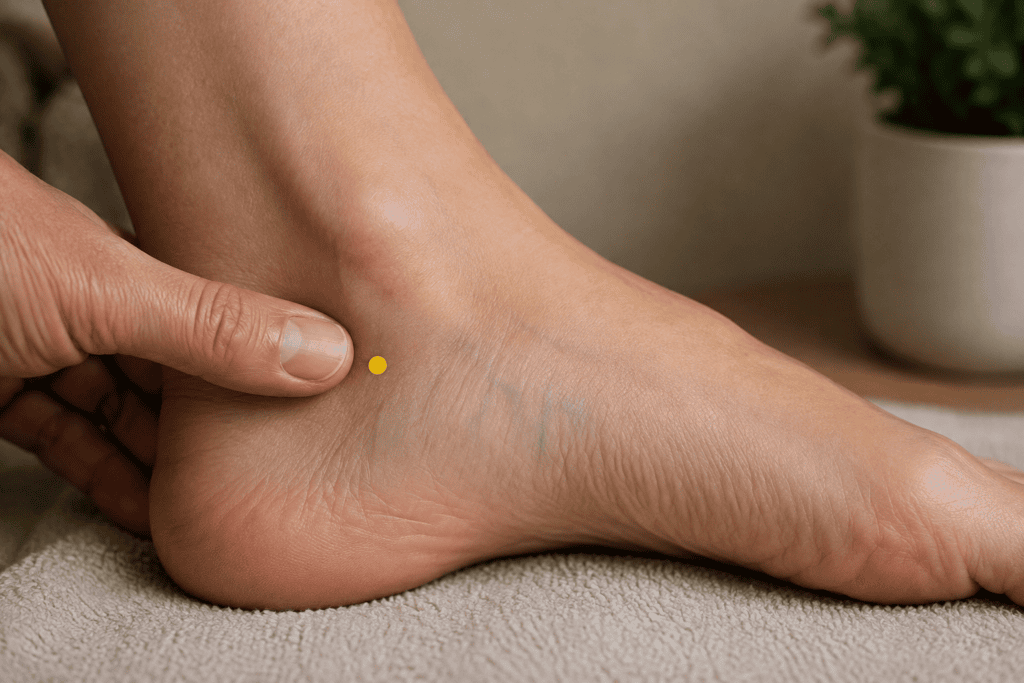
6. SP6, four finger-widths above the ankle bone. From the tip of the inner ankle bone, measure four finger-widths up the leg, just behind the shinbone. SP6 sits there, often tender when you find it. It is the major point for cycle regulation, and worth pressing daily through the first half of your cycle. One note: use SP6 while trying to conceive, but stop once you have a positive pregnancy test.
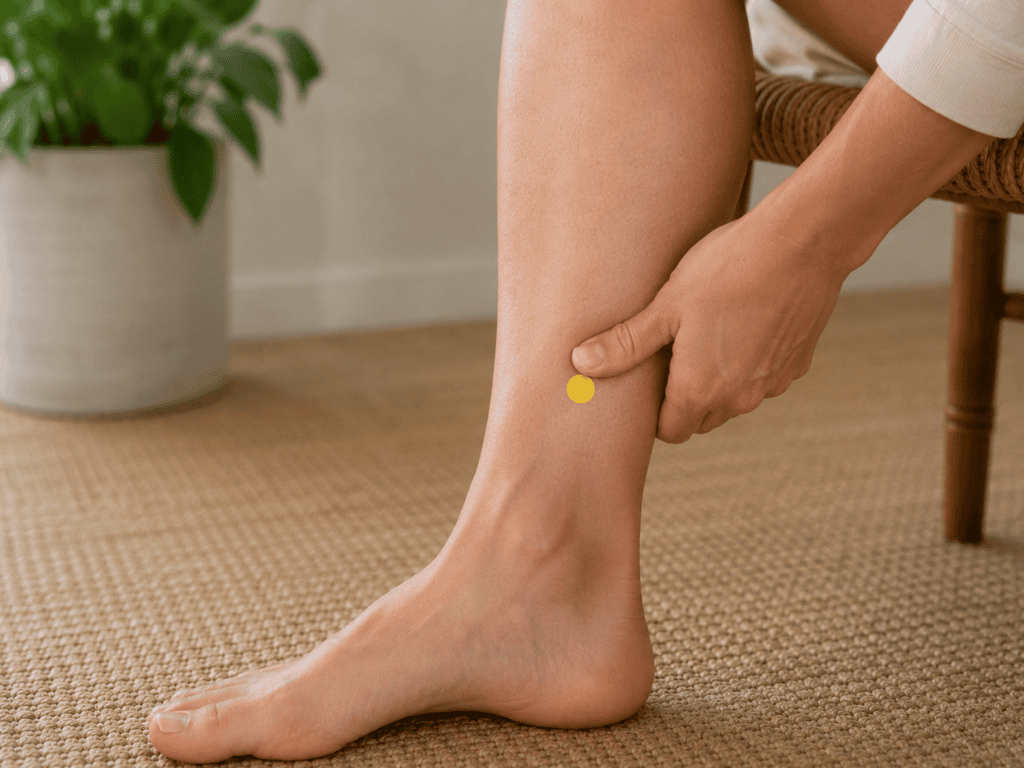
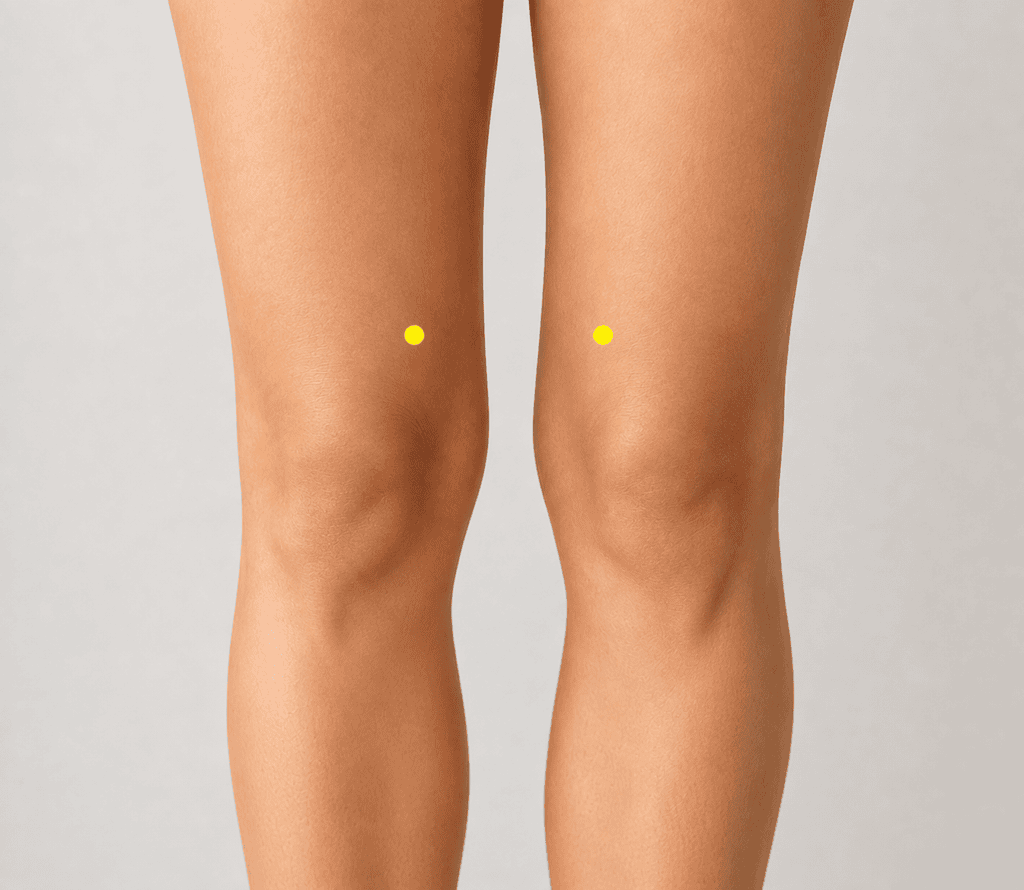
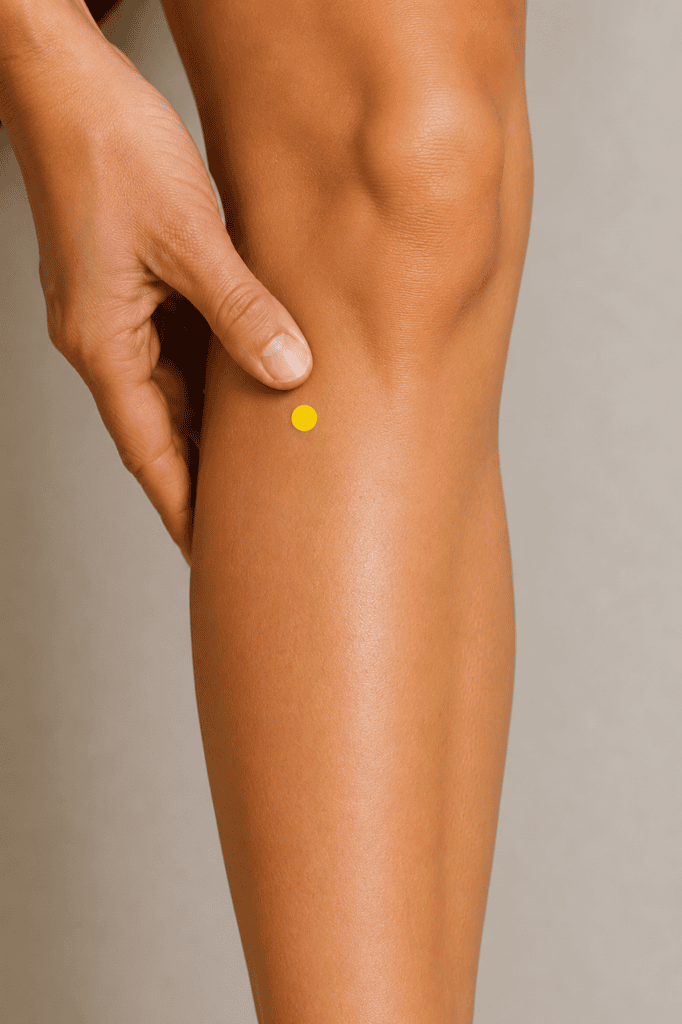
7. SP10, above the inner knee. Bend your knee and place your palm over the kneecap; where your thumb lands on the inner thigh, a couple of inches above the knee, is roughly SP10. Press firmly. It supports the blood that builds the uterine lining, so it earns its place in the first half of the cycle especially.
The Lower Leg and Foot: Energy and Flow
8. ST36, below the kneecap. Four finger-widths below the kneecap, one finger-width to the outside of the shinbone, sits ST36, in the muscular dip you can feel flex when you move your foot. Press firmly with your thumb. This point builds overall energy and strengthens the digestion that produces the blood reproduction relies on, so it supports fertility from the ground up while also countering the fatigue of a long conception journey.
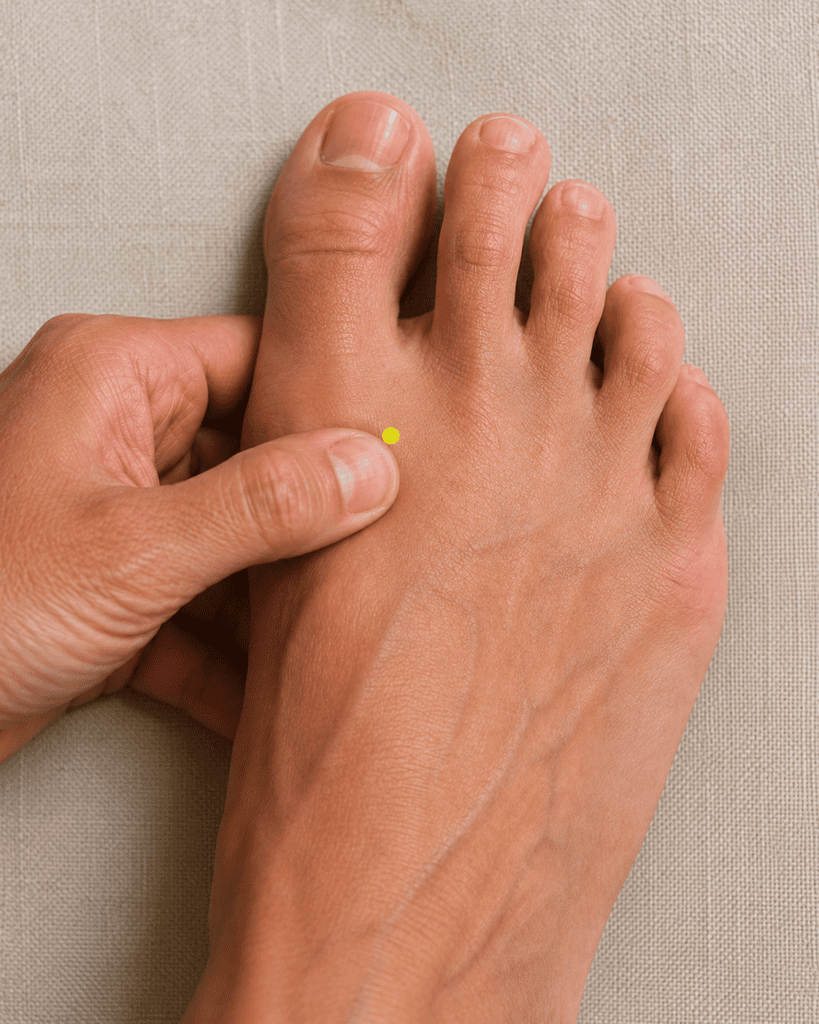
9. LR3, on the top of the foot. Slide your finger up from the gap between your big toe and second toe until it settles into the hollow before the bones meet. LR3 sits there. Press firmly, it is often tender. This is the point for the stress side of fertility, easing the tension and irritability that stress creates and keeping things moving smoothly through the cycle. It is the one to reach for on the hard days.
Build Your Daily Acupressure Fertility Practice
Here are some ways to incorporate them into your daily routine:
- A daily pass, once or twice a day. Move through all nine, spending a minute or two on each. Morning and evening both work; many people find a calm evening session easiest to keep up.
- Match the points to your cycle. In the first half, leading up to ovulation, lean on the building points, SP6, SP10, and the Kidney points, that support the lining and the follicular phase. Through the whole cycle, keep up CV4, CV6, Zigong, ST36, and LR3.
- Warm the abdomen. The lower abdominal points respond well to warmth. A warm compress or a few minutes with a warm palm over CV4 before pressing suits these points.
- Use LR3 for the stress. Trying to conceive is its own kind of stress, and stress works against conception. On the days that weigh on you, LR3 with slow breathing is the point to return to.
- Be consistent, and be patient. Cycle effects develop gradually over months; the key is maintaining a consistent practice.
Combining acupressure with holistic self-care, such as eating nutritious food, ensuring sufficient sleep, practicing gentle exercise, managing stress, and collaborating with healthcare providers, boosts your overall well-being. Chronic stress increases cortisol levels, potentially disturbing reproductive hormones, so the calming benefits of acupressure are as important as activating reproductive points.
When to See a Specialist
Acupressure can be used to support fertility, but it’s important to remember that it doesn’t diagnose underlying issues that might be preventing conception. If you’ve been trying to conceive for a year, or six months if you’re over 35, see a healthcare professional for a thorough evaluation. Conditions such as blocked tubes, endometriosis, PCOS, and hormonal or male-factor issues require medical attention. Many of these conditions respond best when acupressure and acupuncture are used alongside conventional medical treatment, rather than as a replacement.
Above and Beyond Acupuncture offers acupuncture, cupping, and lifestyle coaching at the North Frank Lloyd Wright Boulevard location in Scottsdale.
Schedule an appointment online or call us today to start your healing journey.
The points above are only as effective as the technique used to apply them. Where to press, how firmly, and for how long all affect the result. For a full breakdown of how to perform acupressure properly at home, read Performing Acupressure in 3 Easy Steps.

About the Publisher
Paul Kerzner, L.Ac., is a licensed acupuncturist and board-certified herbalist, as well as the founder of Above and Beyond Acupuncture in Scottsdale. His own journey from chronic patient to practicing acupuncturist shapes his commitment to providing honest, clinically grounded information about acupuncture and Traditional Chinese Medicine. Learn more about Paul and his clinical approach on the About Us page.