Key Takeaways
- The difference between pressure points and acupressure points lies in their origins and purposes: pressure points are linked to Western practices, while acupressure points come from Traditional Chinese Medicine.
- A pressure point may cause discomfort without a systematic basis, whereas an acupressure point is a specific part of a well-defined network in Chinese medicine.
- Confusion arises when both systems coincide at the same physical location, as both perspectives offer different explanations for similar effects.
- Understanding the difference is crucial for effective self-care: pressure usually targets local pain, while acupressure points require knowledge of their broader connections.
- Consult a healthcare provider for persistent issues, as self-pressing may not address underlying problems that need proper diagnosis.
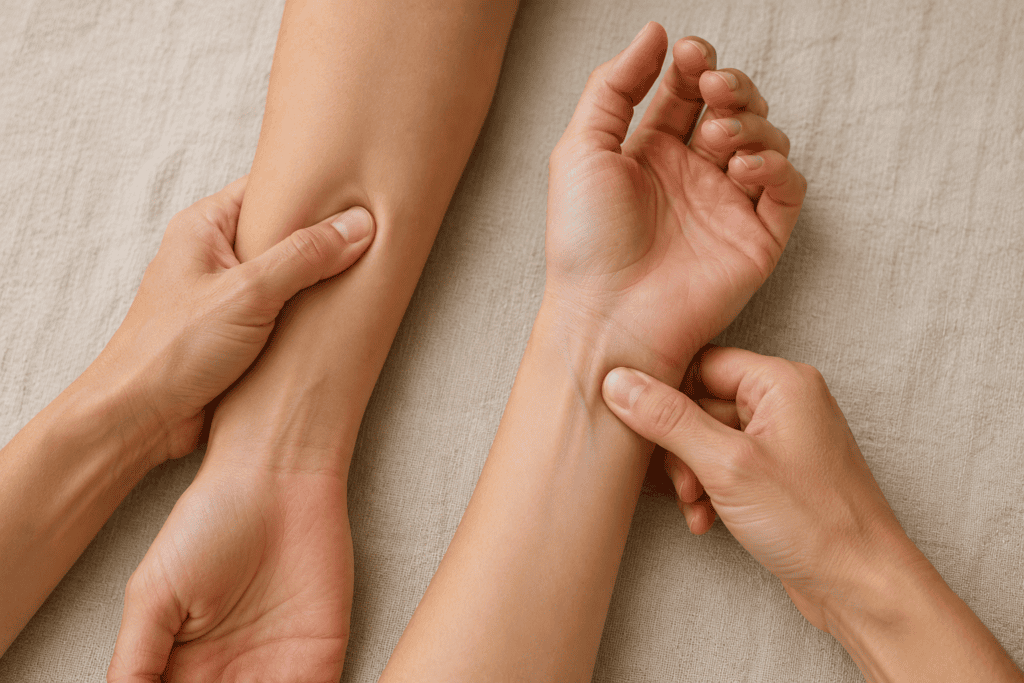
Many people often confuse ‘pressure points’ with ‘acupressure points’. When asked to distinguish between the two, most hesitate because these terms have become quite similar in everyday speech. Although they occasionally refer to the same locations, they stem from different traditions. ‘Pressure points’ come from Western studies and physical therapy, while ‘acupressure points’ come from Traditional Chinese Medicine and an ancient understanding of the body’s layout. Recognizing each term’s origin clarifies their differences and highlights their distinct backgrounds.
Start With Pressure Points
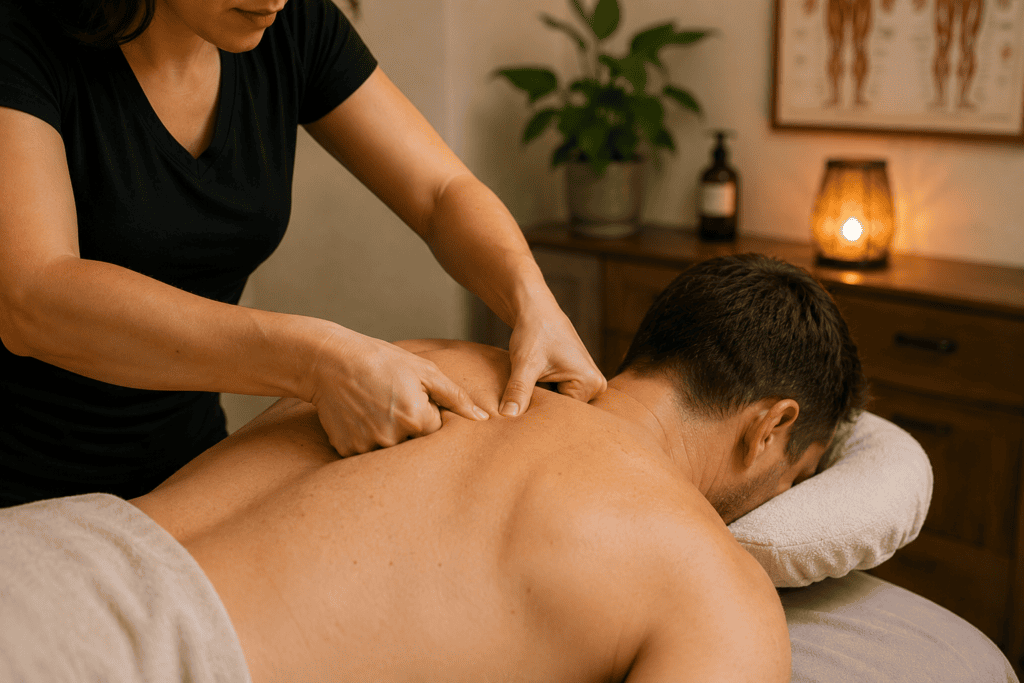
A pressure point is any location on the body that responds when you press it. That is the whole definition, and that is also why the term is so slippery. It describes an effect, not a system. If pressing a spot produces a noticeable effect, people call it a pressure point.
That’s why you’ll notice the term appearing in various contexts. In a massage, a pressure point is typically a tense, sore knot that may cause you to flinch and sometimes radiate pain to adjacent areas. In a first aid course, it describes a location where a blood vessel lies close to the skin’s surface, and applying steady pressure can help stop bleeding. In a self-defense class, a pressure point is a spot where slight pressure can induce enough discomfort to create an opening. These are different interpretations of the same word, with no single explanation fitting all situations.
When someone says “press this pressure point,” the only certainty is that pressing it is meant to produce some effect. The phrase itself doesn’t clarify which tradition or purpose it pertains to.
Now Look at Acupressure Points
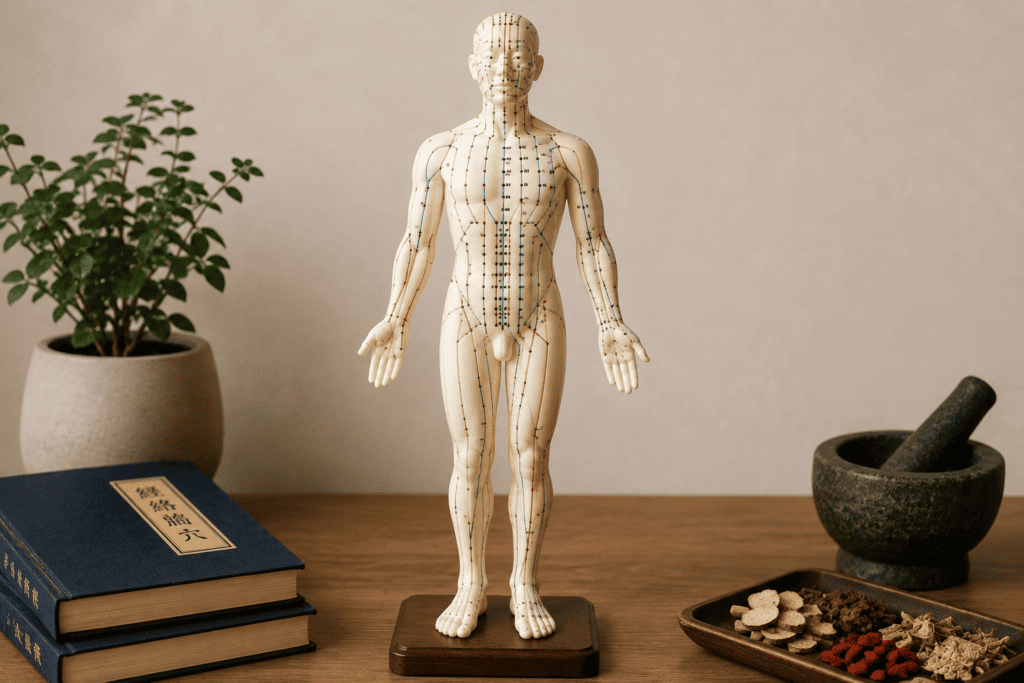
An acupressure point is fundamentally different because it is part of a system. These points originate from Traditional Chinese Medicine and share the same body map as acupuncture. Each point has a specific anatomical location, a name, a number, and a set of functions documented and taught for generations.
These points follow meridians, which Chinese medicine considers channels that transport qi throughout the body. They aren’t randomly placed; they form a structured network, with each point serving a specific purpose. Applying pressure to an acupressure point aims to influence this pattern within the body, and the resulting effect may manifest in areas away from the point itself.
This part often surprises people. A point on the hand is linked to headaches and facial tension. A point below the knee addresses stomach issues and digestion. A point on the inner wrist helps with nausea and calming the mind. Often, the point and the symptom are in different areas because the system relies on channels that connect distant body parts, rather than the location of pain itself.
A 2024 article in Acupuncture and Herbal Medicine notes that the meridian system remains a heavily researched topic in medicine. Current studies indicate that meridians have both physical and informational aspects, which cannot be fully understood through a single line of investigation. While clinical practice has relied on this system for thousands of years, science is still working to keep pace.
Why People Confuse the Two
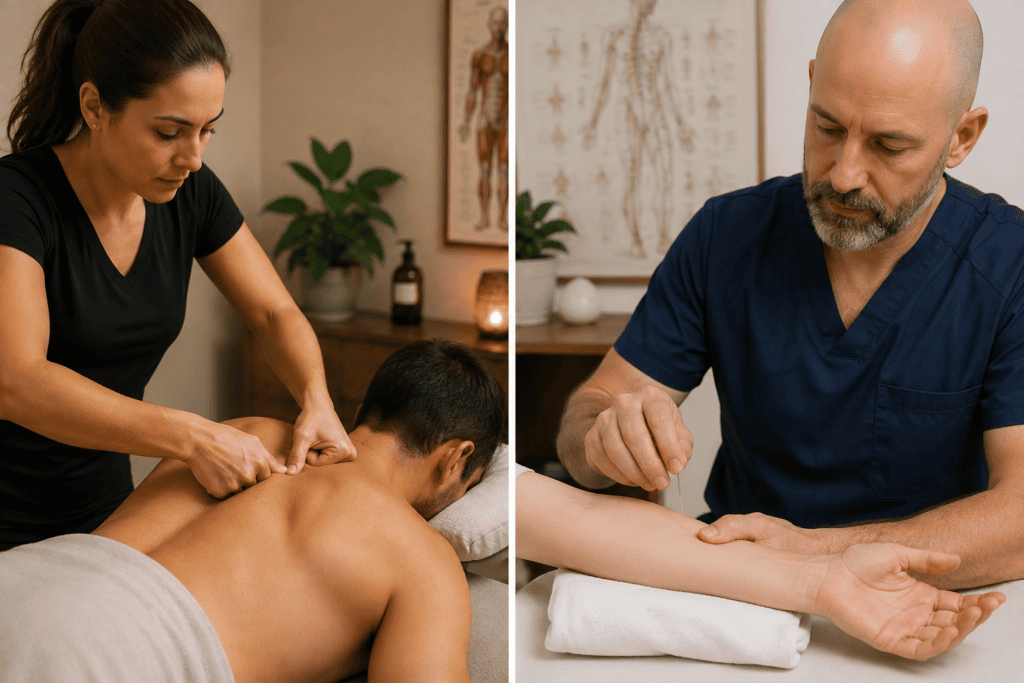
The confusion happens because both systems sometimes mark the same physical spot, and that can be a bit confusing.
Many acupressure points are located where a massage therapist might find a trigger point. When you massage a tight, tender spot on your shoulder and notice it releases, you might have pressed a muscular knot along with an acupressure point. It’s fascinating how two different traditions offer their own explanations: Western bodywork might say you’ve released muscle tension, while Chinese medicine might suggest you’ve moved qi along a meridian. Both views are different ways of understanding the same pressure on your body.
That overlap is significant and deserves respect. It’s also why these terms often blend together.
The two frameworks remain quite unique. One describes muscles, nerves, and referred pain. The other focuses on channels, energy, and patterns, more about the flow and connections within. They meet at certain points but never fully overlap.
Why This Matters When You Treat Yourself at Home
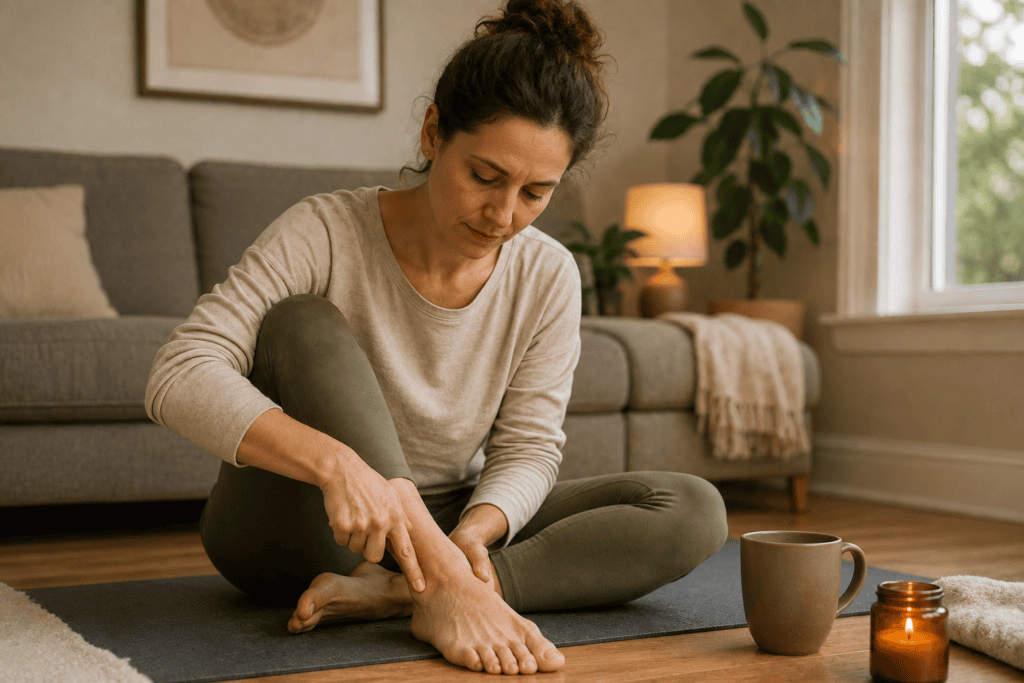
The differences are not merely academic; they change how you approach self-care.
When dealing with a general pressure point, such as a tight or sore spot in a muscle, you typically work locally. You apply pressure directly to the painful area, helping the tissue relax and often providing lasting relief in that spot. Your fingers and the problem area are in the same location.
When working with an acupressure point, it follows a specific map. Instructions usually recommend pressing a point on your hand for a headache or on your leg for an upset stomach. Without understanding the system, you might miss these steps because the location seems unrelated to your symptoms. Understanding the core principles behind acupressure helps you better understand this modality. Each point is carefully selected, and using them as directed ensures the practice’s effectiveness.
The key message is straightforward: for reliable acupressure, target the specific point locations instead of pressing anywhere you feel discomfort. The acupressure map is essential. Random pressing is just pressing; accurate point pressing is true acupressure.
When to Seek Clinical Help

Any pressure you apply yourself is not a proper medical diagnosis.
If you’re experiencing persistent pain, worsening symptoms, numbness, weakness, or other issues that don’t improve on their own, it’s a good idea to see a qualified healthcare provider. Sometimes, what feels like muscle tension can stem from underlying problems that need imaging or a hands-on medical assessment.
If you want to go beyond self-care and address the underlying patterns, Acupuncture, Cupping and Lifestyle Coaching covers what services this clinic offers.
Schedule an appointment online or call us today to start your healing journey.
About the Publisher
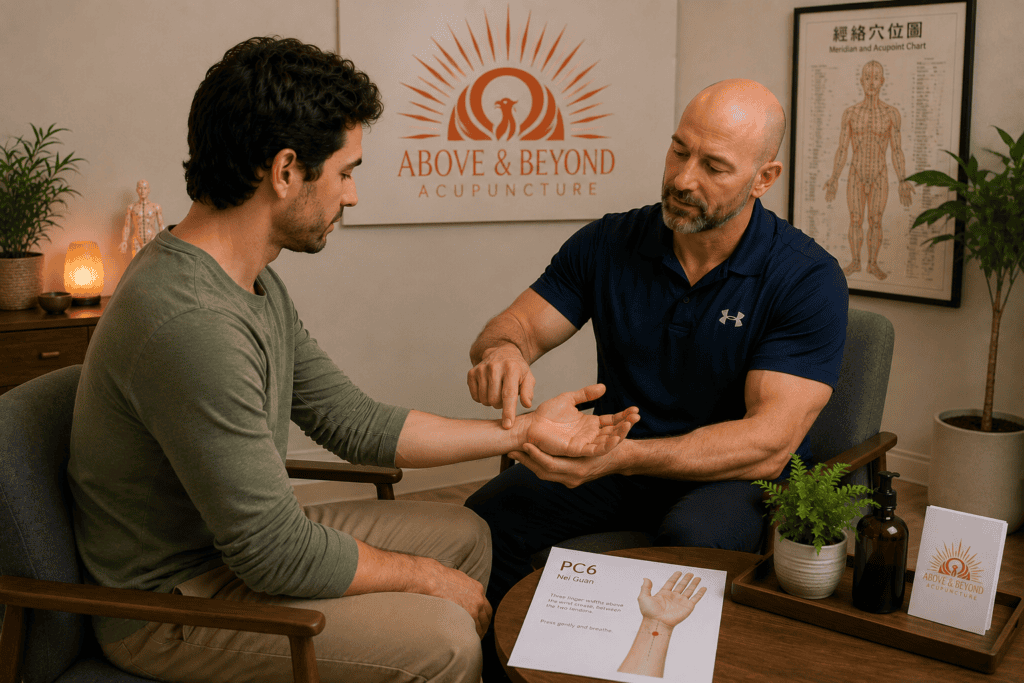
Paul Kerzner, L.Ac., is a licensed acupuncturist and board-certified herbalist, as well as the founder of Above and Beyond Acupuncture in Scottsdale. His own journey from chronic patient to practicing acupuncturist shapes his commitment to providing honest, clinically grounded information about acupuncture and Traditional Chinese Medicine. Learn more about Paul and his clinical approach on the About Us page.