Key Takeaways
- Bloating and gas can cause discomfort; acupressure offers a natural way to ease these symptoms by releasing trapped Qi in the abdomen.
- Key acupressure points include ST25 for trapped gas, CV6 for lower Qi, and CV12 for upper-abdomen discomfort, among others.
- These points address both immediate relief and underlying digestive issues, helping to strengthen digestion and reduce stress that can worsen bloating.
- For optimal results, use correct techniques, press abdominal points clockwise, and hold each for one to two minutes.
- Maintain healthy habits such as eating slowly and recognizing trigger foods, combined with acupressure, to help prevent bloating and gas.

A bloated, gassy stomach can cause significant discomfort, making your afternoon unpleasant and your clothes tight.
Bloating and trapped gas are common digestive problems that are usually not serious but can be very uncomfortable. Acupressure offers a simple, natural method to alleviate these symptoms. Using your hands, you can help release trapped gas, reduce pressure, and soothe a swollen abdomen.
In Traditional Chinese Medicine, bloating and gas are signs that Qi is stuck in the abdomen. When Qi doesn’t flow smoothly through the digestive tract because you eat too quickly, eat foods that don’t suit you, have weak digestion, or are stressed, it can accumulate as gas, swelling, and pressure. The Spleen and Stomach are usually involved, either because they are too weak to keep things moving or because they are overloaded. The intestines may then have trouble passing gas. Stress can also play a role, as a tense Liver can disrupt digestion. The acupressure points below are intended to help move stuck Qi, support intestinal function, strengthen digestion, and reduce stress that affects the gut.
Here are nine acupressure points that can help:
What Acupressure Points to Press and Why
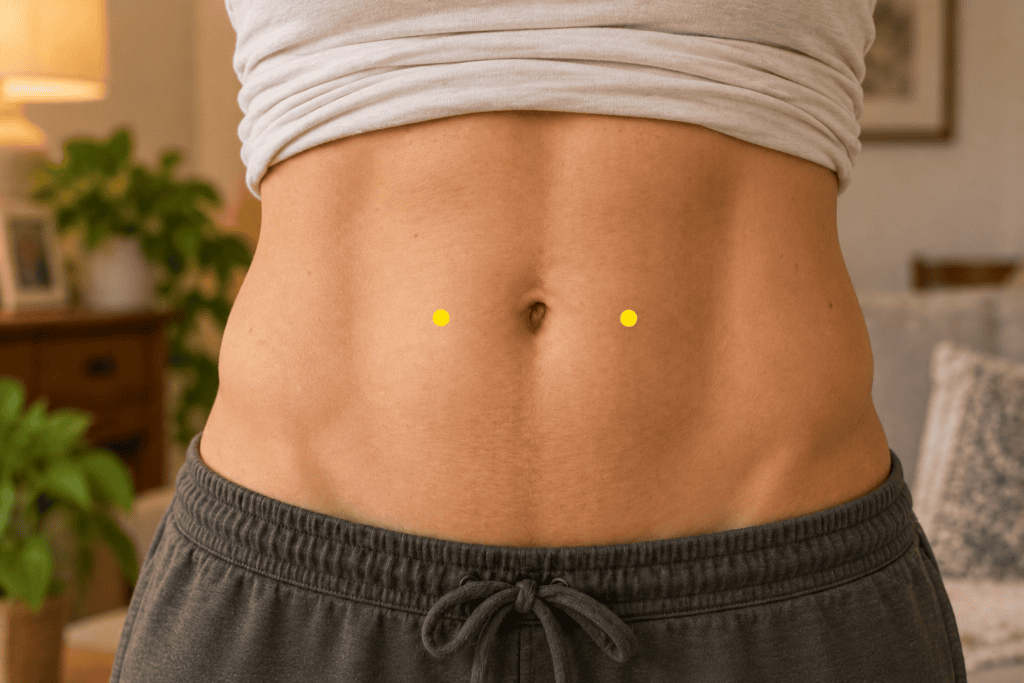
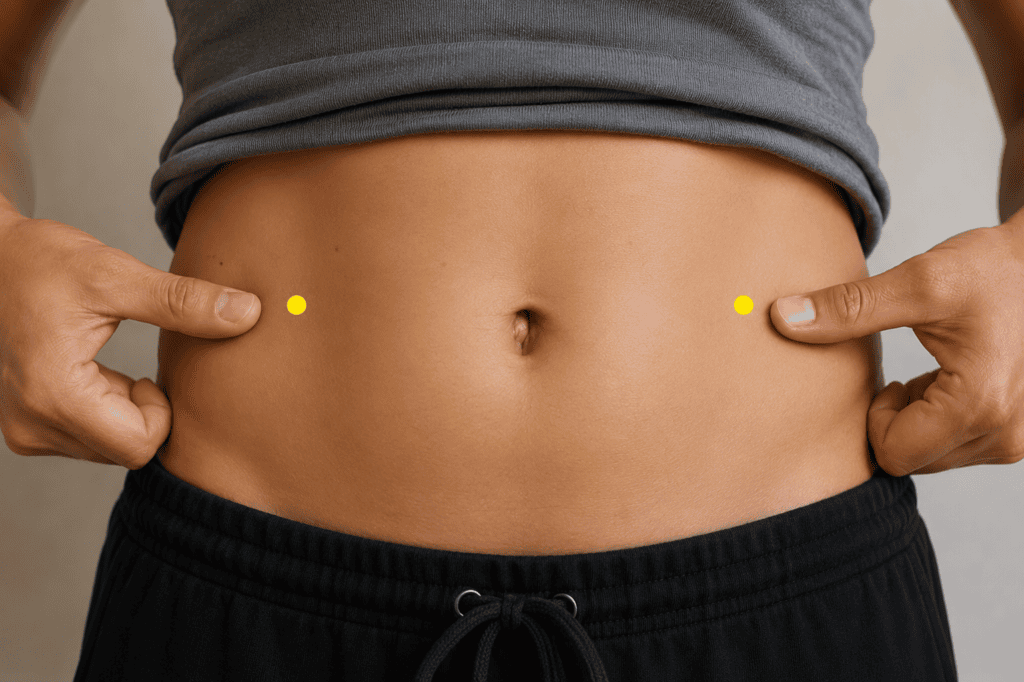
1. Press on ST25 beside the navel to release trapped intestinal gas. ST25 sits about three finger-widths out to each side of the navel, level with its center. Press gently but firmly with your fingertips for one to two minutes on both sides, making small clockwise circles. ST25 is called “Tianshu,” the “Heavenly Pivot,” and it is the front-mu point of the Large Intestine.
This point is the most direct way to relieve trapped gas because it sits right over the intestines and helps them contract to move gas and stool through. It can quickly ease bloating, swelling, and lower abdominal pressure, helping your gut start working again. For best results, press both sides at once in small clockwise circles, following the colon’s direction. If you have that full, gassy feeling, this is the first point to try.
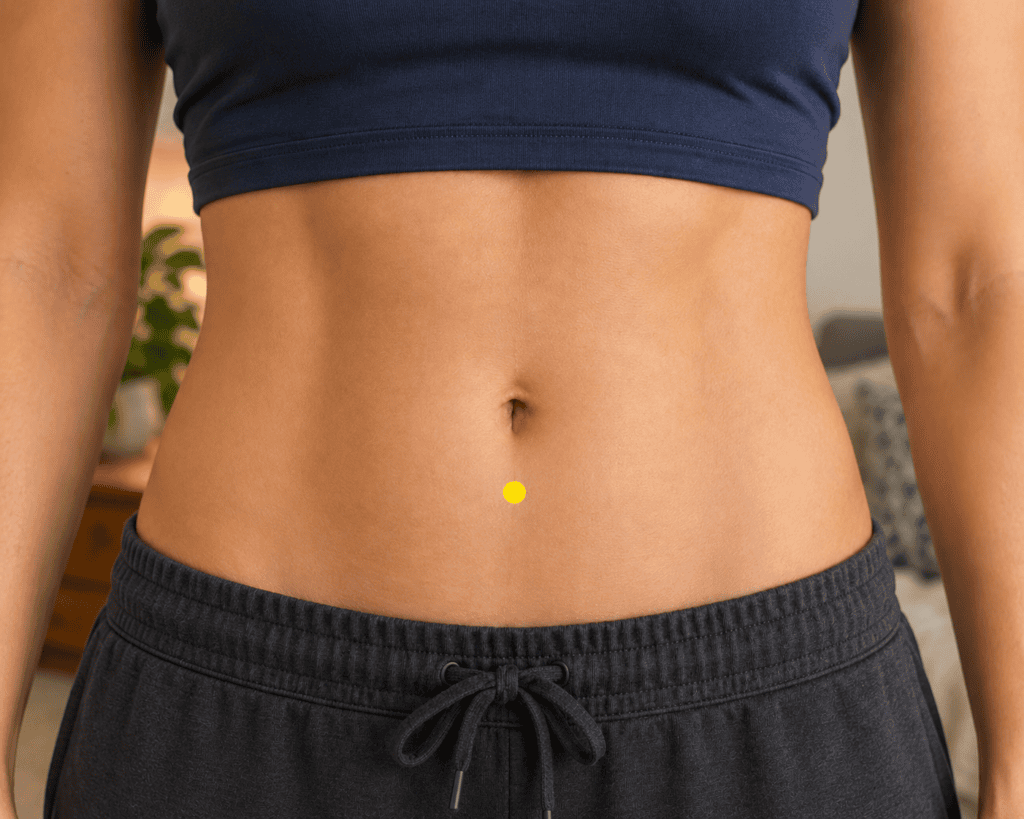
2. Press on CV6 below the navel to move the stuck lower-abdomen Qi. CV6 sits on the midline of the lower abdomen, about two finger-widths below the navel. Press gently with your fingertips in small clockwise circles for one to two minutes. CV6 is called “Qihai,” the “Sea of Qi,” the gathering point for the body’s Qi in the lower abdomen.
CV6 helps move Qi that gets stuck low in the abdomen as gas and swelling. It encourages the lower bowel to contract and push trapped gas out. This point is especially helpful for gas that is stuck and will not pass, and it works well when used together with ST25. If you have a tight, swollen feeling deep in your lower abdomen, pressing this point can help, especially if your hand is warm.
3. Press on CV12 above the navel for upper-abdomen bloating. CV12 sits on the midline of the abdomen, halfway between the navel and the lower end of the breastbone, about four finger-widths above the belly button. Press gently but steadily with your fingertips for one to two minutes. CV12 is called “Zhongwan,” and it is the gathering point of the Stomach at the front of the body.
ST25 and CV6 help with lower-abdomen bloating, but CV12 helps with bloating higher up, like the full, heavy feeling in your stomach after eating. This point supports digestion and eases upper-abdominal fullness and pressure. If your bloating feels more like an overfull stomach than gas in the lower abdomen, try this point. Be gentle when pressing, especially after eating.
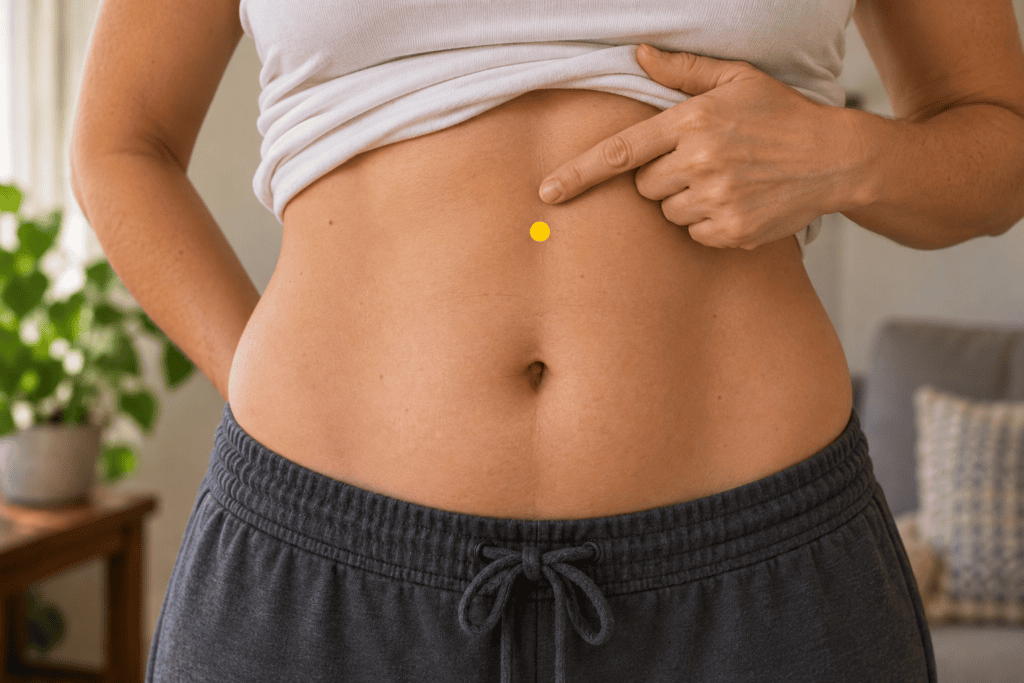
4. Press on SP15 beside the navel to relieve abdominal distension. SP15 sits level with the navel, about four finger-widths out to each side, a little further out than ST25, roughly in line with the outer edge of the abdomen. Press firmly with your fingertips for one to two minutes on both sides. SP15 is called “Daheng,” and it is a Spleen point specifically for the abdomen and intestines.
SP15 is helpful for swelling, cramping, and slow bowels that trap gas. It works from the sides of the abdomen to support the intestines and relieve bloating. This point works well with ST25 and is especially useful if your whole abdomen feels swollen and tight. It is a good addition when bloating is hard to get rid of.
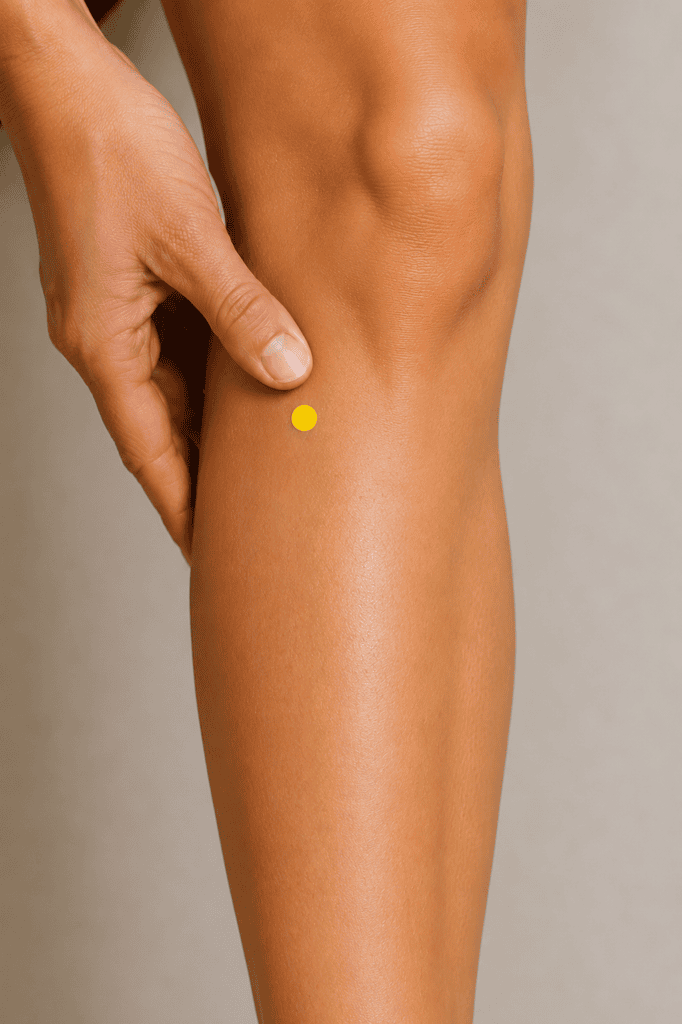
5. Press on ST36 below the knee to strengthen digestion. ST36 sits four finger-widths below the lower edge of the kneecap and one finger-width to the outside of the shinbone, on the muscle that rises when you flex your foot. Press firmly with your thumb for one to two minutes on each leg. ST36 is called “Zusanli,” the “Leg Three Miles,” and it is the master point for digestion in the body.
While the abdomen points help move gas right away, ST36 supports digestion to prevent gas from building up in the first place. It strengthens the Spleen and Stomach so they process food better. If weak digestion causes your bloating, using this point regularly can help address the root problem, not just the symptoms. It also helps calm the stomach.
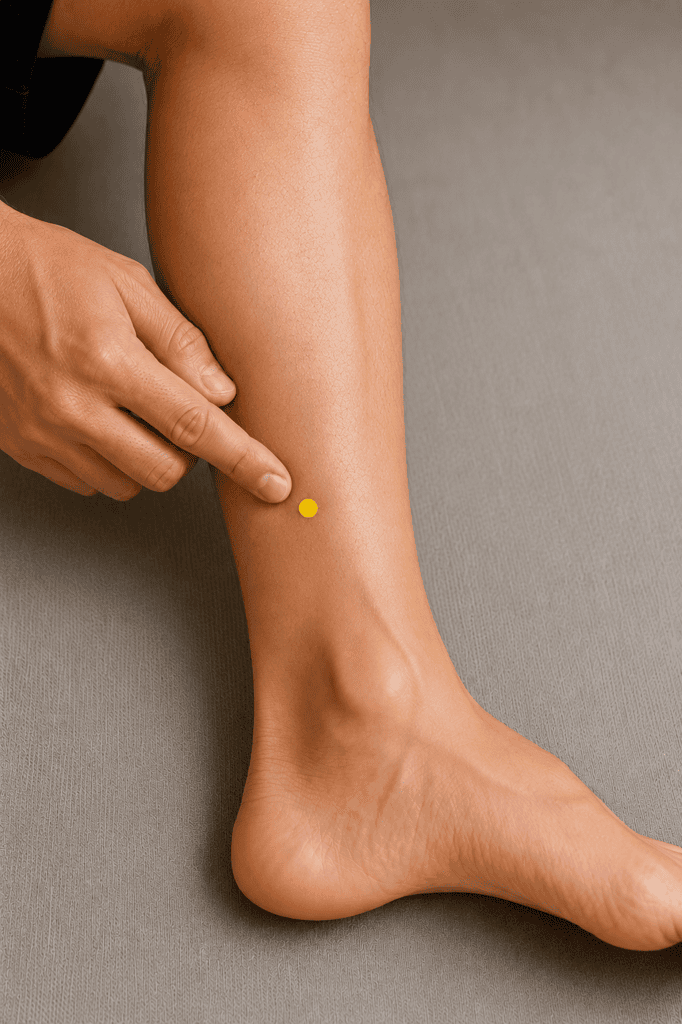
6. Press on SP6 above the inner ankle to support the intestines. SP6 sits four finger-widths up from the tip of the inner ankle bone, just behind the back edge of the shinbone. Press firmly for one to two minutes on each leg. SP6 is called “Sanyinjiao,” the “Three Yin Intersection,” where the Spleen, Liver, and Kidney channels meet. SP6 is avoided during pregnancy.
SP6 helps the Spleen handle food and fluids and supports the intestines, making it useful for bloating and gas from weak digestion. Since it connects three channels, it is one of the best points for digestion and also helps calm the Liver, which can help with stress-related bloating. If your digestion is often slow or easily upset, using this point regularly can be very helpful.
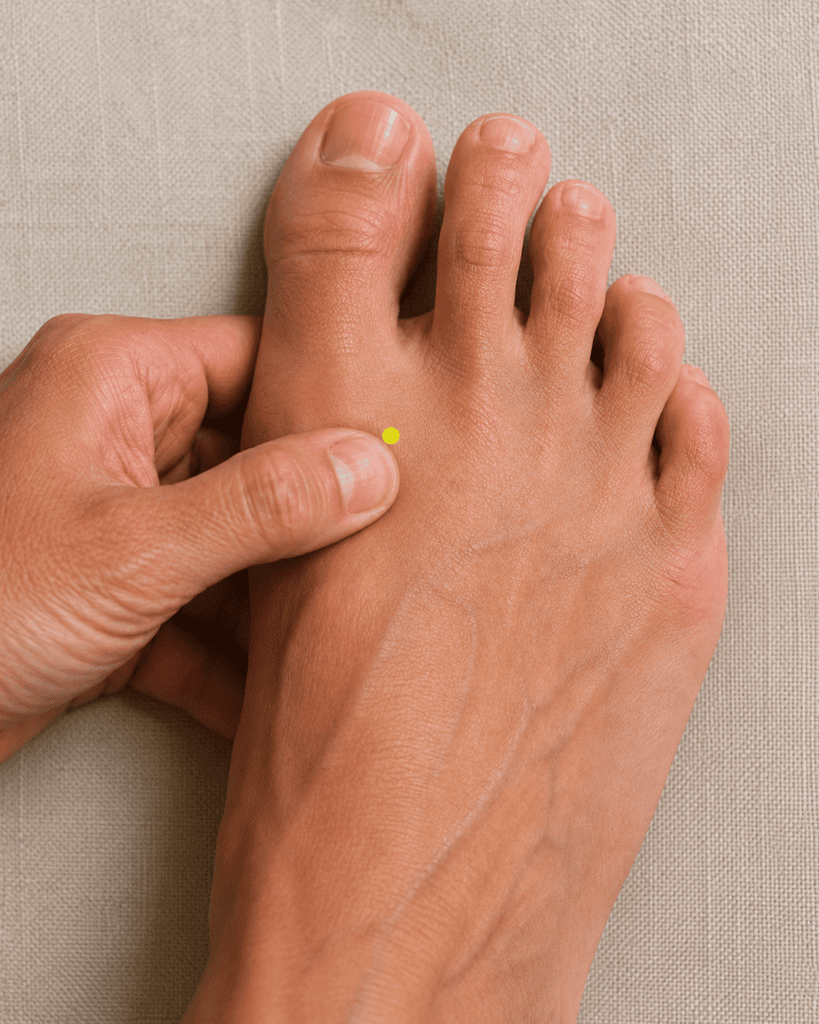
7. Press on LR3 on the top of the foot for stress-related bloating. LR3 sits on the top of the foot, in the webbing between the big toe and second toe, about two finger-widths back where the bones meet in a small hollow. Press firmly with the thumb for one to two minutes on each foot. LR3 is called “Taichong,” and it is the primary point for moving stuck Liver Qi.
Stress can cause a lot of bloating. Your abdomen may swell and tighten when you are tense, eat quickly, or feel under pressure. In Chinese medicine, this is seen as the Liver getting stuck and disrupting digestion. LR3 helps free this stuck Liver Qi and relieves pressure in the gut, easing stress-related bloating. If your abdomen gets bloated when you are stressed, this point can help address the cause and calm your whole system.
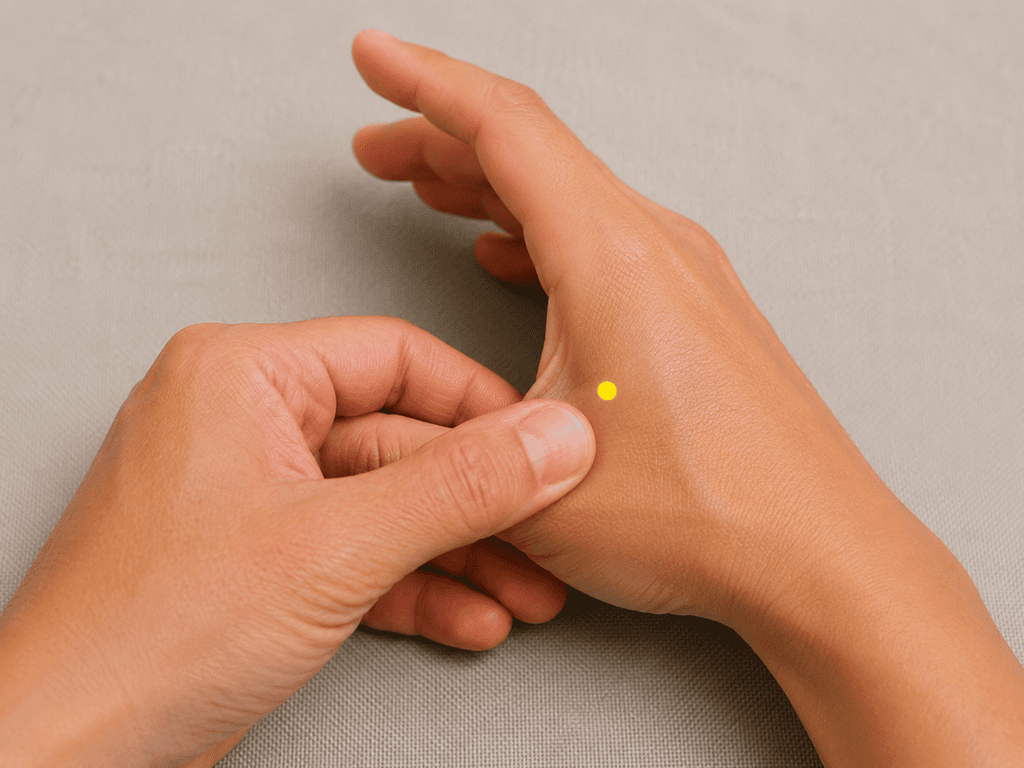
8. Press on LI4 in the hand to move Qi and ease the discomfort. LI4 sits in the webbing between the thumb and index finger, at the highest point of the muscle when the thumb and finger are brought together. Press firmly with the thumb of your other hand for one to two minutes on each hand. LI4 is called “Hegu,” and it is a major point for moving Qi and easing pain. LI4 is avoided during pregnancy.
LI4 helps move Qi through the body and supports bowel movements, making it useful for easing cramps and discomfort from trapped gas. It is a strong point for relieving pain and helping things move along. Since it is on your hand, you can press it discreetly anywhere, like under a desk or during a meeting, when you need quick relief. This point is great for fast, private help.
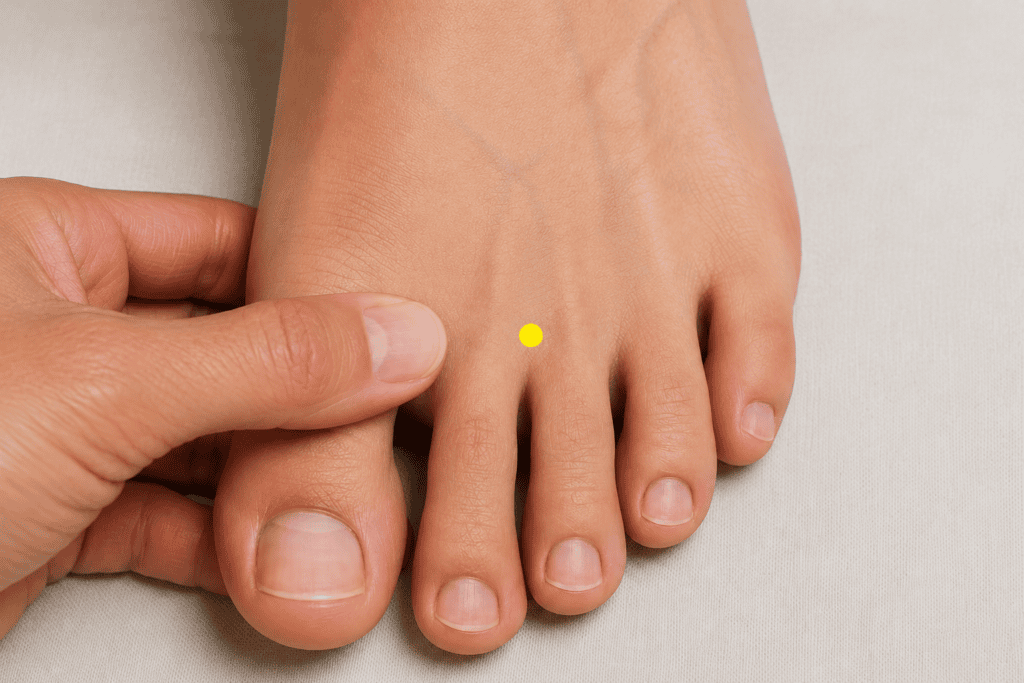
9. Press on ST44 between the toes for bloating with heat. ST44 sits on the top of the foot, in the webbing between the second and third toes, just where they meet. Press firmly with your thumb for one to two minutes on each foot. ST44 is called “Neiting,” and it clears heat from the Stomach and intestines.
Some bloating feels hot, with burning, bad breath, or discomfort after eating rich, greasy, or spicy foods. In Chinese medicine, this is seen as heat in the stomach and intestines, and ST44 helps clear it. This point cools the heat and eases bloating and swelling that come with it. If your bloating feels hot and uncomfortable after overindulging, this point can help calm your gut.
Why These Acupressure Points Work
In Chinese medicine, bloating and gas happen when Qi gets stuck in the abdomen. This means the digestive tract is not moving smoothly, leading to swelling and trapped gas. The Spleen and Stomach may be struggling, and stress or heat can also play a part. The nine acupressure points help with all these issues.
- The abdomen points (ST25, CV6, CV12, SP15) move the stuck Qi directly and help the intestines pass gas, covering the lower and upper abdomen.
- The digestive-strengthening points (ST36, SP6) build the Spleen and Stomach that produce and move food, addressing recurring bloating at the root.
- The stress point (LR3) frees the bound Liver Qi behind bloating that flares with tension.
- The moving and cooling points (LI4, ST44) ease the cramping discomfort and clear the heat behind a hot, overindulged abdomen.
The main goal is to get stuck Qi moving again so trapped gas can be released. This is why pressing the abdominal points in a clockwise direction, following the colon, works best.
How to Properly Use These Acupressure Points
Work the abdomen points in the colon’s clockwise direction, and match the others to what is behind your bloating.
- Start with ST25 and CV6 in the lower abdomen, pressing both sides of ST25 at once in small clockwise circles, since together they most directly move trapped lower-abdominal gas. Add SP15 for a broadly distended abdomen and CV12 for upper-abdominal fullness.
- Add ST36 and SP6 to strengthen weak digestion, LR3 if stress is behind your bloating, and ST44 if it comes with heat after rich food. Use LI4 anytime for quick, discreet relief.
- Press the abdominal points gently, especially soon after eating, and follow the clockwise direction of the colon, up the right side, across, and down the left.
- Hold each point for one to two minutes, breathing slowly, and repeat as needed. Lying down with your knees bent can make the abdominal points easier to work on and help gas pass.
Acupressure can provide immediate relief from gas, but adopting healthy habits can prevent bloating altogether. Eat slowly and chew thoroughly, as rushing meals or swallowing air can cause gas. Choose smaller, more frequent meals instead of large ones, and identify foods that trigger bloating; common culprits include beans, carbonated drinks, dairy, and certain high-fiber or high-FODMAP foods. Stay well-hydrated and active; a brief walk can help move gas along. Avoid carbonated beverages and chewing gum to prevent extra air intake. Managing stress is also vital, since the gut and nervous system are closely linked.
When to Get Professional Help
Occasional bloating and gas are common, and the tips above usually help manage them. Certain types of bloating require medical attention. Seek a doctor if your bloating is severe, persistent, or worsening. You should also consult a healthcare provider if you experience bloating with intense pain, weight loss, changes in bowel habits, blood in your stool, vomiting, or feeling full after eating very little. Bloating accompanied by fever or sudden, severe pain requires urgent medical care. If you notice new or ongoing bloating, especially as a woman, it’s important to have it evaluated.
Acupressure and healthy habits may reduce daily bloating, but they should not replace professional medical care when needed.
Above and Beyond Acupuncture offers acupuncture, cupping, and lifestyle coaching at the North Frank Lloyd Wright Boulevard location in Scottsdale.
Schedule an appointment online to start your healing journey.
The points above are only as effective as the technique used to apply them. Where to press, how firmly, and for how long all affect the result. For a full breakdown of how to perform acupressure properly at home, read Performing Acupressure in 3 Easy Steps.

About the Publisher
Paul Kerzner, L.Ac., is a licensed acupuncturist and board-certified herbalist, as well as the founder of Above and Beyond Acupuncture in Scottsdale. His own journey from chronic patient to practicing acupuncturist shapes his commitment to providing honest, clinically grounded information about acupuncture and Traditional Chinese Medicine. Learn more about Paul and his clinical approach on the About Us page.