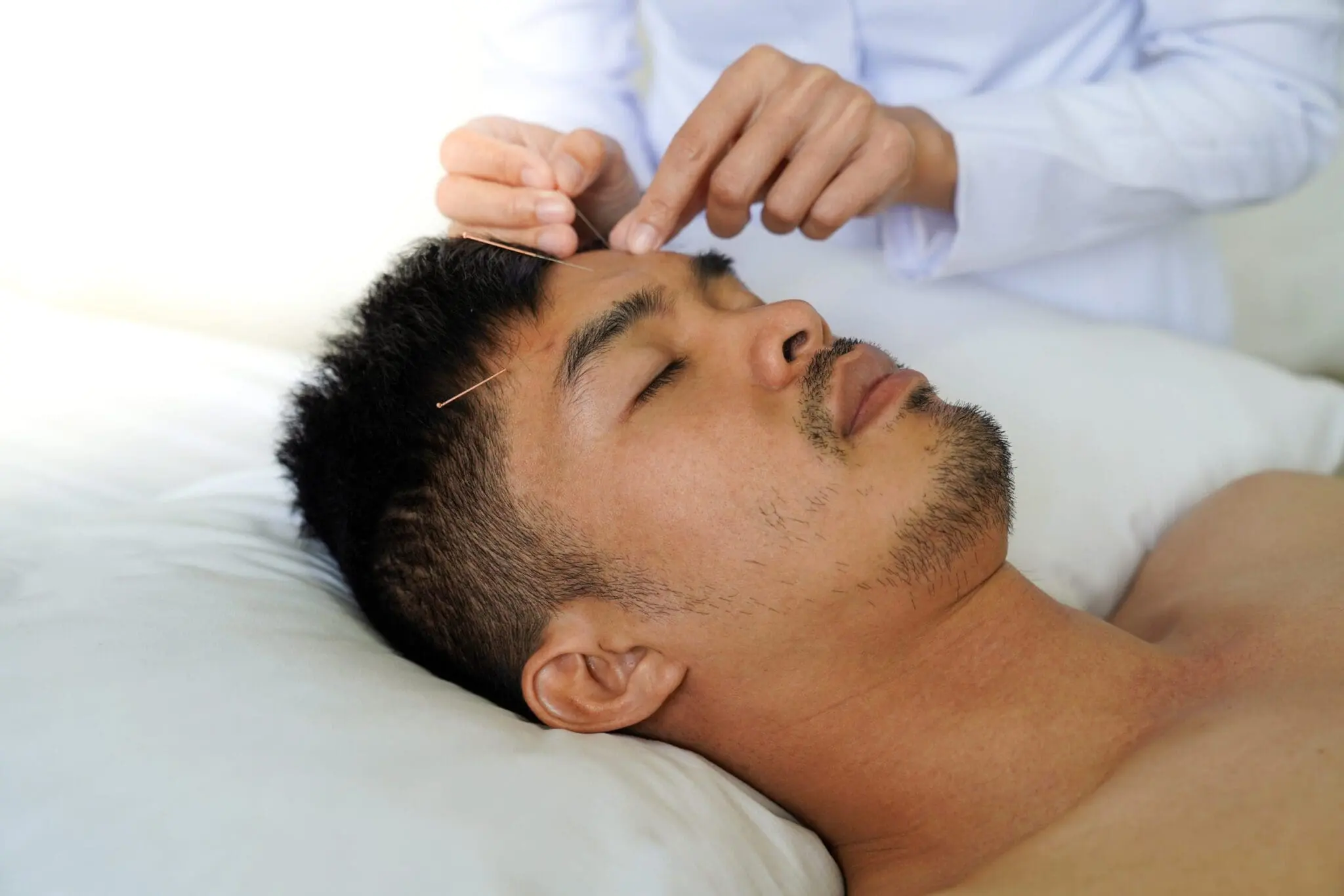
Key Takeaways
- Chronic pain can persist after the initial injury, disrupting sleep and mood as a result of an overactive nervous system.
- The article presents nine acupressure points that may relieve chronic pain by moving Qi and Blood and calming the body.
- Points such as SP21 and LI4 address pain throughout the body, while others, including BL17 and ST36, target specific issues involving stasis and depletion.
- Effectively managing chronic pain with acupressure requires consistent practice and patient pressure application.
- When chronic pain symptoms worsen or change unusually, it’s important to seek professional help.

Have you been experiencing pain that has lasted longer than the injury or illness that caused it?
Chronic pain lasts for three months or more and is one of the most common and exhausting health issues. It may stay in one area, such as your lower back, neck, or a joint, or move throughout your body. Over time, it can affect your sleep, mood, energy, and patience, often continuing even after the original injury has healed. That’s because chronic pain involves more than the tissues themselves. The nervous system becomes more sensitive, amplifying pain signals and keeping you caught in a pain cycle. Acupressure may help by releasing tension in your body and calming your nervous system, all with your own hands.
Traditional Chinese Medicine explains pain simply: when energy flows freely, there is no pain; when pain is present, the flow is blocked. Acute pain usually indicates blocked Qi and Blood, but pain lasting months or years changes over time. According to tradition, long-term illness enters the network vessels, the fine channels that reach throughout the body, and also causes depletion. Chronic pain often involves Qi and Blood lodged deep in these vessels, sometimes with Blood stasis that causes fixed, stabbing, or nighttime pain, along with the fatigue that develops over years of pain. The Shen, or mind and spirit, is also affected, making pain feel worse and disrupting sleep. The points below address all of this: they reach the network vessels, move stagnant Qi and Blood, restore what pain has depleted, relax the muscles, and calm the Shen.
Here are nine acupressure points that can help:
What Acupressure Points to Press and Why
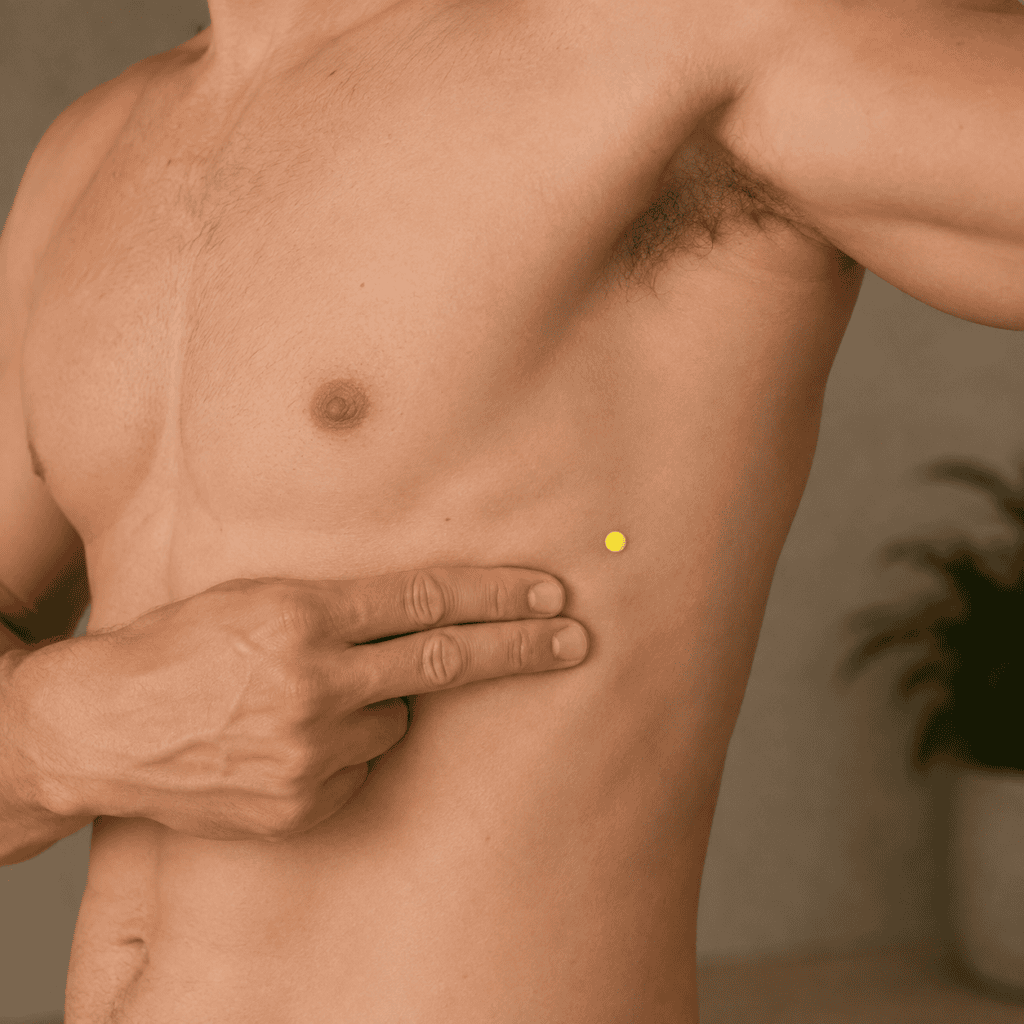
1. Press on SP21 on the side of the chest for pain throughout the body. SP21 sits on the side of the rib cage, in a line straight down from the center of the armpit, about a hand’s width below the armpit, between the ribs. Cross your arms over your chest as if giving yourself a hug, and press into the side of the ribs with your fingertips on both sides at once for one to two minutes, using gentle to moderate pressure. SP21 is called “Dabao,” the “Great Embracing,” and it is the Great Luo point of the Spleen.
SP21 is a special acupuncture point. As the Spleen’s Great Luo, it connects to the body’s vessel network. Classical texts recommend it for pain anywhere in the body, as well as limb weakness or heaviness. This makes it an important point for chronic pain, particularly when the pain is widespread or shifts from place to place. SP21 reaches the deep network vessels where persistent pain settles and helps restore the flow. Its name, the Great Embracing, reflects both its effect and the way you press it, by wrapping your arms around yourself. The area may be sensitive, so begin gently and gradually increase pressure as your body relaxes.
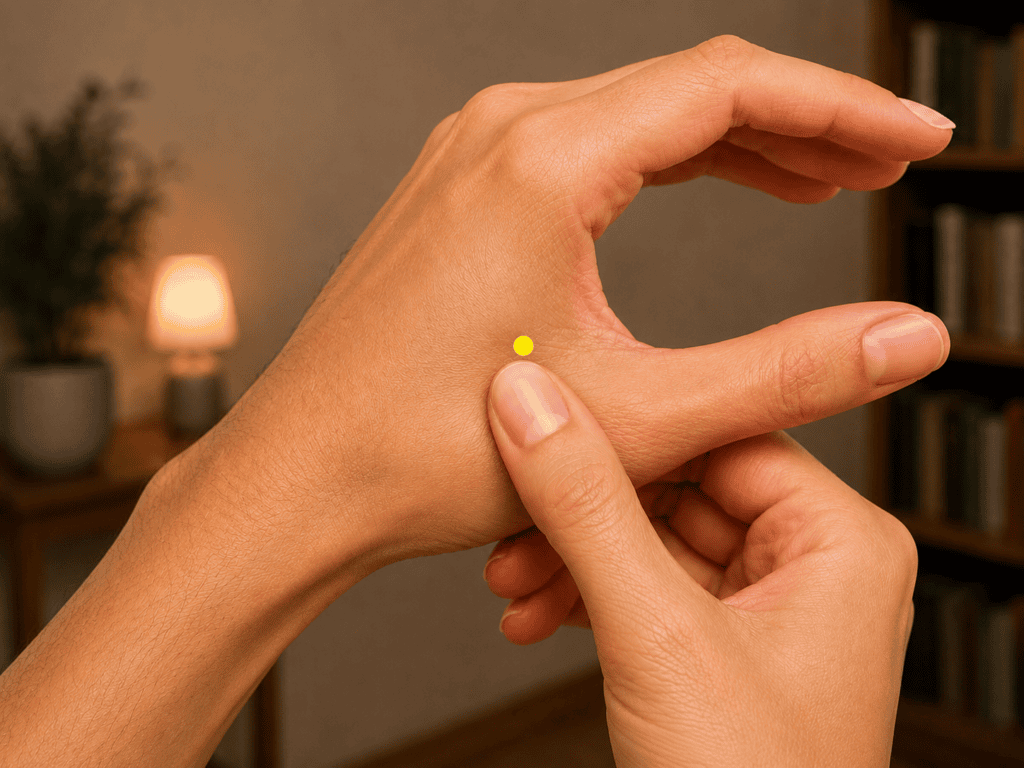
2. Press on LI4 in the hand to relieve pain throughout the body. LI4 sits in the webbing between the thumb and index finger, at the highest point of the muscle when you bring them together. Press firmly with the thumb of your other hand for one to two minutes on each hand. LI4 is called “Hegu,” and it is one of the most powerful pain-relieving points in the body. LI4 is avoided during pregnancy.
LI4 is a well-known point for all kinds of pain. It moves Qi throughout the body, eases pain even from a distance, and helps release the body’s natural painkillers. For chronic pain, it is a dependable point to use daily. Because it is located on the hand, you can press it anywhere, anytime you feel a flare coming on.
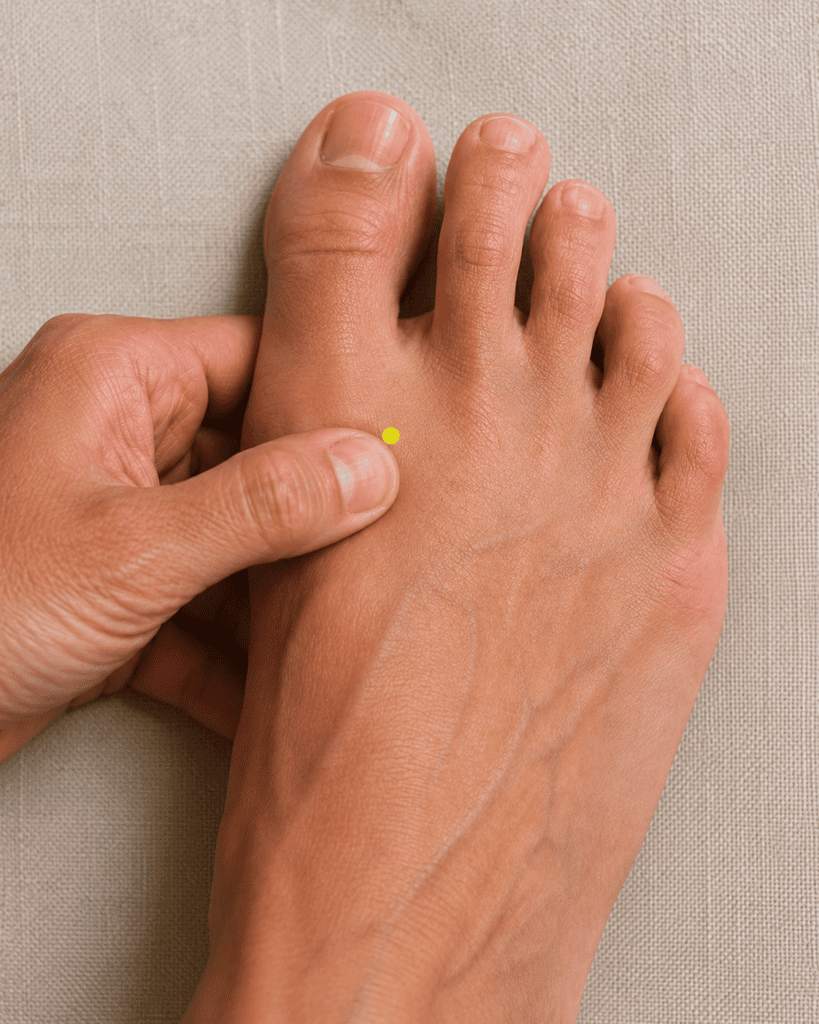
3. Press on LR3 on the top of the foot to complete the Four Gates. LR3 sits on the top of the foot, in the webbing between the big toe and second toe, about two finger-widths back where the bones meet in a small hollow. Press firmly with your thumb for one to two minutes on each foot. LR3 is called “Taichong,” and it is the primary point for moving stuck Liver Qi.
LR3 helps release stuck Qi that causes pain while calming the tension, frustration, and stress that often worsen chronic pain. Pressing LR3 together with LI4 creates the Four Gates, a key acupuncture combination for moving Qi and Blood throughout the body and easing pain wherever it appears. Using all four gates, both hands and both feet, is one of the simplest and most effective routines for chronic pain.
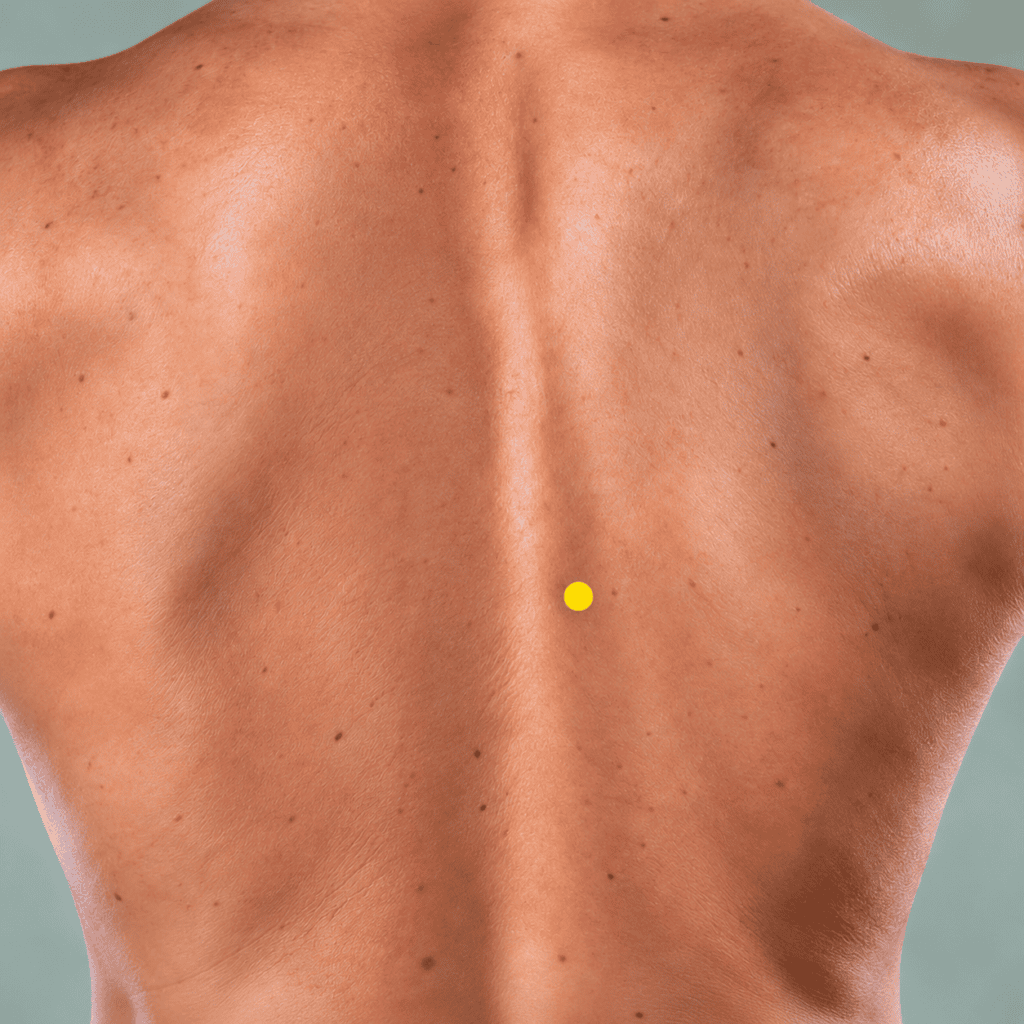
4. Press on BL17 on the mid-back to move stuck Blood. BL17 sits on the mid-back, about two finger-widths out to each side of the spine, roughly level with the bottom tips of the shoulder blades. Lie on your back with a tennis ball under each point, or lean against a wall with the balls in place, and let your body weight press for one to two minutes. BL17 is called “Geshu,” and it is the influential point for the Blood.
When chronic pain remains in one area, feels stabbing or sharp, or worsens at night, Chinese medicine views it as Blood stasis, meaning Blood that has been stuck so long that it can no longer move freely. BL17 is the primary point for getting Blood moving again. It is particularly useful for old injuries that never fully healed and for deep, persistent pain. Using tennis balls on this point can also help release tight mid-back muscles, which often ache in people with long-term pain.
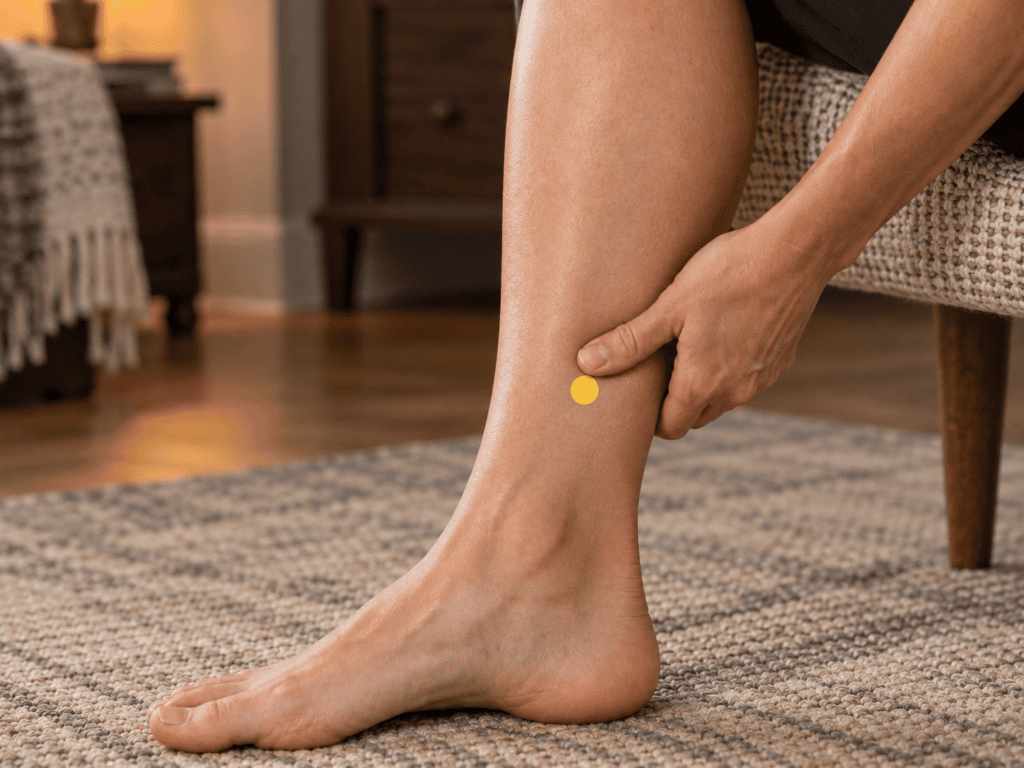
5. Press on SP6 above the inner ankle to nourish and move the Blood. SP6 sits four finger-widths up from the tip of the inner ankle bone, just behind the back edge of the shinbone. Press firmly for one to two minutes on each leg. SP6 is called “Sanyinjiao,” the “Three Yin Intersection,” where the Spleen, Liver, and Kidney channels meet. SP6 is avoided during pregnancy.
SP6 helps nourish and move the Blood, which matters in chronic pain because long-term pain often indicates that the Blood is both stuck and depleted. This point supports the Spleen, Liver, and Kidney, calms the mind, and eases the poor sleep that often accompanies chronic pain. It works well with BL17: one point moves the Blood, while the other nourishes it.
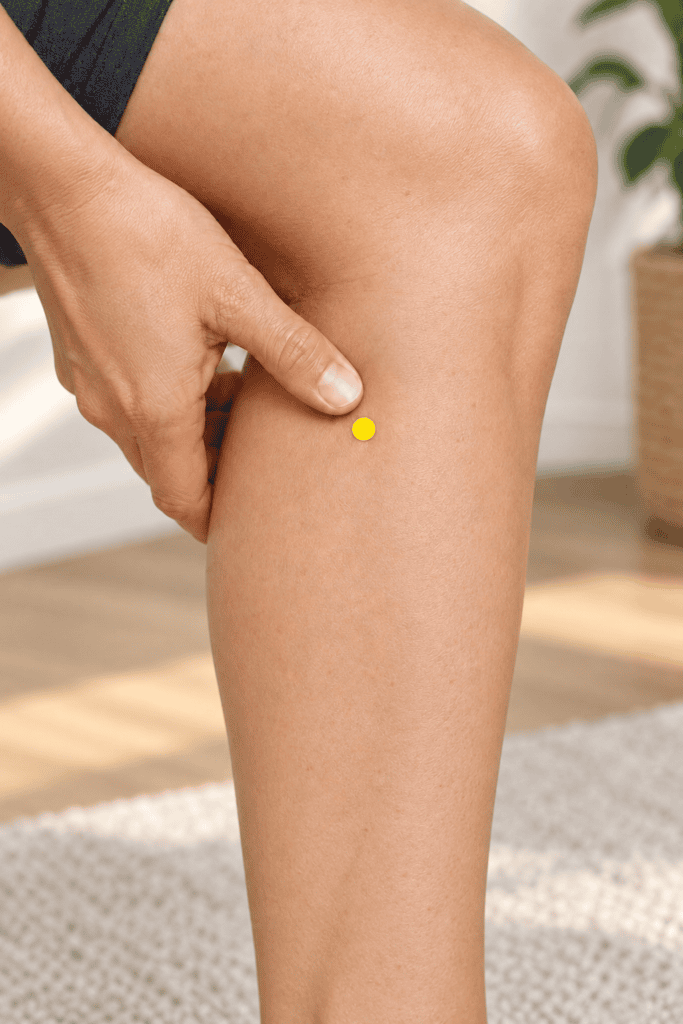
6. Press on GB34 below the outer knee to relax the sinews. GB34 sits on the outer lower leg, in the hollow just below and in front of the head of the fibula, the bony knob below the outer side of the knee. Press firmly with your thumb for one to two minutes on each leg. GB34 is called “Yanglingquan,” and it is the influential point for the sinews, tendons, and muscles.
Chronic pain often causes muscle guarding, the tight, protective tension your body holds around painful areas. This tension can become painful itself. As the main point for the sinews, GB34 helps relax guarding throughout the body while easing stiffness and limited movement. For pain accompanied by tight muscles, knots, or stiffness, this point helps your body relax.
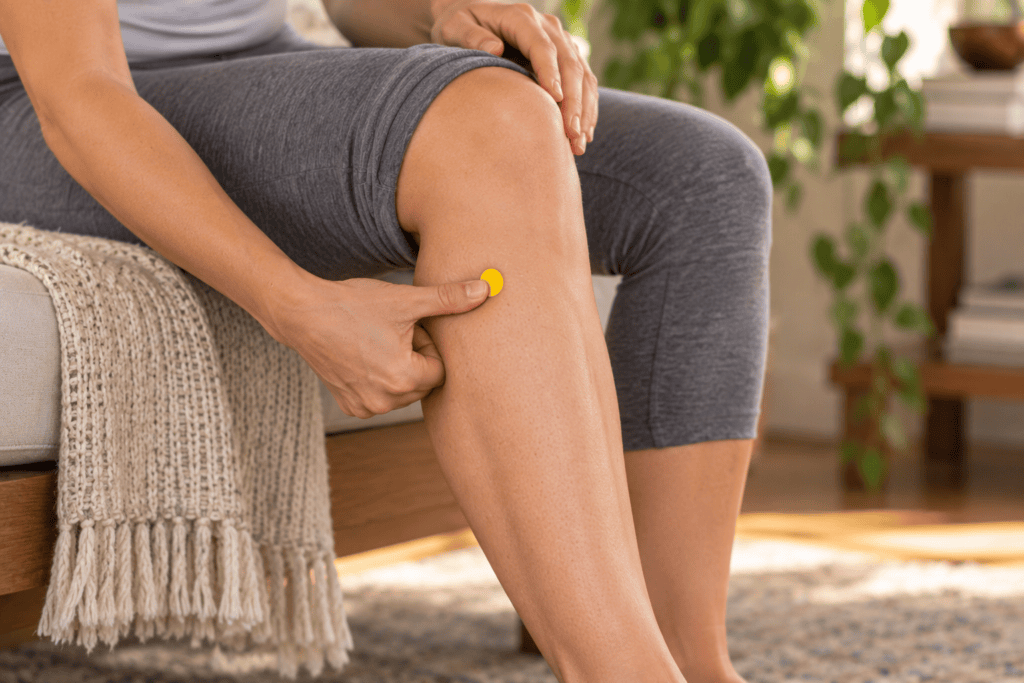
7. Press on ST36 below the knee to rebuild what pain has worn down. ST36 sits four finger-widths below the lower edge of the kneecap and one finger-width to the outside of the shinbone, on the muscle that rises when you flex your foot. Press firmly with your thumb for one to two minutes on each leg. ST36 is called “Zusanli,” the “Leg Three Miles,” and it is the master point for building Qi and Blood.
Living with pain for months or years is exhausting, and this depletion makes it harder for your body to heal and increases your sensitivity to pain. ST36 helps rebuild Qi and Blood at their source, supports your energy and resilience, and addresses the depletion that moving points alone cannot correct. It is one of the most important points to use daily for long-term conditions.
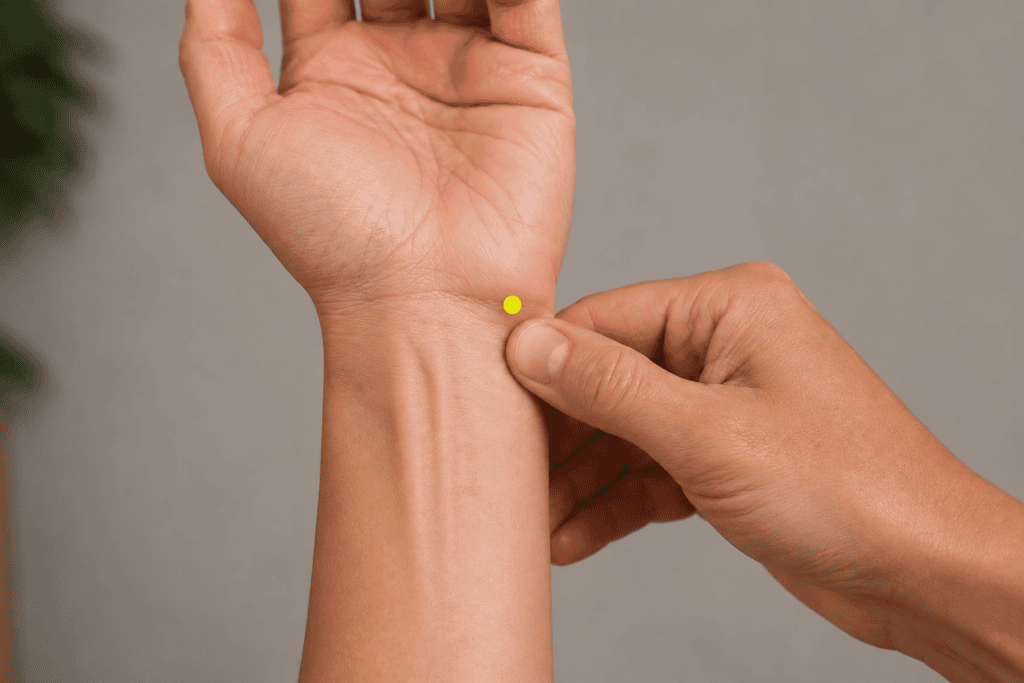
8. Press on HT7 at the wrist to calm the sensitized nervous system. HT7 sits on the inner wrist crease, on the pinky side, in the small hollow just inside the tendon. Press firmly with your thumb for one to two minutes on each wrist. HT7 is called “Shenmen,” the “Spirit Gate,” and it is the most important point for calming the Shen.
With chronic pain, the nervous system becomes more sensitive, while stress, anxiety, and poor sleep can intensify the experience of pain. In Chinese medicine, the Heart is said to house the Shen, and the classics say all pain is felt through the Heart. HT7 calms the Heart and settles the Shen, helping ease the anxiety, irritability, and poor sleep that can worsen pain. It is a useful point during pain flares and at bedtime.
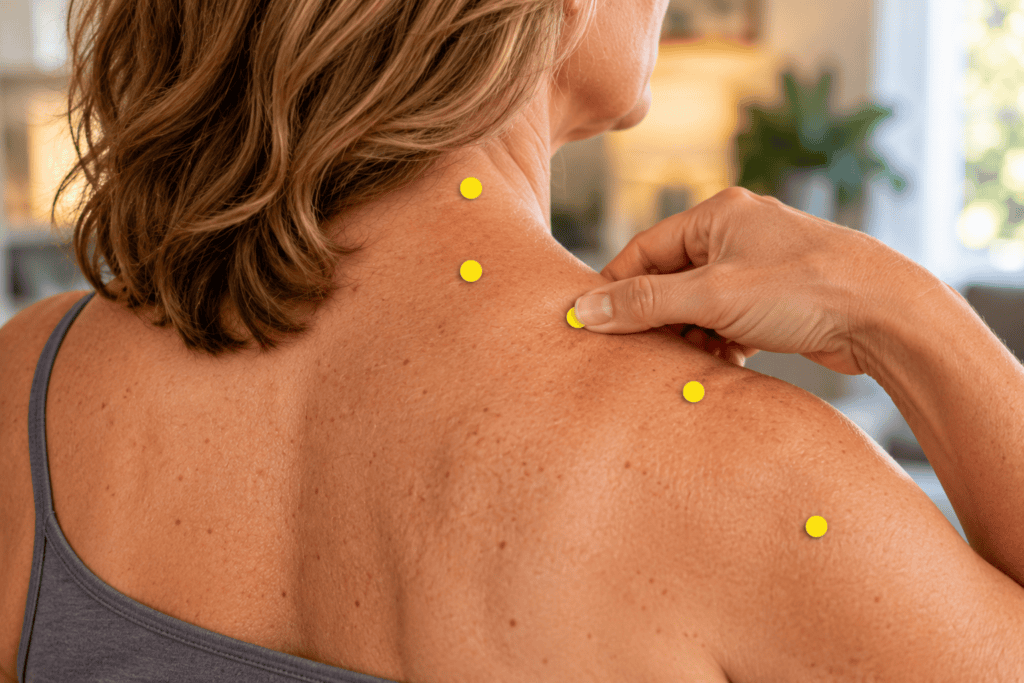
9. Press on the Ashi points at your own sore spots. Ashi points are the tender spots in your own body: the knots, tight bands, and sore places around the area where your pain lives. Feel for them with your fingertips and press each one steadily, within what feels tolerable, for about a minute, or roll over them with a tennis ball. “Ashi” means “that’s it,” the sound people make when the sore point is found.
Everyone’s chronic pain is different, so Ashi points focus on your specific sore spots. In Traditional Chinese Medicine, a tender point indicates where the flow is most blocked; pressing it can help release local stagnation, while other points work from a distance. Apply pressure patiently rather than forcefully, since a sensitive system responds better to steady, moderate pressure than to hard pressing. Ease off any spot that causes sharp pain.
Why These Acupressure Points Work
In Traditional Chinese Medicine, chronic pain is understood as Qi and Blood becoming stuck in the network of vessels, often with Blood stasis, while also causing the fatigue and disturbed Shen associated with long-term pain. The nine points help address all of these issues.
- The whole-body point (SP21) reaches the body’s network of vessels and is the classical point for pain everywhere.
- The Four Gates (LI4, LR3) move Qi and Blood through the whole body and relieve pain from a distance.
- The Blood points (BL17, SP6) move stuck Blood and nourish depleted Blood.
- The points for sinews and strength (GB34, ST36) help relax tight muscles around pain and rebuild the energy that pain has used up.
- The calming point (HT7) helps calm the sensitive nervous system that can make pain feel worse, and the Ashi points help release your sore spots.
A large pooled analysis of individual patient data from more than twenty thousand people found acupuncture more effective than both sham acupuncture and usual care for chronic back, neck, shoulder, and osteoarthritis pain, as well as chronic headache. These benefits largely persisted a year later. A randomized trial published in the BMJ also found acupressure more effective than physical therapy for chronic low back pain.
How to Properly Use These Acupressure Points
Consistent, patient practice tends to improve chronic pain more than intense effort.
- Every day, work SP21, the Four Gates, ST36, SP6, and HT7 as a whole-body routine, taking about fifteen minutes.
- Add BL17 with tennis balls for fixed, stabbing, or long-standing pain, GB34 for tight, guarded muscles, and the Ashi points around the area where your pain lives.
- Use moderate, steady pressure. A sensitized nervous system responds better to calm, sustained pressure than to hard pressing, so stay within what feels tolerable and back off any point that flares the pain.
- Breathe slowly while you press, because slow breathing helps calm your nervous system.
- Work HT7 and SP6 at bedtime to support sleep, and use LI4 and LR3 anytime a flare begins.
- Practice daily for several weeks. Chronic pain develops over time, and it also takes time to improve.
Acupressure works best alongside other approaches that support your body’s recovery from pain. Gentle, regular movement, at a pace that avoids flares, is one of the most effective treatments for chronic pain. Get good sleep, since poor sleep can worsen pain. Applying warmth to tight, aching areas can relax the muscles and improve circulation. Managing stress, staying connected with others, and doing activities you enjoy can all help calm your nervous system. Working with a pain specialist, physical therapist, or counselor trained in pain can also make a meaningful difference.
When to Get Professional Help
Chronic pain should be properly diagnosed, so see a doctor if you have not had it evaluated, if its pattern changes, or if it continues to worsen. Seek medical help right away if your pain occurs with unexplained weight loss, fever, or night sweats; wakes you at night and does not improve with rest or a change in position; causes new numbness, tingling, or weakness; leads to loss of bladder or bowel control; or follows a fall or injury.
Chronic pain and low mood often coexist, so tell your doctor if you’re struggling emotionally. If pain leads to thoughts of self-harm, call or text the 988 Suicide and Crisis Lifeline immediately.
Acupressure is a legitimate, low-risk approach to managing chronic pain; however, it should be used in conjunction with the care appropriate to your condition.
Above and Beyond Acupuncture offers acupuncture, cupping, and lifestyle coaching at the North Frank Lloyd Wright Boulevard location in Scottsdale.
Schedule an appointment online to start your healing journey.
The points above are only as effective as the technique used to apply them. Where to press, how firmly, and for how long all affect the result. For a full breakdown of how to perform acupressure properly at home, read Performing Acupressure in 3 Easy Steps.
For a clinical understanding of chronic pain and its treatment, acupuncture for pain management explores neurological and fascial mechanisms in depth.

About the Publisher
Paul Kerzner, L.Ac., is a licensed acupuncturist and board-certified herbalist, as well as the founder of Above and Beyond Acupuncture in Scottsdale. His own journey from chronic patient to practicing acupuncturist shapes his commitment to providing honest, clinically grounded information about acupuncture and Traditional Chinese Medicine. Learn more about Paul and his clinical approach on the About Us page.