
Key Takeaways
- Eye strain from screen use is common, causing discomfort and fatigue around the eyes, temples, and neck.
- Acupressure offers a simple remedy, targeting specific points to relieve tension and improve eye comfort.
- Key acupressure points include BL2 for brow strain, Yuyao for eyelid relief, and Taiyang for headaches from eye strain.
- Maintaining good habits, like following the 20-20-20 rule, enhances the effectiveness of acupressure for eye strain.
- For persistent eye issues, consulting an eye doctor is essential as acupressure does not replace professional care.

Anyone who spends hours in front of a screen is familiar with the common symptoms: a dull ache around the eyes, dryness, gritty heaviness, and tension spreading to the temples and neck. These often lead to a blurry and tiring feeling, prompting the desire to close your eyes and rest. Eye strain is a prevalent issue today, but acupressure provides an easy solution using just your fingertips. Gentle pressure around the eyes, extending to the temples and neck, can help relieve the tension and fatigue accumulated after a day of intense focus.
Chinese medicine offers a clear perspective on tired eyes, linking the Liver to eye health. It explains that Liver Blood nourishes the eyes, keeping them moist, clear, and comfortable. Prolonged visual tasks, such as screen use, gradually deplete this nourishment, leading to dryness, fatigue, and pain. Additionally, Qi and Blood tend to stagnate in the small muscles around the orbit, which remain tense throughout the day. Tension in the neck and along the Gallbladder channel, which connects to the head, further exacerbates this strain. The following points address these issues by promoting the circulation of Qi and Blood around the eyes, relieving tension in the temples and neck, and using the channel connection to the Liver, which governs eye health.
Acupressure may alleviate daily eye strain caused by screens and close-up tasks, but it does not address underlying vision issues or eye conditions.
Here are ten acupressure points that can help:
What Acupressure Points to Press and Why
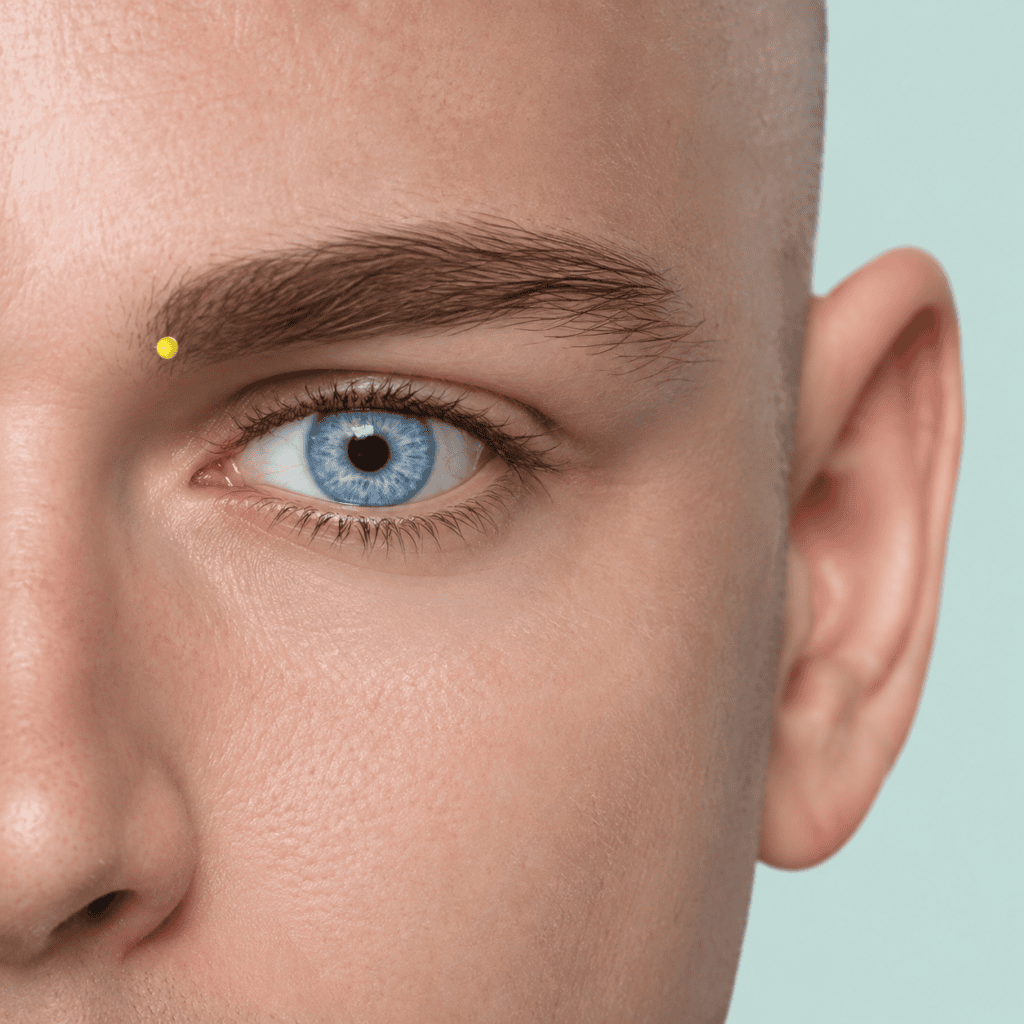
1. Press on BL2 at the inner eyebrow to relieve strain across the brow. BL2 sits in the small notch at the inner end of the eyebrow, right where it meets the bridge of the nose. Press gently but firmly upward into the notch with your thumb or fingertip for about a minute on both sides at once. BL2 is called “Zanzhu,” and it is one of the most reliable points for tired, strained eyes.
BL2 clears the eyes and relieves the frontal tension that builds across the brow during close work, which is why it is a first choice for the ache that settles above and between the eyes after a long day of screens. It moves the stuck Qi and Blood right where the brow furrows in concentration, releasing the small muscles that have been held tight for hours. For the person whose eye strain shows up as pressure across the eyebrows and forehead, this point brings quick relief and pairs naturally with the brow and temple points that follow.
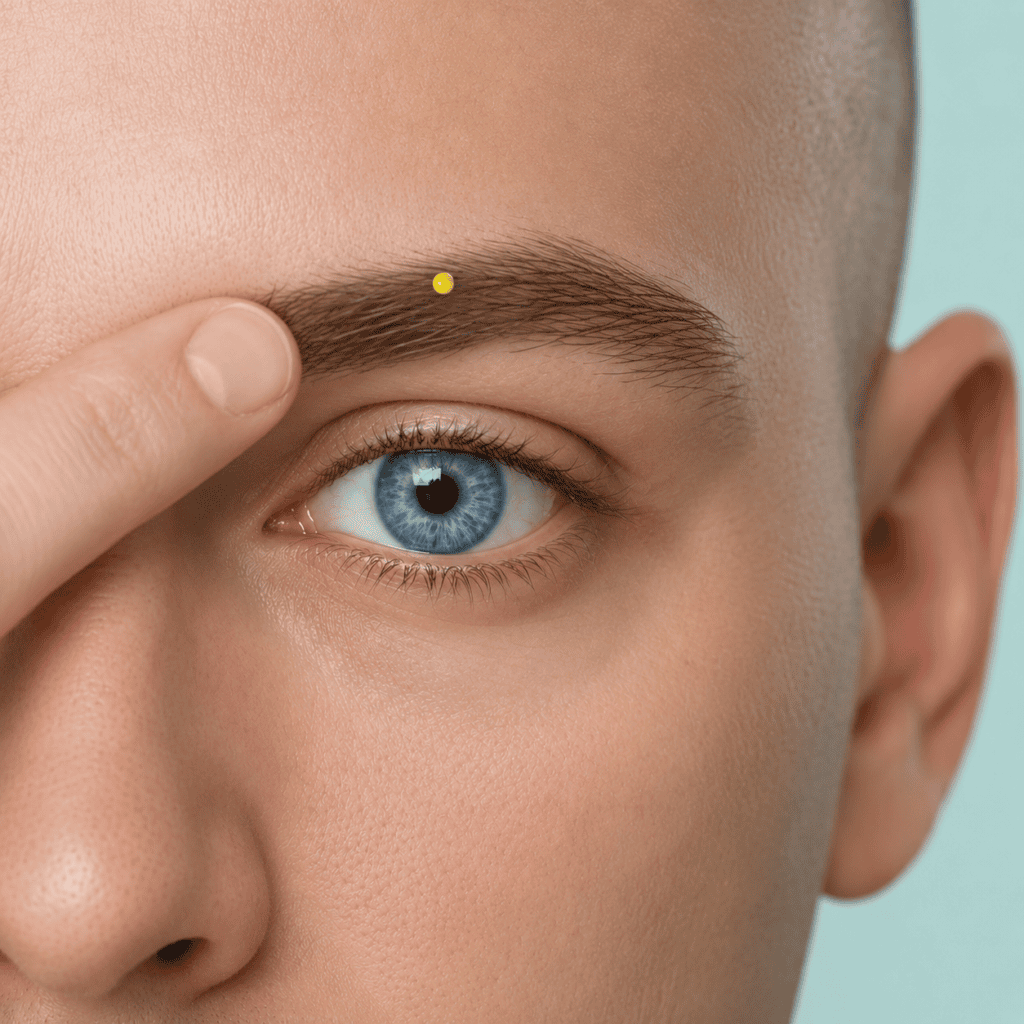
2. Press on Yuyao in the middle of the eyebrow to ease the eyelid and eye. Yuyao sits at the midpoint of the eyebrow, directly above the pupil when you look straight ahead. Press gently upward or straight in with your fingertip for about a minute on both sides. Yuyao is an extra point, meaning it sits off the main channels, and it is used specifically for the eyes and eyelids.
This point eases eye strain, twitching or heavy eyelids, and the tired ache centered over the eye itself. Sitting directly above the eyeball, it addresses the local stagnation in the muscles that raise the brow and hold the eye open through hours of focus. It is a gentle, targeted point for the fatigue felt right in the eye, and it works well pressed in sequence with BL2 at the inner brow and the outer brow point next in the list, treating the whole span of the eyebrow in one pass.
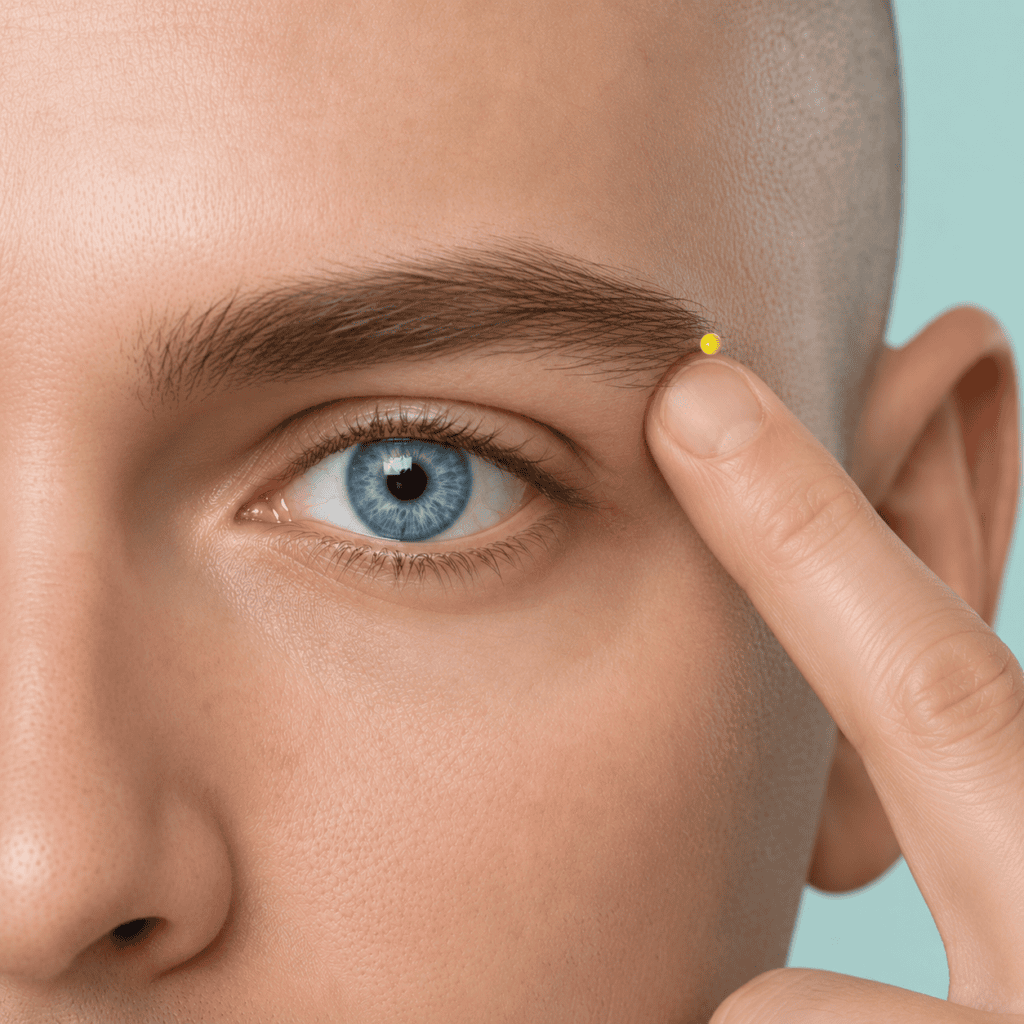
3. Press on SJ23 at the outer eyebrow to release the outer eye and temple. SJ23 sits in the small hollow at the outer end of the eyebrow, where the brow tapers off toward the temple. Press gently into the hollow with your fingertip for about a minute on both sides. SJ23 is called “Sizhukong,” and it clears the eyes and eases temporal tension.
SJ23 relieves the strain that gathers at the outer corner of the eye and the tension that runs from there into the temple, a common pattern for anyone whose eye fatigue turns into a headache by the side of the head. It brightens tired eyes and moves the stagnation at the outer orbit where the small muscles pull during concentrated seeing. Completing the brow line from BL2 through Yuyao to SJ23 treats the entire eyebrow, and this outer point flows naturally into the temple point later in the list.
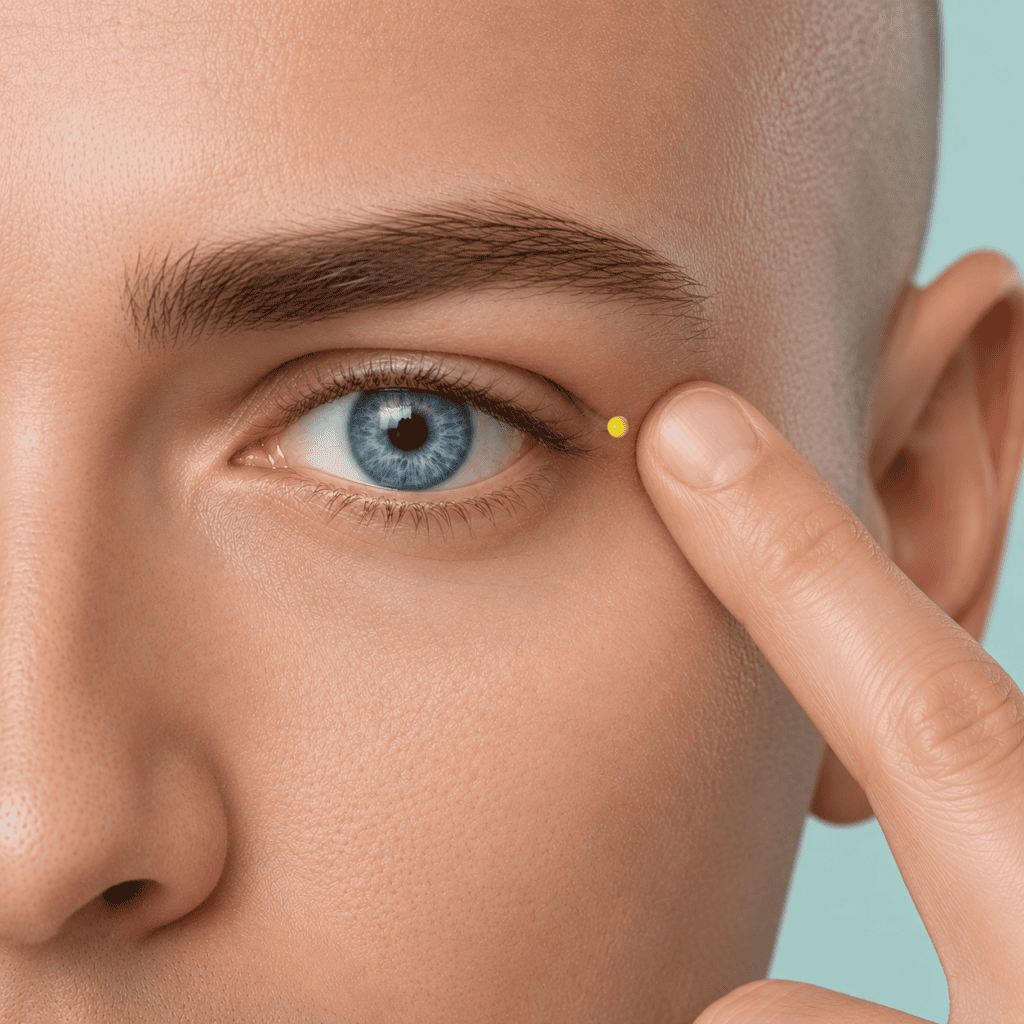
4. Press on GB1 at the outer corner of the eye for tired, strained eyes. GB1 sits in the small hollow just to the outside of the outer corner of the eye, about a finger-width out from the corner toward the temple, on the bony orbit. Press very gently with your fingertip for about a minute on both sides, staying on the bone and off the eye. GB1 is called “Tongziliao,” the “Pupil Crevice.”
GB1 is a classic point for tired, dry, strained eyes and the fine tension that gathers at the outer eye, and it is one of the points traditionally used to keep the eyes bright and comfortable. It moves the stagnant Qi and Blood at the outer orbit, easing the worn-out ache of overused eyes. Because it sits close to the eye, keep the pressure light and on the bony edge, letting slow, gentle pressure do the work rather than force.
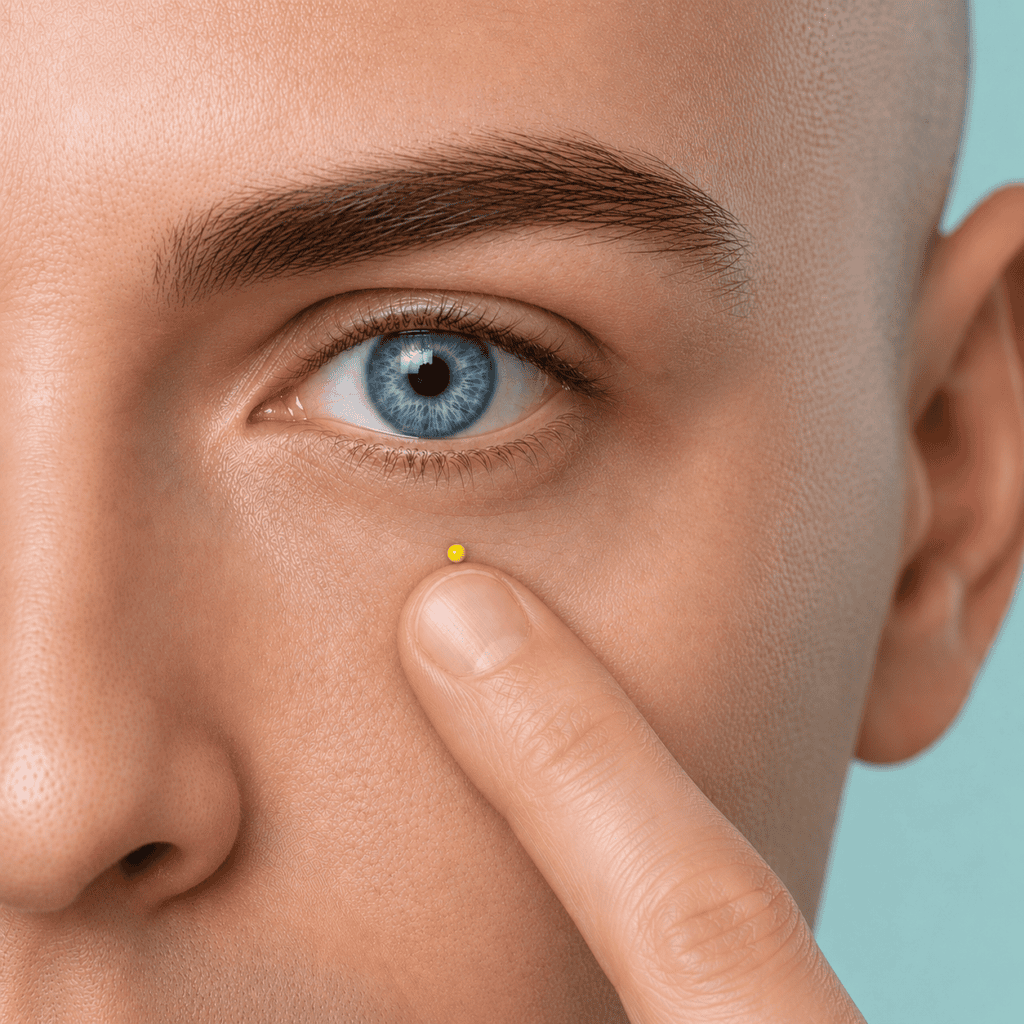
5. Press on ST2 below the eye to refresh tired eyes. ST2 sits on the bony ridge below the eye, in a small hollow about a finger-width beneath the center of the lower eyelid, directly below the pupil. Press gently upward against the ridge with your fingertip for about a minute on both sides. ST2 is called “Sibai,” and it is one of the most widely used points for refreshing tired eyes.
ST2 relieves the heavy, tired ache beneath the eyes and the puffiness and fatigue that come from long visual work, and it is a mainstay of the eye self-massage taught for exactly this purpose. It moves the stuck Qi and Blood in the cheekbone hollow just below the orbit, brightening eyes that have gone dull and sore. Keep the pressure gentle and directed against the bone rather than into the soft tissue, and this point noticeably freshens eyes worn down by a day of screens.
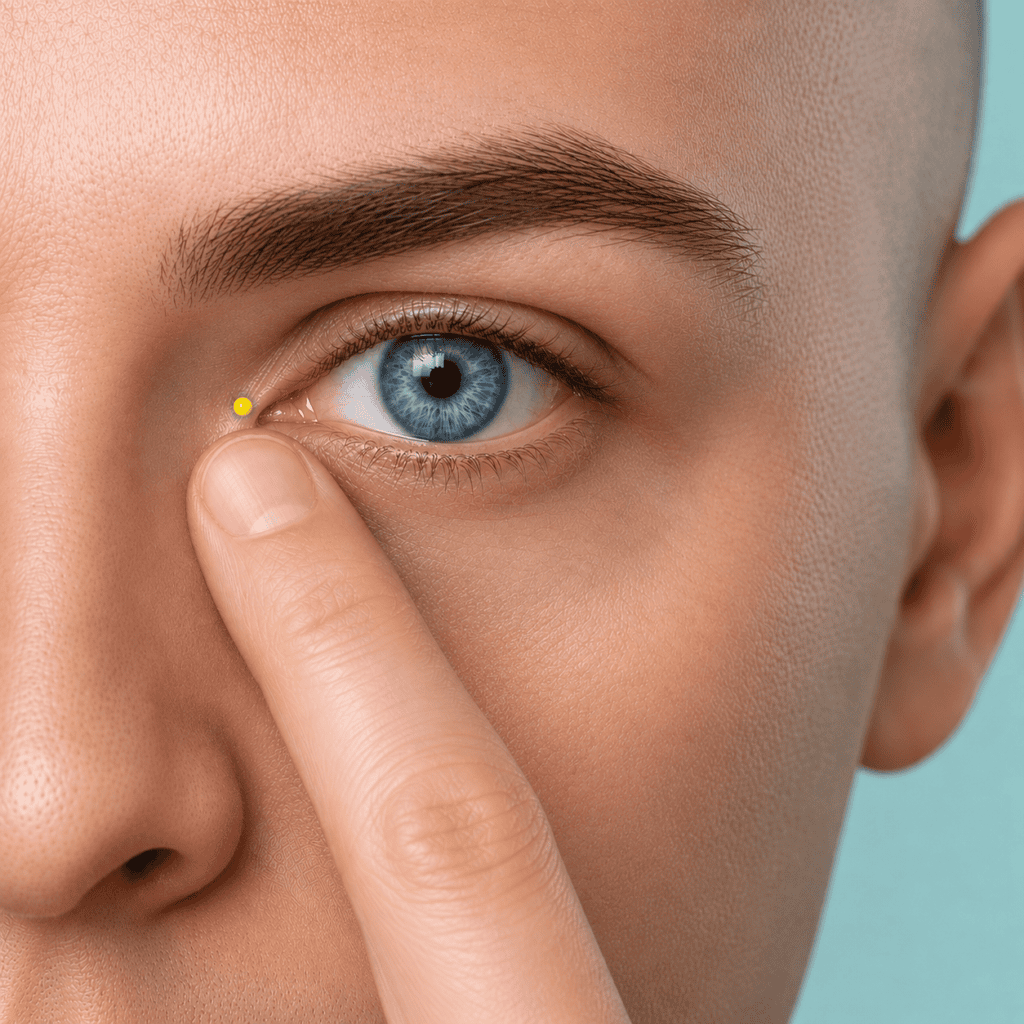
6. Press on BL1 at the inner corner of the eye for dryness and strain. BL1 sits in the tiny hollow just above the inner corner of the eye, between the corner and the bridge of the nose. Press very gently with your fingertip for about thirty seconds to a minute on both sides, using the lightest pressure of any point here. BL1 is called “Jingming,” the “Bright Eyes,” and it is one of the most important local points for the eyes.
BL1 is used for a wide range of eye complaints, including the dryness, tiredness, and blurriness of strained eyes, and its name reflects its long reputation for clearing and brightening the vision. It works right at the inner corner where several channels meet the eye, moving stagnation at the most delicate part of the orbit. Because it sits so close to the eyeball, this point calls for the gentlest possible pressure, a light, steady contact rather than any real push, and it should be skipped by anyone uncomfortable working this near the eye.
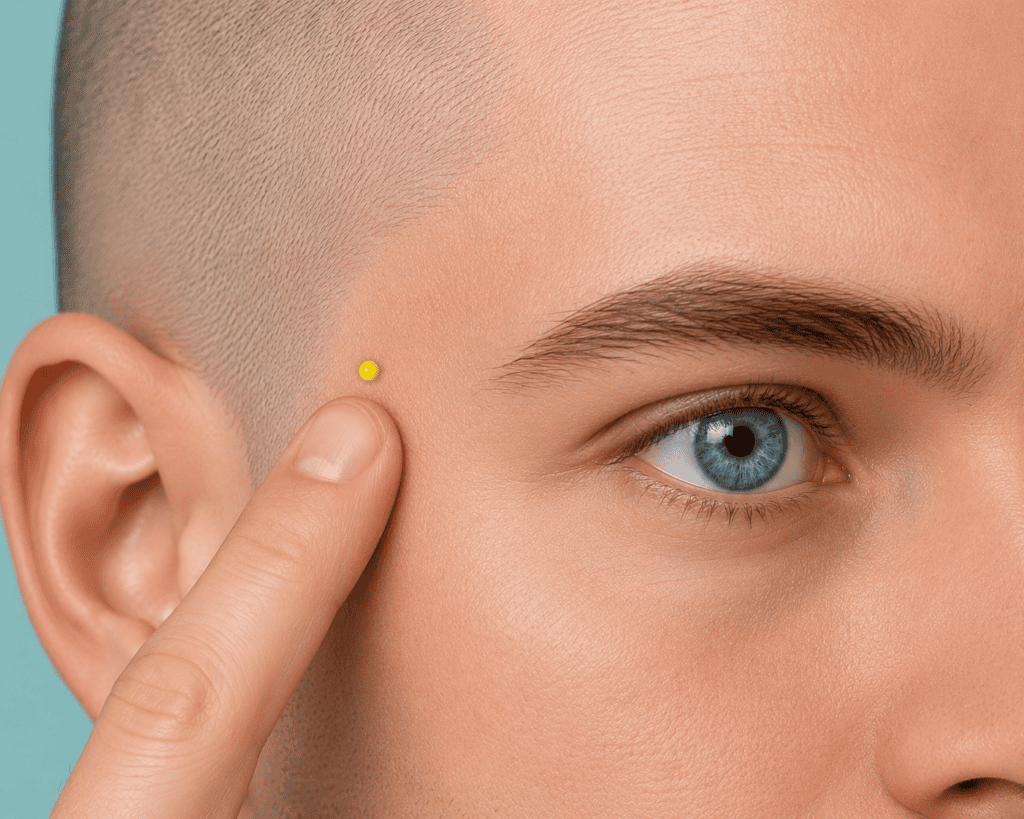
7. Press on Taiyang at the temple to release eye and head tension. Taiyang sits in the soft hollow of the temple, about a finger-width back from the midpoint between the outer eyebrow and the outer corner of the eye. Press firmly and make small circles with your fingertip for one to two minutes on both sides. Taiyang is an extra point, and it is one of the most used points anywhere for eye strain and headaches.
Taiyang releases the tension that eye strain sends into the temples, the tight, aching band that turns tired eyes into a headache, and it is deeply relaxing to work at the end of a long day. Unlike the delicate points around the orbit, this one takes firm, satisfying pressure, and it moves the stagnation in the temple where so much visual tension collects. For the person whose eye strain and headache run together, Taiyang is the point that addresses both at once, and it is worth spending an extra minute here.
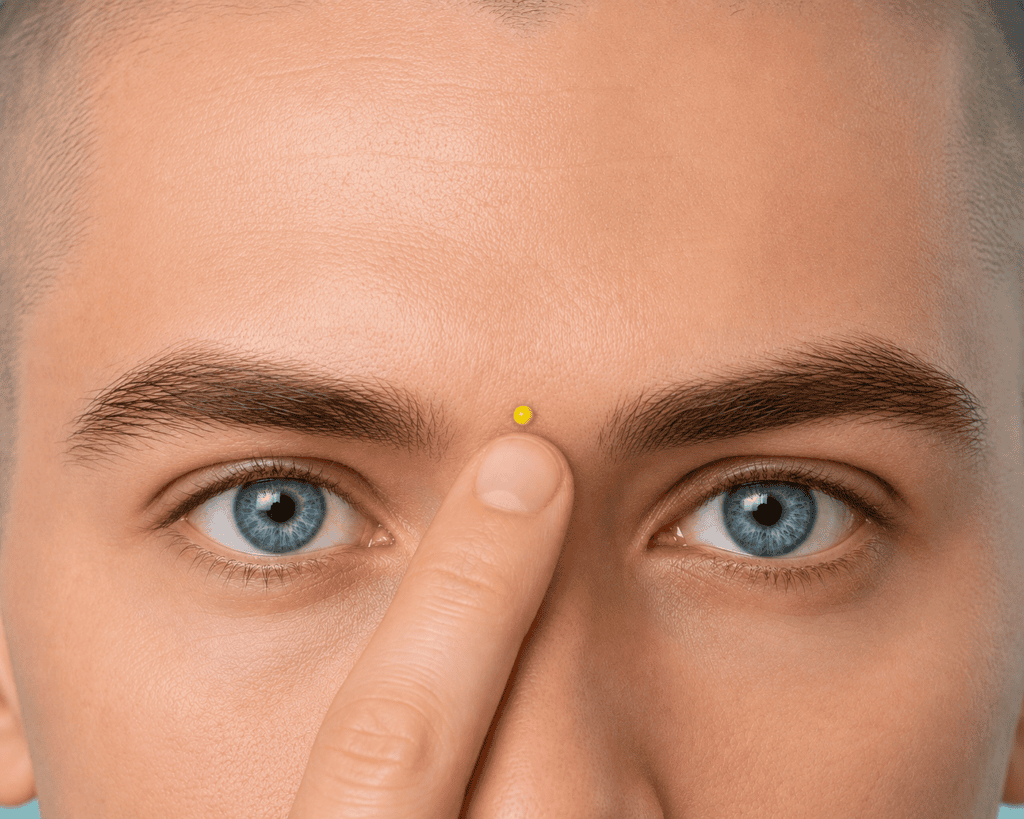
8. Press on Yintang between the eyebrows to calm the eyes and mind. Yintang sits in the center of the forehead, in the small hollow directly between the two eyebrows. Press gently and hold, or make small circles, with your fingertip for one to two minutes. Yintang is an extra point, and it is one of the most calming points in the body.
Yintang eases the pressure and strain that build between the eyes during concentrated work and quiets the mental fatigue that goes with it, since screen-driven eye strain and a tired, overworked mind so often arrive together. It settles the whole front of the face and the nervous system along with it, releasing the furrow of concentration held between the brows for hours. This point is as much about calming as about the eyes themselves, and pressing it slowly with a few deep breaths gives the eyes and the mind a moment to reset.
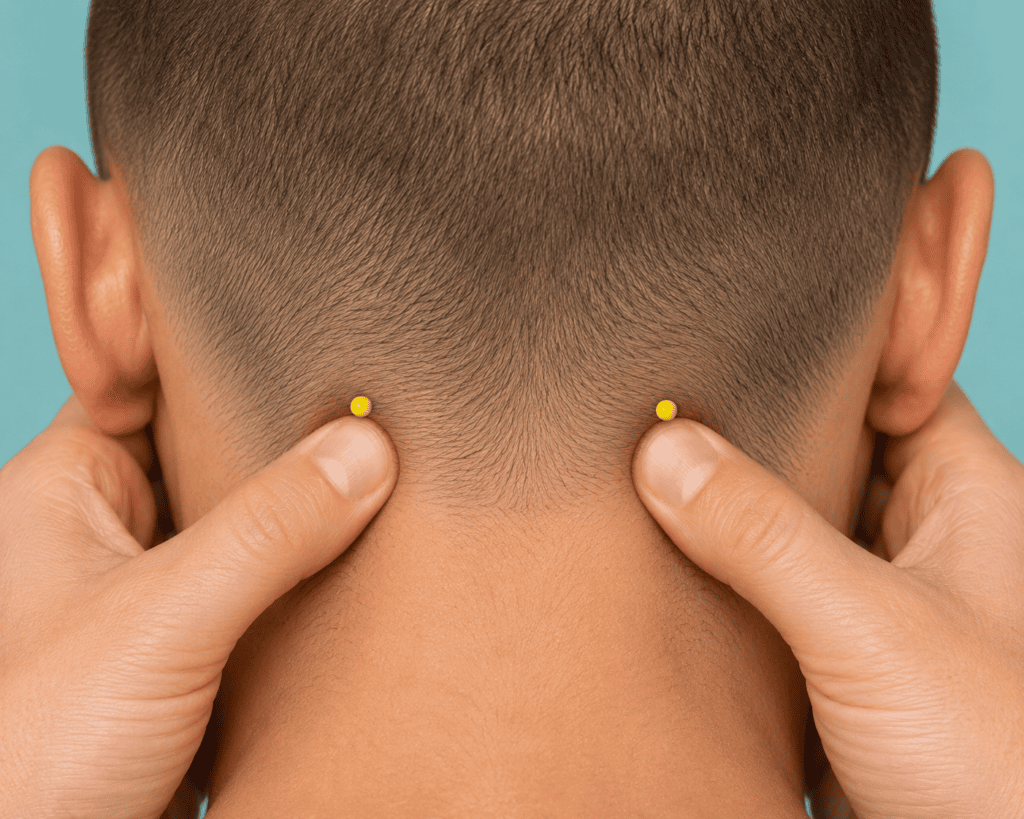
9. Press on GB20 at the base of the skull to release the neck-and-eye tension. GB20 sits in the two hollows at the base of the skull, between the two large vertical neck muscles and the outer edge, level with the top of the ears. Tip your head back slightly and press firmly up and inward with your thumbs for one to two minutes. GB20 is called “Fengchi,” and it is a major point for the head, neck, and eyes.
GB20 releases the tight, aching tension at the base of the skull that builds from hours of holding the head still at a screen, and in this tradition it is one of the classic points said to brighten the eyes, connecting the neck directly to visual fatigue. Screen-related eye strain is rarely just about the eyes, it travels down into the occiput and neck, and this point addresses that whole pattern at once. For anyone whose tired eyes come with a stiff, aching neck, GB20 is essential, and releasing it often eases the eyes more than working the orbit alone.
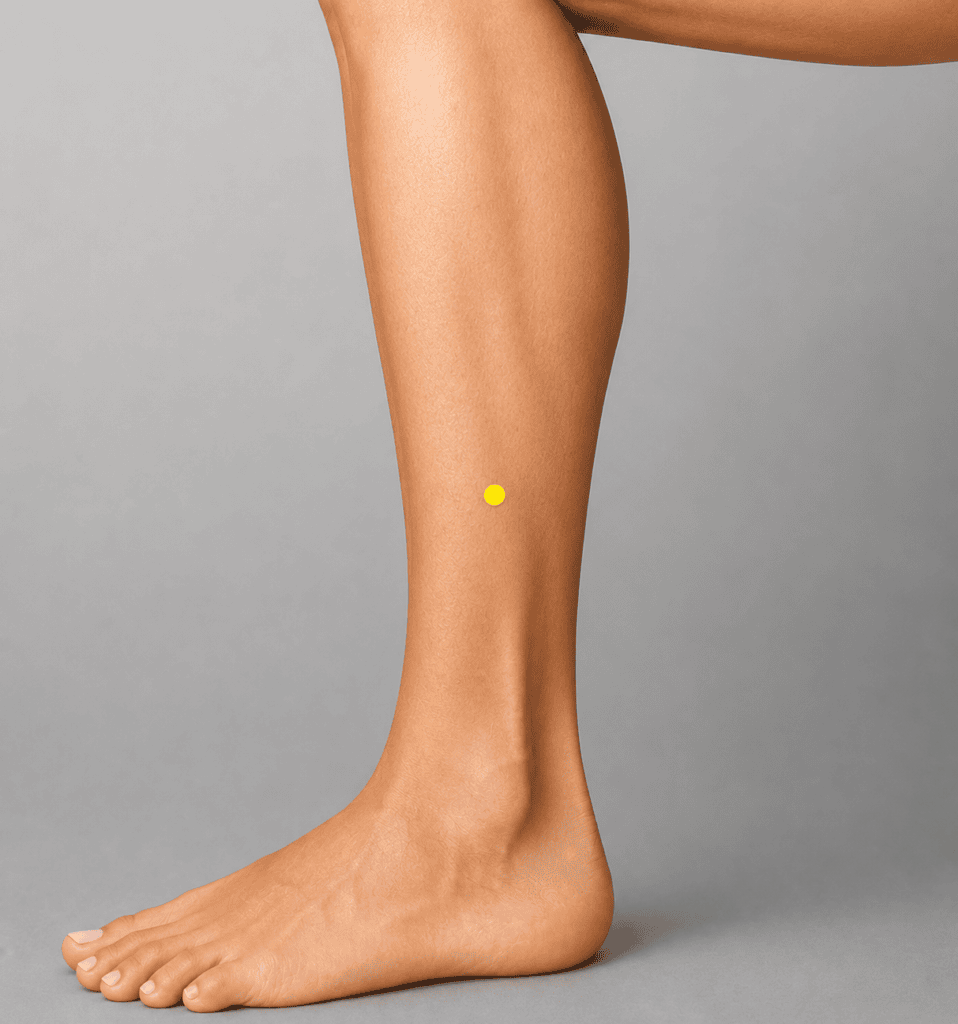
10. Press on GB37 on the lower leg to treat the eyes at the root. GB37 sits on the outer lower leg, about five finger-widths above the tip of the outer ankle bone, just in front of the fibula, the thinner of the two lower leg bones. Press firmly with your thumb for one to two minutes on each leg. GB37 is called “Guangming,” which means “Bright Light,” and it is the point most directly associated with the eyes and vision.
Where the other points work locally, GB37 reaches the eyes through the channel system, drawing on the Gallbladder channel’s close relationship with the Liver, the organ that opens into the eyes and nourishes them. Its very name points to its long use for eye complaints and failing, tired vision, and it treats strained eyes at the root rather than only at the surface. For the person whose eyes are chronically depleted by constant close work, this distal point supports the whole system that keeps the eyes nourished, and it is a fitting way to close a routine that began at the eyes themselves.
Why These Acupressure Points Work
In Traditional Chinese Medicine, the Liver supports the eyes by opening into them and supplying Blood that nourishes, moistens, and clarifies vision. Eye strain occurs after prolonged focus, depleting this nourishment and causing Qi and Blood to stagnate in the small muscles around the orbit, leading to tension in the temples, forehead, and neck.
- The points around the eye (BL2, Yuyao, SJ23, GB1, ST2, BL1) move the stuck Qi and Blood right where the strain sits, refreshing and brightening tired, dry, aching eyes.
- The temple and forehead points (Taiyang, Yintang) release the tension that eye strain sends into the head and calm the tired mind along with it.
- The neck point (GB20) frees the occipital tension that screen posture builds and that classically clouds the eyes.
- The distal point (GB37) reaches the eyes through the Liver and Gallbladder connection, supporting the system that nourishes them at the root.
How to Properly Use These Acupressure Points
Apply gentle pressure around the eyes and gradually use firmer strokes farther out, letting the routine naturally extend from the eyes outward.
- Go around the orbit first, BL2, Yuyao, SJ23, GB1, ST2, and BL1, using light, careful pressure, then move out to the temple, forehead, neck, and leg where you can press more firmly.
- Keep all pressure around the eyes gentle, stay on the bony edges of the orbit, and never press on the eyeball itself. Skip BL1 if working that close to the eye is uncomfortable.
- Hold each point for about a minute, or make small slow circles, breathing slowly as you go, and close your eyes while you work them.
- A full pass takes only a few minutes and can be repeated through the day, especially during a screen break.
Acupressure helps relieve eye strain, but establishing habits that protect your eyes prevents it from developing in the first place. Follow the 20-20-20 rule: every twenty minutes, look at something about twenty feet away for twenty seconds to give your eyes a break from continuous close-up focus. Blink frequently and fully, as screen use reduces blink rate and causes dryness. Keep your screen at a comfortable distance and brightness, minimize glare, and take regular breaks. Ensuring your vision prescription is up to date is also important, since uncorrected vision is a common hidden factor that contributes to eye strain.
When to Get Professional Help
Daily eye strain from screens is common and usually improves with rest and the methods mentioned above. However, some eye symptoms may require additional attention.
See an eye doctor if eye strain persists or worsens despite rest and good screen habits, and seek prompt care for eye pain exceeding mild tiredness, sudden vision changes, persistent blurred or double vision, flashes of light, new floaters, halos around lights, or eye redness with pain. Frequent or severe headaches should also be evaluated, as they may not originate from the eyes. Uncorrected or changing vision often causes strain, so getting an updated eye exam is advisable. Acupressure can relieve the tired, aching eyes after a long day, but it is not a substitute for medical care needed for eye disease or vision issues.
Above and Beyond Acupuncture offers acupuncture, cupping, and lifestyle coaching at the North Frank Lloyd Wright Boulevard location in Scottsdale.
Schedule an appointment online or call us today to start your healing journey.
The points above are only as effective as the technique used to apply them. Where to press, how firmly, and for how long all affect the result. For a full breakdown of how to perform acupressure properly at home, read Performing Acupressure in 3 Easy Steps.

About the Publisher
Paul Kerzner, L.Ac., is a licensed acupuncturist and board-certified herbalist, as well as the founder of Above and Beyond Acupuncture in Scottsdale. His own journey from chronic patient to practicing acupuncturist shapes his commitment to providing honest, clinically grounded information about acupuncture and Traditional Chinese Medicine. Learn more about Paul and his clinical approach on the About Us page.