
Key Takeaways
- Many people, particularly postpartum women and men with prostate problems, experience urinary incontinence. Acupressure may be a helpful remedy.
- Techniques involve applying pressure to certain acupressure points to enhance pelvic floor strength, improve bladder control, and balance internal Qi.
- Key acupressure points include BL32, CV4, and ST36 for bladder control, while LR3 helps reduce urgency linked to an overactive bladder.
- Consistency matters; perform acupressure daily for at least six to eight weeks for best results.
- Consult a healthcare professional if symptoms worsen or if you have other concerns, as this could signal underlying health issues that need medical care.

Urinary incontinence is quite common, especially among women after childbirth or menopause, and men following prostate problems or surgery, yet it remains rarely talked about. It may lead people to plan outings around bathrooms, avoid physical activity, and withdraw from activities they once enjoyed. The good news is that incontinence can often improve with proper care. Techniques like acupressure offer a simple, private way to support bladder control, along with pelvic floor exercises and healthy habits.
There are a few main types of incontinence, and knowing which one you have is helpful. Stress incontinence means leaking urine when you cough, sneeze, laugh, jump, or lift something, usually because the pelvic floor is weak. Urge incontinence, also called overactive bladder, is a sudden, strong need to urinate that is hard to control, often leading to frequent bathroom trips day and night. Many people experience both types.
In Traditional Chinese Medicine, bladder control involves several systems. The Kidney is thought to hold urine in; when Kidney Qi weakens with age, childbirth, or illness, the bladder may lose firmness, causing leaking and frequent urination. The Spleen helps keep things in place, so when its Qi is low, stress incontinence and a heavy feeling can occur, especially when tired. Stress and tension can affect the Liver Qi, making the bladder more irritable and urgent.
Here are nine acupressure points to strengthen the Kidney’s control, lift Qi, calm urgency, and support the pelvis.
What Acupressure Points to Press and Why
1. Press on the sacral points BL32 and BL33 to support the bladder and pelvic floor. These points sit on the sacrum, the flat, triangular bone at the base of the spine, in the second and third small dimples down on each side of the midline, about a thumb-width out from the center. Lie on your back with a tennis ball under the area, or have someone press both sides with their thumbs for one to two minutes. BL32 is called “Ciliao” and BL33 “Zhongliao.” These points are avoided during pregnancy.
Research strongly supports using sacral points to treat incontinence. For instance, a 2017 JAMA trial showed that women with stress incontinence experienced significantly less leakage after electroacupuncture at sacral points like BL33, compared to a sham treatment. This area contains nerves that regulate the bladder and pelvic floor, likely explaining the benefits. Consistently applying gentle pressure or using a tennis ball on these points may help manage both stress and urge incontinence.
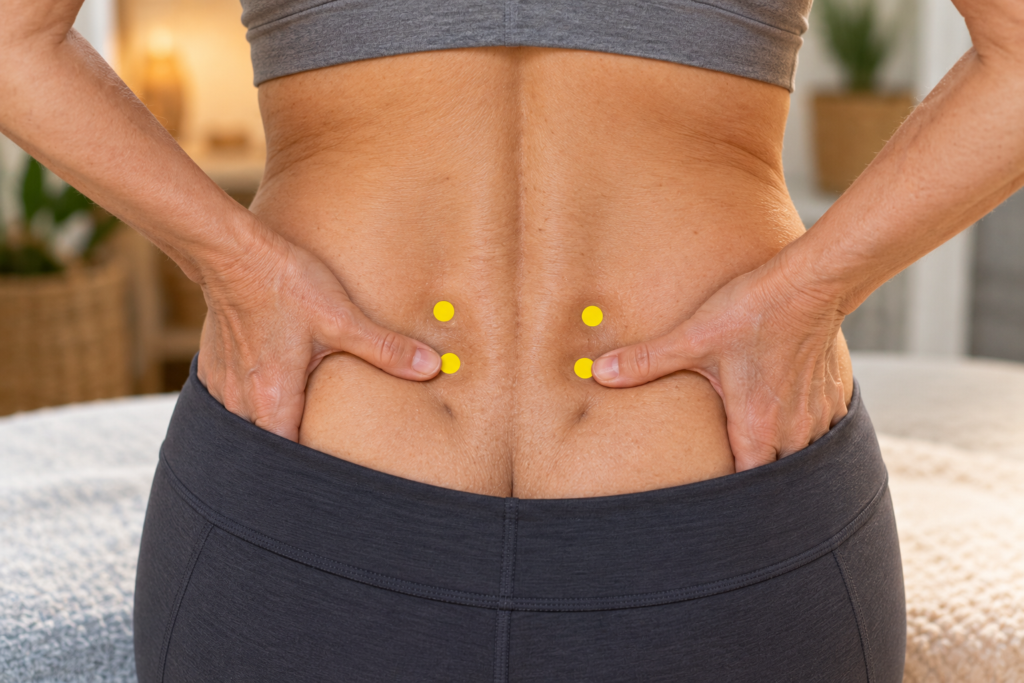
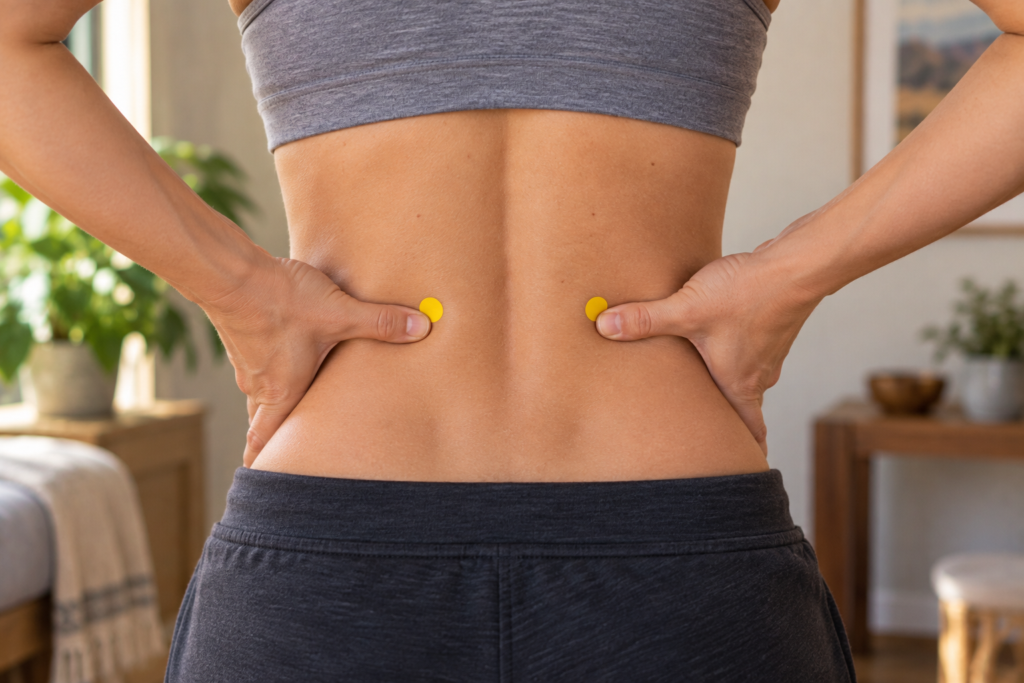
2. Press on BL23 on the lower back to strengthen the Kidney. BL23 sits on the lower back, at about waist level, roughly two finger-widths out to each side of the spine. Press firmly with your thumbs or knuckles, or rub the area briskly until it feels warm, for one to two minutes. BL23 is called “Shenshu,” the Kidney’s back point.
Because the Kidney is thought to regulate the lower openings and hold urine, BL23 is key to bladder control. It works by strengthening and warming the Kidney from behind, which can help with issues like dribbling, frequent urination, waking at night to urinate, and incontinence associated with aging or a weak, sore lower back. A traditional way to support the Kidney is by briskly rubbing this area until it feels warm.
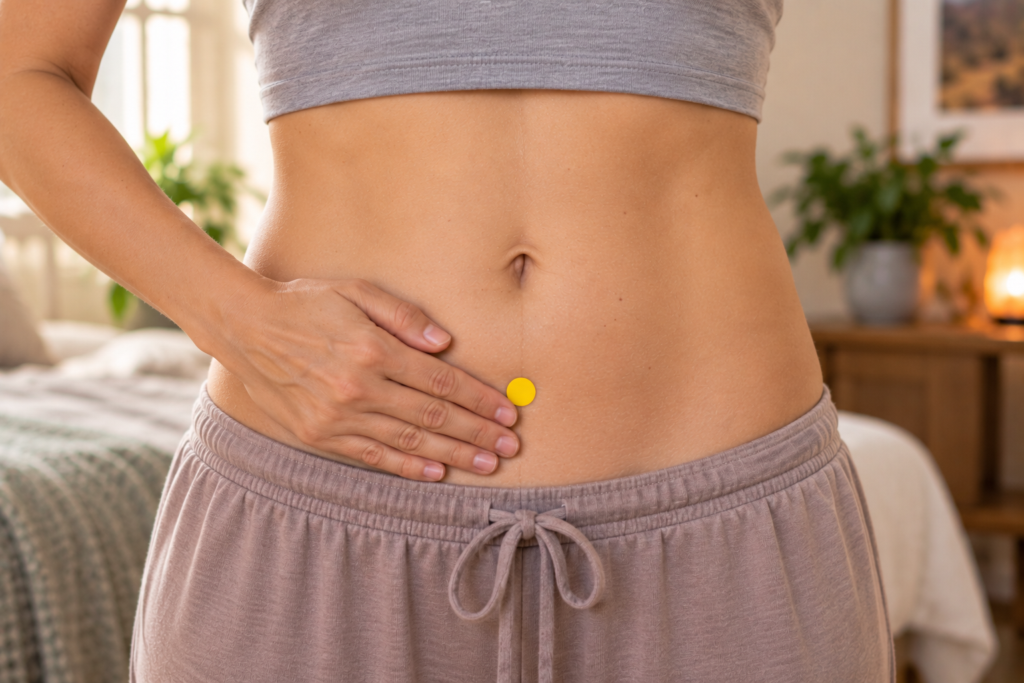
3. Press on CV4 below the navel to firm the lower abdomen. CV4 sits on the midline of the lower abdomen, about four finger-widths below the navel. Empty your bladder first, then rest your fingertips or a warm hand there and press gently for one to two minutes. CV4 is called “Guanyuan,” the “Gate of Origin.” CV4 is used with caution in pregnancy.
CV4 is positioned directly over the bladder and lower abdomen, serving as a key point to strengthen the Kidney and lower body. It helps enhance the Qi that stabilizes the bladder and is commonly used for issues like frequent urination, leakage, and sleep disturbances. Applying gentle warmth or a heat pack to this area can amplify its benefits.
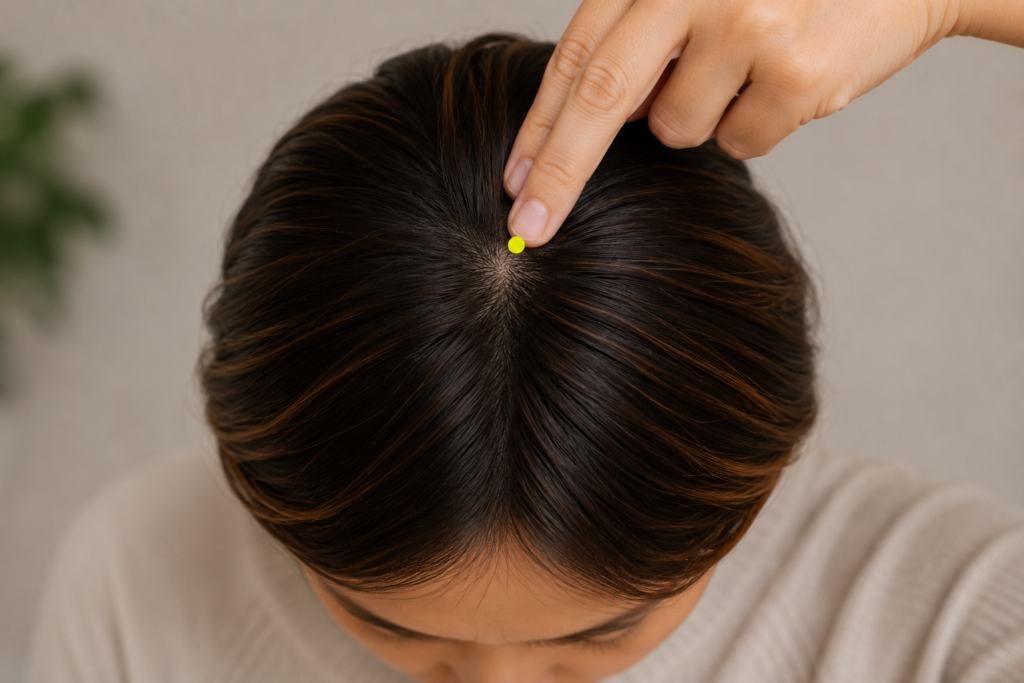
4. Press on GV20 at the top of the head to lift what has sunk. GV20 sits at the very top of the head, on the midline, on a line drawn up from the tops of both ears. Press straight down, or make small circles, with your fingertip for one to two minutes. GV20 is called “Baihui,” the “Hundred Meetings.”
While it may seem unusual that a point on the head can aid bladder issues, GV20 is a traditional point used for conditions caused by Qi deficiency, including stress incontinence, pelvic heaviness, and prolapse. It helps elevate Qi and enhances the body’s capacity to retain. GV20 is often paired with ST36, with one point lifting from above and the other reinforcing from below.
5. Press on KI3 above the inner ankle to rebuild the Kidney. KI3 sits in the hollow between the inner ankle bone and the Achilles tendon, level with the tip of the ankle bone. Press firmly with your thumb for one to two minutes on each ankle. KI3 is called “Taixi,” the source point of the Kidney.
KI3 supports kidney regeneration at its core, boosting the Qi that retains urine and maintains reserves that may diminish with aging, childbirth, or prolonged illness. It is particularly beneficial for symptoms like frequent urination, post-void dribbling, and nighttime awakenings to urinate. Because it works at a fundamental level, consistent daily practice over several weeks yields the best results.
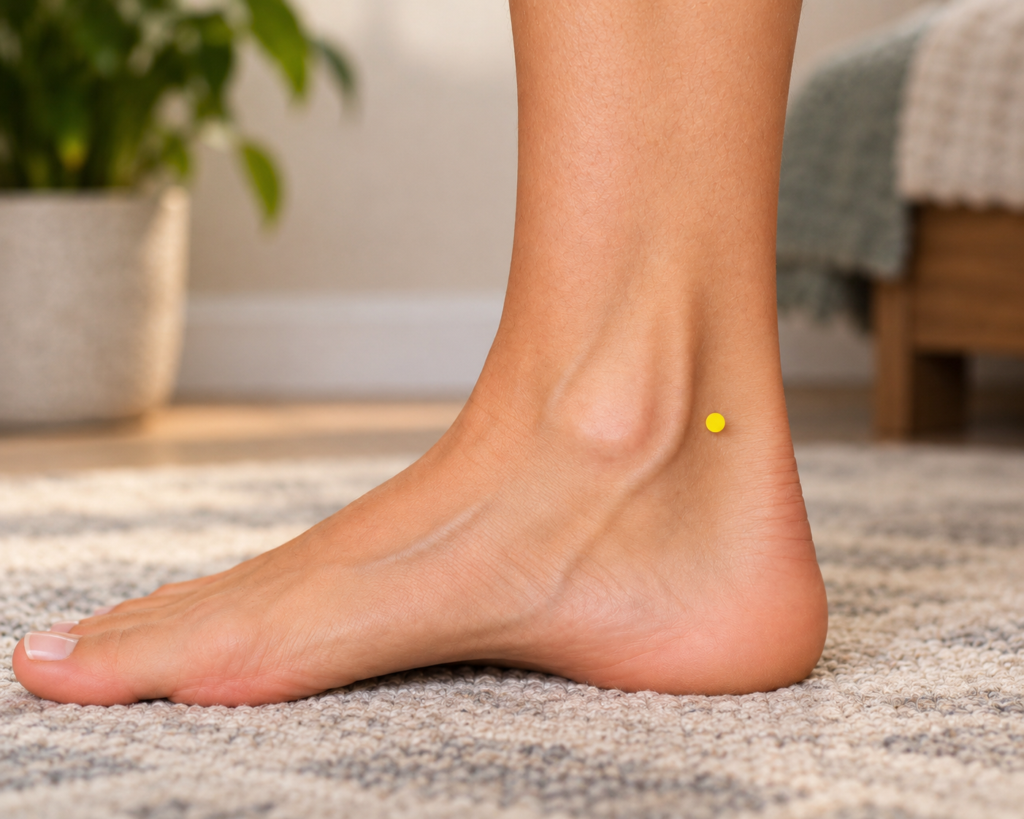
6. Press on SP6 above the inner ankle, the key point for the lower body. SP6 sits four finger-widths up from the tip of the inner ankle bone, just behind the back edge of the shinbone. Press firmly for one to two minutes on each leg. SP6 is called “Sanyinjiao,” the “Three Yin Intersection,” where the Spleen, Liver, and Kidney channels meet. SP6 is avoided during pregnancy.
SP6 is a crucial point for the bladder and pelvic region because three important channels converge here and run through the lower abdomen. It supports the Spleen and Kidney, calms the Liver, and helps regulate urination, benefiting both stress and urge incontinence. Practitioners frequently begin treatments with this point for bladder problems.
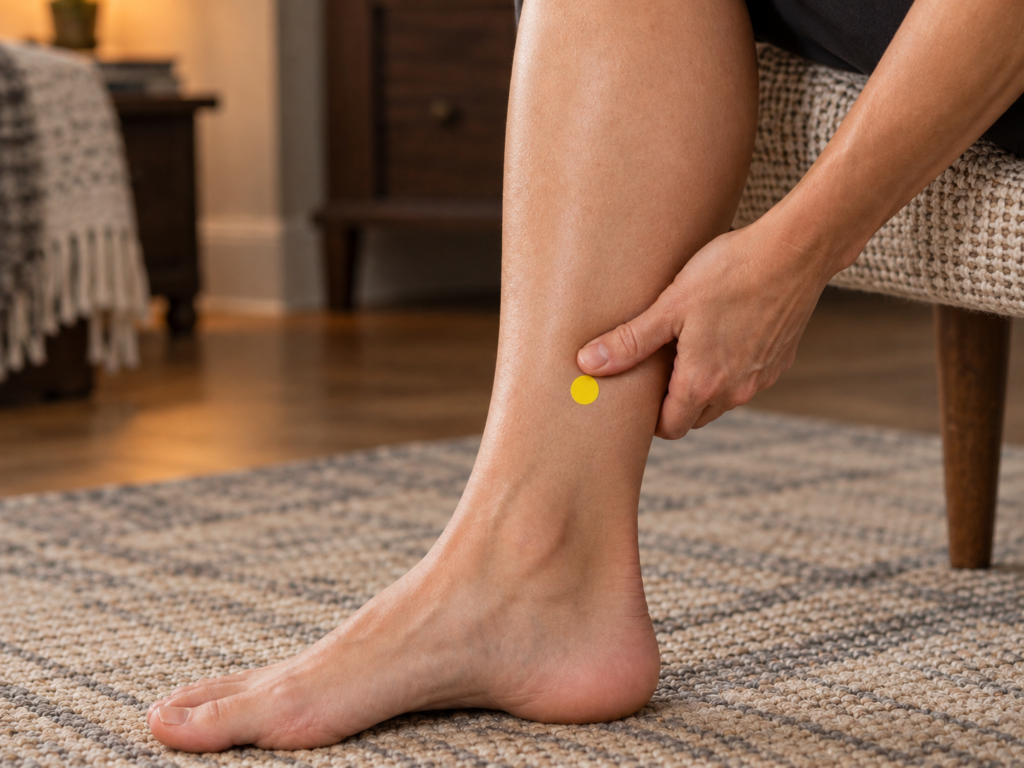
7. Press on ST36 below the knee to strengthen the Qi that holds things up. ST36 sits four finger-widths below the lower edge of the kneecap and one finger-width to the outside of the shinbone, on the muscle that rises when you flex your foot. Press firmly with your thumb for one to two minutes on each leg. ST36 is called “Zusanli,” the “Leg Three Miles.”
Stress incontinence often causes weakness, fatigue, and heaviness. According to Chinese medicine, these symptoms indicate that Spleen Qi is too weak to support the body’s functions. Stimulating ST36 can strengthen this Qi, improve muscle tone throughout the body, including the pelvic floor, and reduce evening fatigue, which may help alleviate leakage. It is one of the most effective points to stimulate daily.
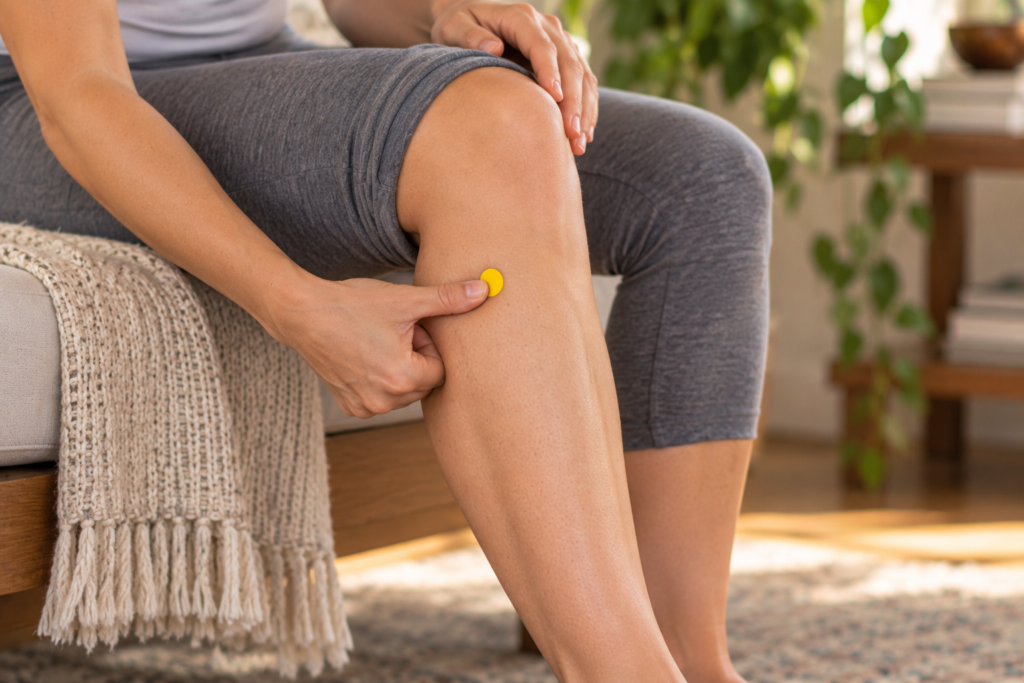
8. Press on SP9 below the inner knee to regulate the water passages. SP9 sits on the inner lower leg, in the hollow just below the bulge at the top of the shinbone, under the inner side of the knee. Press firmly with your thumb for one to two minutes on each leg. SP9 is called “Yinlingquan,” and it is the main point for regulating fluids.
SP9 helps regulate fluid movement in the body and is commonly used to treat bladder issues such as frequent urination and difficulty emptying the bladder. It is particularly beneficial if you experience heaviness or dampness in the lower body or if your bladder feels irritable. SP9 pairs effectively with SP6, located just below it on the same leg.
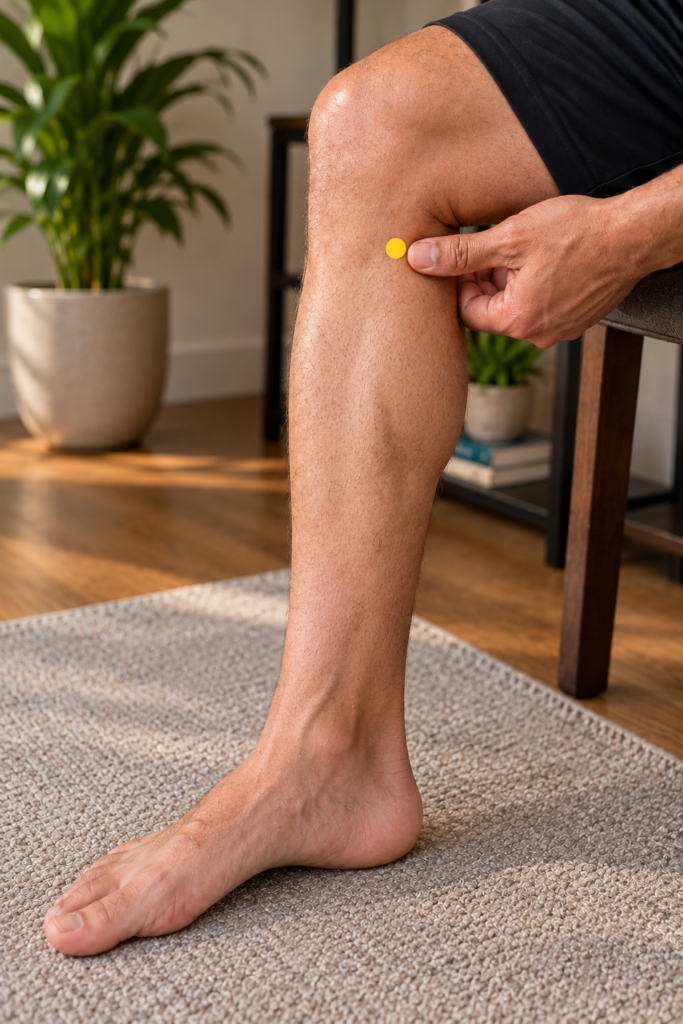
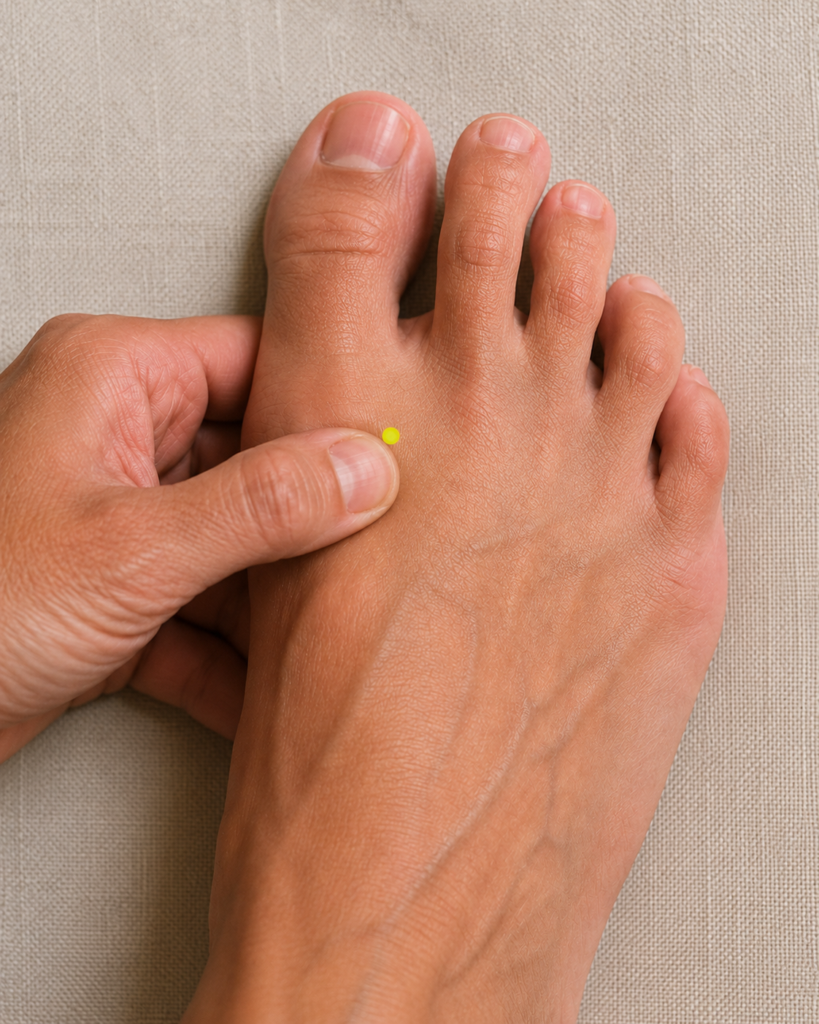
9. Press on LR3 on the top of the foot to calm urgency. LR3 sits on the top of the foot, in the webbing between the big toe and second toe, about two finger-widths back where the bones meet in a small hollow. Press firmly with your thumb for one to two minutes on each foot. LR3 is called “Taichong,” and it is the primary point for moving stuck Liver Qi.
Stress and anxiety can amplify urgency, creating a sudden, urgent need that feels impossible to ignore. In Traditional Chinese Medicine, this is thought to result from tense, stagnant Liver Qi irritating the bladder, and LR3 helps soothe this imbalance. Applying pressure to this point during urges, combined with slow, deep breaths, may help ease the immediate urge. Regular use of this technique can also help regulate an overactive bladder over time.
Why These Acupressure Points Work
In Traditional Chinese Medicine, bladder control depends on the Kidney’s ability to hold in urine, the Spleen’s role in supporting the body, and the Liver remaining calm and balanced. Incontinence may occur if Kidney Qi is weak, if Qi sinks, or if tension causes bladder irritation. The nine points target these issues comprehensively.
- The pelvic and Kidney points (BL32 and BL33, BL23, CV4, KI3) enhance the Kidney’s control over the bladder and reinforce the pelvic floor, with the sacral points supported by trial evidence.
- The lifting and strengthening points (GV20, ST36) help lift sinking Qi and strengthen the support that keeps things stabilized.
- The regulating and calming points (SP6, SP9, LR3) influence urination, water pathways, and the urgency associated with an overactive bladder.
How to Properly Use These Acupressure Points
Consistency is essential because improving bladder control can take several weeks.
- Perform the entire routine once daily; it takes approximately fifteen minutes. Use a tennis ball for the sacral points and BL23 while lying on your back.
- Empty your bladder before applying gentle pressure on CV4 and the lower abdomen.
- For stress incontinence, target the sacral points GV20, ST36, and CV4.
- For urgency and overactive bladder, target SP6, LR3, and SP9, pressing LR3 or SP6 during sudden urges while maintaining slow breathing.
- If you’re pregnant, avoid the sacral points, SP6, and CV4, and consult your provider about pelvic floor care.
- Apply steady pressure to each point for one to two minutes, and practice daily for at least six to eight weeks.
Combine these acupressure points with other effective incontinence treatments. Pelvic floor exercises, which involve lifting, squeezing, and relaxing the muscles that control urine flow, are crucial for managing both stress and urge incontinence. A pelvic floor physical therapist can teach you how to do them correctly. To reduce urgency, try bladder training by gradually extending the time between bathroom visits to retrain your bladder. Avoid caffeine, alcohol, and carbonated drinks, as they can irritate the bladder, but don’t cut back on water too much, since concentrated urine can also cause irritation. Keep your bowels regular to avoid straining from constipation, and maintain a healthy weight to reduce pressure on the bladder.
When to Get Professional Help
Consult a doctor if you develop new, worsening, or disruptive incontinence, as a proper assessment can identify the cause and available effective treatments. Seek immediate care if you have burning or painful urination, cloudy or foul-smelling urine, fever, or new confusion in an older adult, since these symptoms may suggest a urinary tract infection. Also, see a doctor if you notice blood in your urine. Emergency attention is required if you suddenly lose bladder or bowel control along with back pain, leg weakness, or numbness in the groin or inner thighs, as this could indicate nerve compression at the base of the spine. Furthermore, consult your healthcare provider if you have trouble starting urination, a weak stream, or feel that your bladder is not fully emptying, which in men might relate to prostate issues. Finally, seek medical advice if you experience vaginal pressure or a bulge, signaling prolapse, or if incontinence occurs after beginning a new medication.
Acupressure offers a safe, low-risk way to support bladder control and should be used alongside pelvic floor exercises and your doctor’s advice.
Above and Beyond Acupuncture offers acupuncture, cupping, and lifestyle coaching at the North Frank Lloyd Wright Boulevard location in Scottsdale.
Schedule an appointment online to start your healing journey.
The points above are only as effective as the technique used to apply them. Where to press, how firmly, and for how long all affect the result. For a full breakdown of how to perform acupressure properly at home, read Performing Acupressure in 3 Easy Steps.

About the Publisher
Paul Kerzner, L.Ac., is a licensed acupuncturist and board-certified herbalist, as well as the founder of Above and Beyond Acupuncture in Scottsdale. His own journey from chronic patient to practicing acupuncturist shapes his commitment to providing honest, clinically grounded information about acupuncture and Traditional Chinese Medicine. Learn more about Paul and his clinical approach on the About Us page.