
Key Takeaways
- Concentration problems often stem from distractions, mental fog, and multitasking.
- Acupressure can significantly improve focus by stimulating particular points that soothe the mind and alleviate mental heaviness.
- Key acupressure points include Yintang, Si Shen Cong, GV20, HT7, SP3, ST40, ST36, KI3, and KI1, each serving a unique purpose for improving concentration.
- Boost your focus even more by combining acupressure with healthy habits such as removing distractions and staying properly hydrated.
- Seek professional help if concentration issues persist or disrupt daily life, as they may indicate underlying conditions.

Concentration can be hard to hold onto when your attention is constantly pulled in different directions.
Notifications interrupt you, thoughts wander, and switching back and forth between tasks can make it difficult to settle into anything for very long. Sometimes the problem is distraction; other times it feels more like mental fog, where you try to focus but your mind simply will not sharpen. Acupressure offers a simple way to settle a scattered mind, clear some mental heaviness, and prepare yourself to focus.
Traditional Chinese Medicine views concentration through several interconnected systems. The Heart houses the Shen, or mind and spirit, which must be settled for clear, steady attention. The Spleen is associated with the Yi, the aspect of the mind involved in thinking, studying, and concentration. When the Spleen is weak, thinking can become sluggish or repetitive, and the Dampness and Phlegm that may develop from Spleen deficiency can contribute to a heavy, foggy feeling in the head. The Kidneys store Jing, or Essence, which nourishes the brain and supports memory and deeper mental reserves. The highlighted acupressure points address multiple aspects: they calm the Shen, support the Spleen and Yi, clear mental fog, and nourish the deeper resources essential for clear, focused concentration.
Acupressure supports concentration and works best when paired with helpful habits. If a foggy, unclear head is a big part of your trouble focusing, Why Do I Have Brain Fog? is a useful companion article.
Here are nine acupressure points that can help. These points help calm mental restlessness, support clarity, and keep the mind focused on the task at hand.
What Acupressure Points to Press and Why
1. Press on Yintang between the eyebrows to quiet a scattered mind. Yintang sits in the small hollow directly between the two eyebrows. Press steadily and hold, or make small, slow circles with your fingertip for one to two minutes. Yintang is an extra point, and it is one of the most calming and centering points in the body.
Yintang helps settle the Shen and calms a restless, distracted mind, forming a basis for focus. When the mind jumps around, attention can’t become fixed. This point encourages centered clarity and reduces mental noise and slight agitation that interfere with concentration. For those whose minds constantly wander or shift from thought to thought, it is the first point to target, calming the scattered energy to enable true focus. Apply pressure at the beginning of focused tasks and whenever your attention starts to waver.

2. Press Si Shen Cong at the crown to sharpen focus and clarity. Si Shen Cong is a group of four points surrounding the very top of the head, each about one thumb-width in front of, behind, and to either side of GV20, the point at the crown on a line drawn up from the tops of the ears. Press each of the four in turn, or hold two at a time with your fingertips, for one to two minutes. The name means “four spirit intelligence,” and this group is the classic point set for the mind.
Si Shen Cong is traditionally used to improve concentration, memory, and mental clarity, making it essential for focus-related practices. Located around the crown where multiple channels converge, it helps calm and clear the mind, sharpening attention while reducing mental noise. It is especially effective for those experiencing scattered or foggy thinking. For individuals who struggle to maintain focus, this group targets the attention faculty directly and works well in combination with Yintang to help settle and sharpen the mind.

3. Press on GV20 at the top of the head to clear and lift the mind. GV20 sits at the center of the crown, on the midline, on a line drawn up from the tops of both ears, between the four Si Shen Cong points. Press straight down, or make small circles, with your fingertip for one to two minutes. GV20 is called “Baihui,” the “Hundred Meetings,” where many channels converge.
GV20 clears the head and lifts the Qi, enhancing mental clarity and reducing feelings of dullness and fog that hinder concentration. It brightens and energizes the mind, counteracting sluggishness and sinking sensations that distract focus, helping you stay alert and present. Positioned at the core of Si Shen Cong, it synergizes with that group for improved clarity and focus. Use it when your thinking feels dull or your attention wanes.
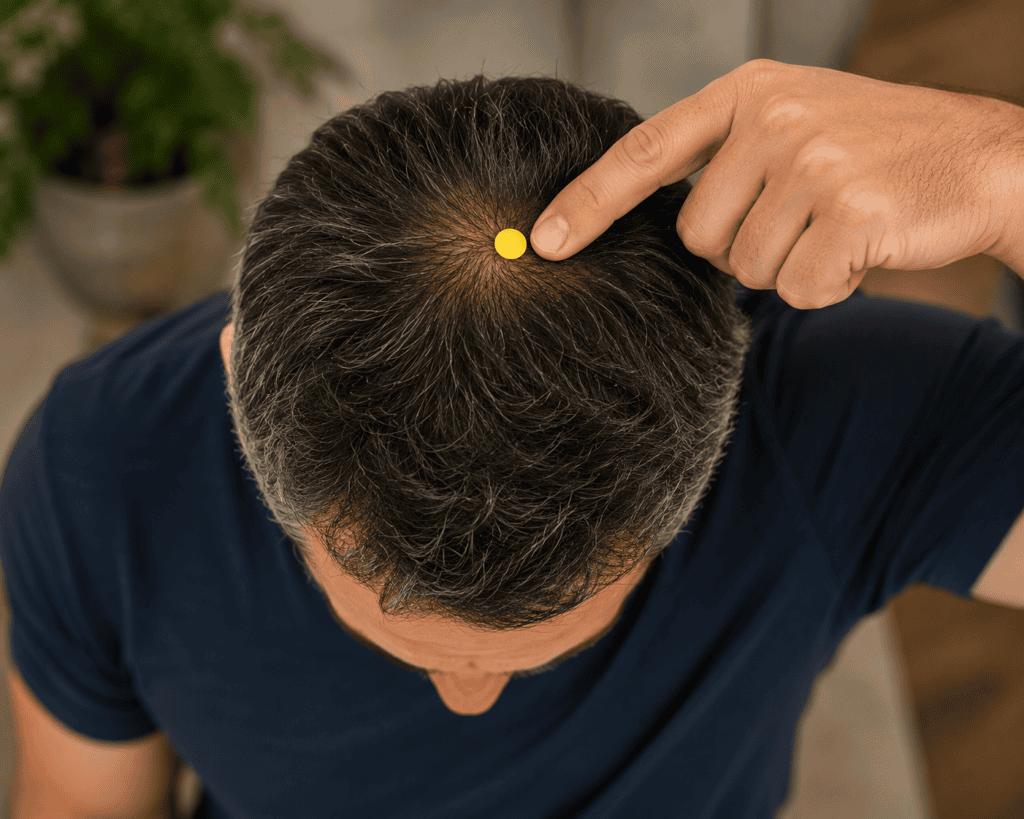
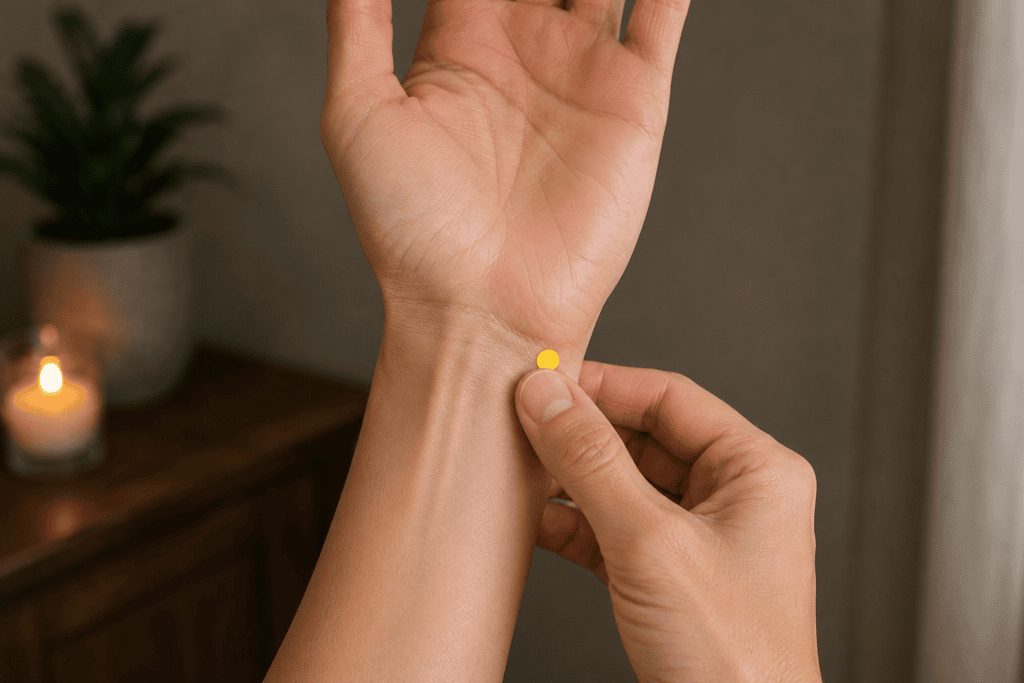
4. Press on HT7 at the wrist to settle the Shen so attention can land. HT7 sits on the inner wrist crease, on the pinky side, in the small hollow just inside the tendon. Press firmly with your thumb for one to two minutes on each wrist. HT7 is called “Shenmen,” the “Spirit Gate,” and it is the source point of the Heart and the most important point for calming the Shen.
Since concentration relies on a settled Shen, HT7 is key to calming the mind so attention can focus without scattering. It alleviates restlessness, anxiety, and jumpiness that disrupt focus, and soothes a busy mind that struggles to concentrate. For those whose poor focus stems from restlessness or anxiety, this point addresses the root cause and can be easily pressed whenever attention drifts.
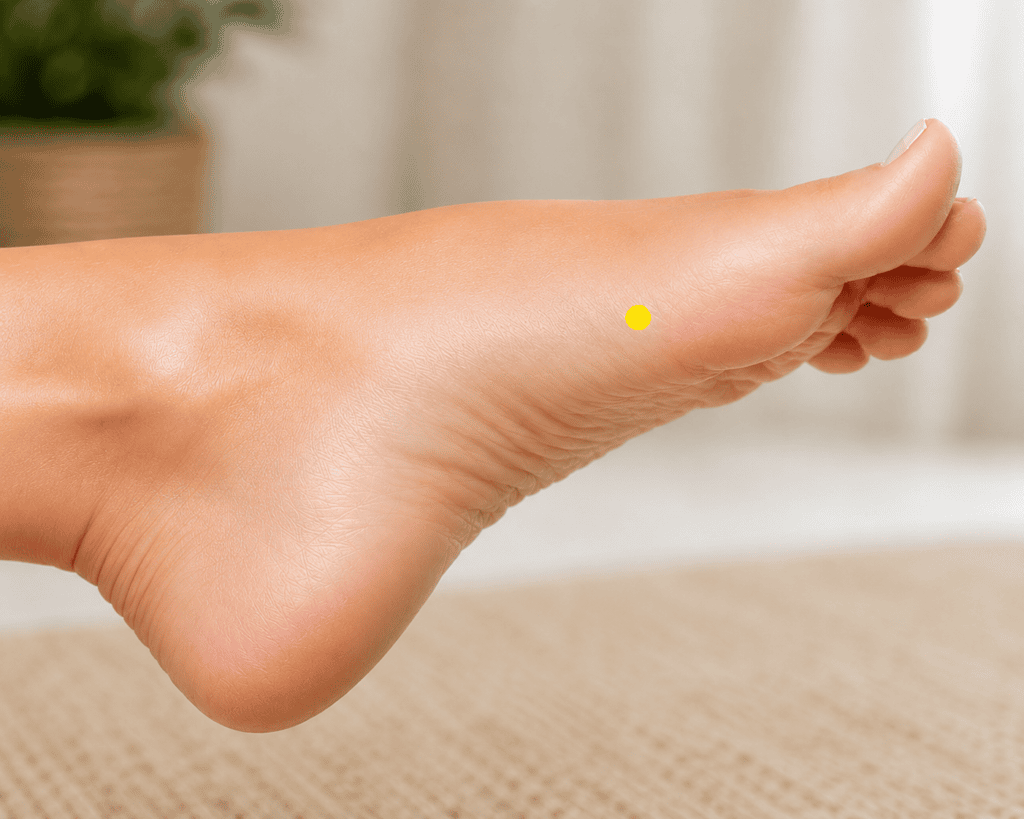
5. Press on SP3 on the foot to strengthen the faculty of focus. SP3 sits on the inner edge of the foot, in the hollow just behind and below the ball of the big toe, where the skin changes color along the side of the foot. Press firmly with your thumb for one to two minutes on each foot. SP3 is called “Taibai,” the source point of the Spleen.
Because the Spleen houses the Yi—your intellect and concentration- the SP3 point, as the Spleen’s source, enhances this fundamental ability, making it one of the most profound ways acupressure supports focus. A weak Spleen weakens Yi and makes it harder to maintain attention. This point helps rebuild the strength needed for clear, sustained focus. For individuals with chronic concentration issues and quick mental fatigue, this point strengthens the underlying system responsible for focus itself, distinguishing it from mere calming effects.
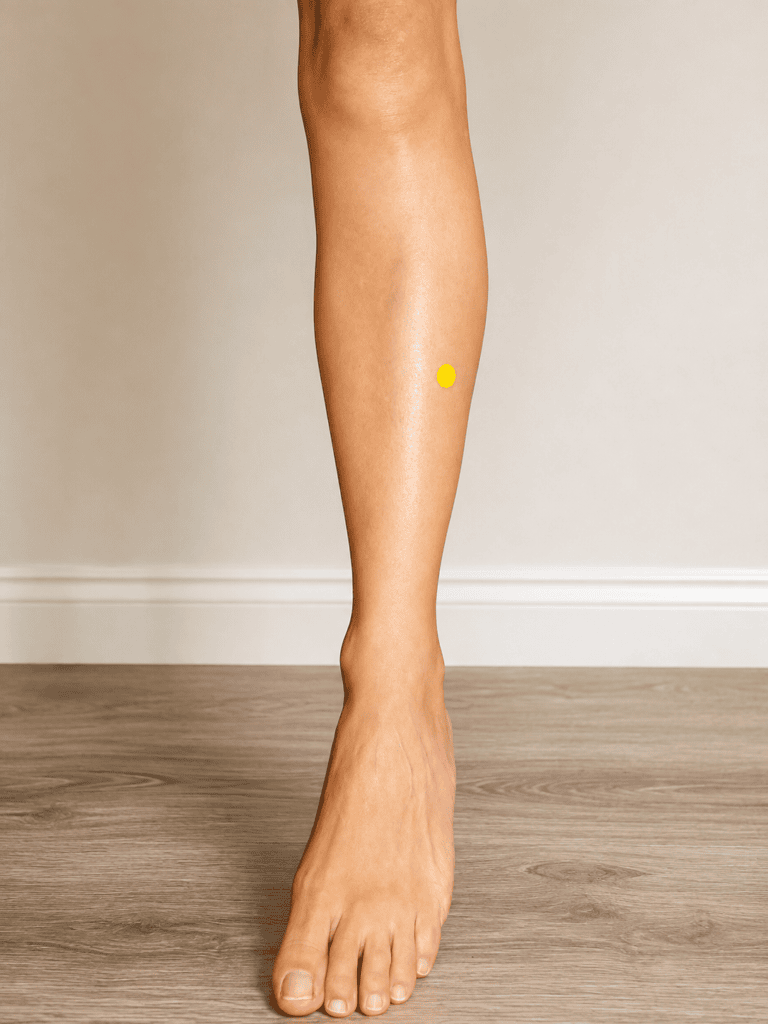
6. Press on ST40 on the lower leg to clear the mental fog. ST40 sits on the outer lower leg, midway between the knee and the outer ankle bone, about two finger-widths outside the shinbone, on the muscle. Press firmly with your thumb for one to two minutes on each leg. ST40 is called “Fenglong,” and it is the body’s main point for clearing phlegm.
When poor concentration is paired with a heavy, foggy, and dull-headed feeling, Chinese medicine usually sees this as phlegm and dampness obscuring the mind. ST40 is the main point for clearing this phlegm, helping to lift mental fog and confusion that impair focus. It clears the head and sharpens mental clarity. For those whose concentration issues mainly come from a foggy, unclear mind rather than a racing one, this point specifically targets that cause. It is one of the most effective and distinctive points for resolving clouded thinking.
7. Press on ST36 below the knee to sustain mental energy. ST36 sits four finger-widths below the lower edge of the kneecap and one finger-width to the outside of the shinbone, on the muscle that rises when you flex your foot. Press firmly with your thumb for one to two minutes on each leg. ST36 is called “Zusanli,” the “Leg Three Miles,” and it is the master point for energy in the whole body.
ST36 replenishes Qi and reinforces the Spleen, which provides both physical energy and, because the Spleen governs thought, mental stamina necessary for sustained concentration. It combats fatigue that gradually diminishes focus and enhances mental clarity by strengthening the Spleen. For those whose concentration wanes as energy diminishes, this point helps rebuild stamina to maintain focus longer, working naturally with SP3 to further support Spleen function and enhance focus.
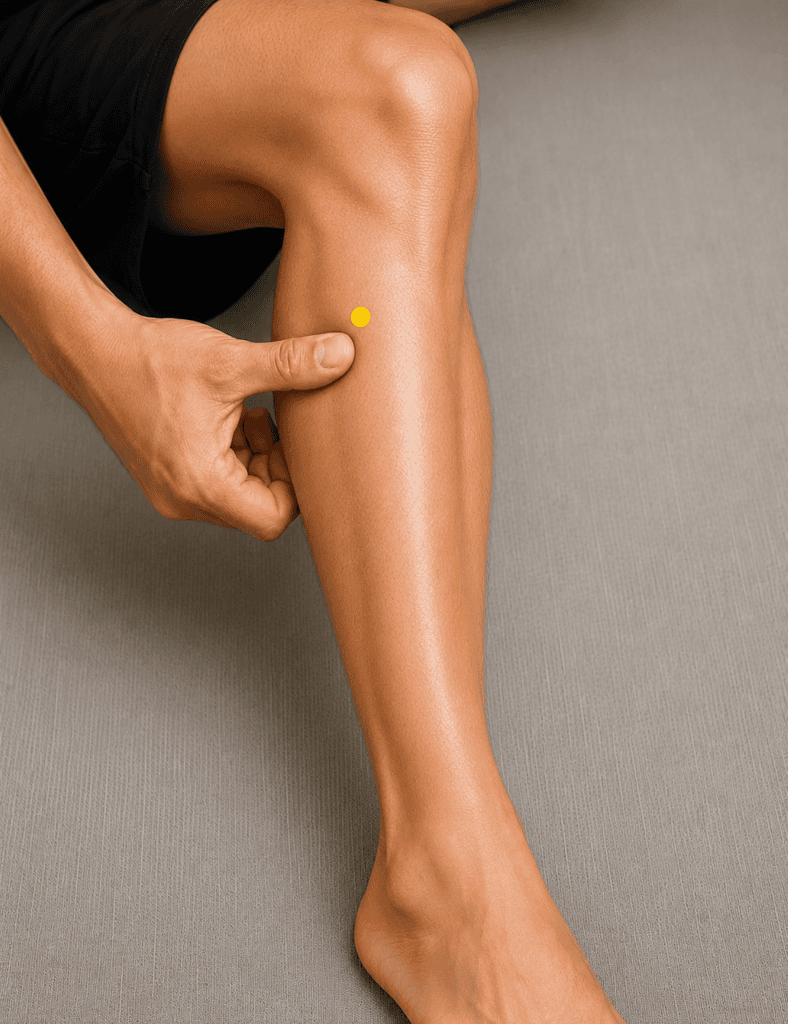
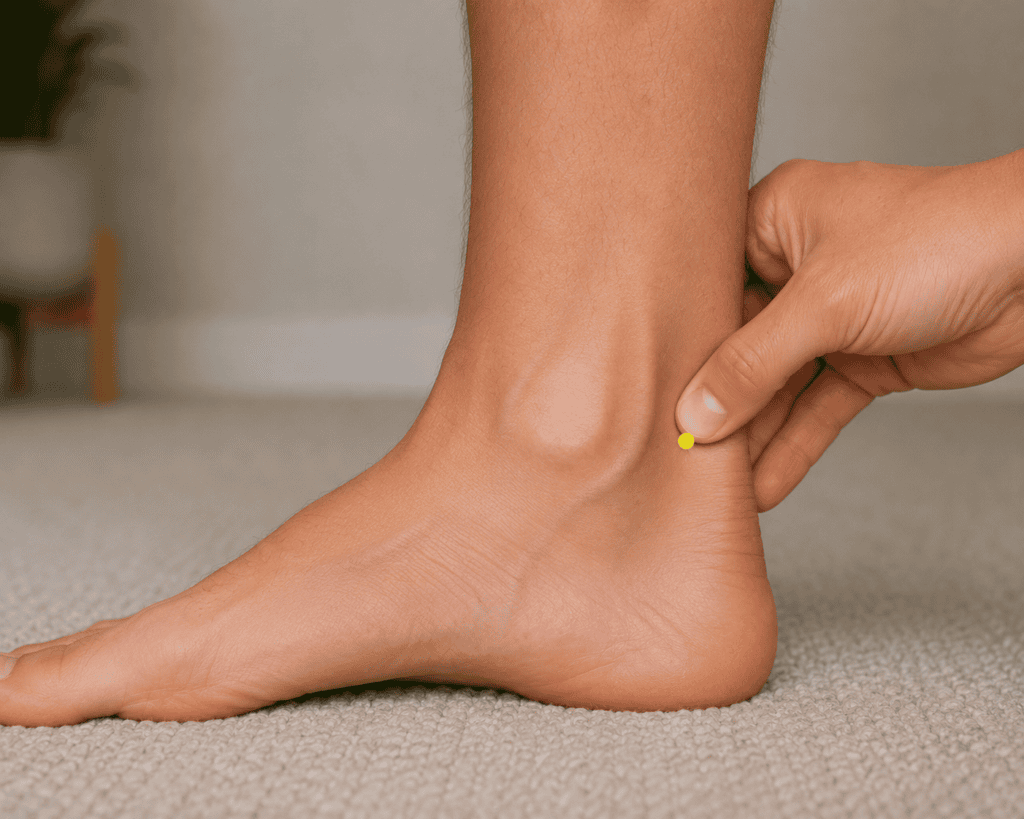
8. Press on KI3 above the inner ankle to nourish the brain. KI3 sits in the hollow between the inner ankle bone and the Achilles tendon, level with the tip of the ankle bone. Press firmly with your thumb for one to two minutes on each ankle. KI3 is called “Taixi,” the source point of the Kidney.
In Chinese medicine, the Kidney stores the essence that fills the brain, serving as a deep reserve that supports sharp, clear thinking and strong concentration. KI3, the Kidney’s source point, directly nourishes this reserve, enhancing mental clarity and deep focus, especially when poor focus stems from mental exhaustion or burnout. For individuals whose concentration has deteriorated due to depletion rather than distraction, this point helps rebuild the foundational support for clear thinking.
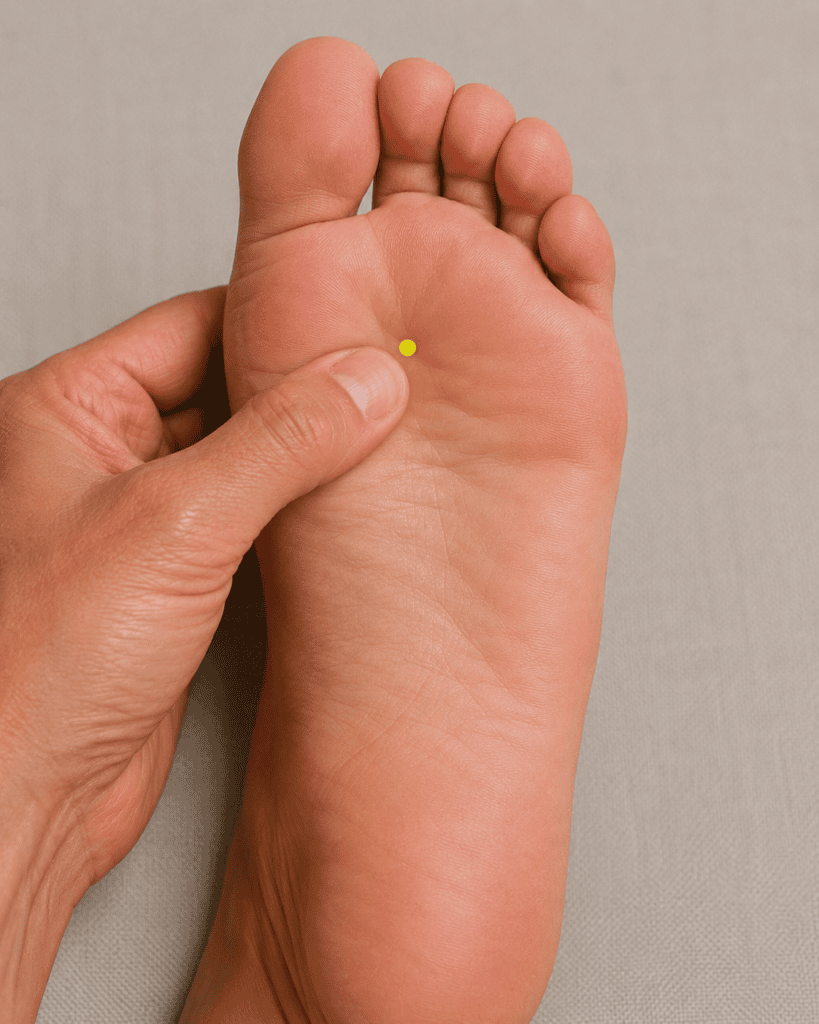
9. Press on KI1 on the sole of the foot to ground an overstimulated mind. KI1 sits on the sole of the foot, in the hollow that forms in the center of the ball of the foot when you curl the toes, about a third of the way down from the toes to the heel. Press firmly with your thumb for one to two minutes on each foot. KI1 is called “Yongquan,” the “Bubbling Spring,” and it is the lowest point on the body.
KI1 helps calm an overwhelmed mind by directing restless energy downward from a cluttered, input-heavy head. As the body’s lowest point, it grounds the system, settling a frazzled, head-focused mind and restoring focus. For those whose concentration suffers from overstimulation and constant mental noise, this point offers grounding and clarity. It also works well as a conclusion to a focus routine or as a quick reset during a break.
Why These Acupressure Points Work
In Traditional Chinese Medicine, concentration depends on a rooted Shen that allows focus to settle, a robust Spleen that houses the Yi and controls focus, a mind free from phlegm-fog that clouds it, and a brain nourished by Kidney essence. The nine points influence all these aspects.
- The mind-settling points (Yintang, HT7, KI1) quiet and ground a scattered, restless, overstimulated mind so attention can hold.
- The clarity points (Si Shen Cong, GV20) sharpen focus and lift the dull, heavy head.
- The Spleen-and-Yi points (SP3, ST36) strengthen the faculty of concentration and the mental stamina behind sustained focus.
- The fog-clearing point (ST40) clears the phlegm-damp that mists the mind into a foggy, dull haze.
- The nourishing point (KI3) rebuilds the essence that fills the brain and underpins clear thinking.
How to Properly Use These Acupressure Points
Use these points before you need to focus on work and whenever your attention wanders.
- Begin with Yintang, Si Shen Cong, and GV20 to settle the mind and sharpen it before you start something that needs focus.
- When your head feels foggy and dull, work ST40 and GV20 to clear it, and when your mind is racing or restless, use HT7 and KI1 to settle and ground it.
- To strengthen concentration over time, press SP3, ST36, and KI3 regularly, since these rebuild the Spleen and the reserves behind the lasting ability to focus.
- Hold each point for one to two minutes with firm, steady pressure, breathing slowly, and use a short point routine as the signal that you are shifting into focused work.
Acupressure supports concentration most effectively when paired with habits that protect attention.
- Eliminate obvious distractions before starting an activity, as the biggest drain on most people’s focus is a phone within reach; put it out of sight.
- Focusing on a single task at a time, rather than switching frequently, helps because constant task-switching trains the mind to scatter.
- Taking genuine breaks is essential, since focus naturally diminishes over time, and a brief pause can restore it.
- Maintaining a consistent sleep schedule is crucial, as a fatigued brain cannot concentrate effectively.
- Proper hydration and nutrition are vital, since the brain needs fuel to sustain focus.
- Engaging in sustained attention exercises, such as reading or focused work without interruptions, gradually rebuilds capacity that constant distraction diminishes.
When to Get Professional Help
Difficulty concentrating is common and often improves with the right tools and habits. If your concentration problems are severe, persistent, or significantly disrupt your work, studies, or daily routine, consider consulting a doctor. Persistent attention difficulties may indicate conditions like ADHD, and poor focus can also be a sign of treatable issues such as thyroid problems, depression, anxiety, or sleep disorders. Any sudden or noticeable decline in your ability to concentrate, especially when paired with memory loss and age, warrants medical attention.
Acupressure can help manage brain fog and scattered thoughts from everyday distractions, but it isn’t a substitute for medical care when concentration issues are more serious.
Above and Beyond Acupuncture offers acupuncture, cupping, and lifestyle coaching at the North Frank Lloyd Wright Boulevard location in Scottsdale.
Schedule an appointment online or call us today to start your healing journey.
The points above are only as effective as the technique used to apply them. Where to press, how firmly, and for how long all affect the result. For a full breakdown of how to perform acupressure properly at home, read Performing Acupressure in 3 Easy Steps.

About the Publisher
Paul Kerzner, L.Ac., is a licensed acupuncturist and board-certified herbalist, as well as the founder of Above and Beyond Acupuncture in Scottsdale. His own journey from chronic patient to practicing acupuncturist shapes his commitment to providing honest, clinically grounded information about acupuncture and Traditional Chinese Medicine. Learn more about Paul and his clinical approach on the About Us page.