
Key Takeaways
- Acid reflux affects millions of people, causing discomfort such as a burning sensation in the chest and a bitter taste; it often goes untreated.
- Conventional treatments, such as proton pump inhibitors, only mask symptoms rather than addressing the root causes of acid reflux.
- Acupuncture shows promise for treating acid reflux by reducing stress, improving muscle coordination, and reducing inflammation.
- Lifestyle changes, such as eating smaller meals and reducing stress, can enhance the effectiveness of acupuncture in managing reflux.
- Consulting with a professional, such as Above and Beyond Acupuncture, can help address underlying issues related to acid reflux.

Acid reflux is a widespread problem that sounds simple but it quietly affects millions. It manifests as a burning feeling in your chest after meals, a bitter taste rising in your throat, a nagging cough that refuses to go away, and restless nights since lying down makes everything worse.
For many patients, it has been going on for so long that they simply accept it as part of how their body functions.
It doesn’t have to be like that. There is solid research supporting acupuncture for acid reflux, and its approach often targets the root patterns that traditional treatments overlook.
What is Acid Reflux?
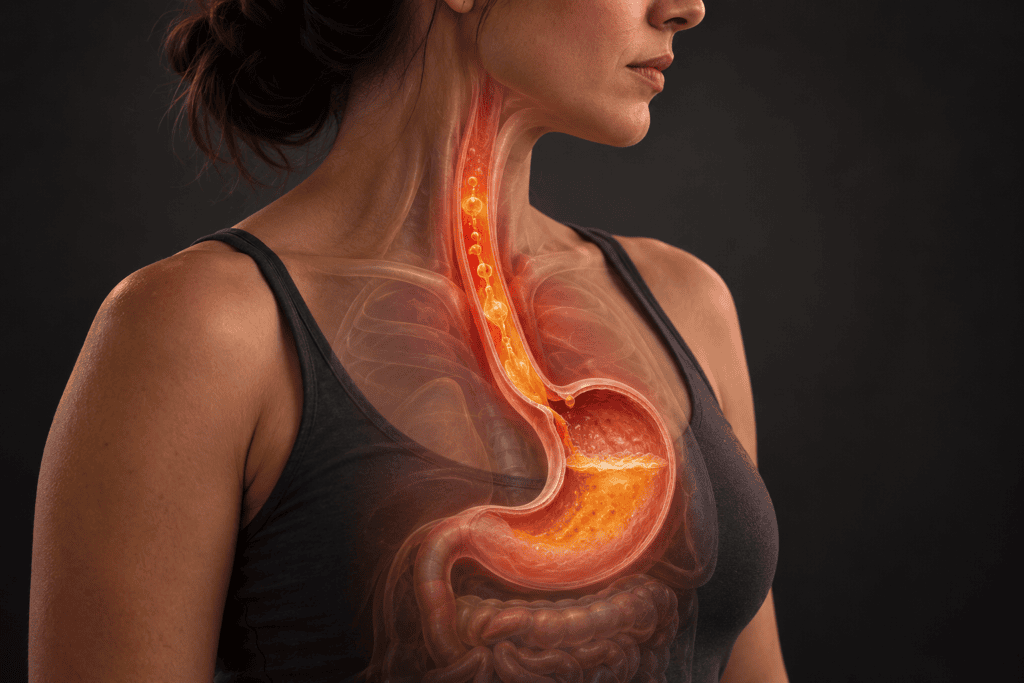
Acid reflux occurs when stomach acid moves up into the esophagus, the tube linking your mouth to your stomach. A small muscle ring at the base of the esophagus should close after you swallow to keep the acid in. If this muscle doesn’t close properly, or if the stomach produces excess acid, the acid can flow back up.
Most patients first notice the burning sensation. The acid damages tissue not adapted to it. Over time, chronic reflux can cause more severe changes to the esophagus, making it important to treat the condition instead of accepting it.
Reflux occurs more frequently than many people assume. While estimates vary by measurement method, about 20 percent of American adults experience it weekly. The rise in reflux cases in recent decades may be linked to cultural habits such as eating quickly, consuming ultra-processed foods, high stress levels, and irregular meal times.
What is the Conventional Approach and its Limitations?

The standard treatment for acid reflux is medication that reduces stomach acid. Antacids are used for occasional symptoms. H2 blockers like famotidine treat more persistent symptoms. Proton pump inhibitors like omeprazole are used for chronic cases.
These medications provide temporary relief by decreasing acid production, which alleviates the burning sensation. However, they do not target the root causes, such as why the stomach produces excess acid or why the lower esophageal muscle fails to close properly. As a result, they only mask the symptoms without addressing the underlying issue.
Another limitation is that long-term use of proton pump inhibitors carries its own concerns. The medications were originally approved for short-term use, but many patients end up on them for years. Research has linked long-term use to reduced absorption of certain nutrients, increased risk of certain infections, and other downstream effects worth noting.
How Does Traditional Chinese Medicine View Acid Reflux?

Traditional Chinese Medicine has treated digestive disorders for thousands of years and offers a clear framework for understanding what acid reflux is doing. In TCM, the stomach is supposed to move energy and food downward. When that downward movement is disrupted, the energy starts moving the wrong way. The medical term in TCM is “rebellious Stomach Qi.” In plain language, the system that should be sending things down is sending them up.
What causes the system to start rebelling? Chronic stress is one of the biggest factors. When the nervous system is in sustained fight-or-flight mode, digestion gets disrupted.
Dietary inflammation is another factor. Foods the body processes poorly generate internal heat and stagnation, which directly contribute to the reflux pattern.
In TCM, the goal is to restore downward flow, calm the stomach, and treat the imbalance at the root. This approach differs from simply suppressing acid, as it focuses on the underlying pattern rather than just the symptoms.
What Does the Research Show?

Clinical research on acupuncture for reflux has been growing. A 2023 systematic review found that acupuncture produced meaningful improvement in reflux symptoms across multiple studies, with effects that held after treatment ended. The National Center for Complementary and Integrative Health acknowledges acupuncture as an evidence-supported approach for several conditions, including digestive complaints.
Acupuncture can effectively treat reflux holistically because it targets multiple mechanisms. It helps transition the nervous system away from chronic stress responses that interfere with digestion. It improves coordination of the muscles responsible for effective stomach emptying. It also decreases inflammation that can exacerbate symptoms.
Practical Things You Can Change

Acupuncture is most effective when combined with practical adjustments that reduce strain on the digestive system. Fortunately, these changes are largely common-sense. The harder part is that they require discipline and consistency.
- Eat smaller meals. The stomach can only process so much food at a time, and overloading it makes reflux much worse.
- Eat earlier. Finishing dinner three hours before bed makes a real difference because the system needs time to move things down before you lie flat.
- Slow down while eating. Eating fast, combined with insufficient chewing, puts more load on the stomach and is one of the biggest factors most patients overlook.
- Watch the obvious triggers. Coffee, alcohol, citrus, tomatoes, spicy food, chocolate, mint, and carbonated drinks all relax the muscle at the bottom of the esophagus or increase acid production. Different patients have different sensitivities, so this varies from person to person.
- Reduce ultra-processed food. The inflammatory load from ultra-processed food makes everything in the digestive system harder, including reflux.
- Address the stress patterns. The connection between chronic stress and reflux is real, and patients who do not address the stress side rarely achieve full resolution with any approach.
- Consider the food sensitivity issue. Many patients with chronic reflux are reacting to specific foods that they do not realize they are sensitive to. The IgG food sensitivity test can identify these foods. The full discussion is in The Many Benefits of the IgG Food Sensitivity Test.
Where to Start

If you have been dealing with acid reflux that has not fully resolved with conventional treatment, or if you are looking for a way to address the underlying pattern rather than just suppressing the symptom, the next step is a consultation to map out what is going on in your specific case.
Reach out to Above and Beyond Acupuncture on North Frank Lloyd Wright Boulevard in Scottsdale to set up your first visit.
Schedule an appointment online or call us today to start your healing journey.

About the Publisher
Paul Kerzner, L.Ac., is a licensed acupuncturist and board-certified herbalist, as well as the founder of Above and Beyond Acupuncture in Scottsdale. His own journey from chronic patient to practicing acupuncturist shapes his commitment to providing honest, clinically grounded information about acupuncture and Traditional Chinese Medicine. Learn more about Paul and his clinical approach on the About Us page.