
Key Takeaways
- NSAID use can lead to serious long-term health issues, such as gastrointestinal damage and kidney problems, often overlooked by users.
- Arnica is a natural alternative that effectively targets pain and inflammation without the systemic side effects of NSAIDs.
- Research shows Arnica performs similarly to topical NSAIDs for pain relief and inflammation, making it a valuable home care option.
- At Above and Beyond Acupuncture, we integrate Arnica with Traditional Chinese Medicine to support healing and extend treatment benefits.
- Our recommendations include Boiron Arnicare Gel and Boiron Arnica Montana 30C tablets for effective pain and inflammation management.

When patients struggle with a sprain, strain, bruise, post-workout soreness, or a flare-up of joint pain, they often reach for ibuprofen first. NSAIDs are treated as a casual default for any pain or inflammation in the body – they are on every drugstore shelf and in almost every medicine cabinet.
But when these same individuals come to Above and Beyond Acupuncture in Scottsdale, they are often seeking a sustainable, holistic way to break that cycle.
What most patients have not been told is how serious the long-term consequences of regular NSAID use can be and that meaningful alternatives exist.
At Above and Beyond Acupuncture, our clinical practice is based on Traditional Chinese Medicine, which includes acupuncture and a detailed system of Chinese herbal medicine used for thousands of years to treat pain, inflammation, and injury. In addition to this core approach, we often provide patients with supportive herbal supplements to use at home between appointments.
Arnica is the most dependable among these adjuncts: a plant-based remedy with a long history of clinical use and growing research showing its effectiveness is comparable to topical NSAIDs for many common pain and inflammation patterns.
This article aims to explain why NSAIDs should be used carefully and why Arnica is a valuable addition to home care that complements clinical treatments.
The Real Cost of NSAID Use
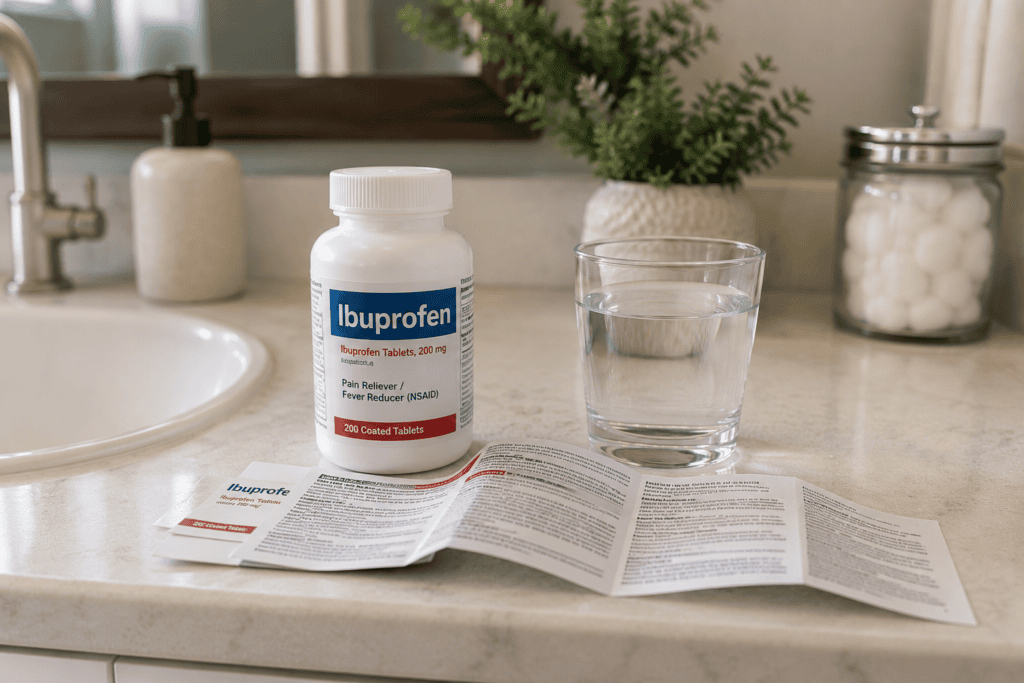
NSAIDs, or nonsteroidal anti-inflammatory drugs, include ibuprofen (Advil, Motrin), naproxen (Aleve), and aspirin. They block the enzymes that produce inflammation and effectively reduce pain in the short term. The problem is what they do to the body over time, particularly with regular or chronic use.
Long-term use of NSAIDs is linked to more than 100,000 hospitalizations each year in the United States alone.
The mechanisms of harm are numerous. NSAIDs damage the protective lining of the stomach and small intestine, leading to ulcers, gastrointestinal bleeding, and perforations that may require emergency intervention.
They reduce blood flow to the kidneys, which can lead to measurable declines in kidney function over time and, in some cases, acute kidney injury. They are associated with increased cardiovascular risk, including heart attacks, strokes, and worsening heart failure.
The mortality data is alarming. Several peer-reviewed studies estimate that gastrointestinal complications linked to NSAID use cause between 3,200 and 16,500 deaths each year in the United States. In fact, more people die annually from NSAID-related issues than from many other conditions that attract more public health focus.
The Hospital for Special Surgery’s clinical guidelines on NSAIDs note that older adults, anyone with a history of ulcers, anyone on blood thinners, and anyone with reduced kidney function should be especially cautious. The list of risk factors is long enough that a substantial percentage of regular NSAID users would qualify.
None of this means NSAIDs have no role in modern medicine.
These are suitable for short-term, acute use under clinician guidance. However, the problem lies in the casual, chronic, default consumption that has become normalized in American homes. Pharmacy shelves fail to convey the associated risks, and many patients have never received a clear alternative explanation.
What Is Arnica?

Arnica Montana is a flowering plant native to the mountains of Europe and Siberia. Western herbal medicine has used it for centuries to treat bruising, muscle soreness, sprains, joint pain, and post-injury inflammation. Arnica’s active compounds include sesquiterpene lactones and flavonoids, which have documented anti-inflammatory effects when applied to the skin.
Unlike NSAIDs that suppress inflammation throughout the entire body, Arnica specifically targets the injury site. When applied as a topical gel to bruises, sprains, or sore muscles, it increases blood flow to the area, reduces swelling, and supports the body’s natural healing process without affecting overall systemic function.
What the Research Shows

Arnica has been studied extensively in the modern medical literature, particularly for its topical use in musculoskeletal conditions. A 2021 review of herbal therapies for osteoarthritis concluded that Arnica gel is about as effective as topical NSAIDs for inflammation and pain relief, without the systemic side effects that come with oral NSAID use.
A 2024 systematic review published in the journal Plants examined Arnica’s effects across a range of conditions including post-traumatic injury, surgical recovery, delayed onset muscle soreness, and chronic inflammatory pain. The review concluded that Arnica preparations produce meaningful reductions in pain and swelling across multiple clinical contexts, with a favorable safety profile when used topically.
A clinical trial of knee osteoarthritis found that applying Arnica montana gel twice daily for six weeks significantly reduced pain, stiffness, and functional limitation. 87 percent of patients rated tolerability as good, and 76 percent said they would use it again.
The body of evidence supporting Arnica is not as massive as the body of evidence on NSAIDs, simply because herbal medicines do not receive the same research funding pipeline. But the available research is consistent. Arnica works for many of the same indications that drive people to reach for ibuprofen, and it does so without putting the kidneys, stomach, or heart at risk.
Where Arnica Fits Into the Treatment Plan

Above and Beyond Acupuncture’s clinical approach is rooted in Traditional Chinese Medicine. This includes acupuncture treatments, Chinese herbal formulas when needed, and a diagnostic framework that informs every aspect of care, all derived from an ancient system refined over thousands of years. This solid foundation delivers the reliable, lasting results patients seek.
Arnica is mentioned as a home care supplement, not a replacement for treatment. It allows patients to support the same healing processes between sessions, whether they are dealing with an injury, chronic pain, recovery after surgery, or overuse from athletics. Arnica provides patients with a tangible action they can take at home, effectively extending the benefits of clinical therapy.
The patterns that Arnica targets are closely related to those long recognized in Traditional Chinese Medicine (TCM). In TCM, bruising, swelling, and post-injury pain are seen as Blood Stasis – a condition where blood and energy flow are obstructed, leading to discoloration, swelling, and pain at the injury site.
The acupuncture and herbal work being done in the treatment room help move stagnation, restore circulation, and aid the body’s healing process. Arnica applied at home complements this by supporting the same healing efforts between sessions. Both approaches work toward the same goal.
This is an example of a holistic clinical approach in action. The primary framework is Traditional Chinese Medicine, with tools from other traditions incorporated as supportive elements, never competing with it. Arnica is a trusted Western herbal remedy because it is well-tolerated, extensively researched, and reliably effective for the patterns patients experience at home.
The Clinic’s Recommendations Regarding Arnica
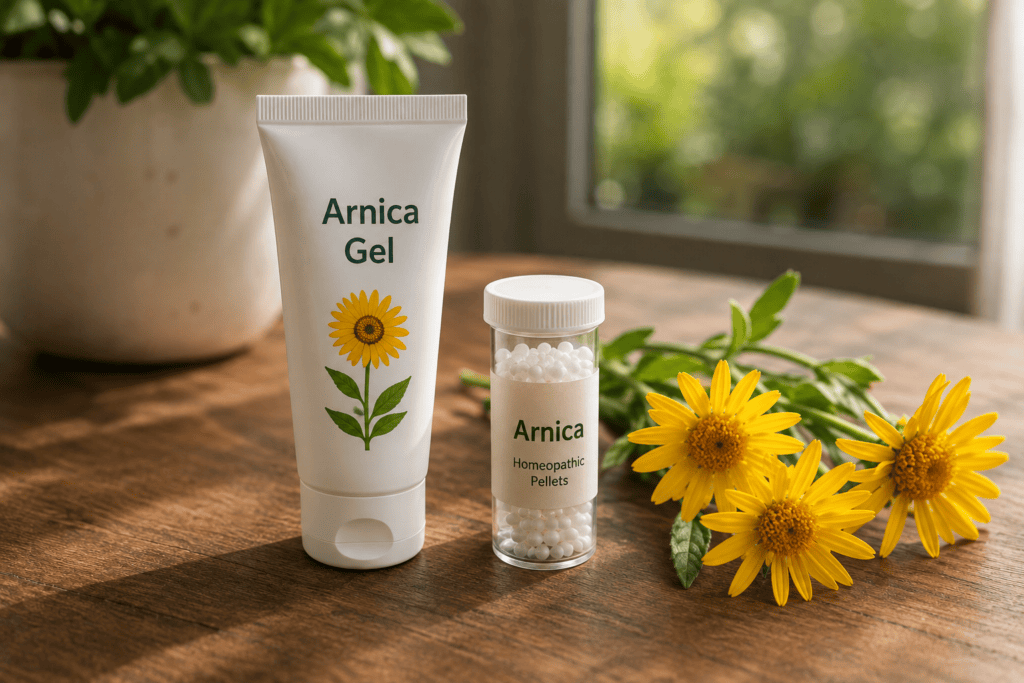
Arnica is recommended in two forms, used together to address both external and internal pain and inflammation.
Apply the topical gel (or cream) directly to the affected area for bruises, sprains, sore muscles after workouts or physical labor, joint flare-ups, and post-injury swelling. It absorbs well, has a mild scent, and can be reapplied several times a day as needed.
The oral tablets, small homeopathic pellets that dissolve under the tongue, provide complementary internal support. Take them on the same days as the topical application to support the body’s processing.
The recommended products are from Boiron, a manufacturer that has produced Arnica preparations for decades and maintains high quality standards. The two products are Boiron Arnicare Gel for topical application and Boiron Arnica Montana 30C tablets for internal support.
These recommendations are based on clinical experience, not financial relationships. No affiliate compensation is received for links to these products. They are simply the products that have produced the most reliable results for patients over years of practice.
Practical Use
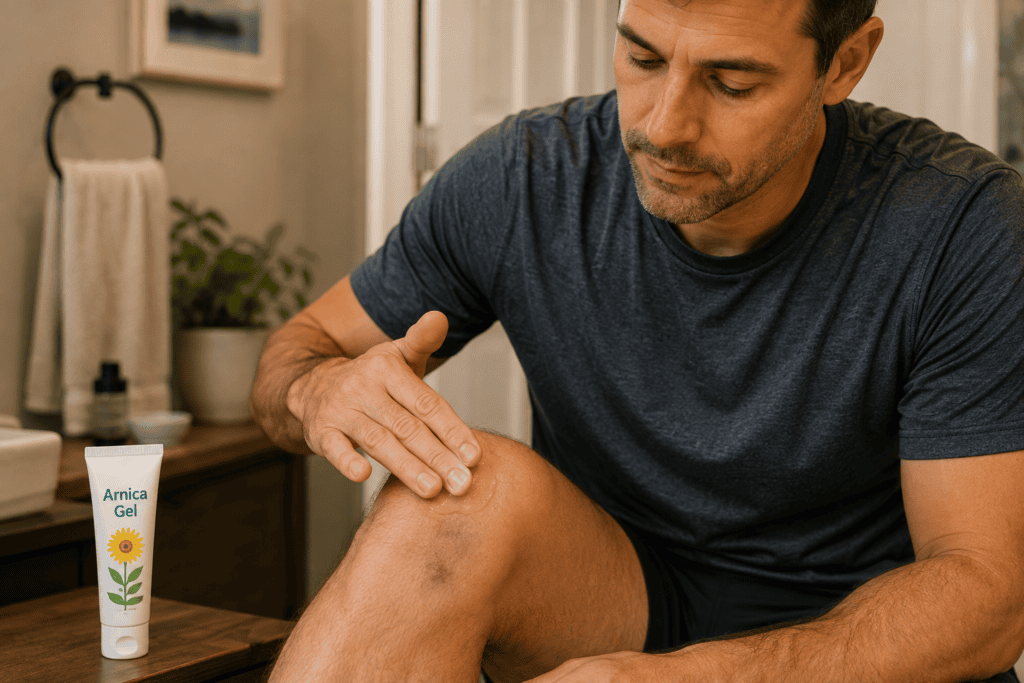
Apply Arnica gel topically to intact skin as needed. Most patients find that applying it two to four times daily during an active injury or flare yields noticeable results within a few days. Do not apply the gel to broken skin or open wounds.
The tablets dissolve under the tongue rather than being swallowed with water. The packaging includes specific guidance on frequency, which patients can follow without further clinical input in most common use cases.
If irritation develops on the skin where you apply the gel, discontinue use. Arnica is generally well-tolerated, but a small percentage of people are sensitive to the plant compounds and may develop a localized skin reaction.
An Improved Standard for Pain and Inflammation

Your medicine cabinet doesn’t need to rely solely on NSAIDs. For common issues like bumps, bruises, sprains, soreness, and inflammation from daily life, Arnica offers a safer, well-tolerated option backed by research and centuries of traditional use.
At Above and Beyond Acupuncture, we treat patients with chronic pain, recurring inflammation, or those recovering from injury or procedures using Traditional Chinese Medicine. We also incorporate Arnica as one of several supportive tools to help extend treatment benefits into everyday life.
Reach out to schedule a consultation on North Frank Lloyd Wright Boulevard in Scottsdale and explore what a complete approach to pain and inflammation looks like when treatment in the clinic is paired with the right home care tools.
Schedule an appointment online or call us today to start your journey to relief.

About the Publisher
Paul Kerzner, L.Ac., is a licensed acupuncturist and board-certified herbalist, as well as the founder of Above and Beyond Acupuncture in Scottsdale. His own journey from chronic patient to practicing acupuncturist shapes his commitment to providing honest, clinically grounded information about acupuncture and Traditional Chinese Medicine. Learn more about Paul and his clinical approach on the About Us page.