Key Takeaways
- Cancer-related fatigue is a persistent side effect of cancer treatments, often lasting for months or even years.
- Research from the University of Michigan indicates that acupressure is an effective self-care technique for alleviating fatigue.
- The article describes a calming routine and an energizing routine, each using specific acupressure points to target different types of fatigue.
- Practicing consistently alongside other self-care methods improves the effectiveness of acupressure in managing cancer-related fatigue.
- Always talk to your oncology team if you experience ongoing fatigue, as it could signal underlying health problems that require further care.

Cancer-related fatigue is a common and long-lasting side effect of cancer and its treatments. Unlike regular tiredness, it doesn’t go away after a good night’s sleep and can make even simple tasks feel difficult, often lasting months or years after treatment ends. This fatigue may stem from the cancer itself, treatments like chemotherapy, radiation, surgery, and hormone therapy, or from issues such as anemia, poor sleep, low mood, and weakness. Acupressure is among the few self-care methods that have been studied specifically for this type of fatigue, with promising results.
Researchers at the University of Michigan conducted a study on self-administered acupressure involving 288 breast cancer survivors experiencing fatigue. Participants performed either a relaxing or stimulating acupressure routine daily for six weeks, while a control group continued with usual care. After this period, around two-thirds of the relaxing group and three out of five in the stimulating group saw their fatigue levels return to normal, compared to less than one-third of the control group. These improvements persisted for several weeks after the routines ended. The relaxing routine also enhanced sleep quality. Since both routines proved effective, this article includes both options so you can select the most suitable one for your needs.
In Traditional Chinese Medicine, cancer-related fatigue is seen as a severe depletion of Qi and Blood, which are drained by the disease and its treatments. While chemotherapy and radiation are effective, they can weaken the Spleen and Stomach, organs responsible for generating Qi and Blood from food, as well as the Kidney, which stores vital energy. The emotional stress, poor sleep, and mental unrest caused by a cancer diagnosis also impact the Shen, or spirit, linked to the Heart. When the mind is troubled and sleep quality declines, the body cannot recover properly. This explains why the two routines focus differently: one relaxing routine aims to calm the mind and promote better sleep, while the energizing routine focuses on replenishing Qi and Blood.
Here are ten acupressure points, organized into the two routines studied in the research:
The Relaxing Routine: Calm the Mind and Restore Sleep
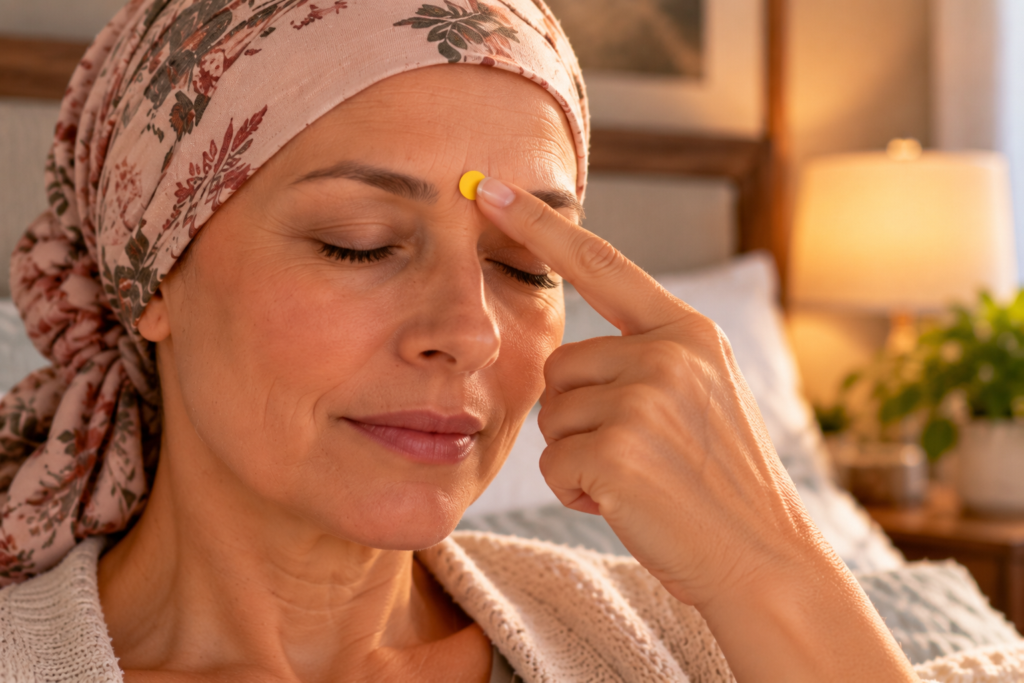
1. Press on Yintang between the eyebrows to calm the mind. Yintang sits in the small hollow directly between the two eyebrows. Using your index finger or thumb, make small, slow clockwise circles with firm but comfortable pressure for about three minutes. Yintang is an extra point and one of the most calming points in the body.
Yintang helps soothe the Shen and calms a restless mind, often preventing deep rest in cancer patients. It relieves mental fatigue from dealing with a serious illness, including persistent thinking, planning, and worrying. Additionally, it supports the nervous system in shifting into a rest-and-repair mode vital for recovery. Since calming the mind is the initial step toward all other benefits, it facilitates establishing a relaxing routine.
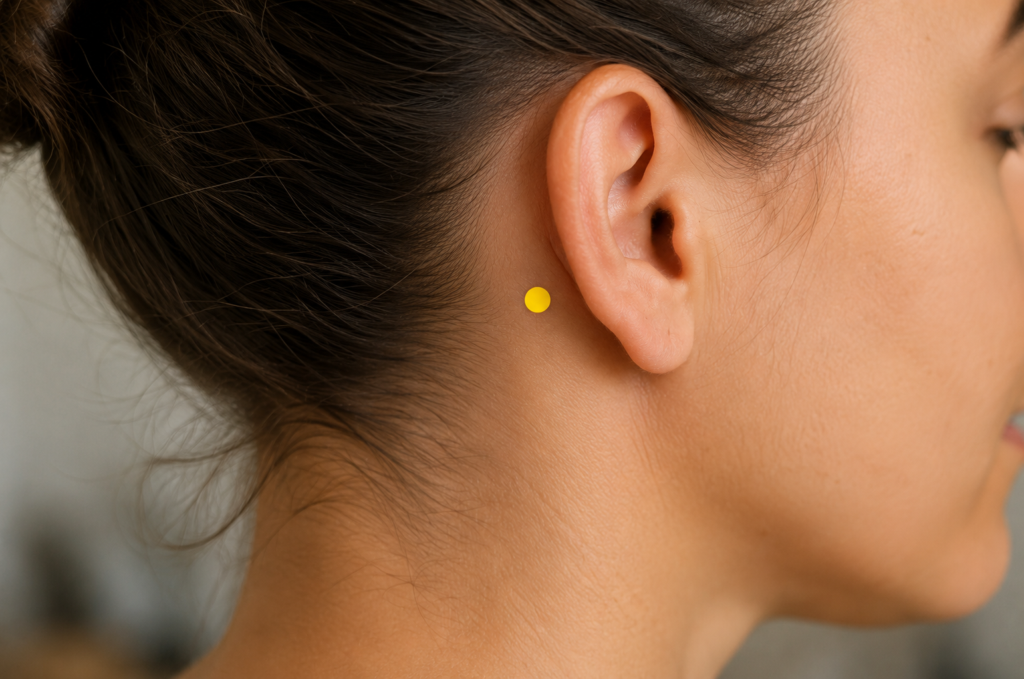
2. Press on Anmian behind the ear to restore restful sleep. Anmian sits behind the ear, in the hollow between the bony bump behind the earlobe and the base of the skull, a little above the jaw. Make small clockwise circles on each side for about three minutes. Anmian is an extra point whose name literally means “Peaceful Sleep.”
Lack of sleep and fatigue reinforce each other, creating a cycle that can persist in cancer-related fatigue. Anmian is frequently targeted for insomnia, and including it in a relaxing routine aligns with the trial results showing improved sleep and increased energy. Since much of the body’s repair processes occur during sleep, restoring proper sleep is one of the most straightforward ways to lessen fatigue.
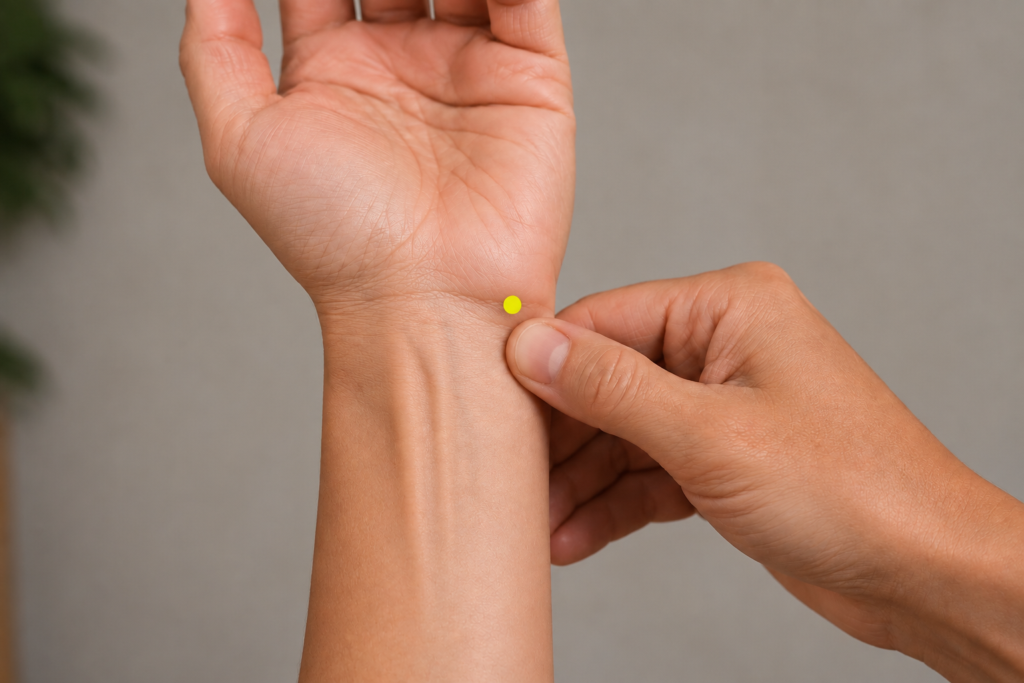
3. Press on HT7 at the wrist to settle the spirit. HT7 sits on the inner wrist crease, on the pinky side, in the small hollow just inside the tendon. Make small clockwise circles on each wrist for about three minutes. HT7 is called “Shenmen,” the “Spirit Gate,” and it is the source point of the Heart.
HT7 helps calm the Heart and stabilize the Shen, easing anxiety, restlessness, and emotional stress related to a cancer diagnosis and its aftermath. When the spirit is stabilized, it can rest more deeply and recover better. This is why HT7 is such an important part of the relaxation routine. It also addresses poor sleep and the wired-but-exhausted feelings many survivors experience.
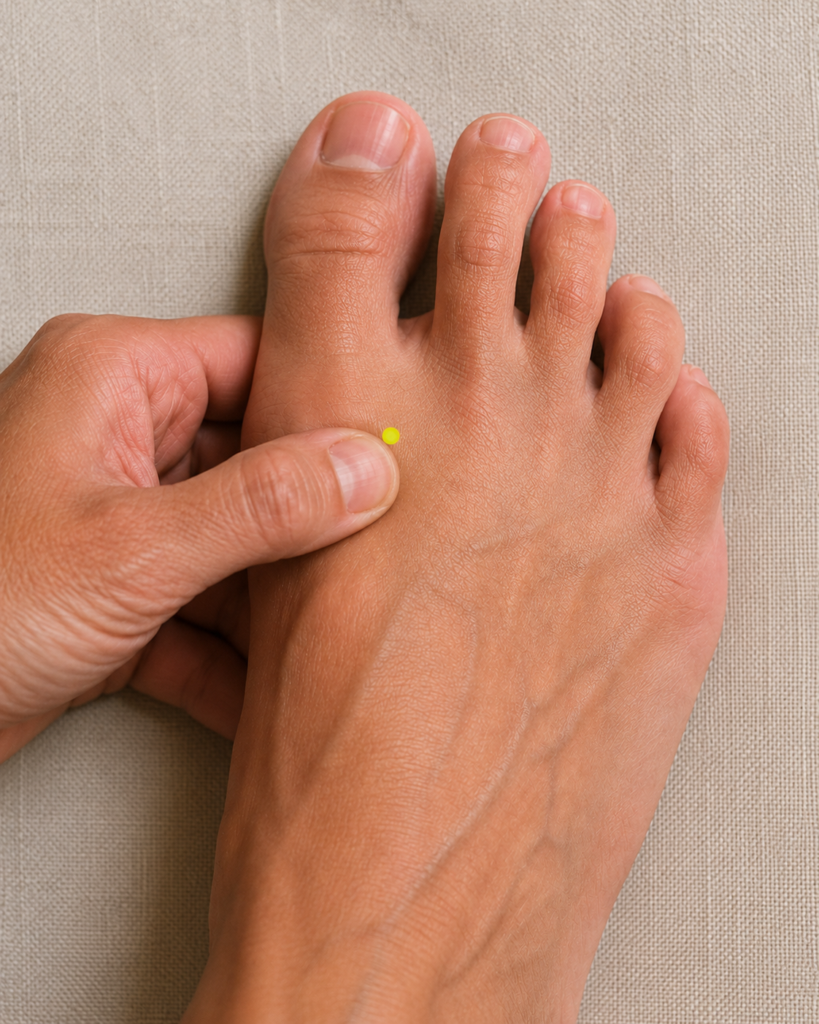
4. Press on LR3 on the top of the foot to release tension and stress. LR3 sits on the top of the foot, in the webbing between the big toe and second toe, about two finger-widths back where the bones meet in a small hollow. Make small clockwise circles on each foot for about three minutes. LR3 is called “Taichong,” and it is the primary point for moving stuck Liver Qi.
Cancer-related stress and disturbances can cause Liver Qi to become bound, leading to a tight, tense, and overstrained feeling that drains energy even while resting. By releasing this stagnant Qi, LR3 helps ease tension and stabilizes the overall system by guiding energy downward to the feet. This also helps the body stop the habit of bracing, which is necessary for true rest and recovery to occur.
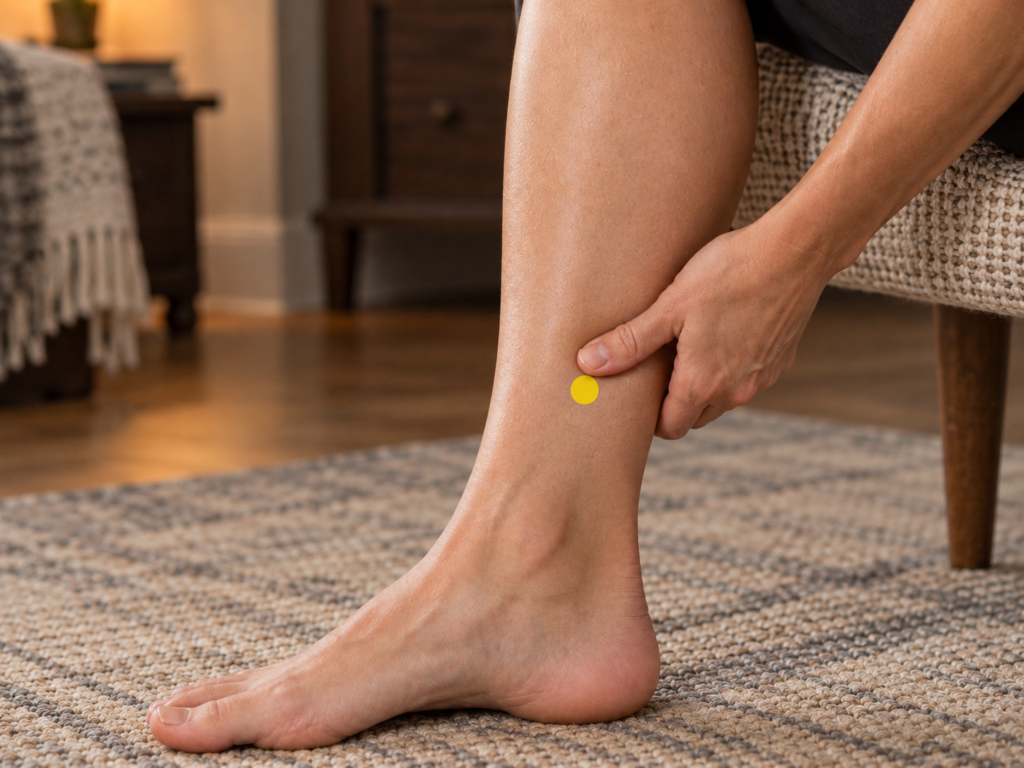
5. Press on SP6 above the inner ankle, the point shared by both routines. SP6 sits four finger-widths up from the tip of the inner ankle bone, just behind the back edge of the shinbone. Make small clockwise circles on each leg for about three minutes. SP6 is called “Sanyinjiao,” the “Three Yin Intersection,” where the Spleen, Liver, and Kidney channels meet. SP6 is contraindicated during pregnancy.
SP6 was the sole acupressure point used in both routines in the study, and the reason is clear. It nourishes the Blood and Yin that the treatment depletes, supports the Spleen in restoring Qi and Blood, and calms the mind, ensuring both reconstruction and stabilization. No matter which routine you choose, including this point is essential.
The Energizing Routine: Rebuild Qi and Blood
6. Press on GV20 at the top of the head to lift the energy. GV20 sits at the very top of the head, on the midline, on a line drawn up from the tops of both ears. Make small clockwise circles for about three minutes. GV20 is called “Baihui,” the “Hundred Meetings,” where many channels converge at the crown.
GV20 elevates the Qi and spirit, counteracting the heavy, sunken feeling often linked to cancer-related fatigue and clearing the foggy mind that accompanies it. By energizing and brightening the whole system, this point is placed at the start of the energizing routine. For dull, heavy fatigue, this acupoint offers a gentle uplifting effect.

7. Press on CV6 below the navel to rebuild the core reserve. CV6 sits on the midline of the lower abdomen, about two finger-widths below the navel. Rest your fingertips there and make small, gentle clockwise circles for about three minutes. CV6 is called “Qihai,” the “Sea of Qi.” Skip this point if you have had abdominal or pelvic surgery that is still healing, an abdominal port or drain, or radiation to the area.
The CV6 point is where the body stores Qi, and pressing it can help draw on and replenish this energy reserve after depletion. It functions by restoring energy from the body’s center, providing a sensation similar to having a full tank of fuel. This effect is especially pronounced when a warm hand is placed over the area, provided it has not been previously treated.

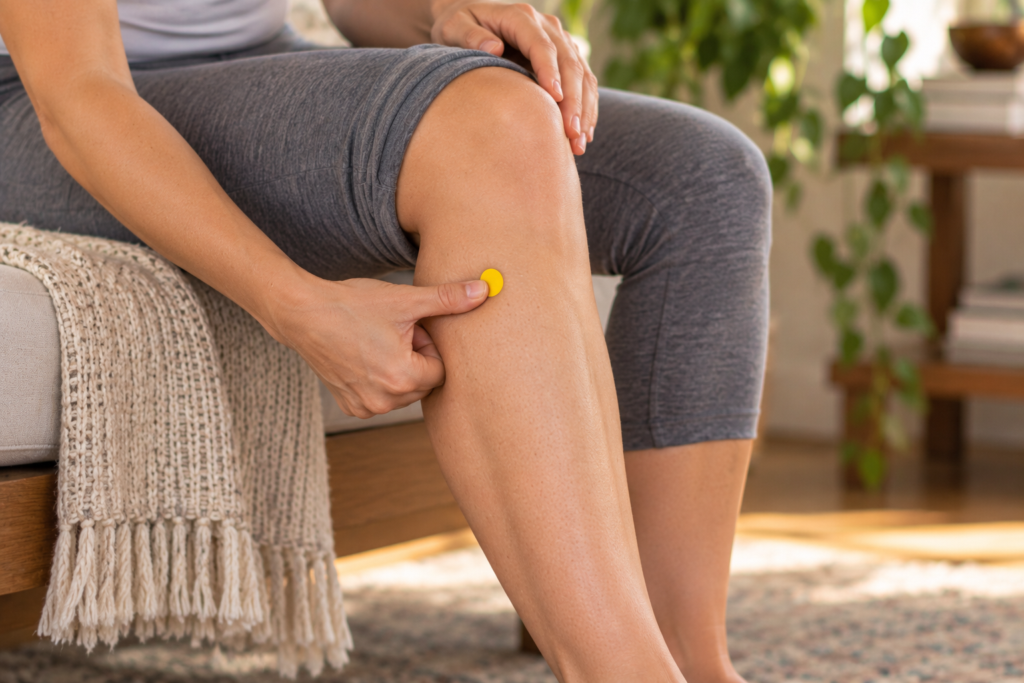
8. Press on ST36 below the knee, the master point for energy. ST36 sits four finger-widths below the lower edge of the kneecap and one finger-width to the outside of the shinbone, on the muscle that rises when you flex your foot. Make small clockwise circles on each leg for about three minutes. ST36 is called “Zusanli,” the “Leg Three Miles,” and it is the single most important point for energy.
The ST36 point enhances the function of the Spleen and Stomach, organs responsible for generating Qi and Blood from food. This helps restore energy at its root. It is one of the most well-researched acupuncture points for fatigue and recovery during cancer treatment. Additionally, it supports appetite and digestion, which are often affected by treatment. This point serves as the basis for the energizing routine.
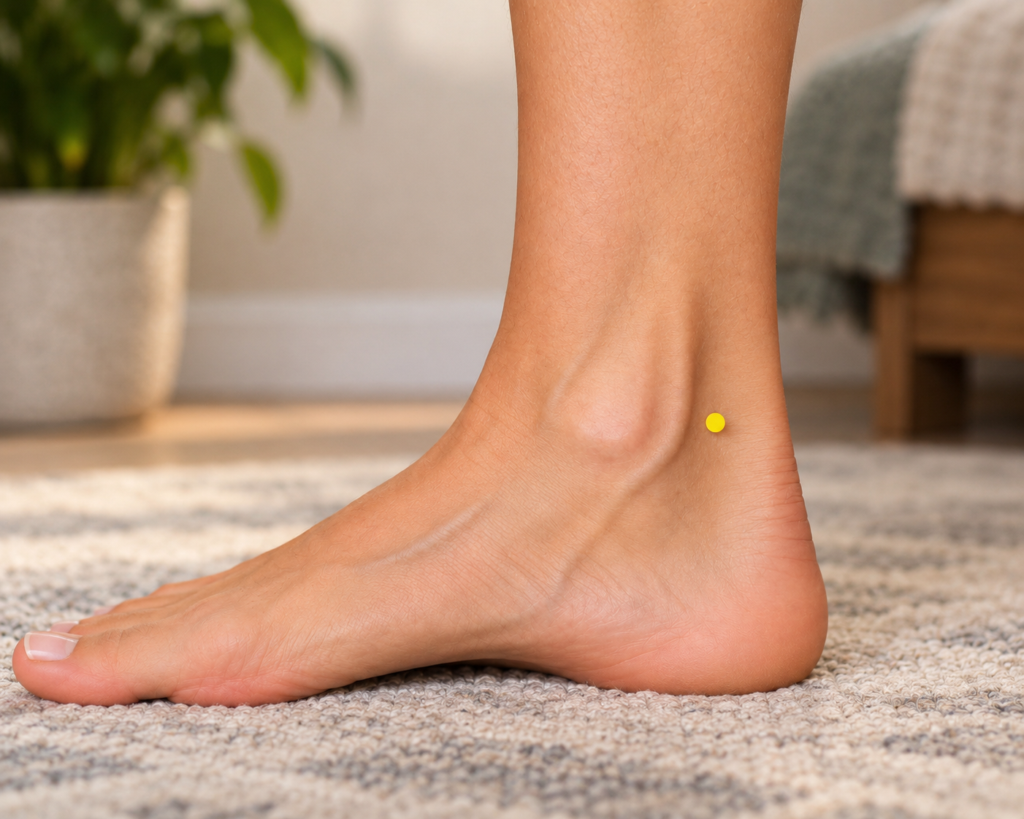
9. Press on KI3 above the inner ankle to replenish the deep reserves. KI3 sits in the hollow between the inner ankle bone and the Achilles tendon, level with the tip of the ankle bone. Make small clockwise circles on each ankle for about three minutes. KI3 is called “Taixi,” the source point of the Kidney.
Cancer treatments can significantly affect the Kidney, the body’s key reserve, leaving lasting exhaustion as a sign of depletion. KI3 supports the restoration of this vital foundation. Its gradual action requires a consistent daily practice over several weeks, rather than depending on a single session.
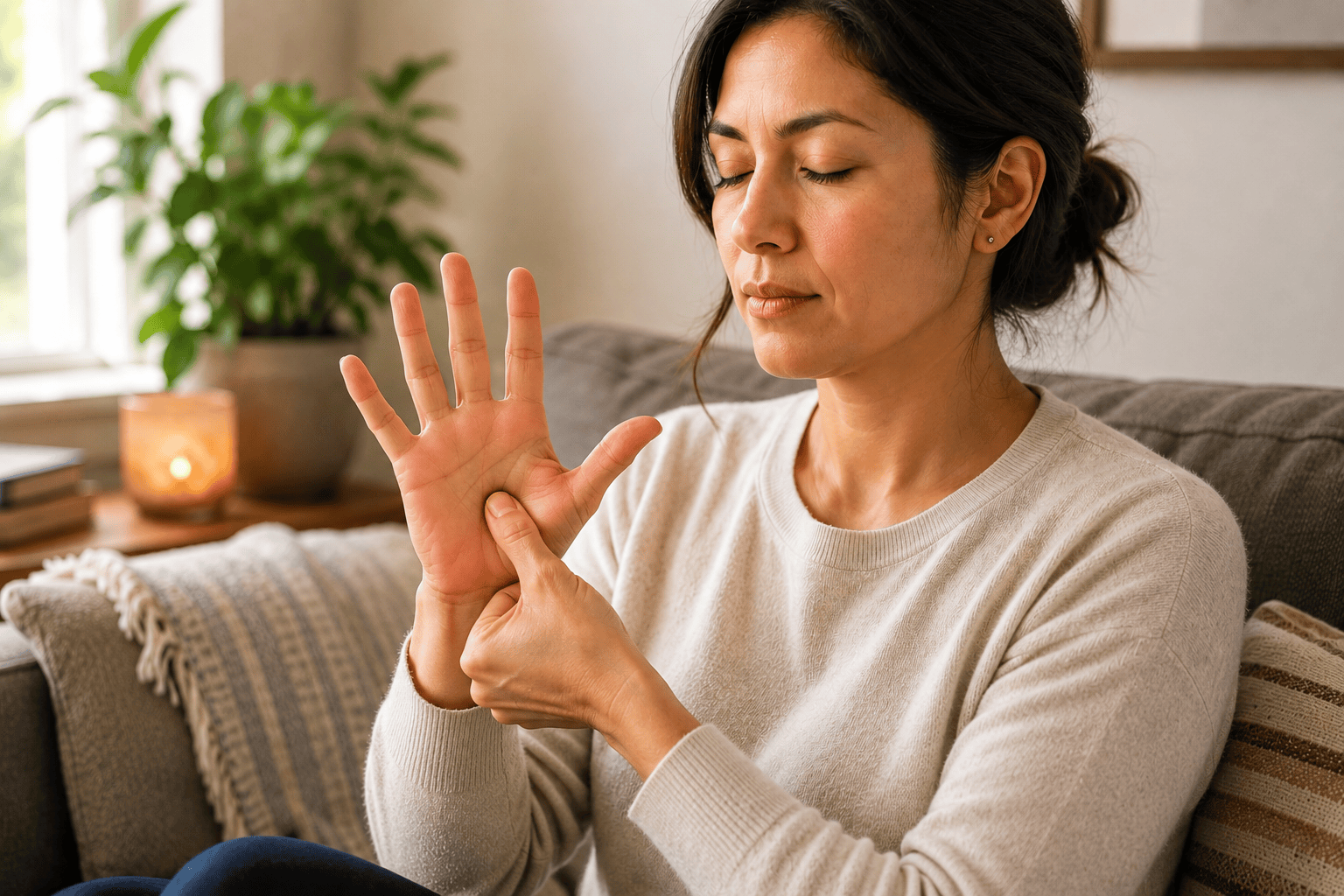
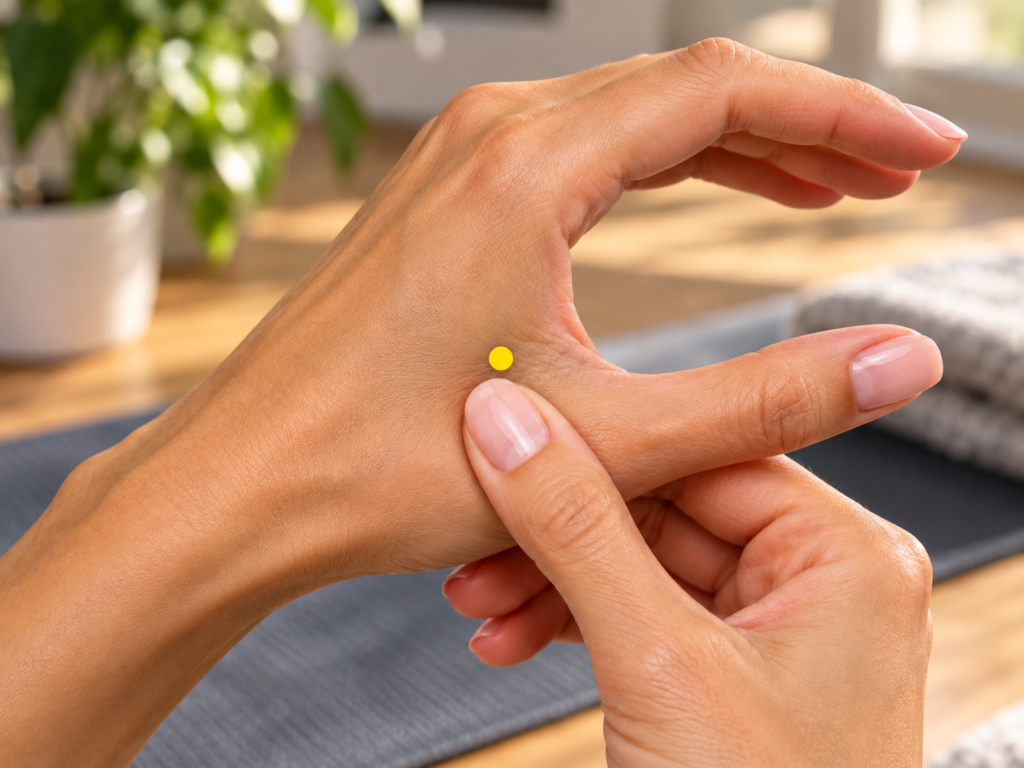
10. Press on LI4 in the hand to move the Qi. LI4 sits in the webbing between the thumb and index finger, at the highest point of the muscle when you bring the thumb and index finger together. Make small clockwise circles on each hand for about three minutes. LI4 is called “Hegu,” and it is one of the great points for moving Qi. LI4 is contraindicated during pregnancy.
Rebuilding energy is just part of the challenge; the Qi must also be activated to flow. LI4 facilitates this by promoting circulation throughout the body, which helps relieve the heavy, stagnant, and blocked feelings often accompanying fatigue. Additionally, it diminishes aches and headaches that may develop from the treatment and finalizes the energizing process by ensuring the energy flows smoothly.
Why These Acupressure Points Work
In Traditional Chinese Medicine, cancer-related fatigue is seen as a profound deficiency of Qi and Blood caused by the illness and its treatments, along with a disturbed spirit that hampers the body’s ability to rest and recover. The two approaches address this issue from opposite perspectives.
- This calming practice involves points Yintang, Anmian, HT7, LR3, and SP6. It helps soothe the Shen, ease tension, and improve sleep, enabling the body’s recovery.
- This invigorating routine (GV20, CV6, ST36, KI3, LI4, SP6) not only replenishes Qi and Blood but also lifts and mobilizes the energy.
- SP6, shared by both, has a dual effect of nourishing and calming.
In a trial at the University of Michigan, both routines significantly decreased fatigue compared to standard care, with the relaxing routine being slightly more effective and also improving sleep. Brain imaging studies from the same group showed that each routine changes brain connectivity differently, supporting the idea that they operate through distinct pathways.
How to Properly Use These Acupressure Points
The research’s method should be followed since it directly contributed to the results.
- If you feel fatigue combined with poor sleep, worry, or a wired but exhausted state, start with the relaxing routine. However, if you feel heavy, drained, and empty, begin with the energizing routine.
- For each paired point on both sides, press firmly but comfortably with your thumb or index finger, and make small clockwise circles for about three minutes.
- Perform the full routine daily for at least six weeks. The research shows that benefits develop gradually over weeks and continue afterward, so consistency is more important than intensity.
- Apply light pressure, avoiding tumors, surgical sites, ports, drains, recently irradiated skin, or treated areas. If you’ve had lymph node removal or lymphedema, use only light pressure on that limb or the other side. If blood counts are low or you bruise easily, use light pressure and consult your oncology team.
Acupressure works best when combined with other strategies that help reduce cancer-related fatigue. Although it may be the last thing you want to do, gentle, consistent physical activities like walking are highly effective. Start slowly and increase the intensity gradually for better results. Maintain a regular sleep schedule, plan your most important tasks during your peak energy times, eat nutritious foods, stay well-hydrated, and don’t hesitate to seek help from others. Talking to a counselor or joining a support group can also help lessen the emotional strain that worsens exhaustion.
When to Get Professional Help
Always inform your oncology team about fatigue, as it may indicate treatable issues. Causes include anemia, thyroid problems, low vitamin levels, dehydration, infection, poor sleep, depression, and medication side effects, all of which can often be addressed. Seek medical attention promptly if fatigue appears suddenly or severely, especially if accompanied by shortness of breath, chest pain, dizziness, fainting, or a rapid heartbeat. For chemotherapy patients, a fever is an emergency requiring immediate contact with your care team.
If you’re feeling fatigued alongside ongoing low mood or hopelessness, talk to your doctor. For any thoughts of self-harm, contact or text the 988 Suicide and Crisis Lifeline.
Acupressure is a safe, evidence-supported complementary therapy that can help manage cancer-related fatigue during your ongoing treatment.
Above and Beyond Acupuncture offers acupuncture, cupping, and lifestyle coaching at the North Frank Lloyd Wright Boulevard location in Scottsdale.
Schedule an appointment online to start your healing journey.
The points above are only as effective as the technique used to apply them. Where to press, how firmly, and for how long all affect the result. For a full breakdown of how to perform acupressure properly at home, read Performing Acupressure in 3 Easy Steps.

About the Publisher
Paul Kerzner, L.Ac., is a licensed acupuncturist and board-certified herbalist, as well as the founder of Above and Beyond Acupuncture in Scottsdale. His own journey from chronic patient to practicing acupuncturist shapes his commitment to providing honest, clinically grounded information about acupuncture and Traditional Chinese Medicine. Learn more about Paul and his clinical approach on the About Us page.