
Key Takeaways
- Despair is a significant burden; it frequently arises subsequent to loss or persistent suffering, yet support mechanisms are available and recovery remains achievable.
- Acupressure provides relief by focusing on specific points to help stabilize emotions and restore willpower, without replacing formal medical treatment.
- Nine key acupressure points help lift spirit, release grief, unblock emotions, and rebuild willpower, making them effective for managing despair.
- Approach acupressure with kindness, using gentle pressure, and consider seeking professional support if feelings of despair persist.
- If you’re experiencing thoughts of self-harm, seek help right away; remember, you’re not alone, and support is available.

Does it seem as though the light has faded from life and there’s no path ahead?
Despair is one of the heaviest burdens a person can bear, surpassing ordinary sadness by embodying total hopelessness. It often results from loss, ongoing illness, chronic pain, burnout, or difficult periods, and can cause feelings like heaviness in the chest, emptiness, profound fatigue, and a longing to withdraw. If you’re going through this, remember that improvement is possible, even if it feels out of reach. Seeking support is a brave and essential step toward healing.
If you’re feeling overwhelmed and having thoughts of ending your life or hurting yourself, please reach out for support right away. You can call or text the 988 Suicide and Crisis Lifeline anytime, day or night. If you’re in immediate danger, don’t hesitate to call 911. You’re not alone, and help is available.
Acupressure is not meant to replace essential support, counseling, or medical treatment. Instead, it offers a gentle and calming way to care for yourself, helping to stabilize both the body and mind. It can provide brief relief from feelings of heaviness. A caring person can even press certain points, which can be comforting.
In Traditional Chinese Medicine, despair is seen as a downward shift of the Shen, the spirit housed in the Heart, making the world seem grey and the future hard to envision. Grief is stored in the Lung and can make the chest feel heavy when it has nowhere to go. The Liver maintains emotional flow; when stressed, emotions become blocked and heavy. The Kidney holds the will and drive to move forward, but prolonged exhaustion and fear can deplete this reserve, leaving a person feeling empty. Classical acupuncture recognizes points on the back linked to the spirit, soul, and will, and has used them for centuries to help manage emotional pain.
Here are nine acupressure points to uplift the spirit, release grief, unblock emotions, and restore the will.
What Acupressure Points to Press and Why
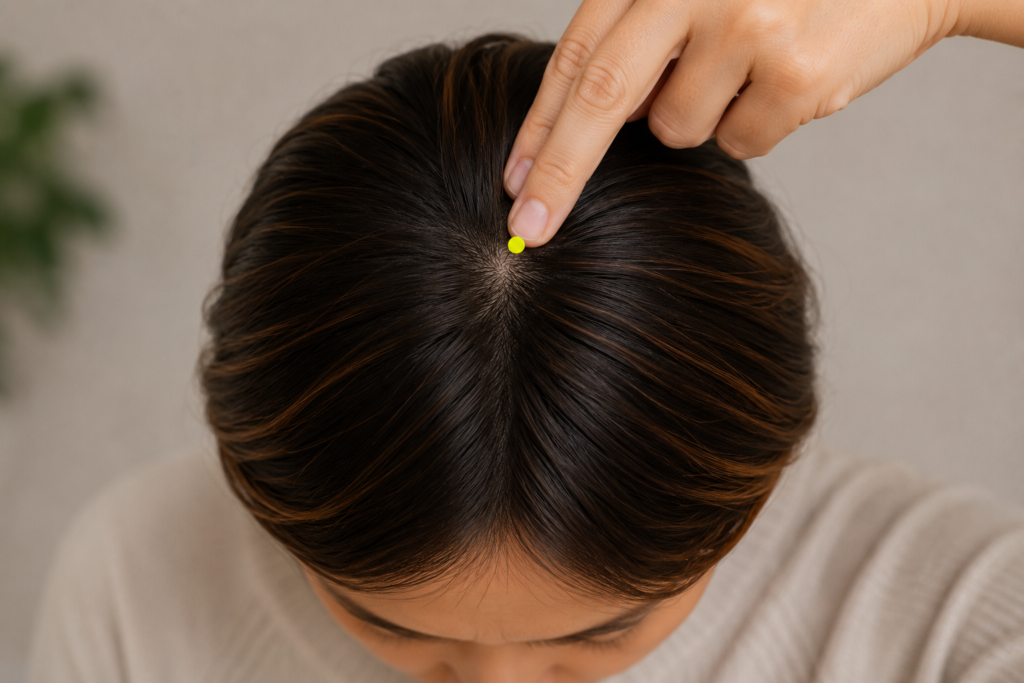
1. Press on GV20 at the top of the head to lift a sinking spirit. GV20 sits at the very top of the head, on the midline, on a line drawn up from the tops of both ears. Rest a fingertip there and press gently, or make slow circles, for one to two minutes while breathing slowly. GV20 is called “Baihui,” the “Hundred Meetings.”
GV20 is the highest point on the body where many channels converge and is used to lift what has fallen, including the spirit. When despair makes everything feel heavy and dull, gentle pressure on this point can create a sense of lightness and clarity, even temporarily. This makes it a good starting point.
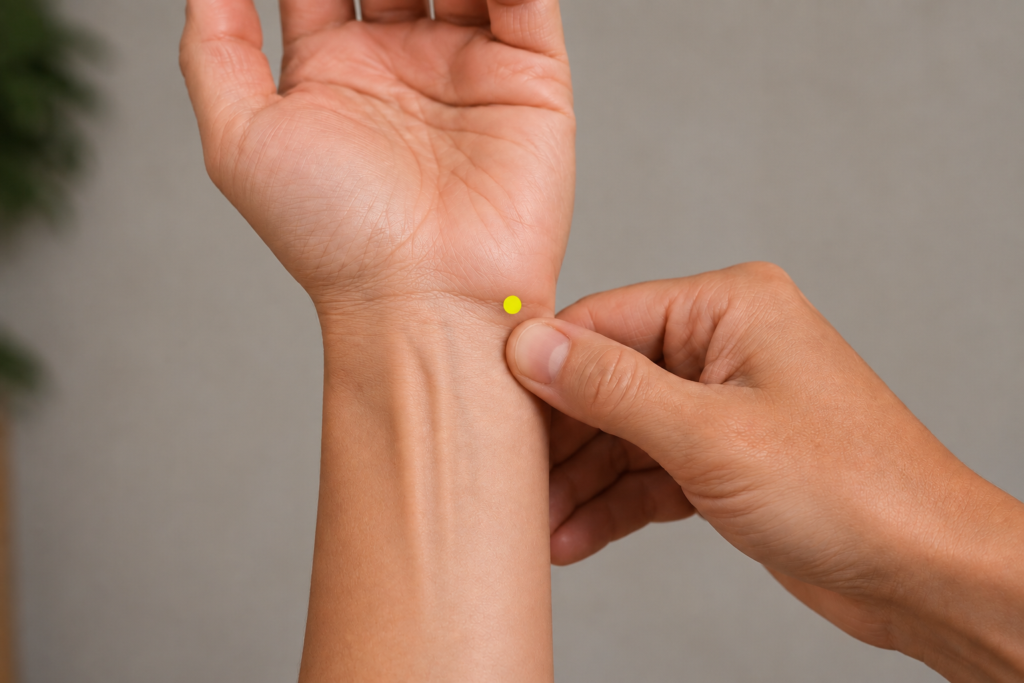
2. Press on HT7 at the wrist to steady the Heart. HT7 sits on the inner wrist crease, on the pinky side, in the small hollow just inside the tendon. Press gently but firmly with your thumb for one to two minutes on each wrist. HT7 is called “Shenmen,” the “Spirit Gate.”
HT7 is a crucial point for the Shen, helping to calm and stabilize the Heart. When experiencing despair, it can reduce restlessness, insomnia, and the unsettled feelings that often accompany heaviness. The technique is gentle, unobtrusive, and suitable for use at any time, including nighttime, when despair may be strongest.
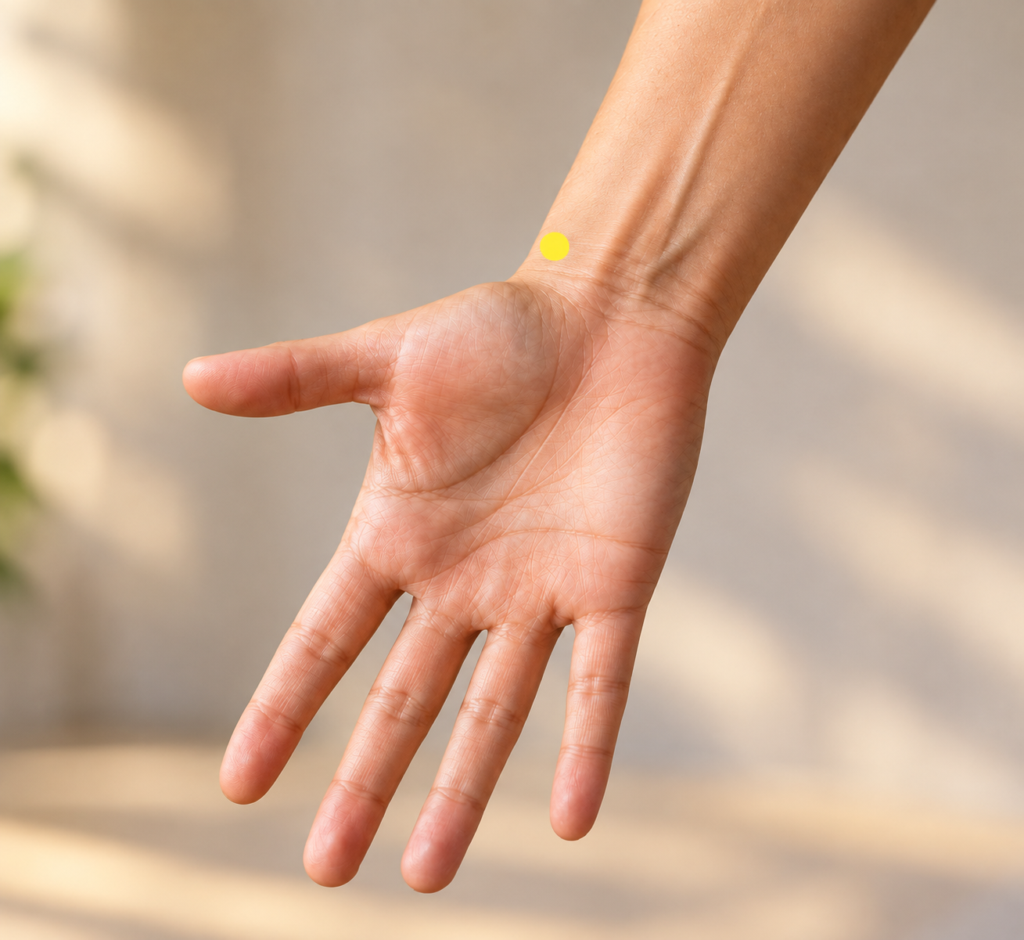
3. Press on LU7 above the wrist to release held grief. LU7 sits on the thumb side of the forearm, about two finger-widths above the wrist crease, in a small groove on the edge of the bone. Press gently with your fingertip for one to two minutes on each arm. LU7 is called “Lieque,” the “Broken Sequence.”
The Lung organ retains feelings of grief, and LU7 is a traditional acupuncture point used for grief that has been unable to be released or expressed, the type of grief that causes the chest to tighten and makes it difficult to breathe deeply. It is helpful to press on this point while taking slow, deep breaths in order to relax the chest. If tears come, allow them to flow; they are part of the process by which grief is worked through.
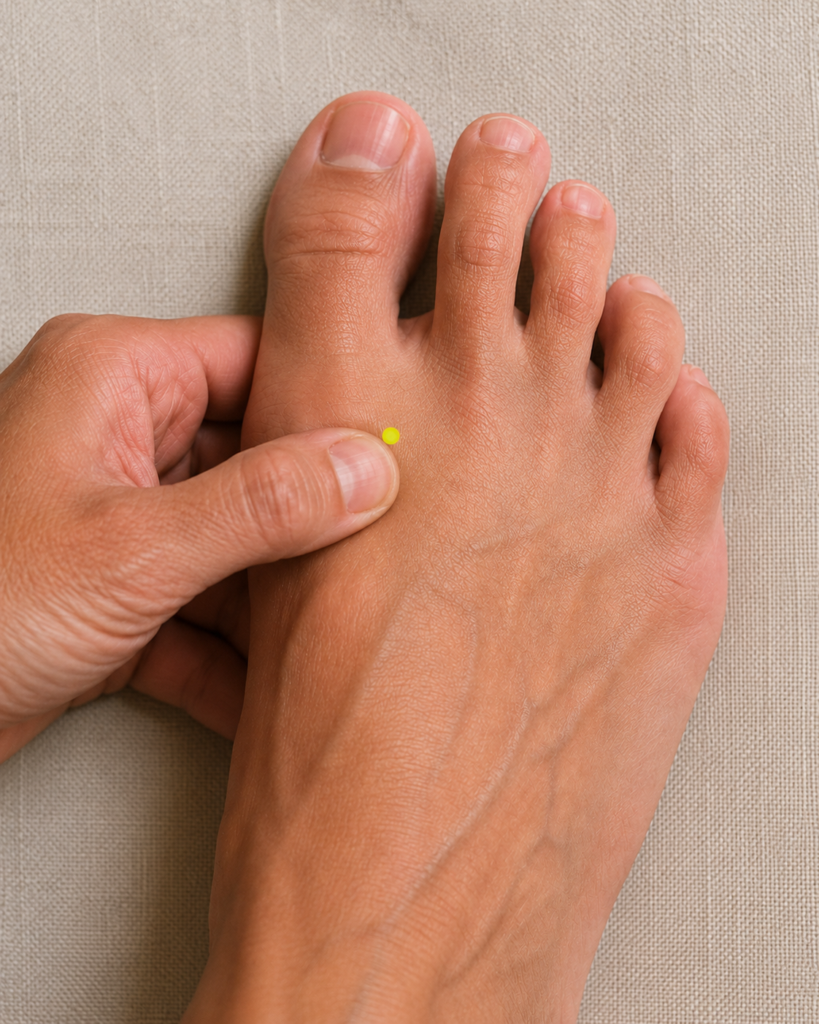
4. Press on LR3 on the top of the foot to move what feels stuck. LR3 sits on the top of the foot, in the webbing between the big toe and second toe, about two finger-widths back where the bones meet in a small hollow. Press with your thumb for one to two minutes on each foot. LR3 is called “Taichong.”
In Traditional Chinese Medicine, stagnation and heaviness of emotions suggest a blockage in Liver Qi. LR3 helps unblock this energy, relieving persistent heaviness and tension in the chest, throat, and stomach. It also helps stabilize the body by directing energy downward to the feet.
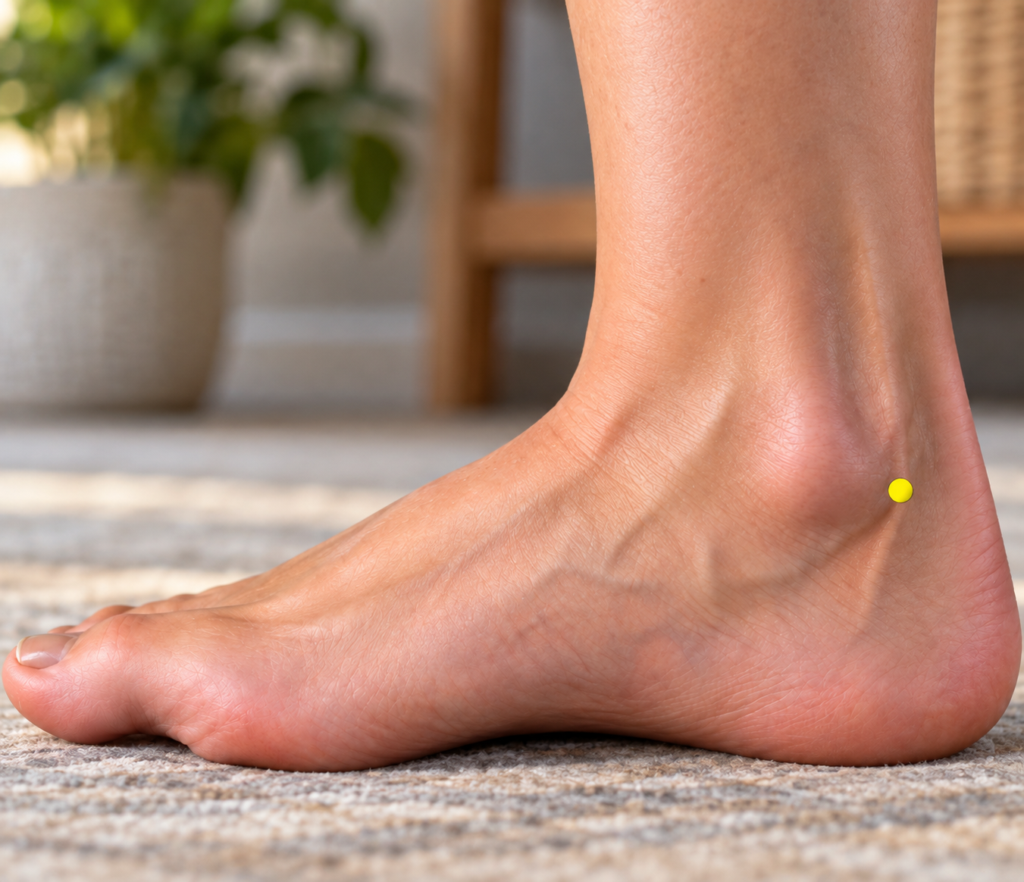
5. Press on KI4 at the inner ankle to rebuild the will. KI4 sits on the inner ankle, just below and slightly behind the inner ankle bone, in the small hollow at the front edge of where the Achilles tendon attaches to the heel. Press gently with your thumb for one to two minutes on each ankle. KI4 is called “Dazhong,” the “Great Bell.”
KI4 has traditionally been used to address a specific type of despair, which is a state characterized by exhaustion and fear in which a person wants to close the door, remain inside, and not see anyone. As a point of the Kidney, it helps to strengthen the will, the strong inner urge to keep going. Its name, the Great Bell, implies a call encouraging a return to life. This is particularly appropriate when despair is accompanied by withdrawal and fear.
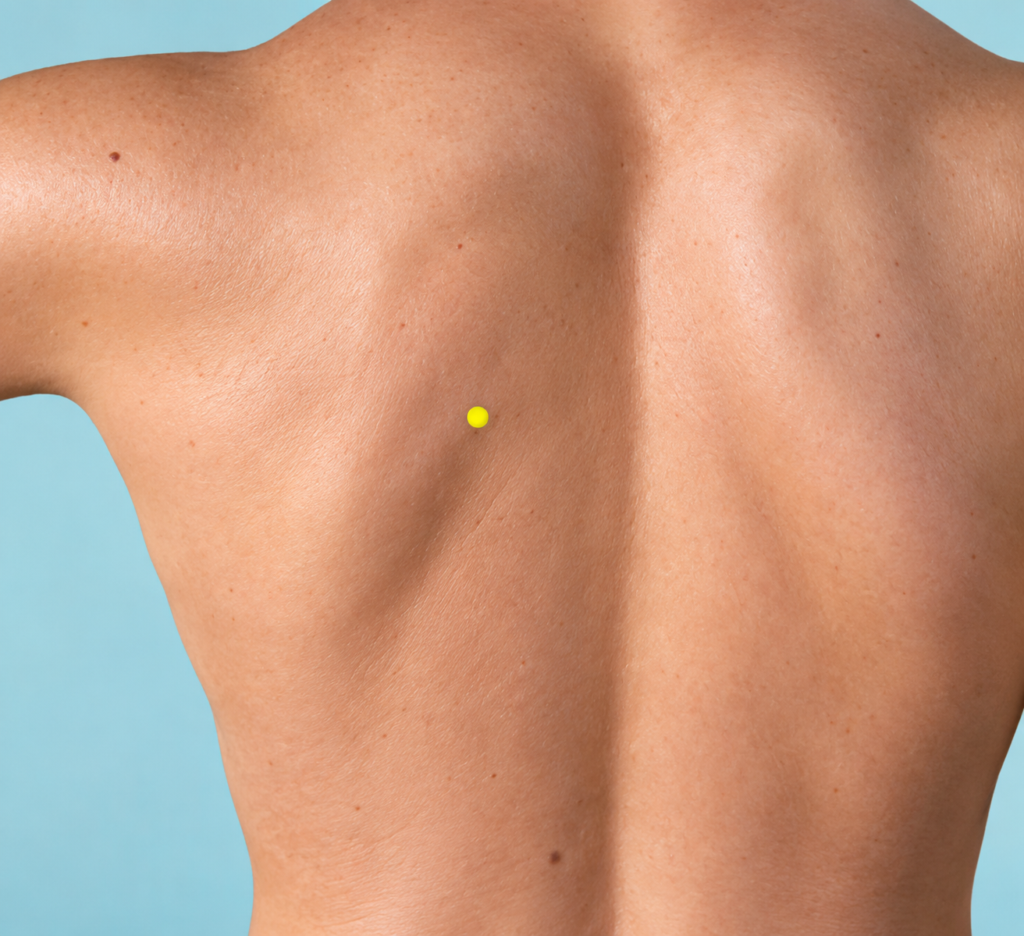
6. Press on BL44 on the upper back, the Spirit Hall. BL44 sits on the upper back, about four finger-widths out from the spine, along the inner edge of the shoulder blade, level with the space between the shoulder blades’ midpoints. Lie on your back with a tennis ball under each side, or have someone you trust press both sides gently with their thumbs for one to two minutes. BL44 is called “Shentang,” the “Spirit Hall.”
BL44 is situated at the back of the Heart area and is named after the spirit. It supports a spirit that feels shaken or weakened and relieves the tight, aching upper back often caused by emotional pain. Having someone press this point while you rest can be very comforting.
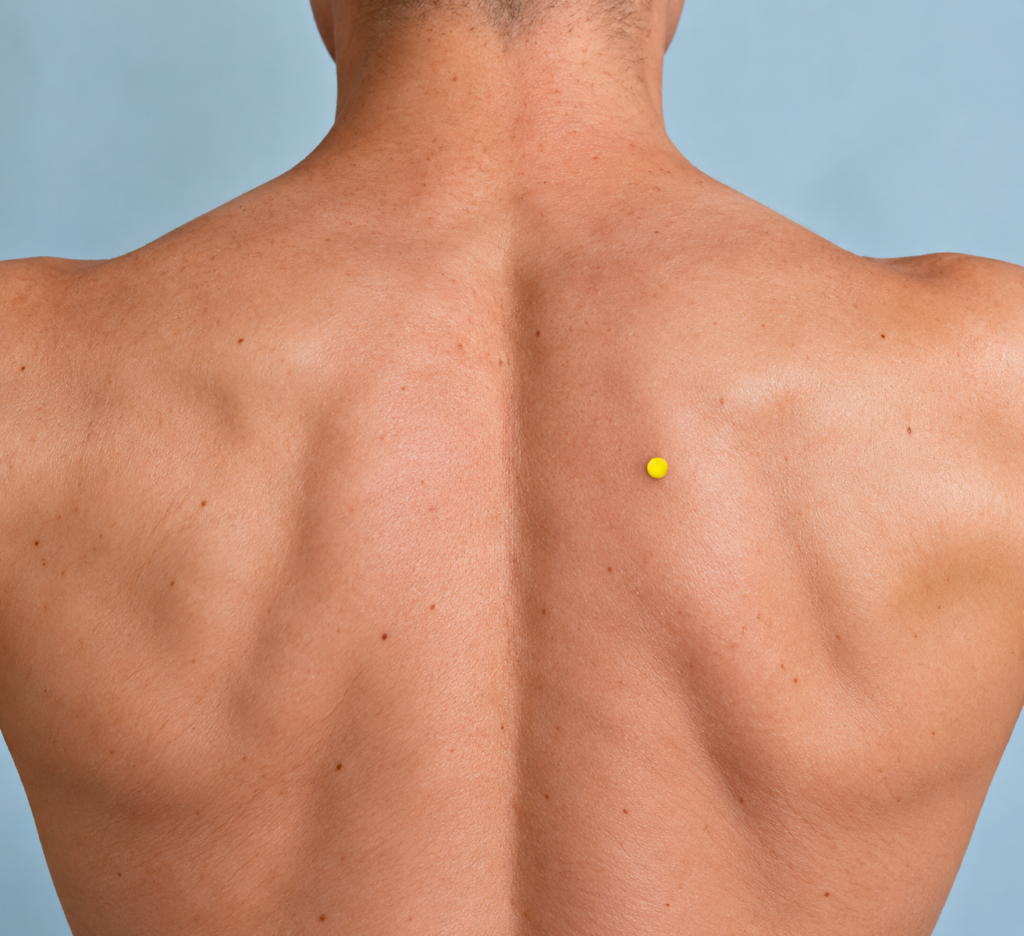
7. Press on BL42 on the upper back, the Door of the Soul. BL42 sits on the upper back, about four finger-widths out from the spine, near the upper inner corner of the shoulder blade, level with the top of the shoulder blades. Use a tennis ball while lying down, or have someone press gently for one to two minutes. BL42 is called “Pohu,” the “Door of the Po.”
In Traditional Chinese Medicine, the Po is the spirit component linked to the Lung and grief, embodying the physical aspect of our identity. BL42 is used when grief is lodged deeply in the body, causing heaviness and congestion in the chest. It works effectively with LU7 to facilitate the release and movement of stored sorrow.
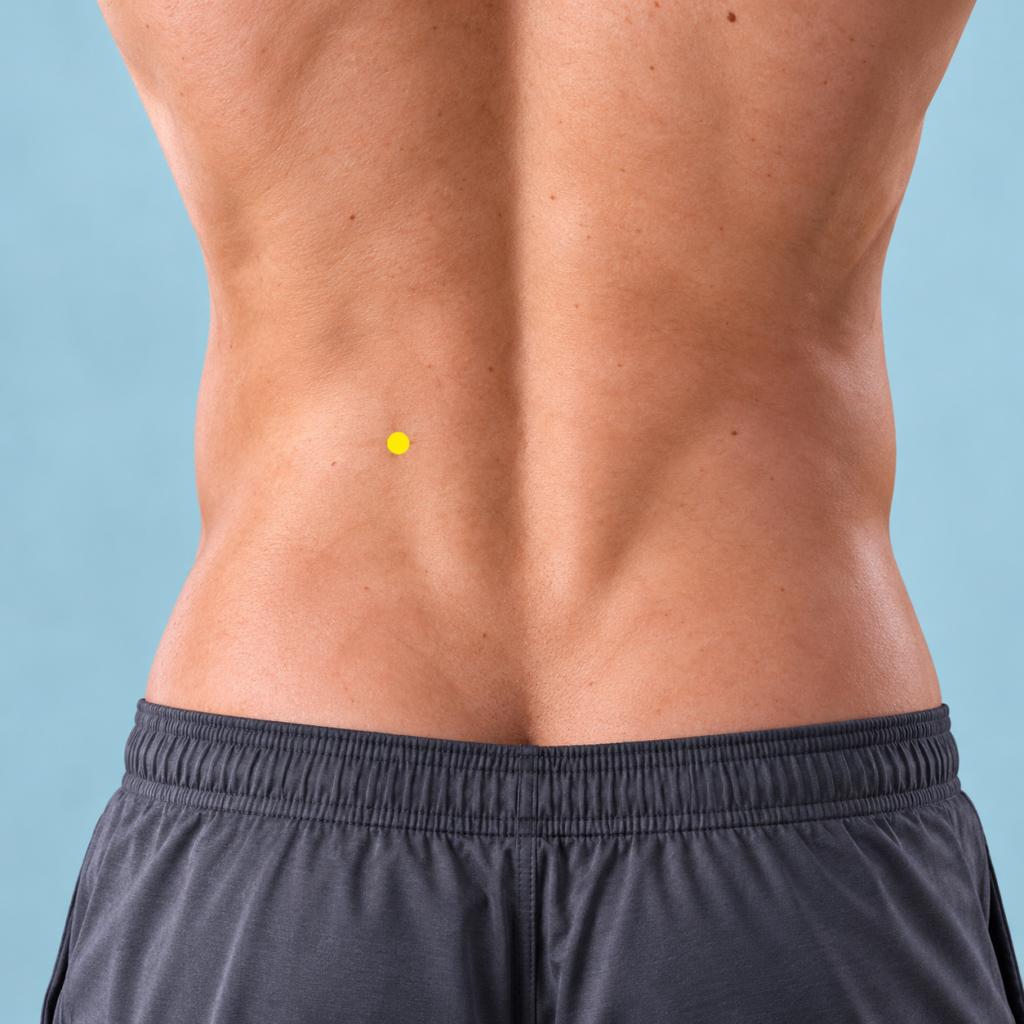
8. Press on BL52 on the lower back, the Chamber of the Will. BL52 sits on the lower back, at about waist level, roughly a hand’s width out to each side of the spine. Rest your palms over the area, or have someone press gently with their thumbs, for one to two minutes, letting warmth build. BL52 is called “Zhishi,” the “Room of the Will.”
BL52 is situated next to the posterior part of the Kidney and is named after willpower, the resolve to persevere despite despair, which often overwhelms it. It helps restore this deep reserve. A simple, effective way to work on it is to warm the lower back with your hands. This point pairs well with KI4 at the ankle.
9. Press Ear Shenmen for gentle calm whenever you need it. Ear Shenmen sits in the upper part of the ear, in the triangular hollow near the top, at its apex. Press gently with your fingertip for about a minute on each ear.
Ear Shenmen, also known as the Spirit Gate, like HT7, is among the most calming acupoints in the ear. You can gently press it anywhere, even while lying in bed, as a gentle point to return to whenever you feel a sense of heaviness.

Why These Acupressure Points Work
In Traditional Chinese Medicine, despair is seen as a sinking spirit, accompanied by grief held in the chest, emotions that are trapped and stagnant, and a weakened will. The nine points address all these aspects.
- The Shen (spirit) is stabilized and elevated through the spirit points (GV20, HT7, Ear Shenmen, BL44).
- The acupressure points LU7 and BL42 help alleviate and disperse sorrow.
- The LR3 point helps unblock emotions and stabilize the body.
- The will points (KI4, BL52) restore the deep drive to continue and move forward.
How to Properly Use These Acupressure Points
- Be kind to yourself by applying gentle to moderate pressure, and stop if it becomes too much.
- Start with GV20 and HT7, inhaling slowly, then proceed to LU7, LR3, and KI4.
- For points BL44, BL42, and BL52, lie down and place tennis balls on them or ask someone to press them while resting. Having someone supervise can aid healing.
- If you find yourself awake due to despair, try using Ear Shenmen and HT7 during the night.
- Spend one to two minutes on each point, using only a few if necessary. A little goes a long way.
Small actions matter; try to converse with someone daily, even briefly. Spend time outside in daylight, take a short walk, and maintain regular sleep and meal schedules. Completing just one simple task each day can be enough. A counselor or therapist can provide support that may be hard to find on your own. If you’re unsure where to begin, our services for anxiety, stress, and depression offer a gentle and straightforward starting point.
When to Reach Out for Help Right Away
If you are considering ending your life, have a plan, have thoughts of harming yourself, or believe you cannot ensure your own safety, please reach out immediately. You can call or text the 988 Suicide and Crisis Lifeline at any time, or call 911 or go to the nearest emergency room. If feelings of despair have persisted for more than a few weeks, if you’ve lost interest in things you once cared about, or if you’re struggling to eat, sleep, or get through the day, or if you’re using alcohol or other substances to cope, you should see a doctor or mental health professional soon. You deserve help, and support is available.
Above and Beyond Acupuncture offers acupuncture, cupping, and lifestyle coaching at the North Frank Lloyd Wright Boulevard location in Scottsdale.
Schedule an appointment online to start your healing journey.
The points above are only as effective as the technique used to apply them. Where to press, how firmly, and for how long all affect the result. For a full breakdown of how to perform acupressure properly at home, read Performing Acupressure in 3 Easy Steps.
For acupressure points focused on hopelessness, acupressure for hopelessness is the companion post.

About the Publisher
Paul Kerzner, L.Ac., is a licensed acupuncturist and board-certified herbalist, as well as the founder of Above and Beyond Acupuncture in Scottsdale. His own journey from chronic patient to practicing acupuncturist shapes his commitment to providing honest, clinically grounded information about acupuncture and Traditional Chinese Medicine. Learn more about Paul and his clinical approach on the About Us page.