Key Takeaways
- Cluster headaches cause intense pain often centered around one eye, and they can be debilitating; many people turn to acupressure for relief.
- Nine acupressure points, such as GB20, Taiyang, and LI4, help relieve pain by decreasing heat and enhancing Qi and Blood flow.
- Pressing these points can relieve symptoms during attacks and aid recovery between episodes, but they should be used alongside medical treatments.
- Acupressure helps to ground intense energy and alleviate pain, but it’s essential to consult a healthcare provider for cluster headaches.
- Seek professional assistance for accurate diagnosis and effective treatment, since cluster headaches demand prompt attention and management.

Cluster headaches are extremely intense, rapidly occurring pains typically localized around or behind one eye, characterized by a burning, piercing sensation.
They often come with watery eyes, nasal congestion or a runny nose, and restlessness on the affected side. These headaches tend to follow cyclical patterns, sometimes occurring multiple times daily over several weeks, and can be very debilitating. Many people find that conventional treatments don’t provide complete relief, prompting them to seek alternative methods. Acupressure lets you target pain, tension, and stress with your own hands.
In Traditional Chinese Medicine, cluster headaches are associated with the Liver and Gallbladder channels, which run along the sides of the head and around the eyes, precisely where pain occurs. Stress can generate intense heat and elevate Liver yang, blocking Qi and Blood in the head and causing burning, stabbing pain. Symptoms around the eyes and the pain’s location follow the Gallbladder channel through the temple and eye, with heat rising upward. The listed points aim to reduce this heat and yang, promote the movement of stagnated Qi and Blood, open the channels near the eye and temple, and soothe the nervous system to relieve pain and tension.
Here are nine acupressure points that can help alleviate some discomfort.
What Acupressure Points to Press and Why
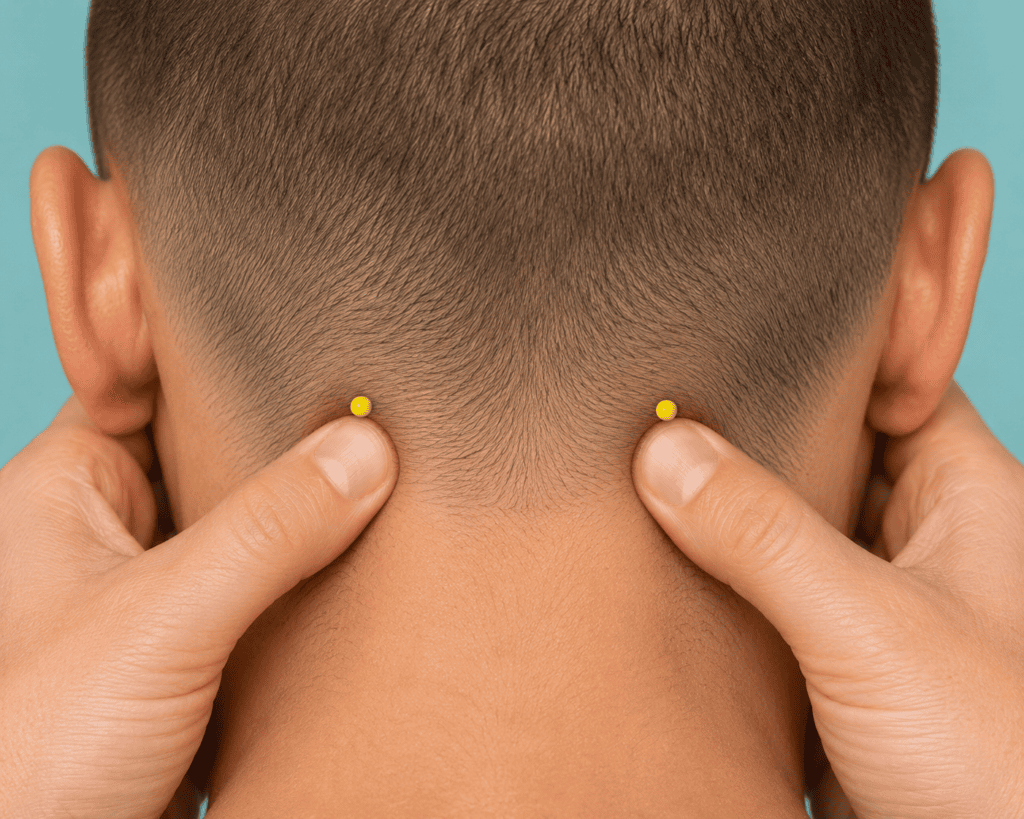
1. Press on GB20 at the base of the skull to bring the pain down. GB20 sits in the two hollows at the base of the skull, between the two large vertical neck muscles and the outer edge, roughly level with the tops of the ears. Tip your head back slightly and press firmly up and inward with your thumbs for one to two minutes. GB20 is called “Fengchi,” and it is one of the most important points for headaches of the head and side.
GB20 is an important point for relieving headaches, particularly those on one side or along the Gallbladder channel, which correlates with cluster headaches. It helps reduce excessive heat and yang that drive pain upward, clears the head, and relieves tension at the base of the skull. Since the Gallbladder channel extends to the temple and eye, this point aligns with the pathway of cluster pain. It’s a good initial point to press firmly into the hollows to alleviate both pain and neck tension.
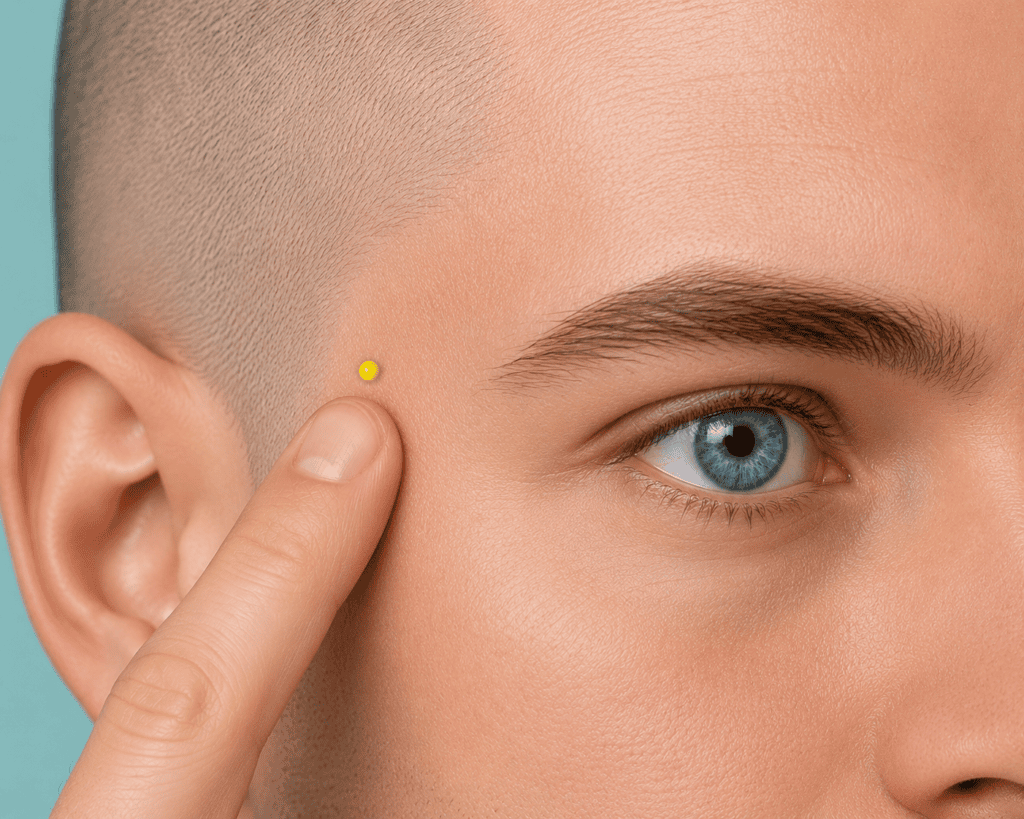
2. Press on Taiyang at the temple, close to the pain. Taiyang sits in the soft hollow of the temple, about a finger-width back from the midpoint between the outer end of the eyebrow and the outer corner of the eye. Press firmly, or make small, slow circles with your fingertips for one to two minutes on the affected side. Taiyang is an extra point, one of the most used points for headaches at the side of the head and around the eye.
Taiyang sits at a common pain point near the temple by the eye, making it a highly effective local point. It helps promote the flow of Qi and Blood and reduce heat in the temple area, alleviating sharp pain in the temple and around the eye. Because this spot can be very sensitive during an attack, apply as much pressure as is comfortable, pressing more firmly between attacks and more gently during an attack. This point is particularly beneficial for pain in the temple and eye region.
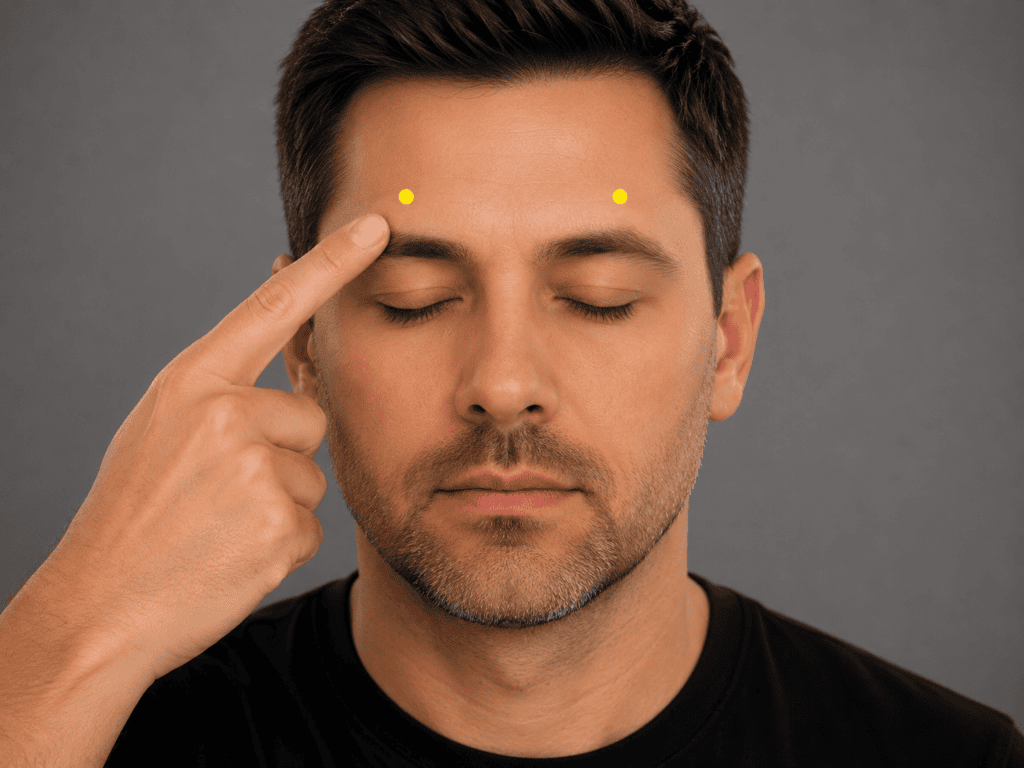
3. Press on GB14 on the forehead above the eye. GB14 sits on the forehead, directly above the pupil, about one thumb-width above the midpoint of the eyebrow. Press firmly with your fingertip for one to two minutes on the affected side. GB14 is called “Yangbai,” a local point for the forehead and the area around the eye.
GB14 lies on the Gallbladder channel on the forehead near the eye, where cluster headaches occur. It alleviates pain and pressure in the forehead and around the eye by promoting the flow of Qi and Blood. This point specifically eases pain that radiates across the brow and above the eye during an attack. It pairs effectively with Taiyang at the temple and other nearby points around the eye, targeting the front of the pain. GB14 is particularly helpful for forehead and brow pain.
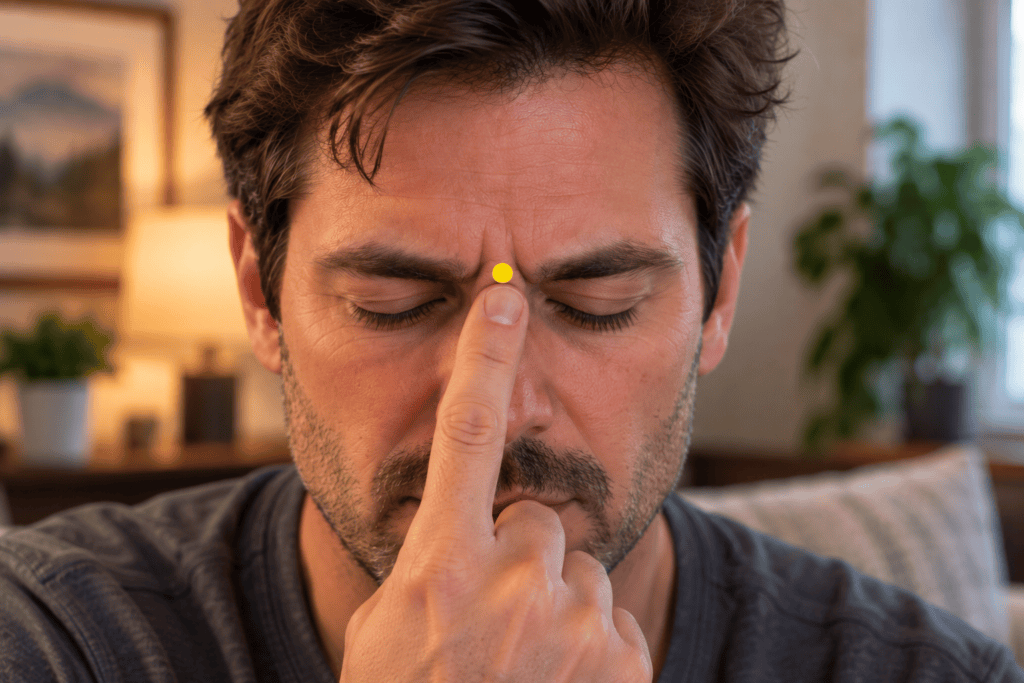
4. Press on Yintang between the eyebrows to calm and ease the head. Yintang sits in the small hollow directly between the two eyebrows. Press steadily and hold, or make small, slow circles with your fingertip for one to two minutes. Yintang is an extra point and one of the body’s most calming points.
Yintang soothes the mind and calms the nervous system, which is especially helpful during cluster headaches. It reduces pressure between and above the eyes and alleviates restlessness and agitation associated with an attack. Stimulating this point relaxes the entire system and eases tension in the front of the head. If you can’t sit still or feel tension around your eyes and brow during an attack, gently press this point while breathing slowly to promote calm.
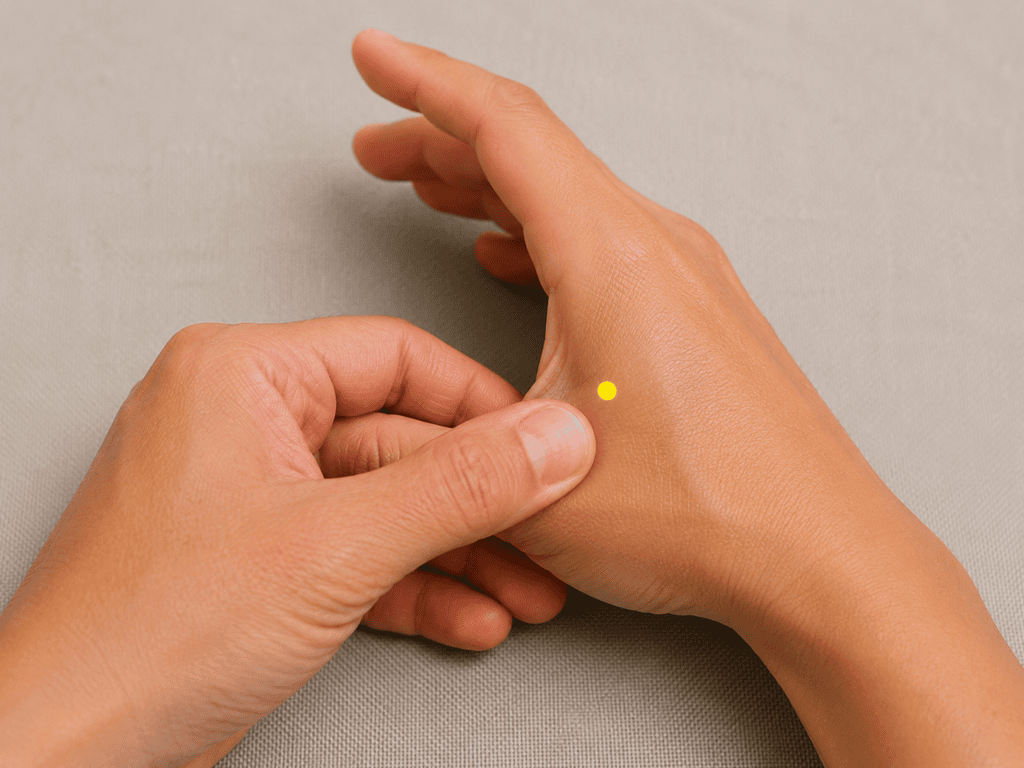
5. Press on LI4 in the hand, a powerful point for head pain. LI4 sits in the webbing between the thumb and index finger, at the highest point of the muscle when you bring them together. Press firmly with the thumb of your other hand for one to two minutes on each hand. LI4 is called “Hegu,” the command point for the head and face, and one of the body’s strongest pain-relieving points. LI4 is avoided during pregnancy.
LI4 is a highly effective point for relieving head and face pain. It channels Qi to the area and can alleviate pain even when the head feels too tender to touch. As a command point for the face, it helps clear heat and reduce overall head discomfort. Located on the hand, it lets you press firmly without worsening the pain. For severe cluster headaches, this point can be particularly beneficial, so use it repeatedly during an attack.
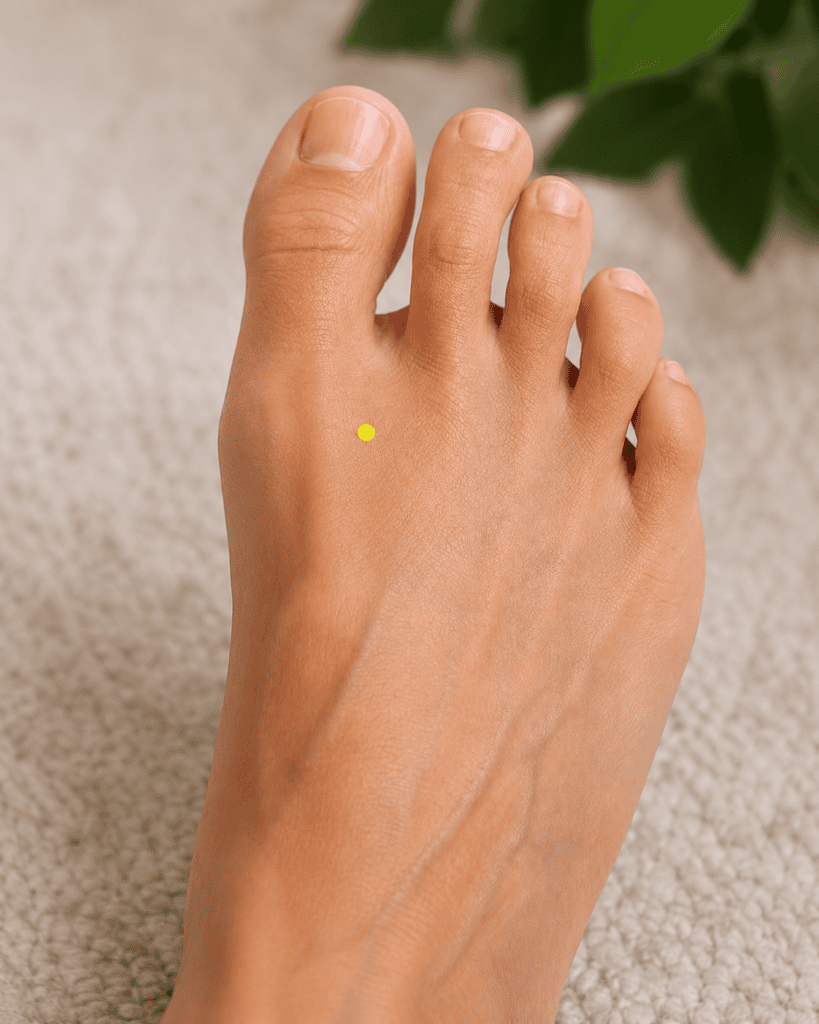
6. Press on LR3 on the top of the foot to bring down the heat and yang. LR3 sits on the top of the foot, in the webbing between the big toe and second toe, about two finger-widths back where the bones meet in a small hollow. Press firmly with the thumb for one to two minutes on each foot. LR3 is called “Taichong,” and it is the primary point for bringing down rising Liver yang.
In Traditional Chinese Medicine, cluster headaches are considered to stem from heat and rising Liver yang. LR3 serves as the main point to soothe the Liver and address this fundamental cause. It directs heat and yang down from the head, calms the Liver, and helps stabilize the body by guiding energy to the feet. This action counteracts the upward force responsible for pain. When LR3 is pressed together with LI4 on the hand, known as the Four Gates, it creates a powerful combination for moving Qi and alleviating severe head pain. For heat that contributes to cluster headaches, this point helps to draw it downward.
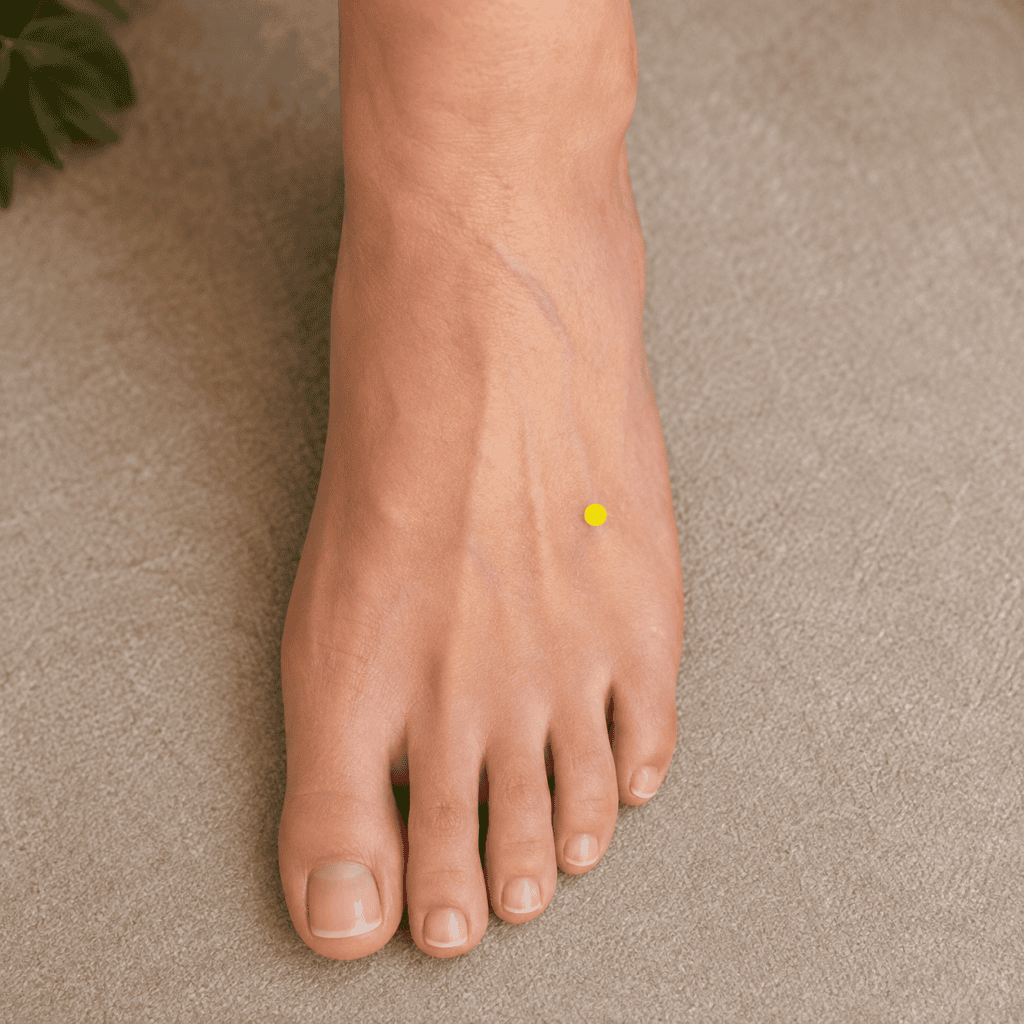
7. Press on GB41 on the foot to clear the Gallbladder channel. GB41 sits on the top of the foot, in the groove between the fourth and fifth toes, about two thumb-widths back from the web margin. Press firmly with your thumb for one to two minutes on each foot. GB41 is called “Zulinqi,” a key distal point on the Gallbladder channel.
Cluster pain usually occurs along the Gallbladder channel over the temple and around the eye. GB41, situated on the foot along this pathway, helps clear and open the channel from a distance by drawing the pain downward. It functions by moving stagnant Qi in the Gallbladder channel and is commonly used for one-sided head pain, temple discomfort, and eye issues, similar to cluster headaches. As a distal point away from the head, it influences the channel while also utilizing local points. For pain along the Gallbladder pathway, this point aids in opening the entire route.
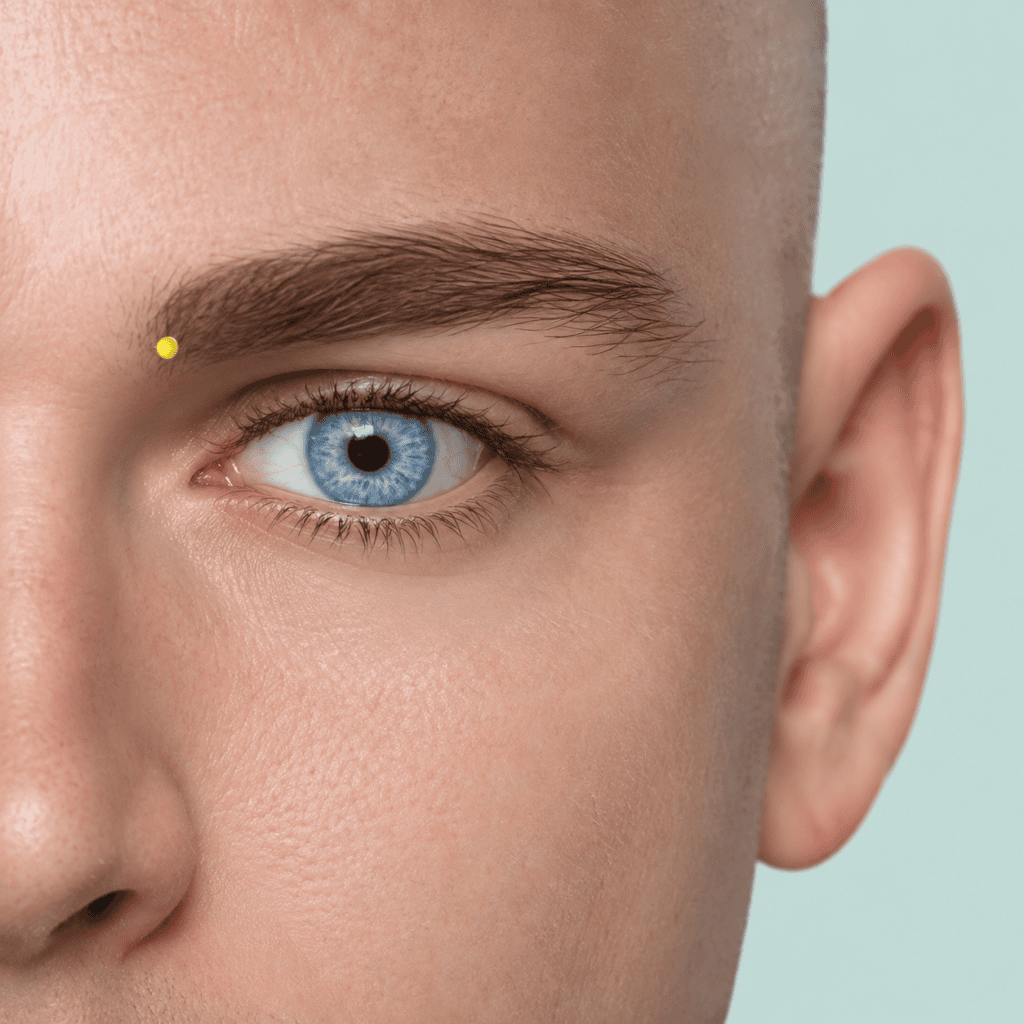
8. Press on BL2 at the inner eyebrow for the eye. BL2 sits in the small notch at the inner end of the eyebrow, right where it meets the bridge of the nose. Press gently but firmly up into the notch with your thumbs or fingertips for about a minute on the affected side. BL2 is called “Zanzhu,” and it is a key point for the eyes and the forehead.
Cluster headaches often cause severe pain, redness, and watering around the eye. BL2, situated at the inner corner of the eyebrow, can help relieve this pain and pressure. It alleviates discomfort across the brow and reduces congestion and irritation in and around the eye during an attack. This point specifically targets the inner-eye area, which temple and forehead points may not effectively reach. When applying pressure to this point for eye and inner brow pain, do so gently, as the area can be very sensitive during a headache.
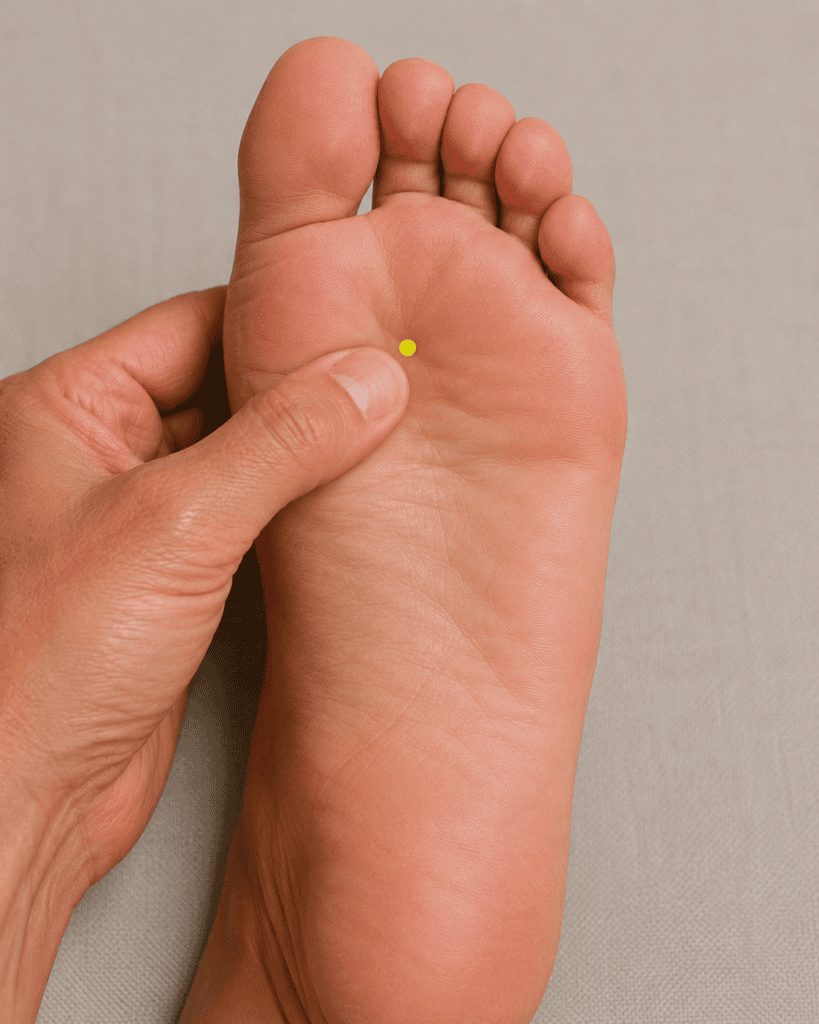
9. Press on KI1 on the sole of the foot to ground the intensity. KI1 sits on the sole of the foot, in the hollow that forms in the center of the ball of the foot when you curl the toes, about a third of the way down from the toes to the heel. Press firmly with your thumb for one to two minutes on each foot. KI1 is called “Yongquan,” the “Bubbling Spring,” and it is the lowest point on the body.
KI1 acts as a stable grounding point, directing the intense upward energy of a cluster headache downward and outward from the head. As the lowest point on the body, it offers a firm anchoring. In Traditional Chinese Medicine, Kidney water cools and calms the Liver heat and yang that cause pain. During a severe cluster headache, this point helps channel energy downward and ground the body, making it a vital anchor in routines designed to ease the pain.
Why These Acupressure Points Work
In Traditional Chinese Medicine, cluster headaches are attributed to heat and Liver yang ascending, with Qi and Blood obstruction in the head’s channels, particularly along the Gallbladder channel over the temple and around the eye. The nine points are designed to target these interconnected issues.
- The local head points (GB20, Taiyang, GB14, Yintang, BL2) move the stuck Qi and Blood and clear the heat right where the pain sits, around the temple, forehead, and eye, and calm the front of the head.
- The powerful distal pain points (LI4, LR3) relieve severe head pain and reduce rising heat and yang, working together as the Four Gates.
- The Gallbladder-channel point (GB41) clears and opens the affected channel from the foot.
- The grounding point (KI1) draws the fierce upward energy down and cools the heat driving the pain.
The main focus is guiding rising heat and discomfort away from the head, which is why grounding and heat-descending points are as important as the local ones.
How to Properly Use These Acupressure Points
Use these points as much as you can during an attack and between attacks to reduce tension and support the overall pattern.
- During an attack, press strong distal points such as LI4, LR3, GB41, and KI1 to relieve pain and direct energy downward. Also, press local points GB20, Taiyang, GB14, and BL2 as firmly as you can tolerate.
- Between attacks and during a cluster period, work the full set regularly, including the heat-descending and grounding points, to work on the underlying pattern and keep the system calmer.
- Press firmly on the distal points, and adjust the pressure on the head and eye points to what the tenderness allows in the moment.
- Hold each point for one to two minutes, breathe slowly, and combine the acupressure with whatever else brings you relief.
Acupressure is among several options and should be combined with other treatments for cluster headaches. Since these attacks can be severe, quick-acting medications are essential and should be used as needed; acupressure complements, but does not replace, these drugs. Maintaining a regular sleep schedule is crucial, as attacks often occur during sleep and can disrupt rest. Avoiding common triggers such as alcohol, strong odors, and certain foods may also help decrease attack frequency. Applying acupressure between episodes, getting adequate rest, and managing stress can all contribute to calming the nervous system during a cluster period.
When to Get Professional Help
Cluster headaches are a severe condition that benefits from prompt diagnosis and treatment to improve outcomes. If you haven’t been diagnosed, see a doctor, preferably a neurologist or headache specialist, since these headaches are frequently misdiagnosed. Proper treatment can prevent attacks and lower their frequency during a cluster period. If diagnosed, keep working closely with your healthcare provider and consider acupressure as a beneficial supplement. Seek urgent medical help if you develop a new headache that differs from your usual pattern or have the worst headache of your life.
Call emergency services immediately if a sudden, intense headache occurs along with symptoms like stiff neck, fever, confusion, weakness, numbness, speech issues, vision problems, or after head trauma, as these could indicate a serious condition.
If the pain leads to thoughts of self-harm, reach out to the 988 Suicide and Crisis Lifeline by phone or text at any time, and let your doctor know. Better treatment options are available.
While acupressure might help alleviate pain and tension, it should be used alongside the medical treatment necessary for this condition.
Above and Beyond Acupuncture offers acupuncture, cupping, and lifestyle coaching at the North Frank Lloyd Wright Boulevard location in Scottsdale.
Schedule an appointment online to start your healing journey.
The points above are only as effective as the technique used to apply them. Where to press, how firmly, and for how long all affect the result. For a full breakdown of how to perform acupressure properly at home, read Performing Acupressure in 3 Easy Steps.
If your pain feels more like a band or a one-sided throb rather than the piercing eye pain of clusters, acupressure for migraines may be a better fit; for tension-related pain, acupressure for a tension headache is the article to read.

About the Publisher
Paul Kerzner, L.Ac., is a licensed acupuncturist and board-certified herbalist, as well as the founder of Above and Beyond Acupuncture in Scottsdale. His own journey from chronic patient to practicing acupuncturist shapes his commitment to providing honest, clinically grounded information about acupuncture and Traditional Chinese Medicine. Learn more about Paul and his clinical approach on the About Us page.