Key Takeaways
- Postural orthostatic tachycardia syndrome (POTS) causes symptoms like racing heart, lightheadedness, and fatigue, primarily affecting women.
- Acupressure for POTS includes pressing nine important points to calm the heart, boost Qi, nourish Blood, and stabilize the nervous system.
- Each acupressure point, like PC6 and GV20, addresses specific symptoms to manage POTS effectively and safely.
- Alongside acupressure, lifestyle modifications and doctor guidance are essential to manage POTS symptoms and avoid triggers such as heat.
- Consult a physician for proper diagnosis and emergency help if severe symptoms occur, as they can mimic other conditions.

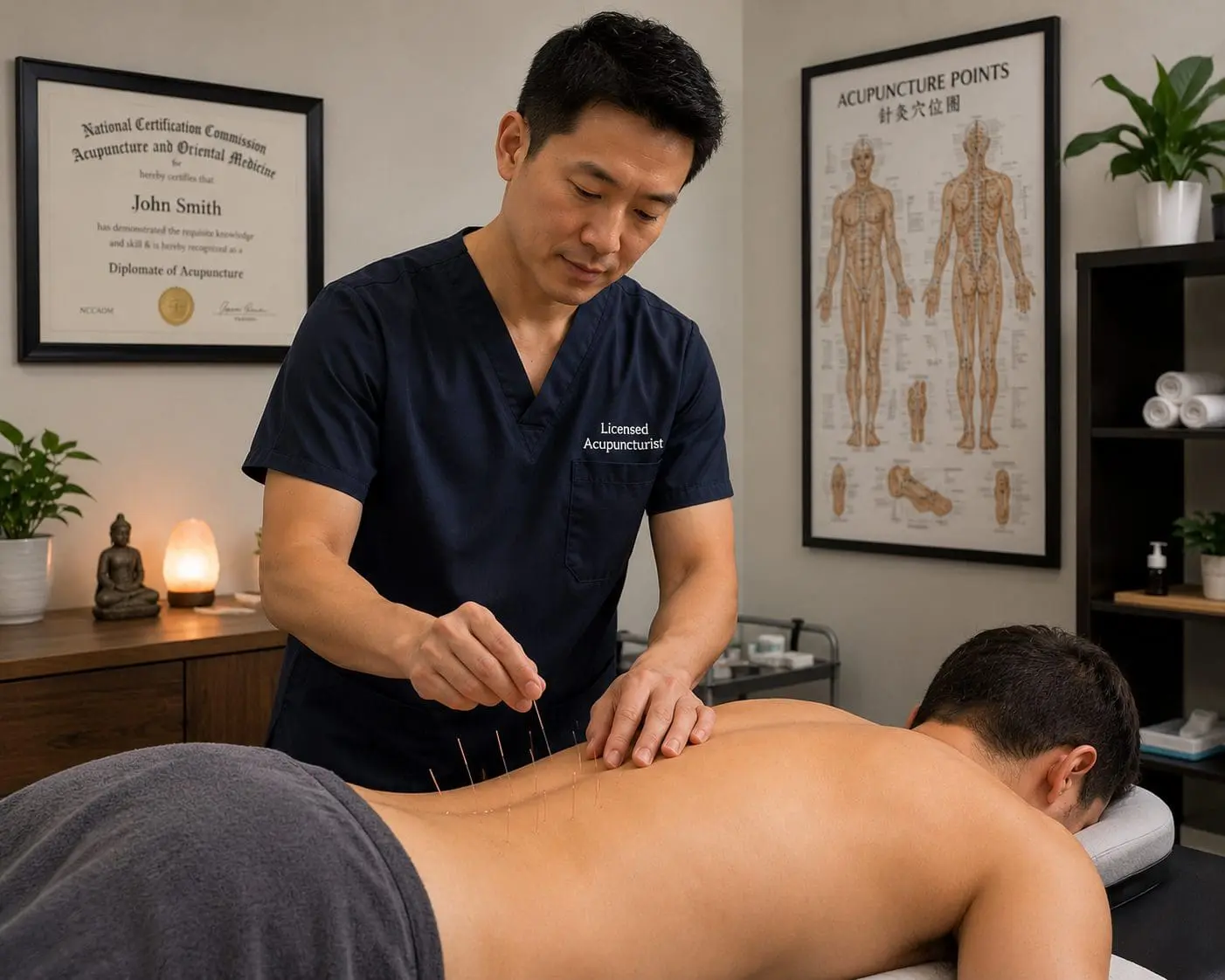
Do you notice your heart racing, feeling lightheaded, or experiencing blurred vision when you stand up, only to feel better when sitting or lying down? This is a common sign of postural orthostatic tachycardia syndrome (POTS). In POTS, the nervous system that regulates blood flow during position changes malfunctions. This causes blood to pool in the legs and abdomen when standing, prompting the heart to beat faster to compensate. Symptoms often include lightheadedness, fainting, palpitations, shakiness, extreme fatigue, brain fog, headaches, nausea, shortness of breath, and sensitivity to heat or exercise. POTS mainly affects women in their teens through their forties and often begins after viral infections, pregnancy, surgery, or trauma. Treatment includes medical care and daily habits, and acupressure may help. Sitting or lying down during acupressure can reduce palpitations, calm the nervous system, and boost energy.
Traditional Chinese Medicine does not use the term POTS, but it recognizes similar patterns. Spleen Qi lifts and holds; when it is weak, the body cannot keep Blood up against gravity. This corresponds to blood pooling in the legs and feeling lightheaded when standing. When Heart Qi and Blood are low, the heart may race or flutter, and the mind becomes unsettled, leading to anxiety, poor sleep, and brain fog. The Kidneys provide deep reserves for the whole body, and when these are drained, often after illness or long-term stress, people feel exhausted and unable to tolerate activity.
Here are nine acupressure points to calm a racing heart, boost Qi, nourish Blood, rebuild reserves, and settle a nervous system on high alert.
What Acupressure Points to Press and Why
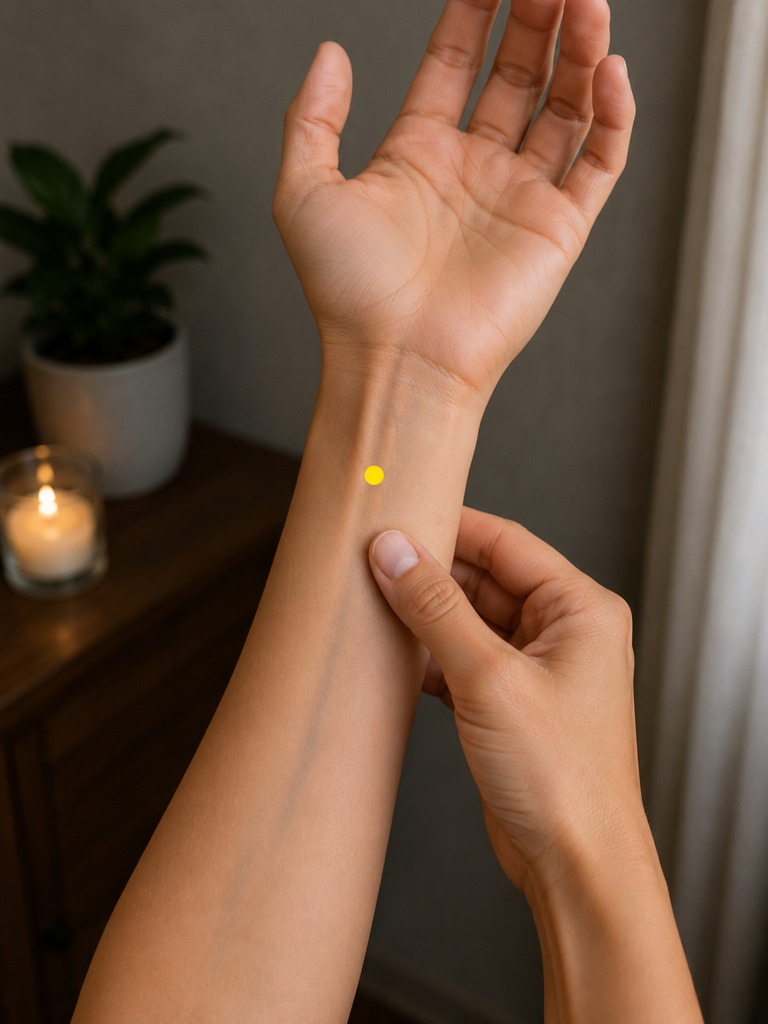
1. Press on PC6 on the inner forearm to calm a racing heart. PC6 sits three finger-widths above the inner wrist crease, in the center of the forearm between the two tendons. Press firmly with your thumb for one to two minutes on each arm while breathing slowly. PC6 is called “Neiguan,” the “Inner Pass.”
PC6 is a key acupressure point for the Heart, effective in calming palpitations and a rapid heartbeat. It also relieves chest tightness and can lessen nausea often associated with POTS. This point is simple to find during your routine and can be comfortably stimulated while sitting if your heart races.
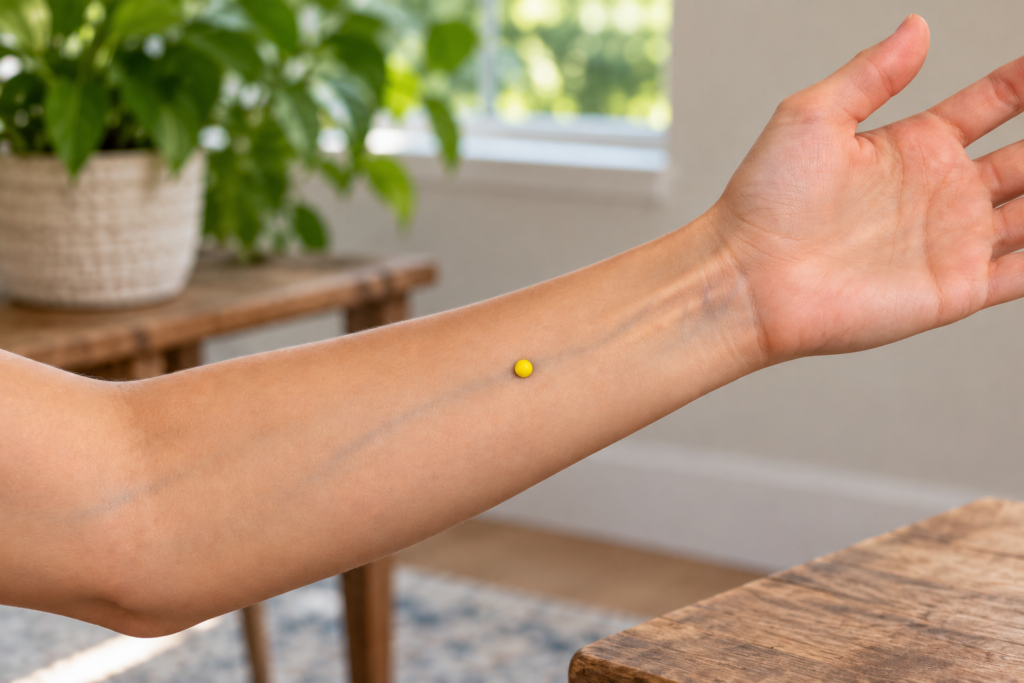
2. Press on PC4 higher on the forearm for strong palpitations. PC4 sits in the center of the inner forearm, between the two tendons, about midway between the wrist crease and the elbow crease, slightly closer to the wrist. Press firmly with your thumb for one to two minutes on each arm. PC4 is called “Ximen,” the cleft point of the Pericardium.
In Traditional Chinese Medicine, cleft points address sudden and intense symptoms. PC4 primarily treats severe palpitations and a pounding heart. Located on the same line as PC6, you can slide your thumb between these points along the center of your forearm.
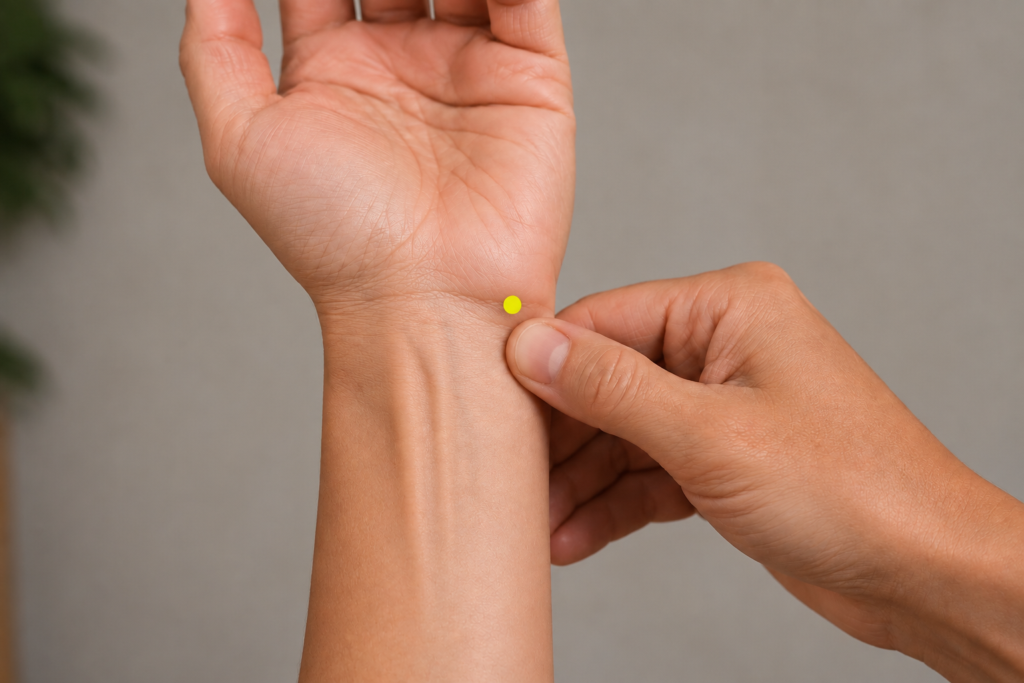
3. Press on HT7 at the wrist to settle the Shen. HT7 sits on the inner wrist crease, on the pinky side, in the small hollow just inside the tendon. Press firmly with your thumb for one to two minutes on each wrist. HT7 is called “Shenmen,” the “Spirit Gate.”
POTS increases nervous system activity, leading to a racing heart that can trigger anxiety and further speed up the heartbeat. HT7 helps soothe the Heart and calm the mind, interrupting this cycle and promoting improved sleep.
4. Press on CV17 at the center of the chest to ease palpitations and tightness. CV17 sits on the midline of the breastbone, level with the space between the nipples. Press gently with your fingertip, or rest your palm over it, for one to two minutes while breathing slowly. CV17 is called “Shanzhong.”
CV17 assists in opening and relaxing the chest area, which can reduce fluttering, tightness, and shortness of breath commonly associated with POTS. Resting your hand in this spot and practicing slow, steady breathing can help calm you.

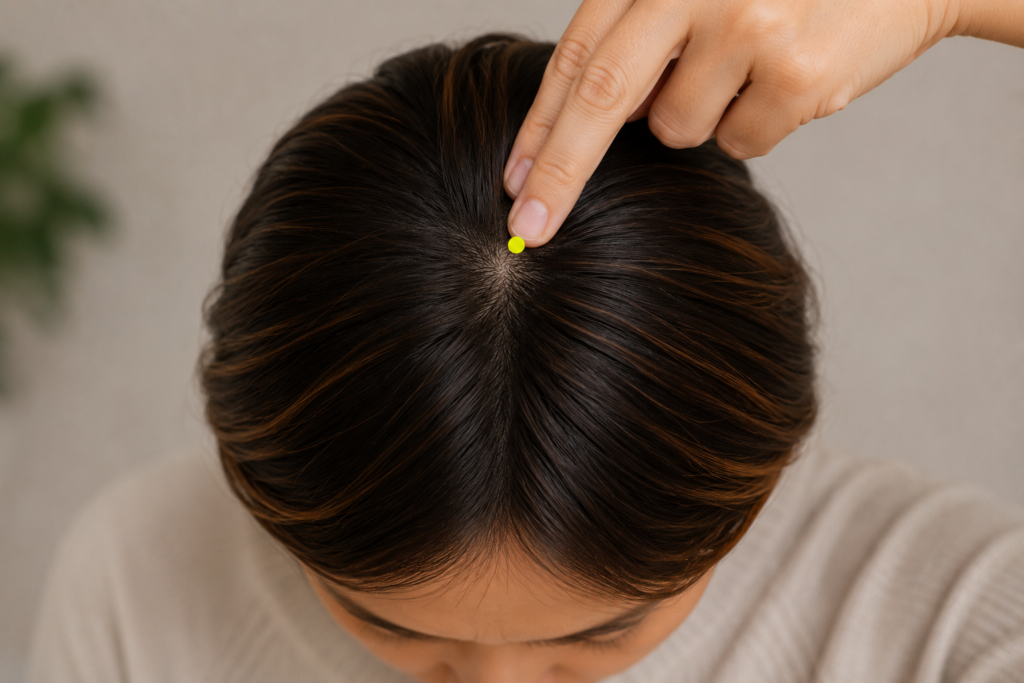
5. Press gently on GV20 at the top of the head to lift the Qi. GV20 sits at the very top of the head, on the midline, on a line drawn up from the tops of both ears. Press gently and hold, or tap lightly, for one to two minutes. GV20 is called “Baihui,” the “Hundred Meetings.”
GV20 is the primary point for elevating Qi to the head. In Traditional Chinese Medicine, stimulating this point can prevent the sinking sensation that leads to lightheadedness and brain fog when standing. It also promotes mental steadiness. Use this point while sitting or lying down.
6. Press on CV6 below the navel to build the body’s reserves. CV6 sits on the midline of the lower abdomen, about two finger-widths below the navel. Rest a warm hand or your fingertips there and press gently for one to two minutes. CV6 is called “Qihai,” the “Sea of Qi.”
CV6 is a point where the body stores Qi, helping to build energy and strength when you’re drained. For deep fatigue associated with POTS, this point draws nourishment from the body’s center. Placing a warm hand here offers a gentle, restorative effect.

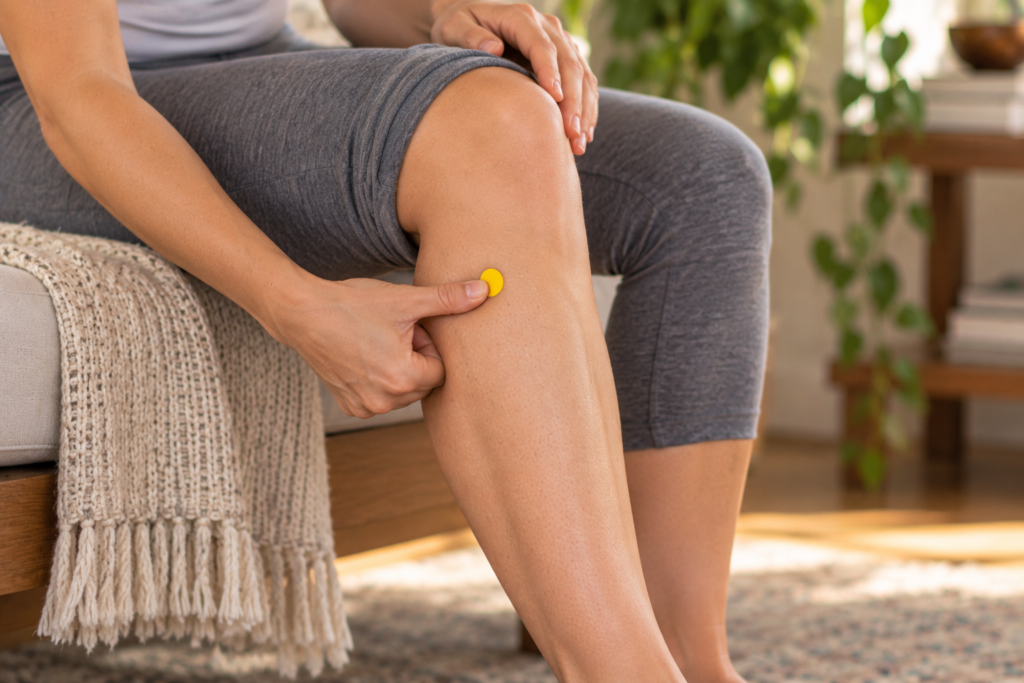
7. Press on ST36 below the knee to strengthen the Spleen Qi. ST36 sits four finger-widths below the lower edge of the kneecap and one finger-width to the outside of the shinbone, on the muscle that rises when you flex your foot. Press firmly with your thumb for one to two minutes on each leg. ST36 is called “Zusanli,” the “Leg Three Miles.”
ST36 enhances Spleen Qi in Traditional Chinese Medicine, preventing Blood from pooling in the legs. It boosts energy and aids digestion, relieving fatigue and nausea associated with POTS. This point is beneficial for daily use.
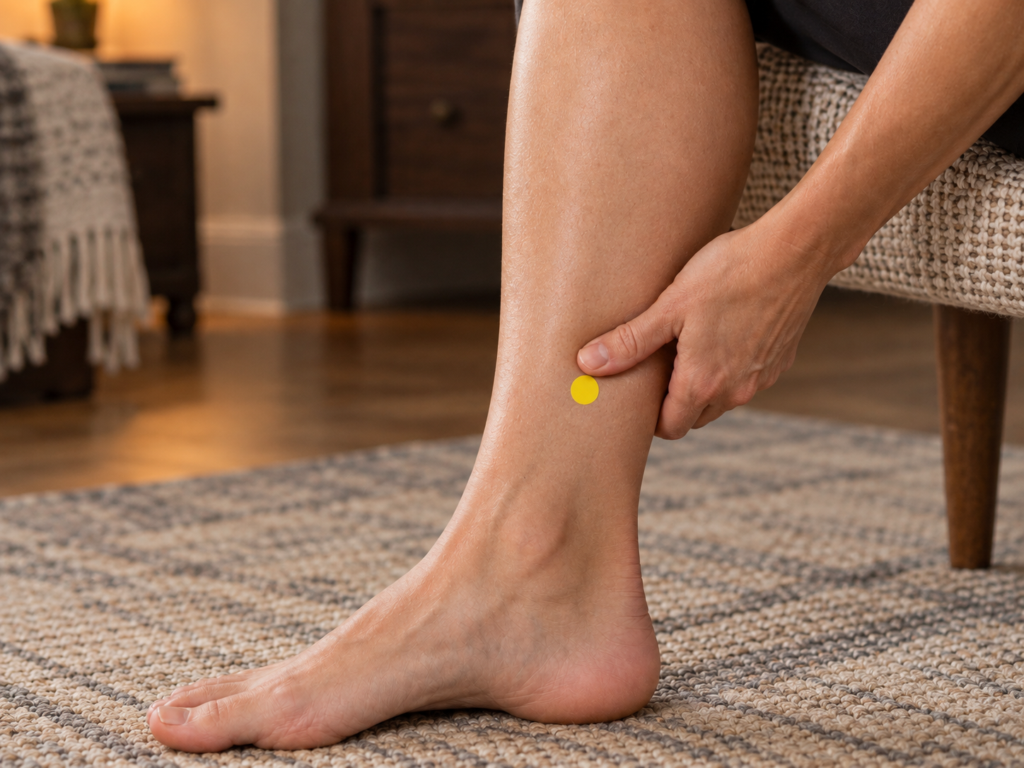
8. Press on SP6 above the inner ankle to nourish the Blood. SP6 sits four finger-widths up from the tip of the inner ankle bone, just behind the back edge of the shinbone. Press firmly for one to two minutes on each leg. SP6 is called “Sanyinjiao,” the “Three Yin Intersection.” SP6 is avoided during pregnancy.
SP6 nourishes the Blood and supports the Spleen, Liver, and Kidney simultaneously. Low Blood levels may lead to a racing heart and lightheadedness; therefore, strengthening Blood can help stabilize circulation. This point also enhances sleep quality.
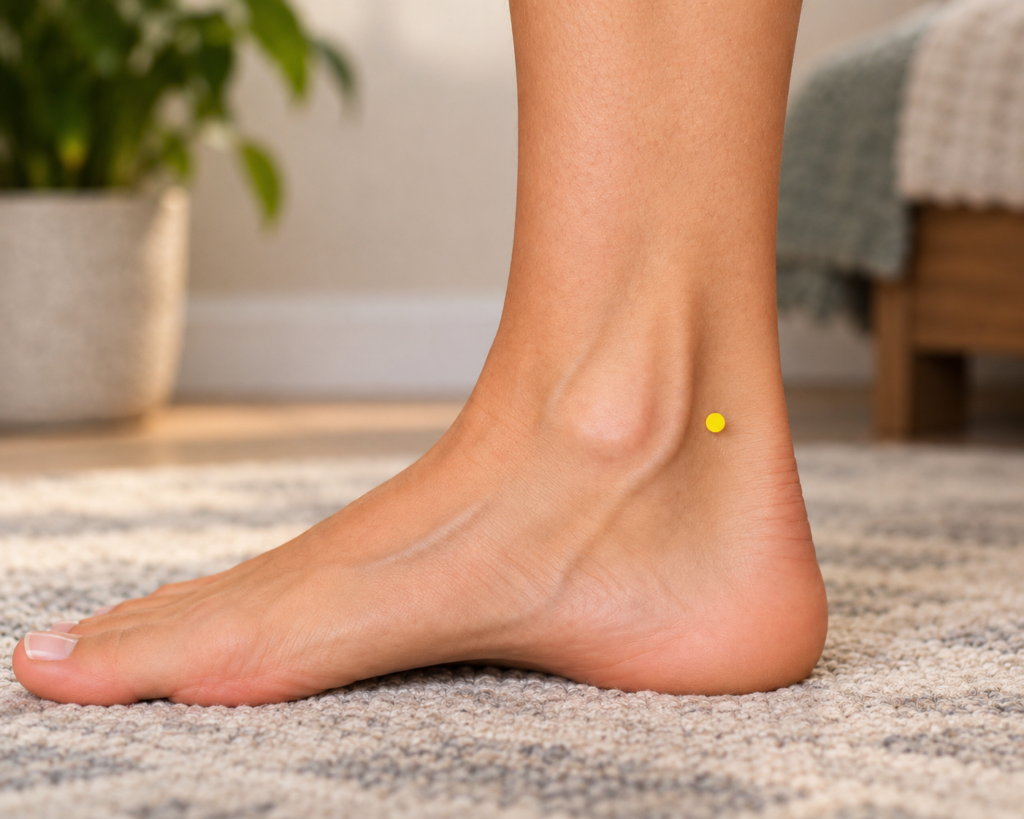
9. Press on KI3 above the inner ankle to rebuild the deep reserves. KI3 sits in the hollow between the inner ankle bone and the Achilles tendon, level with the tip of the ankle bone. Press firmly with your thumb for one to two minutes on each ankle. KI3 is called “Taixi,” the Kidney’s source point.
POTS often comes after illness or long-term stress that drains the body’s deep reserves. KI3 helps rebuild these reserves. It supports stamina and tolerance for activity over time and works best with regular daily use.
Why These Acupressure Points Work
In Traditional Chinese Medicine, POTS is viewed as Qi too weak to hold Blood up, a tired, unsettled Heart, and deep, drained reserves. The nine points address all of these issues.
- The Heart points (PC6, PC4, HT7, CV17) help reduce palpitations, calm the Spirit (Shen), and relieve chest tightness.
- The lifting and building points (GV20, CV6, ST36) activate and enhance the Qi.
- The nourishing points (SP6, KI3) help build Blood and strengthen deep reserves.
Since research on acupuncture for POTS is limited, acupressure can be employed as a calming, supportive technique alongside standard medical treatment for POTS.
How to Properly Use These Acupressure Points
- Always perform this routine while sitting or lying down, never standing. If you start to feel lightheaded, lie down and elevate your legs.
- If your heart races, sit or lie down, press points PC6 and PC4, and take slow, deep breaths with long exhalations.
- Perform the full routine once daily, preferably while lying down with your legs slightly elevated, holding each point for one to two minutes.
- Use ST36, CV6, SP6, and KI3 daily to gradually build energy and reserves.
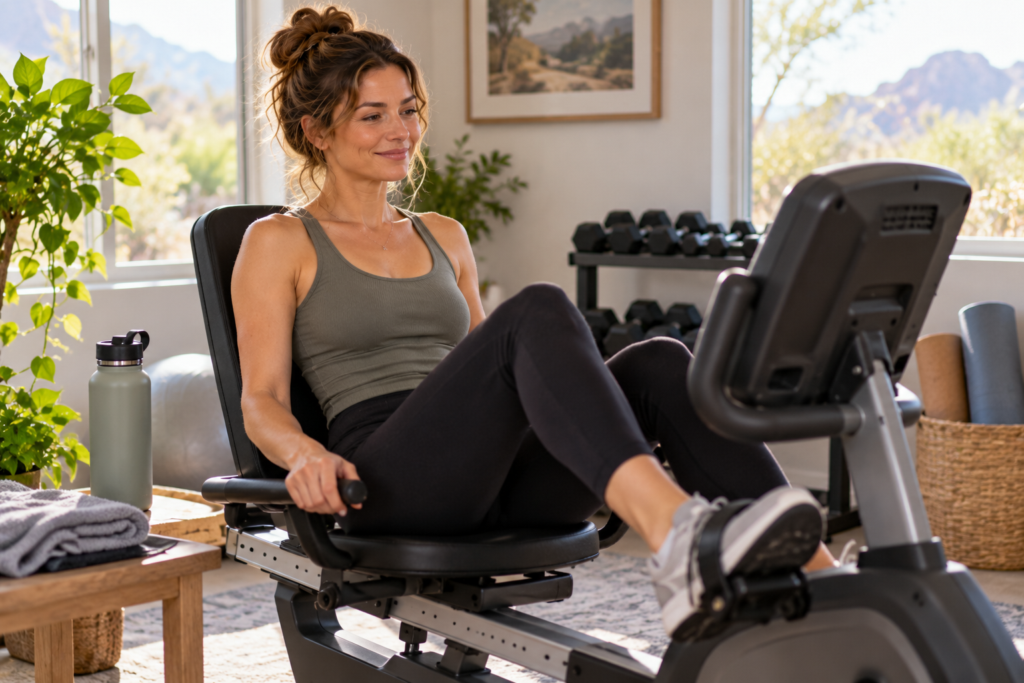
Acupressure works best when combined with daily strategies that help manage POTS. Talk to your doctor about how much fluid and salt you should have, since increasing both is often suggested but may not be right for everyone. Ask about using compression garments for your legs and abdomen. Get up slowly, sitting on the edge of the bed for a minute before standing. If symptoms start while standing, try crossing your legs and squeezing your thigh and buttock muscles, rising onto your toes or squatting briefly. Sit down if these do not help. Build up your fitness slowly, starting with exercises you can do lying down or sitting, such as recumbent cycling, rowing or swimming, ideally with guidance. Eat smaller, more frequent meals since large meals draw blood to your digestive system.
In Arizona, heat significantly triggers POTS by causing blood vessels to dilate and worsening blood pooling. To manage this, avoid long hot showers and baths, stay out of the midday sun, cool down beforehand, carry water and electrolytes, and schedule errands or exercise for early morning or evening. People sensitive to heat and POTS should recognize the risk of heat stroke.
When to Get Professional Help
A doctor must diagnose POTS because conditions like dehydration, anemia, thyroid issues, medication side effects, and heart rhythm problems can present similar symptoms. Seek emergency medical help if you experience chest pain, fainting during exercise, fainting that causes an injury, a racing heart that does not slow when lying down, severe shortness of breath, or confusion. Promptly address signs of heat illness such as confusion, vomiting, or very high fever. Consult your doctor if symptoms worsen, if fainting becomes frequent, if you can’t keep fluids down, or if POTS interferes with daily life, as treatments are available. Living with POTS can be isolating and exhausting, so inform your doctor if you’re struggling emotionally.
Acupressure is a gentle, holistic approach that complements medical treatments and daily management strategies for POTS.
Above and Beyond Acupuncture offers acupuncture, cupping, and lifestyle coaching at the North Frank Lloyd Wright Boulevard location in Scottsdale.
Schedule an appointment online to start your healing journey.
The points above are only as effective as the technique used to apply them. Where to press, how firmly, and for how long all affect the result. For a full breakdown of how to perform acupressure properly at home, read Performing Acupressure in 3 Easy Steps.
For the broader group of conditions POTS belongs to, acupressure for dysautonomia and how to treat dysautonomia holistically go deeper, and can acupuncture help dysautonomia explains the clinical side. If lightheadedness is your main symptom, acupressure for dizziness may also help.
About the Publisher
Paul Kerzner, L.Ac., is a licensed acupuncturist and board-certified herbalist, as well as the founder of Above and Beyond Acupuncture in Scottsdale. His own journey from chronic patient to practicing acupuncturist shapes his commitment to providing honest, clinically grounded information about acupuncture and Traditional Chinese Medicine. Learn more about Paul and his clinical approach on the About Us page.