
Key Takeaways
- Dysautonomia leads to exhaustion and symptoms such as heart palpitations and dizziness, which often go unnoticed by others.
- Acupressure can help by targeting the autonomic nervous system and relieving common symptoms.
- Nine key acupressure points can alleviate issues such as nausea, fatigue, and anxiety associated with dysautonomia.
- Gently press these points while seated or lying down, prioritizing comfort and calmness during your practice.
- Always consult a healthcare provider for proper diagnosis and treatment, using acupressure as a complementary tool.

Living with dysautonomia is exhausting, and most people around you may not notice what you’re going through. When the autonomic nervous system, which controls your heart rate, blood pressure, digestion, and temperature, doesn’t work properly, you can experience a tough mix of symptoms. These include a racing or pounding heart, dizziness or lightheadedness when you stand, deep fatigue, brain fog, nausea, digestive issues, and a body that reacts strongly to everything. While acupressure can’t cure dysautonomia or replace your medical team, it can be a helpful tool because it targets the same nervous system that’s out of balance. The points below may help calm your system and ease some daily symptoms, offering gentle support as you manage this complex condition.
Before you start, here’s a practical tip, especially important for people with dysautonomia. Since dizziness and fainting can occur, press these points while sitting or lying down, especially if you often feel lightheaded. Take your time getting up afterward. Be gentle with yourself and let this be a calming practice.
Traditional Chinese Medicine has addressed these imbalances for centuries and offers a useful framework for understanding them. The typical symptoms of dysautonomia, like a racing heart, dizziness, fatigue, and brain fog that worsen when you stand, are seen as the body’s Qi not rising properly to support the head and heart, often due to overall depletion. The Spleen, Heart, and Kidney all play a role. The Spleen lifts clear Qi to the head, the Heart controls the pulse and mind, and the Kidney stores the body’s deepest energy. Altogether, it shows a body that has lost its ability to regulate itself. In modern terms, this means the sympathetic and parasympathetic parts of the nervous system are out of balance, which is where acupressure may help. The points below are chosen to calm and steady the system, help Qi reach the head, settle the heart, and rebuild your energy reserves.
If you’re interested in the clinical approach, the article “Can Acupuncture Help Dysautonomia?” explains how this is handled in a treatment setting. If you’re seeking a holistic approach to treating dysautonomia, please check out “How to Treat Dysautonomia Holistically.“
Here are nine acupressure points that may help:
Which Acupressure Points to Use and Why
1. To treat palpitations and nausea, press PC6 on the inner forearm. PC6 is located three finger-widths above the crease of the inner wrist, midway between the two tendons in the forearm. Use your thumb to press firmly on each arm for one to two minutes. This point is known as “Neiguan,” the “Inner Pass,” and is one of the most extensively studied points for the heart and stomach.
PC6 is especially helpful for dysautonomia because it targets two of the most common symptoms at once and works directly on the autonomic system. It can calm palpitations and a racing heart, ease nausea and an unsettled stomach, and help relax the chest and nervous system. Research has linked this point to the autonomic reflexes that control the heart and blood vessels, making it a strong choice. For a pounding heart or queasy stomach, this is often the first point to try, and it’s easy to use anywhere.
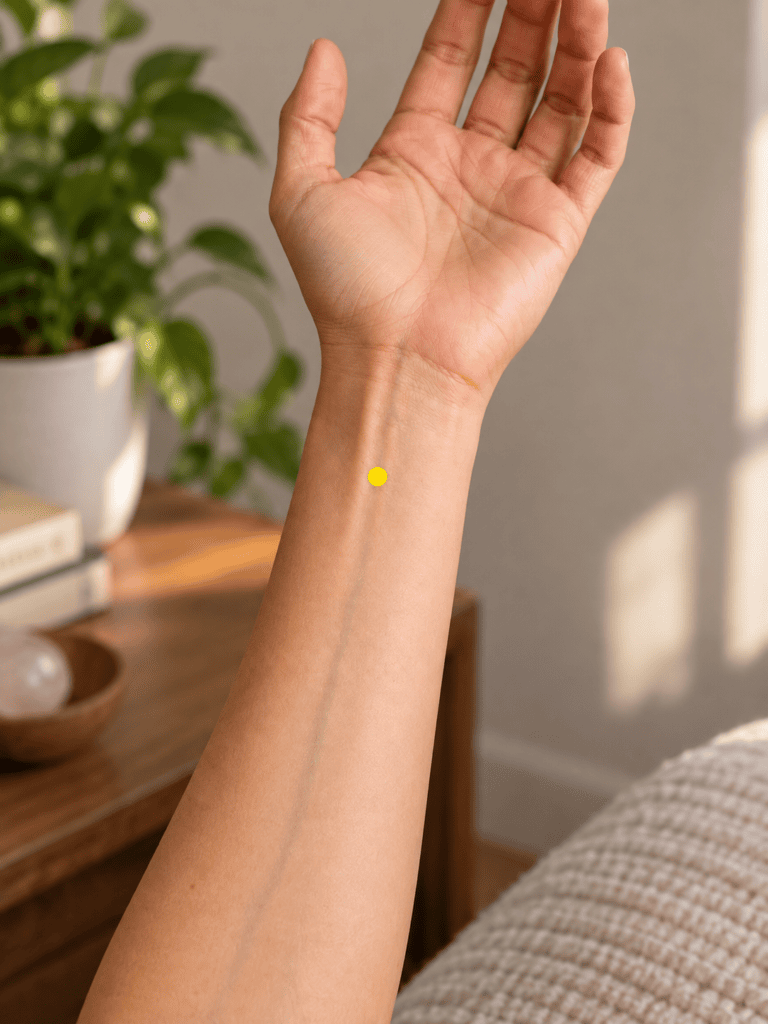
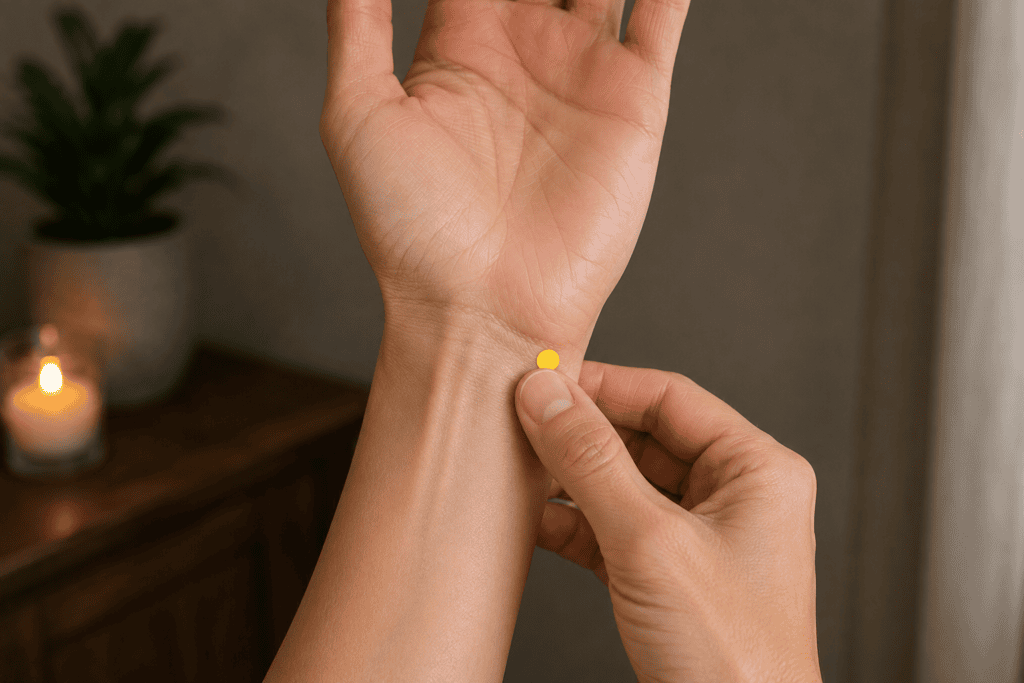
2. To calm the heart and settle the system, press on HT7 at the wrist. HT7 is located on the inner wrist crease, on the pinky side, in the small hollow just inside the tendon, and is known as “Shenmen,” the “Spirit Gate”; it is the source point of the Heart and the most important point for calming the Shen. Press firmly on each wrist with your thumb for one to two minutes.
HT7 calms the heart and nervous system, reducing palpitations, rapid heartbeat, and the anxious, wired sensation associated with dysautonomia. Also called the Spirit Gate, it’s a crucial point for calming an overactive system and stabilizing the mind, which can alleviate anxiety and improve sleep. This point is especially beneficial for heart symptoms and that tense, on-edge feeling, and it pairs effectively with PC6 for heart-related concerns.
3. To restore energy and stabilize the system, press on ST36, which is located below the knee. It is situated four finger-widths down from the lower edge of the kneecap and one finger-width towards the outer side of the shinbone, on the muscle that becomes prominent when you curl your foot. Press firmly with your thumb on each leg for one to two minutes. This point is known as “Zusanli”, “Leg Three Miles”, and is the main point for energy and for grounding the body.
ST36 plays a vital role in managing dysautonomia because it helps restore Qi and strengthen the Spleen and Stomach, alleviating deep fatigue and digestive issues. Studies have also examined its impact on autonomic balance. By supporting the Spleen, it encourages the upward movement of clear Qi to the head, which can lessen dizziness and brain fog, especially when standing. This point provides grounding and stability—precisely what a dysregulated system needs. For fatigue and general depletion, regular stimulation of this point can be particularly beneficial.

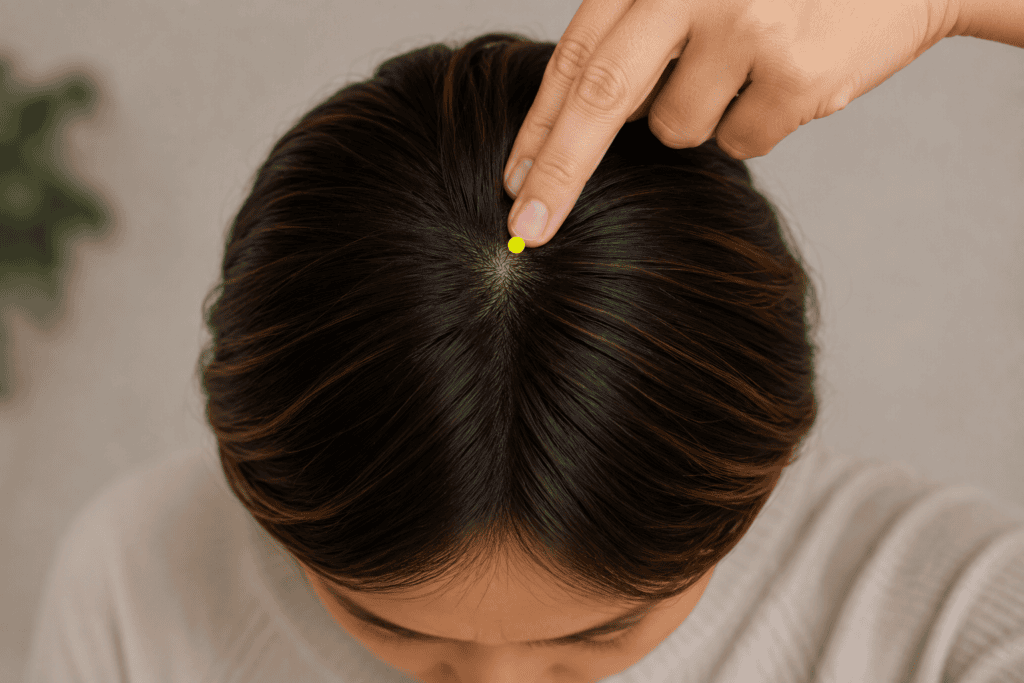
4. To relieve dizziness and brain fog, press on GV20 at the top of the head. GV20 is located at the very top of the head, midway along the head, on the line that runs up from the tops of both ears. Use your fingertip to press straight down or in small circles for one to two minutes. This point is known as “Baihui”, the “Hundred Meetings”, since many channels meet at the crown.
GV20 is a well-known point for alleviating dizziness, lightheadedness, and brain fog. According to Chinese medicine, it helps facilitate the upward flow of Qi to the head, often deficient in dysautonomia symptoms. This point can help clear mental fog, improve focus, and reduce dizziness when standing. For relief, press GV20 while sitting or lying down, then rise slowly.
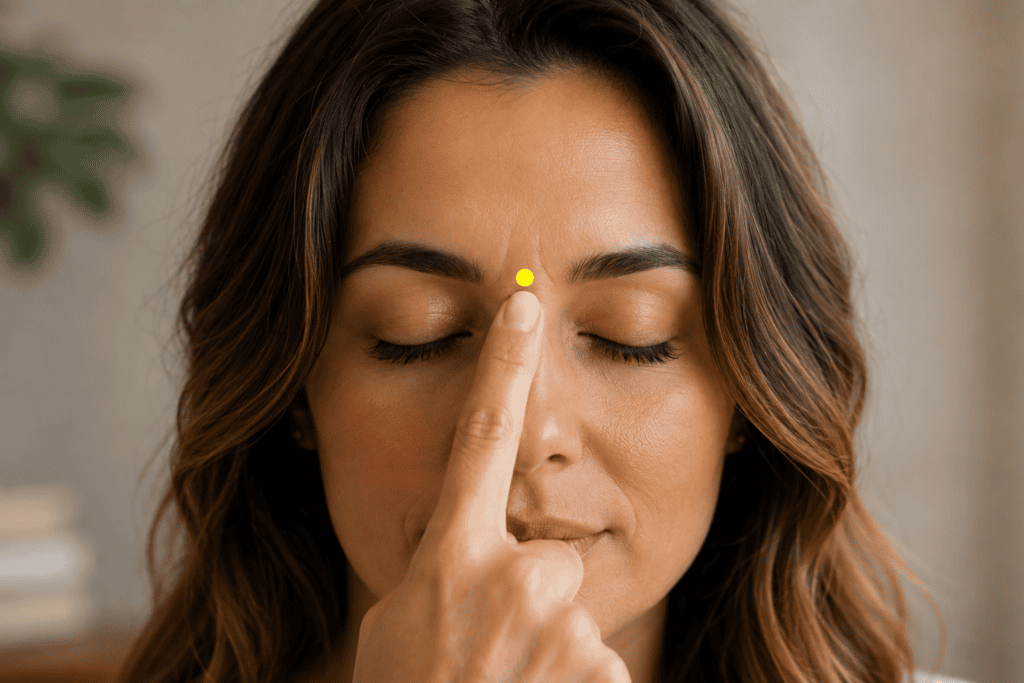
5. To calm the nervous system, press on the Yintang point, which is located in the small hollow directly between the two eyebrows. Using your fingertip, press firmly and keep holding it, or make small, slow circles for one to two minutes. This point is known as an extra point and is one of the most calming points in the body.
Yintang calms the mind and nervous system, reducing anxiety, jittery feelings, and mental fog associated with dysautonomia. It promotes a sense of calm and helps shift the body away from stress responses that trigger symptoms. This point can also alleviate brain fog and mental fatigue. For those with anxiety or overstimulation from dysautonomia, pressing Yintang slowly while taking deep breaths can help you feel more grounded.
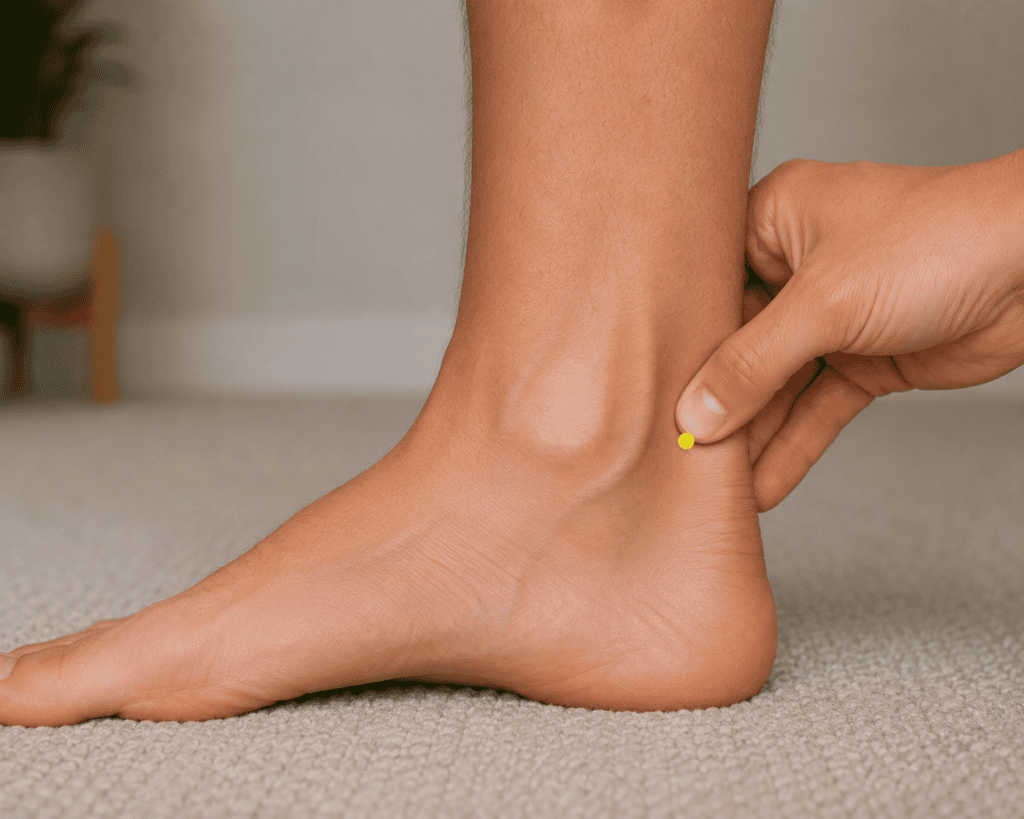
6. Press on KI3 above the inner ankle to rebuild the deep reserves. KI3 sits in the hollow between the inner ankle bone and the Achilles tendon, level with the tip of the ankle bone. Press firmly with your thumb for one to two minutes on each ankle. KI3 is called “Taixi,” the Kidney’s source point.
Since dysautonomia often involves severe depletion, KI3, the Kidney’s source point, supports restoring your body’s essential reserves. It nourishes and reinforces your deepest energy levels, helping to stabilize your entire system. This point can also alleviate dizziness and that fragile, drained sensation. For profound exhaustion and the sensation of running on empty, KI3 operates at a fundamental level and complements ST36 to restore energy through digestion and core vitality.
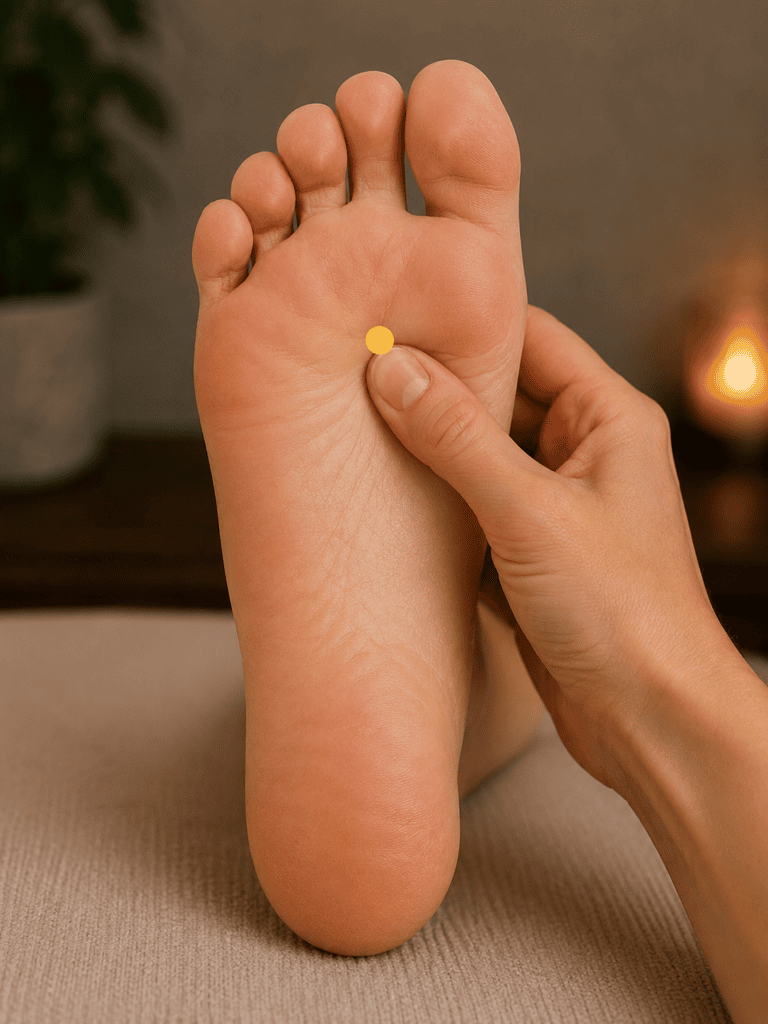
7. Press on KI1 on the sole of the foot to ground the system. KI1 sits on the sole of the foot, in the hollow that forms in the center of the ball of the foot when you curl the toes, about a third of the way down from the toes to the heel. Press firmly with your thumb for one to two minutes on each foot. KI1 is called “Yongquan,” the “Bubbling Spring,” and it is the lowest point on the body.
KI1 provides a strong grounding effect. It draws scattered energy downward and stabilizes your system, which can often feel unsteady due to dysautonomia. Located at the body’s lowest point, it helps you feel more settled and balanced, alleviating lightheadedness or dizziness commonly associated with the condition. For those feelings of unsteadiness and disconnection, this point offers a sense of solidity and serves as a calming conclusion to your acupressure routine while seated or lying down.
8. Press on CV12 above the navel for digestive symptoms. CV12 sits on the midline of the abdomen, halfway between the navel and the lower end of the breastbone, about four finger-widths above the belly button. Press gently but steadily with your fingertips for one to two minutes. CV12 is called “Zhongwan,” and it is the gathering point of the Stomach at the front of the body.
Digestive issues are common in dysautonomia but often go unspoken. Since the autonomic nervous system regulates gut movement, symptoms like nausea, bloating, early fullness, and irregular digestion are common. CV12 is a key point for relieving these issues, as it helps balance the Stomach and Spleen and directly reduces digestive discomfort. Research also examines this point’s effects on the nervous system. For nausea, bloating, or upset stomach, CV12 can soothe your digestive system. Apply gentle pressure, especially after meals.

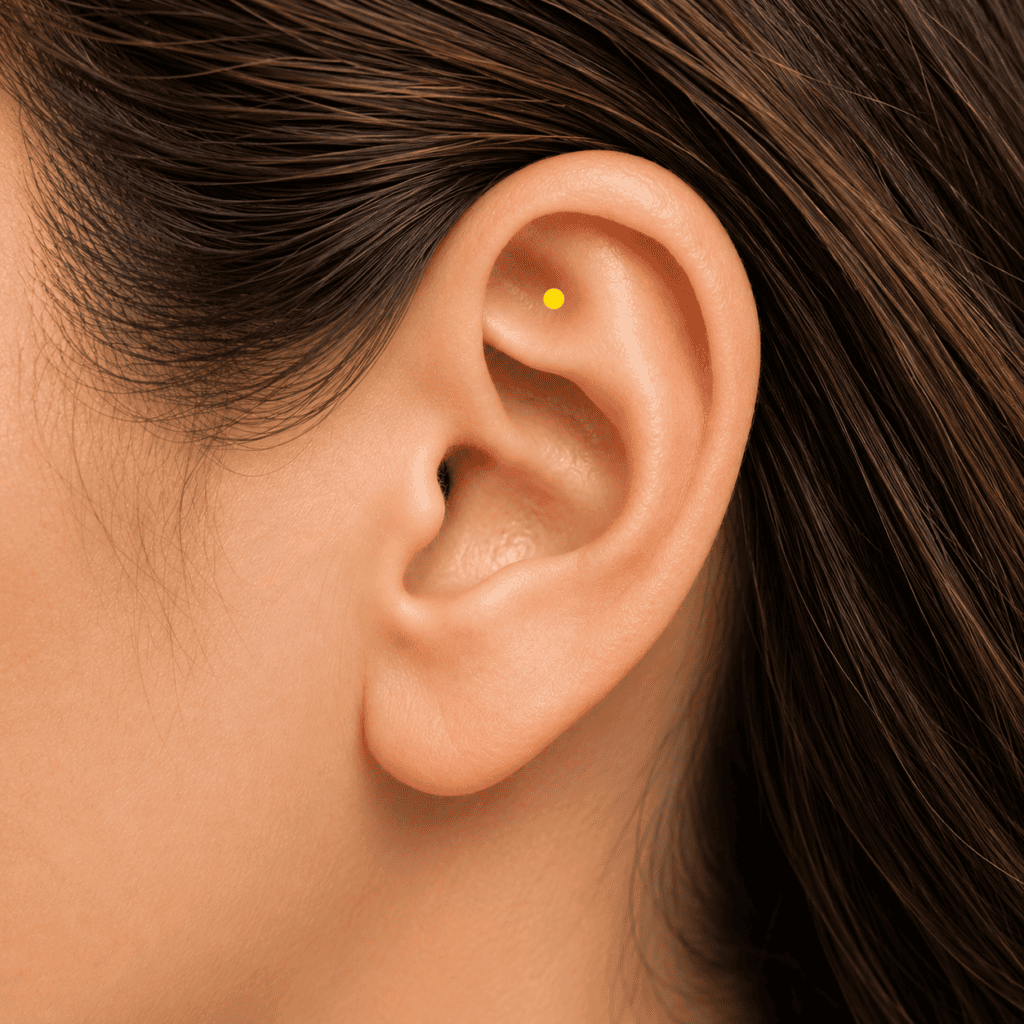
9. Press on Ear Shenmen to shift toward calm. Ear Shenmen sits in the upper part of the ear, in the triangular hollow near the top, at its apex. Press gently with your fingertip or squeeze between your finger and thumb for about a minute on each ear. Ear Shenmen is one of the most calming points on the ear and shares its name, “Spirit Gate,” with the Heart point HT7.
Ear Shenmen is a highly calming point on the body. Studies indicate that applying acupressure to the ear can shift your nervous system toward the parasympathetic, or rest-and-digest, state – exactly what a dysregulated system requires. This point effectively relaxes the mind and alleviates palpitations, anxiety, and the feeling of being wired. When symptoms flare up or you’re overstimulated, Ear Shenmen can help restore calm, and it’s simple to use whenever needed.
Why These Acupressure Points Work
In Traditional Chinese Medicine, dysautonomia symptoms indicate a body that cannot regulate itself properly. Qi often fails to rise and stabilize the head and heart because the Spleen, Heart, and Kidney are exhausted. In modern terms, this reflects an imbalance between the sympathetic and parasympathetic nervous systems, which research shows acupressure can help restore.
These nine points target the entire system:
- KI3 and KI1 restore the deep reserves that are depleted and help stabilize a system that feels unstable and disconnected.
- The head points (GV20, Yintang) raise the clear Qi to ease dizziness and brain fog and calm the nervous system.
- The digestive point (CV12) settles the nausea and gut trouble that come with autonomic dysfunction.
- The calming ear point (Ear Shenmen) helps shift the balance toward the parasympathetic, rest-and-digest side.
These acupressure points work to soothe and restore balance to an overactive, dysregulated nervous system, emphasizing the importance of calming the vagus nerve and enhancing the parasympathetic response.
How to Properly Use These Acupressure Points
Use these points gently and regularly, focusing on the symptoms that bother you most, and always make sure you’re in a safe position.
- Press the points while sitting or lying down, especially if you tend to get dizzy or faint. Take your time getting up afterward.
- If you have heart symptoms, use PC6 and HT7. For dizziness or brain fog, try GV20, KI1, and Yintang. For fatigue, use ST36 and KI3. For digestive issues, work with CV12 and PC6. If you’re having a general flare or feel overstimulated, Ear Shenmen, HT7, and Yintang can help calm your system.
- Hold each point for one to two minutes, using steady and comfortable pressure. Breathe slowly, and keep the practice gentle and calming, not vigorous.
- Make these points a regular part of your routine. Supporting a dysregulated system usually works best with steady, consistent practice rather than using it only once in a while.
Acupressure is one tool, and it works best when used alongside everything else your medical team recommends for managing dysautonomia. This might include staying hydrated, increasing salt if your doctor suggests it, wearing compression garments, changing positions slowly, and taking any prescribed medications. Holistic approaches cover the bigger picture. Acupressure fits in by giving you a way to help calm and steady your system with your own hands.
When to Get Professional Help
Dysautonomia is a real medical condition that requires proper diagnosis and ongoing management by a doctor, ideally one familiar with autonomic disorders. Acupressure is a supportive complement to that care, never a replacement for it.
If you have symptoms that suggest dysautonomia but have not been evaluated, see a doctor for a proper diagnosis, since the underlying cause matters and some causes need specific treatment. If you already have a diagnosis, keep working with your medical team and do not change or stop any prescribed treatment on your own. Seek prompt medical care for new or worsening fainting or near-fainting, chest pain, a heart rate or blood pressure that alarms you, severe or worsening symptoms, or anything that feels like a medical emergency.
Acupressure can assist in managing the daily challenges of dysautonomia, but it should complement proper medical treatment rather than replace it.
Above and Beyond Acupuncture offers acupuncture, cupping, and lifestyle coaching at the North Frank Lloyd Wright Boulevard location in Scottsdale.
Schedule an appointment online or call us today to start your healing journey.
The points above are only as effective as the technique used to apply them. Where to press, how firmly, and for how long all affect the result. For a full breakdown of how to perform acupressure properly at home, read Performing Acupressure in 3 Easy Steps.

About the Publisher
Paul Kerzner, L.Ac., is a licensed acupuncturist and board-certified herbalist, as well as the founder of Above and Beyond Acupuncture in Scottsdale. His own journey from chronic patient to practicing acupuncturist shapes his commitment to providing honest, clinically grounded information about acupuncture and Traditional Chinese Medicine. Learn more about Paul and his clinical approach on the About Us page.