Key Takeaways
- Metabolic syndrome includes risk factors such as increased waist fat, elevated blood pressure, and insulin resistance, which raise the likelihood of heart disease and diabetes.
- Acupressure for metabolic syndrome focuses on stimulating specific points to help clear phlegm, boost digestion, reduce stress, and promote better blood flow.
- Nine key acupressure points, including ST40 and SP9, help clear phlegm and dampness and strengthen the Spleen and Stomach.
- Combine lifestyle modifications such as regular walking, strength training, and healthy eating with acupressure for effective management of metabolic syndrome.
- See your doctor regularly for check-ups and seek immediate help if you notice signs of serious conditions linked to metabolic syndrome.

Has your doctor mentioned metabolic syndrome, or have you noticed your waist size, blood pressure, and blood sugar rising together?
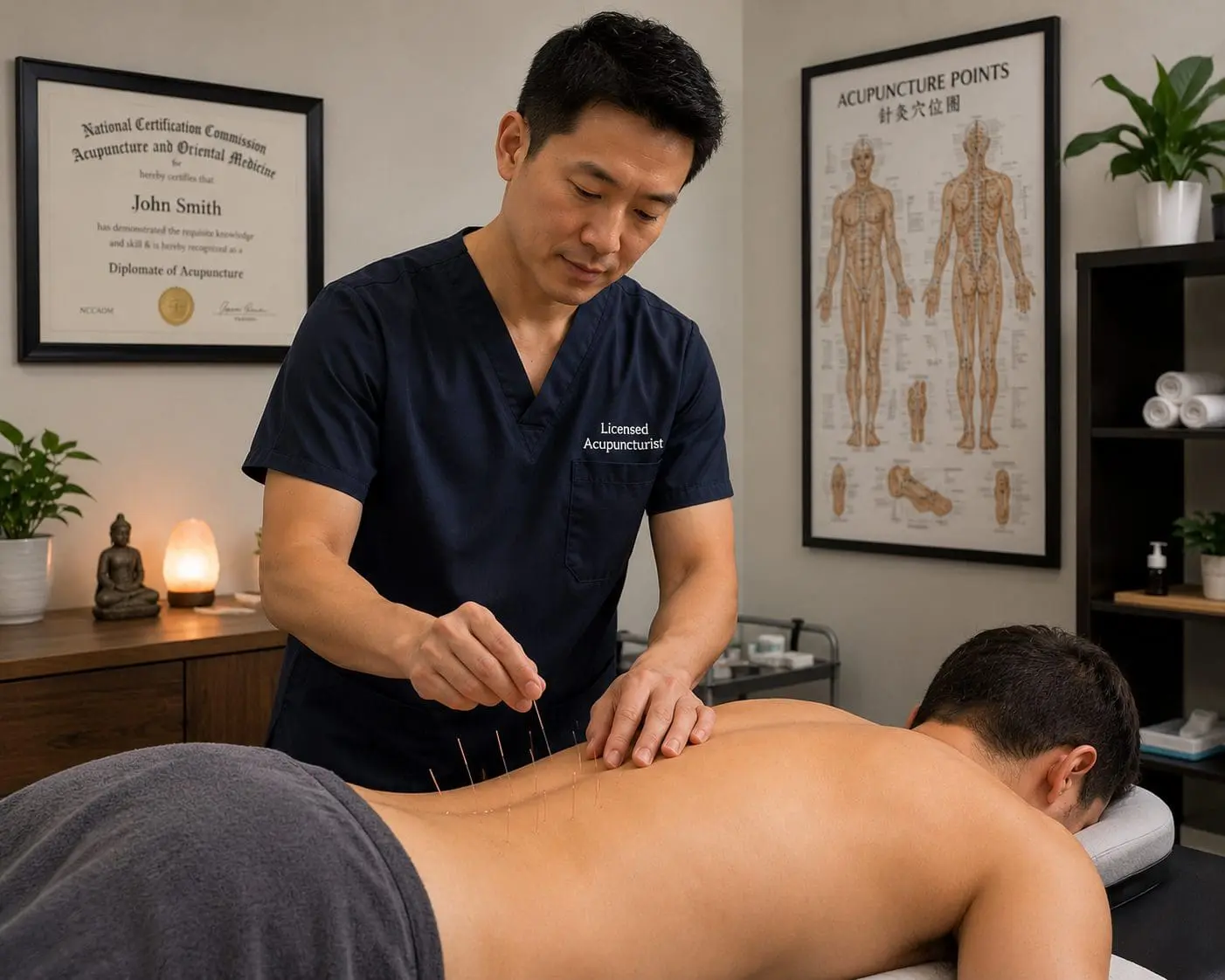
Metabolic syndrome is not a single disease but a collection of related risk factors: excess waist fat, high blood pressure, elevated blood sugar, high triglycerides, and low HDL cholesterol levels. Having multiple factors increases the risk of heart disease, stroke, and type 2 diabetes more than any single factor. The primary cause is often insulin resistance, where the body has difficulty using insulin effectively. This condition is linked to diet, inactivity, stress, poor sleep, and genetics. Fortunately, lifestyle changes can often improve metabolic syndrome, and acupressure can serve as a gentle daily practice to support these changes. It helps reduce stress, aid digestion, and promote better food and energy processing. Here are some points that may help.
In Traditional Chinese Medicine, metabolic syndrome is seen as a build-up of phlegm and dampness. The Spleen and Stomach transform food into energy; however, this process can be disrupted by rich, sweet, or greasy foods, irregular eating patterns, lack of activity, or exhaustion and stress. This disruption causes food to accumulate as phlegm and dampness, which can lead to weight gain around the waist, heaviness, fatigue, and a slow metabolism. Stress can hinder Liver Qi flow, causing heat and Yang to rise, often leading to high blood pressure and overeating as a stress response. Over time, phlegm and stagnation can thicken the Blood and impair its circulation, raising the risk of blood vessel issues in Traditional Chinese Medicine.
Here are nine acupressure points to strengthen the Spleen and Stomach, eliminate phlegm and dampness, promote the smooth flow of Liver Qi, reduce internal heat, and support Blood circulation.
What Acupressure Points to Press and Why
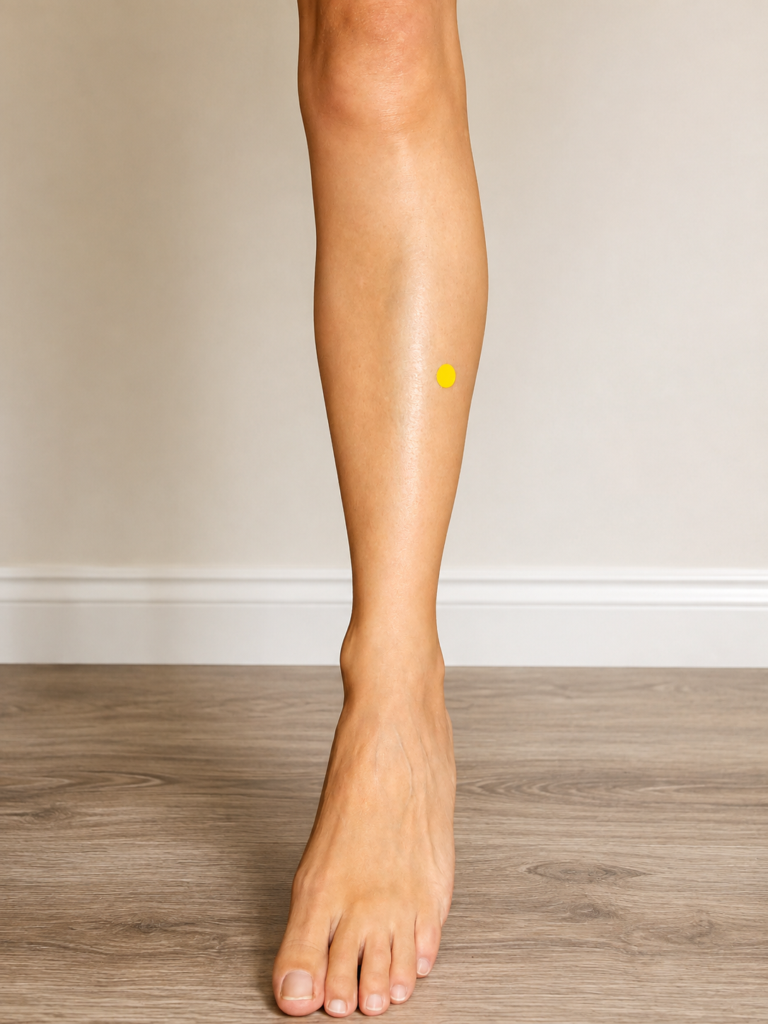
1. Press on ST40 on the lower leg, the key point for phlegm. ST40 sits on the outer lower leg, midway between the knee and the outer ankle bone, about two finger-widths to the outside of the shinbone. Press firmly with your thumb for one to two minutes on each leg. ST40 is called “Fenglong.”
ST40 is a primary point for clearing phlegm, which is essential in Traditional Chinese Medicine’s approach to metabolic syndrome. It alleviates sensations of heaviness, sluggishness, and abdominal weight gain. It also addresses phlegm affecting the head and blood vessels. This point is central to this routine.
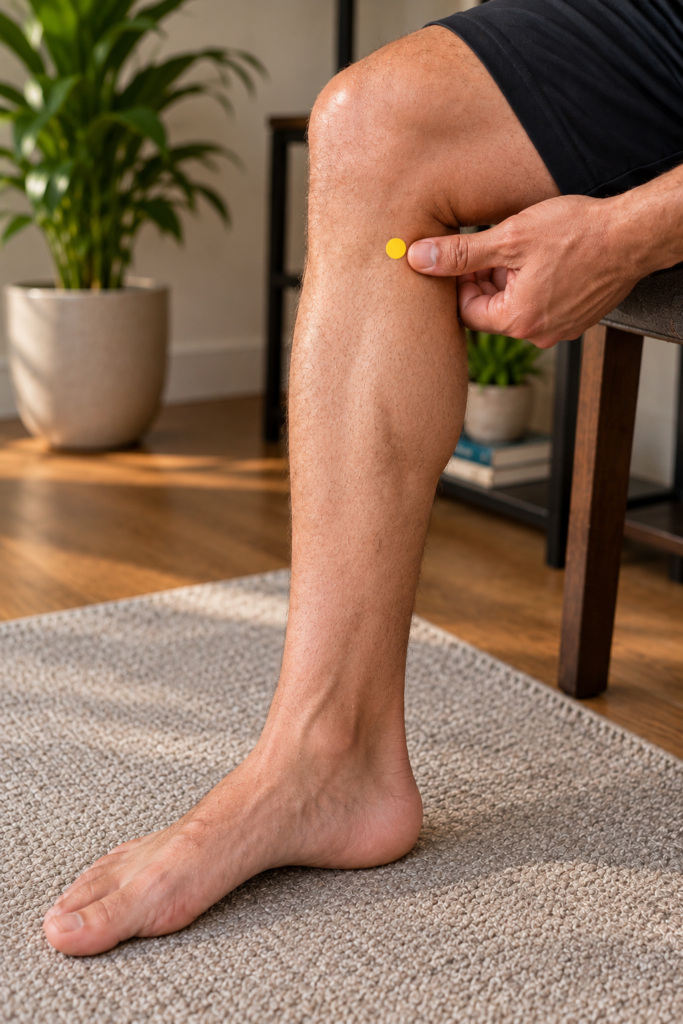
2. Press on SP9 below the inner knee to drain dampness. SP9 sits on the inner lower leg, in the hollow just below the bulge at the top of the shinbone, on the inner side of the knee. Press firmly with your thumb for one to two minutes on each leg. SP9 is called “Yinlingquan.”
SP9 serves as the primary point for draining dampness, alleviating the bloated, heavy, and waterlogged sensations commonly associated with metabolic syndrome. When combined with ST40, it effectively targets both phlegm and dampness.
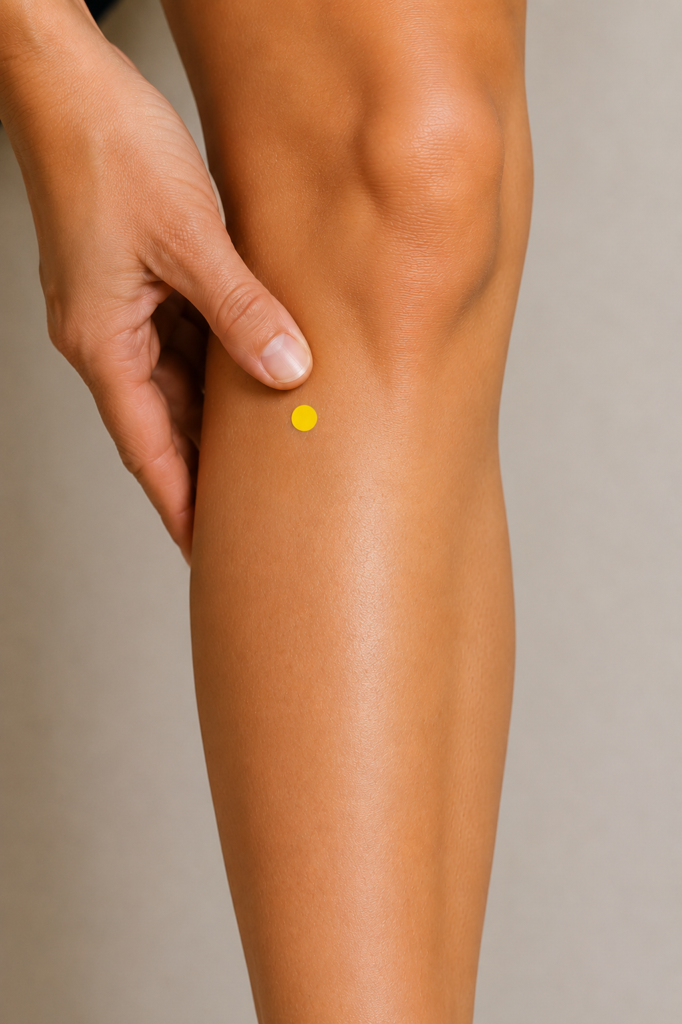
3. Press on ST36 below the knee to strengthen digestion and metabolism. ST36 sits four finger-widths below the lower edge of the kneecap and one finger-width to the outside of the shinbone, on the muscle that rises when you flex your foot. Press firmly with your thumb for one to two minutes on each leg. ST36 is called “Zusanli,” the “Leg Three Miles.”
ST36 supports the Spleen and Stomach in transforming food into energy rather than storing it as phlegm. It promotes consistent energy levels, helping to lessen cravings caused by energy drops and enhancing your stamina for daily tasks.
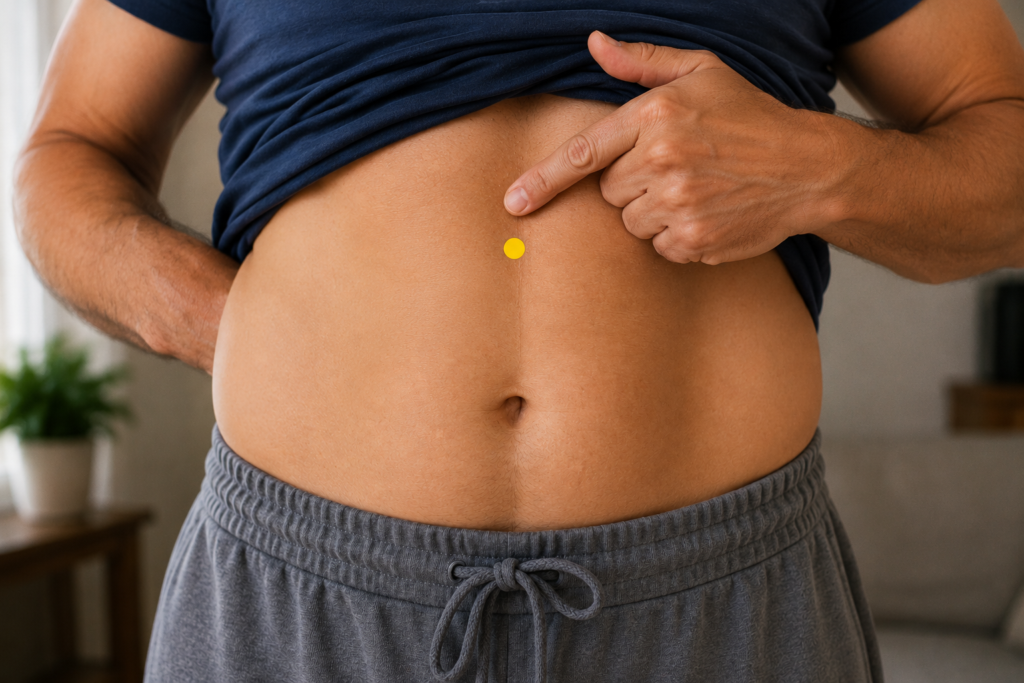
4. Press on CV12 above the navel to harmonize digestion. CV12 sits on the midline of the abdomen, halfway between the navel and the lower end of the breastbone, about four finger-widths above the belly button. Press gently in slow clockwise circles for one to two minutes, an hour or more after eating. CV12 is called “Zhongwan,” the gathering point of the Stomach.
CV12 is located over the stomach and helps balance the entire digestive system. It can help reduce bloating and heaviness after eating and support the Stomach and Spleen in digesting food efficiently.
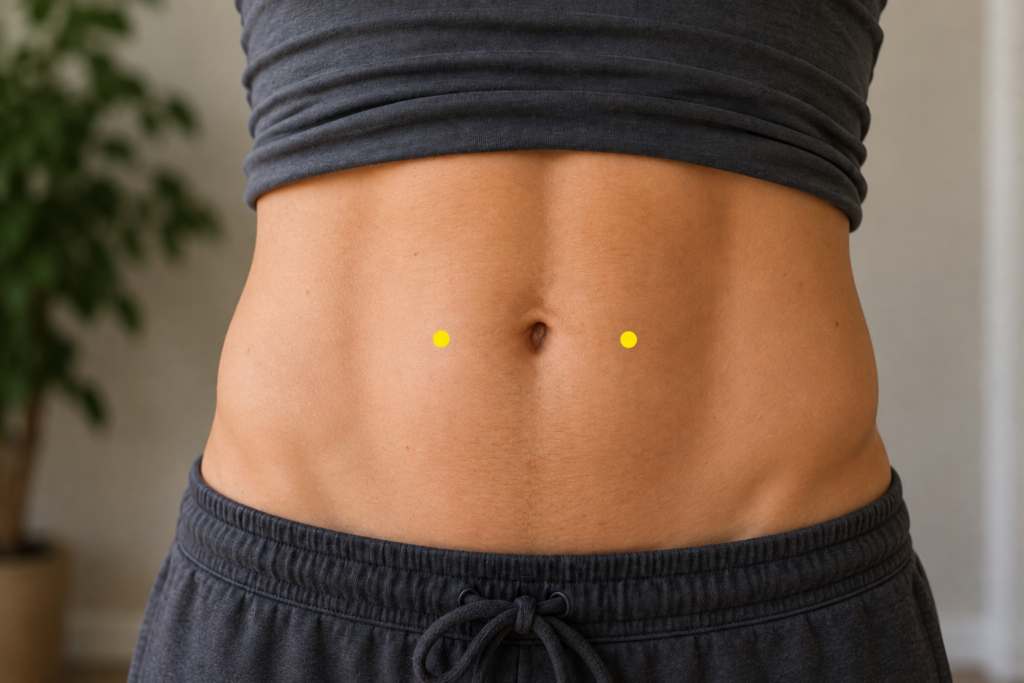
5. Press on ST25 beside the navel to support the abdomen. ST25 sits about three finger-widths out to each side of the navel, level with its center. Press gently with your fingertips for one to two minutes on both sides, or make slow clockwise circles. ST25 is called “Tianshu,” the “Heavenly Pivot.”
ST25 is located on the abdomen, where weight often accumulates due to metabolic syndrome. It aids in regulating intestinal functions and digestion. Commonly used in acupuncture to support weight management and metabolism, gentle clockwise massage on this point can promote healthy bowel movements.
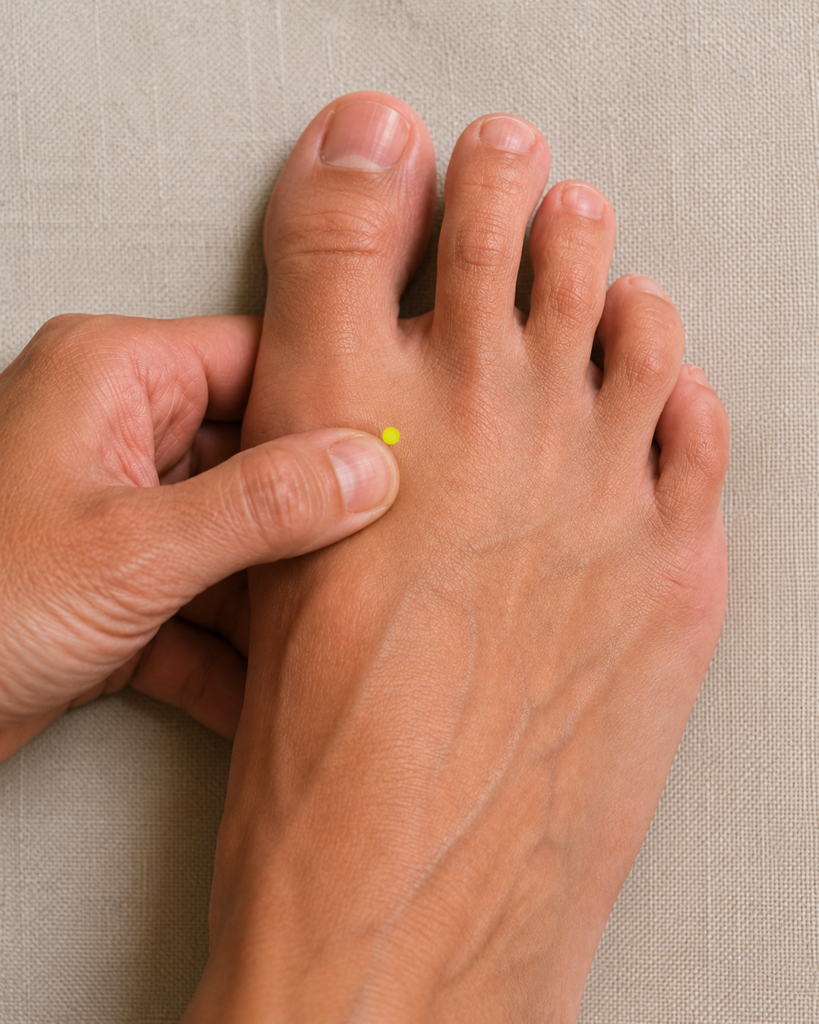
6. Press on LR3 on the top of the foot to ease stress and bring down rising Yang. LR3 sits on the top of the foot, in the webbing between the big toe and second toe, about two finger-widths back where the bones meet in a small hollow. Press firmly with your thumb for one to two minutes on each foot. LR3 is called “Taichong.”
Stress increases blood pressure and blood sugar levels and can lead to emotional eating. LR3 helps move stagnated Liver Qi, relaxes tension, and directs rising energy downward, targeting both stress and the high blood pressure aspect of metabolic syndrome.
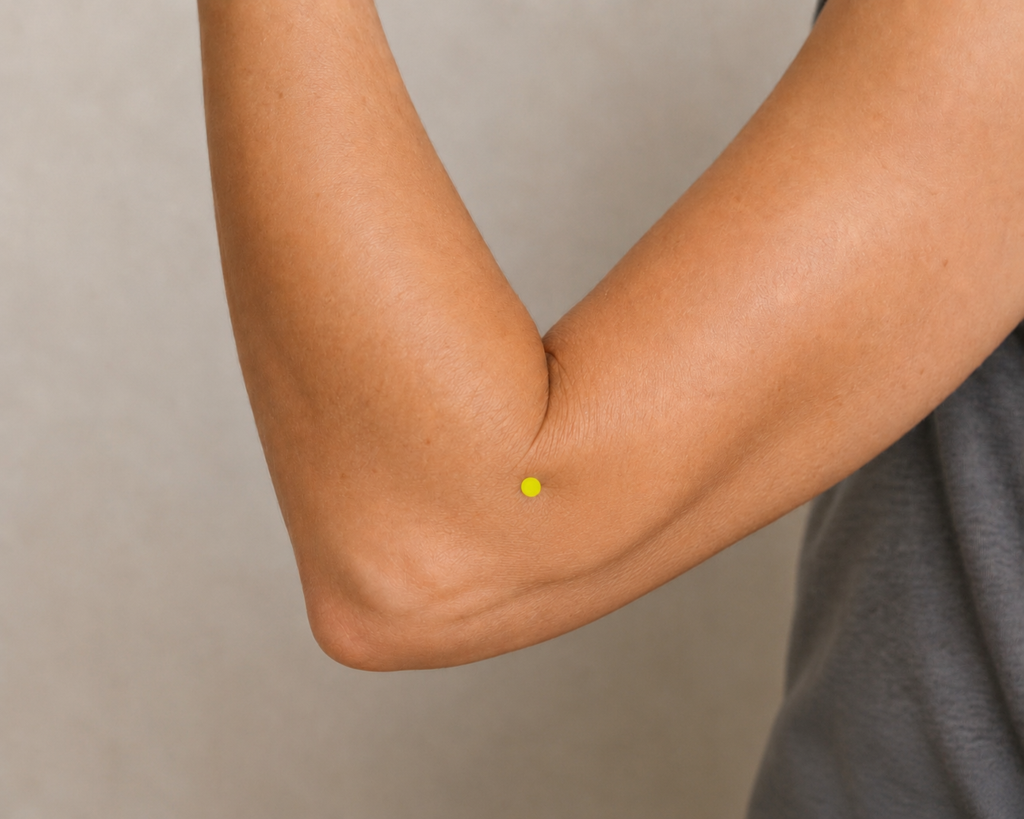
7. Press on LI11 at the elbow to clear heat. LI11 sits at the outer end of the elbow crease, in the hollow that forms when you bend your elbow. Press firmly with your thumb for one to two minutes on each arm. LI11 is called “Quchi,” the “Pool at the Crook.”
LI11 is very effective at clearing heat and is often studied for its effects on blood pressure. It also helps remove damp heat from the digestive system, which can result from eating rich, greasy, or spicy foods and drinking alcohol.
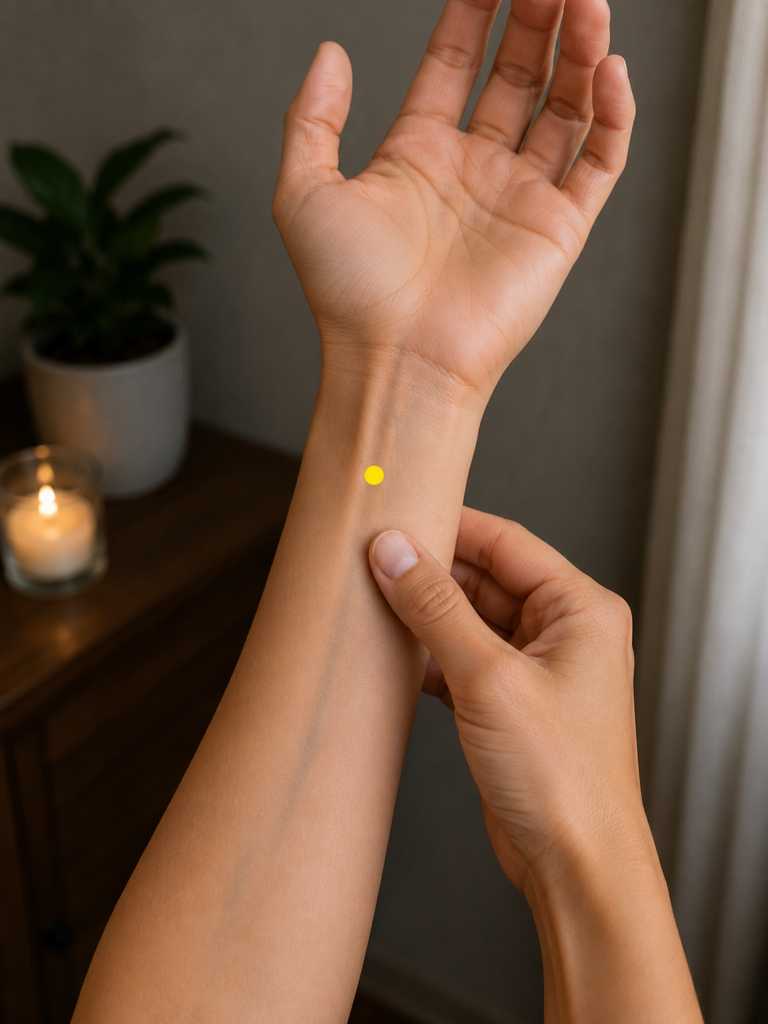
8. Press on PC6 on the inner forearm to calm the heart and cravings. PC6 sits three finger-widths above the inner wrist crease, in the center of the forearm between the two tendons. Press firmly with your thumb for one to two minutes on each arm. PC6 is called “Neiguan,” the “Inner Pass.”
PC6 helps calm the heart, open the chest, and settle the stomach. It can relieve the anxious, unsettled feeling that often triggers cravings. This point also supports the heart, which metabolic syndrome can strain, and it’s easy to press when you feel a craving.
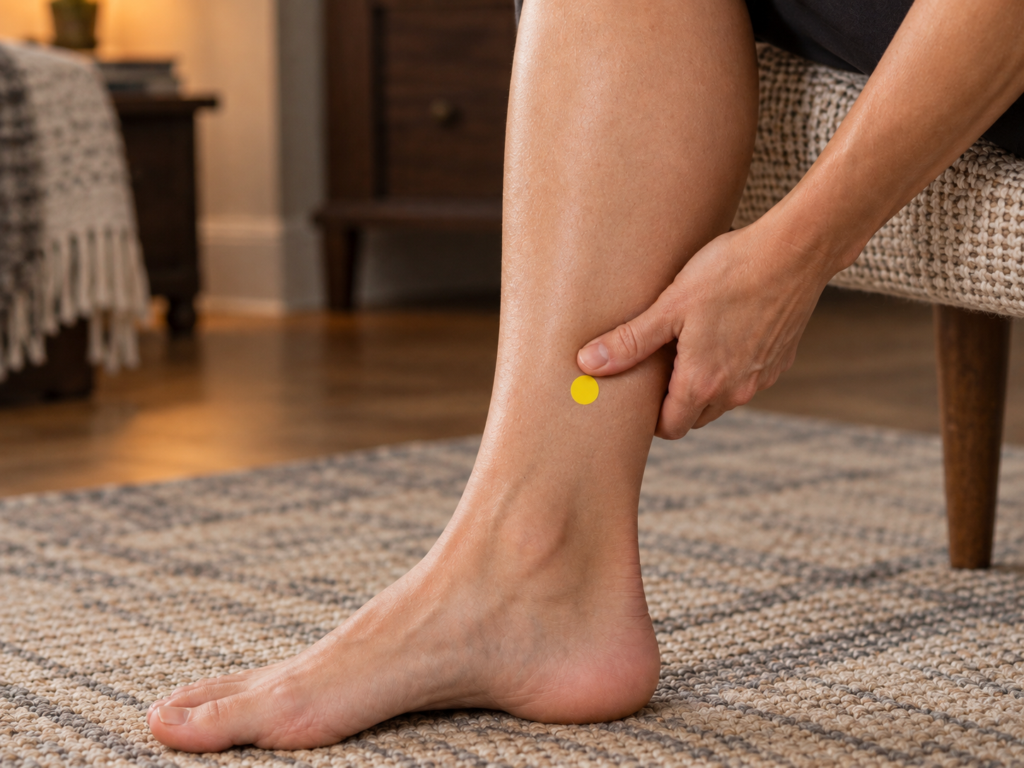
9. Press on SP6 above the inner ankle to keep the Blood moving. SP6 sits four finger-widths up from the tip of the inner ankle bone, just behind the back edge of the shinbone. Press firmly for one to two minutes on each leg. SP6 is called “Sanyinjiao,” the “Three Yin Intersection.” SP6 is avoided during pregnancy.
SP6 helps strengthen the Spleen, move the Blood, and support both the Liver and Kidney. In metabolic syndrome, where phlegm and stagnation can slow down the Blood, this point helps keep your circulation moving smoothly and can also support better sleep.
Why These Acupressure Points Work
In Traditional Chinese Medicine, metabolic syndrome is viewed as caused by phlegm and dampness resulting from an overworked Spleen, stagnation of Liver Qi, rising heat, and sluggish Blood flow. The nine points are designed to target these underlying issues.
- The points for phlegm and dampness (ST40, SP9) help clear the buildup at the core of the condition.
- The digestive points (ST36, CV12, ST25) enhance the body’s ability to convert food into energy.
- The stress and heat points (LR3, LI11, PC6) help reduce stress, diminish cravings, and lower rising heat and pressure.
- The circulation point (SP6) helps regulate the smooth flow of Blood.
Research on acupuncture for metabolic syndrome is still new, but some small studies suggest it may help with things like weight and blood pressure. Acupressure works best as a support for the lifestyle changes and medical care that make the biggest difference.
How to Properly Use These Acupressure Points
- Perform the entire routine once daily, pausing at each point for one to two minutes.
- Press CV12 and ST25 softly in slow clockwise circles, at least one hour after eating.
- Press PC6 and LR3 whenever stress or cravings increase, while taking a few slow breaths.
- Use ST40, SP9, and ST36 daily, as regular practice is essential for clearing phlegm and strengthening digestion.
- Allow the routine to develop over several months as you implement lifestyle changes.
Lifestyle modifications are the most effective approach to managing metabolic syndrome, and even minor changes can have a positive impact.
- Aim to walk daily, particularly for ten to fifteen minutes after meals, to help reduce blood sugar levels.
- Incorporate strength training sessions several times a week to improve insulin sensitivity.
- Focus meals on vegetables, beans, whole grains, fish, olive oil, and lean proteins, while reducing sugary drinks, refined carbs, and ultra-processed foods.
- Limit alcohol, avoid smoking, and get enough sleep.
- Loud snoring and daytime drowsiness could indicate sleep apnea, which is common with metabolic syndrome and treatable.
- Managing stress is crucial, as it can elevate blood pressure and blood sugar.
- Even losing a small amount of weight around the waist can positively influence multiple health markers.
- Following Traditional Chinese Medicine principles, opt for warm, cooked, simple dishes instead of cold, raw, greasy, or sugary foods, which can burden the Spleen.
When to Get Professional Help
Your doctor should regularly monitor metabolic syndrome by measuring your waist circumference, blood pressure, blood sugar, and cholesterol levels. Some individuals may also require medication in addition to lifestyle modifications. Seek emergency medical help if you experience chest pain or pressure, shortness of breath, pain radiating to your arm, jaw, or back, sudden weakness or numbness on one side, facial drooping, difficulty speaking, or a sudden severe headache, as these could indicate a heart attack or stroke. See your doctor promptly for increased thirst, frequent urination, blurred vision, or unexplained weight loss, which can signal high blood sugar, and for very high blood pressure readings. Always follow your prescribed medication instructions.
Acupressure may serve as a useful addition to lifestyle modifications and medical care for your condition.
Above and Beyond Acupuncture offers acupuncture, cupping, and lifestyle coaching at the North Frank Lloyd Wright Boulevard location in Scottsdale.
Schedule an appointment online to start your healing journey.
The points above are only as effective as the technique used to apply them. Where to press, how firmly, and for how long all affect the result. For a full breakdown of how to perform acupressure properly at home, read Performing Acupressure in 3 Easy Steps.

About the Publisher
Paul Kerzner, L.Ac., is a licensed acupuncturist and board-certified herbalist, as well as the founder of Above and Beyond Acupuncture in Scottsdale. His own journey from chronic patient to practicing acupuncturist shapes his commitment to providing honest, clinically grounded information about acupuncture and Traditional Chinese Medicine. Learn more about Paul and his clinical approach on the About Us page.