Key Takeaways
- Heart palpitations are a sudden awareness of the heartbeat, which may feel like racing, pounding, fluttering, or skipped beats in the chest, neck, or throat.
- They are usually harmless and are often triggered by stress, anxiety, caffeine, alcohol, smoking, intense exercise, or hormonal changes during pregnancy and menopause.
- In Traditional Chinese Medicine, palpitations mean the Heart is unsettled, either because it lacks the Qi, Blood, or Yin that keep it steady or because stress and heat are agitating it.
- Nine acupressure points on the wrists, forearms, chest, upper back, and legs help calm the Heart and settle an anxious mind, provided a doctor has ruled out a heart condition.
- Palpitations with chest pain, severe shortness of breath, dizziness, or fainting are an emergency, so call 911.
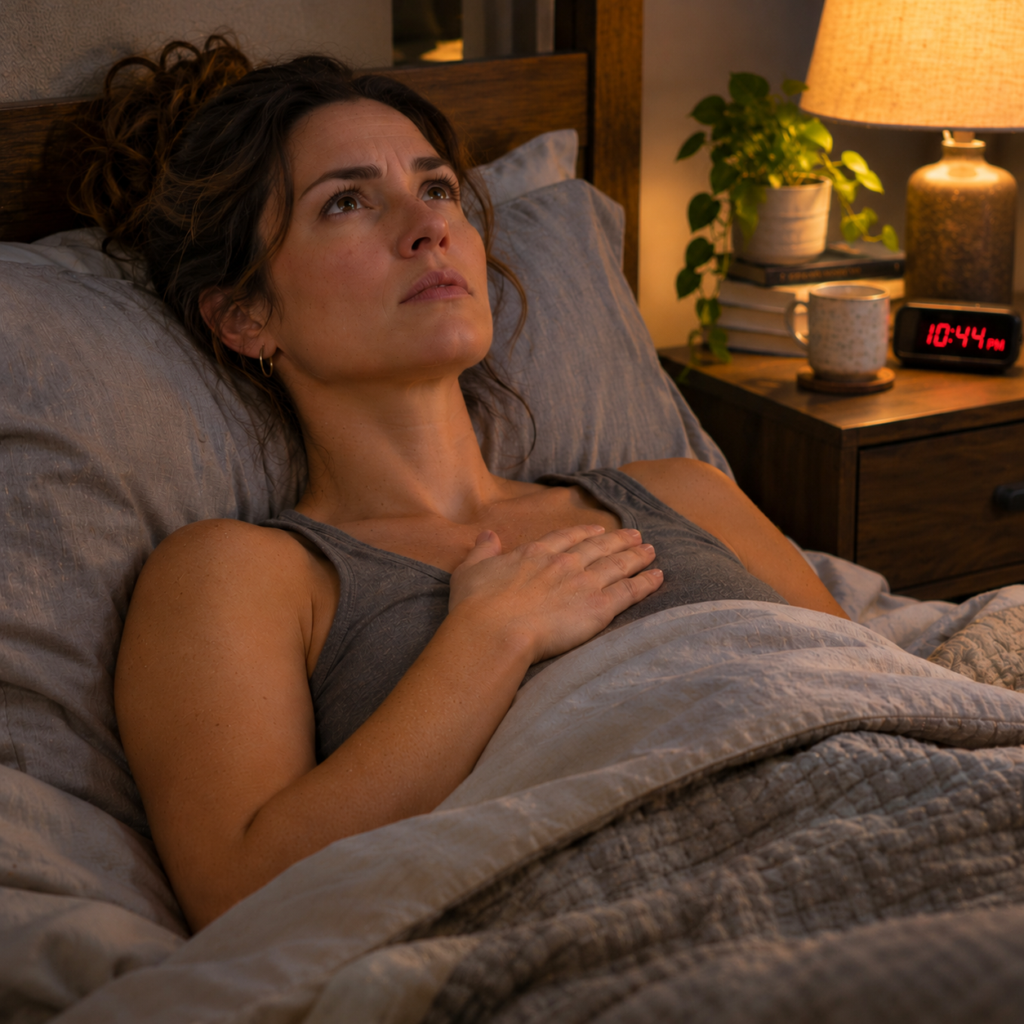
The heart beats about 100,000 times a day, and most of those beats go completely unnoticed. Then one catches your attention: a flutter just behind the breastbone, a hard thud after a pause, or a sudden burst of rapid beats while you’re completely still. It’s often most noticeable at night, when you’re in bed and the room is quiet, with nothing else to focus on. The sensation usually passes within seconds, but the anxiety it leaves behind can last much longer.
According to the British Heart Foundation, palpitations are usually harmless and can feel more serious than they are. They may last seconds or minutes and be felt in the chest, neck, or throat. Common triggers include stress, anxiety or panic attacks, caffeine, alcohol, smoking or vaping, intense exercise, certain medicines, spicy or rich foods, and hormonal changes during pregnancy or menopause. Palpitations can also be caused by an overactive thyroid, anemia, or a heart condition such as an arrhythmia or heart valve disease. For this reason, new, frequent, or worsening palpitations should be checked by a doctor.
Once a doctor has ruled out a cardiac cause, the remaining triggers are largely things a person can address. Stress is high on that list, and palpitations can feed it: one skipped beat can trigger an alarm response, releasing more adrenaline and prompting further skipped beats. A few minutes of steady pressure and slow breathing can help break the cycle.
Traditional Chinese Medicine has recognized palpitations for hundreds of years and considers them a Heart condition, with the Heart understood as the dwelling place of the mind. A healthy Heart, nourished by Qi and Blood, beats steadily without being noticed. When it is depleted of Qi and Blood, such as after illness, blood loss, or prolonged overwork, it loses its anchor, and palpitations may occur alongside fatigue and a pale complexion. Nighttime palpitations accompanied by heat, night sweats, and restless sleep are a classic pattern of insufficient Heart and Kidney Yin, which is common during menopause. Stress and strong emotions can directly agitate the Heart, while a sudden fright may leave it agitated for weeks.
The nine points begin at the wrists and forearms, continue to the chest and upper back, and end on the lower legs.
What Acupressure Points to Press and Why
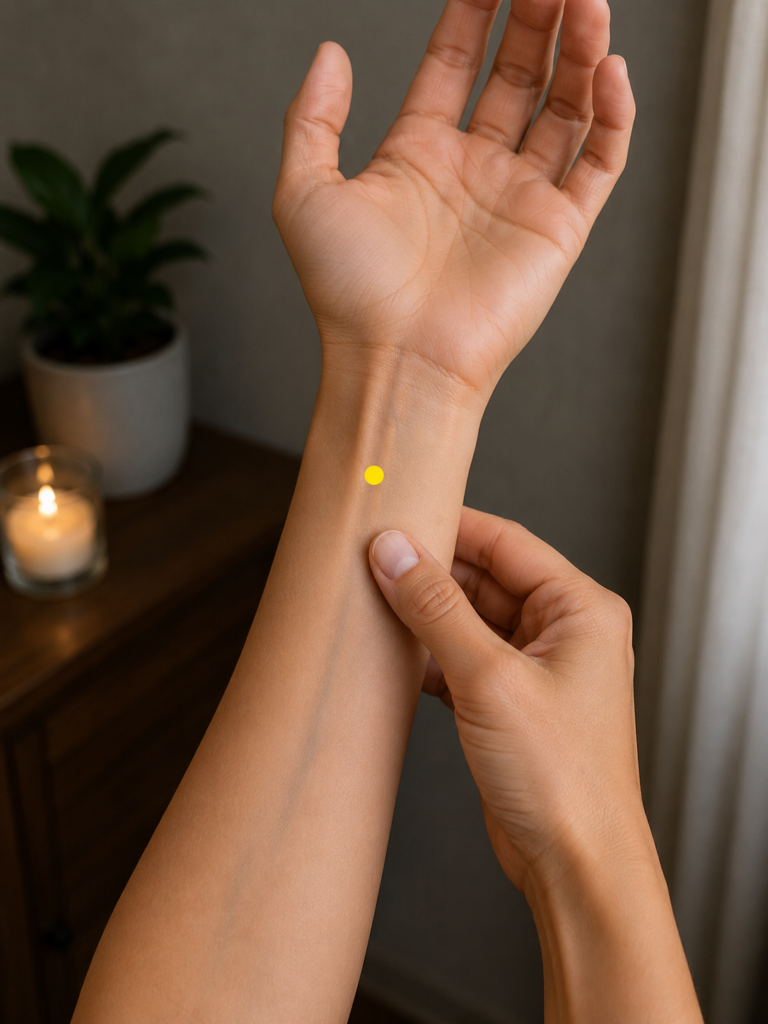
1. Press on PC6 on the inner forearm to steady the heartbeat. PC6 sits on the inner forearm, three finger-widths above the wrist crease, between the two tendons. Press firmly with the thumb of your other hand for one to two minutes on each arm while breathing slowly. PC6 is called “Neiguan,” the “Inner Pass.”
PC6 is the Pericardium’s connecting point, associated in Traditional Chinese Medicine with the protective covering of the Heart. It is the best-known point for palpitations, chest tightness, and anxiety, and the first point to reach for when the heart starts to race.
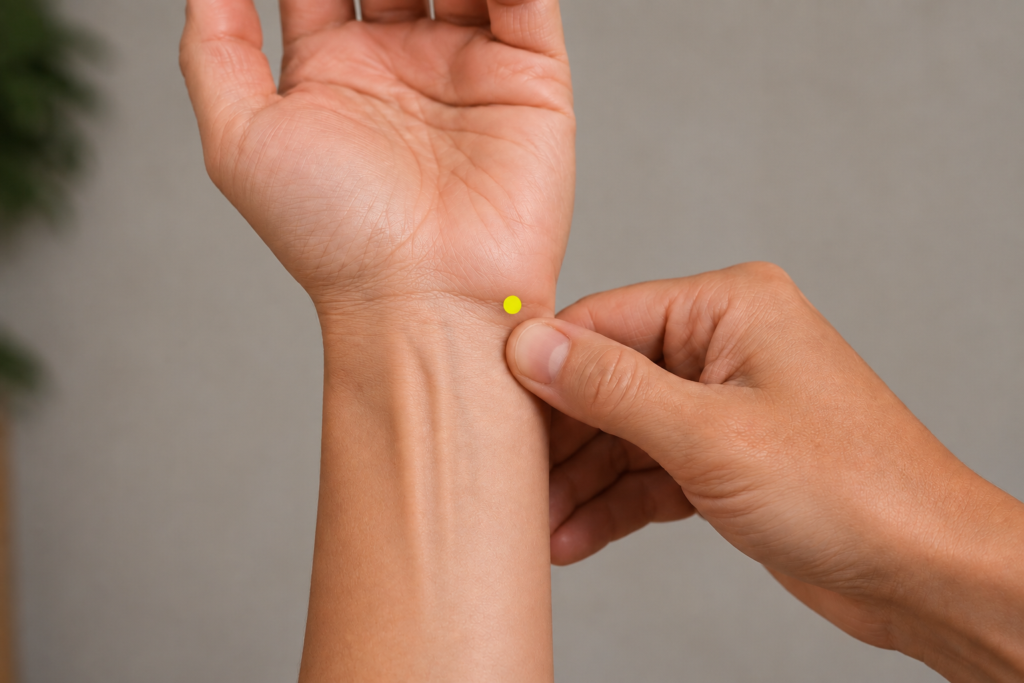
2. Press on HT7 at the wrist crease to calm the mind. HT7 sits on the inner wrist crease, on the little finger side, in the small hollow just inside the tendon. Press gently with the thumb of your other hand for one to two minutes on each wrist. HT7 is called “Shenmen,” the “Spirit Gate.”
HT7 is the Heart’s source point, and the Heart houses the mind. It calms anxiety and racing thoughts that can trigger palpitations, and may also help with the poor sleep that follows.
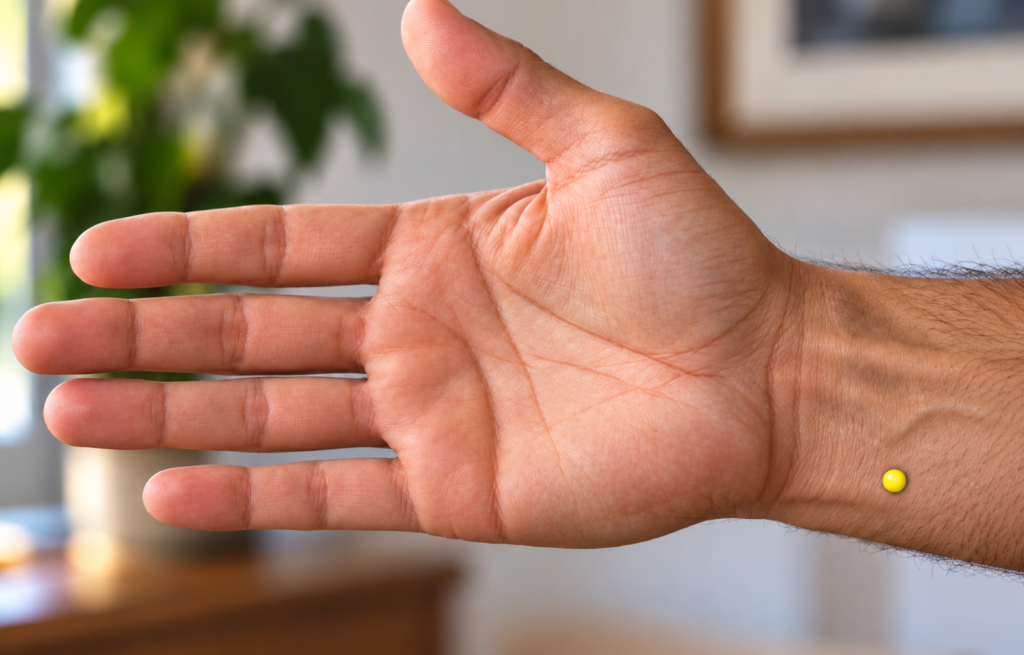
3. Press on HT5 above the wrist to regulate the heart’s rhythm. HT5 sits on the inner forearm on the little finger side, one thumb-width above the wrist crease, just to the thumb side of the tendon. Press gently with your thumb for one to two minutes on each arm. HT5 is called “Tongli,” the “Penetrating the Interior.”
HT5 is the Heart’s connecting point. Classical texts specifically identify it for palpitations and irregular heartbeat, particularly when they occur after a fright or strong emotion.
4. Press on PC4 on the forearm for sudden palpitations. PC4 sits on the inner forearm, between the two tendons, a little less than halfway from the wrist crease to the elbow crease. Press firmly with your thumb for one to two minutes on each arm. PC4 is called “Ximen,” the “Cleft Gate.”
PC4 is the Pericardium’s cleft point, traditionally used for sudden, acute symptoms. It is pressed when palpitations come on quickly, accompanied by chest tightness and a feeling of alarm.
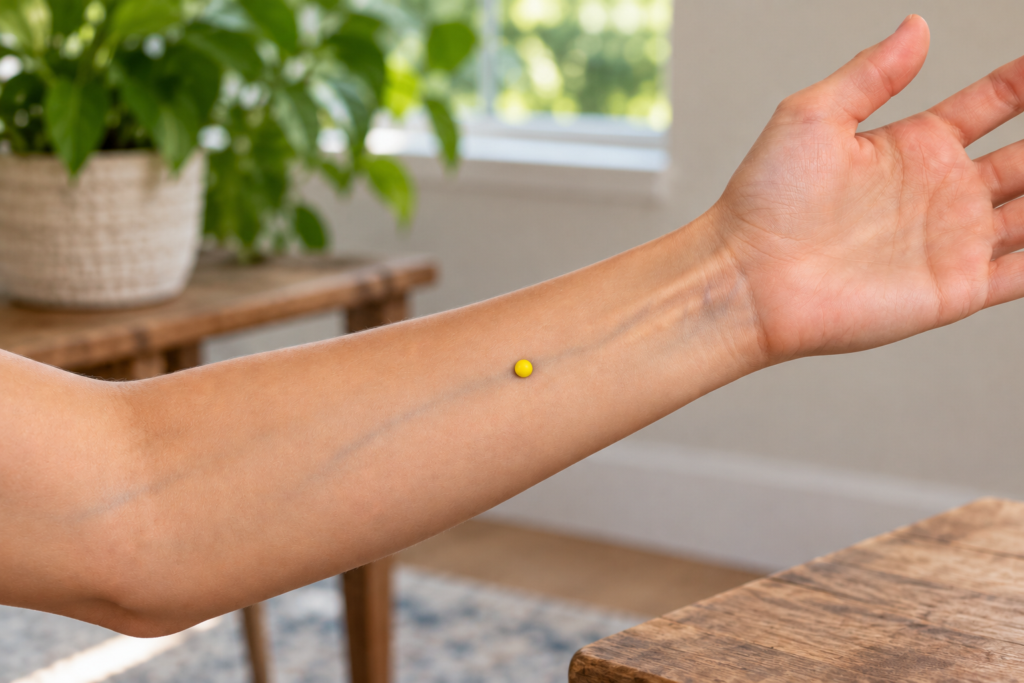
5. Press on CV17 on the breastbone to open the chest. CV17 sits on the center of the breastbone, level with the space between the fourth and fifth ribs, roughly midway between the nipples. Press gently with two or three fingertips for one to two minutes while breathing slowly. CV17 is called “Shanzhong,” the “Chest Center.”
CV17 is the influential point of Qi and the Pericardium’s alarm point. It relieves chest tightness and slows the breath, which can help the heart rate settle.
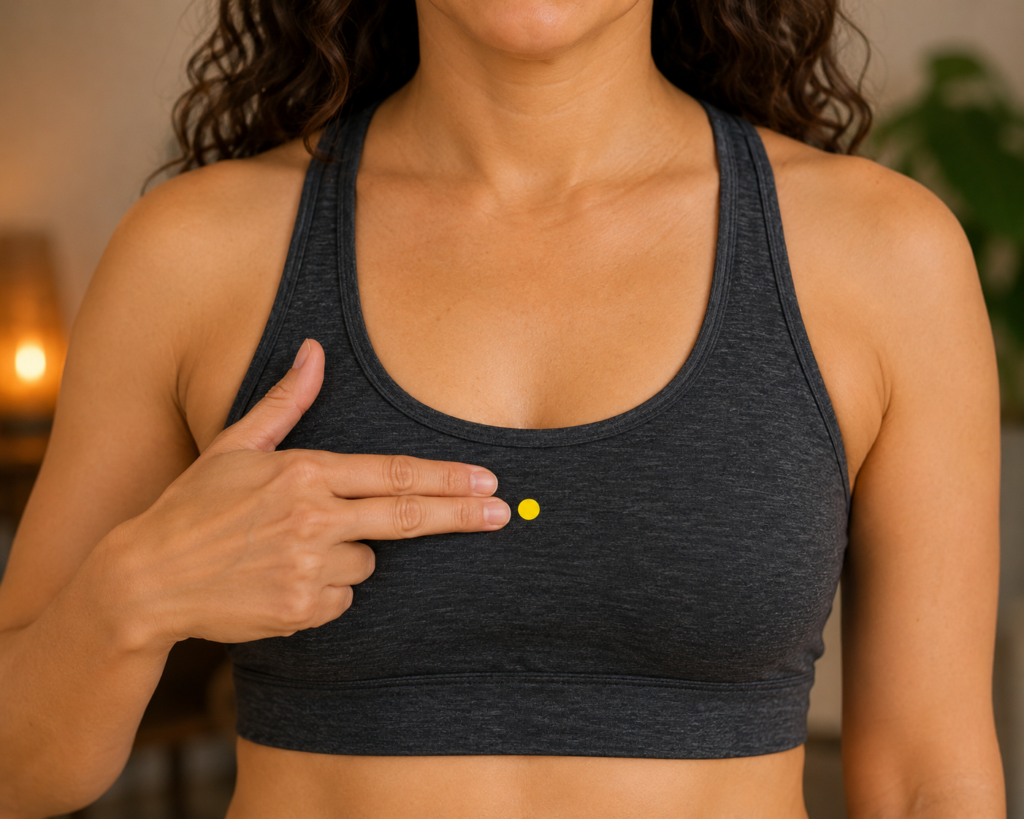
6. Press on CV14 below the breastbone to calm the Heart. CV14 sits on the midline of the upper belly, about two thumb-widths below the bottom tip of the breastbone. Press very gently with two fingertips, or rest a warm palm over the area, for one to two minutes. CV14 is called “Juque,” the “Great Gateway.”
CV14 is the Heart’s alarm point, where Heart energy gathers at the front of the body. It is used for palpitations accompanied by anxiety and an unsettled feeling in the pit of the stomach.
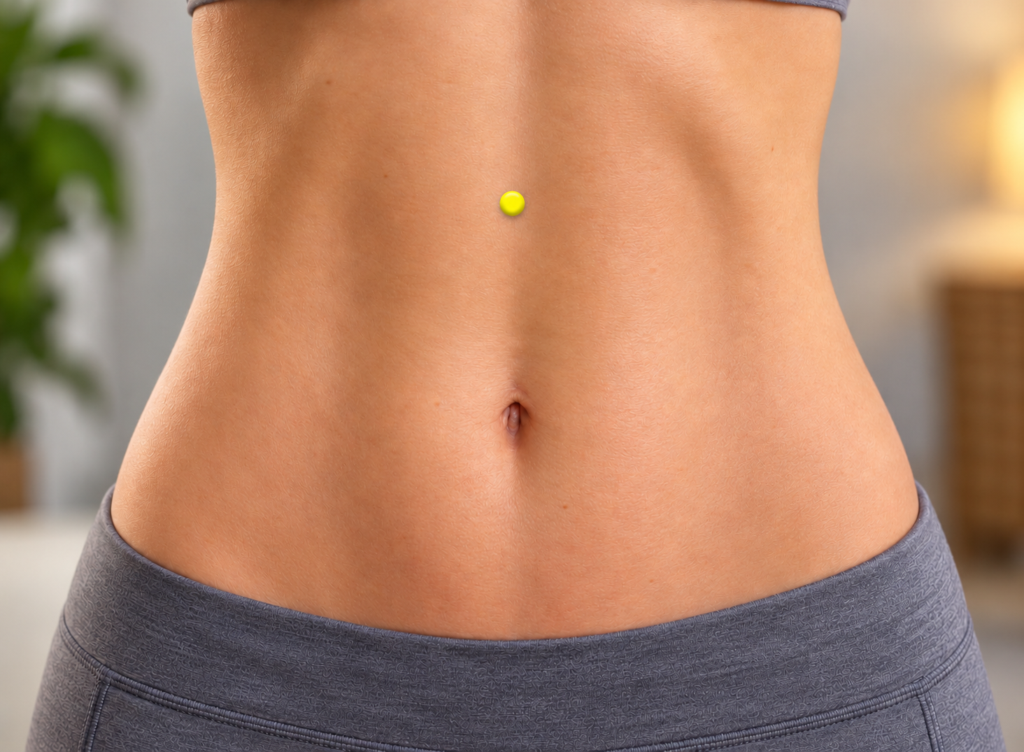
7. Press on BL15 on the upper back to support the Heart. BL15 sits on the upper back, two finger-widths out from the spine on each side, level with the middle of the shoulder blades. Since it is hard to reach by hand, lean against a wall with a tennis ball placed over the point and press into it gently for one to two minutes on each side. BL15 is called “Xinshu,” the “Heart Shu.”
BL15 is the Heart’s back transport point. It strengthens Heart Qi and is used for palpitations accompanied by fatigue or that have persisted for a long time.
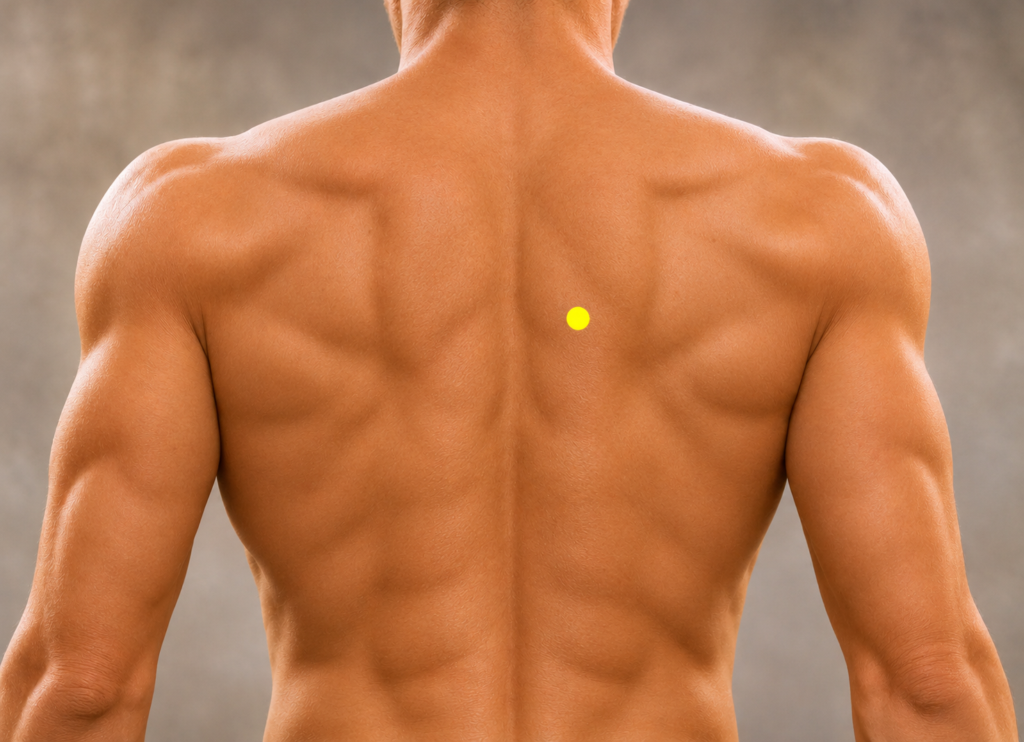
8. Press on SP6 above the inner ankle to nourish Blood. SP6 sits on the inside of the lower leg, four finger-widths above the tip of the inner ankle bone, just behind the edge of the shinbone. Press firmly with your thumb for one to two minutes on each leg. SP6 is called “Sanyinjiao,” the “Three Yin Intersection.” SP6 is avoided during pregnancy.
SP6 nourishes the Blood and Yin that anchor the Heart. It may help with palpitations accompanied by fatigue, lightheadedness when standing, or heavy periods.
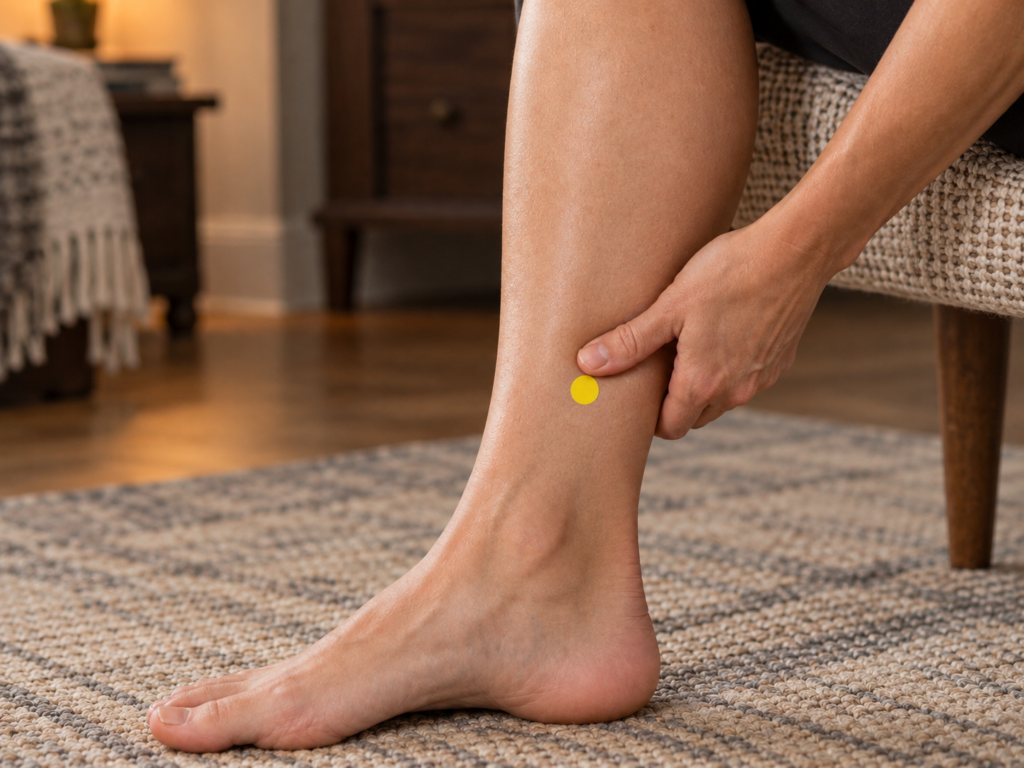
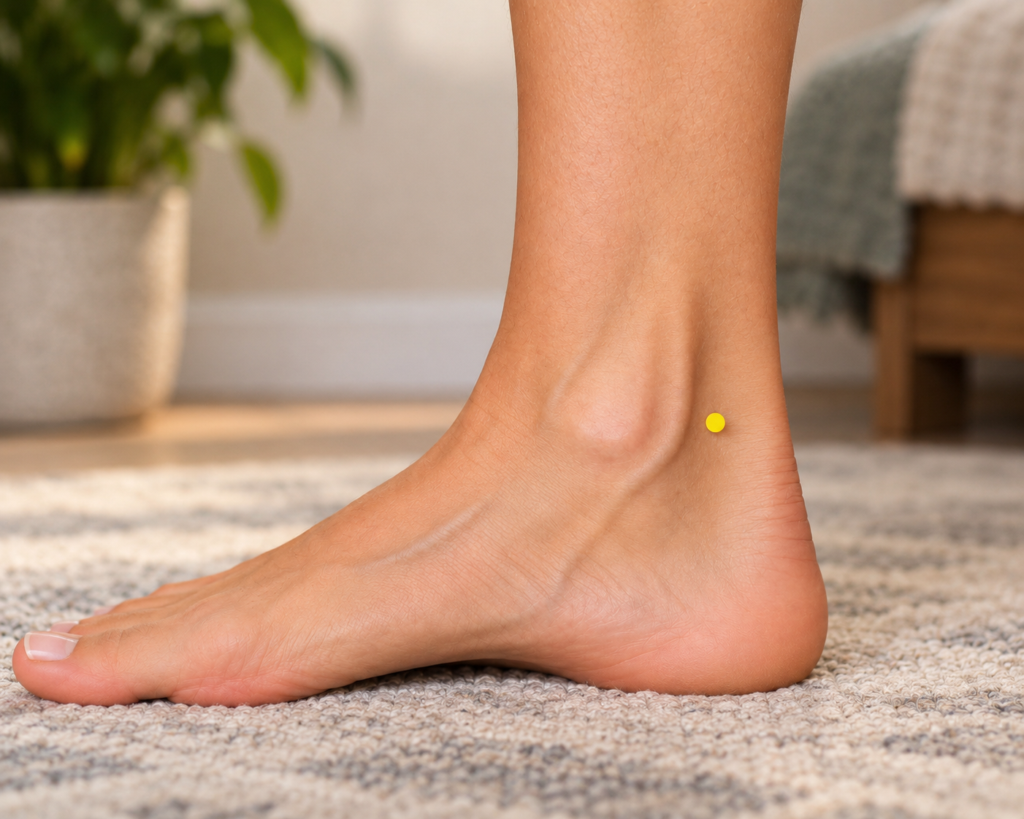
9. Press on KI3 behind the inner ankle bone to cool and settle the Heart. KI3 sits in the hollow between the tip of the inner ankle bone and the Achilles tendon. Press with moderate pressure for one to two minutes on each ankle. KI3 is called “Taixi,” the “Great Stream.”
KI3 is the Kidney’s source point. In Traditional Chinese Medicine, Kidney Yin cools and calms the Heart, so KI3 is used for nighttime palpitations accompanied by heat, night sweats, or restless sleep.
Why These Acupressure Points Work
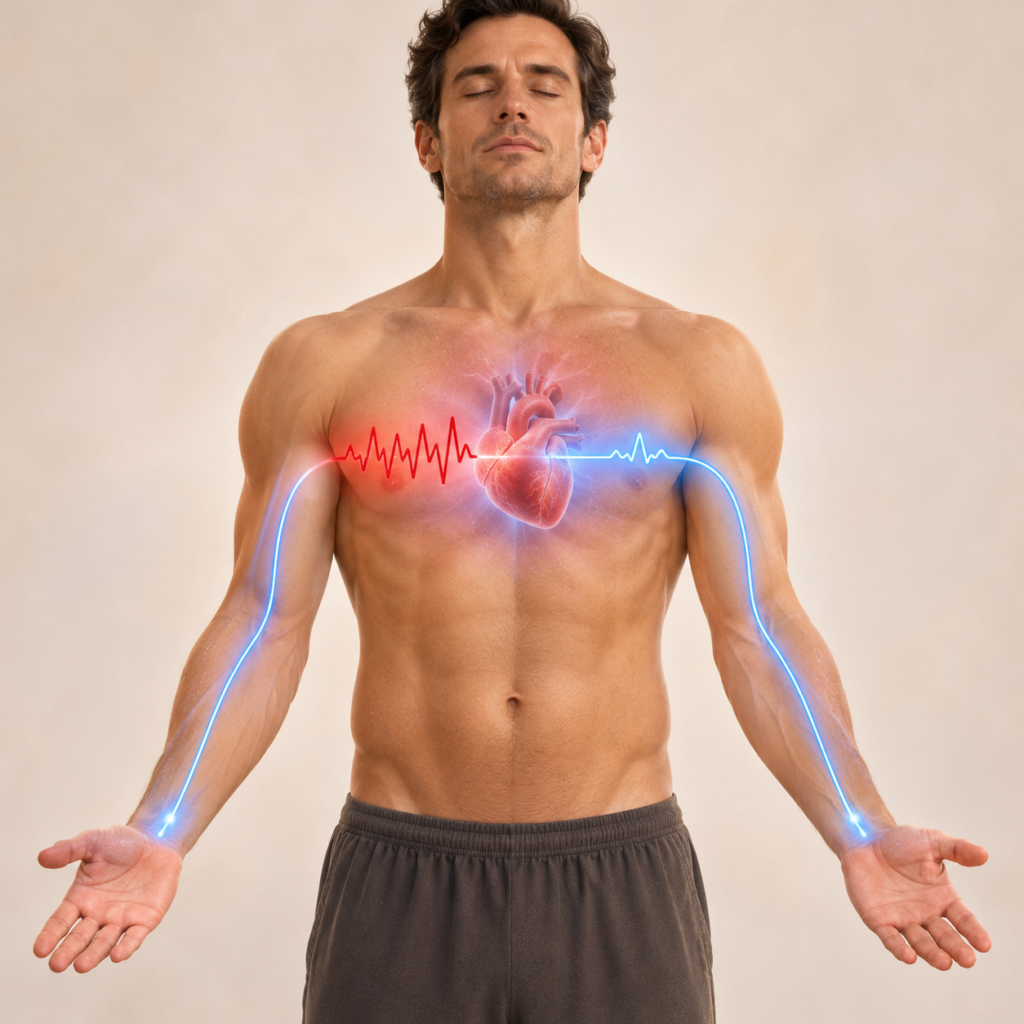
From a Traditional Chinese Medicine perspective, the Heart needs nourishment and calm to maintain a steady beat. Qi and Blood provide its substance, while Yin keeps it cool. When either is depleted, the Heart becomes restless and its beat becomes noticeable. Stress, fright, and worry disturb the mind housed by the Heart, affecting the heartbeat. Treatment calms the Heart through the Heart and Pericardium channels, opens the chest, and replenishes the Blood and Yin that keep it steady.
The nine points work together to calm the Heart and address the factors that unsettle it:
- PC6, PC4, HT7, and HT5 calm the Heart through the Pericardium and Heart channels.
- CV17 and CV14 open the chest and settle the area around the Heart.
- BL15 strengthens Heart Qi from the back.
- SP6 and KI3 nourish the Blood and Yin that anchor the Heart.
How to Properly Use These Acupressure Points

Acupressure for heart palpitations is intended for episodes that have already been evaluated by a physician, and it may be used both during an episode and as part of a daily routine.
- When palpitations begin, sit down and apply firm pressure to PC6 while inhaling for a count of four and exhaling for a count of six. If your heart continues to race, move on to PC4 and HT7.
- For a daily routine, apply pressure to PC6, HT7, and HT5 on both arms, followed by CV17 and CV14, and then SP6 and KI3 on both legs. If time permits, also apply pressure to BL15 using a tennis ball.
- Apply gentle pressure to the wrists, breastbone, and upper abdomen, and firmer pressure to the forearms and legs. Avoid applying pressure to SP6 during pregnancy.
- Repeat once or twice daily for at least four to six weeks. Discontinue and seek medical attention if palpitations are accompanied by chest pain, shortness of breath, dizziness, or fainting.
A symptom diary is one of the most useful ways to identify your triggers. Note when each episode starts, what you ate or drank, and what you were doing at the time. Cut back on coffee, energy drinks, and other caffeine sources, and limit alcohol. Avoid smoking and vaping. Drink plenty of water throughout the day, as dehydration can make your heart work harder. Try to keep a regular sleep schedule, and if you feel stressed, set aside a few minutes for slow breathing or take a short walk. Traditional Chinese Medicine also recommends regular meals, lighter dinners, and less spicy or rich food in the evening.
Find out more about acupressure to reset your vagus nerve.
When to Get Professional Help

Call 911 if palpitations occur with chest pain or tightness, severe shortness of breath, dizziness or lightheadedness, or fainting. Acupressure is not a substitute for emergency care. See a doctor about palpitations that are new, last a long time, recur, or are getting worse, and consult one before relying on acupressure to manage them. A visit is especially important for anyone with a history of heart problems, a family history of sudden cardiac death, or palpitations that start during exercise. A doctor can check the heart’s rhythm, test for causes such as an overactive thyroid or anemia, and review whether medication may be involved. Mention palpitations during pregnancy to your obstetric provider.
Acupressure is a gentle, supportive practice for heart palpitations. It complements, and does not replace, diagnosis and medical care.
For related health concerns, acupressure for panic attacks, acupressure for general anxiety disorder, and acupressure for POTS are companion posts.
Above and Beyond Acupuncture offers acupuncture, cupping, and lifestyle coaching at the North Frank Lloyd Wright Boulevard location in Scottsdale.
Schedule an appointment online to start your healing journey.
The points above are only as effective as the technique used to apply them. Where to press, how firmly, and for how long all affect the result. For a full breakdown of how to perform acupressure properly at home, read Performing Acupressure in 3 Easy Steps.

About the Publisher
Paul Kerzner, L.Ac., is a licensed acupuncturist and board-certified herbalist, as well as the founder of Above and Beyond Acupuncture in Scottsdale. His own journey from chronic patient to practicing acupuncturist shapes his commitment to providing honest, clinically grounded information about acupuncture and Traditional Chinese Medicine. Learn more about Paul and his clinical approach on the About Us page.