
Key Takeaways
- Acupressure can help reset the vagus nerve and calm the nervous system, helping alleviate stress and anxiety.
- Pressing points such as the concha of the ear, where a branch of the vagus nerve reaches the skin, along with GB20 and Yintang, helps calm the nervous system.
- Incorporating deep breathing with acupressure enhances its effectiveness, promoting deeper relaxation and well-being.
- Routine practice is essential; daily sessions on each point can help retrain an overactive nervous system over time.
- Maintaining healthy habits, like avoiding excessive caffeine, supports the benefits of acupressure to reset the vagus nerve.

Do you ever feel tense and tired at the same time, as if your body can’t relax? Maybe your heart races over small things, your breathing feels shallow, or your stomach tightens when you’re stressed. These can be signs that your nervous system is stuck on high alert, which is why many people look for ways to reset the vagus nerve.
The vagus nerve is the longest nerve in the autonomic nervous system. It extends from the brainstem, through the neck, and into the chest and abdomen, connecting the brain to the heart, lungs, stomach, and intestines. As the main nerve of the parasympathetic, or “rest-and-digest,” system, it slows the heart, deepens breathing, supports digestion, and helps the body recover from stress. About eighty percent of its fibers carry information from the body to the brain, which means signals from your breath, gut, or skin can influence how calm you feel.
When stress is ongoing, the body relies more on the fight-or-flight system, while vagal activity, also called vagal tone, decreases. Low vagal tone is linked to anxiety, low mood, digestive issues such as irritable bowel syndrome, chronic inflammation, and poor sleep. Resetting the vagus nerve means using the body’s natural pathways to help the rest-and-digest system function again.
In Traditional Chinese Medicine, this pattern reflects a disconnect between the Heart, which holds the Shen, or spirit, and the Kidney, the body’s deepest reserve. When the Heart and Kidney are disconnected, the mind feels restless and the body can’t relax. The Spleen and Stomach, which handle digestion, become tense, while the Lung, which controls breathing, can’t function fully.
The nine points below can calm your heart, deepen your breath, ease digestion, and help your nervous system return to a restful state.
What Acupressure Points to Press and Why
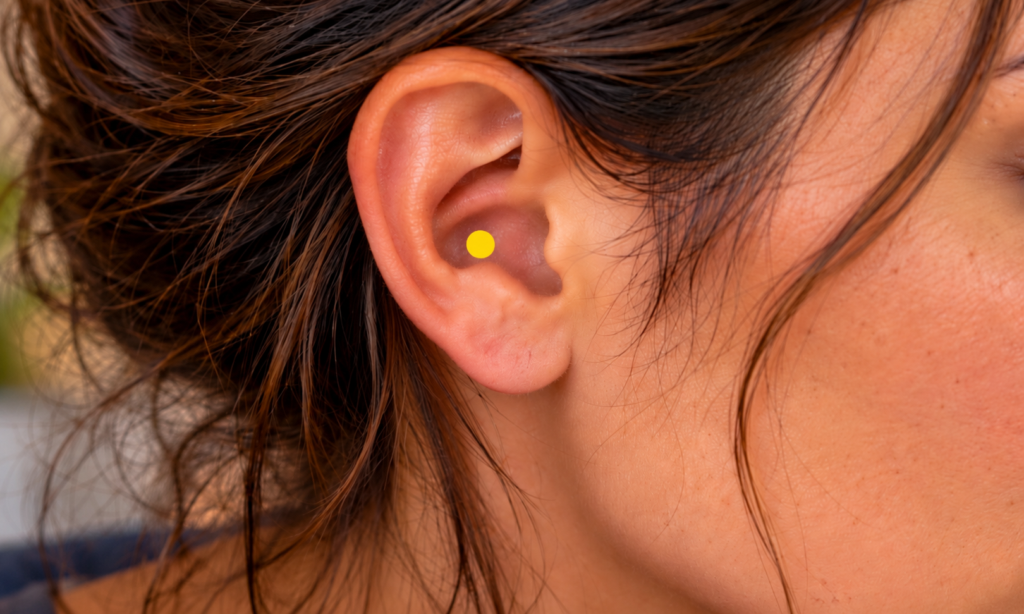
1. Press on the concha of the ear to stimulate the vagus nerve directly. The concha is the deep, bowl-shaped hollow of the outer ear, just outside the opening of the ear canal. Place your index fingertip in the hollow and massage gently in slow circles, or press and hold, for one to two minutes on each ear. In auricular acupuncture, this area holds the Heart and Lung points.
The concha is the only place on the body where a branch of the vagus nerve lies close to the skin. That’s why modern vagus nerve stimulation devices target the ear, and why gentle ear massage can quickly help you feel calm. Pressing here is one of the most direct ways to send a calming signal to your brainstem.
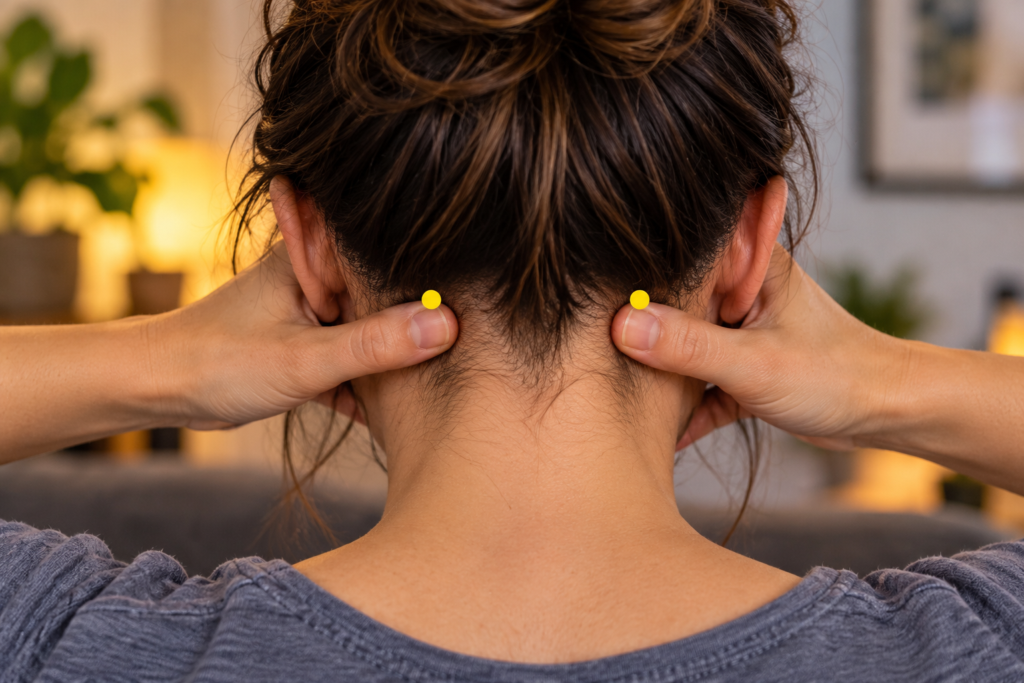
2. Press on GB20 at the base of the skull to release the neck. GB20 sits at the base of the skull, in the hollows on either side of the two large neck muscles, roughly level with the earlobes. Press upward into both points at once with your thumbs for one to two minutes while letting the head rest back into your hands. GB20 is called “Fengchi,” the “Wind Pool.”
The vagus nerve exits the skull just in front of this spot and runs down the neck. Stress often builds at the base of the skull, but pressing GB20 can relax tight muscles, ease headaches, and help your head and neck release tension so your whole body can relax.
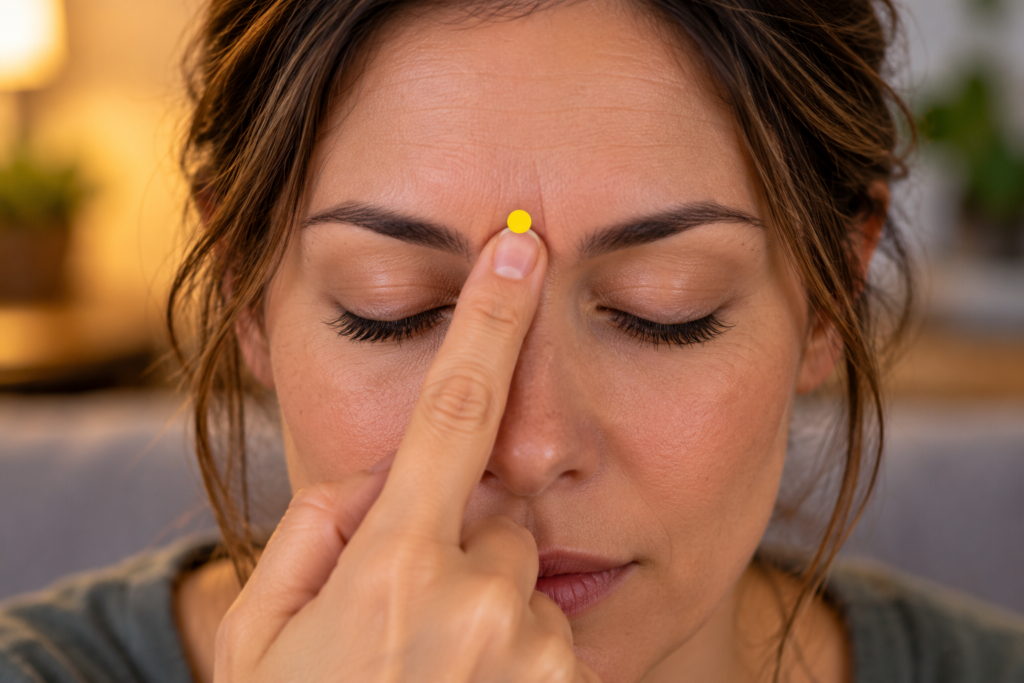
3. Press on Yintang between the eyebrows to quiet the mind. Yintang sits in the small hollow directly between the eyebrows. Press gently with your middle fingertip, or make slow circles for one to two minutes while closing your eyes. Yintang is called the “Hall of Impression.”
Yintang is one of the body’s most calming points. It can quiet racing thoughts, relax the forehead and eye muscles, and help your mind shift out of high alert. Pair it with slow breathing at the start of a vagus nerve routine.
4. Press on CV17 in the center of the chest to deepen the breath. CV17 sits in the center of the breastbone, level with the nipples. Rest two or three fingertips on the point and press gently, or make slow circles, for one to two minutes while breathing slowly into the belly. CV17 is called “Danzhong,” the “Chest Center.”
Slow, deep breathing is one of the best ways to increase vagal activity. In Traditional Chinese Medicine, CV17 is the influential point for Qi. It opens the chest, relieves the tight, shallow breathing caused by stress, and helps guide the breath down toward the belly.

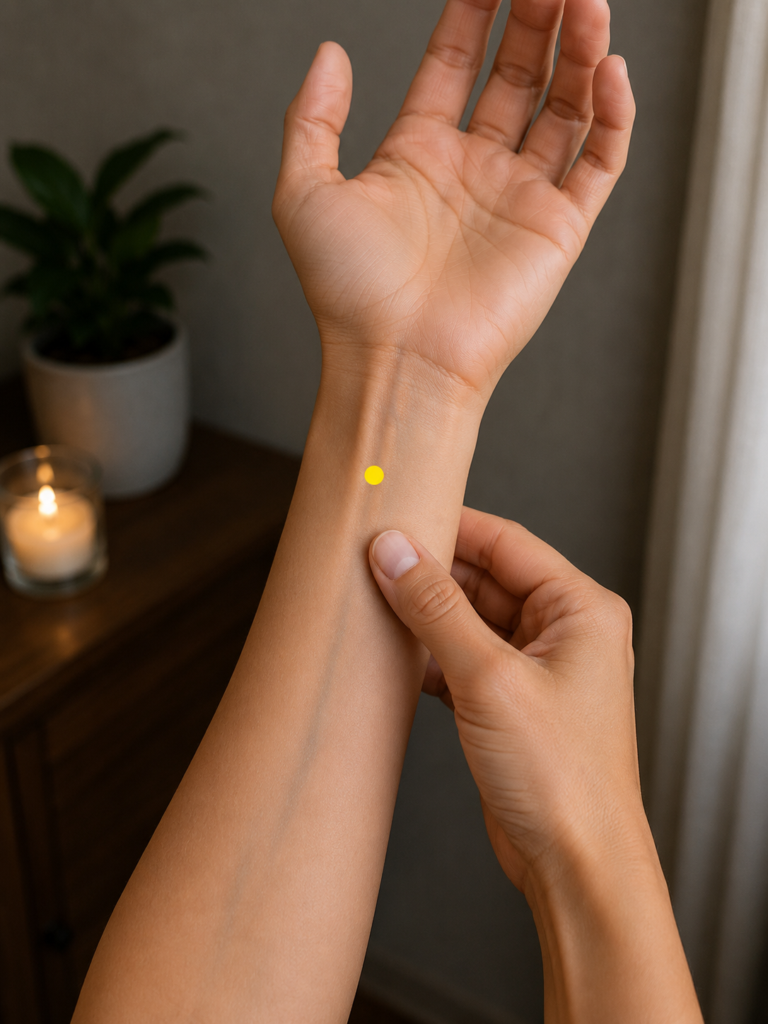
5. Press on PC6 on the inner forearm to calm the heart and stomach. PC6 sits on the inner forearm, three finger-widths above the wrist crease, between the two tendons. Press firmly with the thumb of your other hand for one to two minutes on each arm. PC6 is called “Neiguan,” the “Inner Pass.”
PC6 affects the heart and stomach, both of which are supplied by the vagus nerve. It’s the most studied point for nausea and may ease a racing heart, a tight chest, and the knotted stomach that comes with stress. In Traditional Chinese Medicine, PC6 opens the chest and calms the Shen.
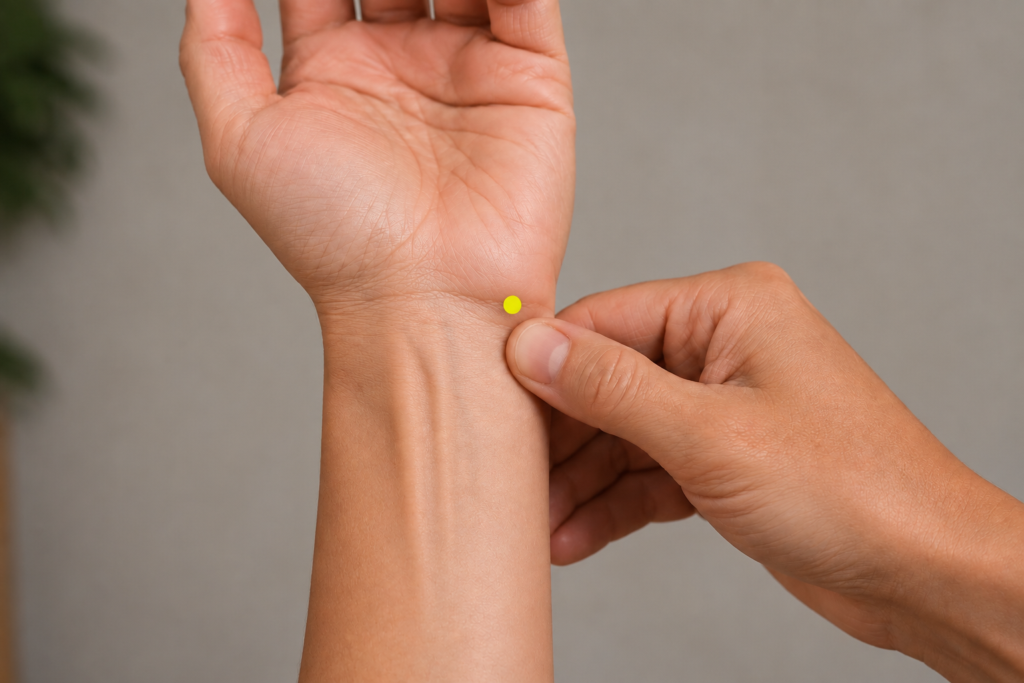
6. Press on HT7 on the wrist to settle the spirit. HT7 sits on the inner wrist crease, on the pinky side, in the small hollow just inside the tendon. Press gently with the thumb of your other hand for one to two minutes on each wrist. HT7 is called “Shenmen,” the “Spirit Gate.”
HT7 is the source point of the Heart and one of the best points for calming the Shen. It can slow a racing heart, ease anxiety and palpitations, and improve sleep. Pressing HT7 and PC6 on the same arm calms the heart from two directions at once.
7. Press on CV12 on the upper abdomen to settle digestion. CV12 sits on the midline of the upper abdomen, halfway between the bottom of the breastbone and the navel. Rest your fingertips or a warm palm on the point and press gently, or make slow clockwise circles, for one to two minutes. CV12 is called “Zhongwan,” the “Middle Cavity.”
The vagus nerve is the primary link between the gut and brain. In Traditional Chinese Medicine, CV12 is the Stomach’s front collecting point and a key point for digestion. It can calm a tight or upset stomach, support appetite and digestion, and help your body shift into rest-and-digest mode.

8. Press on ST36 below the knee to strengthen and restore. ST36 sits four finger-widths below the lower edge of the kneecap and one finger-width to the outside of the shinbone. Press firmly with your thumb for one to two minutes on each leg. ST36 is called “Zusanli,” the “Leg Three Miles.”
ST36 is a key point in Traditional Chinese Medicine, traditionally used to boost energy and improve digestion. Modern research has also explored its effects. A study in Nature found that gentle stimulation at ST36 activated a vagal pathway that reduced inflammation in mice, while stimulation at an abdominal point did not. This suggests that specific points may connect to distinct nerve pathways.

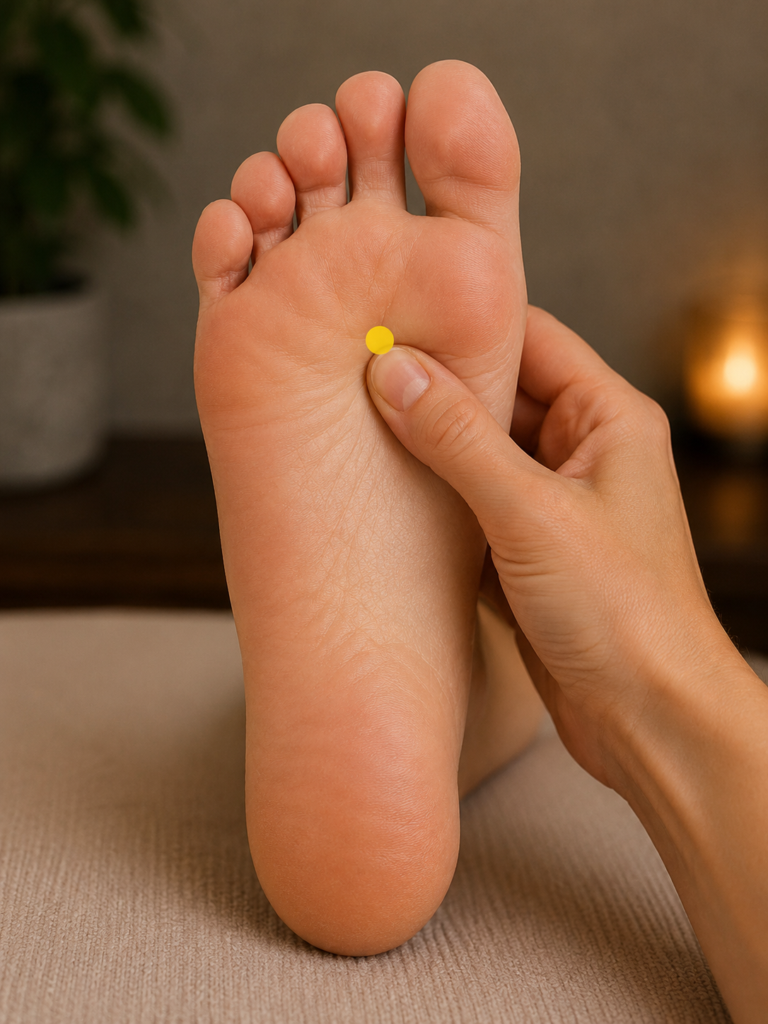
9. Press on KI1 on the sole of the foot to ground the body. KI1 sits on the sole of the foot, in the hollow that forms near the front of the foot when you curl the toes, about one-third of the way from the base of the second toe to the back of the heel. Press firmly with your thumb for one to two minutes on each foot, or roll the sole over a tennis ball. KI1 is called “Yongquan,” the “Bubbling Spring.”
KI1 is the body’s lowest point and has a deeply grounding effect. It helps draw restless energy down from the head and chest and supports the Kidney, which, in Traditional Chinese Medicine, balances the Heart. Reconnecting the Heart and Kidney is essential for calming an overactive nervous system, especially before bed.
Why These Acupressure Points Work
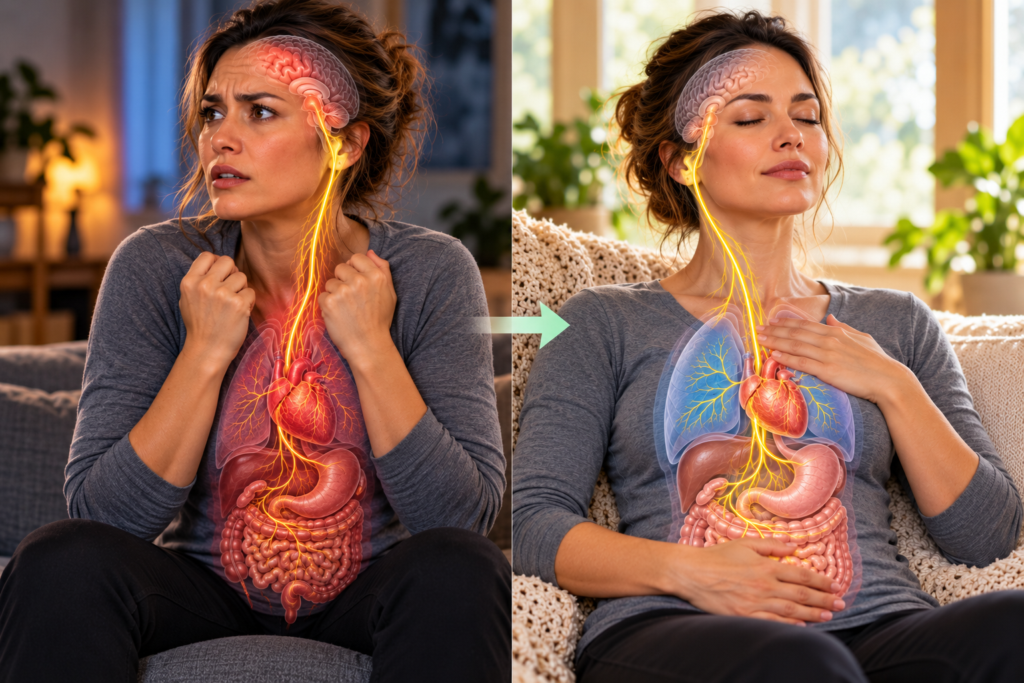
In Traditional Chinese Medicine, a calm, resilient nervous system depends on a settled Shen, a strong connection between the Heart and Kidney, a relaxed digestive center, and deep, unrestricted breathing. From a Western perspective, the vagus nerve links these areas by carrying signals between the brain, heart, lungs, and gut. Each point in this routine works on an area reached by the vagus nerve or a system it regulates.
The nine points work together to bring the body back to rest:
- The ear and neck points (the concha, GB20) send calming signals along the path of the vagus nerve itself.
- The head and chest points (Yintang, CV17) quiet the mind and deepen the breath.
- The heart points (PC6, HT7) slow a racing heart and settle the spirit.
- The digestive and grounding points (CV12, ST36, KI1) settle the gut, restore energy, and reconnect the Heart and Kidney.
How to Properly Use These Acupressure Points
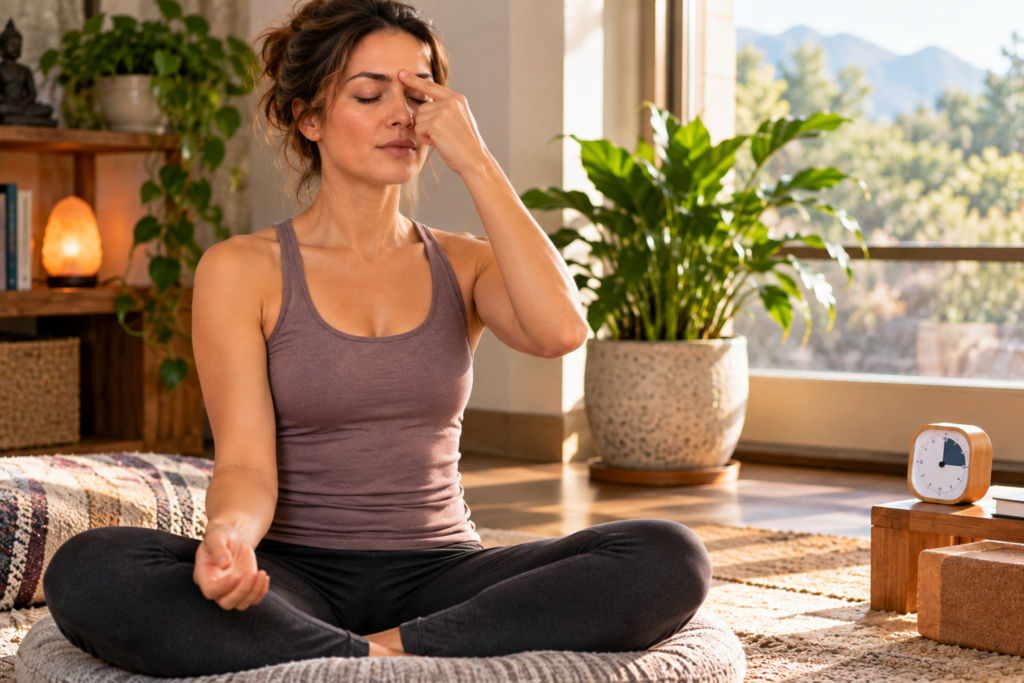
Acupressure targeting the vagus nerve is most effective when combined with slow breathing and practiced daily.
- Complete the full routine once daily, preferably in the evening, holding each point for one to two minutes.
- For each point, inhale through the nose for a count of four, then exhale for a count of six or longer, as a prolonged exhalation is one of the strongest signals to the vagus nerve.
- For a brief reset during a stressful moment, massage the concha of each ear for one minute, then apply pressure to PC6 while taking five slow breaths.
- Practice consistently for several weeks, as a nervous system that has remained in a heightened state of alert requires time to retrain.
Simple daily habits can support the vagus nerve just as much as acupressure points. Humming, singing, and gargling stimulate it through the throat muscles, while splashing cool water on your face can trigger a calming reflex. A short walk after meals can aid digestion, and regular sleep, time outdoors, and connection with others can help your nervous system feel safe. Try to limit caffeine and alcohol, as both can keep your body in a stressed state.
For more details on how the vagus nerve works, learn about the vagus nerve connection and how acupuncture can reset the nervous system.
When to Get Professional Help

See your doctor if you have frequent heart palpitations, an unusually fast or slow heart rate, dizziness when standing, ongoing digestive problems, or anxiety that interferes with sleep, work, or daily life, since these symptoms can have many causes that deserve evaluation. See your doctor promptly if you faint, nearly faint, or notice a pounding heartbeat with shortness of breath. Talk with your doctor before using any electrical vagus nerve stimulation device if you have a heart condition or a pacemaker. Seek emergency care for chest pain or pressure, especially if it spreads to your arm, jaw, or back, sudden shortness of breath, or fainting with injury.
If you have thoughts of harming yourself, call or text 988 to reach the Suicide and Crisis Lifeline right away.
Acupressure is a gentle, supportive practice for calming the nervous system. It complements, and does not replace, diagnosis and medical care.
For related health concerns, acupressure to calm down, acupressure for stress, and acupressure for anxiety are companion posts.
Above and Beyond Acupuncture offers acupuncture, cupping, and lifestyle coaching at the North Frank Lloyd Wright Boulevard location in Scottsdale.
Schedule an appointment online to start your healing journey.
The points above are only as effective as the technique used to apply them. Where to press, how firmly, and for how long all affect the result. For a full breakdown of how to perform acupressure properly at home, read Performing Acupressure in 3 Easy Steps.

About the Publisher
Paul Kerzner, L.Ac., is a licensed acupuncturist and board-certified herbalist, as well as the founder of Above and Beyond Acupuncture in Scottsdale. His own journey from chronic patient to practicing acupuncturist shapes his commitment to providing honest, clinically grounded information about acupuncture and Traditional Chinese Medicine. Learn more about Paul and his clinical approach on the About Us page.