
Key Takeaways
- The article discusses the five forbidden points in acupuncture, including CV8, ST17, GV17, BL9, and HT1, detailing classical prohibitions and modern practices.
- CV8, located at the navel, is forbidden for needling due to anatomical risks, but moxibustion is allowed with specific techniques.
- ST17, at the center of the nipple, is avoided for both needling and moxibustion due to the sensitivity of glandular tissue.
- GV17 and BL9 have strict depth limitations for needling due to their proximity to vital structures, while HT1 is generally not needled due to major vessels and nerves.
- Modern acupuncture respects classical contraindications but also incorporates contemporary anatomical understanding to enhance safety.
The classical acupuncture literature lists a number of points as forbidden for needling, forbidden for moxibustion, or dangerous in specific contexts. The lists vary somewhat across the source texts, with the Ling Shu, the Zhen Jiu Da Cheng, and other classical works each contributing to what modern practitioners recognize as the traditional contraindications.
What does forbidden actually mean in this context, and how does modern acupuncture practice handle these points? Some of the classical prohibitions reflect real anatomical risks that remain relevant today. Others reflect the surgical and imaging limitations of the time when the classics were written. A few sit somewhere in between, still avoided in most modern practice but for reasons that have evolved with the medicine.
Here are five of the most commonly cited forbidden points, what the classical texts say about them, and how modern acupuncture practice approaches them now.
1. CV8 (Shenque, Spirit Gate)

CV8 sits at the exact center of the navel. The classical texts are unanimous in forbidding this point for needling. The prohibition traces back to the umbilicus being considered too vulnerable and too energetically important as the location where the fetus received nourishment before birth. The point was seen as a gateway to the deepest reserves of the body, and puncturing it was considered dangerous in a way that could not be undone.
The classical texts allow moxibustion on this point, but not directly. The technique involves filling the navel with salt or a slice of ginger and burning moxa on top of that. This delivers heat to the point without penetrating the skin, which was the specific concern.
Modern practice preserves this classical position. CV8 is still not needled. The moxa on salt technique is used for specific clinical indications, including collapse patterns, severe fatigue, and certain digestive conditions. The point retains its classical prohibition because the concern about puncturing the umbilicus remains reasonable.
2. ST17 (Ruzhong, Middle of the Breast)
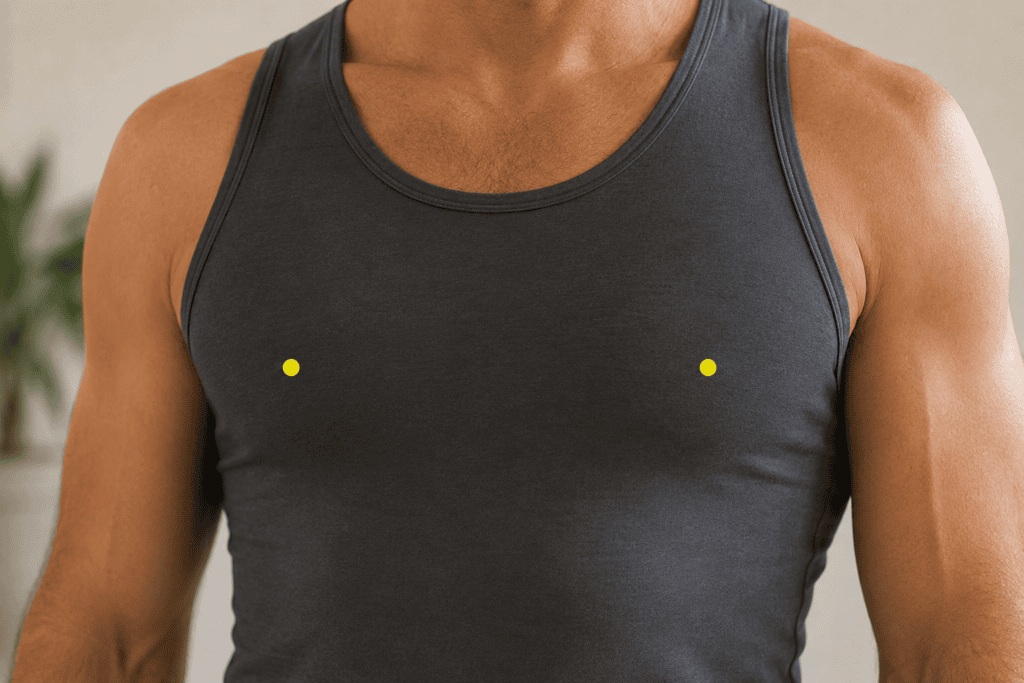
ST17 sits at the center of the nipple. The classical texts forbid this point for both needling and moxibustion. The reasons are anatomical and cultural. The nipple is glandular tissue that responds poorly to puncture, particularly for lactating patients or patients with breast pathology. The point was recognized as sensitive tissue that offered no clinical benefit worth the risk.
The point is not entirely useless in classical practice. ST17 serves as a location landmark for measuring the position of other points on the chest, particularly the points along the Stomach and Kidney channels. The classical texts use it as a reference point without treating it directly.
Modern practice preserves the classical prohibition. ST17 is not needled. It continues to function as a landmark for locating other clinically useful chest points.
3. GV17 (Naohu, Brain Window)
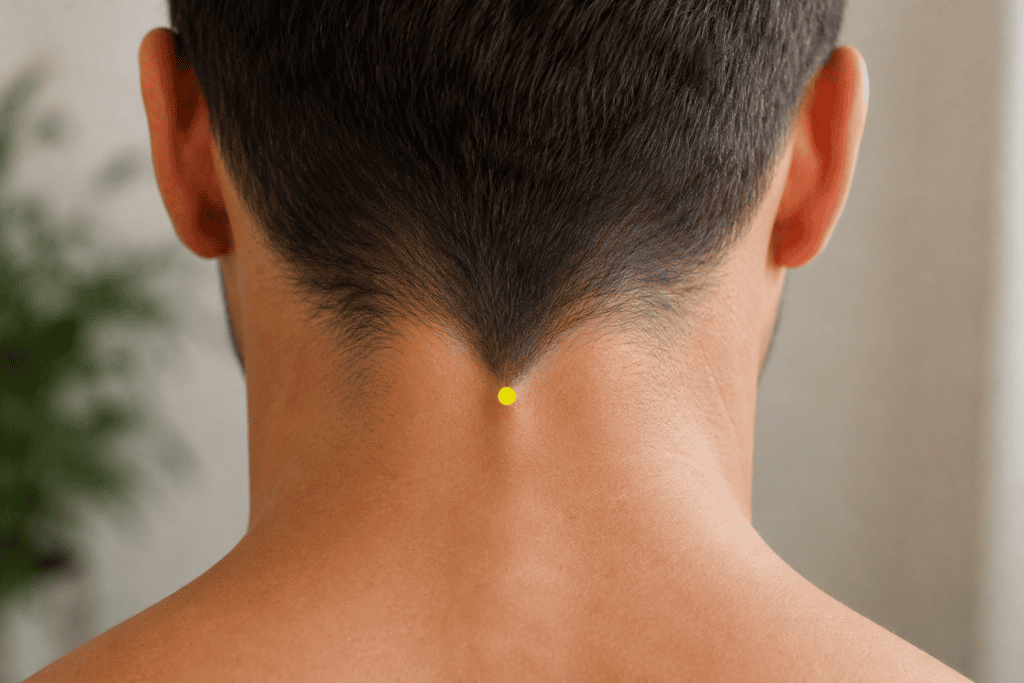
GV17 sits at the base of the skull on the midline, in the depression at the upper edge of the external occipital protuberance. The classical texts forbid deep needling at this point due to the proximity to the brainstem region.
The classical understanding was that deep needling here could reach vital structures. Modern anatomy confirms this concern. The point sits close enough to the foramen magnum and the underlying neural tissue that deep needling would carry real risk.
Modern practice handles this by permitting only very shallow needling at GV17, or avoiding the point entirely in favor of nearby points that offer similar therapeutic effects with less risk. The classical prohibition on deep needling remains fully in force.
4. BL9 (Yuzhen, Jade Pillow)
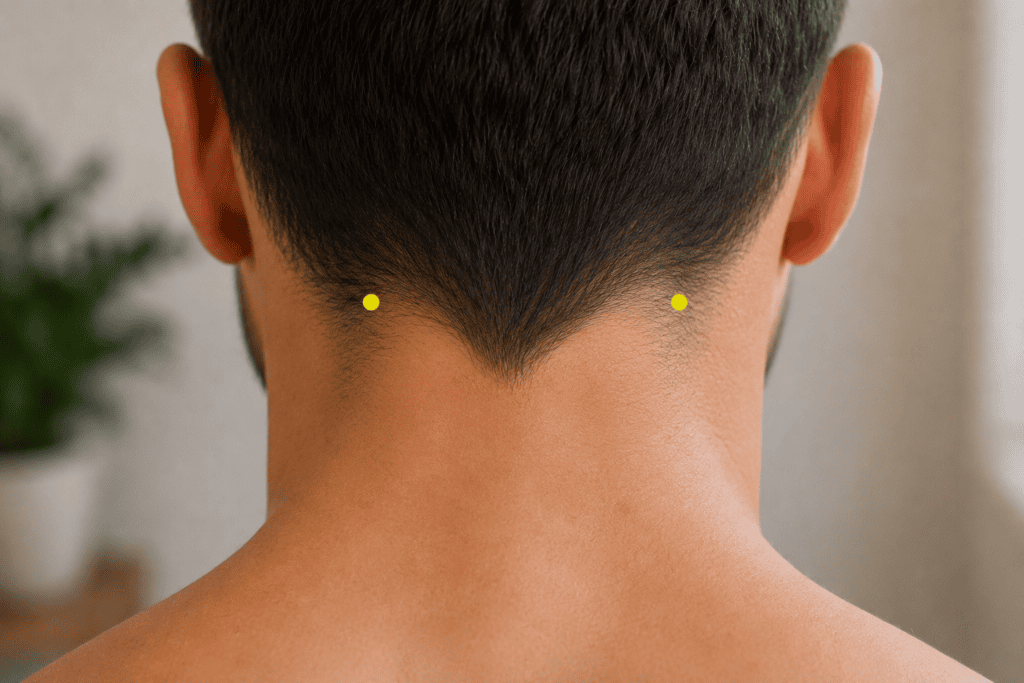
BL9 sits on the back of the head, about 1.3 cun (roughly two finger-widths) lateral to the midline at the level of the external occipital protuberance. The classical texts forbid deep needling here due to proximity to the occipital region and the underlying tissue.
The concern in the classical literature was similar to GV17. Deep needling in this area of the skull carried risks that the classical practitioners recognized even without modern imaging. Modern anatomy confirms that the occipital area contains structures that would be harmed by deep needling.
Modern practice permits shallow needling at BL9 for specific clinical indications, particularly headaches and certain eye conditions. The classical prohibition on deep needling continues to be respected. Practitioners trained in the classical tradition are especially careful with depth at this point.
5. HT1 (Jiquan, Highest Spring)
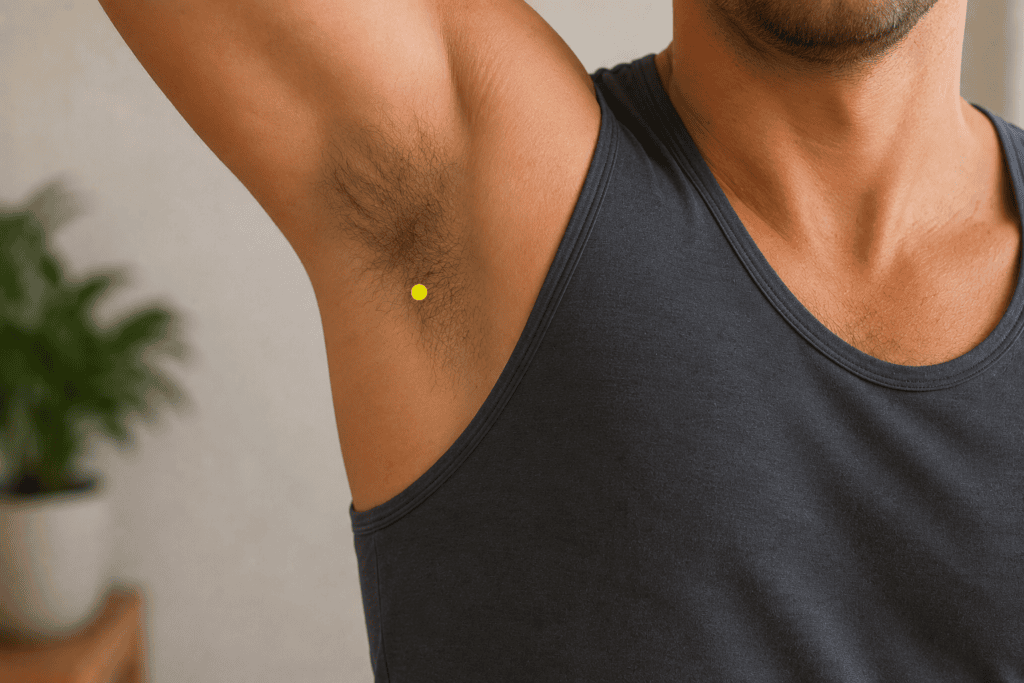
HT1 sits in the center of the armpit, at the pulsation of the axillary artery. The classical texts forbid needling at this point due to the anatomical structures in the axilla, including the axillary artery, the axillary vein, and the brachial plexus nerve bundle.
The classical practitioners recognized that the armpit contained major vessels and nerves that could not be safely punctured. The point was included in the channel system as an important location for the Heart channel but was not used for direct needling.
Modern practice largely preserves this position. HT1 is not typically needled in clinical practice. When it is used, the technique involves very shallow oblique insertion away from the vessels and nerve bundle. Most practitioners select other Heart channel points that offer clinical benefits without the anatomical risk.
How Modern Practice Handles the Classical Contraindications
The classical forbidden points represent one of the earliest documented safety frameworks in medicine. The practitioners who wrote the Ling Shu and the Zhen Jiu Da Cheng were working without modern anatomy or imaging, yet they identified points that modern anatomy confirms as high-risk regions. This is a significant clinical achievement.
Modern acupuncture practice handles the classical contraindications along a spectrum. Some points, including CV8 and ST17, are still absolutely not needled. Others, including GV17 and BL9, are needled only with strict depth limitations. A few points that were forbidden in the classical texts are used routinely in modern practice when the practitioner has appropriate training and the anatomical understanding to work safely.
The NCCIH summary on acupuncture safety describes the modern safety framework, which draws on the classical contraindications while adding contemporary anatomical and clinical considerations. Serious adverse events from acupuncture are rare in modern practice, and the classical tradition of respecting forbidden points is part of why.
A Note on Pregnancy Contraindications
The forbidden points discussed above are absolute contraindications independent of patient status. A separate category exists for points that are contraindicated during pregnancy due to their strong effects on Qi and Blood, particularly downward-moving effects that could induce miscarriage.
The most commonly cited pregnancy contraindications include LI4 (the point in the webbing between the thumb and index finger), SP6 (above the inner ankle), GB21 (on the top of the shoulder), BL60 (behind the outer ankle), and BL67 (on the outside of the little toe). These points are used clinically outside of pregnancy without concern. During pregnancy they are avoided except at term when labor induction is clinically appropriate.
Pregnancy contraindications are contextual rather than absolute. The same points that are strictly avoided during the first two trimesters become clinically useful at term. Practitioners trained in acupuncture for pregnancy navigate these considerations routinely.
The Broader Point
The forbidden points remind us that acupuncture is a real medicine with real effects. The classical tradition took safety seriously enough to write specific prohibitions into the source texts, and modern practice honors that tradition while integrating contemporary anatomical understanding.
Working with a licensed acupuncturist who has appropriate training is what makes the medicine safe. A practitioner who knows the classical contraindications, the modern anatomy, and the clinical judgment to work with both is what patients should be looking for. The full picture of what the practice offers is in Acupuncture, Cupping & Lifestyle Coaching.
For patients curious about how acupuncture actually produces its effects, What Does Acupuncture Actually Do to Your Body? covers the nervous system, hormonal, and immune mechanisms that acupuncture engages.
Reach out to Above and Beyond Acupuncture on North Frank Lloyd Wright Boulevard in Scottsdale to schedule a consultation.
Schedule an appointment online or call us today to start your journey to relief.