
Key Takeaways
- Acupuncture affects the nervous, hormonal, immune, musculoskeletal, circulatory, and brain systems, producing several measurable effects.
- It promotes relaxation, reduces stress response, and enhances pain relief by stimulating endorphins and balancing cortisol levels.
- Acupuncture decreases inflammation, supports immune function, and improves blood circulation through targeted needle insertion.
- Traditional Chinese Medicine describes similar effects using the concept of Qi and the regulation of bodily functions.
- Acupuncture is not a quick fix; it requires multiple sessions and works alongside conventional medical treatments.
“What is acupuncture actually doing to me?”
This question comes up at Above and Beyond Acupuncture in Scottsdale in almost every new patient consultation. The patient has heard that acupuncture works, they may have friends who swear by it, and they want to understand what is going to happen when the needles go in.
The honest answer is that acupuncture does several things at once. It affects the nervous system, the hormonal system, the immune system, the muscles and fascia, and the brain. The effects have been measured through Western research using blood tests, brain imaging, and clinical trials. The same effects have been described for thousands of years in Traditional Chinese Medicine using different language and a different framework.
Both descriptions point to the same underlying phenomenon. Here is what acupuncture actually does in the body, what the research shows, and how the two frameworks fit together.
The Nervous System Effects

The most immediate effect of acupuncture is on the autonomic nervous system, which is the part of the nervous system that regulates the automatic functions of the body. Heart rate, breathing, digestion, blood pressure, and the stress response are all governed by this system.
Acupuncture shifts the balance from sympathetic dominance (the fight-or-flight response) toward parasympathetic activity (the rest-and-digest response). This shift is measurable within minutes of needle insertion. Heart rate variability improves. Blood pressure often drops slightly. The stress response quiets. This is why patients often experience a deep sense of relaxation during treatment, sometimes to the point of falling asleep on the table.
The vagus nerve, which is the primary parasympathetic nerve connecting the brain to the organs, is directly affected by acupuncture at specific points. Vagal stimulation reduces inflammation, supports digestion, and calms the cardiovascular response to stress. The chronic stress patterns that drive most modern chronic conditions are covered in What Is Cortisol and Why Do I Have So Much of It?.
The brain’s stress signaling changes as well. Functional MRI studies have shown that acupuncture reduces activity in the amygdala (the brain’s threat detection center) and other regions associated with pain and anxiety, while increasing activity in regions associated with regulation and calm.
The Hormonal Effects

Acupuncture stimulates the release of several natural chemicals that produce measurable effects on how patients feel.
Endorphins are the body’s natural pain-relieving chemicals. Acupuncture stimulates endorphin release both locally at the treatment site and systemically throughout the body. This is one of the main mechanisms behind the pain relief that acupuncture produces.
Serotonin and dopamine are the neurotransmitters most closely associated with mood and wellbeing. Acupuncture influences the release of both, which is part of why patients often report improved mood, better sleep, and reduced anxiety in the days after treatment.
Cortisol is the primary stress hormone, and chronically elevated cortisol drives many modern chronic conditions. Acupuncture has been shown to reduce cortisol levels over the course of a treatment plan, which is measurable through saliva or blood tests.
The hypothalamic-pituitary-adrenal axis, which is the master regulator of the stress response, is affected by acupuncture in ways that persist beyond the individual session. Patients on a course of treatment often experience improved stress resilience even in situations that would have previously produced strong reactions.
The Immune and Inflammatory Effects
Chronic inflammation is one of the underlying drivers of most modern chronic conditions, including pain, cardiovascular disease, autoimmune conditions, and metabolic dysfunction. Acupuncture has been shown to reduce inflammatory markers in the blood, including C-reactive protein and several inflammatory cytokines.
The immune system is also modulated. Patients often notice they get sick less often during a course of treatment. This is consistent with research showing that acupuncture supports immune function without producing the kind of overactivation that would drive autoimmune symptoms.
The NCCIH summary on acupuncture describes the research on these mechanisms in detail, including the anti-inflammatory and immune-modulating effects that have been documented across multiple clinical contexts.
The Musculoskeletal Effects
At the local level, needle insertion produces measurable effects on the muscles and fascia around the point. Tight muscles release. Trigger points deactivate. Fascia rehydrates and moves more freely. Blood flow to the area improves.
The mechanism is partly mechanical, the needle producing a small controlled disruption that the body responds to by releasing tension and increasing circulation. The mechanism is also neurological, the point stimulation sending signals through the nervous system that produce responses at some distance from the needle site.
This is why acupuncture can produce effects that seem distant from the needle placement. A needle in the leg can affect a shoulder. A needle in the wrist can affect the digestive system. The channels described in Traditional Chinese Medicine correspond closely to the nervous system, fascial, and vascular pathways that Western anatomy has documented.
The Circulatory Effects
Local blood flow increases at the treatment site. Microcirculation, the flow of blood through the smallest vessels, improves. Nitric oxide is released, which relaxes blood vessels and supports overall circulatory function.
These effects contribute to the pain relief, tissue healing, and general sense of wellbeing that patients experience. Better circulation means better delivery of oxygen and nutrients to tissues, better removal of metabolic waste, and better overall function of the affected areas.
The Brain Effects
Perhaps the most fascinating research on acupuncture has come from brain imaging studies. Functional MRI has shown that acupuncture produces specific changes in brain activity that correspond to the effects patients report.
Pain processing regions show reduced activity, which corresponds to the pain relief patients experience. Regions associated with anxiety and threat detection show reduced activity. Regions associated with self-regulation and calm show increased activity. The default mode network, which is associated with self-referential thinking and rumination, shows changes that correspond to the reduction in anxious thoughts patients often report.
These brain effects persist beyond the individual session, which is part of why the benefits of acupuncture accumulate over the course of a treatment plan rather than being purely session-by-session.
The Traditional Chinese Medicine Framework
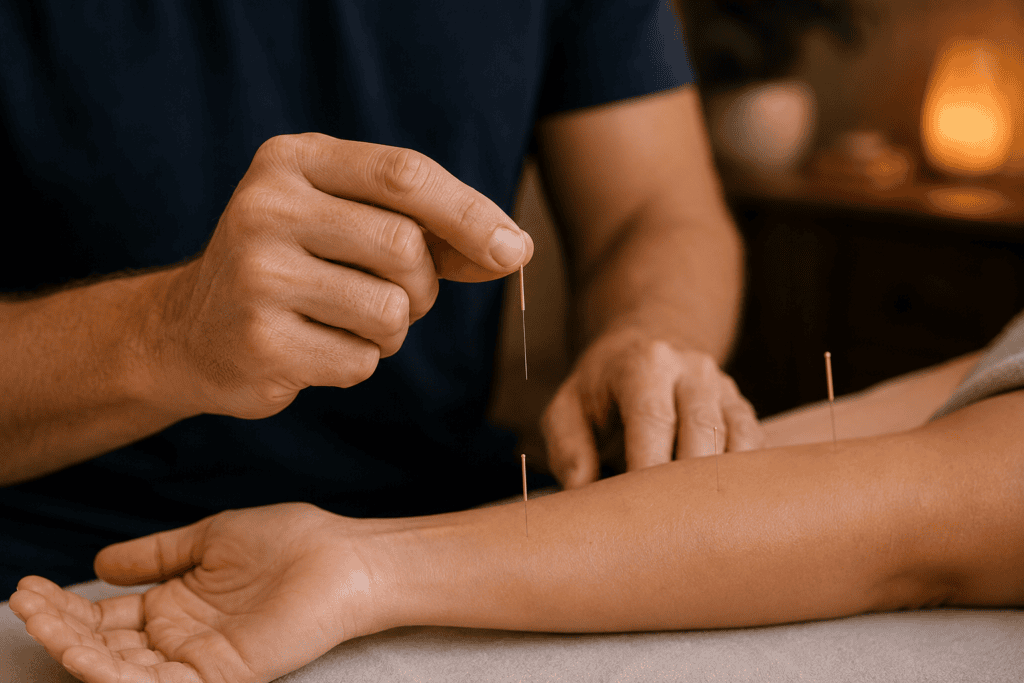
The Western research base describes what happens in the body during and after acupuncture. Traditional Chinese Medicine describes the same phenomenon using different language.
Qi is the body’s regulatory function, the coordinated activity of the nervous system, the endocrine system, the immune system, and the circulation. When Qi flows smoothly, the body works well. When Qi becomes stuck or depleted, symptoms show up.
The channels are pathways along which the body communicates and regulates itself. They correspond closely to nervous system pathways, fascial planes, and vascular networks that Western anatomy has documented independently.
The points are access points to the regulatory system. Each point has specific functions, some local and some distant, that reflect the physiological effects described in the Western research.
The patterns are the ways the body organizes its response to imbalance. Liver Qi stagnation shows up as chronic stress, muscular tension, and irritability, which maps closely to sympathetic dominance and chronic cortisol elevation. Kidney deficiency shows up as fatigue, low back pain, and reduced resilience, which maps closely to HPA axis dysfunction and adrenal fatigue patterns.
Both frameworks are describing the same body. The language is different, but the underlying phenomenon is the same.
What Acupuncture Does Not Do
A few honest limits are worth naming.
- Acupuncture does not produce dramatic single-session cures for most conditions. The research effects show up over the course of multiple sessions.
- Acupuncture does not work by placebo effect alone. The measurable changes in nervous system activity, hormone levels, inflammatory markers, and brain function distinguish acupuncture from placebo interventions in controlled trials.
- Acupuncture does not replace medical care for serious conditions. It sits alongside conventional treatment as a supporting intervention for many patients.
- Acupuncture does not work equally well for every condition. Some conditions respond quickly and reliably. Others respond more modestly. A few do not respond well, in which case the practitioner should say so honestly.
Where to Start
If you have been wondering what acupuncture would do for you specifically, a clinical conversation about your particular situation is the next step. The full picture of what the practice offers is in Acupuncture, Cupping & Lifestyle Coaching.
The broader stress and nervous system patterns that show up as many chronic conditions are covered in Anxiety, Stress, and Depression.
For patients who are wondering what to expect once treatment begins, What Are the Signs That Acupuncture Is Working? covers the immediate and longer-term signs that indicate the treatment is producing its intended effects.
Reach out to Above and Beyond Acupuncture on North Frank Lloyd Wright Boulevard in Scottsdale to schedule a consultation.
Schedule an appointment online or call us today to start your journey to relief.