
Key Takeaways
- Toothaches can be debilitating, and acupressure offers temporary pain management while waiting for dental care.
- Nine acupressure points can effectively relieve toothache by addressing local pain and related tension.
- LI4 and ST44 are powerful points for toothache relief; combining these with local points enhances effectiveness.
- Seek immediate dental care for severe symptoms like swelling, fever, or intense pain that persists despite relief efforts.
- Acupressure is a supportive tool and cannot replace the need for professional dental treatment.

If you’ve ever had a toothache, you know how quickly it can dominate your reality.
The constant throbbing. The sharp pain when you bite down. The sensitivity to hot and cold that makes eating and drinking miserable. The aching discomfort that radiates into your jaw, ear, or head. Toothaches are among the most disruptive types of pain, and they often strike when getting to a dentist is not immediately possible or convenient.
Acupressure has been used for thousands of years in Traditional Chinese Medicine to manage dental pain. The technique will not replace a dental visit. It will not fix a cavity, drain an abscess, or address the underlying dental issue causing your pain. What acupressure can do is help you manage the pain while you make arrangements for dental care, work through the pain until your appointment, or navigate the discomfort during recovery from a dental procedure.
An important note before starting. Severe tooth pain, swelling in the face or jaw, fever with tooth pain, difficulty swallowing, or trouble breathing all warrant emergency dental or medical care. Dental abscesses can become serious if left untreated. Acupressure is a supportive tool while you get to appropriate care, not a substitute for it.
Here are nine acupressure points that help manage toothache, why they work, and how to use them.
What Acupressure Points to Press and Why
Each point addresses a different aspect of the toothache pattern. The classical empirical distal points (LI4 and ST44) produce the strongest effects and can be used alone in a pinch. The local face and jaw points target specific regions of the mouth. The head and constitutional points support the broader pain patterns.
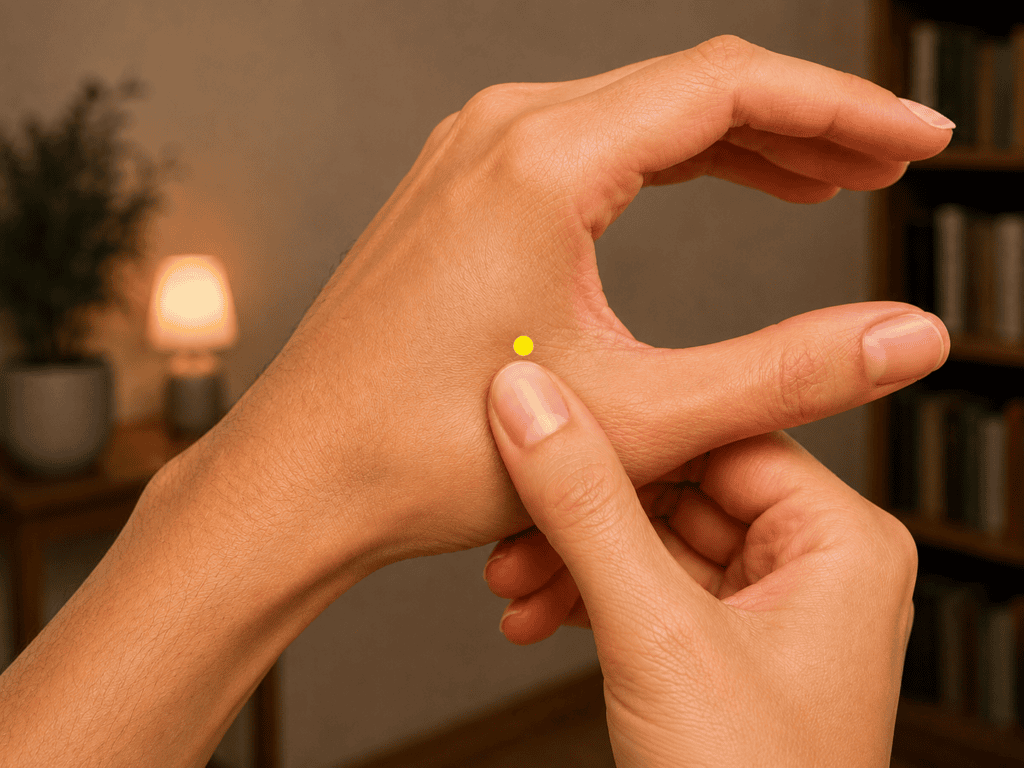
1. Press on LI4 in the webbing between your thumb and index finger for the primary toothache point. LI4 sits in the soft tissue webbing between the thumb and index finger, in the muscle that bulges when the thumb is pressed against the side of the index finger. Press firmly with the thumb of the opposite hand for one to two minutes. Press on the hand opposite to the affected tooth for the strongest effect. LI4 is called “Hegu” and is the classical command point for the face and head. This is one of the most effective acupressure points for toothache in Traditional Chinese Medicine. The Large Intestine meridian runs through the mouth and teeth, which makes LI4 directly relevant. LI4 is contraindicated during pregnancy.
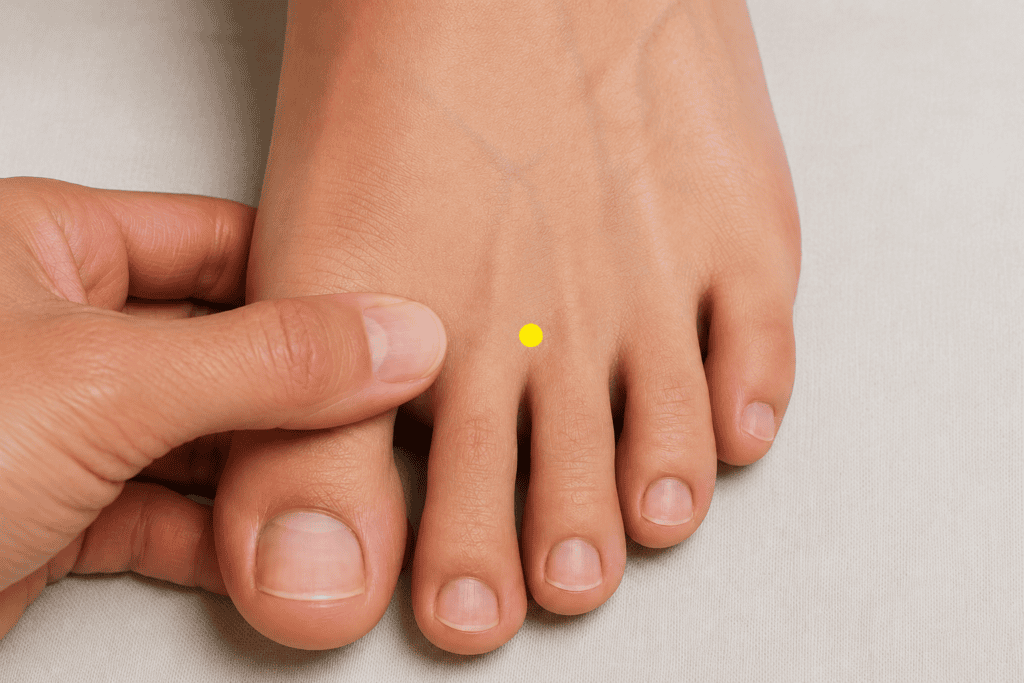
2. Press on ST44 on the top of your foot for the empirical toothache point. ST44 sits on the top of the foot in the webbing between the second and third toes, in the depression just proximal to the web margin. Press firmly with your thumb for one to two minutes on each foot. ST44 is called “Neiting” or “Inner Court” and is one of the classical empirical distal points for toothache. The Stomach meridian runs through the upper teeth and gums, and ST44 clears the Heat pattern that produces throbbing toothache, sensitivity to hot food, and red inflamed gums. Combined with LI4, ST44 produces one of the strongest pain relief effects for upper tooth pain in the acupressure tradition.
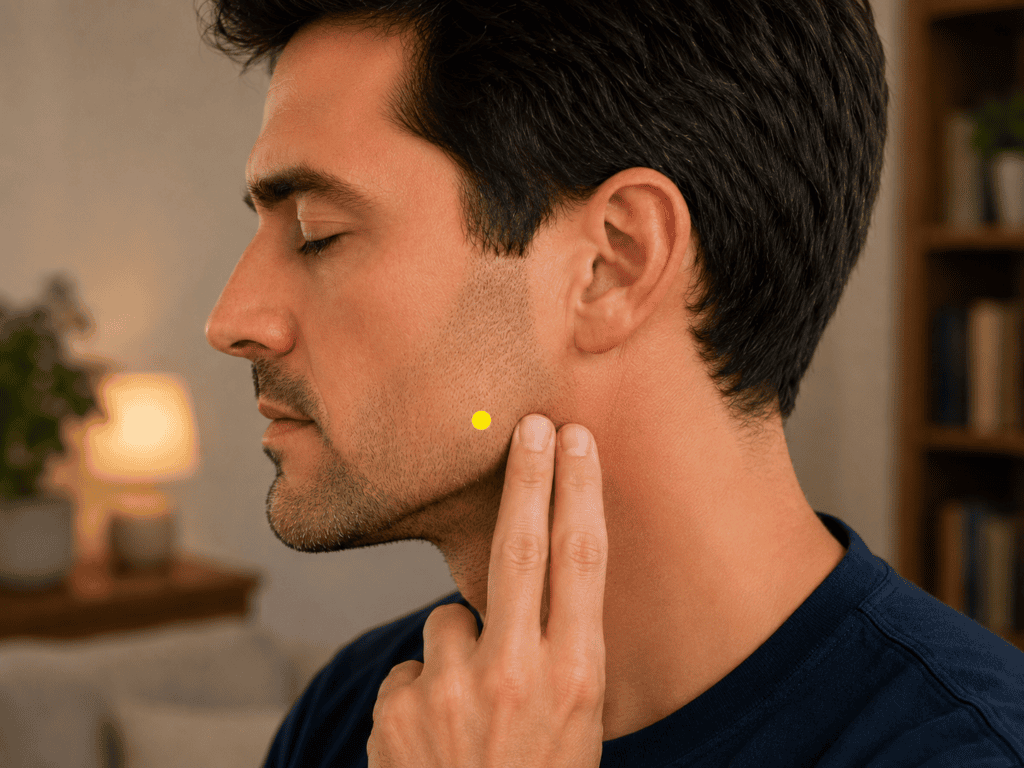
3. Press on ST6 at the jaw angle for the direct jaw and tooth point. ST6 sits on the cheek at the front of the masseter muscle (the chewing muscle you can feel when you clench your jaw), about one finger-width in front of the angle of the jaw. Press firmly with your fingertip for one to two minutes on the affected side. ST6 is called “Jiache” and is one of the most direct points for jaw and tooth pain. The point supports the masseter muscle release that toothache often produces from unconscious clenching, and directly addresses the pain in the lower teeth and jaw.
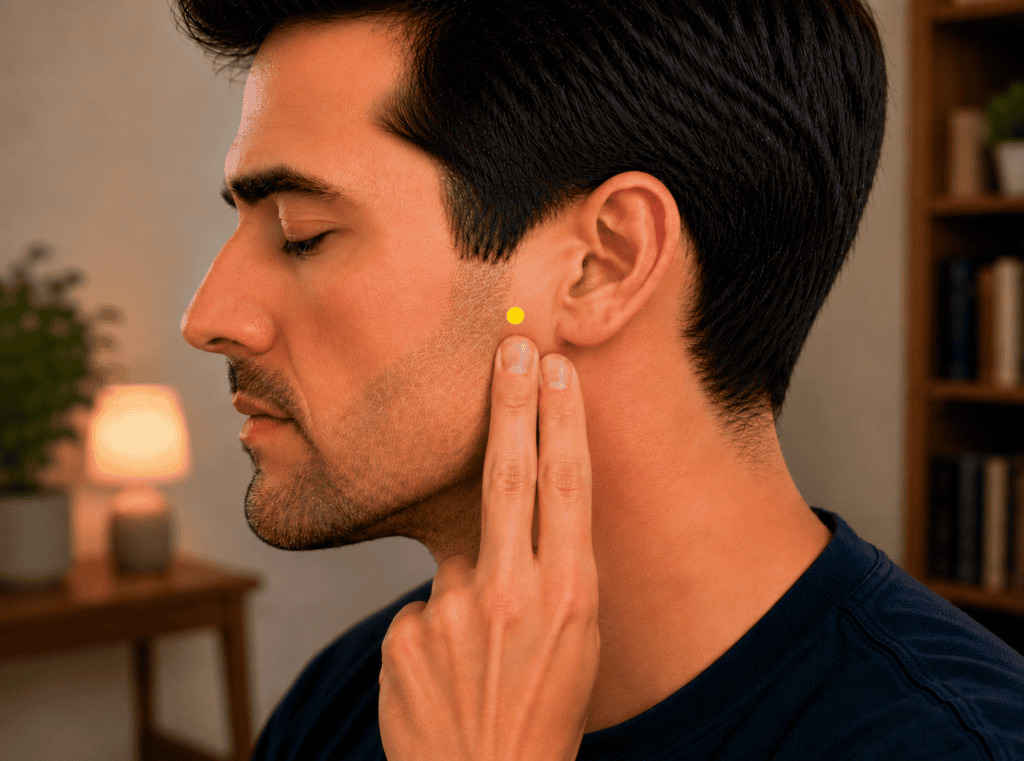
4. Press on ST7 in front of the ear for TMJ and upper tooth support. ST7 sits in the depression that appears when you open your mouth, just in front of the ear where you can feel the jaw joint. Press firmly with your fingertip for one to two minutes on the affected side. ST7 is called “Xiaguan” and addresses TMJ patterns and pain in the upper teeth. The point is particularly useful when the toothache is combined with jaw dysfunction or the pain radiates into the ear area.
5. Press on SI18 on the cheekbone for the local facial point. SI18 sits below the outer corner of the eye, in the depression at the lower edge of the cheekbone. Press gently with your fingertip for one to two minutes on the affected side. SI18 is called “Quanliao” and is a direct local point for facial and tooth pain. The point addresses the pain in the upper teeth and cheek region and works well combined with ST7.
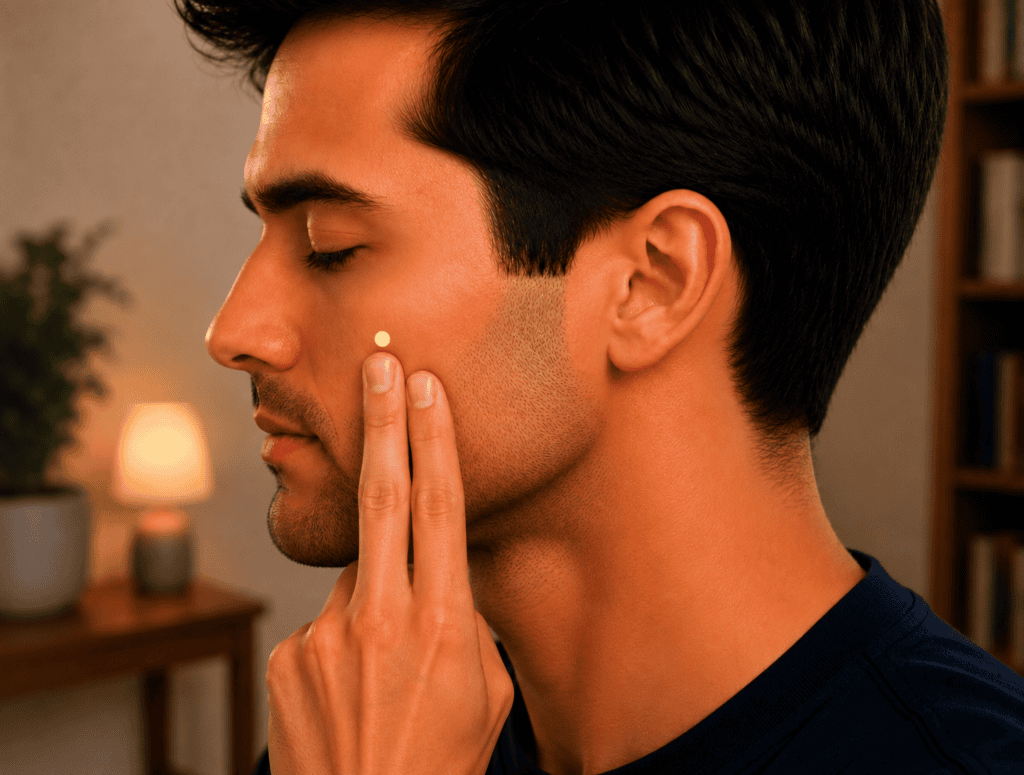
6. Press on LI20 beside your nostril for the upper face point. LI20 sits in the small groove beside the nostril, at the level of the midpoint of the nose. Press gently with your fingertip for one to two minutes on the affected side. LI20 is called “Yingxiang” and addresses the upper facial region including the maxillary sinus area. Because upper tooth pain often connects to sinus patterns and the Large Intestine meridian, LI20 supports the toothache treatment particularly for upper teeth.
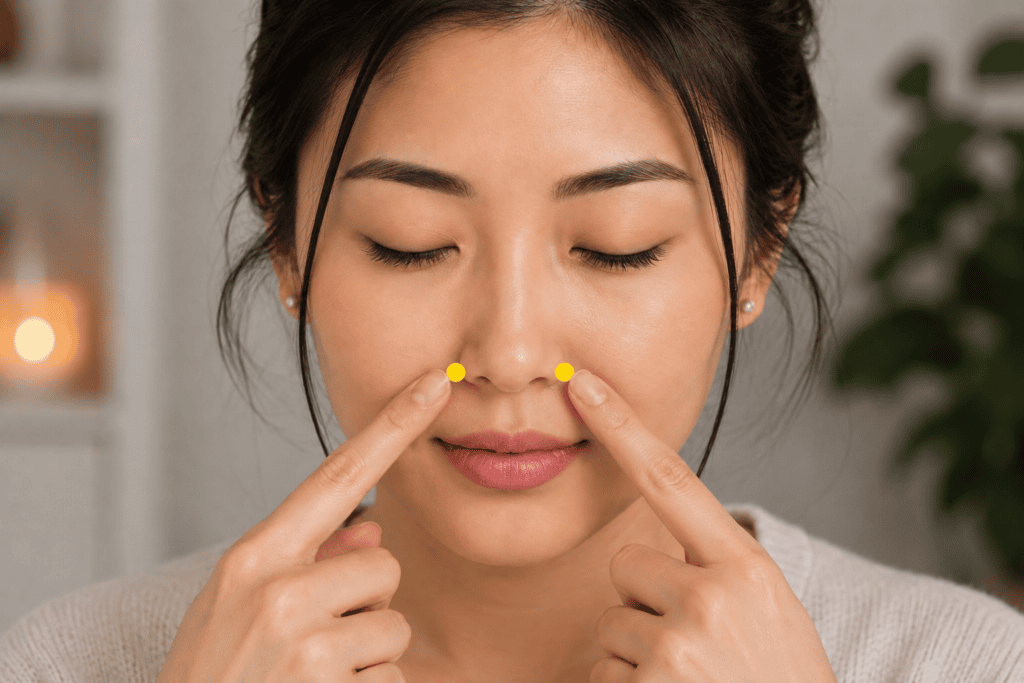
7. Press on CV24 in the center of your chin below your lower lip for the lower face point. CV24 sits in the depression in the center of the chin below the lower lip, in the midline. Press gently with your fingertip for one to two minutes. CV24 is called “Chengjiang” or “Container of Fluids” and is a direct local point for lower tooth pain, gum issues, and mouth conditions. The Ren meridian ends at CV24, and the point supports the mouth and lower face patterns that toothache produces. CV24 works particularly well for pain in the lower teeth combined with ST6 and ST44.
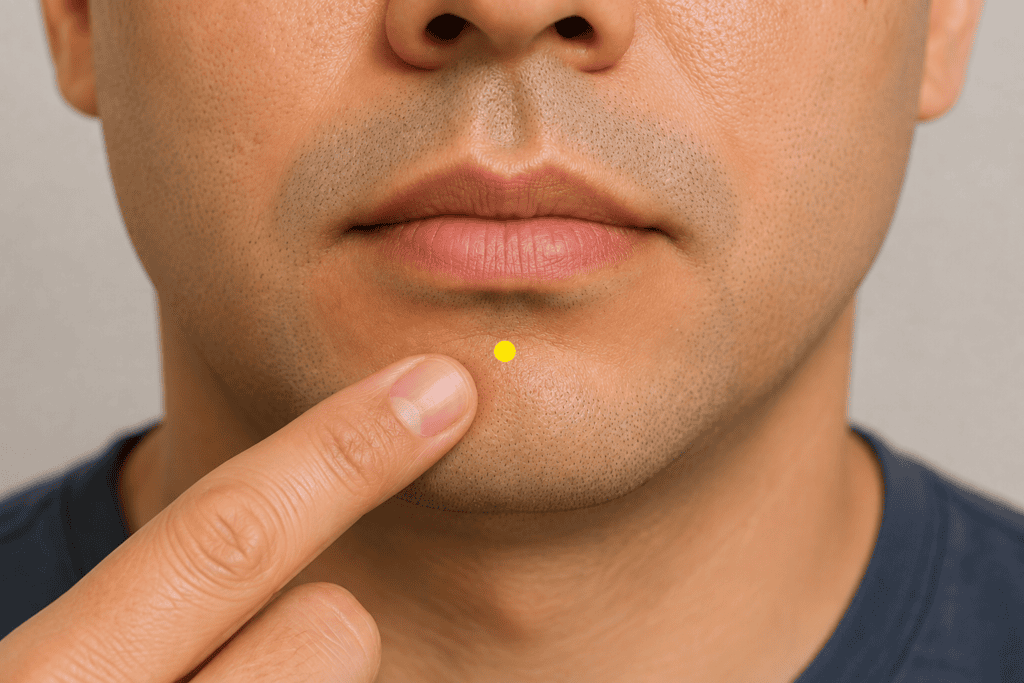
8. Press on GB20 at the base of your skull for headache and pain support. GB20 sits in the hollow at the base of the skull, about two finger-widths to either side of the spine, at the point where the neck muscles attach to the skull. Press firmly with your thumbs for one to two minutes on each side. GB20 addresses the general headache patterns that often accompany severe toothache and releases the neck tension that develops from unconscious pain guarding.
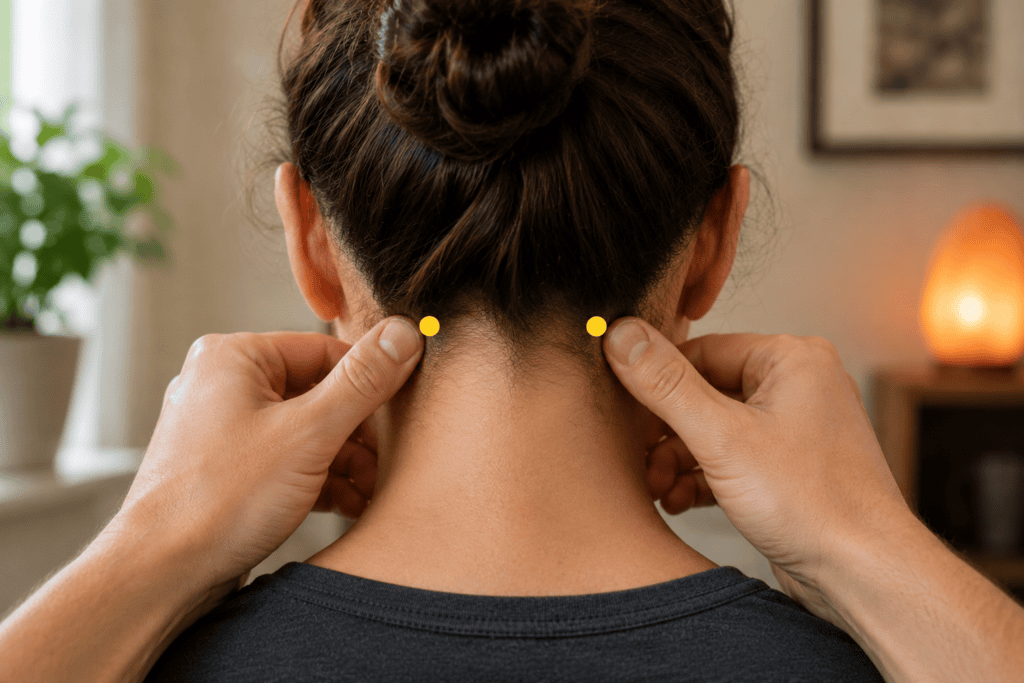
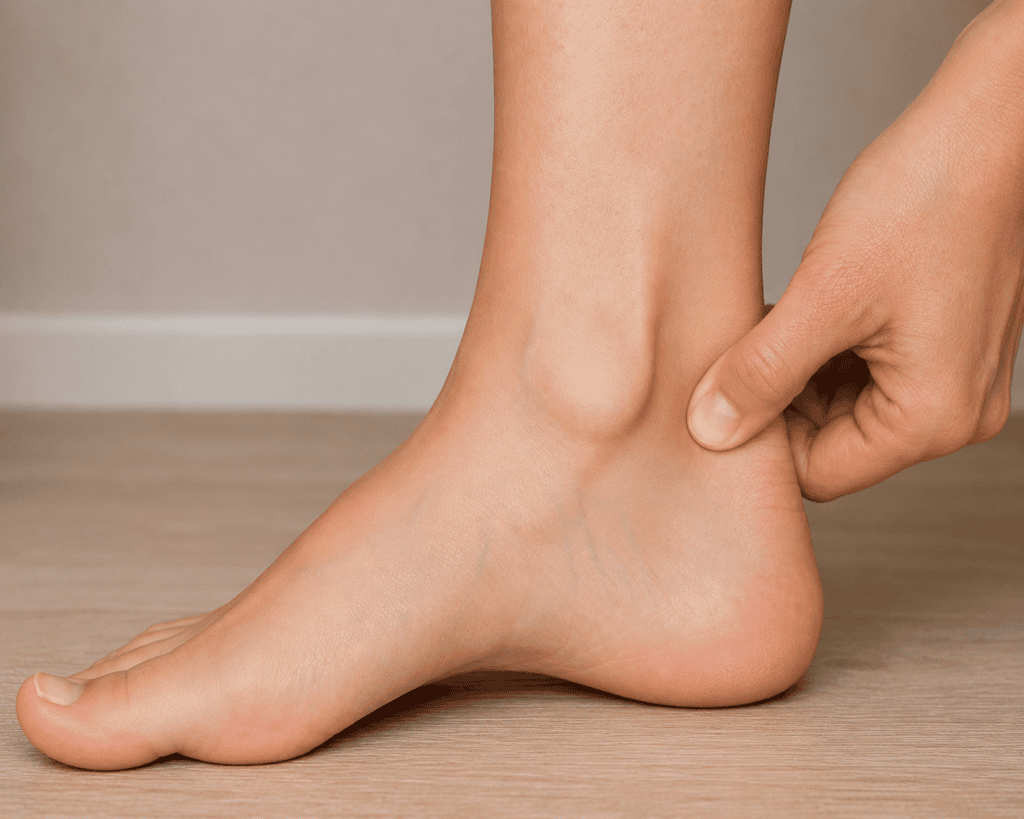
9. Press on KI3 behind your inner ankle for the Kidney system support. KI3 sits in the depression behind the inner ankle bone, between the ankle bone and the Achilles tendon. Press firmly with your thumb for one to two minutes on each leg. KI3 tonifies Kidney essence. In Chinese medicine, the teeth belong to the Kidney system. KI3 supports the constitutional patterns underlying chronic dental issues and provides additional support beyond the local pain points.
Why These Acupressure Points Work
Toothache involves several overlapping patterns. The local pain and inflammation at the affected tooth. The referred pain that radiates through the jaw, face, and head. The muscular tension from unconscious clenching and guarding. The nervous system activation from severe pain. The Chinese medicine view of dental patterns as connected to the Large Intestine, Stomach, Ren, and Kidney systems.
Acupressure works on several of these patterns at once:
- The classical empirical distal points (LI4 and ST44) provide the strongest general effects on face and tooth pain through the Large Intestine and Stomach meridian connections. ST44 specifically clears the Heat pattern that produces throbbing toothache and works particularly well for upper tooth pain.
- The local jaw and face points (ST6, ST7, SI18, LI20) address the muscular tension and provide direct relief in the affected region.
- The lower face Ren meridian point (CV24) provides direct local support for lower tooth pain and gum issues.
- The head and neck release point (GB20) addresses the general pain patterns and neck tension that severe toothache produces.
- The constitutional support point (KI3) addresses the Kidney system connection to dental health from the Chinese medicine perspective.
The Mayo Clinic overview of toothache provides the medical picture of when dental care is necessary.
How to Use these Acupressure Points
For acute severe toothache, LI4 and ST44 pressed together produce the fastest response. These are the classical empirical distal points and can be used anywhere without requiring access to the face. Press these points intensely for two to three minutes at a time and repeat as needed.
- For upper tooth pain, ST44 combined with LI4 provides one of the strongest distal point combinations. Add ST7, SI18, and LI20 for direct local support.
- For lower tooth pain, CV24 combined with ST6 and ST44 provides comprehensive coverage from local, jaw, and distal points.
- For sustained pain management while waiting for a dental appointment, working through the full nine-point protocol two or three times a day supports the ongoing patterns. Between the full protocol sessions, LI4 and ST44 can be pressed anytime the pain intensifies.
- For post-dental procedure recovery, the local points and GB20 support the recovery from procedures like extractions or root canals. Wait until any dental instructions about not disturbing the treatment area allow for facial pressure before pressing the local points.
- Firm sustained pressure works well for LI4, ST44, ST6, GB20, and KI3. Gentler pressure works better for the face points (ST7, SI18, LI20, CV24) since the tissues are more sensitive.
Pairing acupressure with basic toothache management amplifies the results. Over-the-counter pain medications if appropriate for you. Cold compresses to the outside of the cheek for swelling. Salt water rinses to keep the area clean. Avoiding chewing on the affected side. Sleeping with the head elevated.
When to Immediately See a Dentist

Acupressure supports pain management. It does not treat the underlying dental issue.
Seek dental or medical care immediately for severe pain that is not managed by any approach, swelling in the face or jaw, fever accompanying tooth pain, difficulty swallowing or breathing, pus around a tooth or in the mouth, a broken or knocked-out tooth, and severe sensitivity that lasts more than a few days.
Dental abscesses can spread to serious infections if left untreated. Never delay dental care for a tooth infection based on temporary pain relief from acupressure or any other approach.
For patients dealing with chronic dental pain or recurring issues, working with your dentist on the underlying dental patterns is essential. Acupressure supports the pain management alongside proper dental care but cannot substitute for it.
Many patients dealing with chronic pain conditions also experience anxiety, stress, and depression that overlap with the demands of managing ongoing dental issues.
Above and Beyond Acupuncture offers acupuncture, cupping, and lifestyle coaching at the North Frank Lloyd Wright Boulevard location in Scottsdale.
Schedule an appointment online or call us today to start your healing journey.
The points above are only as effective as the technique used to apply them. Where to press, how firmly, and for how long all affect the result. For a full breakdown of how to perform acupressure properly at home, read Performing Acupressure in 3 Easy Steps.
About the Publisher
Paul Kerzner, L.Ac., is a licensed acupuncturist and board-certified herbalist, as well as the founder of Above and Beyond Acupuncture in Scottsdale. His own journey from chronic patient to practicing acupuncturist shapes his commitment to providing honest, clinically grounded information about acupuncture and Traditional Chinese Medicine. Learn more about Paul and his clinical approach on the About Us page.