Key Takeaways
- Menopause symptoms like hot flashes, mood swings, and fatigue can disrupt daily life. Acupressure is a natural way to ease these symptoms.
- Key acupressure points include KI3 for kidney nourishment, SP6 for calming, and HT6 for night sweats, offering broad benefits during menopause.
- Use these points consistently to achieve optimal results, focusing on particular symptoms such as anxiety and fatigue as necessary.
- Acupressure should be used alongside other healthy habits like exercise and proper nutrition, and it does not replace medical consultation.
- Consult a healthcare professional if menopause symptoms intensify or if you experience any abnormal bleeding following menopause.

Menopause brings many changes, and for a lot of women, these changes are far from subtle.
Hot flashes, night sweats, mood swings, irritability, sleepless nights, fatigue, brain fog, anxiety, and dryness can all show up at once and last for years, affecting daily life during and after the transition. While acupressure cannot stop the hormonal changes, it does offer a helpful, drug-free way to ease symptoms. It can help cool you down, calm your mind, support better sleep, and steady your system, all with your own hands.
Traditional Chinese Medicine has long recognized menopause, and its explanation often matches what women experience. At this stage of life, the Kidney, which stores the body’s deepest energy, naturally starts to decline. Usually, the cooling and moistening Yin is the first to run low. When Yin can’t balance the body’s warmth, empty heat rises, leading to hot flashes, night sweats, dryness, and irritability, which are classic signs of menopause. This is why Kidney Yin deficiency is the most common pattern seen in menopausal women. When the Heart and Kidney lose their steady connection, it can cause insomnia, palpitations, and anxiety. The Liver, which is linked to mood and smooth energy flow, can add irritability and mood swings. Sometimes, the warming Yang also declines, causing fatigue and feeling cold. The points below help nourish the Kidney and its Yin, cool empty heat, calm the Heart and mind, soothe the Liver, and steady the system during this transition.
Because hot flashes are the most intense symptom for so many women, acupressure for hot flashes covers that specific symptom in more depth, and for the holistic approach, natural remedies for menopause cover more ground.
Here are nine acupressure points that can help with menopausal symptoms.
What Acupressure Points to Press and Why
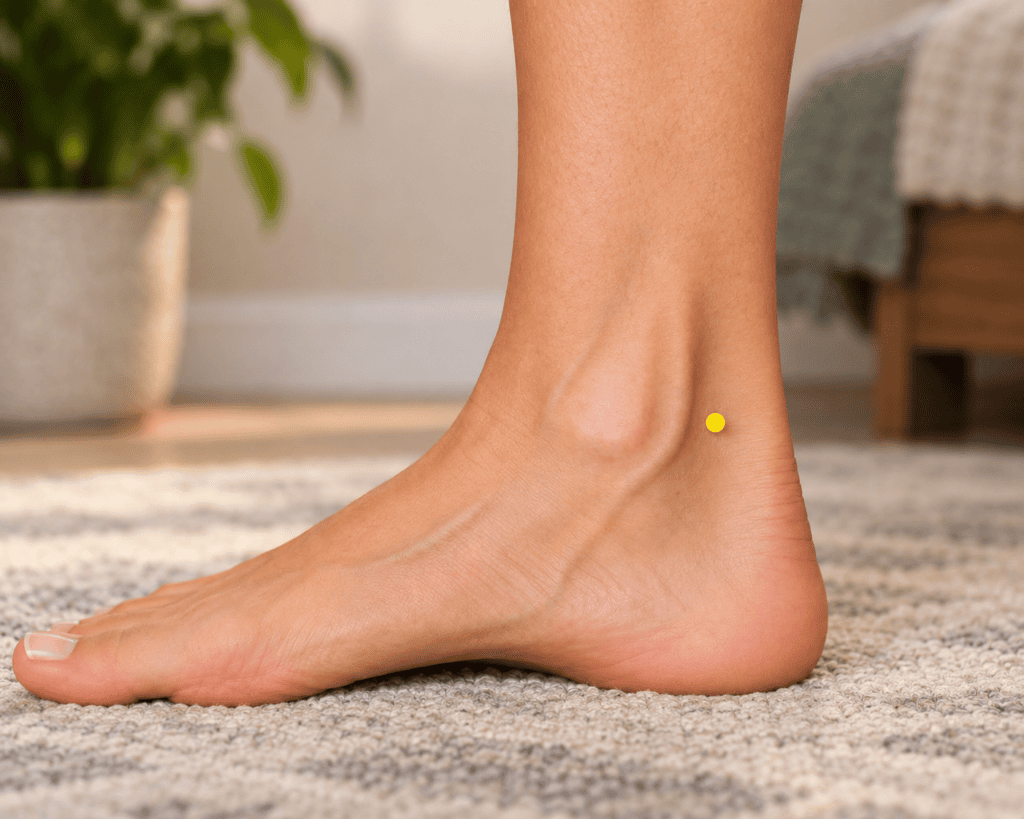
1. Press on KI3 above the inner ankle to nourish the Kidney at the root. KI3 sits in the hollow between the inner ankle bone and the Achilles tendon, level with the tip of the ankle bone. Press firmly with your thumb for one to two minutes on each ankle. KI3 is called “Taixi,” the source point of the Kidney, the organ at the root of menopause.
Since menopause primarily involves a decline in the Kidneys, KI3 is the most important point to use. It works at the root of the transition by nourishing the Kidneys and their cooling Yin, which drops during menopause and causes hot flashes, dryness, and irritability. KI3 is used to support Kidney Yin, which is often low in menopause, so it is included in almost every acupuncture protocol for this stage. This is the first and most important point to use, and it’s worth working with it daily during the transition.
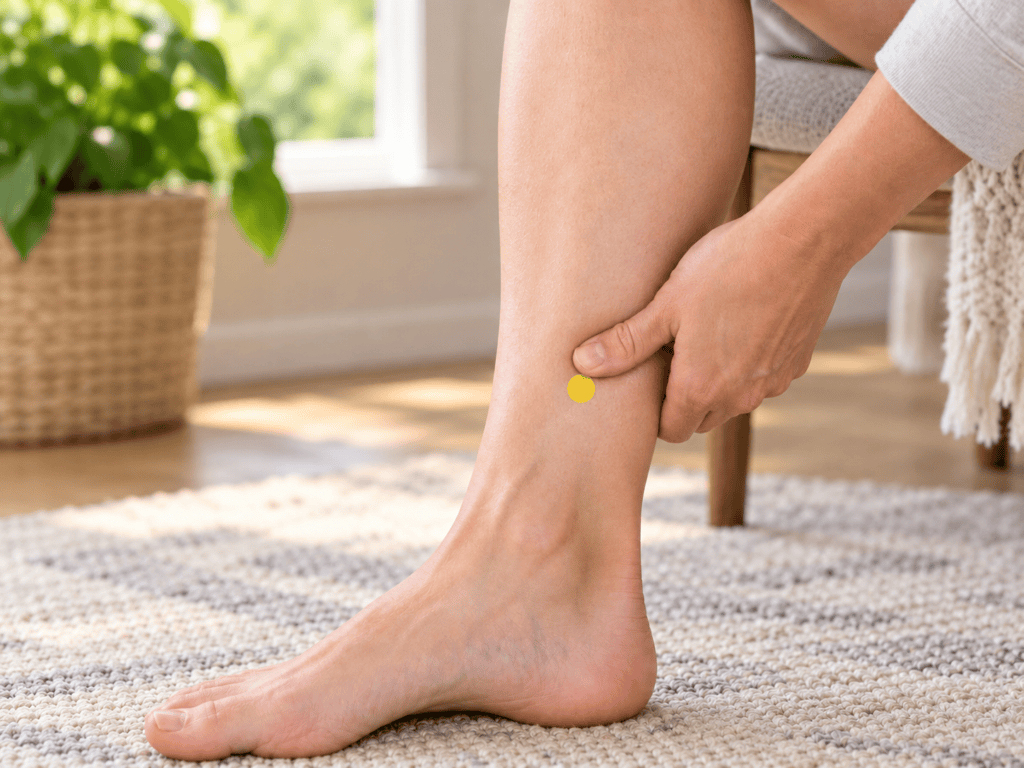
2. Press on SP6 above the inner ankle to nourish and calm across the board. SP6 sits four finger-widths up from the tip of the inner ankle bone, just behind the back edge of the shinbone. Press firmly for one to two minutes on each leg. SP6 is called “Sanyinjiao,” the “Three Yin Intersection,” where the Spleen, Liver, and Kidney channels meet. SP6 is used with caution in perimenopause if there is any chance of pregnancy, since it is avoided during pregnancy.
SP6 is a crucial point for women’s health and an essential part of menopause protocols. It connects the three main channels involved in menopause: Kidney, Liver, and Spleen. SP6 nourishes Yin and Blood, helping to reduce hot flashes, dryness, fatigue, and sleep issues. It also calms the mind and supports the entire system, alleviating many menopausal symptoms simultaneously. This point pairs effectively with KI3 as a daily treatment foundation. If periods continue around menopause, exercise caution with SP6, similar to pregnancy precautions.
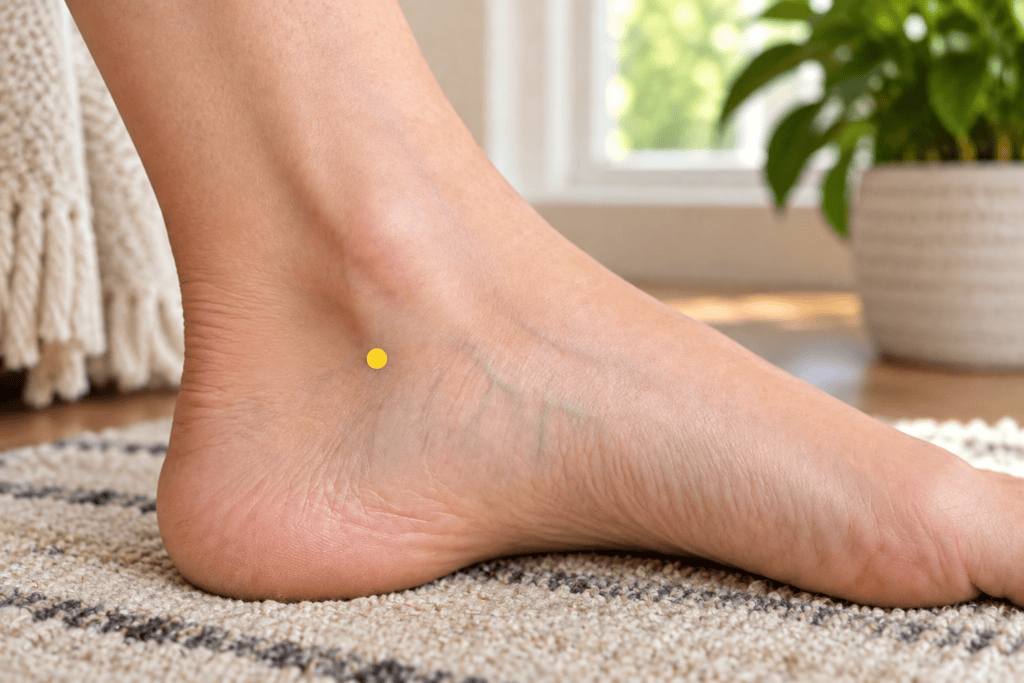
3. Press on KI6 below the inner ankle to cool the empty heat. KI6 sits in the hollow just below the tip of the inner ankle bone. Press firmly with your thumb for one to two minutes on each ankle. KI6 is called “Zhaohai,” a point that nourishes Kidney Yin and cools deficient heat.
KI6 is particularly effective for menopause-related empty-heat symptoms such as hot flashes, night sweats, dryness, and restless, heat-driven insomnia. It nourishes the cooling aspect of Kidney Yin and alleviates heat from Yin deficiency, directly targeting these issues. As a key point in menopause acupuncture protocols, KI6 is often combined with KI3 to support Kidney nourishment and cooling. This point addresses the underlying causes of hot, dry, and night-sweating symptoms, making it valuable during the transition.
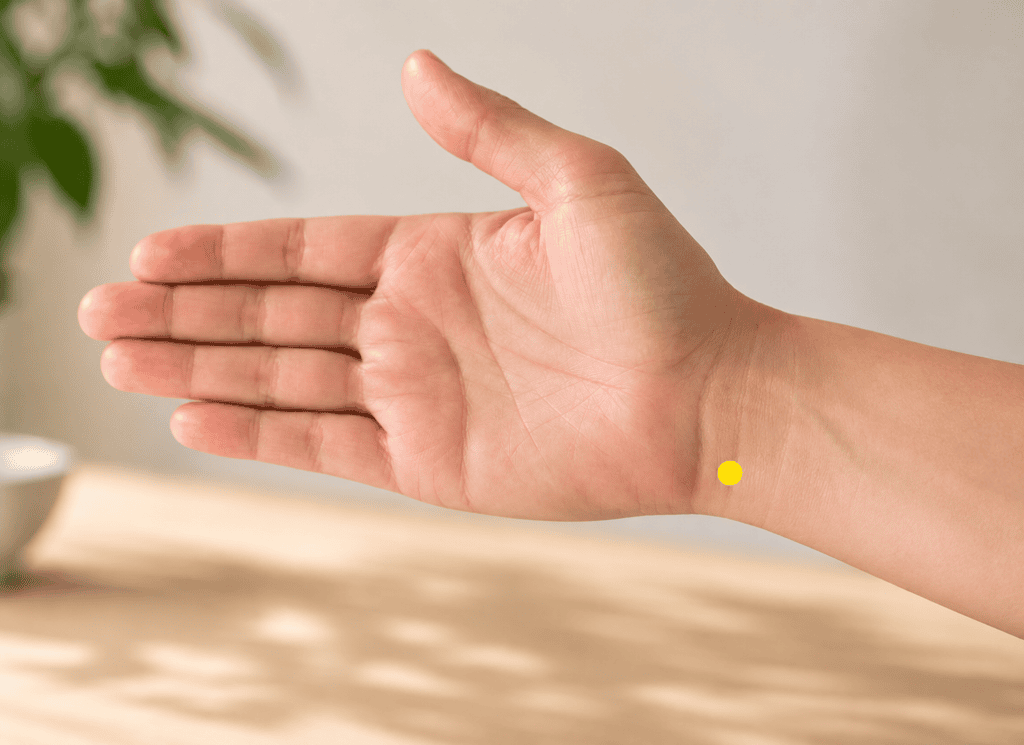
4. Press on HT6 on the inner forearm to ease night sweats. HT6 sits on the inner forearm, on the pinky side, about half a thumb-width above the wrist crease, just off the tendon there. Press firmly with your thumb for one to two minutes on each arm. HT6 is called “Yinxi,” the classic point for night sweats.
Night sweats are a common and disruptive symptom of menopause, often causing sleeplessness and exhaustion. HT6 is traditionally used to treat this issue by reducing excessive night sweats caused by empty heat, calming the Heart, and helping the body retain fluids during the night. This makes it a key point in menopause treatment protocols. If your menopause symptoms hit hardest at night with heavy sweats, this point directly targets the symptom and works effectively with KI6 and KI7 to address sweating linked to both the Heart and Kidney.
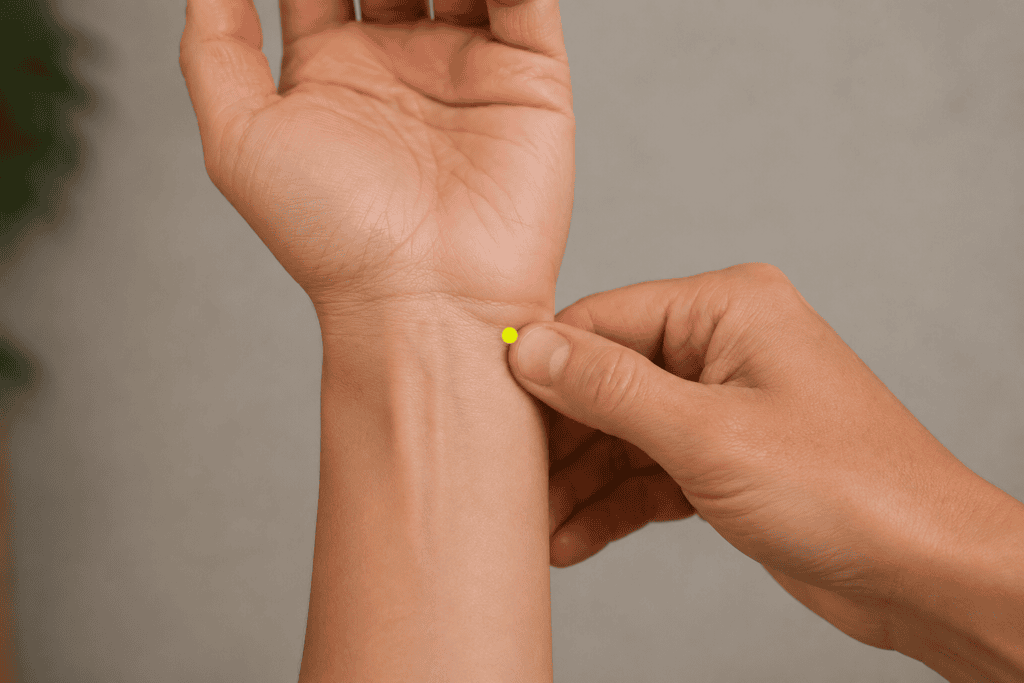
5. Press on HT7 at the wrist to calm the mind and steady the mood. HT7 sits on the inner wrist crease, on the pinky side, in the small hollow just inside the tendon. Press firmly with your thumb for one to two minutes on each wrist. HT7 is called “Shenmen,” the “Spirit Gate,” and it is the source point of the Heart and the most important point for calming the Shen.
Many of the emotional and sleep symptoms of menopause, such as anxiety, mood swings, palpitations, and insomnia, arise when the Heart and Kidney lose their steady connection. HT7 is the main point for calming the Heart and mind. Known as the Spirit Gate, it helps ease anxiety, calm palpitations, and support better sleep, which menopause often disrupts. For mood and sleep issues during menopause, this point helps steady things and works with the Kidney points to restore the Heart-Kidney connection.
6. Press on Yintang between the eyebrows to calm the mind and ease the fog. Yintang sits in the small hollow directly between the two eyebrows. Press steadily and hold, or make small, slow circles with your fingertip for one to two minutes. Yintang is an extra point and one of the most calming points in the body.
Yintang calms the mind and nervous system. It helps ease anxiety, irritability, mood swings, brain fog, and difficulty concentrating, which are common menopausal symptoms. This point promotes relaxation and helps release tension during stressful times. For emotional fluctuations, anxiety, or mental cloudiness, gently press Yintang while breathing deeply for comfort.

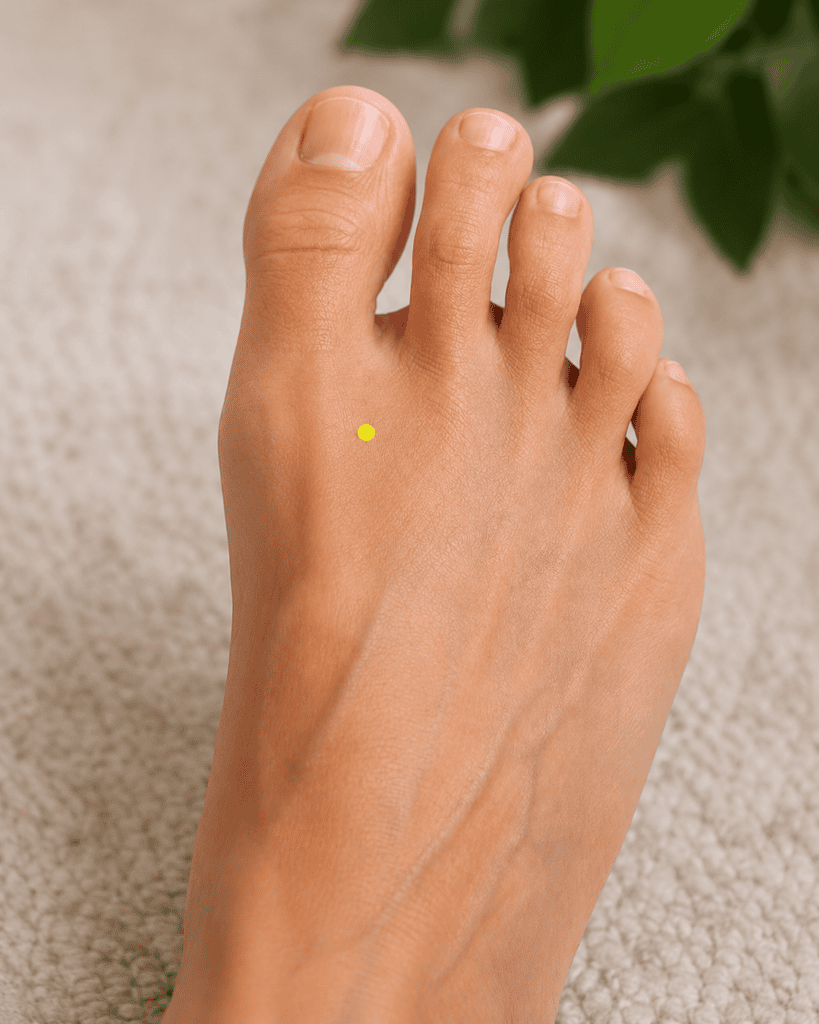
7. Press on LR3 on the top of the foot to soothe the Liver and mood. LR3 sits on the top of the foot, in the webbing between the big toe and second toe, about two finger-widths back where the bones meet in a small hollow. Press firmly with the thumb for one to two minutes on each foot. LR3 is called “Taichong,” the primary point for the Liver.
In Traditional Chinese Medicine, irritability, mood swings, and tension during menopause indicate Liver Qi stagnation, often worsened by empty heat. LR3 is the key point that alleviates this by freeing Liver Qi, calming mood swings, and managing rising heat. It is essential in menopause treatment protocols and works effectively with SP6 to address both emotional and physical issues. If you experience a short temper or mood swings during menopause, this point helps soothe the Liver and stabilize your system.
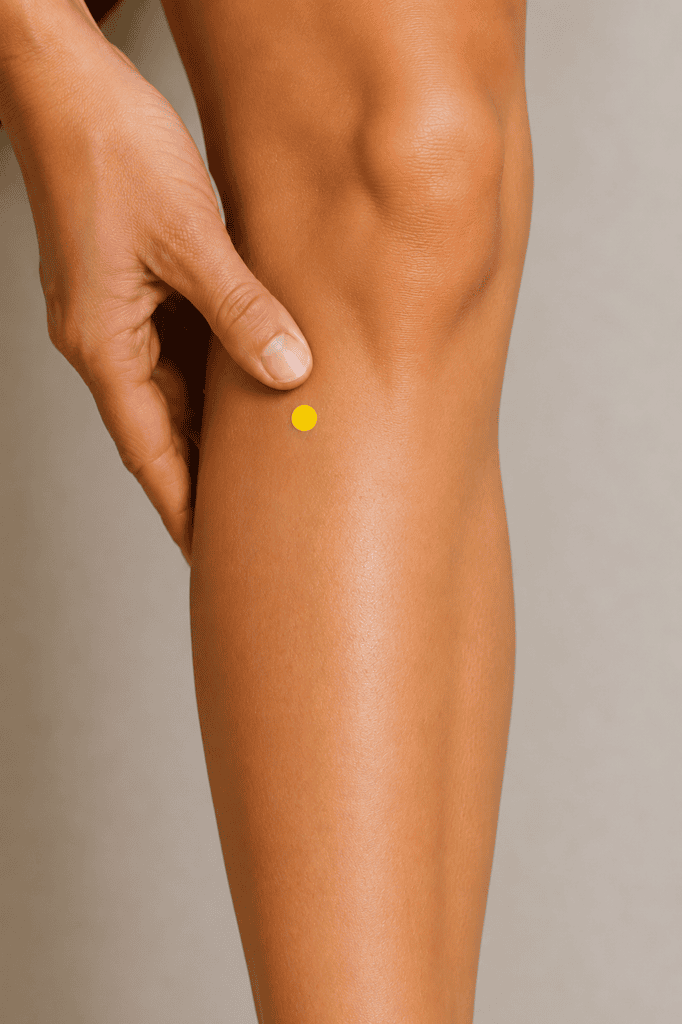
8. Press on ST36 below the knee to rebuild energy and steady the body. ST36 sits four finger-widths below the lower edge of the kneecap and one finger-width to the outside of the shinbone, on the muscle that rises when you flex your foot. Press firmly with your thumb for one to two minutes on each leg. ST36 is called “Zusanli,” the “Leg Three Miles,” and it is the master point for energy in the body.
Fatigue is a common yet often overlooked symptom of menopause. ST36 is an excellent point for boosting energy levels and aiding recovery. It enhances the function of the Spleen and Stomach, responsible for producing Qi, and helps combat exhaustion and that sluggish feeling. Additionally, ST36 supports digestion and metabolism, which can undergo changes during menopause. As a grounding and strengthening point, it stabilizes your system. For fatigue and low energy, this point helps restore your reserves and works in conjunction with Kidney points to support you through menopausal transition.
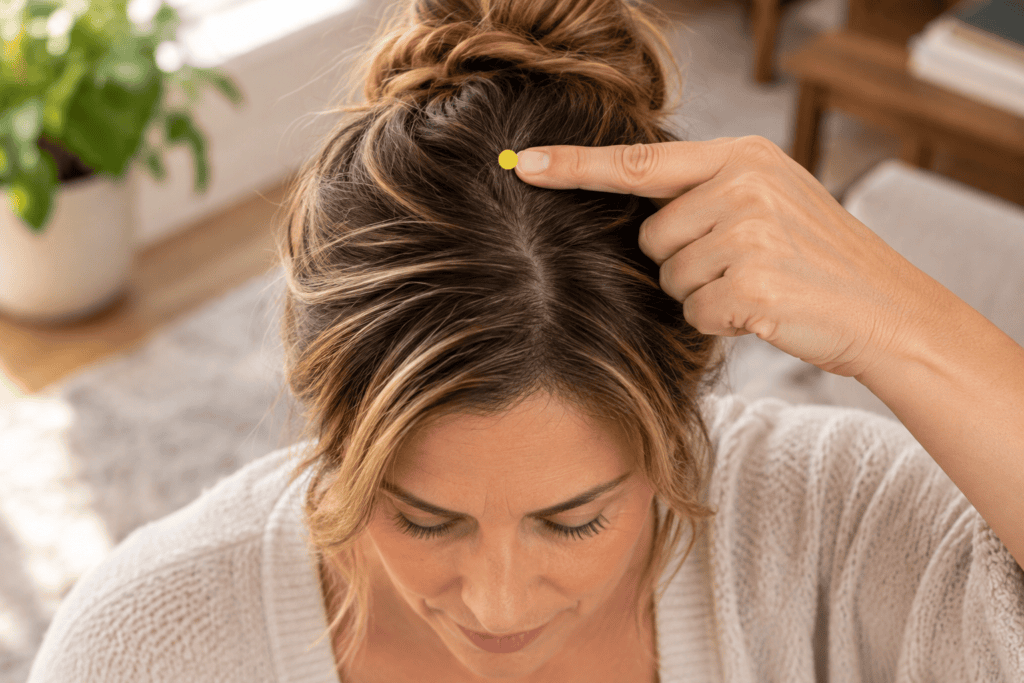
9. Press on GV20 at the top of the head to lift the spirit and clear the head. GV20 sits at the very top of the head, on the midline, on a line drawn up from the tops of both ears. Press straight down, or make small circles, with your fingertip for one to two minutes. GV20 is called “Baihui,” the “Hundred Meetings,” where many channels converge at the crown.
Menopause may lead to feelings of low mood and mental fog. GV20 helps boost your spirits and clear your mind by increasing Qi that often drops with fatigue and low mood. It also brightens your mood and alleviates brain fog. Additionally, GV20 has a calming and centering effect, which is beneficial if you feel unsettled. For managing low mood and mental fog during menopause, this point provides gentle support and mental clarity, making it a perfect addition to your acupressure routine.
Why These Acupressure Points Work
In Traditional Chinese Medicine, menopause is seen as the natural decline of Kidney function. As cooling Yin fades, it creates an empty heat, leading to hot flashes and night sweats. Simultaneously, the connection between the Heart and Kidney weakens, and the Liver plays a role in mood swings. Kidney Yin deficiency is the most common pattern, and nine specific points from the core are used in acupuncture research to treat the whole condition.
- The Kidney-nourishing points (KI3, SP6, KI6) rebuild the Kidney and its Yin at the root and cool the empty heat behind the vasomotor symptoms.
- The sweat-and-Shen points (HT6, HT7) ease the night sweats and calm the anxiety, palpitations, and insomnia.
- The calming and mood points (Yintang, LR3) calm the nervous system, ease brain fog, and soothe the Liver behind irritability and mood swings.
- The rebuilding and lifting points (ST36, GV20) restore energy depleted by fatigue and lift a low, foggy mood.
The core principle of these points is to nourish and cool the declining Kidney while calming the entire system. This is why issues like anxiety, stress, and depression often associated with menopause can also be alleviated through this approach.
How to Properly Use These Acupressure Points
Use these acupressure points daily during menopause, targeting the symptoms that trouble you most. Consistent, regular practice is more effective than occasional use.
- Use KI3, SP6, and KI6 daily as the nourishing, cooling foundation for the whole transition.
- Add HT6 for night sweats; HT7 and Yintang for anxiety, mood, and sleep; LR3 for irritability and mood swings; ST36 for fatigue; and GV20 for low mood and brain fog.
- Work HT7, SP6, and the calming points in the evening to support sleep, since sleepless, sleep-disturbed nights are such a large part of menopause.
- Hold each point for one to two minutes with steady pressure, breathing slowly, and keep it up consistently across weeks, since the benefit for menopausal symptoms builds over time.
Acupressure is most effective when used alongside other holistic approaches during menopause. Engaging in regular exercise can alleviate many symptoms and strengthen your bones and heart, which require extra attention now. Managing stress is crucial, as it can intensify hot flashes and mood swings. To help mitigate symptoms, stay cool, wear layers, and avoid triggers such as alcohol, caffeine, spicy foods, and heat. Maintaining good sleep habits, eating a balanced diet rich in calcium and protein, and keeping hydrated are also beneficial. In this context, acupressure provides an additional calming and stabilizing support to these strategies.
When to Get Professional Help
Menopause is a natural stage in life, and these tools can assist with daily symptoms, but seeking proper medical advice is crucial. Talk with your doctor about your symptoms and treatment options. Effective menopause treatments include hormone therapy and non-hormonal options, tailored to your health and history. Don’t ignore severe symptoms; consult your healthcare provider. If you notice any bleeding after menopause (more than twelve months without a period), see a doctor immediately, as this requires evaluation. Seek help if symptoms are intense or significantly impact your life. Menopause can pose long-term risks to bones and heart health, making regular check-ups essential. Mood swings and depression are common, so don’t hesitate to reach out for support if needed.
If you’re having thoughts of harming yourself, reach out by calling or texting the 988 Suicide and Crisis Lifeline at any time.
Acupressure offers a safe and supportive option for managing menopause symptoms, but it should complement, not replace, medical treatment.
Above and Beyond Acupuncture offers acupuncture, cupping, and lifestyle coaching at the North Frank Lloyd Wright Boulevard location in Scottsdale.
Schedule an appointment online to start your healing journey.
The points above are only as effective as the technique used to apply them. Where to press, how firmly, and for how long all affect the result. For a full breakdown of how to perform acupressure properly at home, read Performing Acupressure in 3 Easy Steps.

About the Publisher
Paul Kerzner, L.Ac., is a licensed acupuncturist and board-certified herbalist, as well as the founder of Above and Beyond Acupuncture in Scottsdale. His own journey from chronic patient to practicing acupuncturist shapes his commitment to providing honest, clinically grounded information about acupuncture and Traditional Chinese Medicine. Learn more about Paul and his clinical approach on the About Us page.