Key Takeaways
- Hiccups can be annoying and may persist despite common remedies; acupressure offers a natural alternative.
- Specific acupressure points target diaphragm spasms and nerve pathways, making them effective for hiccups.
- Key points include PC6 for diaphragm regulation, CV17 for chest control, and GB20 for vagus nerve connection.
- Always use correct pressure and technique for best results; gentle pressure works for sensitive areas like the throat.
- Seek medical help for hiccups lasting over 48 hours or when accompanied by serious symptoms.

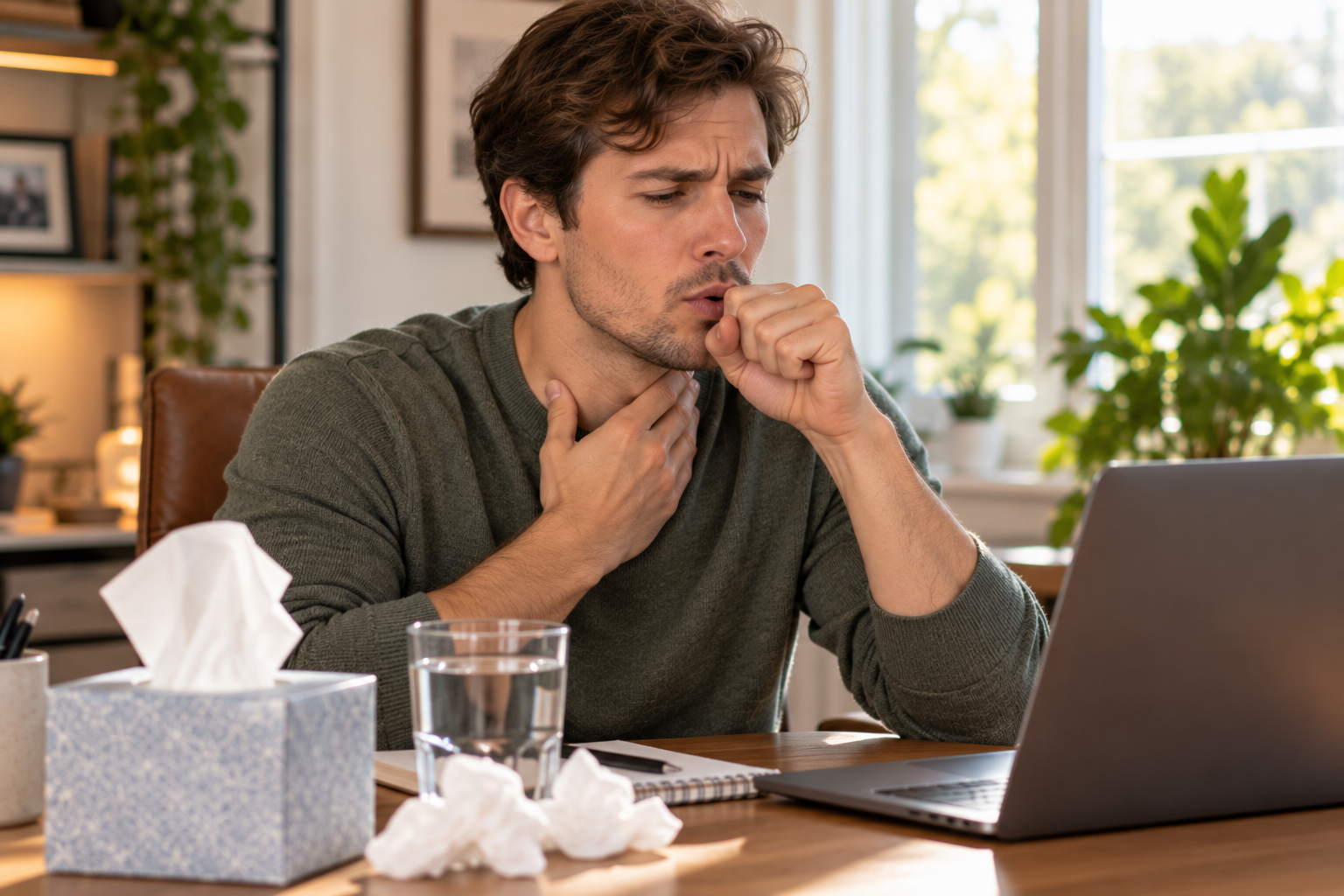
If you have ever had hiccups that will not stop, you already know how quickly they go from mildly annoying to genuinely disruptive. The involuntary spasm of the diaphragm. The sudden intake of breath. The characteristic sound that everyone in the room notices. Most hiccups resolve on their own within minutes, but sometimes they persist for hours or even longer, and standard home remedies like holding your breath or drinking water upside down do not always work.
Acupressure offers a natural approach that addresses the actual cause of hiccups. The diaphragm spasm involves the vagus nerve and the nerves that control the diaphragm, and specific acupressure points regulate these nerve pathways directly. The technique works quickly for most cases of common hiccups.
An important note before starting. Hiccups that persist for more than 48 hours or recur frequently may indicate an underlying medical condition and warrant evaluation. Common transient hiccups respond well to acupressure. Persistent or intractable hiccups need medical attention to identify and address the underlying cause.
Here are seven acupressure points that help:
What Acupressure Points to Press and Why
Each point addresses a different aspect of the hiccup pattern. You can use them individually as symptoms begin or work through the full protocol if the hiccups persist.
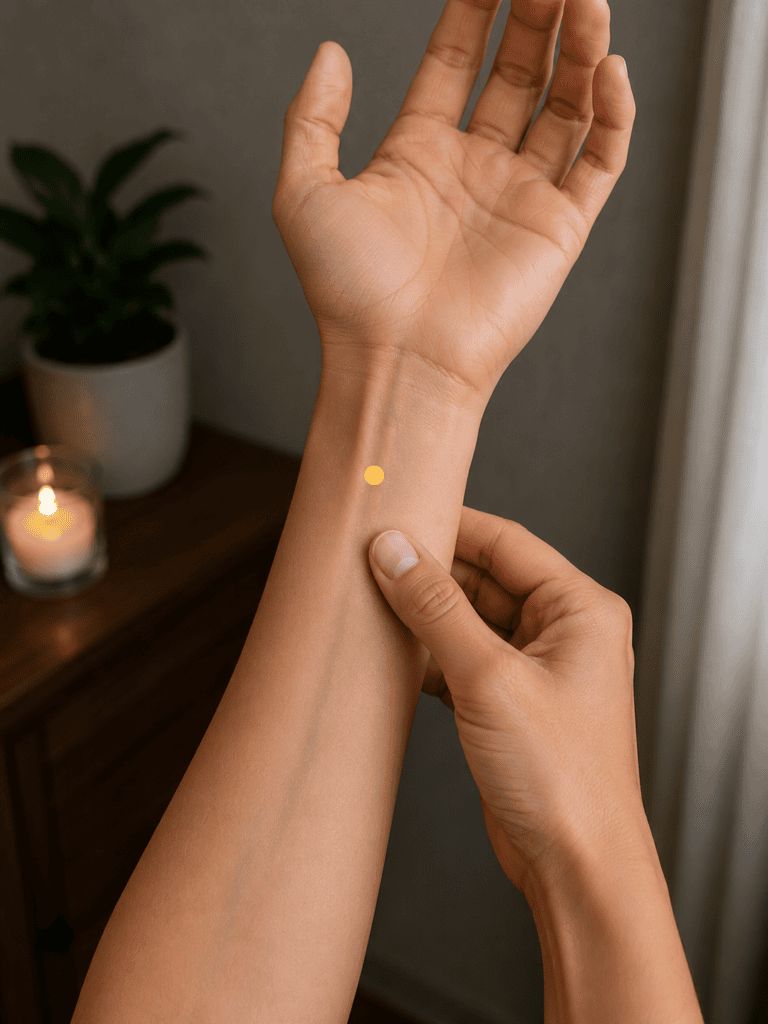
1. Press on PC6 on the inner forearm for the diaphragm regulation point. PC6 sits about three finger-widths above the inner wrist crease, between the two tendons in the center of the forearm. Press firmly with your thumb for one to two minutes on each arm. PC6 is called “Neiguan” or “Inner Pass” in Chinese medicine and regulates the diaphragm and Heart region directly.
The point is one of the classical acupressure points for hiccups in Traditional Chinese Medicine. The regulation of the Pericardium meridian influences the diaphragm spasm that produces hiccups. PC6 works quickly for many cases and is easy to press anywhere.
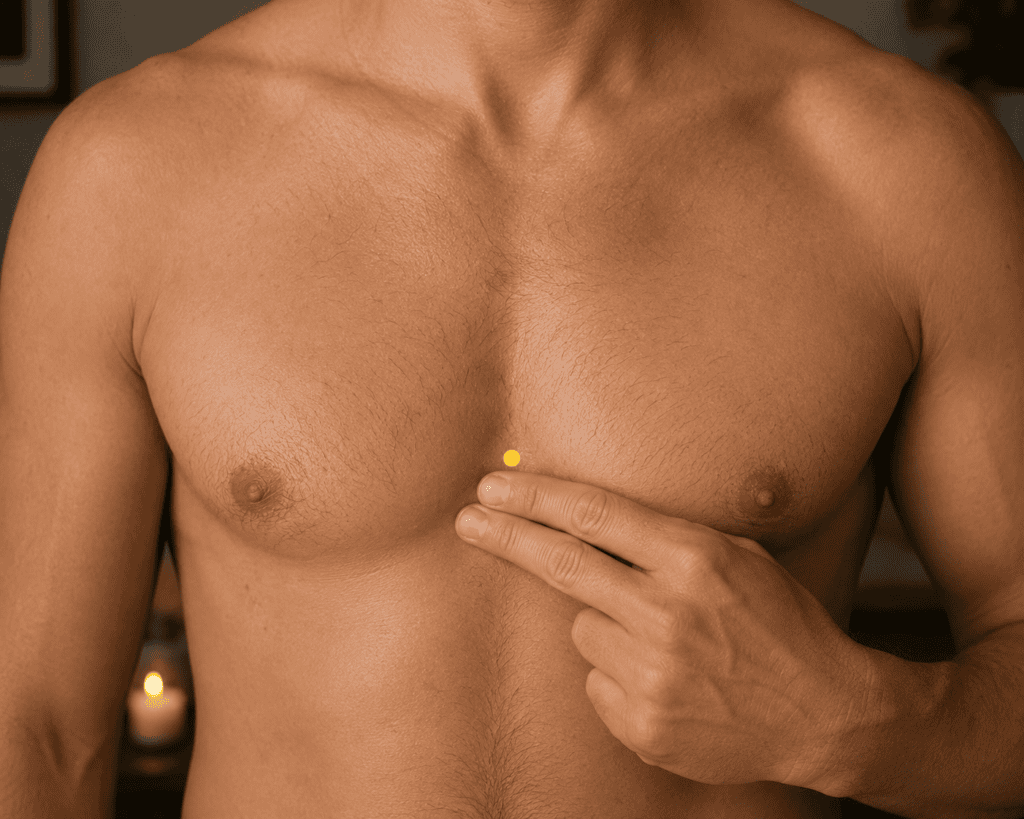
2. Press on CV17 on your sternum for the chest and diaphragm point. CV17 sits on the sternum at the level of the fourth intercostal space, roughly at the level of the nipples in the midline of the chest. Press gently with your fingertip for one to two minutes. CV17 is called “Shanzhong” or “Chest Center” in Chinese medicine.
The point regulates the chest Qi and diaphragm function directly. Hiccups involve counterflow of Qi upward through the diaphragm in the Chinese medicine view, and CV17 addresses this pattern at its source. This is one of the most traditional points specifically for hiccups.
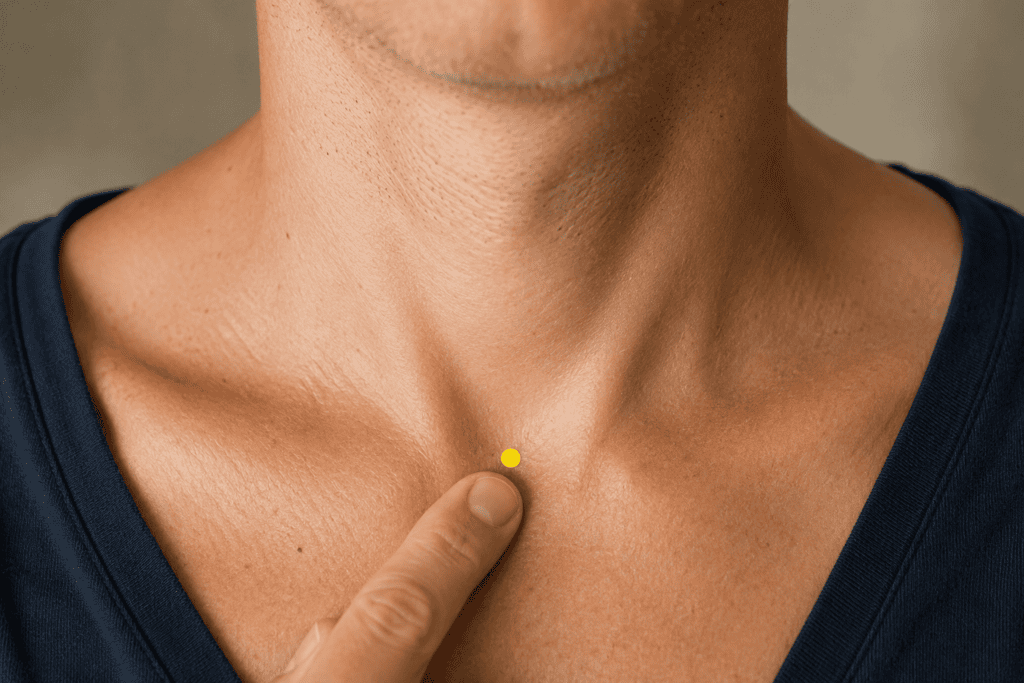
3. Press on CV22 in the notch above your sternum for the throat point. CV22 sits in the depression at the base of the throat, in the notch just above the top of the sternum. Press very gently with your fingertip for one minute. CV22 is called “Tiantu” or “Heavenly Prominence” in Chinese medicine.
The point regulates the throat and chest, addressing the upward counterflow of Qi that produces hiccups. Use very gentle pressure at this point since the location is sensitive. Never press hard on CV22.
4. Press on ST36 below your knee for Stomach support. ST36 sits about four finger-widths below the kneecap, one finger-width to the outside of the shinbone in the muscular depression there. Press firmly with your thumb for one to two minutes on each leg. ST36 regulates Stomach Qi and addresses the rebellious Qi pattern that Chinese medicine identifies as underlying hiccups.
ST36 works particularly well for hiccups that follow eating too fast, drinking carbonated beverages, or other digestive triggers. The point supports proper Stomach function and reduces the tendency toward the counterflow patterns that produce hiccups.
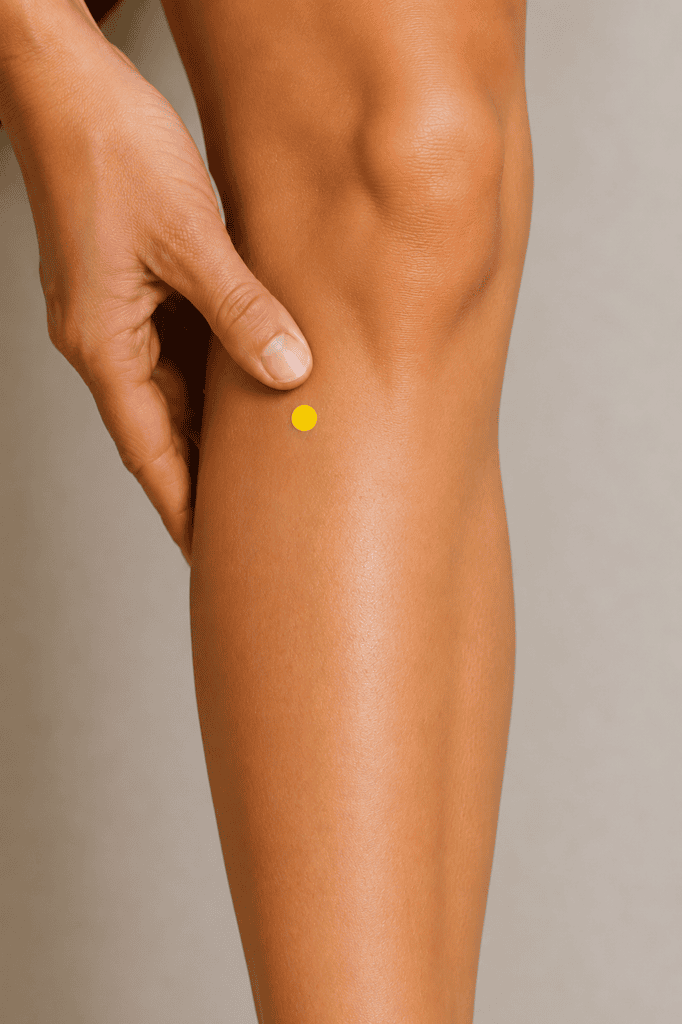
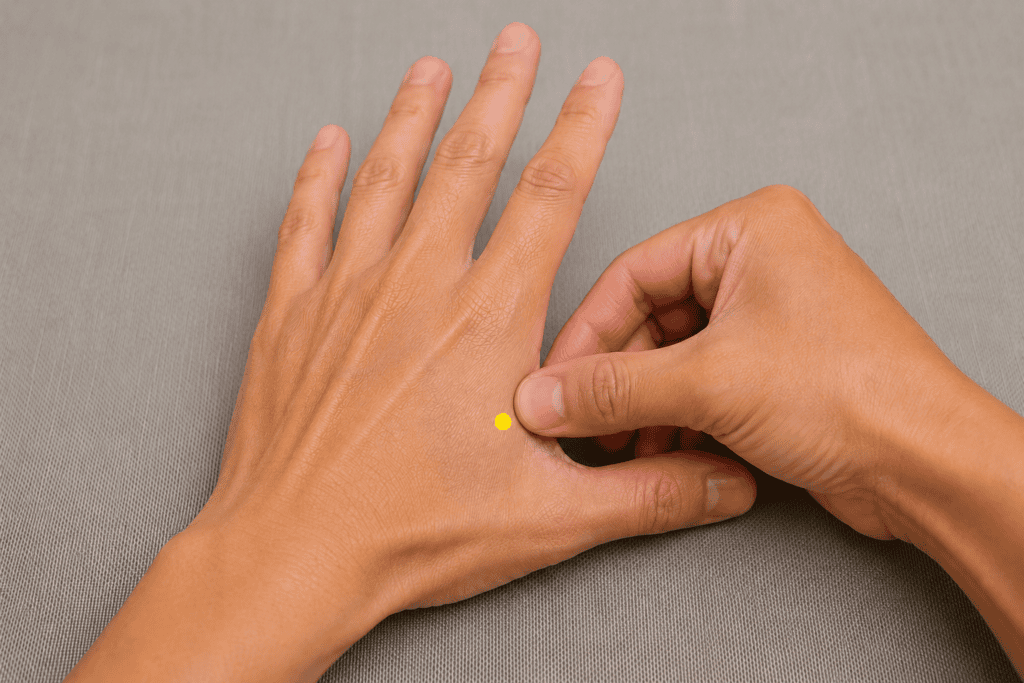
5. Press on LI4 in the webbing between your thumb and index finger for the command point. LI4 sits in the soft tissue webbing between the thumb and index finger, in the muscle that bulges when the thumb is pressed against the side of the index finger. Press firmly with the thumb of the opposite hand for one to two minutes on each hand. LI4 is the classical command point for the face and head.
The point provides general regulation and works well combined with the other points. LI4 is contraindicated during pregnancy.
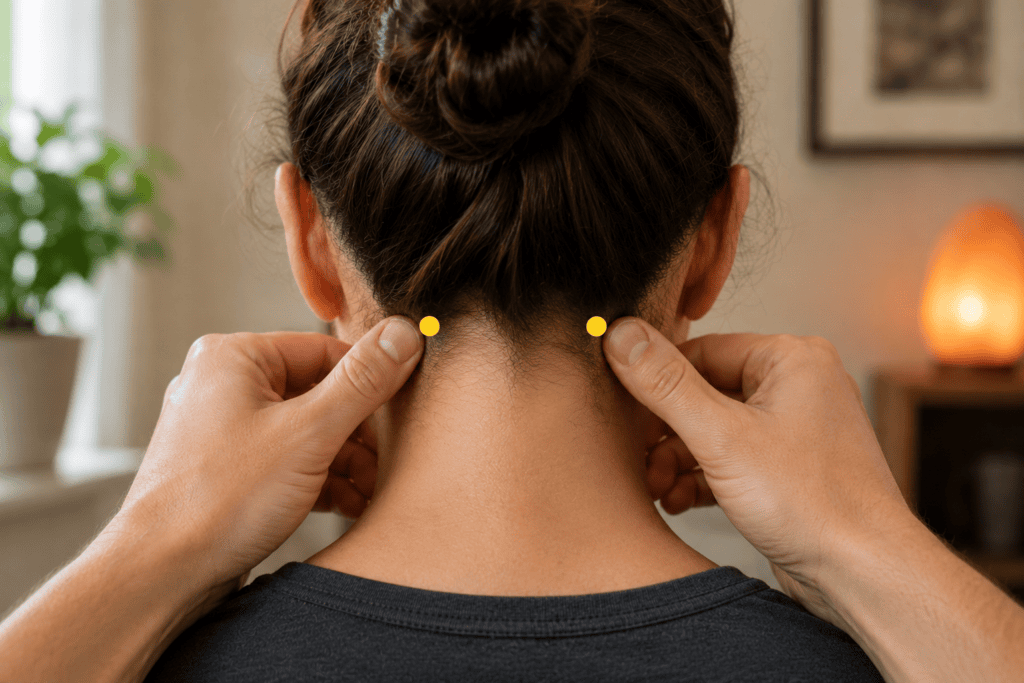
6. Press on GB20 at the base of your skull for the vagal nerve connection. GB20 sits in the hollow at the base of the skull, about two finger-widths to either side of the spine, at the point where the neck muscles attach to the skull. Press firmly with your thumbs for one to two minutes on each side. GB20 addresses the vagus nerve pathway that connects to the diaphragm and directly regulates the nervous system.
The point works particularly well for hiccups related to stress, anxiety, or sudden temperature changes. The vagal nerve regulation supports the parasympathetic nervous system activation that shifts the body out of the state producing hiccups.
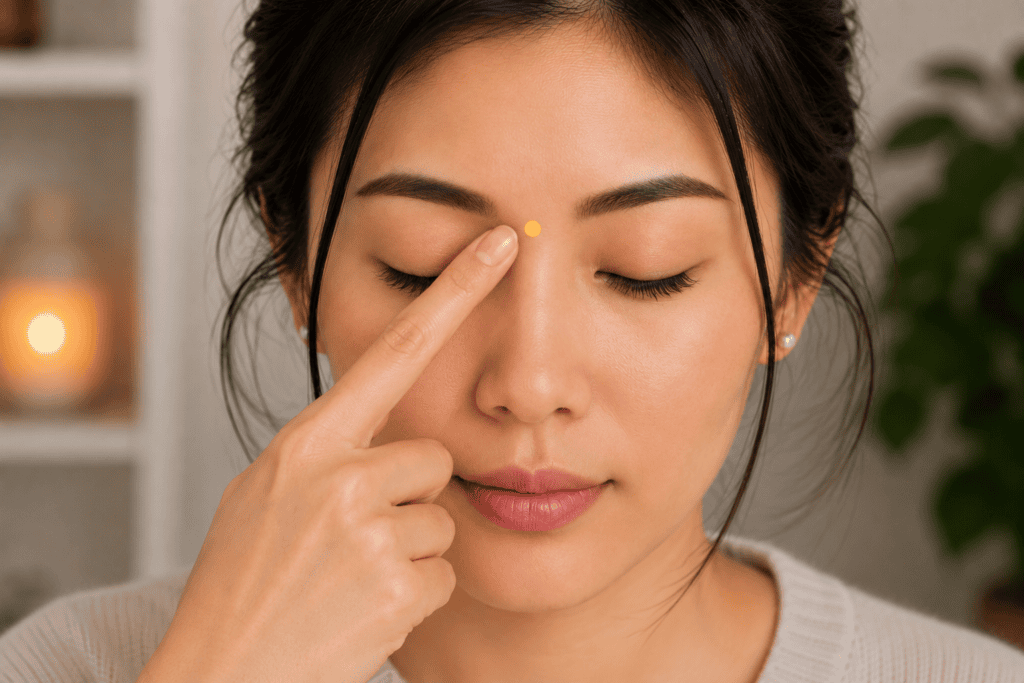
7. Press on Yintang between your eyebrows for calming the nervous system. Yintang sits in the small hollow directly between the eyebrows, above the bridge of the nose. Press gently with your fingertip for one to two minutes. Yintang activates the parasympathetic nervous system directly.
The point addresses the nervous system activation that often produces or worsens hiccups. Yintang works particularly well when combined with GB20 for comprehensive vagal nerve regulation and nervous system calming.
Why These Acupressure Points Work
Hiccups involve several overlapping patterns. The diaphragm spasms involuntarily. The vagus nerve and phrenic nerves that control the diaphragm become dysregulated. In Chinese medicine, Stomach Qi counterflows upward through the diaphragm instead of moving downward as it should. The nervous system enters a specific activation pattern that maintains the spasm.
Acupressure works on several of these patterns at once.
- The diaphragm regulation points (PC6, CV17) directly address the diaphragm spasm and the upward counterflow of Qi in Chinese medicine.
- The throat and chest point (CV22) regulates the upper portion of the pathway where hiccups produce the characteristic sound.
- The Stomach support point (ST36) addresses the rebellious Qi pattern at its digestive source.
- The command point (LI4) provides general regulation.
- The vagal nerve and nervous system points (GB20, Yintang) address the parasympathetic nervous system regulation that stops the hiccup pattern.
How to Use These Acupressure Points
For most common hiccups, PC6 pressed for one to two minutes produces the fastest response. Press firmly on both arms while breathing slowly and deeply. Many patients experience the hiccups stopping within one to two minutes of this simple intervention.
- For hiccups that continue after PC6, add CV17 pressed with gentle sustained pressure. The combination of PC6 and CV17 addresses both the arm and chest components of the diaphragm regulation.
- For persistent hiccups, work through the full seven-point protocol. Start with PC6 and CV17, then add ST36, then LI4, then GB20 and Yintang for nervous system regulation. CV22 can be added carefully at any point using very gentle pressure.
- For hiccups triggered by eating too fast or carbonated drinks, ST36 and PC6 pressed together specifically address the digestive component.
- For hiccups triggered by stress or emotional intensity, Yintang and GB20 pressed together address the nervous system component more directly.
- Firm sustained pressure works well for the arm, hand, leg, and neck points. Gentle pressure works better for the chest, throat, and face points, particularly CV22 where the pressure must remain light.
Pairing acupressure with basic hiccup remedies can amplify the results. Slow deep breathing during the pressure. Gentle swallowing while pressing the points. Drinking cold water in small sips. Avoiding known triggers when possible.
When to Get Professional Help
Common transient hiccups respond well to acupressure. Persistent hiccups need medical attention.
Seek medical evaluation for hiccups that persist for more than 48 hours, hiccups that recur frequently and affect sleep or eating, hiccups accompanied by chest pain, difficulty breathing, or other concerning symptoms, hiccups that develop after starting new medications, and hiccups in the context of other digestive or neurological symptoms.
Persistent or intractable hiccups can indicate underlying conditions including nerve irritation, GERD, medication effects, or rarely more serious conditions. Medical evaluation identifies and addresses the underlying cause.
Many patients dealing with digestive patterns also experience anxiety, stress, and depression that overlap with the gut-brain patterns underlying various digestive symptoms.
Above and Beyond Acupuncture offers acupuncture, cupping, and lifestyle coaching at the North Frank Lloyd Wright Boulevard location in Scottsdale.
Schedule an appointment online or call us today to start your healing journey.
The points above are only as effective as the technique used to apply them. Where to press, how firmly, and for how long all affect the result. For a full breakdown of how to perform acupressure properly at home, read Performing Acupressure in 3 Easy Steps.
About the Publisher
Paul Kerzner, L.Ac., is a licensed acupuncturist and board-certified herbalist, as well as the founder of Above and Beyond Acupuncture in Scottsdale. His own journey from chronic patient to practicing acupuncturist shapes his commitment to providing honest, clinically grounded information about acupuncture and Traditional Chinese Medicine. Learn more about Paul and his clinical approach on the About Us page.