Key Takeaways
- Irritable bowel syndrome (IBS) can be tough to manage, causing cramping, bloating, and irregular bowel habits.
- Acupressure can help alleviate symptoms of IBS by easing cramping, reducing stress, and settling the gut-brain connection.
- Nine specific acupressure points target stress, digestion, and bowel regulation: LR3, LR13, ST25, SP4, CV6, ST36, SP6, PC6, and Yintang.
- Use acupressure both during IBS flare-ups and regularly between them for effective management of the condition.
- Consult a doctor for an IBS diagnosis and combine acupressure with other supportive practices like diet and stress management.

Irritable bowel syndrome is a very common digestive issue, and it can be tough to manage.
Cramping, abdominal pain, bloating, gas, and unpredictable bowel habits, whether diarrhea, constipation, or both, can make you plan your day around bathroom access. IBS is a long-term condition in which the gut doesn’t work properly, even though there’s nothing physically wrong. It’s closely linked to stress and the ongoing communication between the gut and the brain. While acupressure can’t cure IBS, it can help manage symptoms by easing cramping and bloating and calming the stress that often triggers flare-ups. The points below are meant to help settle your gut and soothe the connection between your mind and digestion.
Traditional Chinese Medicine views IBS mainly as a pattern in which the Liver influences the Spleen. The Liver governs smooth energy flow, but stress can cause blockages. The Spleen is crucial for digestion. When stress obstructs the Liver, it can overwhelm the Spleen and disturb digestion, which mirrors IBS symptoms like cramping, bloating, and irregular bowel movements. Often, a weak Spleen leads to sensitive digestion, with bowel habits fluctuating between diarrhea and constipation depending on various factors. This perspective parallels the modern concept of the gut-brain axis—the bidirectional link between the nervous and digestive systems. The following points are selected to help reduce stress, support digestion, regulate bowel movements, and calm the gut-brain connection.
Because IBS is strongly linked to stress and the gut-brain axis, understanding how a distressed mind affects the stomach is crucial. In clinical practice, acupuncture for IBS is customized to target these links during treatment.
Here are nine acupressure points that can help:
What Acupressure Points to Press and Why
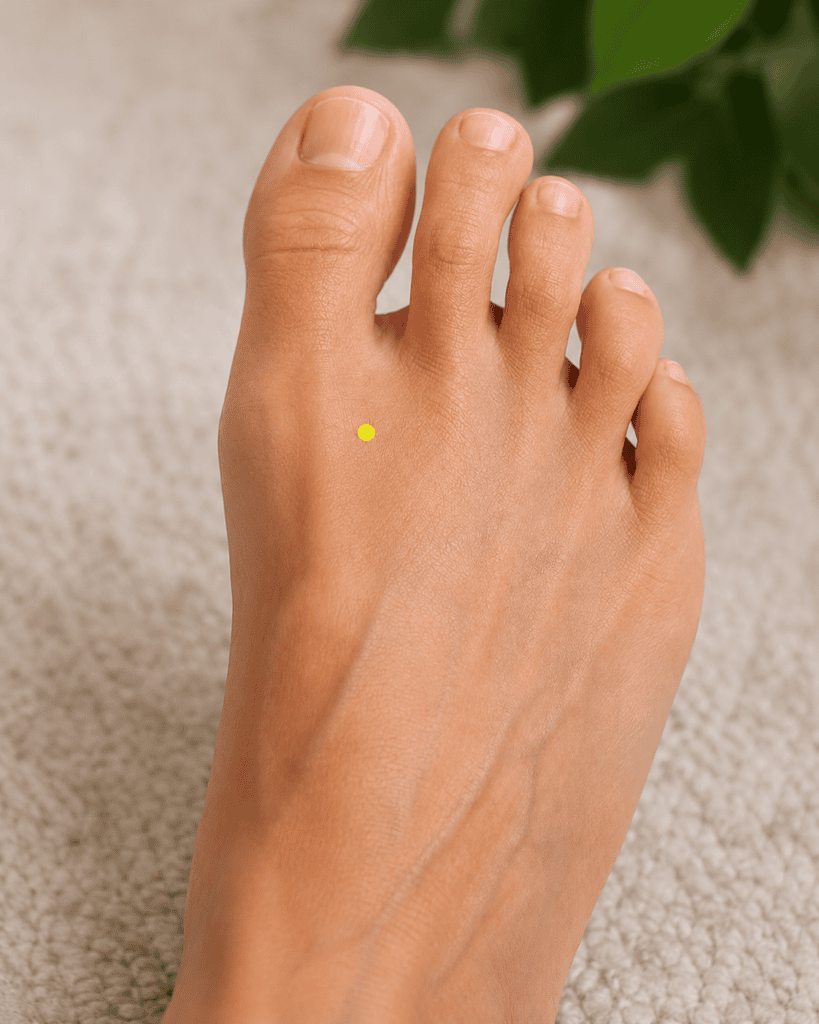
1. Press on LR3 on the top of the foot to relieve the stress that drives IBS. LR3 sits on the top of the foot, in the webbing between the big toe and second toe, about two finger-widths back where the bones meet in a small hollow. Press firmly with the thumb for one to two minutes on each foot. LR3 is called “Taichong,” the primary point for moving stuck Liver Qi.
Since stress often triggers IBS by affecting the Liver and overwhelming digestion, LR3 is a key point to address the root of the problem. It helps release stuck energy, eases stress-related cramping and tension, and can help calm flare-ups during stressful times. LR3 also helps ground your energy, which can be especially helpful if you feel tense or anxious. For most people whose IBS gets worse with stress, this is the most important point to use.
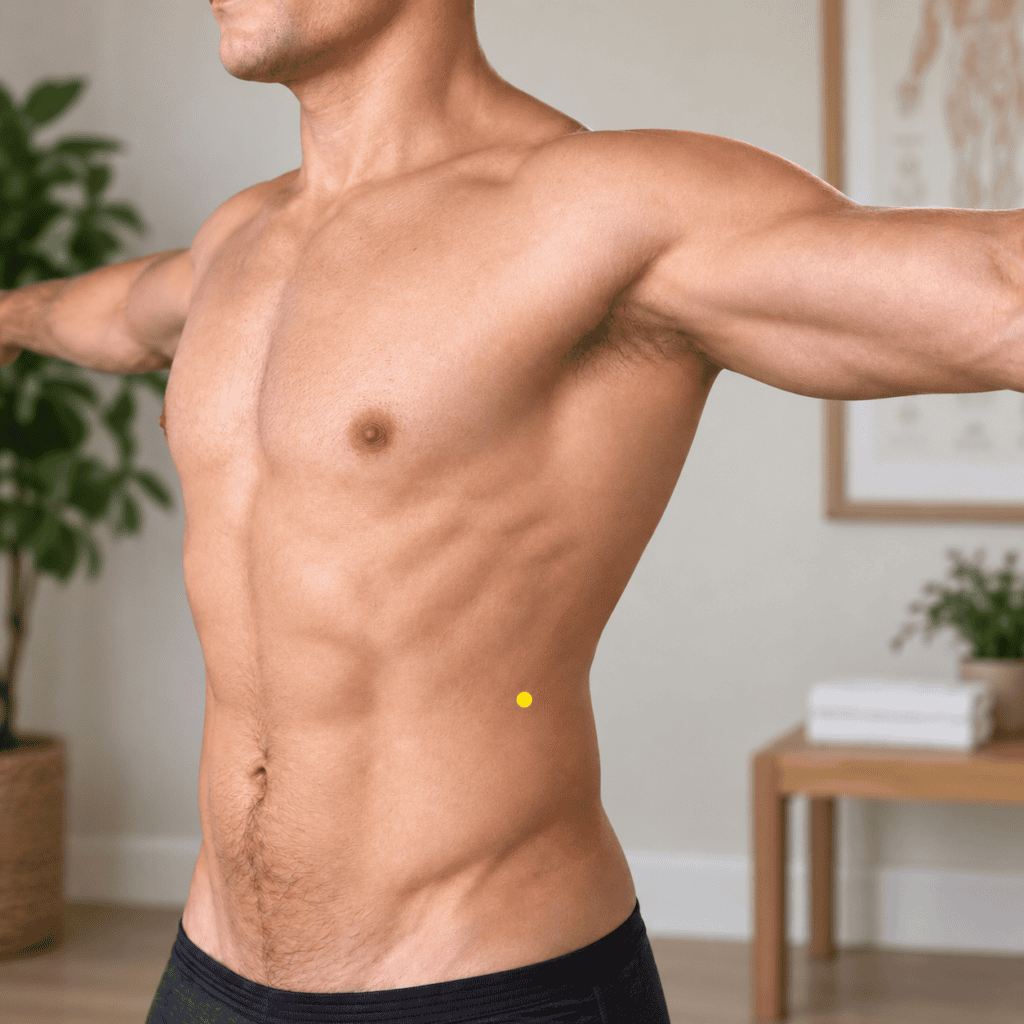
2. Press on LR13 on the side of the trunk for the Liver-Spleen conflict. LR13 sits on the side of the trunk, just below the free end of the eleventh rib, the lower floating rib, roughly level with the navel around the side of the body. Reach around and press firmly with your fingertips for one to two minutes on both sides. LR13 is called “Zhangmen,” the gathering point of the Spleen and the meeting point of the Liver and Spleen.
LR13 is especially helpful for IBS because it’s located where the Liver and Spleen meet, making it the classic point for balancing these two organs. It helps them work together, eases stress-related bloating, distension, and pain, and addresses the main pattern behind IBS. This point is what sets an IBS routine apart from a general digestive routine.
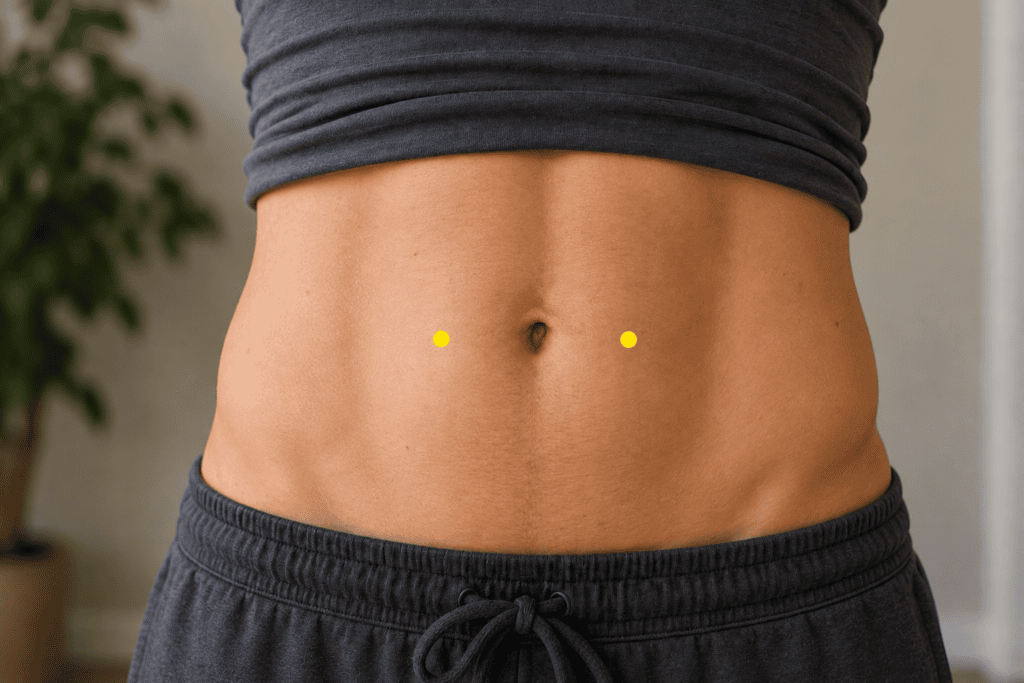
3. Press on ST25 beside the navel to regulate the bowels. ST25 sits about three finger-widths to each side of the navel, level with its center. Press gently but firmly with your fingertips for one to two minutes on both sides. ST25 is called “Tianshu,” the “Heavenly Pivot,” and it is the front-mu point of the Large Intestine.
ST25 is the main point for the intestines and is especially useful for IBS because it helps regulate the bowels, whether you have diarrhea, constipation, or both. It also helps with bloating, distension, and lower abdominal pain. For unpredictable bowels and a bloated, crampy belly, this point helps restore balance.
4. Press on SP4 on the arch of the foot to calm cramping and pain. SP4 sits on the inner arch of the foot, in the depression just below and ahead of the bony bump behind the big-toe joint, where the long foot bone meets it. Press firmly with your thumb for one to two minutes on each foot. SP4 is called “Gongsun,” and it is one of the strongest points for the middle of the body.
SP4 is a strong point for easing abdominal pain and cramping, which is often one of the worst parts of an IBS flare. It helps regulate digestion and calm a tense, painful belly. SP4 is often paired with PC6 for digestive issues, making it a reliable choice for cramping. If you have stubborn cramps, use this point along with PC6.
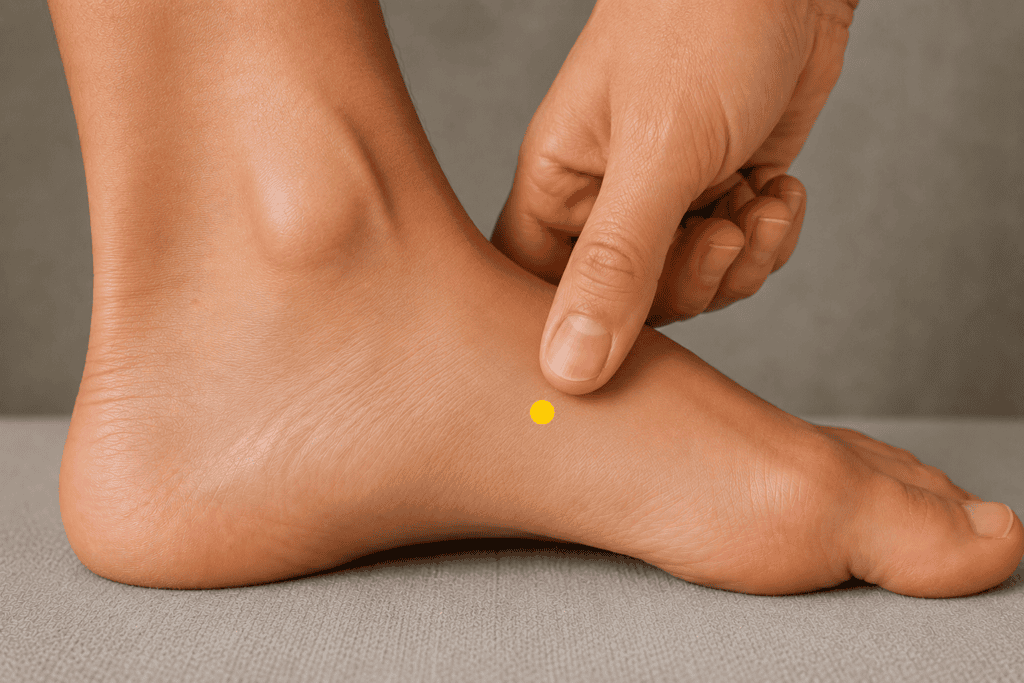
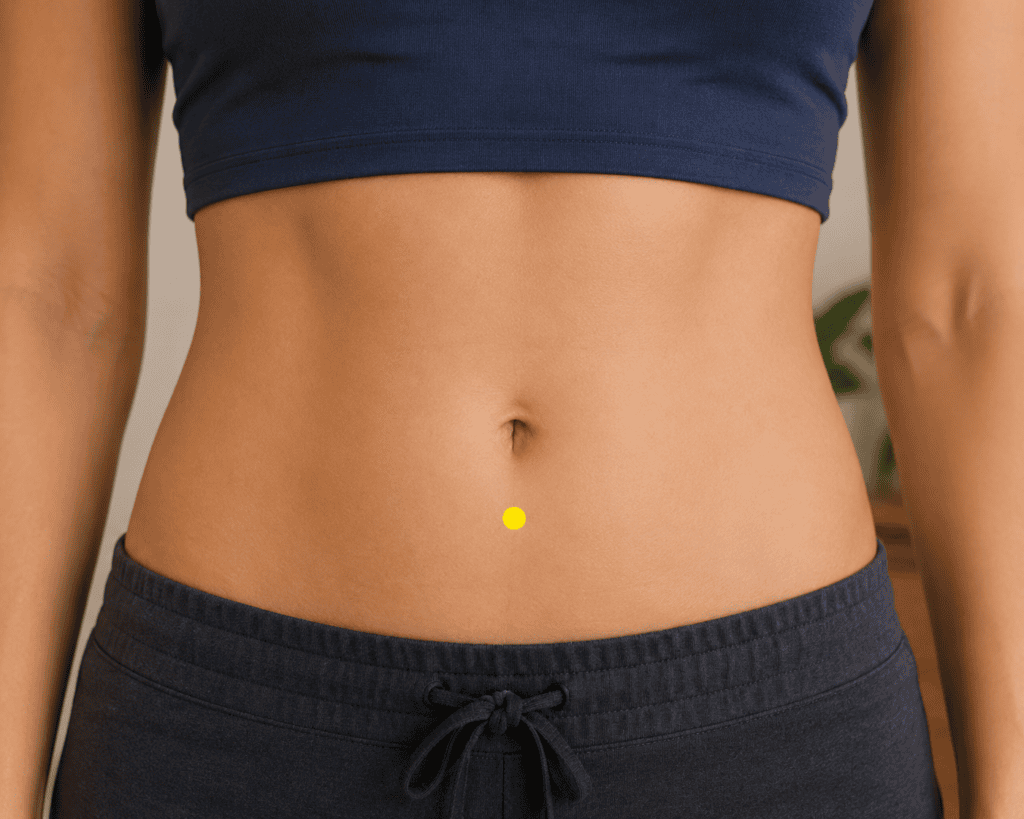
5. Press on CV6 below the navel for bloating and gas. CV6 sits on the midline of the lower abdomen, about two finger-widths below the navel. Rest your fingertips there and press gently for one to two minutes. CV6 is called “Qihai,” the “Sea of Qi,” the gathering point for the body’s Qi in the lower abdomen.
Bloating and trapped gas are common and uncomfortable symptoms of IBS. CV6 helps move stuck energy in the lower belly, which can relieve pressure and distension. For a bloated or gassy stomach, this point can help, especially when used with ST25. Holding it with a warm hand can feel extra soothing.
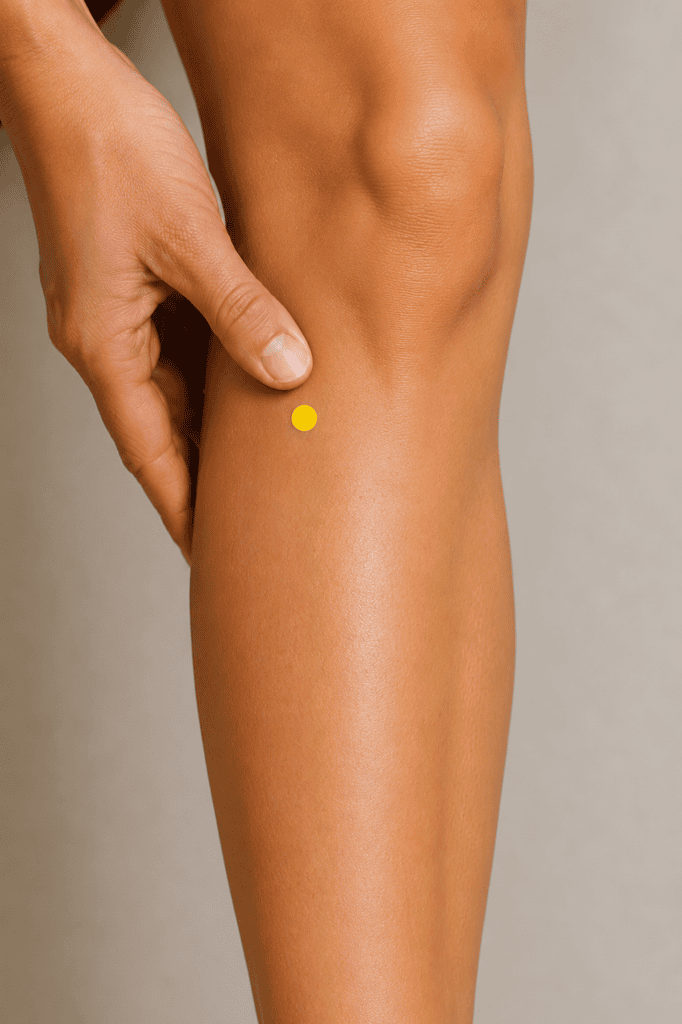
6. Press on ST36 below the knee to strengthen weak digestion. ST36 sits four finger-widths below the lower edge of the kneecap and one finger-width to the outside of the shinbone, on the muscle that rises when you flex your foot. Press firmly with your thumb for one to two minutes on each leg. ST36 is called “Zusanli,” the “Leg Three Miles,” and it is the master point for digestion.
Underneath the flare-ups, IBS usually rests on a foundation of weak, easily upset digestion, and ST36 rebuilds it by strengthening the Spleen and Stomach so the gut can process food steadily rather than reacting to everything. It is the premier point for digestive strength and overall energy, which also helps with the fatigue that chronic IBS can bring. While the other points calm a flare, this one builds underlying digestive resilience, which is why it rewards regular use between flares as much as during them. It is one of the most worthwhile points for anyone managing IBS long-term.
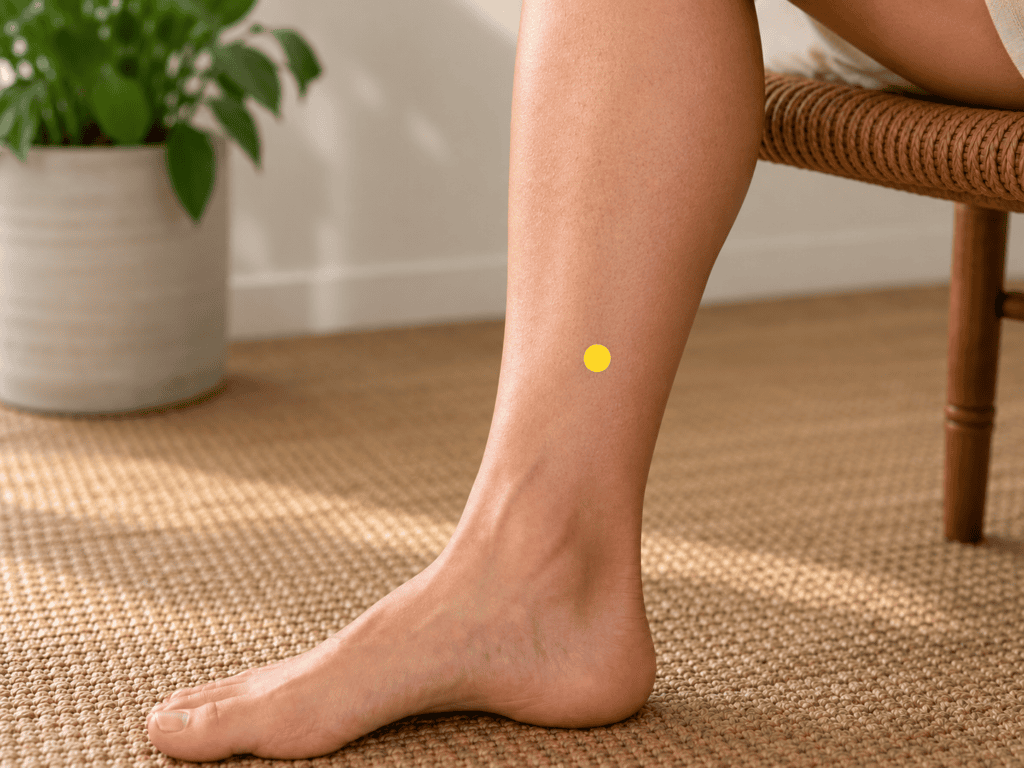
7. Press on SP6 above the inner ankle to support and settle digestion. SP6 sits four finger-widths up from the tip of the inner ankle bone, just behind the back edge of the shinbone. Press firmly for one to two minutes on each leg. SP6 is called “Sanyinjiao,” the “Three Yin Intersection,” where the Spleen, Liver, and Kidney channels meet. SP6 is avoided during pregnancy.
SP6 is especially good for IBS because it connects the Spleen and Liver channels. It supports digestion and helps calm stress, addressing both main issues in IBS. This point nourishes and balances, and it also helps calm the mind, which matters since IBS is often stress-related. Using SP6 regularly can help steady digestion over time.
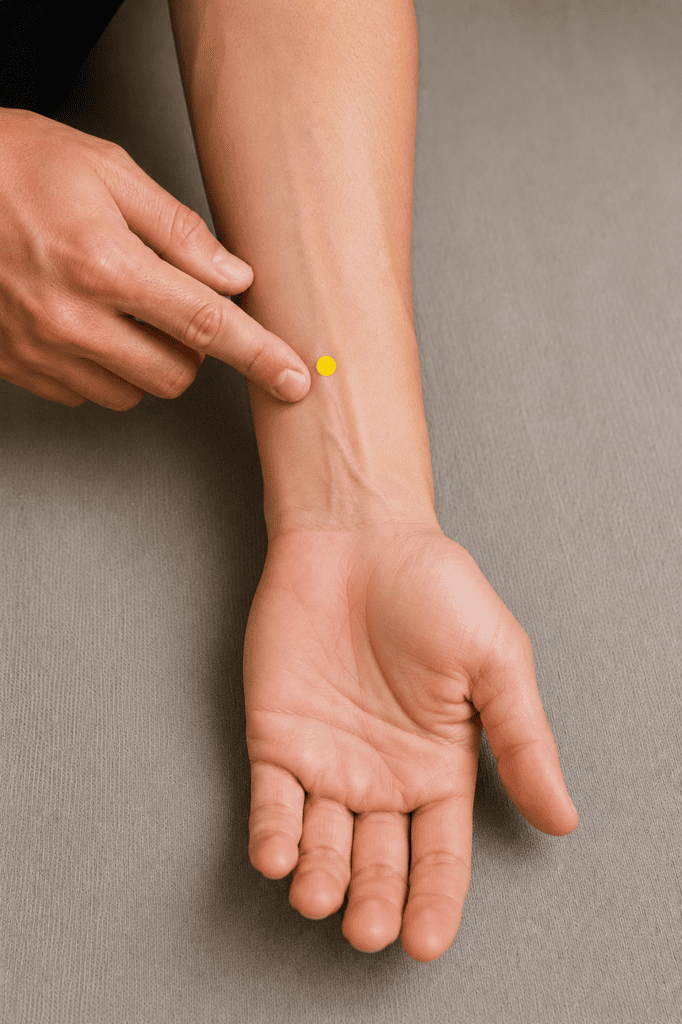
8. Press on PC6 on the inner forearm to calm the gut-brain connection. PC6 sits three finger-widths above the inner wrist crease, in the center of the forearm between the two tendons. Press firmly with your thumb for one to two minutes on each arm. PC6 is called “Neiguan,” the “Inner Pass,” and it opens the chest and calms the mind.
PC6 helps with IBS because it calms both the stomach and the mind. It can ease nausea, settle an upset stomach, and reduce anxiety at the same time. Since IBS is closely tied to stress and anxiety, this point is especially useful for people who get both stomach symptoms and worry. It’s also easy to use discreetly, wherever you are.
9. Press on Yintang between the eyebrows to quiet the stress behind flares. Yintang sits in the small hollow directly between the two eyebrows. Press steadily and hold, or make small slow circles, with your fingertip for one to two minutes. Yintang is an extra point, and it is one of the most calming points in the body.
Because stress is a major trigger for IBS, calming your mind is an important part of calming your gut. Yintang helps quiet anxiety and relax the nervous system, which can help settle digestion. For people whose IBS is made worse by worry, this point can help bring a sense of calm. Pressing it slowly while taking deep breaths can help both mind and body relax, making it a good way to finish your routine.

Why These Acupressure Points Work
In Traditional Chinese Medicine, IBS is primarily viewed as the Liver being affected by stress, which disrupts the Spleen and digestion, often on top of already weak digestion. This aligns with what modern medicine calls the gut-brain axis—the two-way link between the nervous system and the gut. The nine acupressure points listed in this article address all aspects of this pattern.
- The Liver-Spleen points (LR3, LR13) free the stress-bound Liver Qi and harmonize the conflict between the Liver and Spleen at the root of IBS.
- The bowel-and-belly points (ST25, CV6, SP4) regulate the bowels in either direction and ease the cramping, bloating, and pain.
- The Spleen-strengthening points (ST36, SP6) rebuild the weak digestion underneath the condition.
- The gut-brain points (PC6, Yintang) calm the nervous system and the anxiety that trigger and worsen flares.
How to Properly Use These Acupressure Points
Use these points during flares and regularly between flares, since IBS is a chronic condition that responds to consistent management.
- During a flare, work SP4 and ST25 for cramping and the bowels, CV6 for bloating and gas, and LR3 with PC6 and Yintang to calm the stress driving it.
- Between flares, work LR13, ST36, and SP6 regularly to harmonize the Liver and Spleen and rebuild the weak digestion underneath, which is where much of the long-term benefit comes from.
- Match the bowel points to your pattern; ST25 supports relief whether you tend to diarrhea, constipation, or a combination, and applying steady pressure can be effective for any of these issues.
- Hold each point for one to two minutes with steady pressure. Be gentle with points on your abdomen, breathe slowly, and try to use this routine regularly, not just during a crisis.
Acupressure is one of several tools for managing IBS and is most effective when combined with other healthy habits. Since stress significantly impacts IBS, incorporating calming techniques, slow breathing, regular physical activity, and quality sleep can support your gut health. Diet is also crucial, as certain foods may cause flare-ups. Many find that following a low-FODMAP diet, with proper guidance, helps identify and control their triggers. Additionally, eating meals at regular intervals, staying well-hydrated, and reducing intake of caffeine, alcohol, and high-fat foods can further aid in managing symptoms.
When to Get Professional Help
A doctor should diagnose IBS because its symptoms can resemble other conditions that need to be ruled out first. If you haven’t been evaluated, see a physician rather than assuming it’s IBS. Certain symptoms, such as blood in the stool, black or tarry stools, unexplained weight loss, fever, persistent or severe pain, difficulty swallowing, symptoms that disturb your sleep, anemia, or changes in your usual pattern, especially if you are over fifty or have a family history of colorectal cancer, inflammatory bowel disease, or celiac disease, are not typical of IBS and require prompt medical attention. A healthcare professional should evaluate these symptoms.
If you have a confirmed IBS diagnosis, acupressure can help manage daily symptoms alongside diet, stress management, and any treatment your doctor recommends, but it should complement, not replace, medical care.
Above and Beyond Acupuncture offers acupuncture, cupping, and lifestyle coaching at the North Frank Lloyd Wright Boulevard location in Scottsdale.
Schedule an appointment online to start your healing journey.
The points above are only as effective as the technique used to apply them. Where to press, how firmly, and for how long all affect the result. For a full breakdown of how to perform acupressure properly at home, read Performing Acupressure in 3 Easy Steps.

About the Publisher
Paul Kerzner, L.Ac., is a licensed acupuncturist and board-certified herbalist, as well as the founder of Above and Beyond Acupuncture in Scottsdale. His own journey from chronic patient to practicing acupuncturist shapes his commitment to providing honest, clinically grounded information about acupuncture and Traditional Chinese Medicine. Learn more about Paul and his clinical approach on the About Us page.