
Key Takeaways
- IBS is a common digestive condition characterized by recurring abdominal pain and altered bowel habits, affecting 10-15% of American adults.
- Standard care focuses on symptom management but often fails to address the underlying gut-brain axis dysfunction or other contributing factors.
- Acupuncture offers a different approach, targeting the gut-brain axis, visceral hypersensitivity, and inflammation, and shows consistent effectiveness.
- A multi-modality approach combining the low-FODMAP diet, stress management, and acupuncture provides the best chance for IBS relief.
- Patients with specific warning signs should seek medical evaluation to rule out other serious conditions before pursuing IBS acupuncture relief.

Irritable bowel syndrome is one of the most common digestive conditions in modern medicine and one of the most frustrating to manage. Patients experience recurring abdominal pain, changes in bowel habits, bloating, and gas that significantly interfere with daily life. Attacks can be triggered by specific foods, stress, hormonal cycles, or seemingly nothing at all. Many patients spend years cycling through providers, tests, and medications without finding sustained relief.
IBS affects roughly 10 to 15 percent of American adults. Women are affected roughly twice as often as men. The condition typically appears in early adulthood but can develop at any age. Despite how common it is, IBS remains poorly understood by many patients and even by some providers.
The conventional approach involves symptom-management medications, dietary modification, and general advice about stress. These help some patients but leave many still dealing with substantial symptoms. Acupuncture and Traditional Chinese Medicine offer a substantially different approach that addresses the underlying gut-brain axis dysfunction, visceral hypersensitivity, and constitutional patterns that drive the condition.
Here is what IBS actually is, why standard care often falls short, and how acupuncture treats it.
What is IBS?
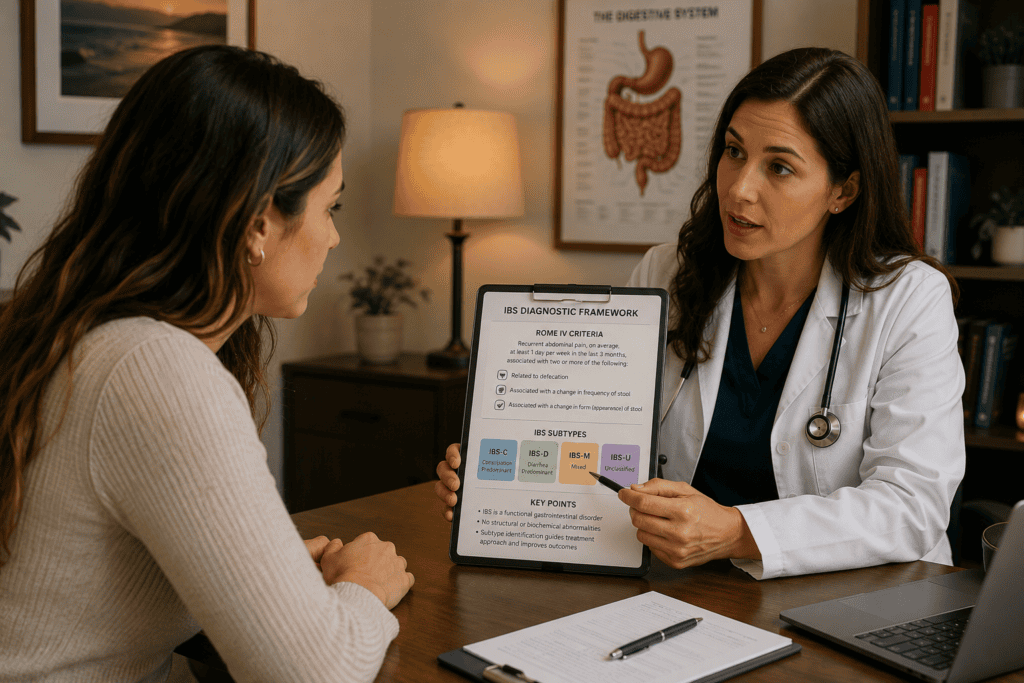
IBS is a functional gastrointestinal disorder. The term functional means that the digestive system is not working properly even though structural examination and standard testing typically show no visible damage or disease. This distinguishes IBS from inflammatory bowel disease (IBD), which includes Crohn’s disease and ulcerative colitis. IBD is characterized by visible inflammation and structural damage to the intestines, while IBS involves altered function without structural damage. These are different conditions with different treatment approaches, and confusing them can lead to inappropriate care.
IBS is diagnosed clinically using the Rome IV criteria, which require recurrent abdominal pain at least one day per week over the previous three months, associated with two or more of the following: pain related to defecation, change in stool frequency, or change in stool form.
The condition falls into several distinct subtypes based on the predominant bowel pattern.
- IBS-C (constipation-predominant) involves hard or lumpy stools with infrequent bowel movements.
- IBS-D (diarrhea-predominant) involves loose or watery stools with more frequent bowel movements.
- IBS-M (mixed) involves alternating patterns of constipation and diarrhea.
- IBS-U (unclassified) involves symptoms that do not fit clearly into the other subtypes.
Identifying the subtype matters because different subtypes respond to different treatment approaches.
The Mayo Clinic overview of IBS and the NIDDK summary provide the medical framework for understanding the condition.
The Modern Understanding of IBS
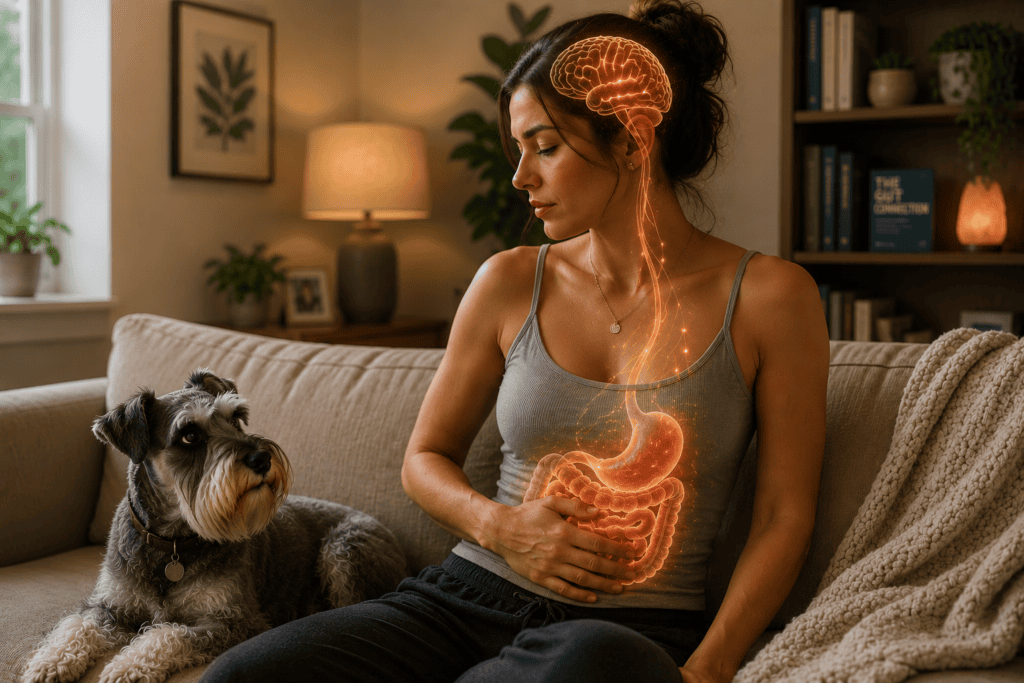
The clinical understanding of IBS has changed substantially over the past two decades. What was once dismissed as a stress-driven condition is now recognized as involving several interconnected mechanisms.
- The gut-brain axis is central to modern IBS understanding. The gut and the brain communicate constantly through neural, hormonal, and immune pathways. The vagus nerve and the enteric nervous system form a bidirectional communication network that affects digestion, mood, and stress response simultaneously. Dysfunction in this gut-brain axis is a primary driver of IBS symptoms.
- Visceral hypersensitivity means that the nerves in the gut become hyper-reactive to normal digestive processes. What would produce no sensation in a healthy gut produces pain in the IBS gut. This is similar to the central sensitization pattern seen in fibromyalgia and other chronic pain conditions.
- Altered gut motility involves either too fast or too slow movement of contents through the digestive tract, which produces the diarrhea and constipation patterns of different IBS subtypes.
- Microbiome dysfunction is increasingly recognized as a component. The bacteria that populate the digestive tract influence motility, immune function, and gut-brain signaling. Disruption of the normal microbiome contributes to IBS in many patients.
- Low-grade inflammation occurs in many IBS patients even in the absence of the visible inflammation that characterizes IBD. This inflammatory component contributes to the hypersensitivity and altered function.
- Food triggers vary by patient but often include specific fermentable carbohydrates known as FODMAPs, gluten in some patients, dairy in others, and individual patterns identified through IgG food sensitivity testing.
Why Standard Care Often Falls Short

Standard care for IBS typically involves symptom-management medications that target specific symptoms without addressing the underlying dysfunction. Antispasmodics for cramping. Antidiarrheals for IBS-D. Laxatives or newer prokinetic medications for IBS-C. Antidepressants for the pain sensitization component. These interventions help some patients but do not address the underlying gut-brain axis dysfunction, visceral hypersensitivity, or microbiome patterns that drive the condition.
The dietary advice that patients receive from standard care is often generic rather than personalized. Patients are told to eat more fiber, reduce stress, and identify their triggers, but structured evidence-based approaches like the FODMAP elimination diet or IgG testing are not consistently offered.
Many patients cycle through medications and dietary changes without finding sustained relief. Others experience partial relief but continue to have substantial symptoms that interfere with their quality of life.
How Does Acupuncture Treat IBS?

Acupuncture addresses IBS through several mechanisms that map directly onto the underlying pathophysiology.
- Gut-brain axis regulation. Acupuncture directly stimulates the vagus nerve, which is the primary parasympathetic pathway connecting the gut and the brain. Vagal stimulation supports normal digestive function and reduces the sympathetic activation that drives many IBS symptoms.
- Visceral hypersensitivity reduction. Multiple studies have documented that acupuncture reduces visceral pain sensitivity in IBS patients. This is one of the most consistent findings across acupuncture research for the condition.
- Autonomic nervous system regulation. Acupuncture shifts the autonomic balance toward parasympathetic activation, which supports normal digestive motility and secretion.
- Anti-inflammatory effects. The low-grade inflammation component of IBS responds to the documented anti-inflammatory effects of acupuncture. What Is Inflammation and Why Is It Affecting Me? covers the inflammatory issues that trigger IBS.
- Stress axis regulation. Chronic stress worsens IBS symptoms through multiple pathways. Acupuncture regulates the hypothalamic-pituitary-adrenal axis and reduces cortisol, which addresses the stress dimension of the condition. What Is Cortisol and Why Do I Have So Much of It? helps to explain this topic in more detail.
- Pattern differentiation. Traditional Chinese Medicine identifies specific patterns producing IBS in each patient. Liver Qi Stagnation invading the Spleen produces the stress-triggered pattern with pain that improves after passing stool. Spleen Qi Deficiency with Dampness produces the loose stool pattern with fatigue and bloating. Kidney Yang Deficiency produces the early morning diarrhea pattern in some patients. A licensed acupuncturist identifies which patterns are dominant and treats accordingly.
What Does Acupuncture Actually Do to Your Body? explains the effect acupuncture has on the mind and body.
The Multi-Modality Approach

IBS responds best to an integrated approach that addresses each of the components.
- The low-FODMAP diet. FODMAPs (fermentable oligosaccharides, disaccharides, monosaccharides, and polyols) are specific carbohydrates that ferment in the gut and produce symptoms in many IBS patients. The low-FODMAP diet involves a structured elimination followed by careful reintroduction to identify individual triggers. This is one of the most evidence-based dietary interventions for IBS.
- IgG food sensitivity testing. For patients whose triggers are not fully identified through FODMAP elimination, IgG food sensitivity testing can identify the delayed immune reactions that contribute to chronic inflammation and IBS symptoms. The Many Benefits of the IgG Food Sensitivity Test covers this holisitic approach in more detail.
- Gluten elimination for some patients. A subset of IBS patients have gluten sensitivity that contributes to their symptoms even in the absence of celiac disease. Getting Rid of Gluten covers this important component.
- Stress management. Given the central role of the gut-brain axis in IBS, stress management practices produce meaningful symptom improvement for many patients.
- Sleep support. Consistent sleep supports gut-brain axis regulation and reduces IBS symptom burden.
- Probiotics for some patients. Certain probiotic strains have research support for specific IBS presentations.
- Regular movement. Physical activity supports normal digestive motility and reduces the sympathetic activation that worsens symptoms.
When to See a Medical Professional
IBS that develops with certain warning signs requires medical evaluation to rule out other conditions. Symptoms warranting urgent evaluation include rectal bleeding, unexplained weight loss, iron deficiency anemia, new symptoms in patients over 50, a family history of colorectal cancer or inflammatory bowel disease, nocturnal symptoms that wake you from sleep, and progressive worsening rather than the fluctuating pattern typical of IBS.
For patients whose IBS is not fully responding to standard care, acupuncture treatment offers a substantial intervention that addresses the underlying mechanisms driving the condition. The Anxiety, Stress, and Depression page covers the nervous system framework that contributes to digestive dysfunction.
To learn more about what this clinic offers please visit: Acupuncture, Cupping & Lifestyle Coaching.
Reach out to Above and Beyond Acupuncture on North Frank Lloyd Wright Boulevard in Scottsdale to schedule a consultation.
Schedule an appointment online or call us today to start your healing journey.