Key Takeaways
- Acupressure is a safe self-care practice that can be done multiple times a day, but moderation is key.
- Overdoing acupressure can cause localized soreness and whole-body responses like lightheadedness.
- It’s best to apply pressure for 1-2 minutes, avoiding intense, prolonged pressure on any point.
- During pregnancy, certain acupressure points should be avoided; consult a professional if you’re unsure.
- Always listen to your body; acupressure should feel soothing, not painful.
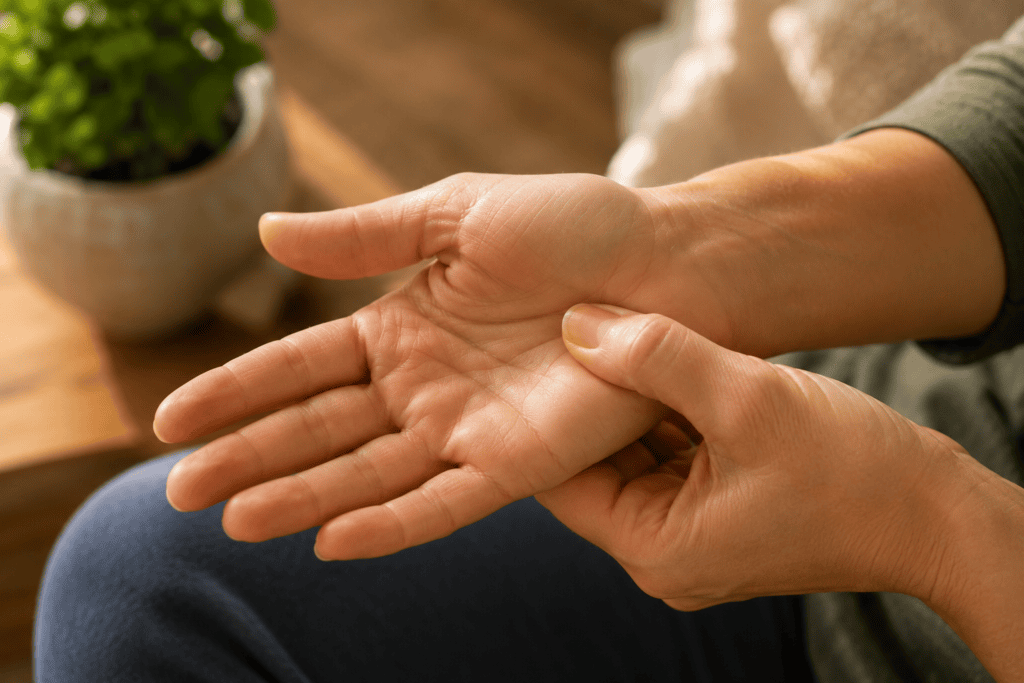
Acupressure is one of the safest self-care practices you can do at home, which helps explain its popularity. It’s very unlikely to cause serious harm. There’s no strict daily limit, and most people can use it several times a day. More isn’t necessarily better, and you should keep a few things in mind to avoid overdoing it.
This article explains how often acupressure is safe, what overdoing it looks like in practice, and how to determine the appropriate amount for you.
Is Acupressure Safe to Do Regularly?

Acupressure is a non-invasive technique involving steady pressure from your fingers and thumbs. It involves no needles or entry into the body, making it very safe and suitable for at-home use. You can press your points multiple times daily, during and after flare-ups without issue.
Regular stimulation generally yields better results than intense, one-off treatments. For most healthy individuals, applying acupressure a few times daily is recommended.
What Does Overdoing Acupressure Look Like?

Overusing acupressure generally doesn’t cause serious harm, but it can lead to localized soreness. Applying too much pressure or pressing for too long can make the area tender, sore, or slightly bruised, especially in sensitive areas like around the eyes or on thin skin. Although harmless, this indicates that the area is reacting to excessive pressure.
A second indicator involves a whole-body response. Intense or extended treatments may lead to lightheadedness, feeling spacy, fatigue, or brief disorientation. These signs show you’ve exceeded your body’s threshold for that session, but the effects typically subside with rest. They serve as feedback letting you know you may have done too much. The best course correction is to decrease intensity and allow more rest.
How Much Acupressure Is the Right Amount?
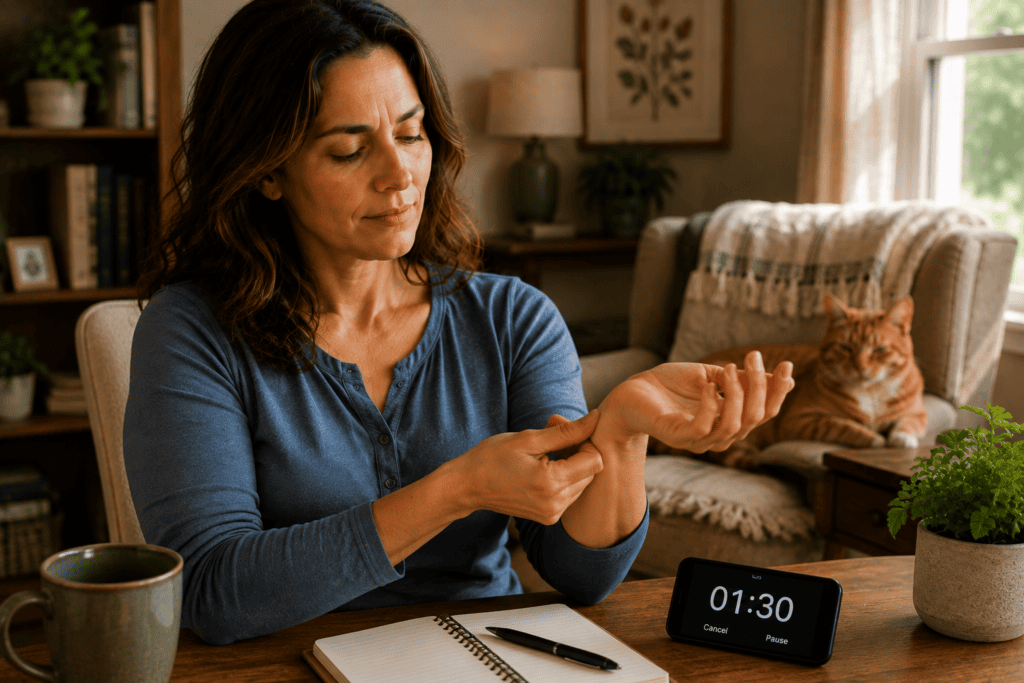
Every body is different so this answer tends to be a bit subjective based on the individual and their health condition. The recommended amount of acupressure tends to be less than many think, as it doesn’t rely on force or quantity. It’s recommended to hold each point for about one to two minutes with firm pressure that causes a pleasant, dull ache, never sharp pain.
Treat both sides of the body where points are paired, and repeat the routine several times daily rather than pressing any point extensively at one time. Applying pressure to one point for ten minutes doesn’t provide extra benefits and can cause soreness and tenderness. A steady, moderate, repetitive pressure approach is most effective for regular use as needed.
For detailed instructions, see ‘Performing Acupressure in 3 Easy Steps‘ for proper technique.
When to Take Extra Care
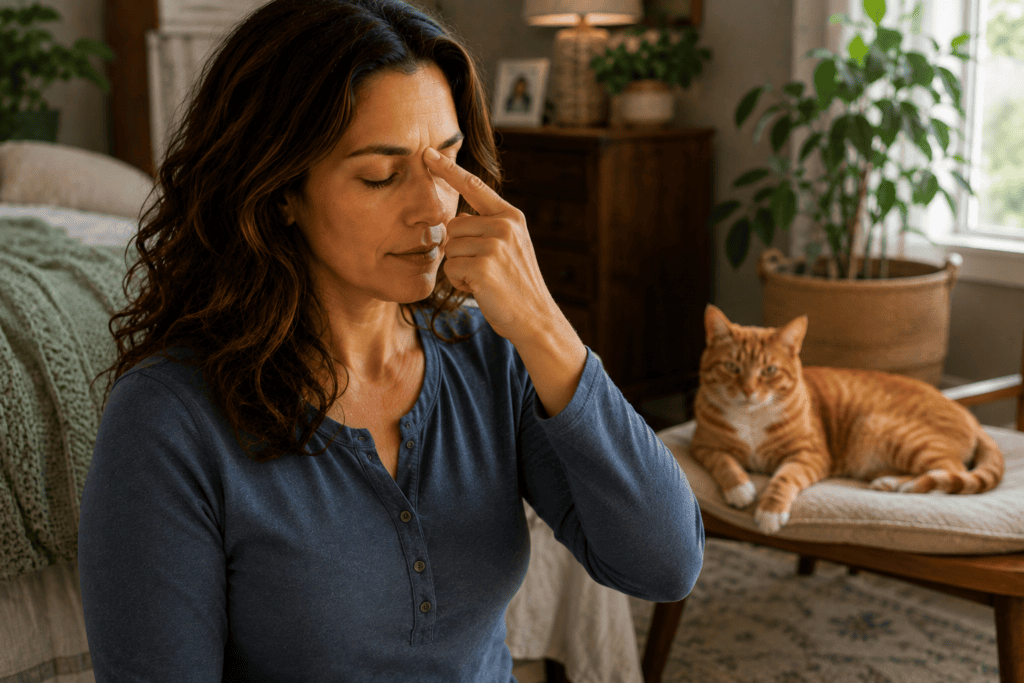
Certain situations require a lighter touch or more restraint.
The sensitive areas around the eyes should receive gentle, brief pressure rather than firm, sustained pressure. Strong acupressure points, such as LI4 in the hand and LR3 on the foot, are very powerful, and applying too much pressure to them at once can cause lightheadedness in sensitive individuals.
Pregnancy is a notable exception; several points, including LI4, SP6, BL60 and GB21, are traditionally avoided during pregnancy. Pregnant individuals should consult a professional before using these points.
If you bruise easily or take blood thinners, use gentler pressure and avoid broken, irritated, or injured skin.
Listening to Your Body

The key rule for acupressure is that it should feel soothing, not painful. It aims to reduce tension and discomfort. If a point becomes tender, if pressure no longer feels pleasant, or if you start feeling drained or lightheaded, stop and rest instead of pushing further. Drink water, take a break, and return to it later or another day.
Your body signals when enough is enough. With consistent, moderate use, acupressure is more beneficial than overdoing it all at once. Used in moderation, it can be a daily self-care practice for as long as needed without issue.
Above and Beyond Acupuncture offers acupuncture, cupping, and lifestyle coaching at the North Frank Lloyd Wright Boulevard location in Scottsdale.
Schedule an appointment online or call us today to start your healing journey.
About the Publisher
Paul Kerzner, L.Ac., is a licensed acupuncturist and board-certified herbalist, as well as the founder of Above and Beyond Acupuncture in Scottsdale. His own journey from chronic patient to practicing acupuncturist shapes his commitment to providing honest, clinically grounded information about acupuncture and Traditional Chinese Medicine. Learn more about Paul and his clinical approach on the About Us page.