
Key Takeaways
- A runny nose, sore throat, and mild fever may signal a cold or flu, so addressing symptoms early is important.
- Garlic-honey-lemon tea is an effective home remedy for colds and the flu, thanks to the immune-boosting properties of its ingredients.
- Crushing garlic and letting it sit before adding it to hot water helps enhance its beneficial compounds, while honey and lemon provide soothing effects.
- Drink the tea up to three times a day while feeling sick, and consider adding ginger or cayenne for extra benefits.
- Rest, stay hydrated, and eat properly to support recovery, but consult a doctor if symptoms are severe or persist.

Are you experiencing a runny or congested nose, sore throat, sneezing, slight fever, coughing, headache, body aches, and mild fatigue?
You may have a cold, and if your symptoms are more severe, you may have the flu. When cold and flu season arrives, we see a significant increase in patients getting sick. One of the first things we share with them is a simple home remedy they can prepare in their own kitchen, one that has helped many people over the years.
Traditional Chinese Medicine, including acupuncture and Chinese herbs, can help relieve cold and flu symptoms while supporting your body’s recovery. If you feel run down or think you may be getting sick, seeing an acupuncturist may help. However, this post mainly shares a natural home remedy made with common ingredients. Use it alongside proper care, and remember to see a professional if you need additional help.
Catch It Early

Timing is the most important part of fighting a cold or flu.
In Chinese medicine, a cold is viewed as something from outside, called wind-cold or wind-heat, entering the body. The best time to act is at the very beginning, when you first notice a scratchy throat, a chill, or feel run down. At this early stage, warm and pungent remedies that support your immune system work best. Make the tea as soon as you notice symptoms instead of waiting until you are very sick. This gives your body a better chance to fight the illness off or reduce its severity. That is why many of our patients keep these ingredients ready during winter.
The Garlic-Honey-Lemon Tea
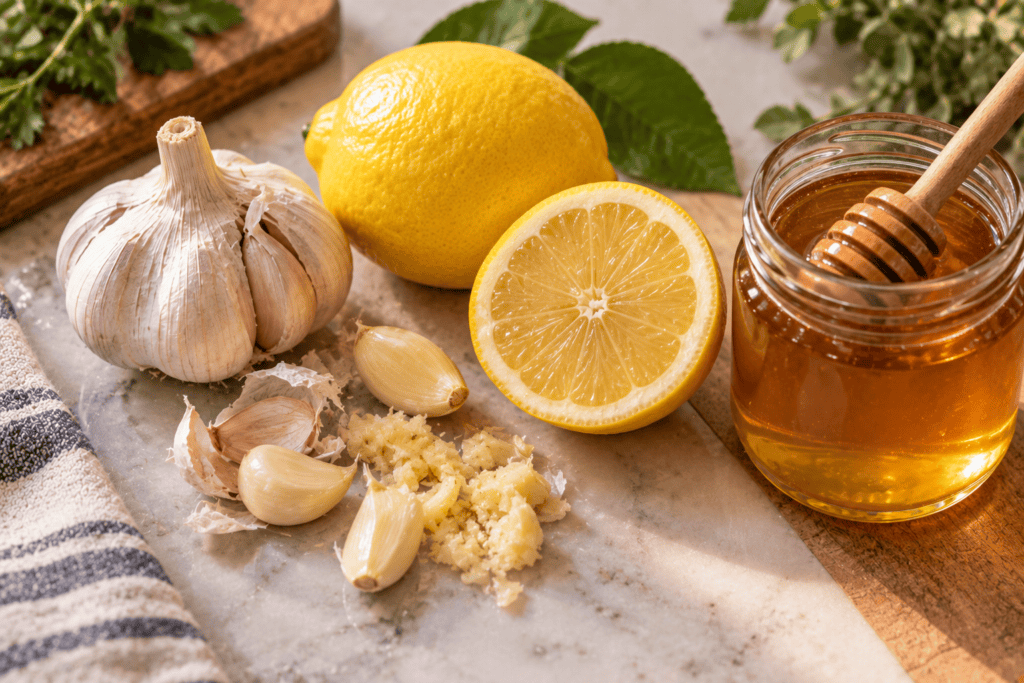
Garlic-Honey-Lemon tea is one of the most popular home remedies we recommend. It is simple, natural, and soothing, without the side effects associated with many over-the-counter medicines. This tea works best when you use it at the first sign of illness. Each of its three ingredients helps support your immune system and relieve your symptoms.
Garlic is the most potent of the three ingredients and has been used in numerous cultures to treat colds and influenza and to support immune function. It contains allicin, a compound released when garlic is crushed, which is believed to contribute to its antibacterial and antimicrobial properties. Garlic is also warming and pungent, qualities that are valued in traditional Chinese medicine for addressing colds during their early stages. Honey soothes sore throats and coughs by coating and calming the throat and has long been used as a traditional remedy. Lemon adds vitamin C and gentle warmth to the tea while helping balance the garlic’s flavor.
Together, these ingredients make a comforting beverage that may help support the immune system when illness first appears.
Here is the recipe for Garlic-Honey-Lemon tea:
- Take 3 cloves of garlic and remove the shell and skin.
- Dice or crush the cloves, crushing is better.
- Let the crushed garlic sit out for 10 minutes. This step is important.
- Boil 8 to 10 ounces of water and make a tea with the garlic.
- Add 1 tablespoon of organic honey.
- Add the juice of 1 lemon.
- Allow the contents to sit and steep for a few minutes.
- Drink the tea.
- Eat the garlic.
Why the Steps Matter
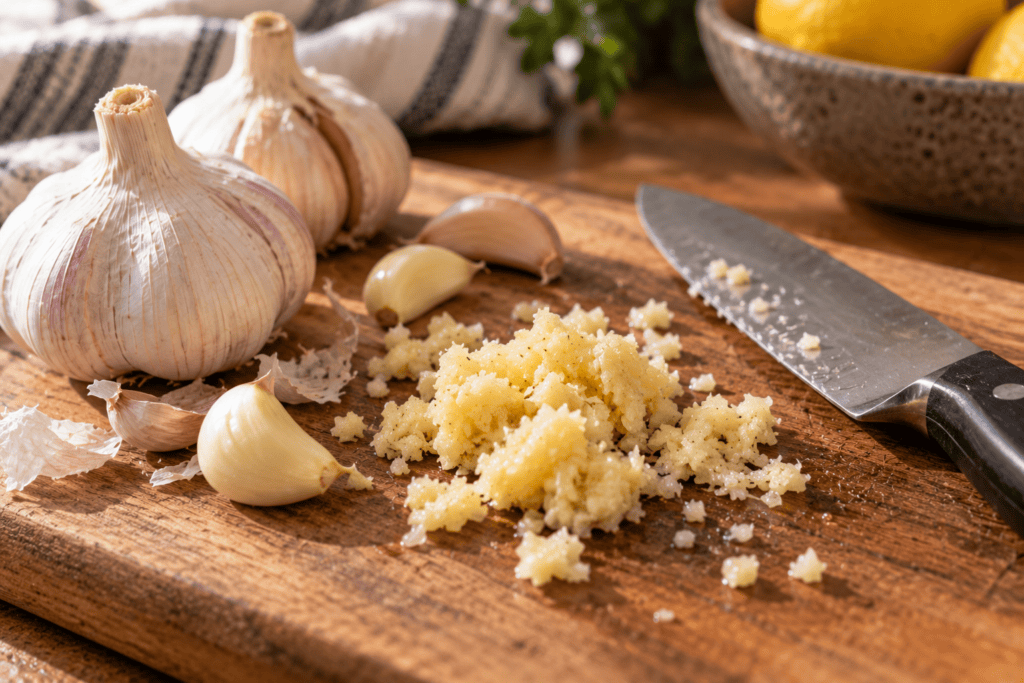
Some of these steps are easy to overlook, but they are essential for making the remedy effective.
Crushing the garlic, rather than simply chopping it, helps release more of its beneficial compounds. Letting the crushed garlic rest for ten minutes is also important, as this allows the allicin to form. Adding the garlic to hot water too soon can destroy the allicin before it develops. It is also best to let the water cool slightly before adding the honey and lemon, since very hot water may reduce the benefits of raw honey and vitamin C. Finally, eat the garlic at the end to get even more of its benefits.
You can drink this tea up to three times a day. It works best if you use it as soon as you start feeling sick, but it can still help even after your illness has progressed.
Tips and Variations
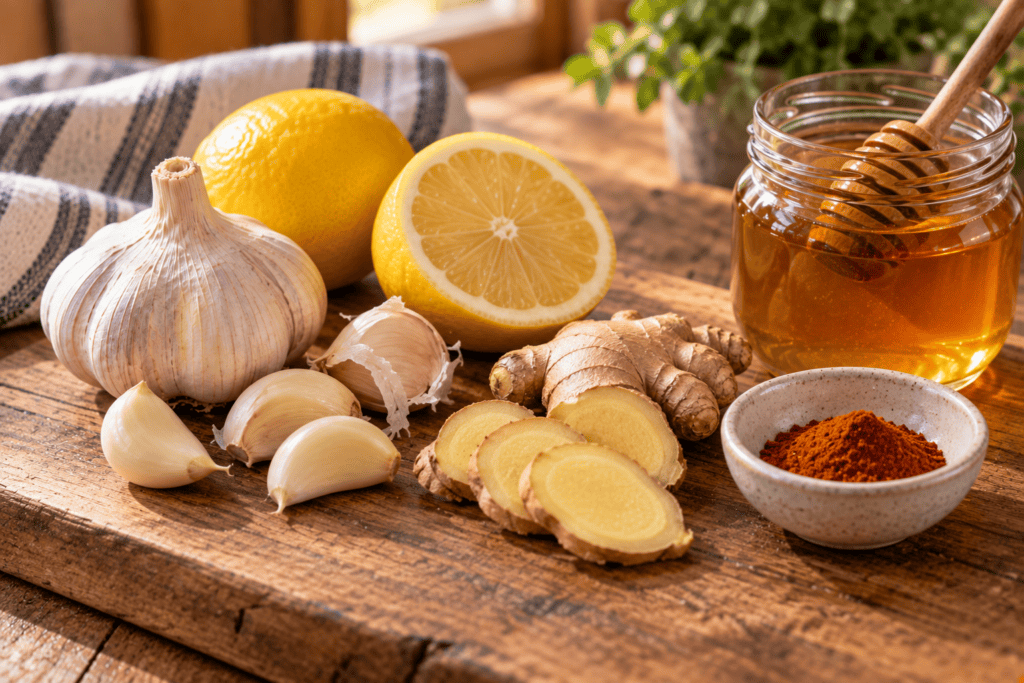
The tea is bold and potent, but adding a few ingredients can make it easier to drink and even more beneficial.
Consider adding several slices of fresh ginger, which may provide a warming effect, help settle the stomach, support the body during a cold, and mellow the garlic’s flavor. For those who prefer a spicier taste, a pinch of cayenne pepper may help relieve congestion. If raw garlic is too pungent to consume, mince it and swallow it with a small amount of honey. Prepare the tea fresh each time, as its beneficial compounds are most potent immediately after preparation. If you frequently get ill in winter, keep garlic, lemon, and honey on hand so you can prepare the tea as soon as symptoms start.
Support the Remedy With the Basics

This tea works best when you also take good care of yourself as soon as you start feeling sick.
- Rest is most important because your body can fight illness more effectively when you give it time.
- Drink plenty of water and warm beverages to soothe your throat and ease congestion.
- Choose warm, simple foods, such as broth, instead of cold or heavy meals, since they are gentler on your body.
- Steam from a hot shower or a bowl of hot water may help loosen congestion, while staying warm supports your body.
- Getting enough sleep helps your immune system do its job.
- Acupuncture may also ease symptoms and support recovery, especially if you get sick often or take a long time to get better.
When to See a Doctor

This remedy may ease a common cold or mild flu, though medical care may sometimes be needed.
Never give honey to a child under one year old. See a doctor for a high or persistent fever, severe symptoms, or an illness lasting more than ten days. If your cold improves but then suddenly worsens, you may have a secondary infection. Seek medical help immediately if you have difficulty breathing, chest pain, or a severe headache with a stiff neck. Take extra care with babies, older adults, and anyone with a chronic illness or a weakened immune system. A sudden, severe illness with a high fever and body aches could be the flu, so talk to a doctor, especially if you are at higher risk.
We hope you stay healthy this season. If you do get sick, this simple home remedy can complement rest and proper care.
Above and Beyond Acupuncture offers acupuncture, cupping, and lifestyle coaching at the North Frank Lloyd Wright Boulevard location in Scottsdale.
Schedule an appointment online to start your healing journey.

About the Publisher
Paul Kerzner, L.Ac., is a licensed acupuncturist and board-certified herbalist, as well as the founder of Above and Beyond Acupuncture in Scottsdale. His own journey from chronic patient to practicing acupuncturist shapes his commitment to providing honest, clinically grounded information about acupuncture and Traditional Chinese Medicine. Learn more about Paul and his clinical approach on the About Us page.