Key Takeaways
- Frequent burping may result from swallowing air, overeating, stress, or digestive problems, while occasional burping is normal.
- Traditional Chinese Medicine views belching as a disturbance of Stomach Qi, commonly caused by food stagnation or emotional stress.
- Nine acupressure points help direct Stomach Qi downward and relieve burping-related discomfort.
- Consider lifestyle changes like eating more slowly and avoiding carbonated drinks to reduce burping.
- Seek professional help if burping continues along with persistent symptoms such as heartburn or upper abdominal pain.

Do you frequently burp after eating or in between meals?
Occasional burping is normal and simply indicates that your body is releasing air you swallowed while eating or drinking. However, frequent burping can be uncomfortable or embarrassing. You might feel full and tight in your upper abdomen, taste sour, or feel unsettled. Usually, frequent burping happens because you swallow air without realizing it, eat too quickly or too much, drink carbonated beverages, or feel stressed. It can also be associated with reflux or indigestion. Acupressure offers a simple way to relax your stomach and promote proper energy flow.
In Traditional Chinese Medicine, belching signals that the Stomach Qi is moving abnormally. Normally, the stomach pushes food downward, but when this flow is obstructed, the energy rises instead, causing burping. There are three main causes: First, food stagnation from overeating or eating too quickly can leave food in the Stomach, causing fullness, sour or foul-smelling burps, and relief after burping. Second, emotional factors such as stress, frustration, or tension can disturb Liver Qi, affecting the Stomach and causing increased burping, tightness under the ribs, and frequent sighs. Third, weakness of the Stomach and Spleen can impair digestion, causing burping even with small meals and feelings of heaviness or fatigue.
Here are nine acupressure points to help direct Stomach Qi downward, move lodged food, soothe the Liver, and support digestion.
What Acupressure Points to Press and Why
1. Press on CV12 above the navel to settle the Stomach. CV12 sits on the midline of the abdomen, halfway between the navel and the lower end of the breastbone, about four finger-widths above the belly button. Press gently but steadily with your fingertips for one to two minutes, or make slow clockwise circles. CV12 is called “Zhongwan,” the gathering point of the Stomach.
CV12 sits directly above the stomach and helps keep it functioning smoothly. Pressing this area can help reduce fullness, pressure, and the urge to burp by encouraging the stomach to move contents downward rather than letting air and gas rise. Wait at least an hour after a large meal before applying firm pressure, and use gentle pressure if your stomach feels tender.

2. Press on CV10 above the navel to move food downward. CV10 sits on the midline of the abdomen, about two finger-widths above the navel, below CV12. Press gently for one to two minutes, or make slow clockwise circles. CV10 is called “Xiawan,” the “Lower Stomach Duct.”
CV12 lies over the main part of the stomach, while CV10 is closer to the point where the stomach empties into the intestines. Applying pressure to CV10 helps move food out of the stomach, which is especially useful for relieving belching caused by food staying too long after a large or greasy meal. Using CV12 first, then CV10, aligns with the natural downward movement of Stomach Qi.
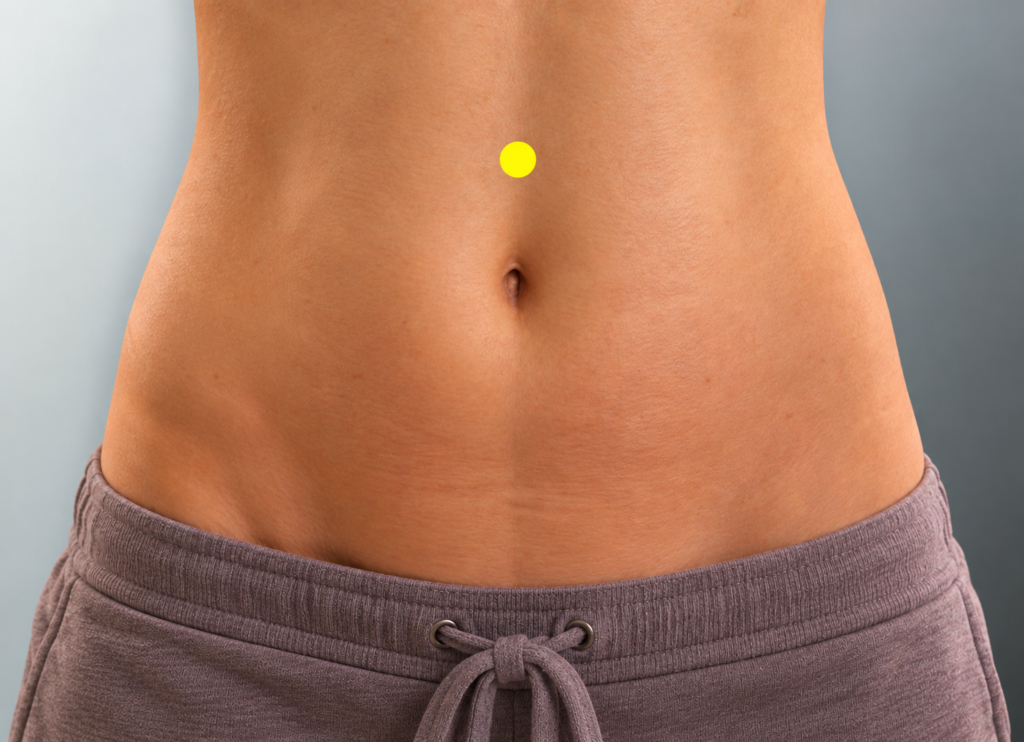
3. Press on CV17 at the center of the chest to calm rising Qi. CV17 sits on the midline of the breastbone, at the level of the space between the nipples. Press gently and steadily with your fingertip for one to two minutes, breathing out slowly. CV17 is called “Shanzhong,” the gathering point of Qi in the chest.
When Stomach Qi rises through the chest, CV17 is a traditional point to soothe it and guide it downward. Applying pressure here can alleviate the tight, full sensation in your chest associated with frequent belching. Exhale slowly while pressing this point to help reduce air swallowing caused by shallow, tense breaths.

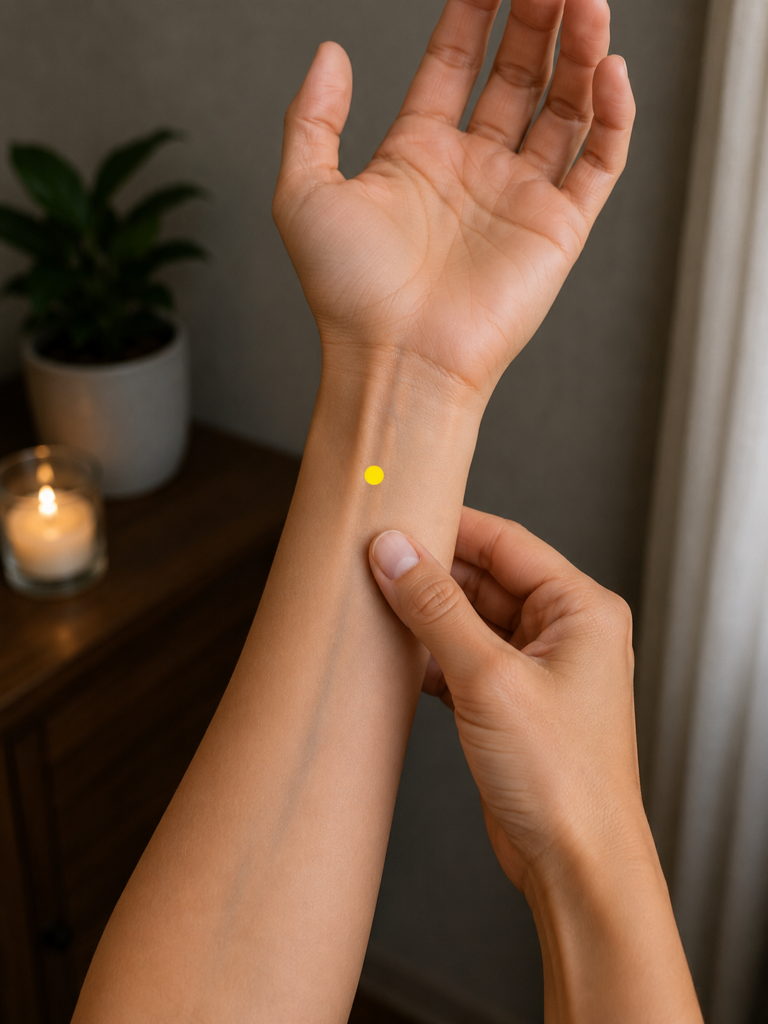
4. Press on PC6 on the inner forearm to send the Stomach Qi down. PC6 sits three finger-widths above the inner wrist crease, in the center of the forearm between the two tendons. Press firmly with your thumb for one to two minutes on each arm. PC6 is called “Neiguan,” the “Inner Pass.”
PC6 is essential when Stomach Qi moves upward, like in nausea, belching, or hiccups. It helps open the chest, soothe the stomach, and relax the mind, and is particularly useful for stress-related belching. Located on your wrist, it can be pressed quietly and easily, even during meals or work.
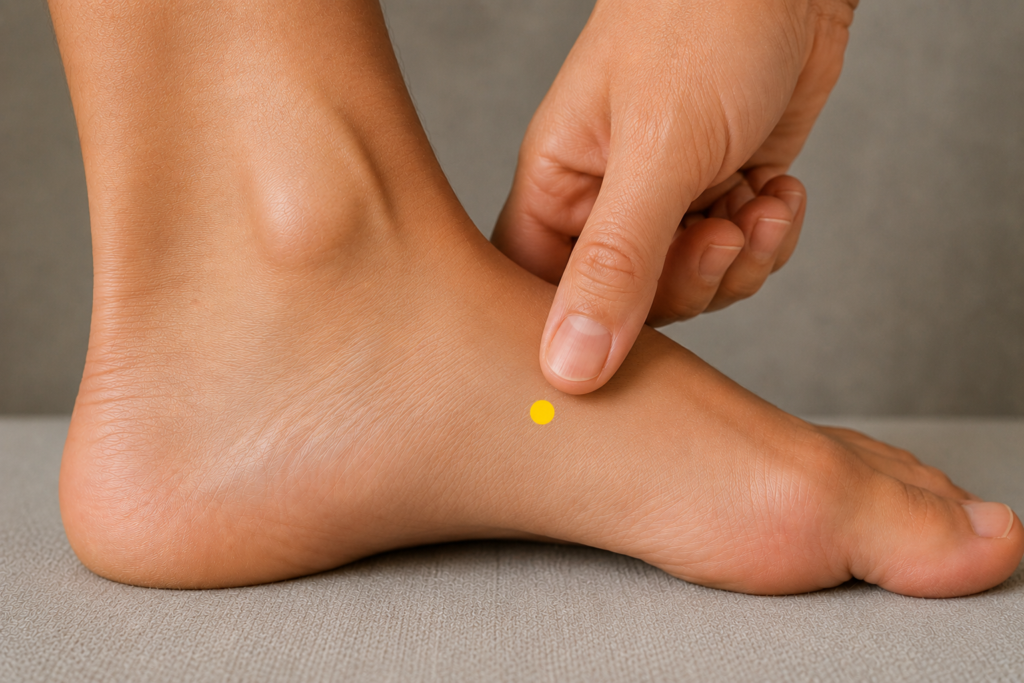
5. Press on SP4 on the arch of the foot, PC6’s classic partner. SP4 sits on the inner arch of the foot, in the depression just below and ahead of the bony bump behind the big toe joint. Press firmly with your thumb for one to two minutes on each foot. SP4 is called “Gongsun.”
SP4 and PC6 are a well-known acupressure duo for stomach problems, located on the wrist and foot. People commonly use them together to relieve fullness, belching, and upper belly discomfort. SP4 also supports the Spleen and Stomach, making it helpful if your belching results from sluggish digestion.
6. Press on ST36 below the knee to strengthen digestion. ST36 sits four finger-widths below the lower edge of the kneecap and one finger-width to the outside of the shinbone, on the muscle that rises when you flex your foot. Press firmly with your thumb for one to two minutes on each leg. ST36 is called “Zusanli,” the “Leg Three Miles.”
ST36 is the primary point for the stomach, aiding digestion and directing Stomach Qi downward. It is particularly beneficial if you burp after small meals, feel heavy or tired after eating, or experience slow digestion. Regular use can help improve your digestion’s stability over time.

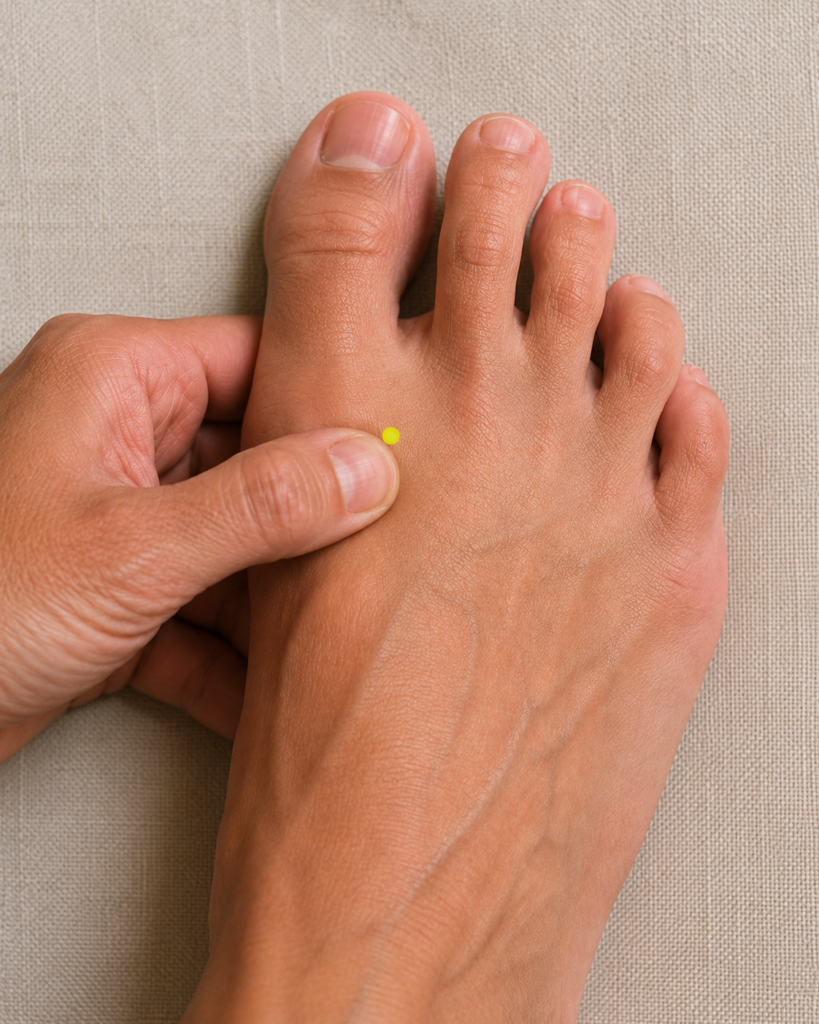
7. Press on LR3 on the top of the foot for stress-driven belching. LR3 sits on the top of the foot, in the webbing between the big toe and second toe, about two finger-widths back where the bones meet in a small hollow. Press firmly with your thumb for one to two minutes on each foot. LR3 is called “Taichong,” and it is the primary point for moving stuck Liver Qi.
If you observe increased burping during stress, rushing, or frustration, Traditional Chinese Medicine explains this as the Liver influencing the Stomach and directing its energy upward. LR3 helps to free stagnant Liver Qi and reduce tension, relieving pressure on the stomach. This point is particularly beneficial if stress worsens your belching.
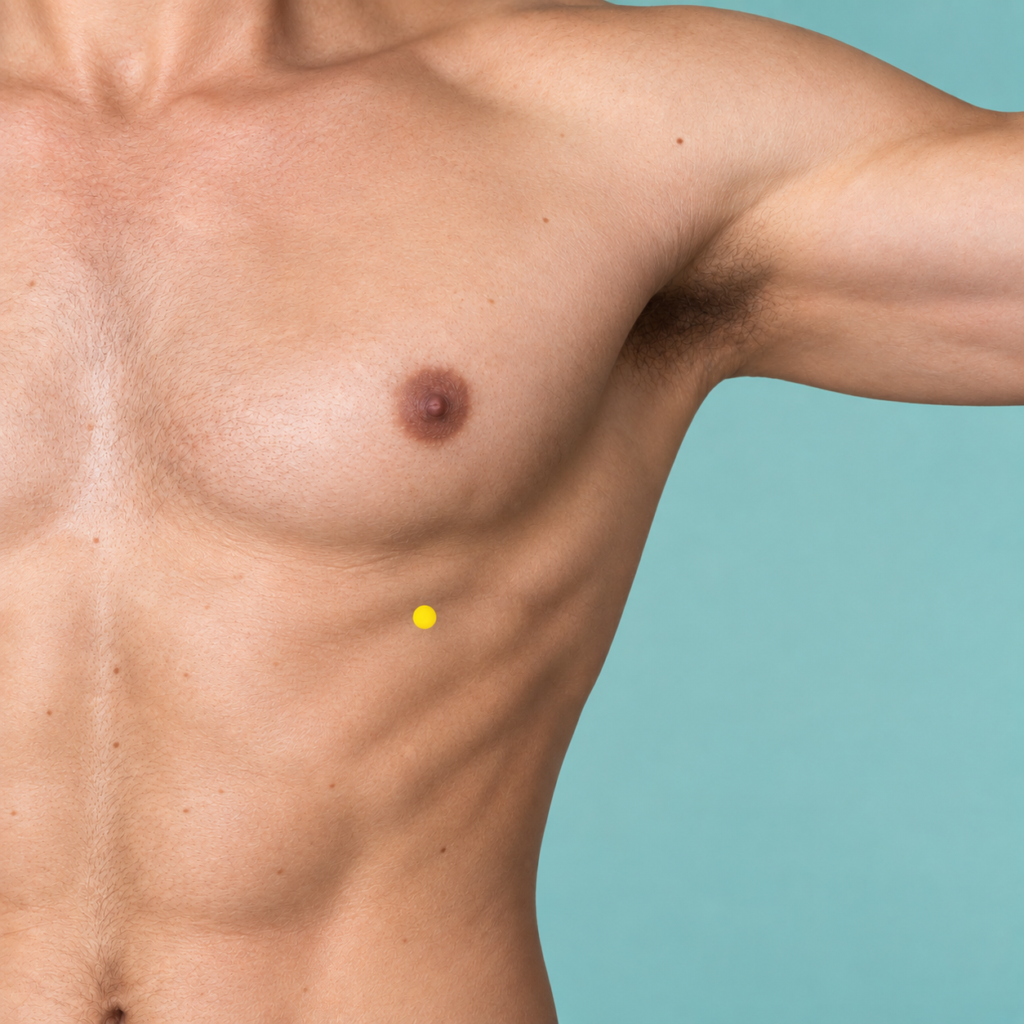
8. Press on LR14 below the chest for belching with tightness under the ribs. LR14 sits on the chest directly below the nipple, in the space between the ribs about two ribs down. Press gently with your fingertips for one to two minutes on both sides. LR14 is called “Qimen,” the “Gate of Hope,” and it is where the Liver’s energy gathers at the front of the body.
LR14 is the primary point where the Liver and Stomach connect during treatment. It targets issues like belching, sour regurgitation, and a feeling of fullness or tightness beneath the ribs. Applying pressure here can relieve tension in the upper abdomen and chest caused by stress-related digestive issues. When used together with LR3, it helps calm the Liver from both above and below. Always apply gentle pressure.
9. Press on ST44 between the toes for sour, hot belching. ST44 sits on the top of the foot, in the webbing between the second and third toes, just where they meet. Press firmly with your thumb for one to two minutes on each foot. ST44 is called “Neiting,” and it clears heat from the Stomach.
If your belching has a sour or unpleasant taste and is accompanied by burning, bad breath, or an intense urge to overeat, Chinese medicine often interprets this as stomach heat caused by sluggish digestion. ST44 helps dissipate this heat and calms the stomach. It is particularly beneficial after consuming rich, spicy, or greasy foods.

Why These Acupressure Points Work
In Traditional Chinese Medicine, belching occurs when Stomach Qi rises instead of descending. This may result from food stagnation, stress affecting the stomach, or weak digestion. The nine points listed above address all of these issues.
- The abdomen and chest points (CV12, CV10, CV17) settle the Stomach, move food downward, and calm the rising Qi.
- The classic stomach pairing (PC6, SP4) and ST36 direct the Stomach Qi down and strengthen digestion.
- The Liver points (LR3, LR14) release the stress and tension that push the Stomach Qi upward.
- The heat-clearing point (ST44) cools the heat behind sour, foul belching.
How to Properly Use These Acupressure Points
Consider using these points after meals or whenever you experience increased belching. Also, combining them with habits that reduce air intake can help.
- About an hour after eating, gently press CV12, then CV10, in slow clockwise circles. After that, press PC6 and SP4.
- If stress makes you burp more, add LR3 and LR14 to your routine. You can also press PC6 whenever you feel tension building.
- If you have sour or heavy belching after a large or rich meal, try adding ST44 and CV10.
- Use ST36 daily to strengthen your digestion over time.
- Hold each point for one to two minutes. Use gentle pressure on your belly and chest, and remember to breathe slowly and deeply from your belly while you press.
Many instances of excess belching are caused by unknowingly swallowing air. To reduce this, consider changing some habits: eat more slowly, chew thoroughly, and avoid talking while chewing. Limit carbonated drinks, gum, and hard candies, and avoid using straws, as these increase the air in your stomach. Smaller meals and avoiding lying down immediately after eating can help. Quitting smoking and ensuring dentures fit well are also beneficial. Some people habitually swallow air, especially when anxious, which leads to burping. Practicing slow belly breathing can help break this pattern. Keeping a food diary may also help identify foods that trigger increased belching.
When to Get Professional Help
If you continue to belch frequently, even after making these adjustments, and especially if you experience ongoing heartburn, a sour taste, feeling full after eating very little, or pain in your upper abdomen, see your doctor. These symptoms may indicate treatable conditions like reflux, gastritis, ulcers, or stomach infections. Seek medical attention immediately if you have difficulty or pain when swallowing, unexplained weight loss, vomiting (including blood or coffee-ground appearance), black or tarry stools, or new digestive issues after age fifty. Visit the emergency room if your belching is accompanied by chest pain or pressure, shortness of breath, sweating, or pain radiating to your arm or jaw, as these could signal heart problems that sometimes mimic indigestion.
Acupressure is a simple, low-risk way to soothe your stomach, but it should complement medical treatment when necessary.
Above and Beyond Acupuncture offers acupuncture, cupping, and lifestyle coaching at the North Frank Lloyd Wright Boulevard location in Scottsdale.
Schedule an appointment online to start your healing journey.
The points above are only as effective as the technique used to apply them. Where to press, how firmly, and for how long all affect the result. For a full breakdown of how to perform acupressure properly at home, read Performing Acupressure in 3 Easy Steps.
If belching mostly comes with heartburn, acupressure for acid reflux covers that condition; if bloating and lower belly gas are the bigger problem, acupressure for bloating and gas is the companion article.

About the Publisher
Paul Kerzner, L.Ac., is a licensed acupuncturist and board-certified herbalist, as well as the founder of Above and Beyond Acupuncture in Scottsdale. His own journey from chronic patient to practicing acupuncturist shapes his commitment to providing honest, clinically grounded information about acupuncture and Traditional Chinese Medicine. Learn more about Paul and his clinical approach on the About Us page.