Key Takeaways
- Complex regional pain syndrome (CRPS) causes intense pain, heightened sensitivity, and various physical changes after an injury.
- Acupressure for CRPS includes nine specific points to calm the nervous system, promote Qi and Blood flow, and alleviate pain without touching the affected area.
- Key acupressure points include Ear Shenmen, HT7, and LI4, among others, which help balance the body’s energy and reduce pain.
- Apply gentle pressure and perform the routine consistently, ensuring no direct contact with the painful limb.
- Consult a healthcare professional if the pain intensifies, spreads, or if there are worrying signs such as swelling or changes in temperature.
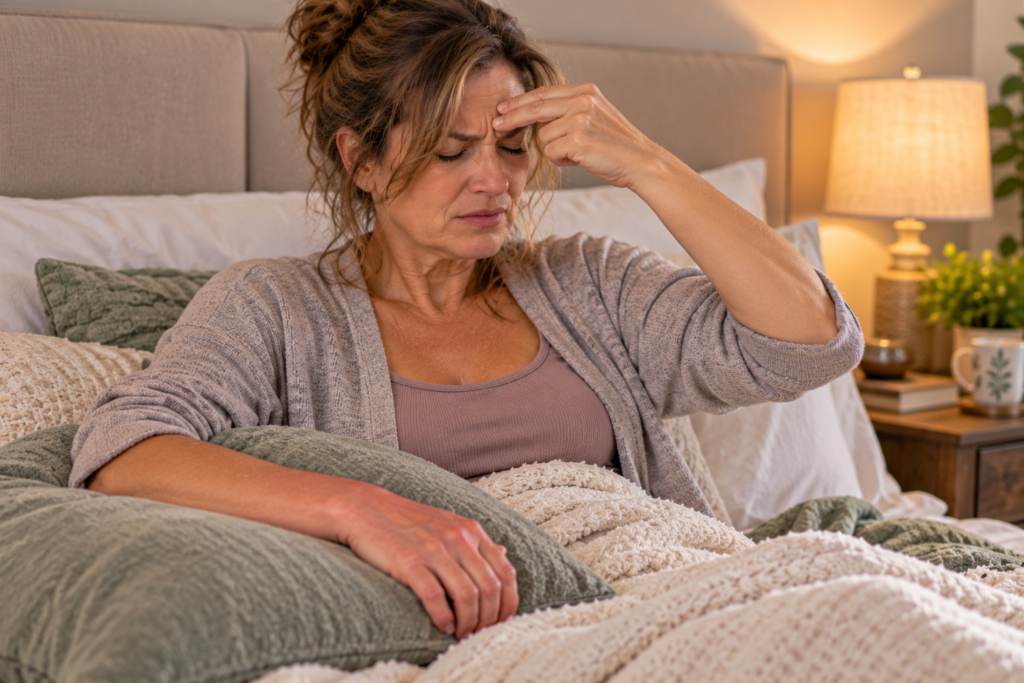
Is your arm, hand, leg, or foot so painful that even a light touch, a bedsheet, or a gentle breeze becomes unbearable?
This may suggest complex regional pain syndrome, or CRPS, which often starts after an injury, surgery, fracture, or sprain, even minor ones. The pain is usually more severe and lasts longer than expected. Patients may experience constant burning, throbbing, or stabbing pain, along with increased sensitivity to touch and temperature, swelling, and changes in skin color and temperature, such as redness and warmth or blue and coldness. Other signs include changes in skin, hair, and nail growth; stiffness; and difficulty moving the affected limb. CRPS results from nerve dysfunction and abnormal pain processing by the brain and nervous system. Early, comprehensive treatment provides the best chance of recovery. Acupressure can help by calming the nervous system and encouraging the flow of Qi and Blood without directly touching the painful area.
The key rule in this routine is to avoid pressing the affected limb. For CRPS, touching the painful region may intensify the pain and cause flare-ups. Instead, the routine targets points on the ears, head, wrists, and unaffected limbs, along with a mirror-image point on the opposite side of the body. This mirrors a traditional acupuncture method used when directly touching the painful area isn’t possible.
In Traditional Chinese Medicine, CRPS is regarded as a severe blockage of Qi and Blood within the affected limb. The injury impedes the flow, and the channels cannot clear it on their own. Initially, the limb often appears red, warm, and swollen. As stagnation worsens, it may turn bluish, cool, and stiff. Burning or shooting pain indicates wind and heat in the channels, while heightened sensitivity reflects a reactive Shen, the mind and spirit. Persistent pain depletes the body’s Qi and Blood.
Here are nine acupressure points to calm the Shen, ease stagnant Qi and Blood, and boost energy.
What Acupressure Points to Press and Why
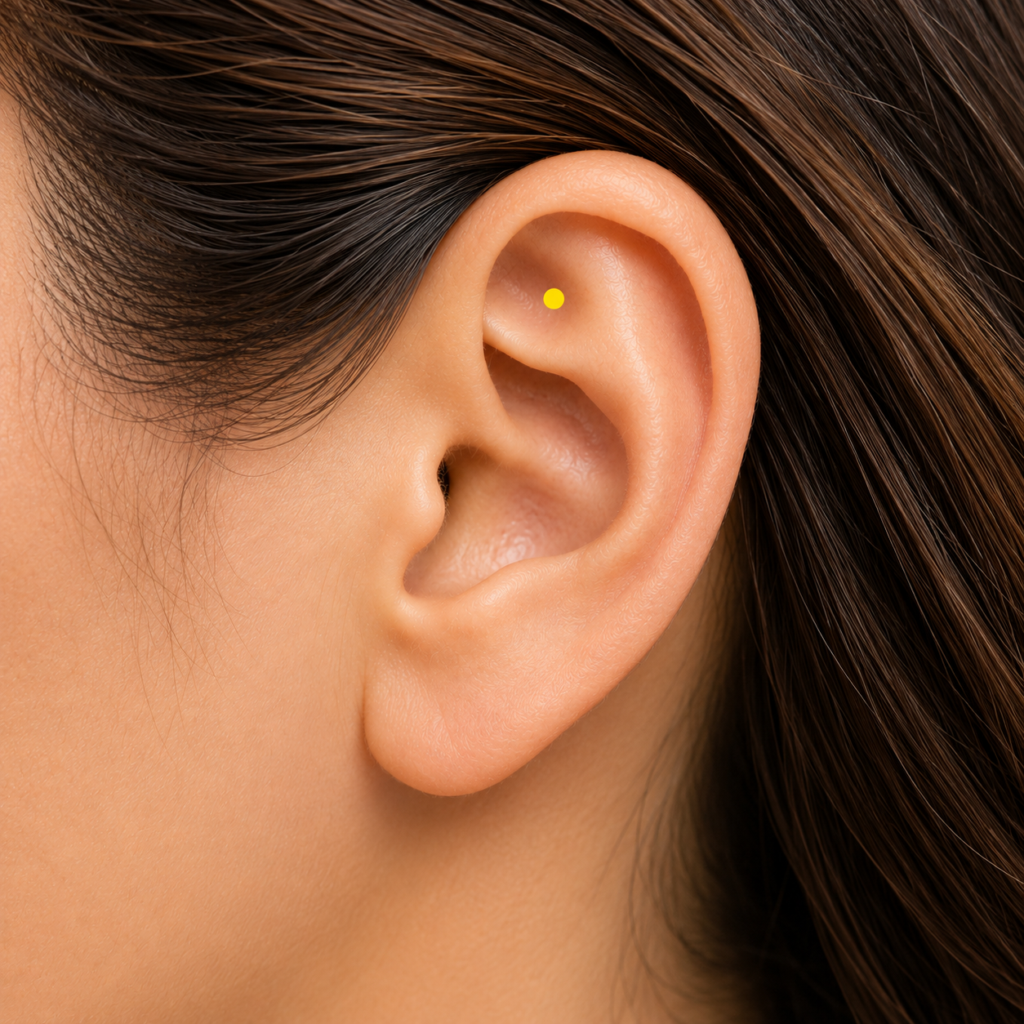
1. Press Ear Shenmen to calm pain without touching the limb. Ear Shenmen sits in the upper part of the ear, in the triangular hollow near the top, at its apex. Press gently with a fingertip or squeeze between the finger and thumb for one to two minutes on each ear.
Ear Shenmen is a frequently used point to ease pain and soothe the nervous system because it is located on the ear, allowing it to be pressed without touching the painful limb. It is the gentlest starting point and should be revisited during each flare-up.
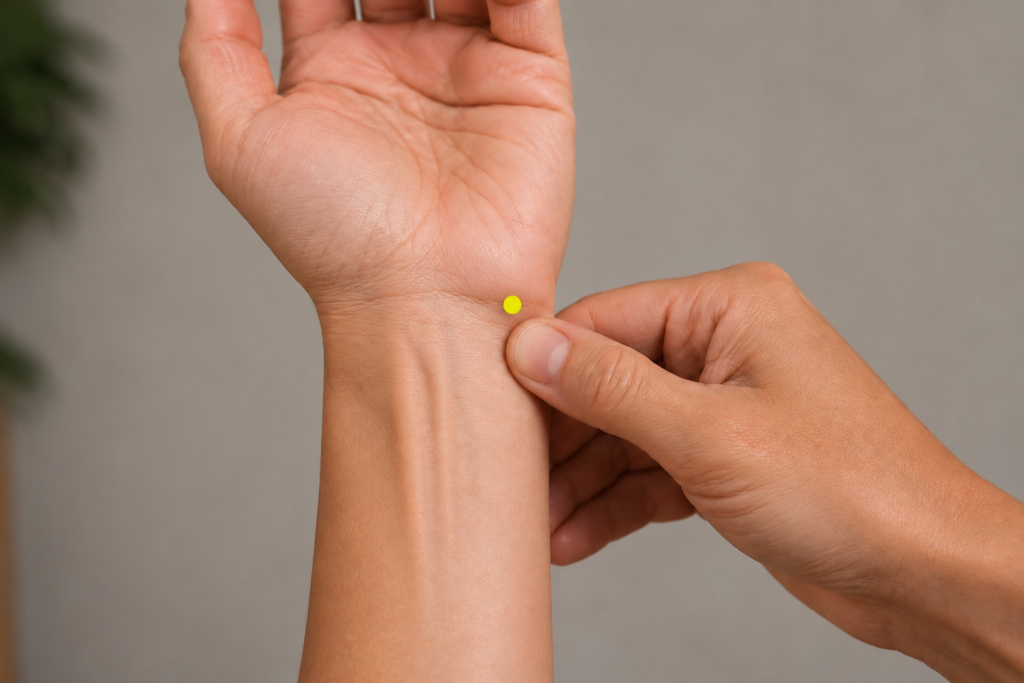
2. Press on HT7 at the wrist to settle a sensitized system. HT7 sits on the inner wrist crease, on the pinky side, in the small hollow just inside the tendon. Press firmly with your thumb for one to two minutes, using the unaffected arm if one arm is involved. HT7 is called “Shenmen,” the “Spirit Gate.”
In CRPS, the nervous system becomes sensitized, amplifying pain and turning normal sensations into suffering. Poor sleep and anxiety further intensify this feeling. HT7 helps by calming the Heart and stabilizing the Shen, which alleviates restlessness, fear, and insomnia that contribute to pain. It is especially effective when used at bedtime.
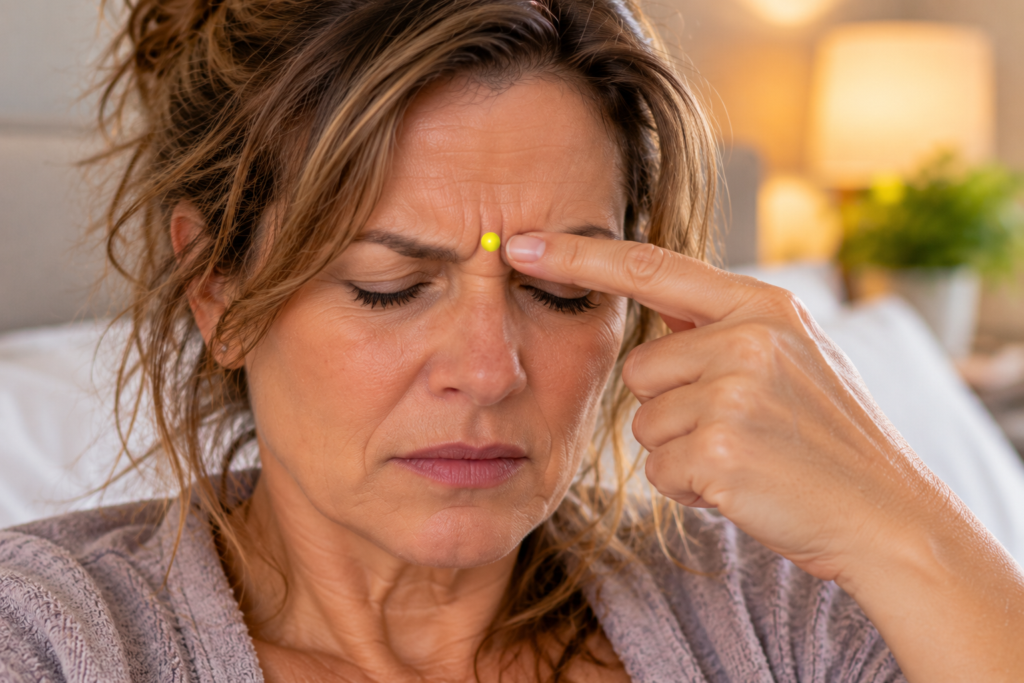
3. Press on Yintang between the eyebrows to quiet the mind. Yintang sits in the small hollow directly between the two eyebrows. Press gently and steadily, or make slow circles, for one to two minutes while breathing slowly. Yintang is an extra point.
Yintang is a highly calming point, soothing a mind heightened by persistent pain. When paired with slow breathing, it aids in shifting the nervous system out of fight-or-flight mode, which is crucial for calming CRPS.
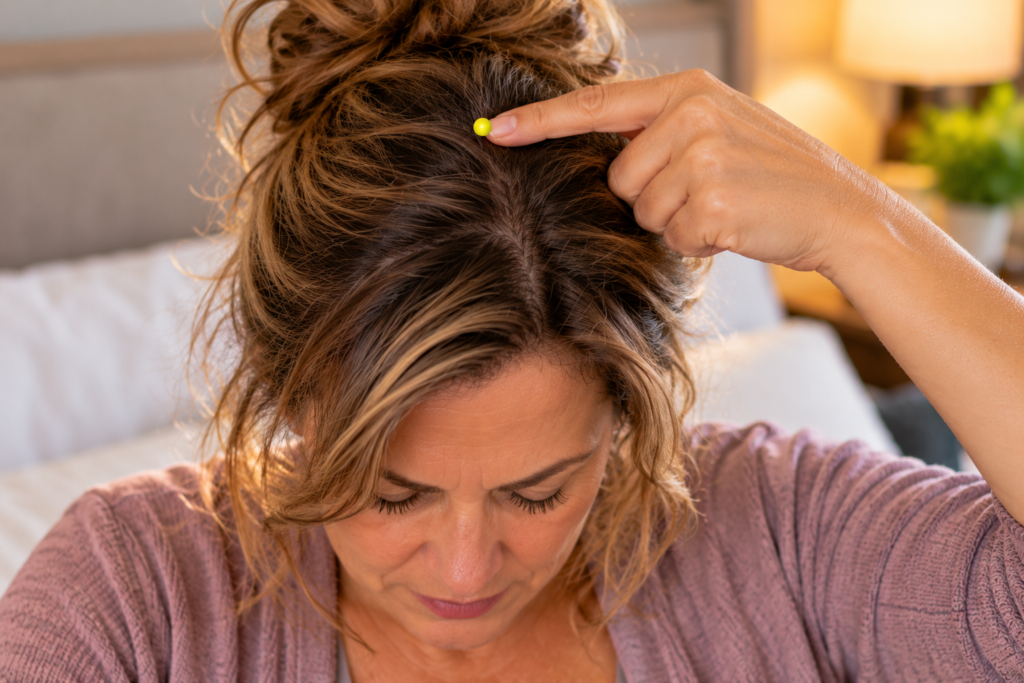
4. Press gently on GV20 at the top of the head to steady the system. GV20 sits at the very top of the head, on the midline, on a line drawn up from the tops of both ears. Rest your fingertip there and press gently for one to two minutes. GV20 is called “Baihui,” the “Hundred Meetings.”
Gently pressing GV20 calms the mind and nervous system, and pressing GV20 and Yintang together, one hand on each, makes a simple, calming combination that can be done lying down.
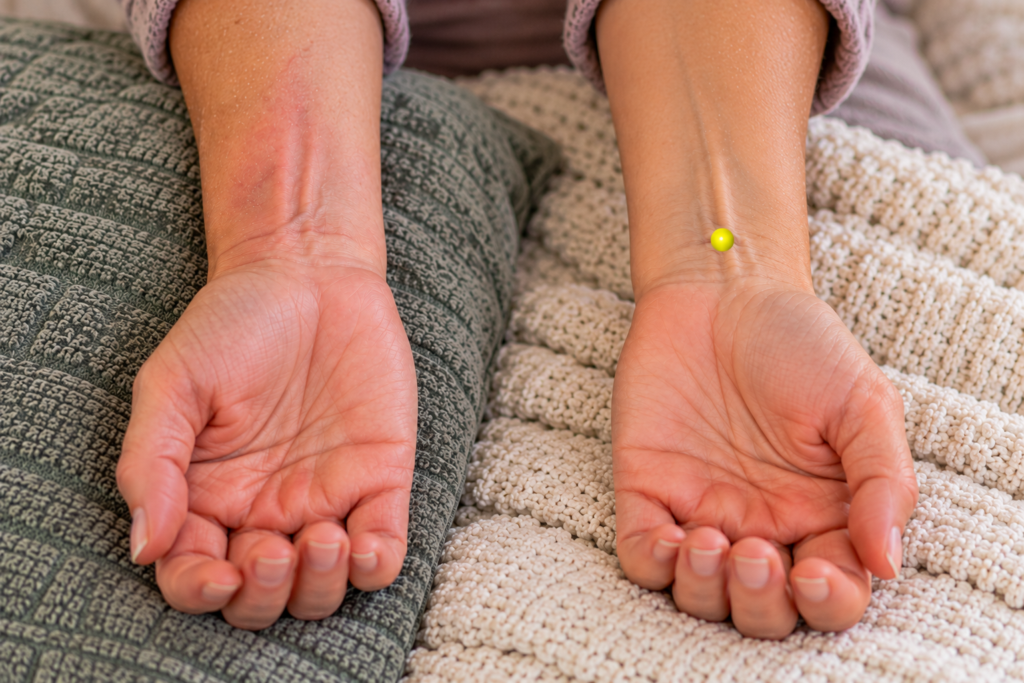
5. Press the mirror point on the opposite limb. Find the spot on your unaffected limb that matches the most painful area on the affected one. If your right wrist is affected, use the same spot on your left wrist; if your left ankle is affected, use the same spot on your right ankle. Press gently and steadily there for one to two minutes, breathing slowly.
In Traditional Chinese Medicine, the channels on both sides of the body are interconnected. Stimulating the healthy side can influence the painful side without causing harm. This technique, called the mirror method, is one of the oldest approaches for managing pain that cannot be physically accessed. It offers a safe way to treat the affected area indirectly. However, if pressing the mirror point causes more pain in the affected limb, lessen the pressure.
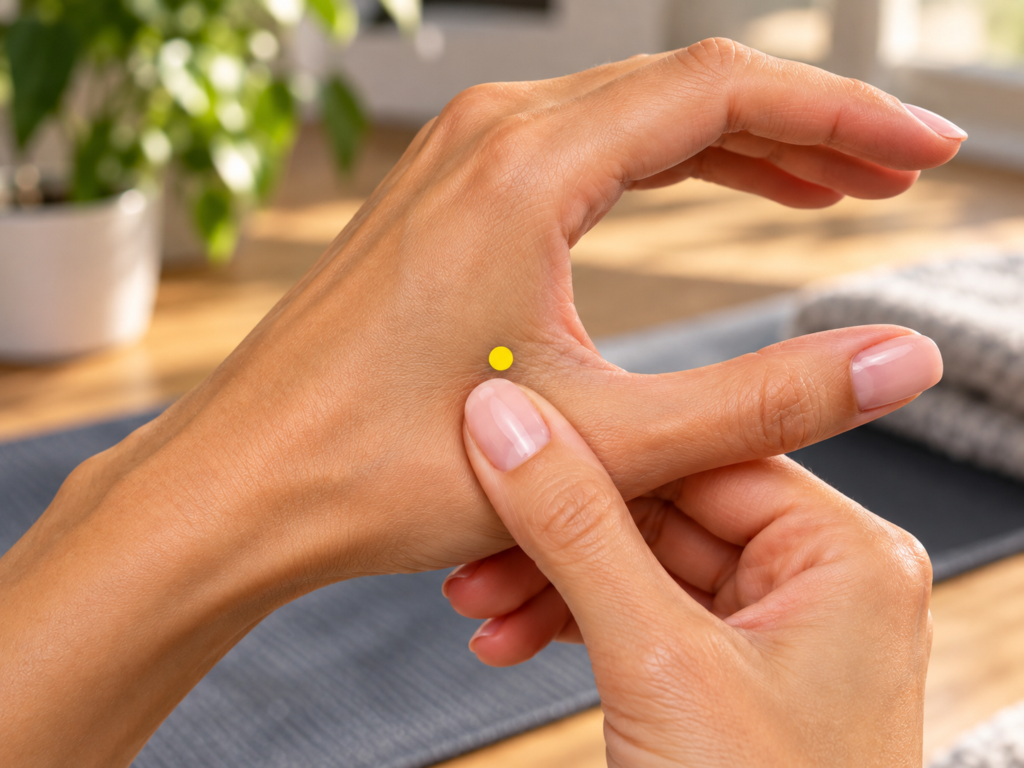
6. Press on LI4 in the unaffected hand to ease pain throughout the body. LI4 sits in the webbing between the thumb and index finger, at the highest point of the muscle when you bring the thumb and finger together. Press firmly with the thumb of your other hand for one to two minutes, using the unaffected hand if one hand or arm is involved. LI4 is called “Hegu.” LI4 is avoided during pregnancy.
LI4 is a highly effective point for pain relief that works at a distance. Together with LR3, it forms the Four Gates, a traditional combo used to unblock stagnant Qi and reduce pain throughout the body. This remedy is suitable for deep stagnation linked to CRPS.
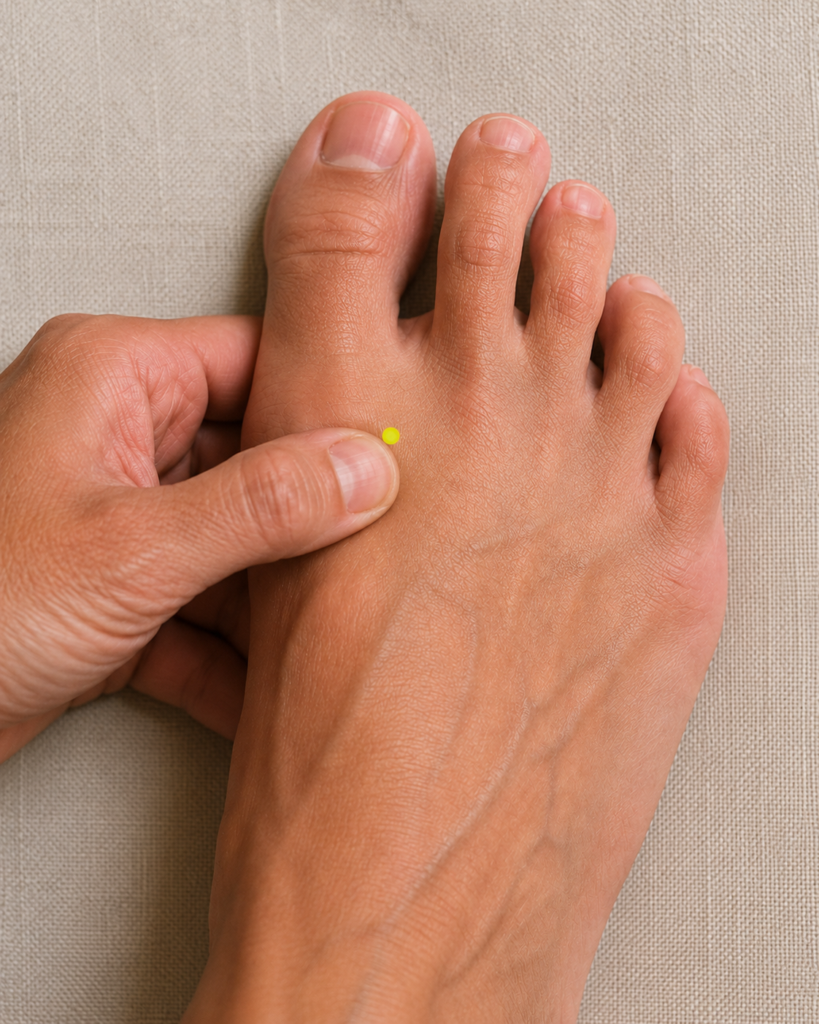
7. Press on LR3 on the unaffected foot to move the Qi. LR3 sits on the top of the foot, in the webbing between the big toe and second toe, about two finger-widths back where the bones meet in a small hollow. Press firmly with your thumb for one to two minutes, using the unaffected foot if one leg or foot is involved. LR3 is called “Taichong.”
LR3 clears stagnant Qi, alleviates tension and irritability linked to chronic pain, and helps calm the wind responsible for burning and shooting sensations. When used together with LI4, it forms the complete Four Gates.
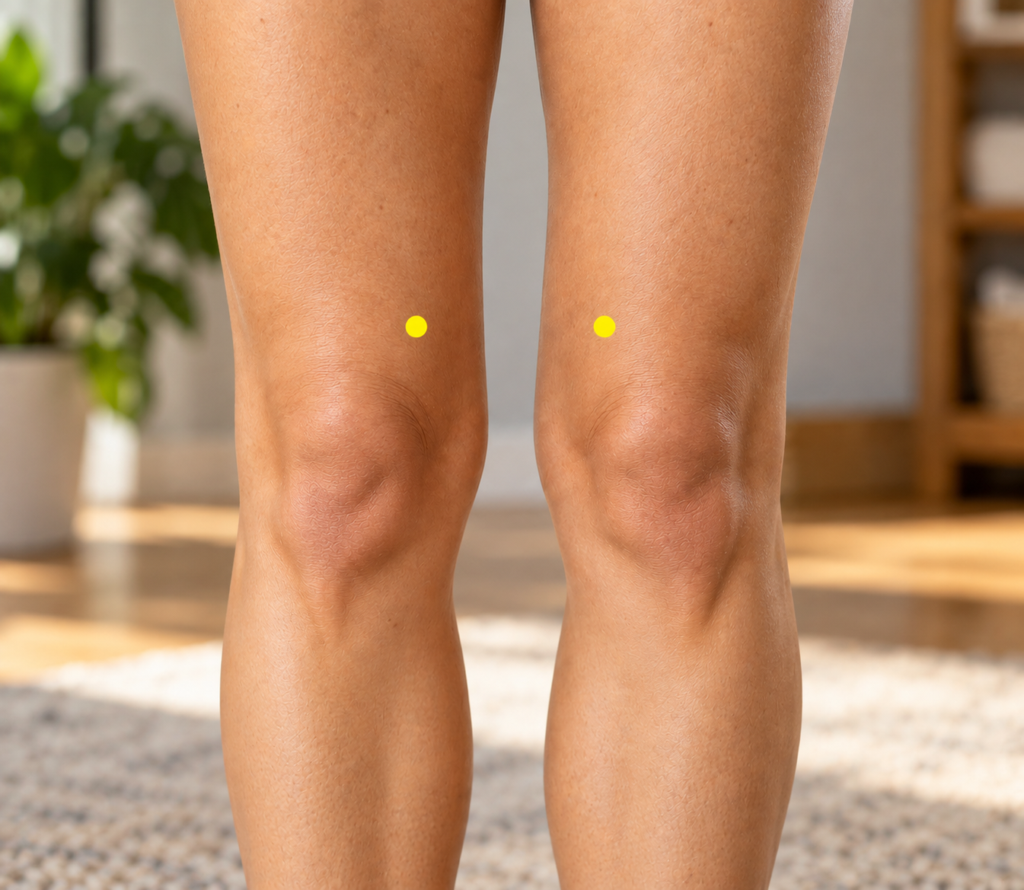
8. Press on SP10 above the knee to move stagnant Blood. SP10 sits on the inner thigh, about three finger-widths above the inner upper corner of the kneecap, on the bulge of the muscle there. Press firmly with your thumb for one to two minutes on the unaffected leg if one leg is involved. SP10 is called “Xuehai,” the “Sea of Blood.”
CRPS involves intense, stabbing pain, color changes, and swelling caused by heat in the blood. SP10 is a primary acupressure point employed to treat this condition. It also helps cool heat in the blood, making it suitable for the red, warm phase of CRPS.
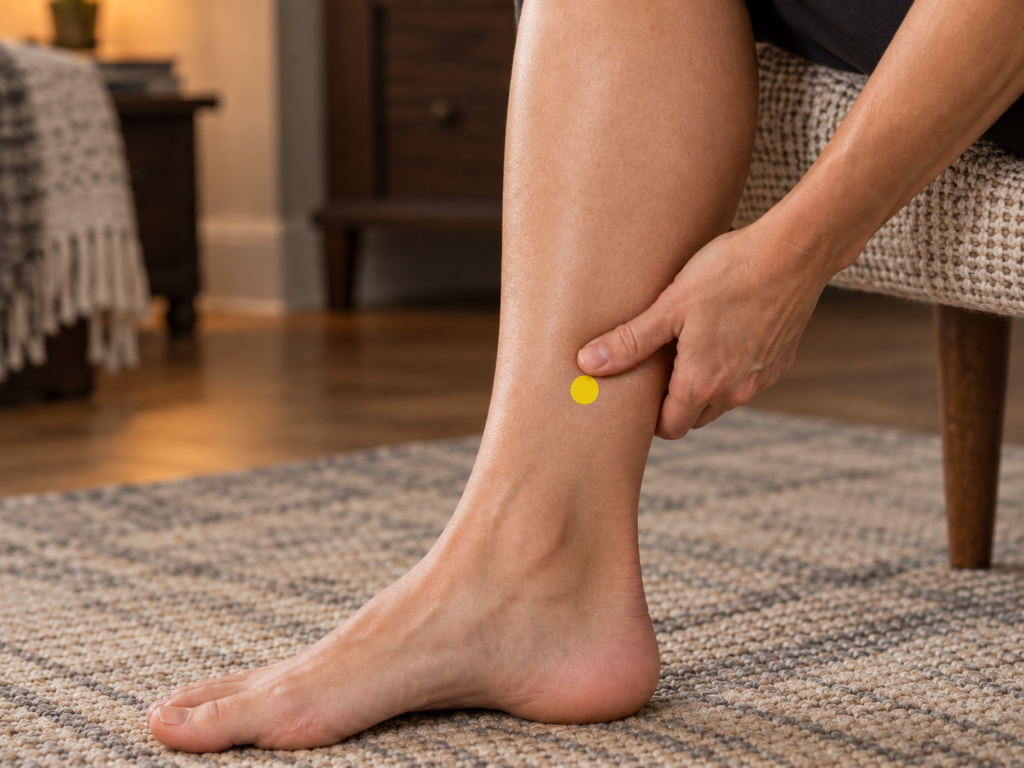
9. Press on SP6 above the inner ankle to nourish and move the Blood. SP6 sits four finger-widths up from the tip of the inner ankle bone, just behind the back edge of the shinbone. Press firmly for one to two minutes on the unaffected leg if one leg is involved. SP6 is called “Sanyinjiao,” the “Three Yin Intersection.” SP6 is contraindicated during pregnancy.
SP6 helps nourish and circulate Blood, addressing both stagnation and deficiency from chronic pain. It also calms the mind and improves sleep, which is often disrupted by CRPS.
Why These Acupressure Points Work
In Traditional Chinese Medicine, CRPS is viewed as a significant stagnation of Qi and Blood in the affected limb, compounded by factors like heat or cold, wind, and a raw, reactive Shen. The nine points address this imbalance without directly affecting the painful area.
- Points like Ear Shenmen, HT7, Yintang, and GV20 calm the Shen and nervous system.
- The protocol involves applying treatment to the healthy side.
- The two acupressure points, LI4 and LR3, are called the Four Gates and are used to promote the flow of stagnant Qi throughout the body.
- The Blood points SP10 and SP6 stimulate the flow of stagnant Blood and aid in replenishing what long-term pain has depleted.
Research on acupuncture for CRPS is developing, with some small studies suggesting it may help reduce pain in certain individuals. Additionally, acupressure offers a gentle at-home treatment option for the relevant points, complementing medical and rehabilitation care.
How to Properly Use These Acupressure Points
- Avoid pressing, rubbing, or massaging the affected limb.
- Start by stimulating the calming acupressure points: Ear Shenmen, HT7, Yintang, and GV20, while taking slow, deep breaths with long exhalations.
- Next, treat the opposite side with the mirror point and the Four Gates: LI4 and LR3, followed by SP10 and SP6.
- Use gentle to moderate pressure and stop if it causes more pain in the affected limb.
- Avoid heat packs or ice on the affected limb because CRPS affects temperature regulation, causing the skin to react unpredictably. Keep the limb at a comfortable room temperature.
- Hold each point for one or two minutes and perform the routine once or twice daily.
- Continue taking your prescribed medications and attend your physical and occupational therapy sessions.
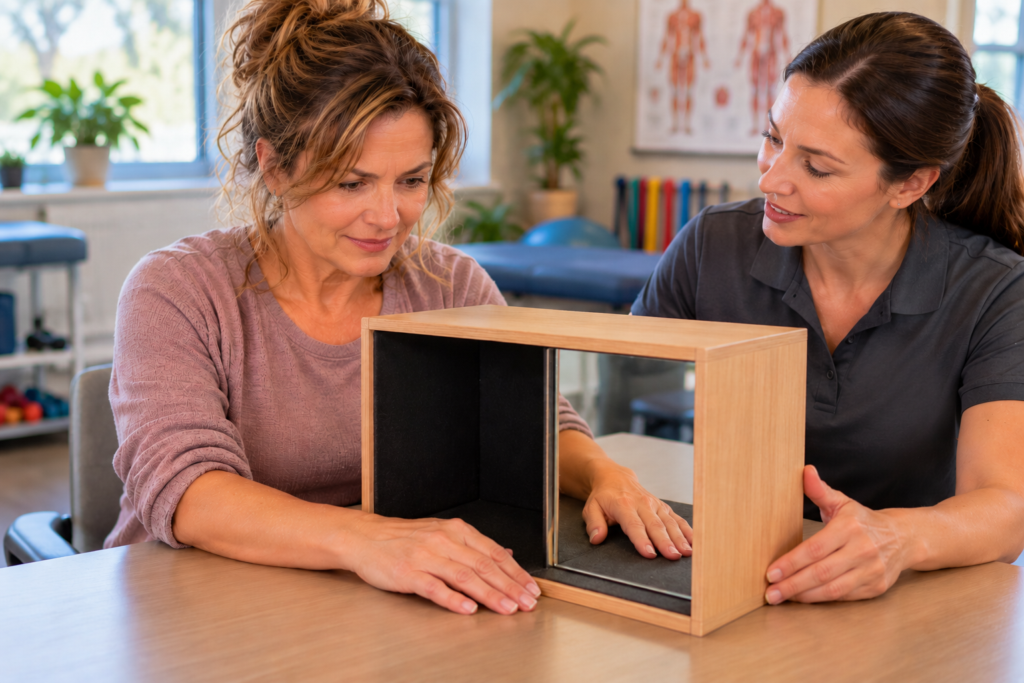
Recovery from CRPS relies on gentle movement of the affected limb, despite pain, so collaborating with a physical or occupational therapist experienced in CRPS is important. Techniques like mirror therapy, gradual desensitization, and graded movement can help retrain the nervous system gradually. Protect your sleep, pace activities to prevent major flare-ups, and practice slow breathing or meditation to calm your nervous system. Avoid smoking, as it impairs circulation, and wear soft, loose clothing over the affected area for comfort.
When to Get Professional Help
See a doctor promptly if pain after an injury or surgery is significantly worse or lasts longer than expected, or if it is accompanied by swelling, color or temperature changes, or extreme sensitivity. Early diagnosis and treatment of CRPS offer the best chance for recovery. Seek immediate care if symptoms spread to other areas; if the skin breaks down or develops sores; if a limb suddenly becomes swollen, red, and hot with a fever; or if a limb becomes cold, pale, and painful, which could indicate circulation issues. Living with CRPS can be challenging, so it’s important to consult your doctor if you’re struggling.
If pain ever leads to thoughts of self-harm, call or text the 988 Suicide and Crisis Lifeline immediately.
Acupressure offers a gentle, supportive approach to managing CRPS, complementing medical and rehabilitation therapies.
Above and Beyond Acupuncture offers acupuncture, cupping, and lifestyle coaching at the North Frank Lloyd Wright Boulevard location in Scottsdale.
Schedule an appointment online to start your healing journey.
The points above are only as effective as the technique used to apply them. Where to press, how firmly, and for how long all affect the result. For a full breakdown of how to perform acupressure properly at home, read Performing Acupressure in 3 Easy Steps.
About the Publisher
Paul Kerzner, L.Ac., is a licensed acupuncturist and board-certified herbalist, as well as the founder of Above and Beyond Acupuncture in Scottsdale. His own journey from chronic patient to practicing acupuncturist shapes his commitment to providing honest, clinically grounded information about acupuncture and Traditional Chinese Medicine. Learn more about Paul and his clinical approach on the About Us page.