Key Takeaways
- Emotional numbness can leave individuals feeling disconnected and unresponsive, often as a protective response to trauma or stress.
- Common causes of emotional numbness include PTSD, grief, burnout, and certain medications or substances.
- Nine acupressure points can help awaken feelings and restore emotional connection by warming the body and clearing mental fog.
- Performing acupressure slowly while paying attention to bodily sensations may help gradually restore sensation.
- Seek professional support if emotional numbness continues or occurs alongside serious symptoms, such as suicidal thoughts.

Emotional numbness can be harder to describe than feeling overwhelmed. People experiencing it may say they’re just going through the motions, feel as though they’re watching life from behind glass, or know they should feel happy or sad but feel nothing at all. They may be unable to cry at a funeral, feel distant from loved ones, or find that music, food, and favorite activities no longer affect them as they once did.
Emotional numbness is often a form of protection. When trauma, loss, or ongoing stress overwhelms the nervous system, it can shift into a shutdown state, turning down the volume on all feelings at once. In the short term, this can make the unbearable feel more manageable. But when it lasts, it cuts a person off from positive feelings as well as painful ones.
Cleveland Clinic psychologist Susan Albers, PsyD, describes emotional numbness, also called blunting, as feeling flat, shut down, or disconnected from your feelings, and notes that people often compare it to being in a heavy fog. Common causes include trauma and PTSD, grief, burnout, depression, long-term anxiety, and chronic exhaustion. Some medications, particularly certain antidepressants, can dampen emotions. Alcohol, cannabis, and other substances used to self-medicate can deepen the numbness over time. Physically, it’s often associated with fatigue, shallow breathing, cold hands and feet, a foggy mind, and feeling detached from the body.
In Traditional Chinese Medicine, the Heart houses the Shen, the spirit that shines through the eyes and enables a person to respond to the world. Shock and prolonged stress can cause the Shen to withdraw, as a person literally pulls back from something too painful to bear. The Heart’s warmth is lost, Qi becomes frozen, and Phlegm can cloud the mind, leaving a person flat, dull, and distant from their own feelings.
These nine points gently awaken the Shen, rekindle the body’s warmth, open the flow of Qi, clear the fog, and help the mind and body reconnect.
What Acupressure Points to Press and Why
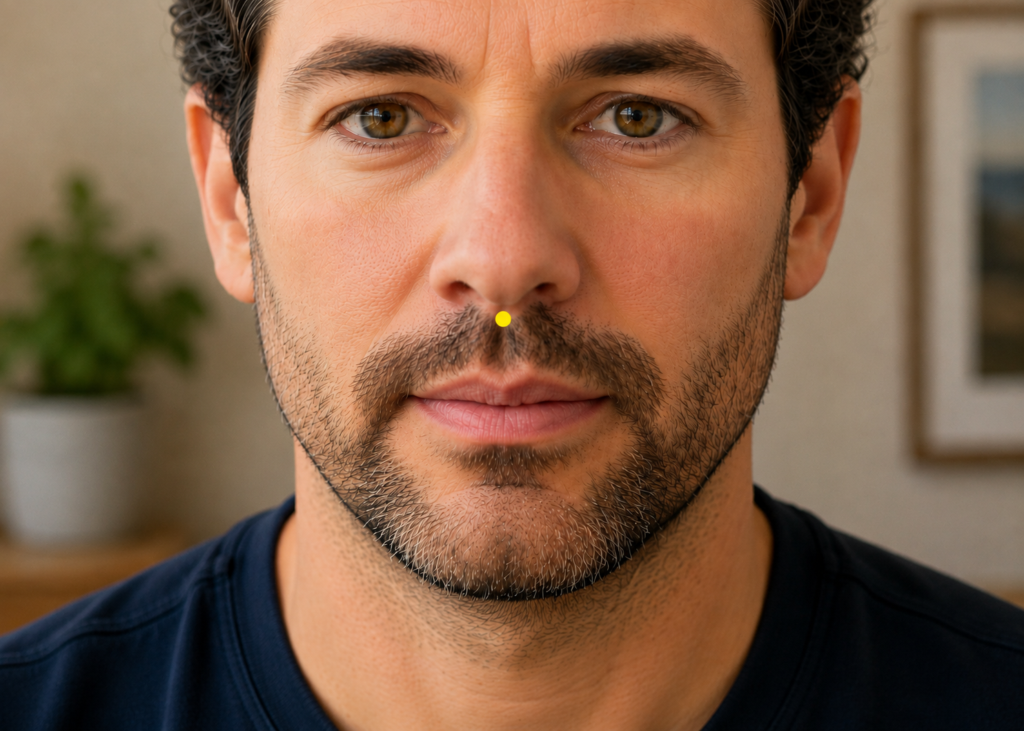
1. Press on GV26 below the nose to awaken the spirit. GV26 sits on the upper lip, in the groove below the nose, about one-third of the way down from the base of the nose to the top of the lip. Press firmly with the tip of your index finger for thirty seconds to one minute. GV26 is called “Renzhong,” the “Middle of the Person.”
GV26 is one of the most important points in Traditional Chinese Medicine for awakening the Shen and opening the Heart’s orifices. It has long been used to revive someone who has fainted or gone into shock. For emotional numbness, it offers a gentle wake-up call to a spirit that has withdrawn.
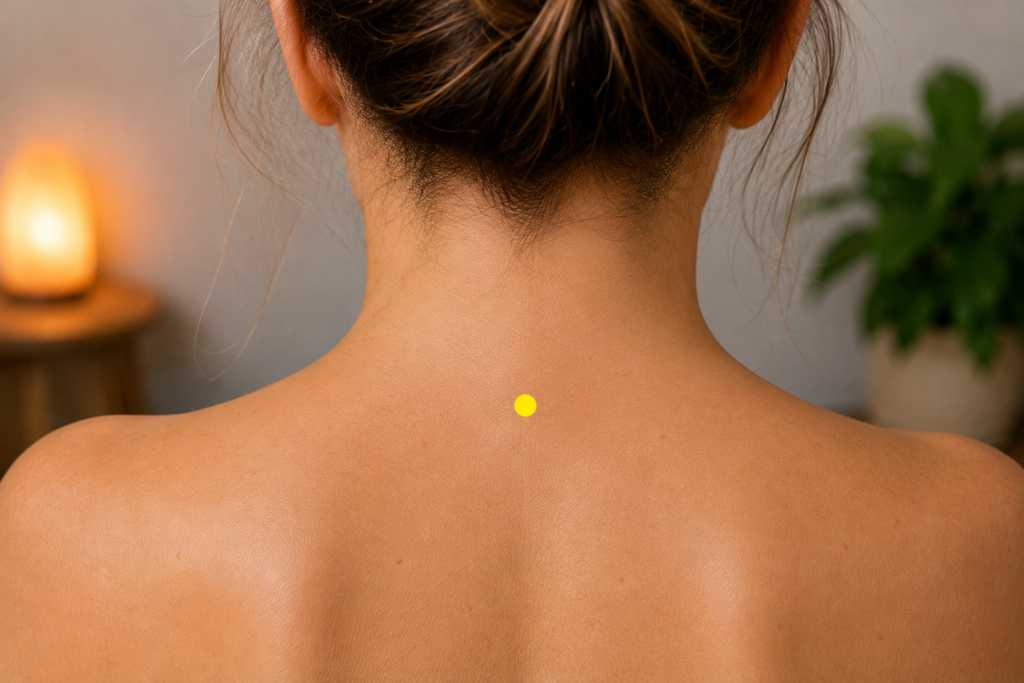
2. Press on GV14 at the base of the neck to rouse the body’s warmth. GV14 sits on the midline at the base of the neck, in the hollow just below the most prominent bone that sticks out when you bend your head forward. Press with your fingertips for one to two minutes, or rub the area briskly with your palm until it feels warm. GV14 is called “Dazhui,” the “Great Vertebra.”
GV14 is where all the body’s Yang channels meet, the channels that carry warmth, activity, and outward movement. When numbness leaves someone feeling cold, heavy, and shut down, GV14 rouses the Yang and helps warmth and energy return. It also releases tension at the base of the neck, where many people hold the strain of keeping their feelings in check.
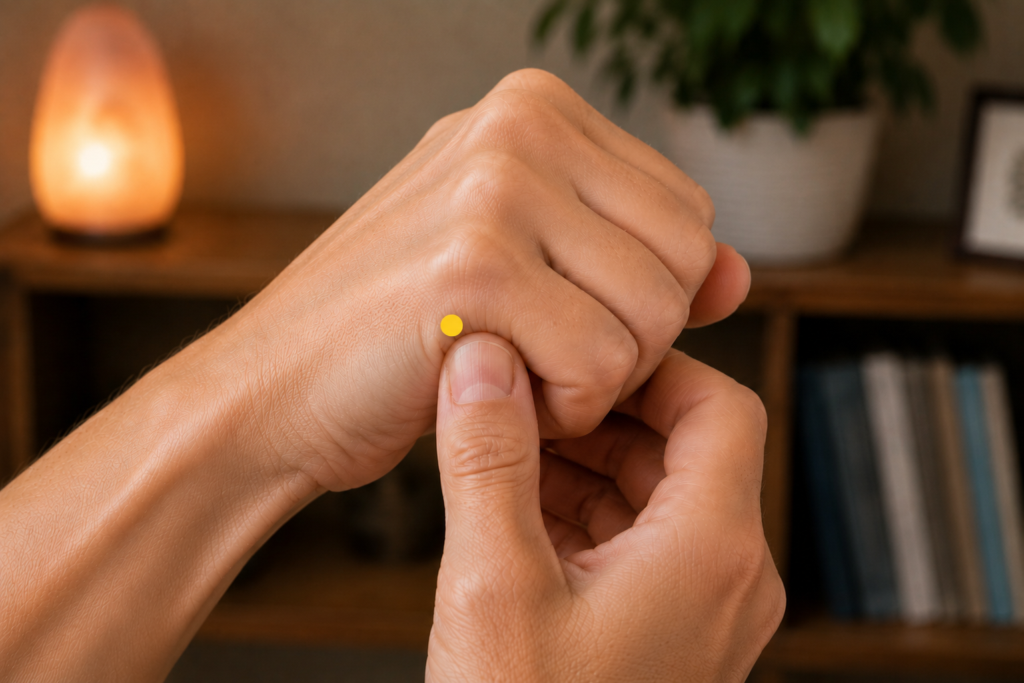
3. Press on SI3 on the edge of the hand to reconnect mind and body. SI3 sits on the outer edge of the hand, below the little finger. Make a loose fist, and the point sits at the end of the crease that forms just below the knuckle of the little finger, where the skin of the palm meets the skin of the back of the hand. Press firmly with the thumb of your other hand for one to two minutes on each hand. SI3 is called “Houxi,” the “Back Stream.”
SI3 opens the Governing Vessel, which runs along the spine and into the brain. In Traditional Chinese Medicine, it helps clear the mind and strengthen the connection among the brain, spine, and the rest of the body. It may help when numbness is accompanied by a sense of disconnection or of watching life from the outside.
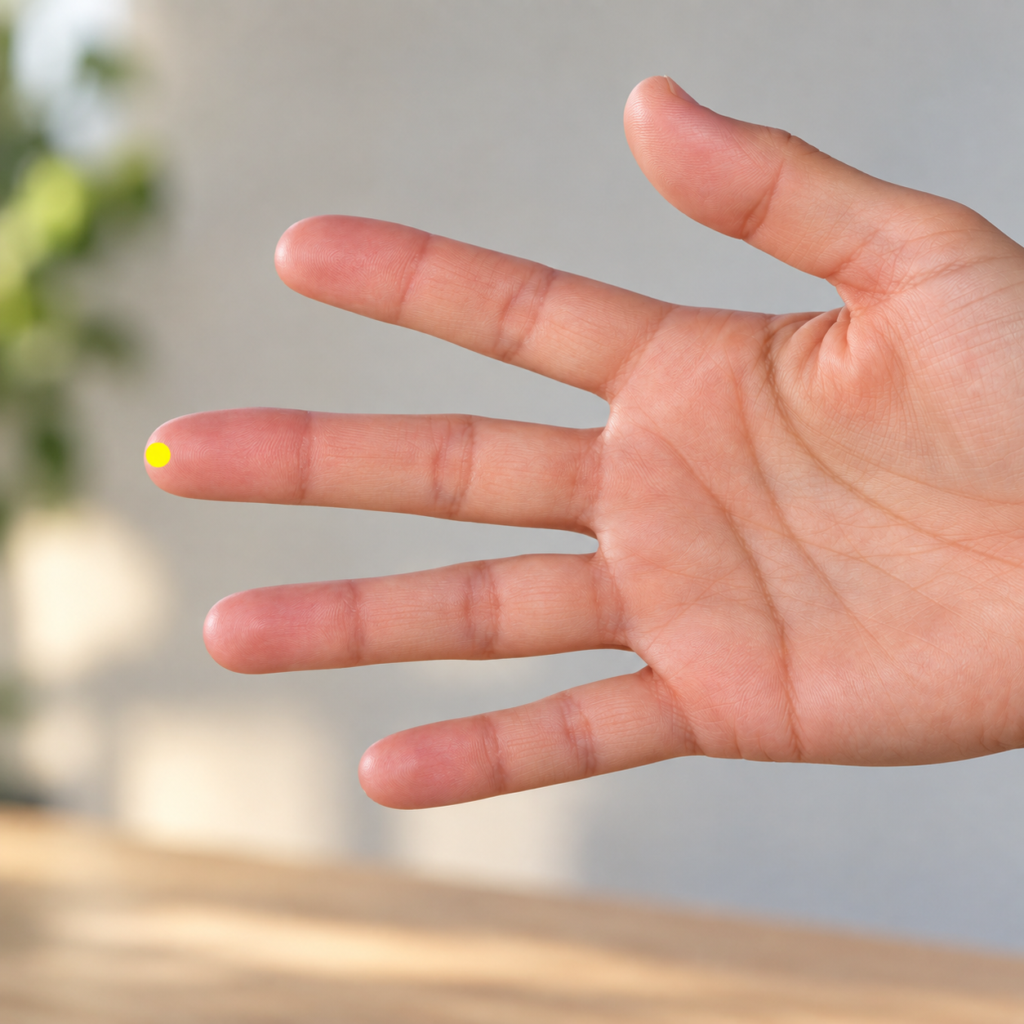
4. Press on PC9 at the tip of the middle finger to reawaken the Heart. PC9 sits at the center of the tip of the middle finger. Pinch the fingertip firmly between the thumb and index finger of your other hand for thirty seconds to one minute on each hand. PC9 is called “Zhongchong,” the “Middle Rushing.”
PC9 is the first point on the Pericardium channel, which protects the Heart. Points at the tips of the fingers and toes are traditionally used to revive consciousness and restore flow when it has stalled. PC9 helps rouse the Heart and bring feeling back to a chest that has gone quiet.
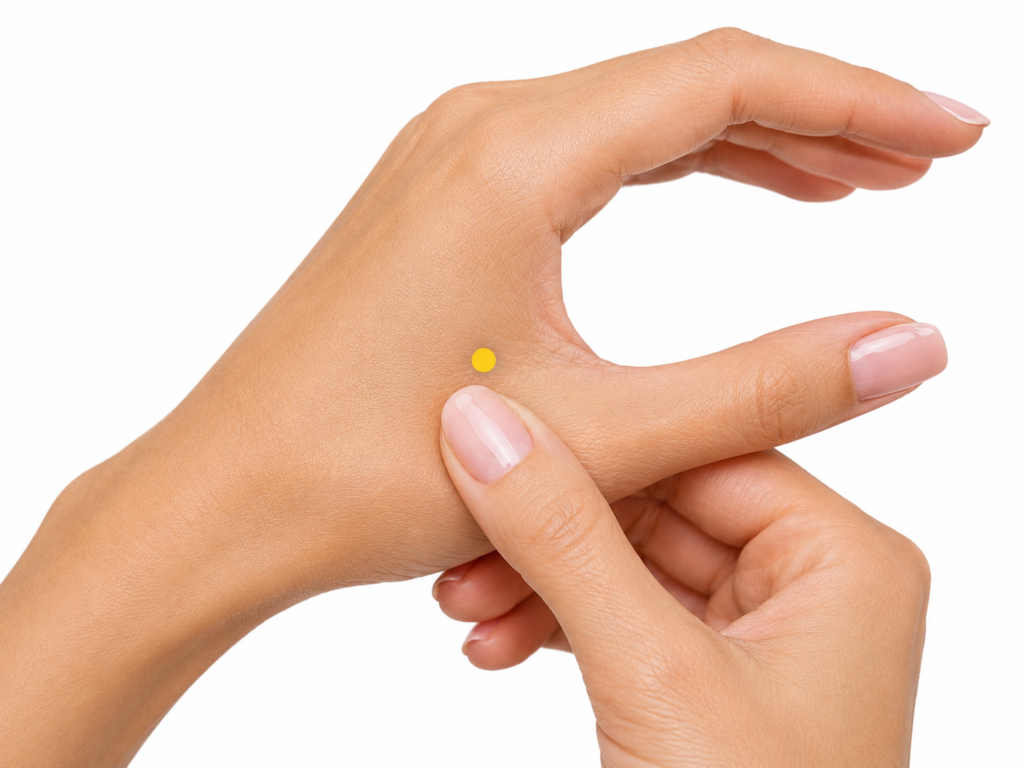
5. Press on LI4 in the hand to open the flow of Qi. LI4 sits in the webbing between the thumb and index finger, at the highest point of the muscle when the thumb and index finger are brought together. Press firmly with the thumb of your other hand for one to two minutes on each hand. LI4 is called “Hegu,” the “Joining Valley.” LI4 is avoided during pregnancy.
LI4 is one of the strongest points in Traditional Chinese Medicine for moving Qi throughout the body. When emotions become frozen, Qi stops flowing and the body holds itself still. LI4 releases this tension, eases tightness in the head, jaw, and shoulders, and pairs with LR3 to form the Four Gates, a classic combination for opening the flow of Qi from head to toe.
6. Press on CV4 below the navel to rekindle the inner fire. CV4 sits on the midline of the lower abdomen, four finger-widths below the navel. Rest a warm palm over the point or press gently with your fingertips for one to two minutes while breathing slowly into the belly. CV4 is called “Guanyuan,” the “Gate of Origin.” CV4 is avoided during pregnancy.
CV4 is a primary point in Traditional Chinese Medicine for nourishing the body’s deepest reserves and warming the fire that supports the Heart. When numbness makes someone feel cold and empty inside, CV4 can help rekindle that warmth. Resting a hand or a heating pad over CV4 is also a simple way to bring awareness back into the body.

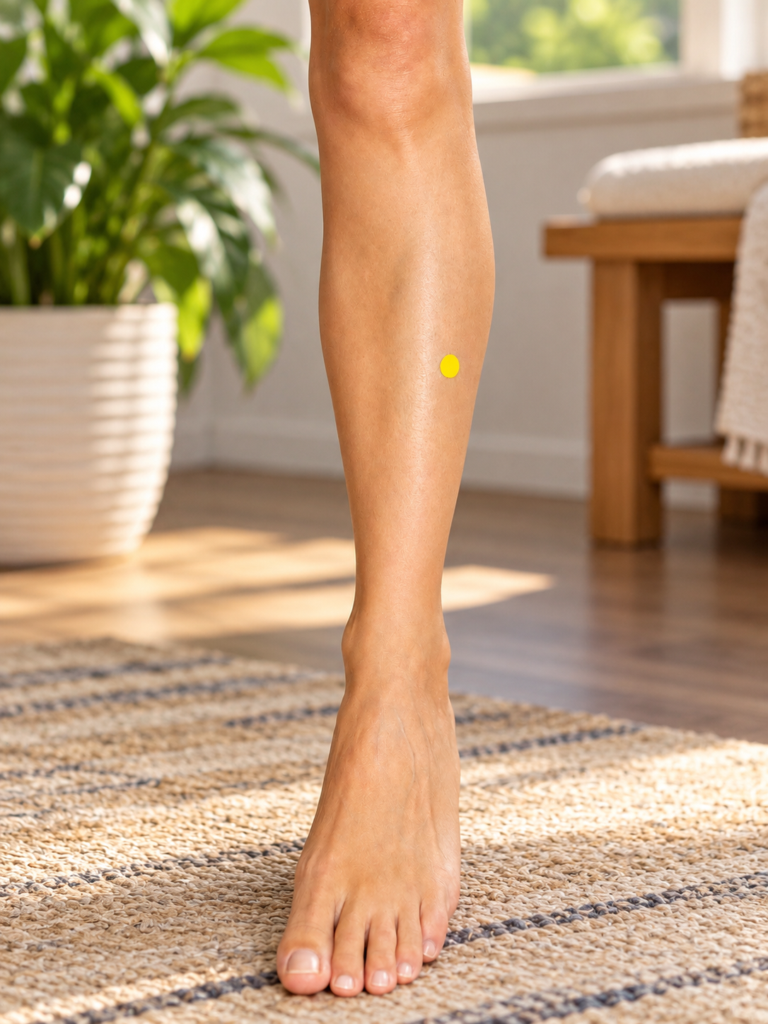
7. Press on ST40 on the outer lower leg to clear the fog. ST40 sits on the outer side of the lower leg, halfway between the knee crease and the outer ankle bone, about two finger-widths to the outside of the front edge of the shinbone. Press firmly with your thumb for one to two minutes on each leg. ST40 is called “Fenglong,” the “Abundant Bulge.”
In Traditional Chinese Medicine, Phlegm clouding the Heart can leave a person feeling dull and flat, unable to think or feel clearly. ST40 is the most important point for resolving Phlegm. It helps clear the fog between a person and their feelings, supporting clearer thinking.
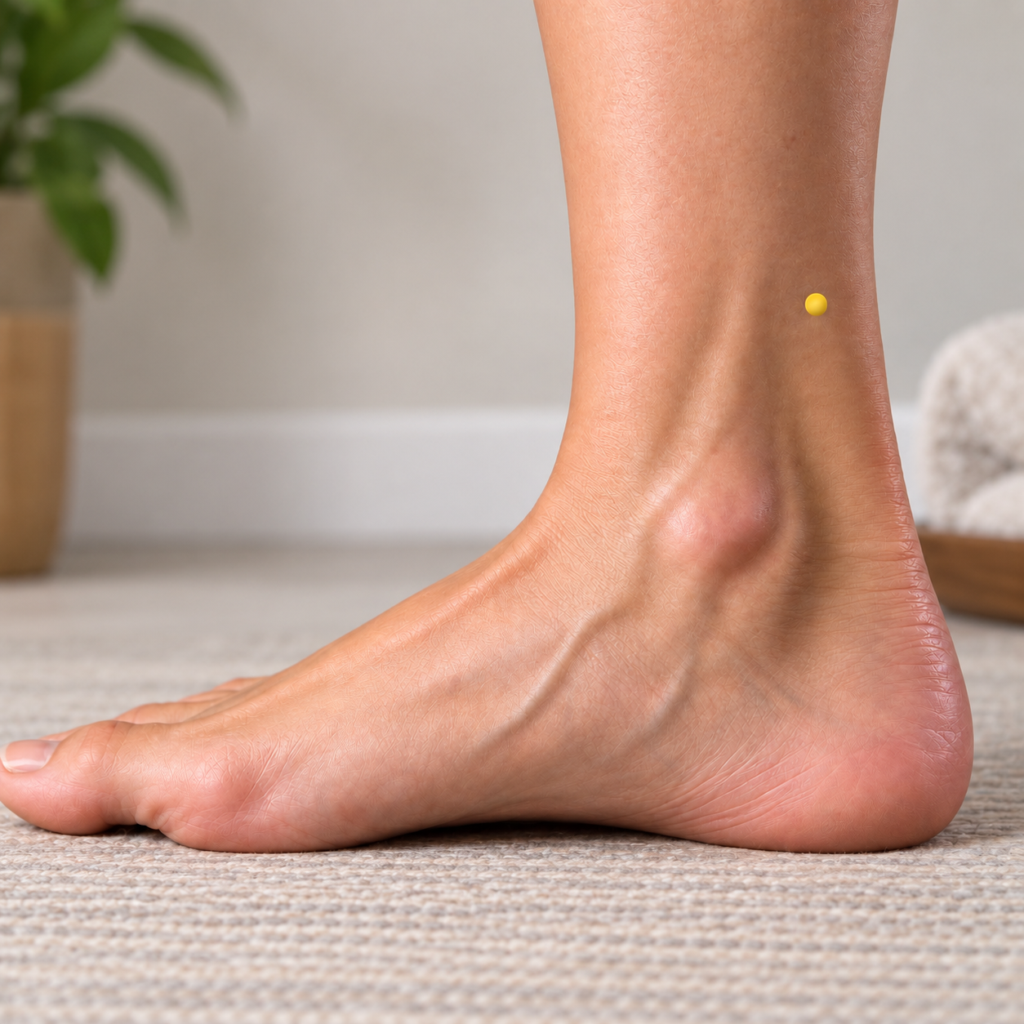
8. Press on KI7 above the inner ankle to restore warmth and drive. KI7 sits on the inner side of the lower leg, about three finger-widths above the hollow behind the inner ankle bone, along the front edge of the Achilles tendon. Press firmly with your thumb for one to two minutes on each leg. KI7 is called “Fuliu,” the “Returning Current.”
The Kidney governs fear and stores the body’s deep reserves. Shock or prolonged stress can leave it depleted and contracted. KI7 strengthens Kidney Yang, warms cold hands and feet, and supports the connection between the Kidney and the Heart. Restoring this connection helps the body feel safe enough to let feelings return.
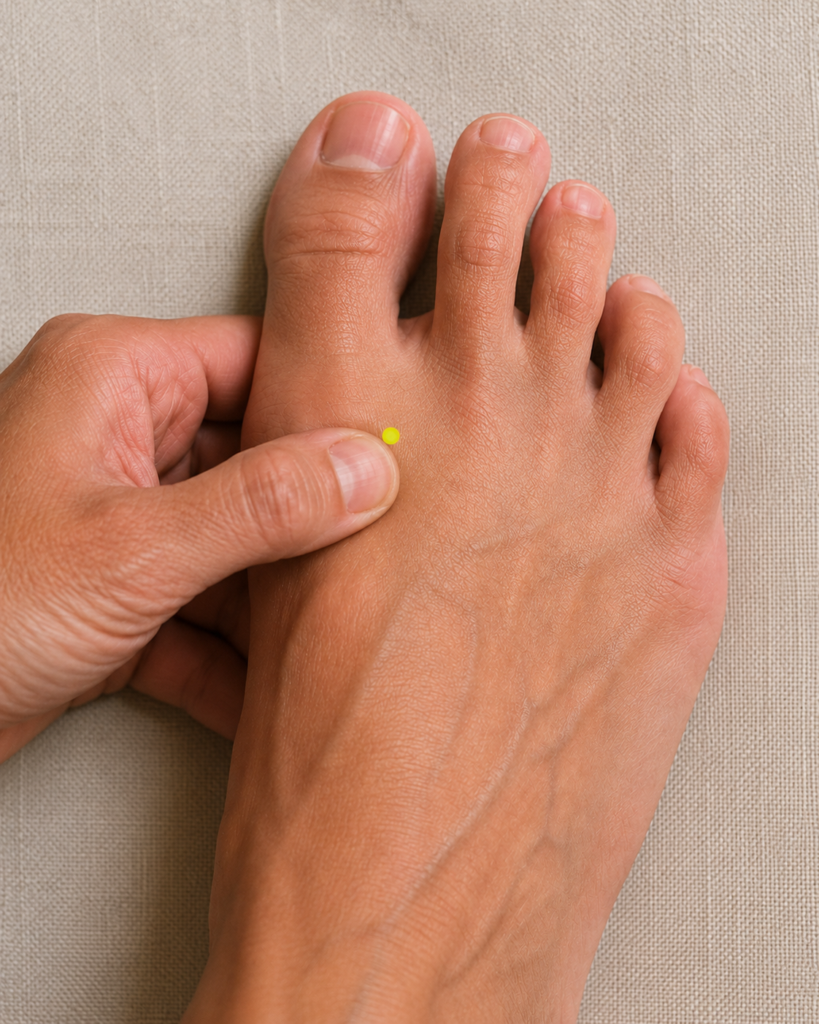
9. Press on LR3 on the top of the foot to let feelings move again. LR3 sits on the top of the foot, in the hollow between the bones of the big toe and second toe, about two finger-widths back from the web. Press firmly with your thumb for one to two minutes on each foot. LR3 is called “Taichong,” the “Great Surge.”
The Liver keeps Qi and emotions flowing smoothly. When feelings are suppressed for a long time, Liver Qi becomes stagnant. LR3, the Liver’s source point, releases this constraint and completes the Four Gates with LI4, helping feelings move through the body rather than remain locked away.
Why These Acupressure Points Work
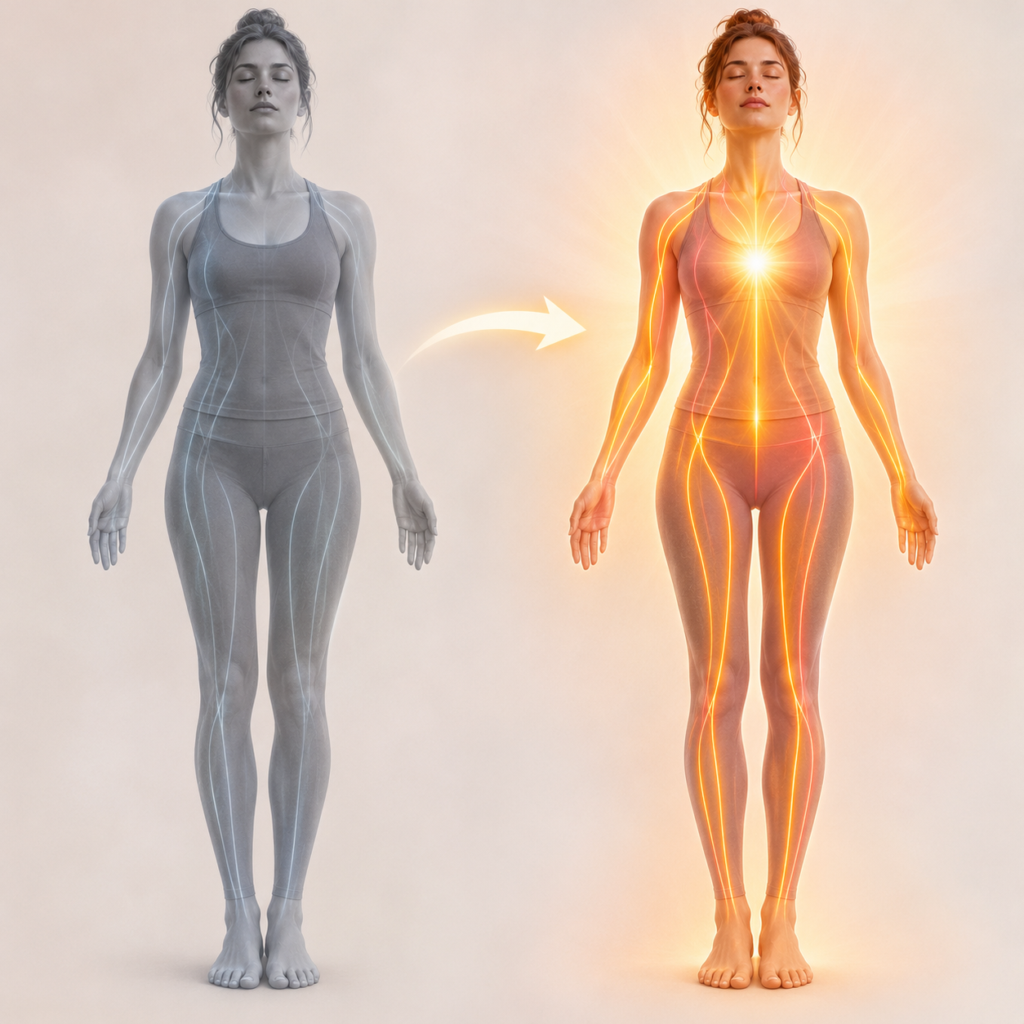
In Traditional Chinese Medicine, feeling fully depends on a present, responsive Shen, a Heart warmed by the body’s inner fire, freely flowing Qi, and a clear mind that can register the body’s sensations. Emotional numbness arises when the Shen withdraws, warmth fades, Qi stagnates, and Phlegm clouds the mind.
The nine points work together to restore emotional receptivity:
- The awakening points (GV26, PC9) rouse the Shen and open the orifices of the Heart.
- The warming points (GV14, CV4, KI7) rekindle the body’s warmth and restore the connection between the Kidney and the Heart.
- The connecting points (SI3, ST40) clear the fog and strengthen the link between the mind and the body.
- The opening points (LI4, LR3) form the Four Gates, releasing frozen Qi so feelings can move again.
How to Properly Use These Acupressure Points

Acupressure for emotional numbness is most effective when practiced slowly and gently, as numbness may serve as a protective response to feelings that need to return gradually.
- Complete the full routine once daily, holding each point for one to two minutes, or for thirty seconds to one minute when working with GV26 and PC9.
- Observe any sensations that arise while pressing each point, such as warmth, tingling, or changes in breathing, as a means of reconnecting with the body.
- If strong emotions arise, pause, place both feet firmly on the floor, breathe slowly, and resume the routine only when you feel steady.
- Practice consistently over several weeks, as feelings that have been suppressed for an extended period often resurface gradually rather than all at once.
Daily habits can help restore the mind-body connection. Move your body each day through walking, dancing, stretching, or yoga; movement helps restore sensation in your muscles and breath. Gently engage your senses with a warm shower, music you once loved, cooking with fragrant spices, or spending time in nature. Spend time with people who feel safe, even when you don’t feel much in the moment. Notice and name small pleasant moments, like sunlight on your face or the taste of a warm drink. Keep a regular sleep schedule, eat warm, nourishing meals, and limit alcohol and cannabis, as they can deepen numbness over time.
Learn more about practicing an attitude of gratitude.
When to Get Professional Help

See a mental health professional if emotional numbness lasts more than a few weeks, follows a traumatic event, or occurs alongside flashbacks, nightmares, depression, or a sense that you or your surroundings are not real. Trauma-focused therapy and other treatments can help. If the numbness began after you started a medication, talk with the prescribing doctor about adjusting it rather than stopping it on your own. Seek support, too, if you rely on alcohol or other substances to cope, or if the numbness is affecting your relationships or work.
If you feel hopeless or have thoughts of harming yourself, call or text 988 to reach the Suicide and Crisis Lifeline right away.
Acupressure is a gentle, supportive practice for emotional numbness. It complements, and does not replace, diagnosis and medical care.
For related emotional concerns, acupressure for trauma, acupressure for depression, and acupressure for hopelessness are companion posts.
Above and Beyond Acupuncture offers acupuncture, cupping, and lifestyle coaching at the North Frank Lloyd Wright Boulevard location in Scottsdale.
Schedule an appointment online to start your healing journey.
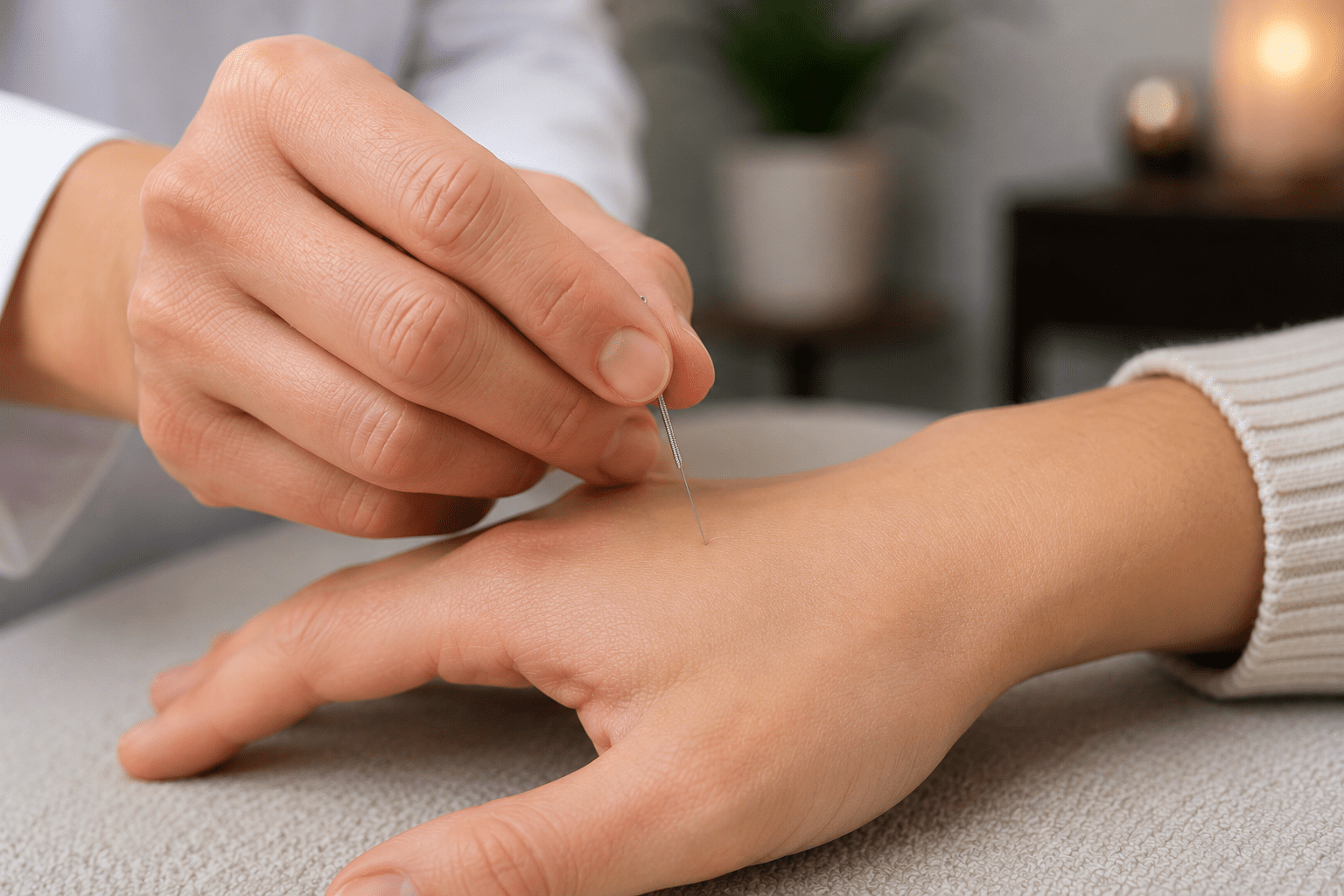
The points above are only as effective as the technique used to apply them. Where to press, how firmly, and for how long all affect the result. For a full breakdown of how to perform acupressure properly at home, read Performing Acupressure in 3 Easy Steps.

About the Publisher
Paul Kerzner, L.Ac., is a licensed acupuncturist and board-certified herbalist, as well as the founder of Above and Beyond Acupuncture in Scottsdale. His own journey from chronic patient to practicing acupuncturist shapes his commitment to providing honest, clinically grounded information about acupuncture and Traditional Chinese Medicine. Learn more about Paul and his clinical approach on the About Us page.