
Key Takeaways
- Public speaking anxiety often causes a strong physical reaction, including a pounding heart, tight chest, dry mouth, and blank mind, not just temporary nervousness.
- In Chinese medicine, fear corresponds to the Kidney’s emotion, and sudden stage fright disperses the Heart-Shen. This is why calming points are located on the Heart and Pericardium channels.
- Nine key acupressure points help manage performance anxiety: PC6, HT7, CV17, PC8, Yintang, Ear Shenmen, GV20, KI1, and LR3.
- Proper use of these points can effectively ground and settle nerves before public speaking.
- Seek professional help if the fear of speaking causes significant life disruptions or panic attacks.
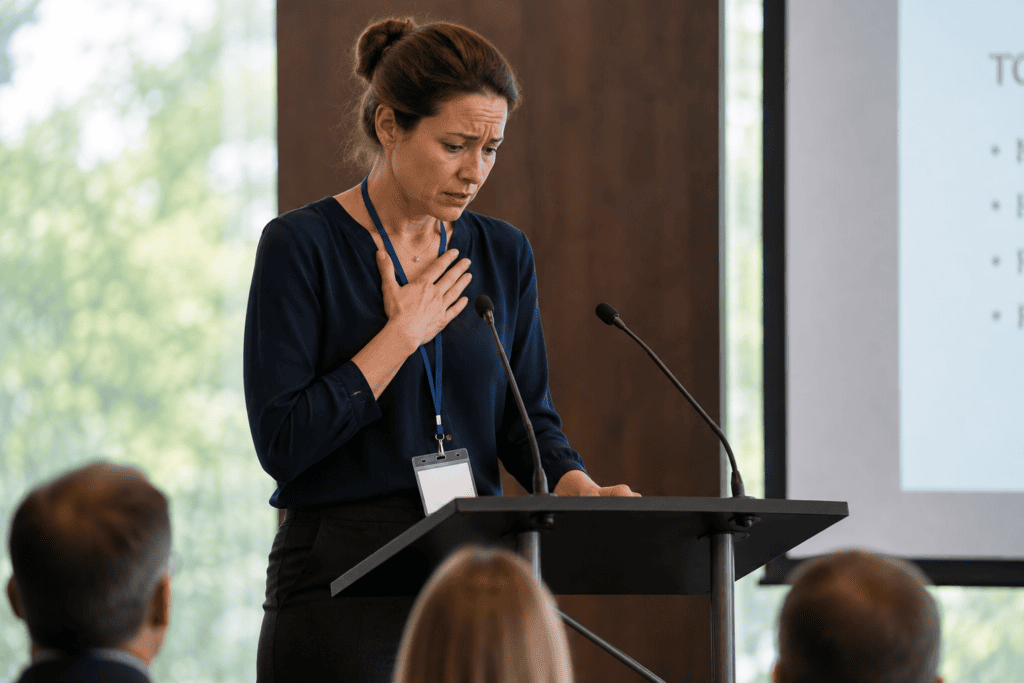
The fear of public speaking is one of the most common experiences people have, and its physiological symptoms can be overwhelming and hard to control.
This type of performance-related fear causes a strong physical and emotional reaction. The heart may race, the chest might feel constricted, the mouth could dry out, and the hands might tremble. You may also have a stomach ache or your mind may go blank, even after weeks of practice.
Traditional Chinese Medicine interprets this fear as impacting the physical body in numerous ways. Since fear relates to the Kidneys, a Water element, sudden fright can disturb Kidney Qi (energy), leading to a scattering of Shen, the mind and spirit, housed by the Heart. This explains symptoms like a pounding Heart, restless thoughts, and feeling mentally detached during stage fright. The Pericardium, which safeguards the Heart, endures significant physical strain, causing chest tightness. Many acupressure points for easing performance anxiety are located along the Heart and Pericardium channels, with grounding points that help re-center the scattered energy back to the Kidneys.
Please note: Acupressure won’t turn a nervous speaker into a fearless one, nor will it replace preparation and practice. It helps reduce physical symptoms in the moment, such as a rapid heartbeat, shallow breathing, and trembling hands. Acupressure helps calm the nervous system and promotes clearer, calmer thinking. Many of the points are subtle enough to activate while waiting to speak publicly, in the hallway, or even at the podium, without drawing too much attention.
Here are nine acupressure points that can help:
What Acupressure Points to Press and Why
Each acupressure point addresses a specific aspect of the fear of public speaking. You can press one or two points discreetly during your speech or go through the entire set beforehand when you have a few moments to calm yourself.
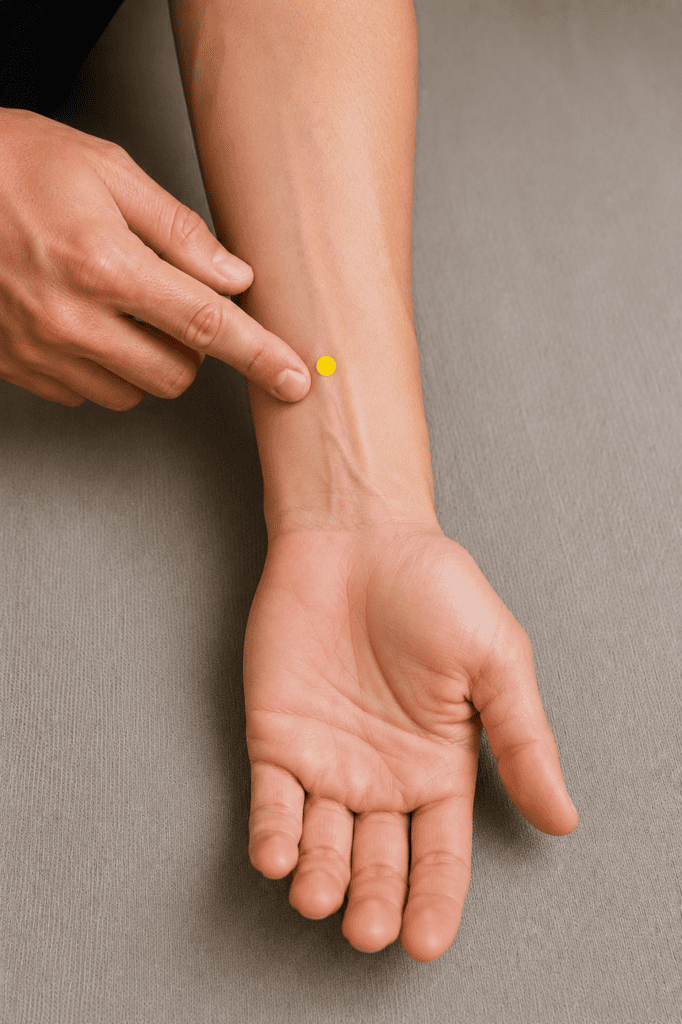
1. Press on PC6 on your inner forearm for calming the racing heart. PC6 sits about three finger-widths above the inner wrist crease, in the center of the forearm between the two tendons you can feel there. Press firmly with your thumb for one to two minutes on each arm. PC6 is called “Neiguan” or “Inner Pass” and is the anchor point for the chest and the Heart.
The Pericardium protects the Heart, and PC6 is the master point for calming a pounding, fluttering Heart, settling nausea, and easing chest tightness, the exact three things stage fright produces at once. It is the first point to reach for when the physical surge hits, and pressing it looks like nothing more than resting one hand on your other forearm.
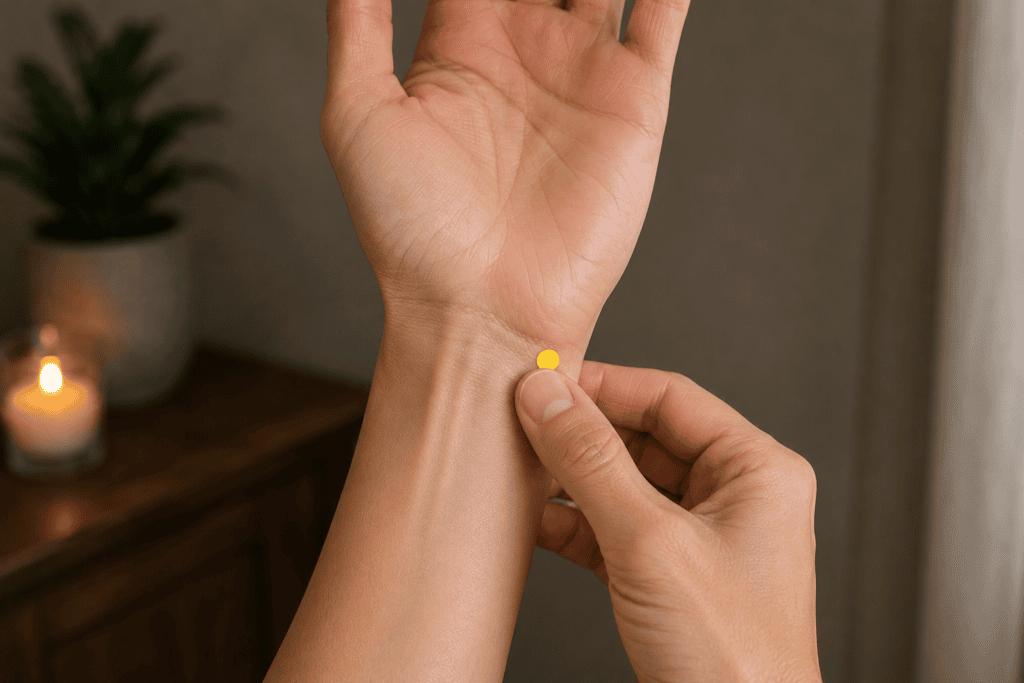
2. Press on HT7 at your wrist for settling the spirit. HT7 sits at the wrist crease on the pinky side, in the small hollow just inside the bony bump at the base of the hand. Press gently with your thumb for one to two minutes on each hand. HT7 is called “Shenmen” or “Spirit Gate” and is the source point of the Heart channel.
When fear scatters the Shen, HT7 gathers it back. It directly calms the Heart, steadies palpitations, and settles the scattered, cannot-hold-a-thought quality that comes over people before they speak. Like PC6, it is completely discreet, since holding your own wrist reads as a perfectly ordinary thing to do while you wait.
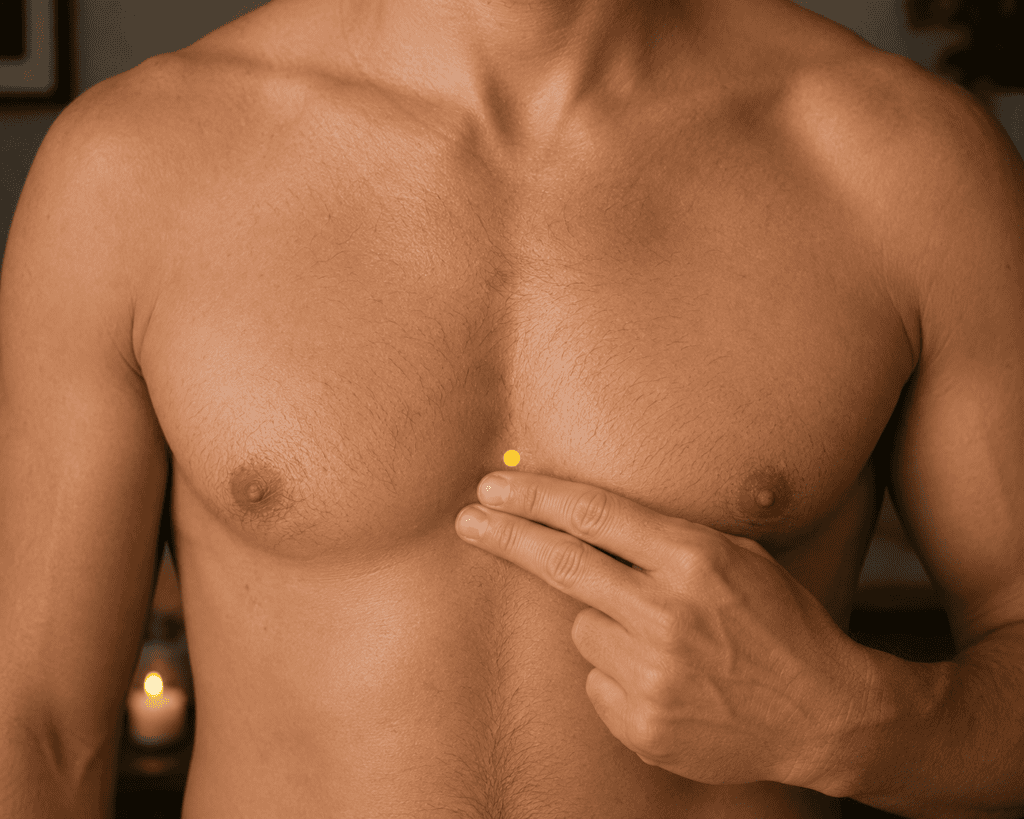
3. Press on CV17 at the center of your chest for opening the breath. CV17 sits on the midline of the breastbone, level with the space between the fifth ribs, roughly at nipple level. Press or tap gently with two or three fingertips for one to two minutes. CV17 is called “Shanzhong,” the “Sea of Tranquility,” and is the gathering point for Qi in the chest.
Stage fright produces a tight, banded chest and the feeling of not being able to draw a full breath. CV17 is the point that opens it. It regulates the Qi of the chest and releases the held, constricted feeling, and its old name reflects the emotional calm it brings. A few slow breaths while resting your fingers here settle both the breath and the panic riding on it.
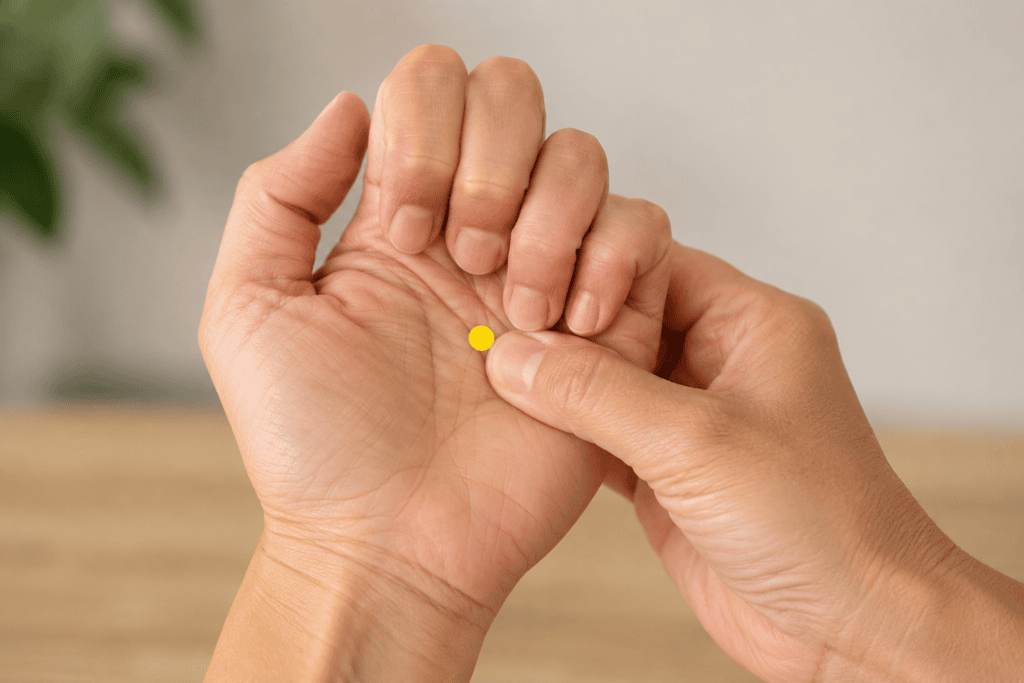
4. Press on PC8 in your palm for clearing anxious heat. PC8 sits in the center of the palm, where the tip of your middle finger lands when you curl your fingers into a loose fist. Press with the thumb of the opposite hand, or press your palms together, for one to two minutes. PC8 is called “Laogong” or “Palace of Toil” and is the Fire point of the Pericardium channel.
This point clears heat from the Heart, which is what the hot, flushed, sweaty-palmed panic of stage fright actually is in Chinese medicine. For the person whose hands go damp and whose face flushes as the moment approaches, PC8 cools that surge. Pressing your palms together quietly is among the most discreet things you can do while standing and waiting.
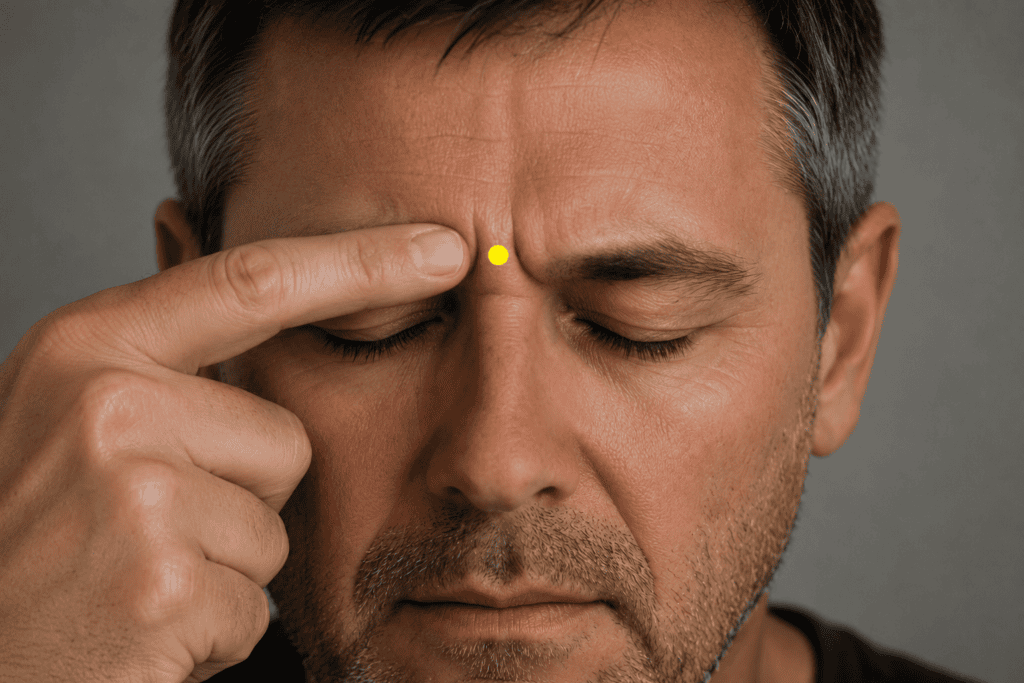
5. Press on Yintang between your eyebrows for quieting the mind. Yintang sits in the small hollow directly between the eyebrows, above the bridge of the nose. Press gently with a fingertip for one to two minutes. Yintang is an extra point long used to calm the mind and settle the nervous system.
The racing, looping thoughts before a talk, the rehearsing and catastrophizing, are what Yintang quiets. It shifts the body toward the calmer parasympathetic state and brings a scattered mind back to center. Even a minute of gentle pressure here, eyes closed, noticeably slows the spin.
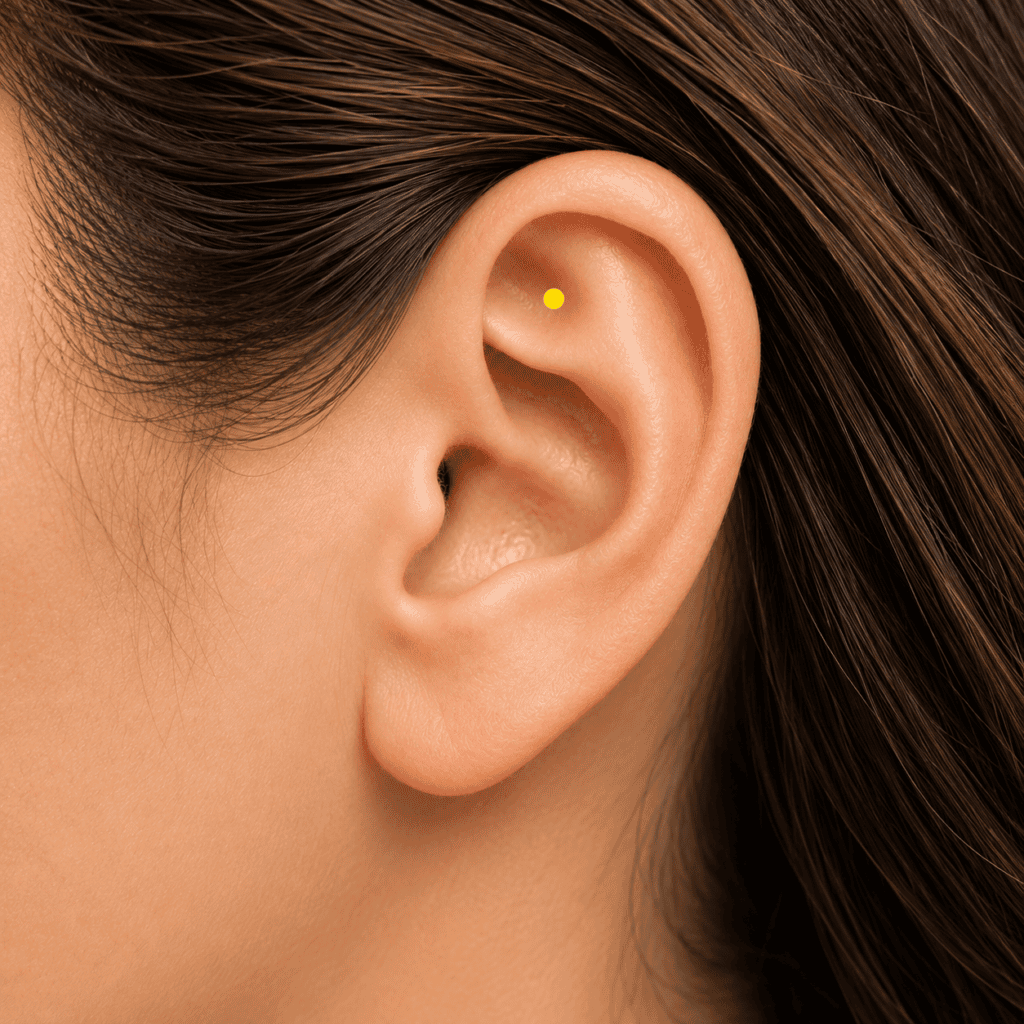
6. Press on Ear Shenmen for discreet calming. Ear Shenmen sits in the upper part of the ear, in the triangular hollow formed where the ridge of cartilage forks near the top. Pinch it gently between your thumb and index finger for one to two minutes. This is the calming master point of the ear, the same point used in the widely known auricular protocols for stress and anxiety.
The ear has a strong influence over the autonomic nervous system, and Ear Shenmen is the point that quiets an overactivated one. It is the most discreet point on this list by far, since holding your ear or resting your hand along the side of your head as you wait draws no attention at all. For someone who wants to settle without being seen doing anything, this is the point.
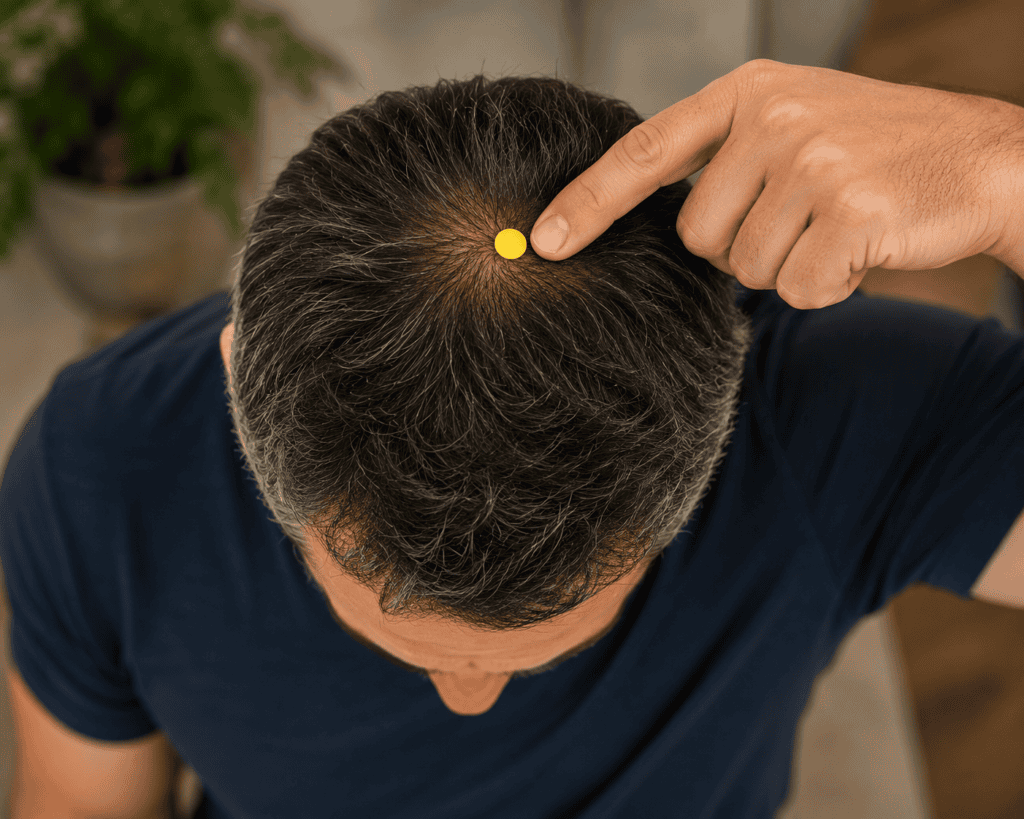
7. Press on GV20 at the top of your head for mental clarity. GV20 sits at the crown of the head, at the midpoint of a line drawn up and over from the top of one ear to the other. Press or tap with your fingertips for one to two minutes. GV20 is called “Baihui” or “Hundred Meetings,” where all the yang channels of the body converge.
This is the point for the mind going blank. GV20 lifts clear energy to the head and restores focus and presence, while at the same time having a settling, centering quality. Pressing or lightly tapping it before you go on helps clear the mental fog that fear produces and brings you back into your head so your prepared material is there when you reach for it.
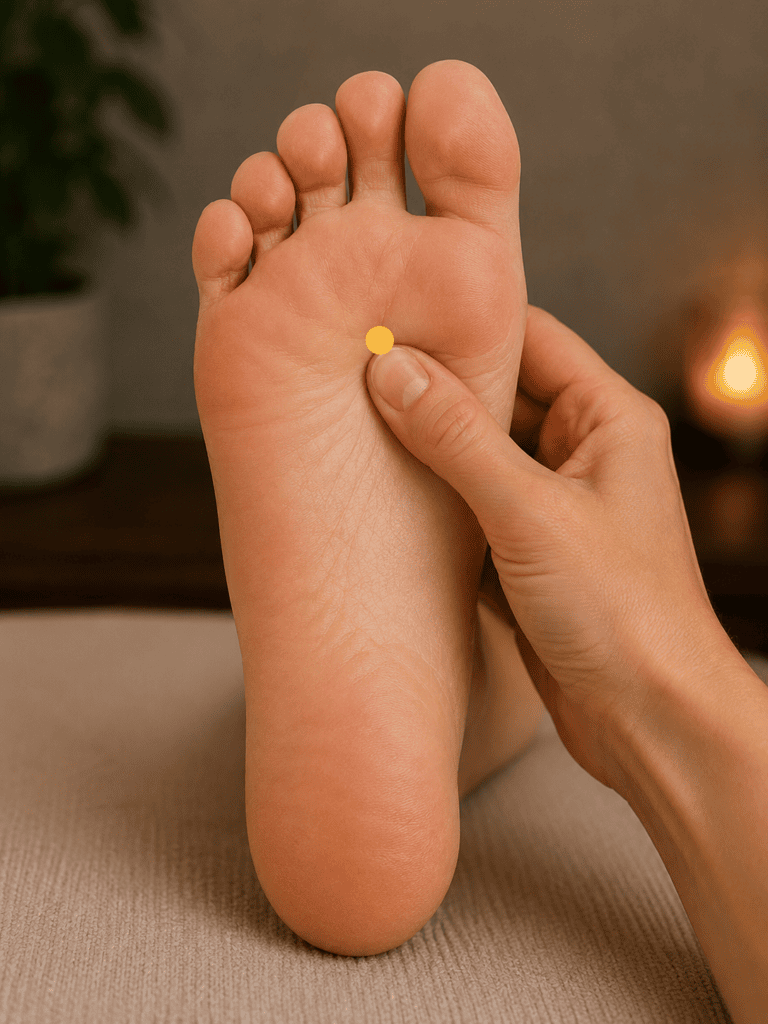
8. Press on KI1 on the sole of your foot for grounding. KI1 sits on the sole of the foot, in the depression that forms just behind the ball of the foot when you curl your toes, roughly a third of the way down from the base of the toes to the heel. Press firmly with your thumb for one to two minutes on each foot, or press the sole against the floor. KI1 is called “Yongquan” or “Bubbling Spring” and is the lowest point on the body.
This is the grounding anchor of the whole set, and it speaks directly to the Kidney root of the fear. When stage fright sends energy rushing up into a pounding head and chest, KI1 draws it back down and settles the Kidney, which calms the fear response at its source. Even standing and pressing both soles firmly into the floor before you walk on borrows this point’s grounding effect.
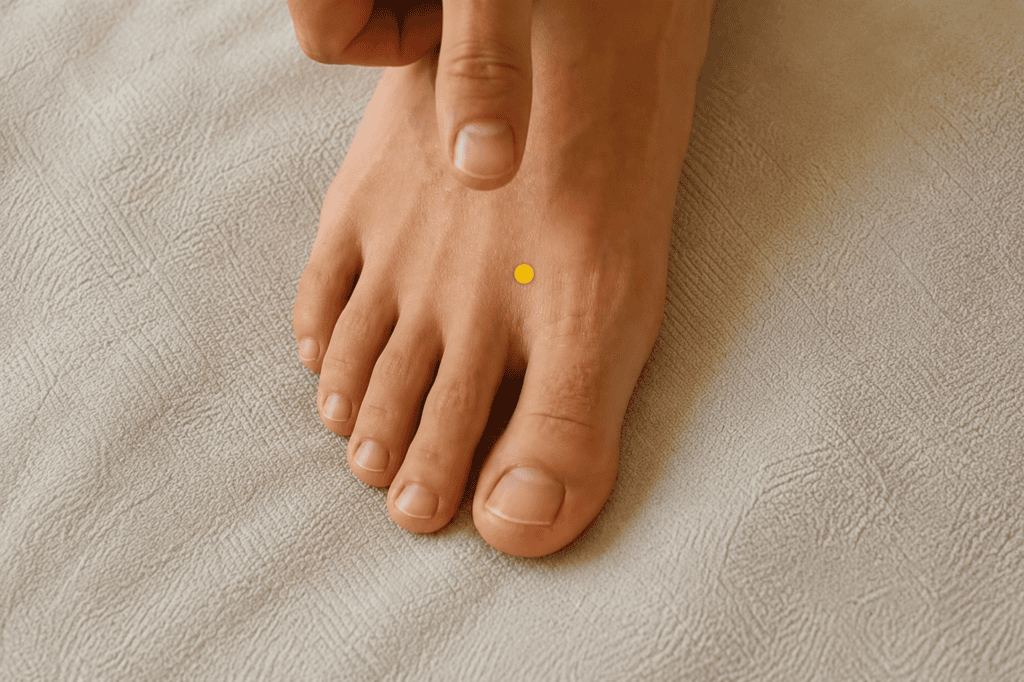
9. Press on LR3 on the top of your foot for settling the nerves. LR3 sits on the top of the foot, in the webbing between the first and second toes, about two finger-widths back from the web where the bones meet. Press firmly with your thumb for one to two minutes on each foot. LR3 is called “Taichong” or “Great Rushing” and is the primary point for moving stuck Liver Qi.
Nerves bind the Qi and leave the body wound and jittery, and LR3 moves that stagnation and settles the whole system. Paired with KI1, it draws energy down and out of the anxious head and roots you back into your feet, which is exactly the grounded state a nervous speaker is trying to find. Working both foot points together before going on is the strongest grounding combination on this list.
Why These Acupressure Points Work
In Chinese medicine, the fear of public speaking is viewed as a Heart-Kidney event. It starts from the Kidney, the Water element organ linked to fear, and ascends to disturb the Shen (mind) housed in the Heart. The Pericardium, which protects the Heart, also absorbs some of the physical stress. This pattern accounts for many typical stage fright symptoms, and the acupressure points address each component.
- The Heart and Pericardium points (PC6, HT7, CV17, PC8) calm the scattered Shen and settle the racing heart, the tight chest, and the anxious heat.
- The calming points for the mind (Yintang, Ear Shenmen) quiet the racing thoughts and settle an overactivated nervous system.
- The clarity point (GV20) lifts clear energy to the head and restores focus when the mind goes blank.
- The grounding points (KI1, LR3) draw the rushing energy back down and settle the fear at its Kidney root.
Physiologically, stage fright is a sympathetic “fight or flight” response involving adrenaline and a racing heart, preparing the body for a perceived threat that isn’t real. Pressing these points helps shift the body back to the parasympathetic “rest and relax” state, slowing the heart rate and easing breathing. Acute stress triggers a surge of adrenaline and cortisol that fuels this response, and calming the nervous system is key to reversing it.
How to Properly Use These Acupressure Points
Acupressure points work best when you know them well. Practice locating and pressing these points beforehand, rather than trying to do so for the first time backstage.
- While you wait to go on, discreetly. PC6, HT7, and Ear Shenmen can all be pressed while you sit or stand looking perfectly composed. Work them slowly and breathe. This is the core in-the-moment set.
- For the tight chest and held breath. CV17 with PC6, pressed together with slow breathing, opens the chest and settles the Heart when you cannot get a full breath.
- For sweaty hands and hot panic. PC8, pressed by bringing the palms together, clears the heat behind the flush and the damp hands.
- For the mind going blank. GV20 and Yintang together clear the fog and bring your focus back before you step up.
- To ground before you walk on. KI1 and LR3, or simply pressing both feet firmly into the floor, pull the energy down out of your head and root you. Do this in the last moments before you begin.
Combining acupressure with holistic techniques to reduce public speaking anxiety significantly improves outcomes:
- Prepare your material through practice and rehearsal to lessen the fear that feeds on uncertainty.
- To stay calm, take slow, deep breaths, as longer exhalations activate the nervous system’s calming response.
- Reframe the rush of adrenaline as excitement rather than fear, since both trigger similar bodily reactions, but your mind can interpret them differently.
- Regularly practicing speaking in relaxed settings helps lessen fear over time, as repeated exposure makes it easier to manage.
When to Get Professional Help
These tools assist with common performance anxiety but are not sufficient for more serious issues.
If fear of speaking or being watched causes you to decline opportunities, avoid classes, meetings, or jobs, or organize your life around avoiding these situations, it indicates social anxiety. This condition is common and highly treatable.
If you experience full panic attacks before speaking or if the anxiety affects other areas of your life, consider seeking professional mental health support. Talk therapy, especially cognitive behavioral therapy, has proven effective for this fear and works well alongside physical calming methods like acupressure and acupuncture.
Above and Beyond Acupuncture offers acupuncture, cupping, and lifestyle coaching at the North Frank Lloyd Wright Boulevard location in Scottsdale.
Schedule an appointment online or call us today to start your healing journey.
The points above are only as effective as the technique used to apply them. Where to press, how firmly, and for how long all affect the result. For a full breakdown of how to perform acupressure properly at home, read Performing Acupressure in 3 Easy Steps.

About the Publisher
Paul Kerzner, L.Ac., is a licensed acupuncturist and board-certified herbalist, as well as the founder of Above and Beyond Acupuncture in Scottsdale. His own journey from chronic patient to practicing acupuncturist shapes his commitment to providing honest, clinically grounded information about acupuncture and Traditional Chinese Medicine. Learn more about Paul and his clinical approach on the About Us page.