
Key Takeaways
- Fear affects our body and mind, causing symptoms like racing heart and shallow breathing.
- Acupressure is effective for managing fear by targeting specific points that strengthen the Kidney, calm the Heart, and ground the spirit.
- Nine acupressure points, including KI3 and HT7, help stabilize and connect the body’s energy related to fear.
- Use these points regularly, especially during episodes of fear, combining them with deep breathing for best results.
- Seek professional help for severe fears or panic attacks; acupressure complements therapy well.
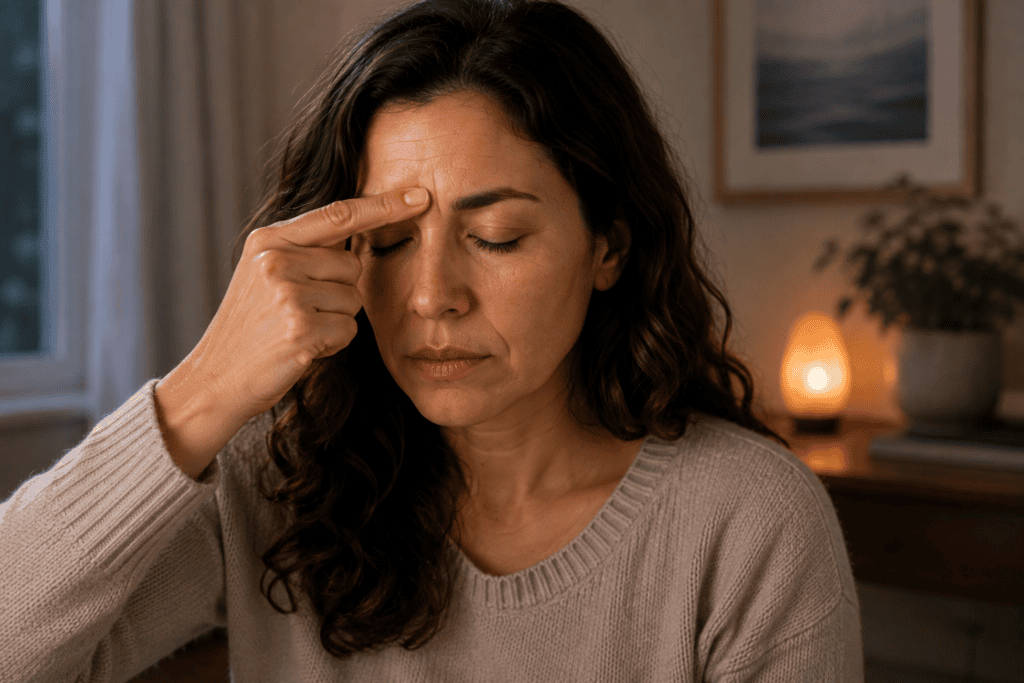
Fear is one of our most primal emotions.
It can strike suddenly with a sharp jolt, or it can linger as a dull, persistent unease that taints everything. This specific dread or nervousness often leaves a mark: the heart races, breathing becomes shallow, the stomach drops, knees weaken, and a sense of sinking and bracing takes over. Acupressure can calm this fear, soothe the anxious mind, ground the body, and help you regain stability from within.
Traditional Chinese Medicine views fear as a precise and ancient emotion linked to the Kidneys and Water element. It is considered the deepest and most fundamental emotion, which is why it can feel so profound and difficult to reason through. The Kidneys hold the body’s deepest reserves, and ongoing or repeated fear depletes them, leading to exhaustion. A common principle states that fear causes Qi to descend, which you can physically feel as a sinking stomach, weak knees, and the drooping sensation of fear. Additionally, fear disrupts the vital connection between the Kidneys and the Heart, unsettling the Shen, the spirit housed within the Heart, manifesting as a racing heart and a distracted, frightened mind.
Fear is a normal and protective emotion, and acupressure is a tool to steady it rather than erase it, since a healthy dose of fear keeps us safe. It is a close relative of anxiety, though the two are distinct, fear is the deep, primal response while anxiety is more the restless, worried anticipation, and that companion piece is worth reading alongside this one.
Here are nine acupressure points to help strengthen and ground the Kidneys, restore the connection between the Kidneys and the Heart, calm the Shen, and support the spirit diminished by fear.
What Acupressure Points to Press and Why
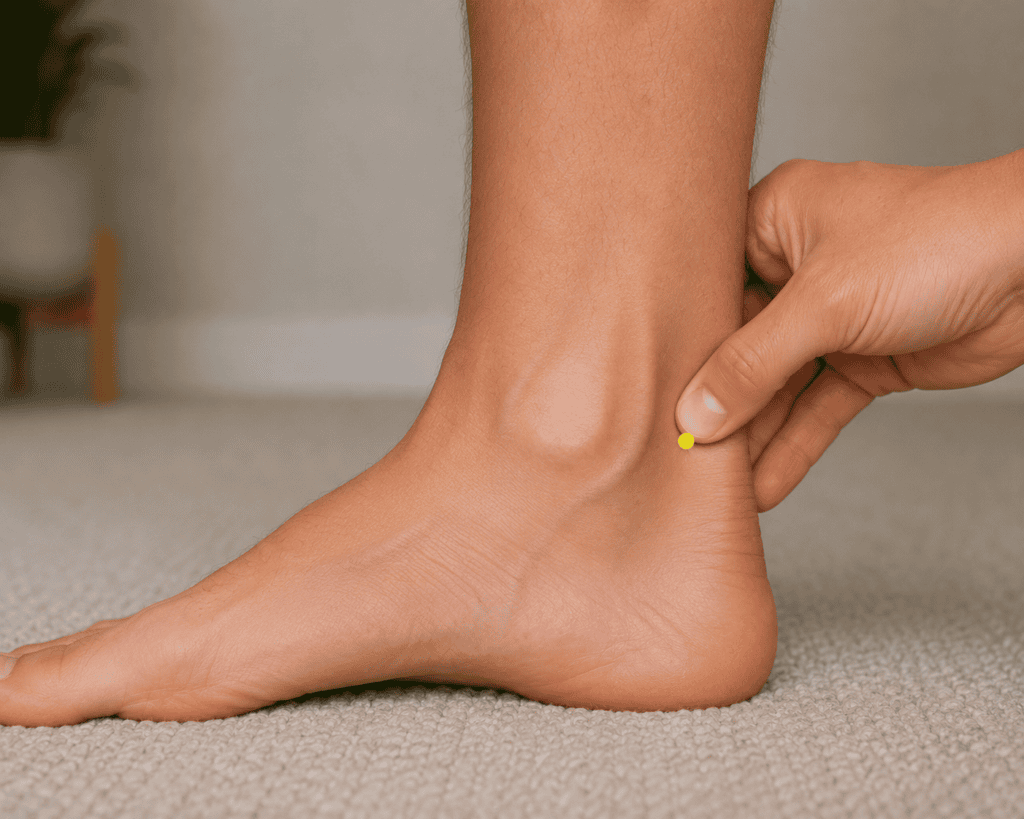
1. Press on KI3 above the inner ankle to steady fear at its root. KI3 sits in the hollow between the inner ankle bone and the Achilles tendon, level with the tip of the ankle bone. Press firmly with your thumb for one to two minutes on each ankle. KI3 is called “Taixi,” the source point of the Kidney, the organ at the root of fear.
Since fear is linked to the Kidney, KI3, as its primary point, is the most effective for addressing fear at its core. It nourishes and reinforces the Kidney’s reserves, which are often drained by chronic fear, helping to stabilize feelings of insecurity and fearfulness from the foundation. Additionally, it helps the Kidney reconnect with the Heart, reducing the racing and scattered sensations associated with fear. For those experiencing persistent, deep fear, this is the key point to focus on, as it addresses the root issue that supports other related points.
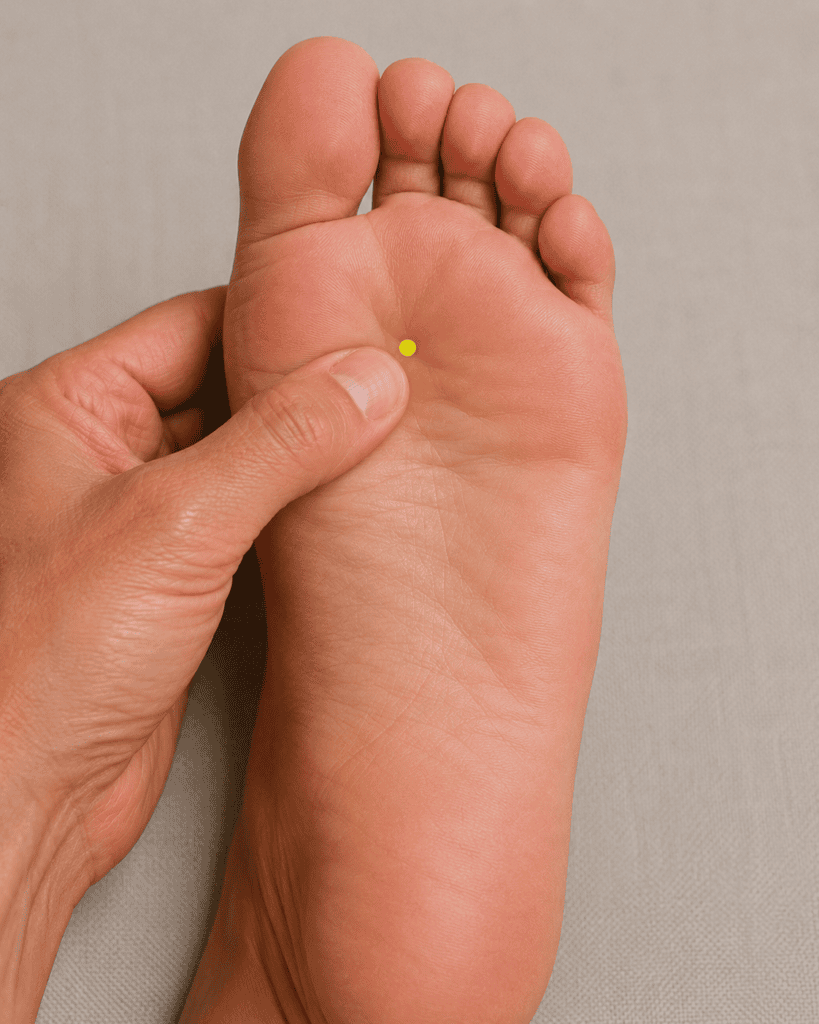
2. Press on KI1 on the sole of the foot to ground the sinking fear. KI1 sits on the sole of the foot, in the hollow that forms in the center of the ball of the foot when you curl the toes, about a third of the way down from the toes to the heel. Press firmly with your thumb for one to two minutes on each foot. KI1 is called “Yongquan,” the “Bubbling Spring,” and it is the lowest point on the body.
KI1 serves as the key grounding point, effectively channeling scattered, anxious energy from a racing mind and pounding heart downward and into the earth. Located at the lowest part of the body and as the first point on the Kidney channel, it calms deep-seated Kidney fear and stabilizes a system that fear has made spin and feel unmoored. For those feeling frightened, ungrounded, and on the verge of fleeing, this point helps restore a sense of solid stability. It naturally complements KI3, creating a comprehensive way to work through Kidney issues from the root to the base.
3. Press on CV4 below the navel to rebuild what fear depletes. CV4 sits on the midline of the lower abdomen, about four finger-widths below the navel. Rest your fingertips or palm there and press gently and warmly for one to two minutes. CV4 is called “Guanyuan,” the “Gate of Origin,” and it is one of the main points for warming and rebuilding the body’s deep reserves. Use CV4 with caution during pregnancy.
Living with fear depletes the deep Kidney reserves, leaving a person drained, cold, and exhausted. CV4 is a profoundly warming, strengthening point that restores this foundational energy at its source. Applying gentle, warm pressure to this point helps replenish vitality and stability, which constant fear can erode. It gives the body a sense of being filled and rooted from within. For those drained by persistent fear or anxiety, CV4 provides warmth and support, especially when combined with slow breathing or a warm compress, helping to ground and rebuild.

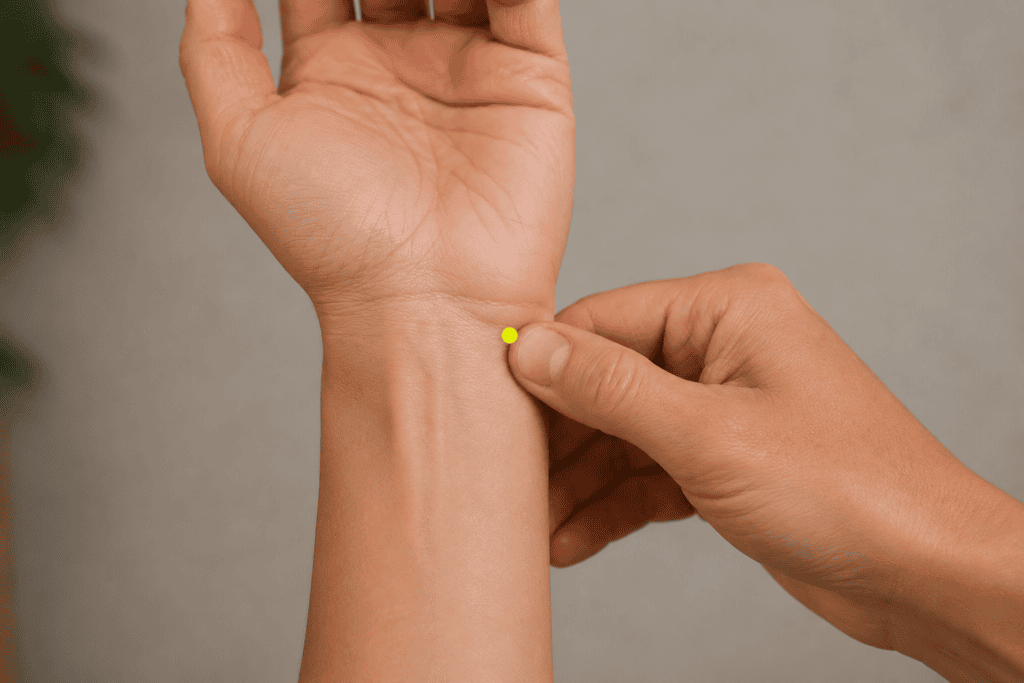
4. Press on HT7 at the wrist to calm the frightened heart. HT7 sits on the inner wrist crease, on the pinky side, in the small hollow just inside the tendon. Press firmly with your thumb for one to two minutes on each wrist. HT7 is called “Shenmen,” the “Spirit Gate,” and it is the source point of the Heart and the most important point for calming the Shen.
HT7 soothes the Heart and calms the Shen, reducing the pounding heart and scattered, frightened thoughts caused by fear. As the Spirit Gate, it is the most important point for an unsettled spirit. Importantly, it helps reconnect the Heart above with the Kidney below, which fear can disrupt, so the calming effect addresses the root as well as the surface. For a racing heart and anxious, fearful mind, this point stabilizes both and can be pressed quietly whenever fear emerges.
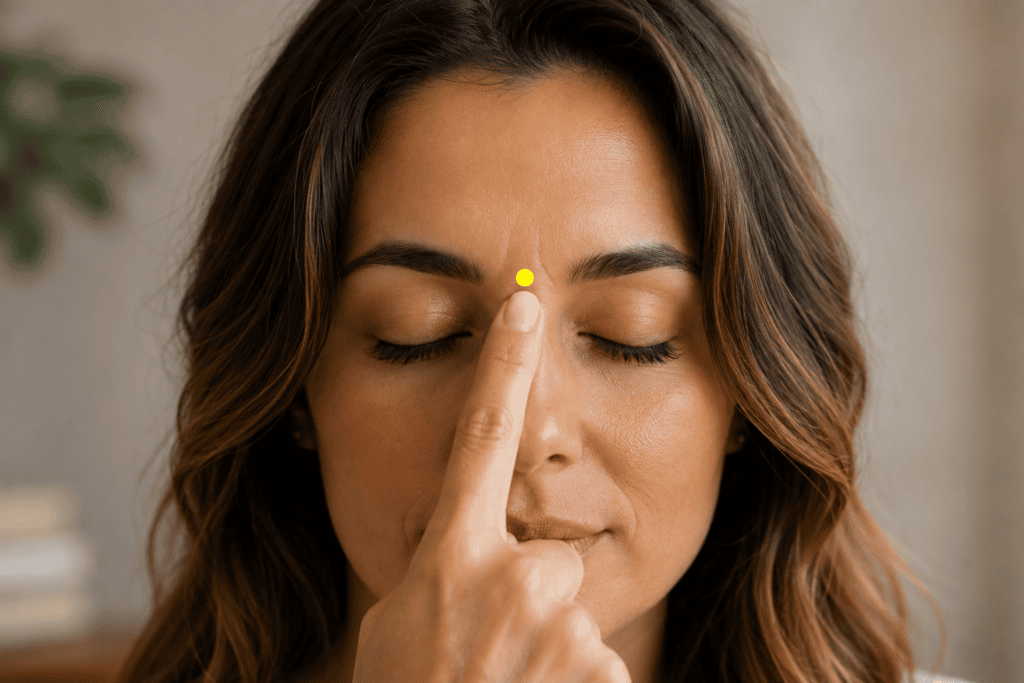
5. Press on Yintang between the eyebrows to quiet the fearful mind. Yintang sits in the small hollow directly between the two eyebrows. Press steadily and hold, or make small, slow circles with your fingertip for one to two minutes. Yintang is an extra point and one of the most calming points in the body.
Yintang helps settle the Shen and calm a frightened mind by easing racing thoughts, dread, and tension. It relaxes the nervous system and halts the cycle of fear. For those whose fears trigger worst-case scenarios, especially at night, pressing this point combined with deep breathing fosters genuine calmness.
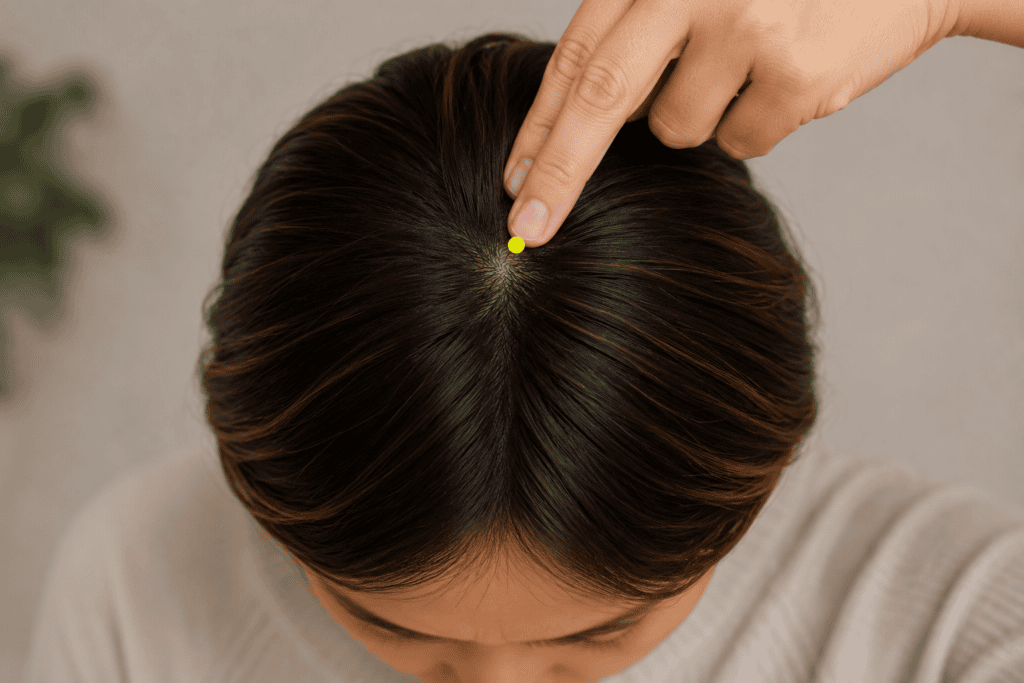
6. Press on GV20 at the top of the head to lift the collapsed spirit. GV20 sits at the very top of the head, on the midline, on a line drawn up from the tops of both ears. Press straight down, or make small circles, with your fingertip for one to two minutes. GV20 is called “Baihui,” the “Hundred Meetings,” where many channels converge at the crown.
Since fear causes the Qi to descend and the spirit to collapse, GV20 functions oppositely by lifting the Qi and restoring the uplifted, courageous spirit. This makes it especially useful for regaining courage and stability. It clears the mind and counteracts the shrinking, pulling-down sensation of fear, enabling you to confront your fears from a more upright and grounded position. For those whose fear makes them timid and collapsed, this point helps lift them, balancing the grounding effects of the Kidney points with a steady upward energy.
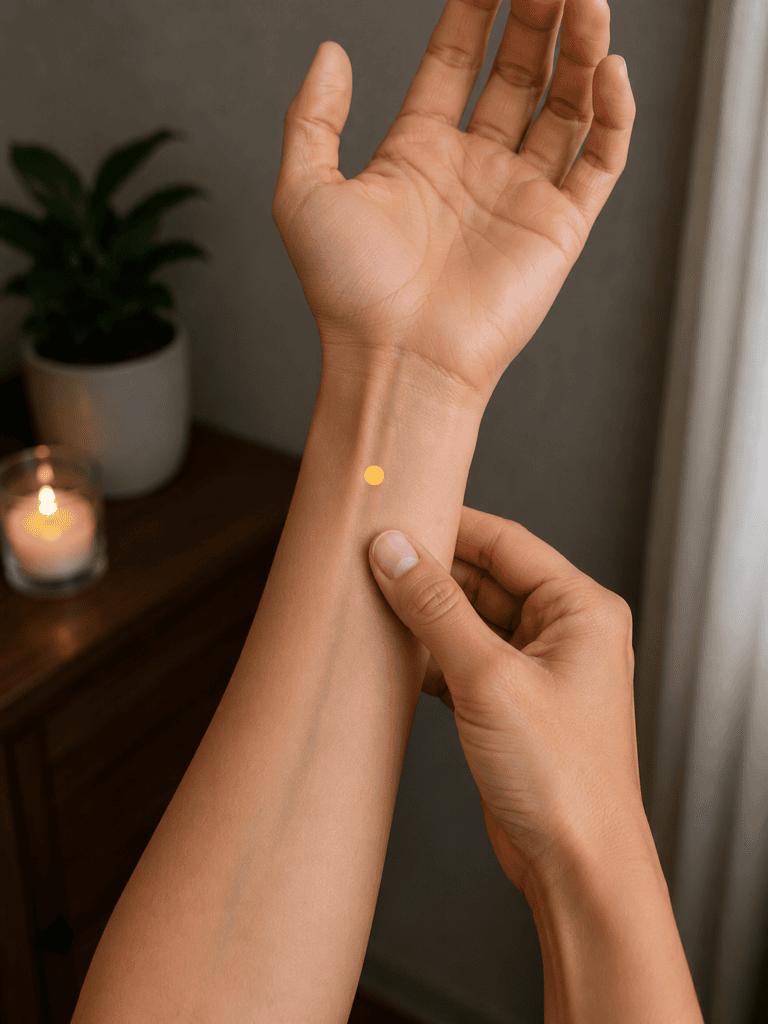
7. Press on PC6 on the inner forearm to open the braced chest. PC6 sits three finger-widths above the inner wrist crease, in the center of the forearm between the two tendons. Press firmly with your thumb for one to two minutes on each arm. PC6 is called “Neiguan,” the “Inner Pass,” and it opens the chest and calms the spirit.
PC6 opens the chest, relieving the tight, gripping sensation that fear causes. It eases both the physical constriction and the pounding, fluttering heart. As a key point for the chest and emotions, it helps loosen fear’s hold, calming the nervous system. For those experiencing a tight chest and racing heart due to fear, this point releases that tension and also helps soothe the queasy, dropping stomach often associated with fear.
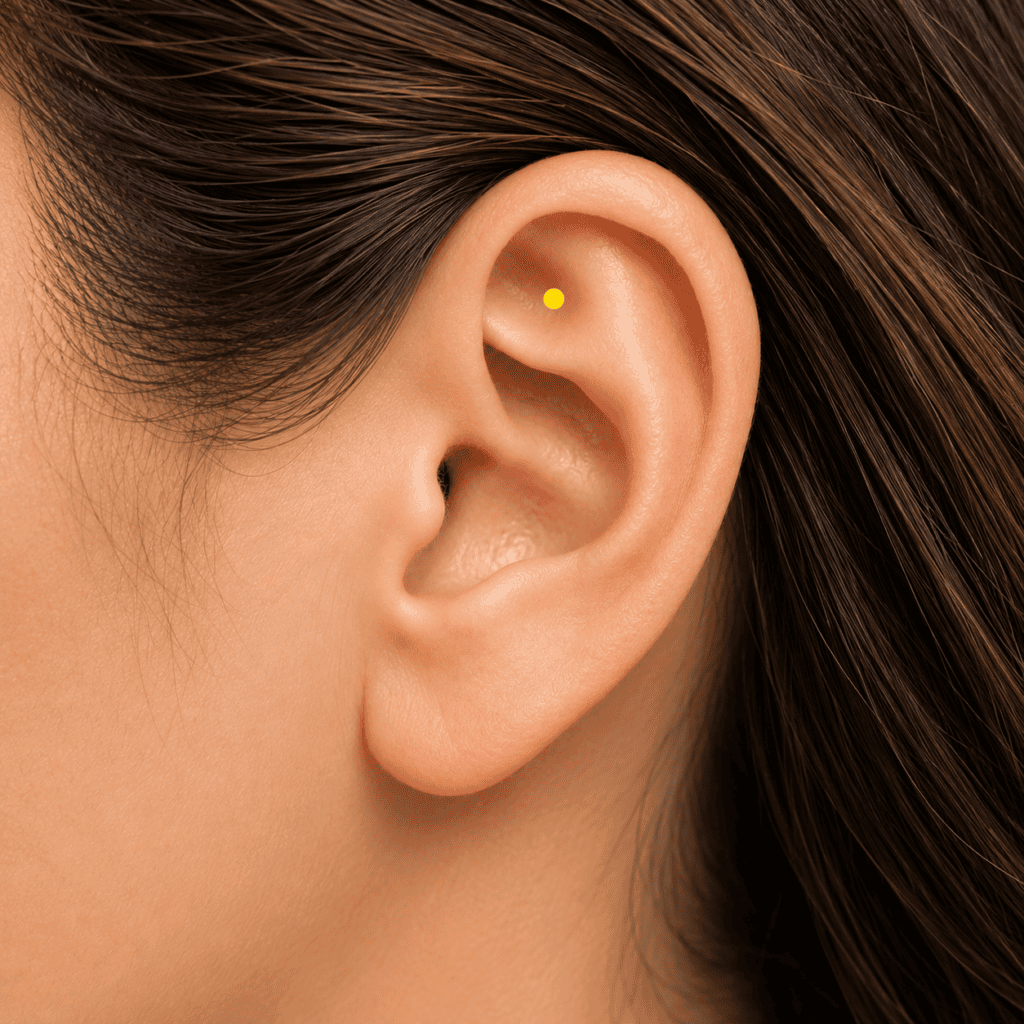
8. Press on Ear Shenmen for deep, fast calm in a fright. Ear Shenmen sits in the upper part of the ear, in the triangular hollow near the top, at its apex. Press gently with your fingertip, or squeeze between your finger and thumb, for about a minute on each ear. Ear Shenmen is one of the most calming points on the ear and shares its name, “Spirit Gate,” with the Heart point HT7.
Ear Shenmen is a highly effective calming point on the body, commonly used to reduce acute fear, fright, and distress. It quickly and deeply calms the Shen, making it the go-to point during moments of fear. It offers quick relief from intense fear surges and is discreet and easily accessible whenever fear arises. For sudden shocks or waves of fear, this point calms the entire system rapidly and works well when pressed together with wrist points.
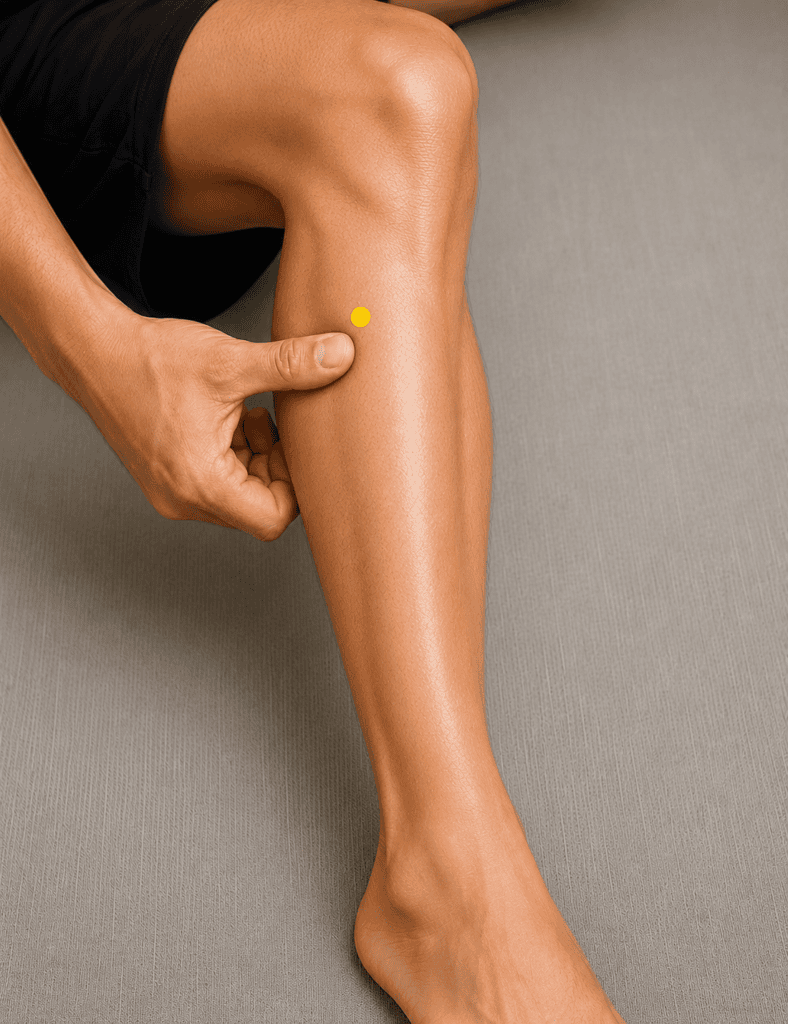
9. Press on ST36 below the knee to ground and rebuild. ST36 sits four finger-widths below the lower edge of the kneecap and one finger-width to the outside of the shinbone, on the muscle that rises when you flex your foot. Press firmly with your thumb for one to two minutes on each leg. ST36 is called “Zusanli,” the “Leg Three Miles,” and it is the master point for grounding and rebuilding the body.
ST36 offers a deeply grounding and strengthening effect, helping to draw the anxious, mind-focused energy of fear downward. It aids in rebuilding the Qi that ongoing fear depletes, stabilizing the entire body. ST36 also calms the restless, upset stomach caused by fear and restores the energy and resilience worn down by living in fear. For those feeling exhausted and unsteady due to fear, this point provides grounding and aids in rebuilding strength. With regular use, it enhances overall stability, making it easier to endure fear.
Why These Acupressure Points Work
In Traditional Chinese Medicine, fear corresponds to the Kidneys. It depletes their deep reserves, causes Qi to sink, interrupts the link between the Kidney and the Heart, and unsettles the Shen. The Shen is experienced as feeling depleted, sinking, racing, or frightened. The nine points target this entire pattern.
- The Kidney points (KI3, KI1, CV4) steady fear at its root, ground the sinking energy, and rebuild the reserves that fear depletes.
- The Heart-and-Shen points (HT7, Yintang, PC6, Ear Shenmen) calm the racing heart and frightened mind and reconnect the Heart with the Kidney.
- The lifting point (GV20) raises the collapsed, cowering spirit that fear sinks, restoring courage.
- The grounding point (ST36) anchors the anxious energy and rebuilds the body worn down by fear.
How to Properly Use These Acupressure Points
Consistently use these supportive points whenever fear arises to help gently stabilize those deep-rooted fears.
- In a moment of fear, work the points that calm and ground fastest, KI1 and ST36 to bring the energy down, HT7, PC6, Yintang, and Ear Shenmen to calm the heart and mind, and slow your breathing while you press.
- For an ongoing, deep-seated fearfulness, work the root points, KI3, CV4, KI1, and ST36, once or twice a day over a stretch of weeks to strengthen and steady the Kidney at the foundation.
- Add GV20 to lift the spirit and restore courage when fear leaves you timid and collapsed.
- Hold each point for one to two minutes with firm, steady pressure, breathing slowly, since slow breathing is itself one of the fastest ways to calm the fear response.
Combining acupressure with calming techniques provides the best results.
Practicing slow, deep breathing helps genuinely calm the body’s fear response in the moment, so doing it regularly before you need it is beneficial. Regular exercise, adequate sleep, and maintaining social connections all foster resilience, making fear easier to manage. Traditional Chinese Medicine also recommends reducing excessive caffeine intake, which can amplify anxious and jittery feelings. Additionally, confronting specific fears gradually, through small, manageable steps rather than avoidance, is among the most effective strategies for diminishing their control over time.
When to Get Professional Help
Fear is a normal, protective emotion, and these points help manage everyday fears. Some severe and significant fears require more attention.
If a specific fear or phobia is so intense that it disrupts your daily routine, causes full-blown panic attacks, or follows a traumatic event with flashbacks, nightmares, or constant dread, it’s important to seek help from a doctor or therapist. These issues often respond well to professional treatment, especially talk therapies like exposure therapy for phobias or trauma-focused therapy.
If fear dominates your life or if you have thoughts of self-harm, please reach out—call or text the 988 Suicide and Crisis Lifeline anytime. Acupressure can also help calm everyday fears and works well alongside professional care for deeper fears.
Above and Beyond Acupuncture offers acupuncture, cupping, and lifestyle coaching at the North Frank Lloyd Wright Boulevard location in Scottsdale.
Schedule an appointment online or call us today to start your healing journey.
The points above are only as effective as the technique used to apply them. Where to press, how firmly, and for how long all affect the result. For a full breakdown of how to perform acupressure properly at home, read Performing Acupressure in 3 Easy Steps.

About the Publisher
Paul Kerzner, L.Ac., is a licensed acupuncturist and board-certified herbalist, as well as the founder of Above and Beyond Acupuncture in Scottsdale. His own journey from chronic patient to practicing acupuncturist shapes his commitment to providing honest, clinically grounded information about acupuncture and Traditional Chinese Medicine. Learn more about Paul and his clinical approach on the About Us page.