
Key Takeaways
- Chronic frustration affects physical and emotional well-being, manifesting as tension and discomfort.
- Traditional Chinese Medicine views frustration as a physical issue related to Liver Qi stagnation, not just a psychological one.
- Acupressure offers techniques to relieve frustration by targeting key points that release tension and improve Qi flow.
- Nine specific acupressure points can help address various aspects of frustration, including Liver support and calming the mind.
- Using these acupressure points regularly can support emotional health and alleviate symptoms of frustration.

If you’ve been dealing with chronic frustration, you know how quickly it can shift your entire day. It manifests as tight shoulders, a clenched jaw, tension in your chest, headaches that seem to come out of nowhere, and digestive issues that flare up when you’re stuck in a difficult situation. When it lingers long enough, frustration often turns into anger. It’s one of the most common emotions we experience, yet Western medicine often treats it as simply a psychological issue to manage with mindset strategies or medication.
Traditional Chinese Medicine has understood frustration for thousands of years as a physical pattern, not just an emotional one. The Liver in Chinese medicine governs the smooth flow of Qi throughout the body and carries the emotional patterns of frustration, anger, and irritability. When situations, relationships, or circumstances prevent the smooth expression of what wants to move, Liver Qi becomes stagnant. This produces the muscular tension, headaches, digestive issues, and emotional intensity that chronic frustration creates.
Acupressure offers direct tools you can use at home to address the actual physical patterns underlying frustration. The technique will not eliminate the situations causing your frustration. What it can do is release the physical patterns that frustration creates, which supports your capacity to respond to challenging circumstances from a more grounded state.
For patients wanting a better understanding about living with chronic frustration, Why Do I Feel Frustrated All the Time? covers the Traditional Chinese Medicine perspective on this experience in more depth.
Here are nine acupressure points that can help:
What Acupressure Points to Press and Why
Each point addresses a different aspect of the frustration pattern. You can use them individually during acute moments or work through the full protocol when you have time for a longer practice.
1. Press on LR3 on the top of your foot for Liver Qi movement. LR3 sits on the top of the foot in the webbing between the first and second toes, about two finger-widths back from the web. Press firmly with your thumb for one to two minutes on each foot. LR3 is called “Taichong” or “Great Rushing” and is the primary Liver Qi moving point.
The Liver in Chinese medicine governs the smooth flow of Qi and Blood and carries the emotional patterns of frustration, anger, and irritability. LR3 directly addresses the Liver Qi Stagnation pattern that produces frustration. This is one of the most important points for anyone dealing with chronic frustration patterns.
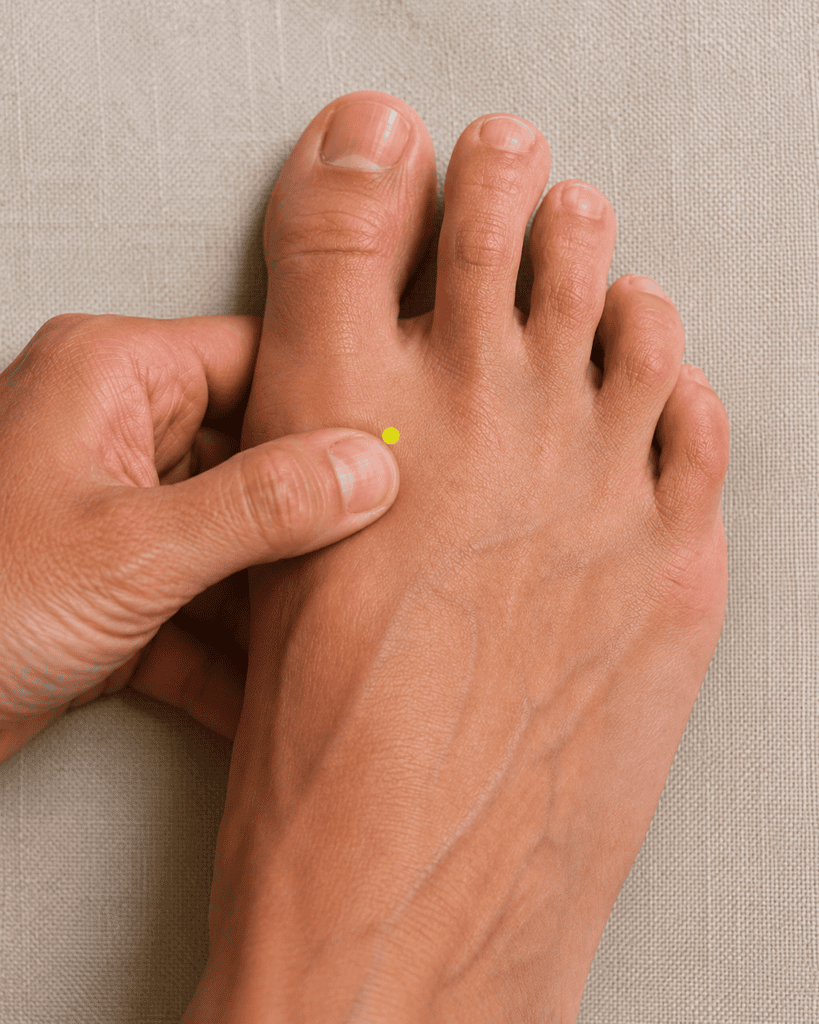
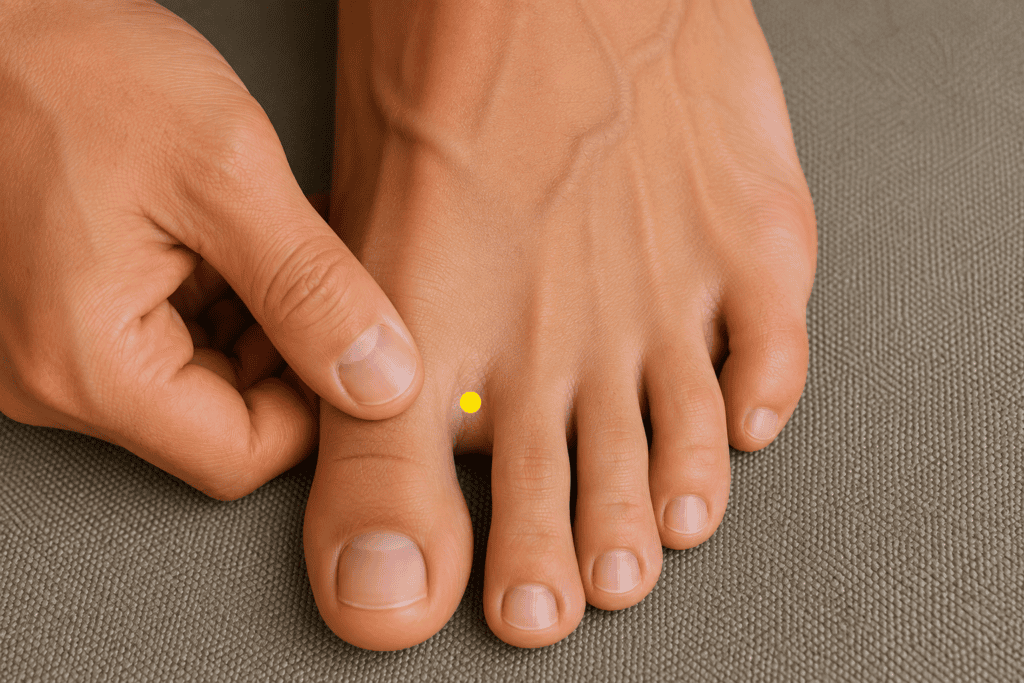
2. Press on LR2 on the top of your foot for Liver Fire clearing. LR2 sits on the top of the foot in the webbing between the first and second toes, at the web margin (about one finger-width forward of LR3). Press firmly with your thumb for one to two minutes on each foot. LR2 is called “Xingjian” or “Moving Between” and is the Fire point of the Liver meridian.
When frustration builds and transforms into anger, heat rises through the body producing red face, headaches at the top of the head, or intense irritability. LR2 addresses this Liver Fire pattern that develops when chronic frustration has been building. LR2 works particularly well combined with LR3 for comprehensive Liver support.
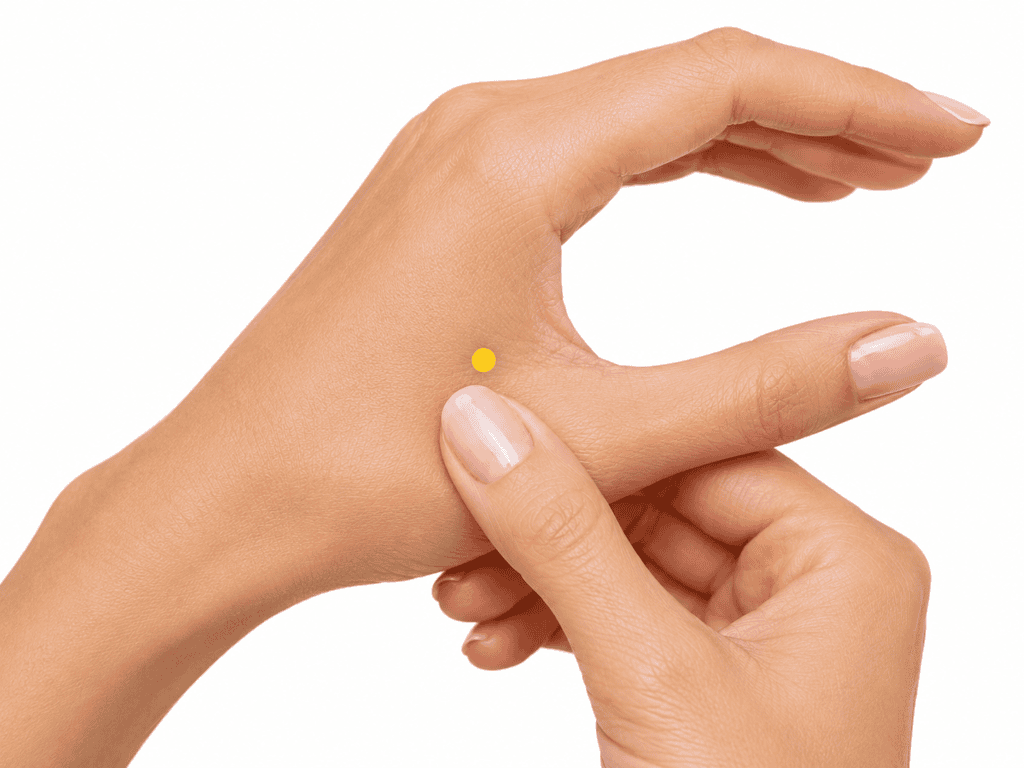
3. Press on LI4 in the webbing between your thumb and index finger for the Four Gates pairing. LI4 sits in the soft tissue webbing between the thumb and index finger, in the muscle that bulges when the thumb is pressed against the side of the index finger. Press firmly with the thumb of the opposite hand for one to two minutes on each hand. LI4 is called “Hegu” and combined with LR3 forms the Four Gates in Chinese medicine.
The Four Gates combination is one of the strongest Qi moving combinations in the entire acupressure tradition. LI4 and LR3 pressed together move Qi throughout the whole body and address the Qi Stagnation pattern at its core. LI4 is contraindicated during pregnancy.
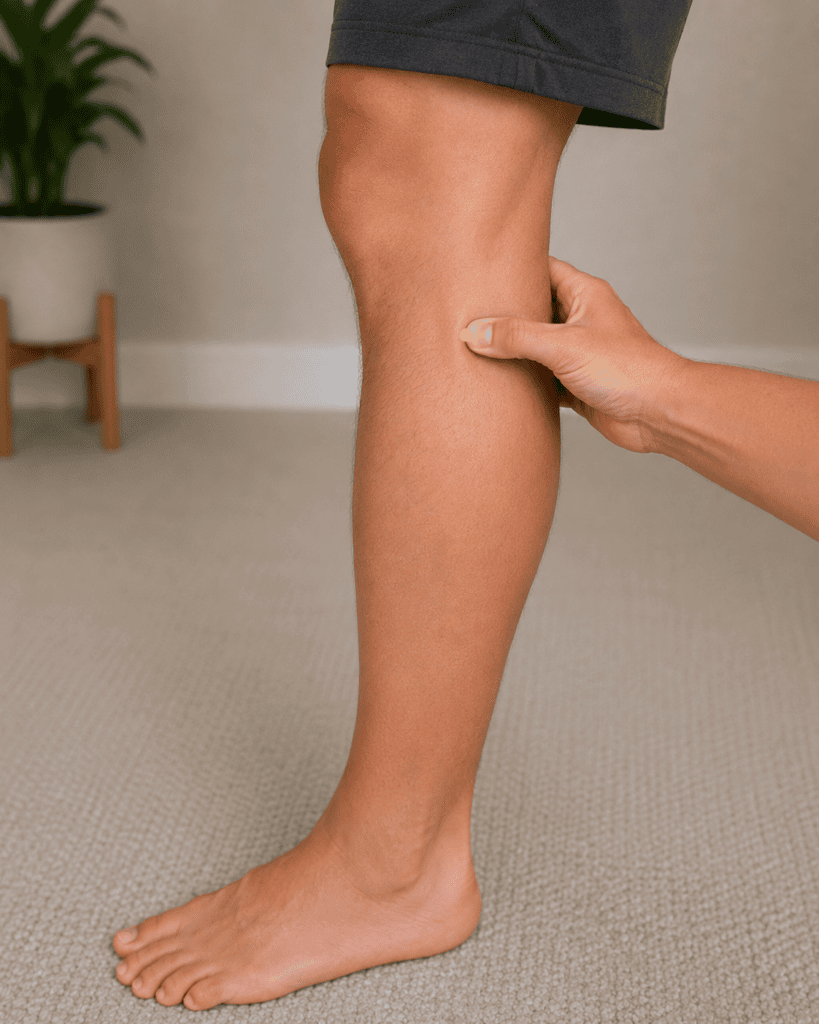
4. Press on GB34 below your outer knee for tendon and Gallbladder support. GB34 sits in the depression on the outer side of the leg just below the knee, in front of and below the head of the fibula. Press firmly with your thumb for one to two minutes on each leg. GB34 is the influential point for tendons and supports the Liver-Gallbladder system directly.
The Gallbladder in Chinese medicine is paired with the Liver and supports decisiveness and clarity. When frustration builds, indecisiveness and confusion often accompany it. GB34 addresses this pattern and releases the muscular tension that Liver-Gallbladder patterns produce in the shoulders and neck.
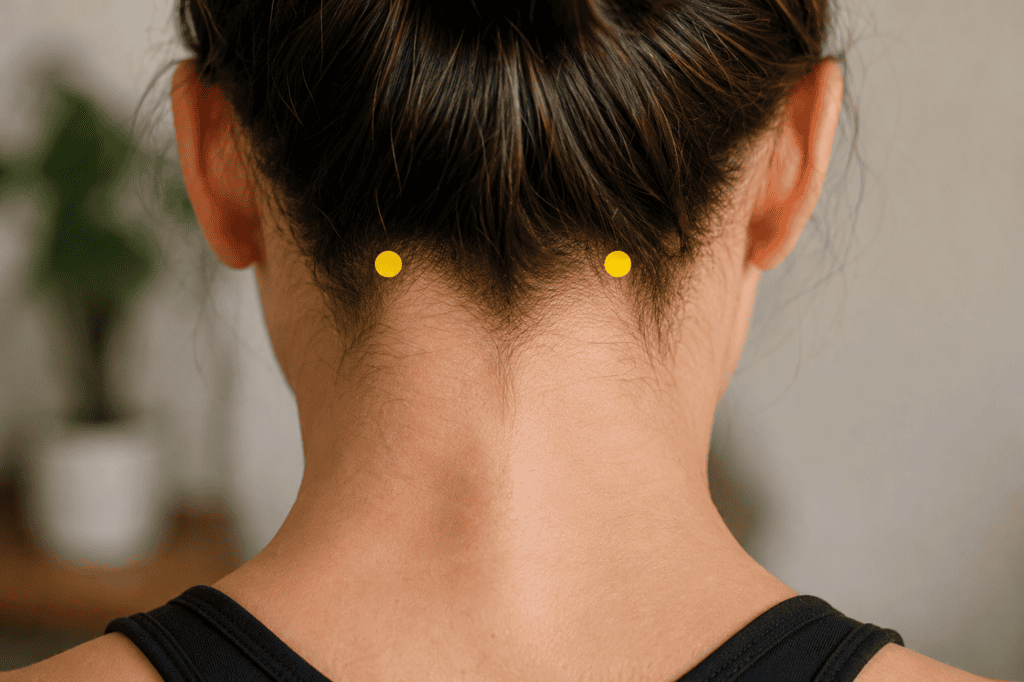
5. Press on GB20 at the base of your skull for neck tension release. GB20 sits in the hollow at the base of the skull, about two finger-widths to either side of the spine, at the point where the neck muscles attach to the skull. Press firmly with your thumbs for one to two minutes on each side. GB20 addresses the neck tension and headache patterns that frustration commonly produces.
The Gallbladder meridian runs through the head and neck, which makes GB20 particularly effective for the headaches and neck tension of chronic frustration. The point pairs well with GB34 for comprehensive Gallbladder work.
6. Press on Yintang between your eyebrows for calming the mind. Yintang sits in the small hollow directly between the eyebrows, above the bridge of the nose. Press gently with your fingertip for one to two minutes. Yintang activates the parasympathetic nervous system directly.
The point addresses the mental restlessness and racing thoughts that frustration produces. Yintang works particularly well in acute moments when frustration is peaking. Even one minute of pressure can shift the nervous system state.

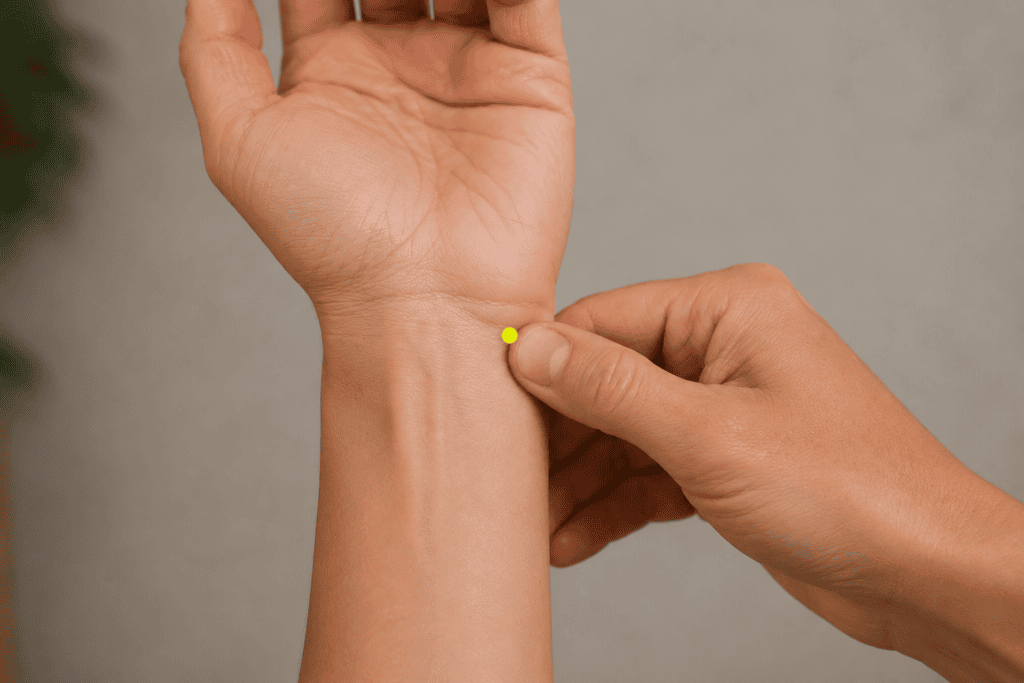
7. Press on HT7 at the pinky-side wrist crease for calming the Spirit. HT7 sits at the wrist crease on the pinky side, in the small depression just above the wrist bone. Press gently with your thumb for one to two minutes on each hand. HT7 is called “Shenmen” or “Spirit Gate” in Chinese medicine and directly calms the Shen.
The point addresses the emotional intensity that frustration produces. When the Heart is disturbed by the emotional patterns of the Liver, HT7 restores the calm to the Shen that allows for clearer thinking and response.
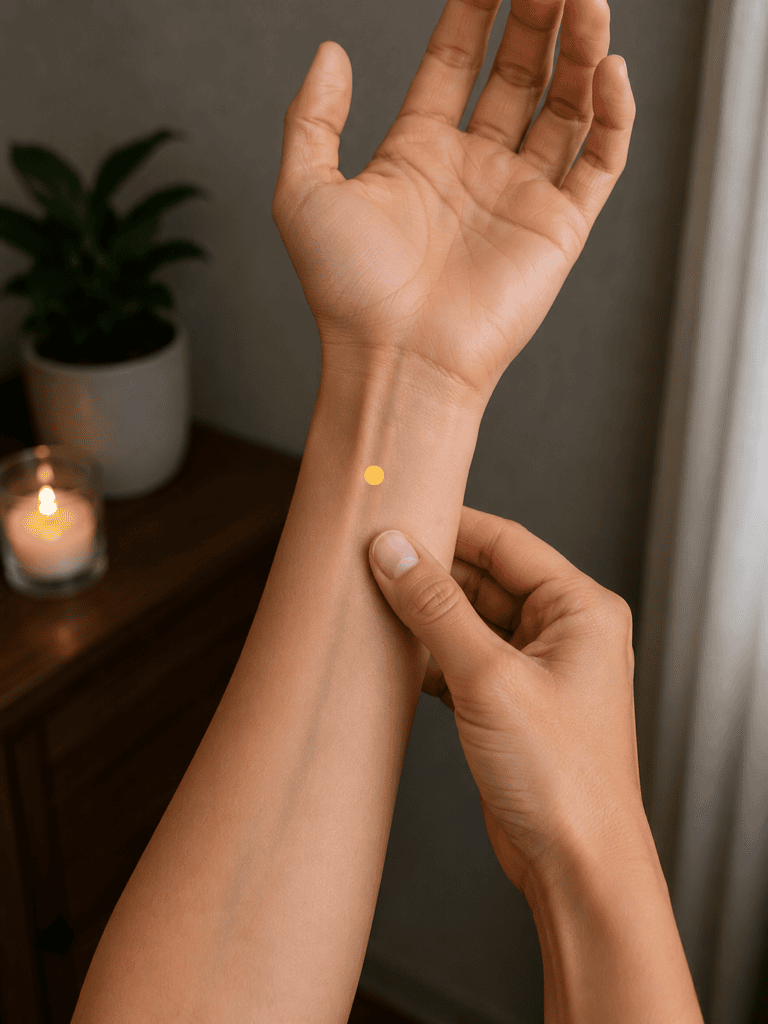
8. Press on PC6 on the inner forearm for Heart region calming. PC6 sits about three finger-widths above the inner wrist crease, between the two tendons in the center of the forearm. Press firmly with your thumb for one to two minutes on each arm. PC6 is called “Neiguan” or “Inner Pass” and directly calms the Heart region.
The chest tightness and physical sensation of frustration in the chest respond directly to PC6. This is one of the strongest points for immediate relief when the physical symptoms of frustration are peaking.
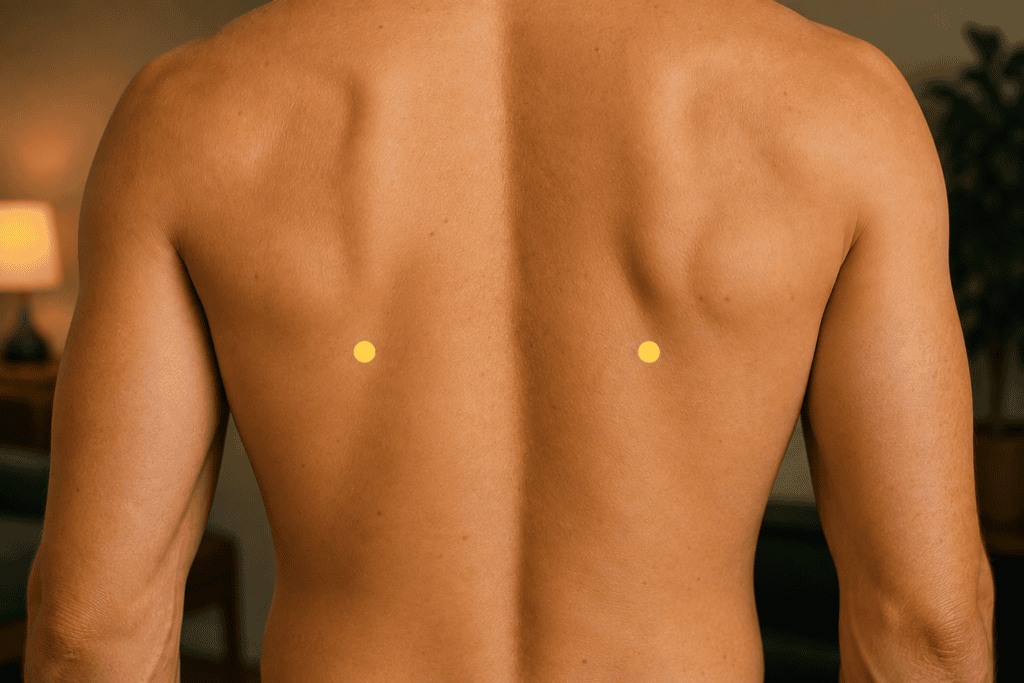
9. Press on BL47 on your back for the Gate of the Hun. BL47 sits on the back, at the level of the lower border of the ninth thoracic vertebra, about three finger-widths to either side of the spine. Press firmly for one to two minutes on each side. BL47 is called “Hunmen” or “Gate of the Hun.”
The Hun is the ethereal soul associated with the Liver in Chinese medicine and governs vision, purpose, and the ability to plan and dream. Chronic frustration disturbs the Hun. BL47 addresses this deeper spiritual and emotional pattern that other Liver points may not reach.
Because BL47 sits on the mid-back where most people cannot reach it themselves, use one of these workarounds. Have a partner press the point for you. Lie on the floor and place a firm ball (a tennis ball, lacrosse ball, or similar) at the point and lean into it. Or use a wooden or plastic massage tool designed for reaching back points. Ending the protocol with BL47 provides the deepest calming effect after the earlier points have done their work.
Why These Acupressure Points Work
Frustration involves several overlapping patterns in Chinese medicine. The Liver Qi becomes stagnant from unresolved situations. The Liver Fire develops when the stagnation has been building over time. The Gallbladder becomes affected because the two organs are paired. The Heart-Shen becomes disturbed by the emotional intensity. The muscular tension develops in the shoulders, neck, and jaw. The Hun becomes disturbed at the deeper spiritual level.
Acupressure works on several of these patterns at once.
- The Liver Qi moving point (LR3) directly addresses the primary pattern underlying frustration.
- The Liver Fire clearing point (LR2) addresses the excess heat that develops when frustration transforms into anger.
- The Four Gates pairing (LR3 with LI4) provides the strongest Qi moving combination in the entire acupressure tradition.
- The Gallbladder support points (GB34, GB20) address the paired organ patterns and the muscular tension.
- The calming points (Yintang, HT7) activate the parasympathetic nervous system and calm the Shen.
- The Heart region point (PC6) addresses the physical chest sensations of frustration.
- The Hun point (BL47) addresses the deeper spiritual pattern of chronic frustration.
The excessive cortisol spikes from living with chronic frustration contribute to the imbalances and manifestations that Liver Qi Stagnation creates.
How to Properly Use These Acupressure Points
For acute moments of frustration, LR3, LI4, and Yintang pressed together produce the fastest response. Even a few minutes of practice in a difficult moment can shift the nervous system and Qi patterns enough to restore clearer thinking.
- For chronic frustration patterns, working through the full nine-point protocol once a day supports the underlying patterns over time. Ending with BL47 provides the deepest calming effect.
- For frustration that has transformed into anger with heat and red face, LR2 combined with LR3 addresses the Liver Fire pattern specifically. Press these two points together for extended periods (two to three minutes each).
- For the neck tension and headaches that chronic frustration produces, GB20 and GB34 pressed together address the Gallbladder patterns comprehensively.
- For the chest tightness and emotional intensity, HT7 and PC6 pressed together calm the Heart region.
- Firm sustained pressure works well for most points. Gentle pressure works better for the face point (Yintang).
Pairing acupressure with basic frustration management amplifies the results. Regular movement including walking, cycling, or activities that move Qi and Blood support the Liver function. Adequate sleep supports the Liver’s cleansing work that happens during the night. Reduced alcohol which strains Liver function directly. Direct nervous system practices including breath work and meditation. Talking through frustrating situations with trusted people rather than holding them internally.
When to Get Professional Help
The tools above support the daily patterns of common frustration. They are not the answer for serious warning signs.
If you are experiencing frustration that has escalated into rage that feels out of control, thoughts of harming yourself or others, symptoms of depression alongside chronic frustration, or symptoms that are not responding to any approach, please reach out for professional mental health support.
If you are experiencing suicidal thoughts, please contact the 988 Suicide and Crisis Lifeline (call or text 988) or reach out to a mental health professional immediately.
Many patients dealing with chronic frustration also experience anxiety, stress, and depression that require additional focus, time and attention.
Above and Beyond Acupuncture offers acupuncture, cupping, and lifestyle coaching at the North Frank Lloyd Wright Boulevard location in Scottsdale.
Schedule an appointment online or call us today to start your healing journey.
The points above are only as effective as the technique used to apply them. Where to press, how firmly, and for how long all affect the result. For a full breakdown of how to perform acupressure properly at home, read Performing Acupressure in 3 Easy Steps.

About the Publisher
Paul Kerzner, L.Ac., is a licensed acupuncturist and board-certified herbalist, as well as the founder of Above and Beyond Acupuncture in Scottsdale. His own journey from chronic patient to practicing acupuncturist shapes his commitment to providing honest, clinically grounded information about acupuncture and Traditional Chinese Medicine. Learn more about Paul and his clinical approach on the About Us page.