
Key Takeaways
- Heartbreak causes both physical and emotional symptoms, which acupressure can help alleviate.
- Key acupressure points include Buddha’s Triangle, CV17, Yintang, and GV20 to calm the mind and body.
- Acupressure may help relieve heartbreak pain by reducing Qi stagnation and calming emotional distress.
- Using acupressure consistently can restore peace and provide comfort during the healing process.
- Seek professional help if heartbreak leads to persistent sadness or affects your daily functioning.

Heartbreak manifests both physically and mentally.
The physical symptoms include a literal ache in the chest, tightness and heaviness behind the breastbone, and a hollow sensation in the stomach. It often causes loss of appetite, insomnia, and intrusive thoughts that linger late into the night. While it can be intensely painful, you can ease the pain and suffering. Acupressure can provide comfort by calming the heart, soothing a restless mind, and relieving sleep disturbances and agitation.
In Traditional Chinese Medicine, the Heart contains the Shen, which represents the mind and spirit and serves as the individual’s emotional foundation. When a bond breaks and love is lost, the Heart sustains a wound, leaving the Shen unsettled and manifesting as restlessness, insomnia, anxiety, and sorrow. This emotional turmoil tightens the chest due to Qi stagnation, leading to physical pain. Additionally, Liver Qi often becomes blocked, creating a sense of being unable to move on, while this drain depletes the emotional reserves of Blood and Yin. The acupressure points in this article target these issues, calming and anchoring the Shen, opening the chest, alleviating stagnation, and restoring what heartbreak diminishes.
Heartbreak is a natural human experience and a form of pain, not a medical condition. Acupressure provides comfort and relief, but not a cure.
Here are nine points that can help:
What Acupressure Points to Press and Why
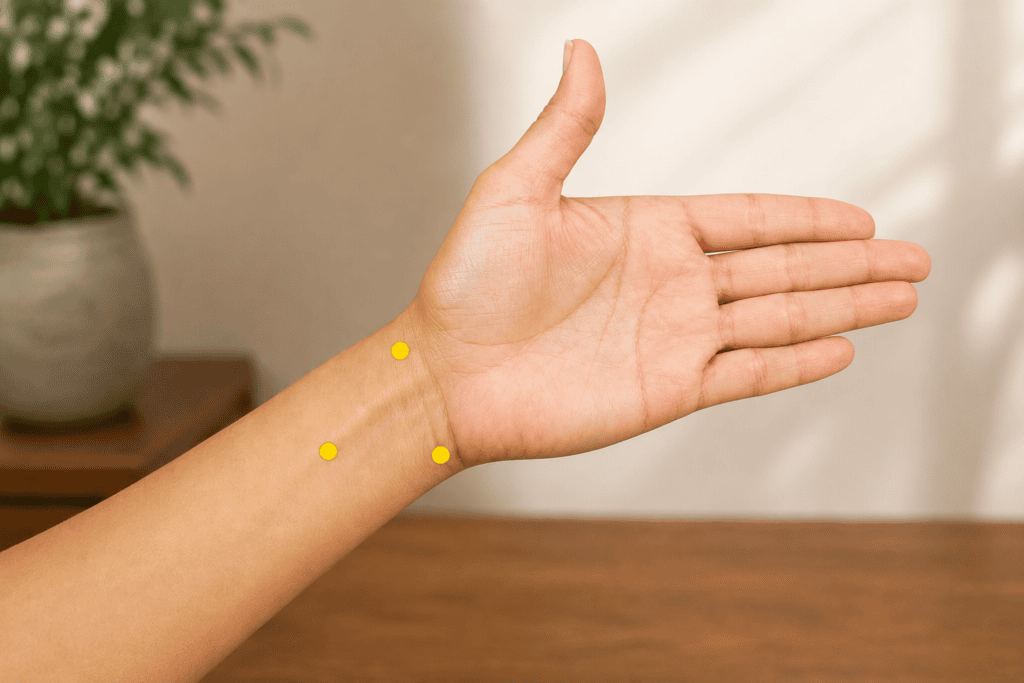
1. Press Buddha’s Triangle at the wrist to calm the heart and settle the spirit. Buddha’s Triangle is a grouping of three points on the inner wrist and forearm, HT7, PC6, and LU9, that together form one of the most calming combinations in all of acupressure, which is exactly why it suits heartbreak so well. Locate each one in turn. HT7 sits on the inner wrist crease on the pinky side, in the hollow just inside the tendon. PC6 sits three finger-widths up from the wrist crease, in the center of the inner forearm between the two tendons. LU9 sits on the inner wrist crease on the thumb side, in the hollow where you can feel the pulse. Because the three sit close together, you can work across them in one pass, pressing each firmly with the thumb for about a minute before moving to the next, then repeating on the other arm.
Each point serves its specific function, collectively covering the full scope of heartbreak. HT7, known as Shenmen or the Spirit Gate, is the primary point for calming the Shen, alleviating anxiety, insomnia, and sorrow linked to a wounded heart. PC6, or Neiguan, opens the chest and regulates the Heart, relieving tension and emotional distress behind the breastbone. LU9, called Taiyuan, is the source point of the Lung, which governs grief and the process of letting go, supporting the Lung’s work in processing loss. Together, HT7 stabilizes the spirit, PC6 alleviates chest discomfort, and LU9 aids grief and emotional release. These points collectively address the wounded heart, tight chest, and sorrow, making this the essential starting point and a revisited reference whenever these feelings surface.
2. Press on CV17 at the center of the chest to release the ache. CV17 sits on the midline of the breastbone, level with the space between the nipples, in the center of the chest. Press gently but steadily with your fingertip for one to two minutes, breathing slowly into the pressure. CV17 is called “Shanzhong,” and it is the meeting point of Qi in the chest and the emotional center of the body.
CV17 sits directly over the place where heartbreak is felt most, the tight, heavy ache in the middle of the chest, and it is the primary point for releasing the emotional Qi that stagnates there. It opens the chest, eases the oppression and grief held inside it, and loosens the physical knot of sorrow. For the person whose heartbreak is felt as a literal weight on the chest, this point meets it head-on, and pressing it slowly with deep breaths is one of the most directly relieving things you can do.

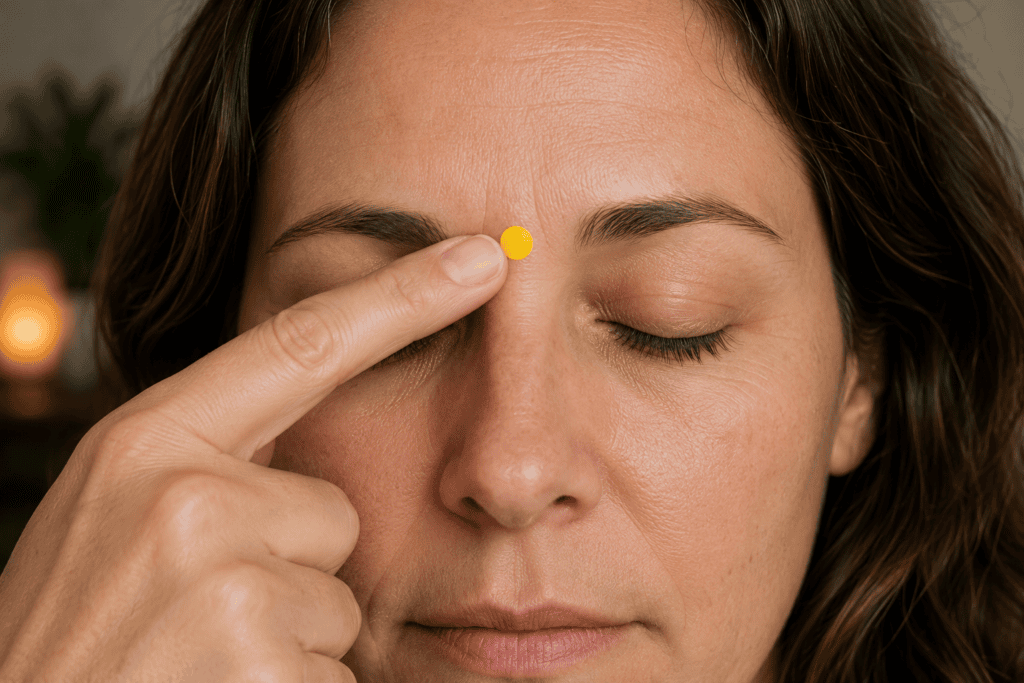
3. Press on Yintang between the eyebrows to quiet the circling mind. Yintang sits in the small hollow directly between the two eyebrows. Press steadily and hold, or make small slow circles, with your fingertip for one to two minutes. Yintang is an extra point, and it is one of the most calming points in the body.
Yintang helps calm the Shen and soothes the continuous cycle of heartbreak-related thoughts: replaying, questioning, and mental restlessness. It relaxes the nervous system and reduces anxiety and mental discomfort linked to sorrow. For those awake at night, overwhelmed by racing thoughts, this point assists in calming the mind, especially when combined with wrist and chest points to promote harmony in body and mind.
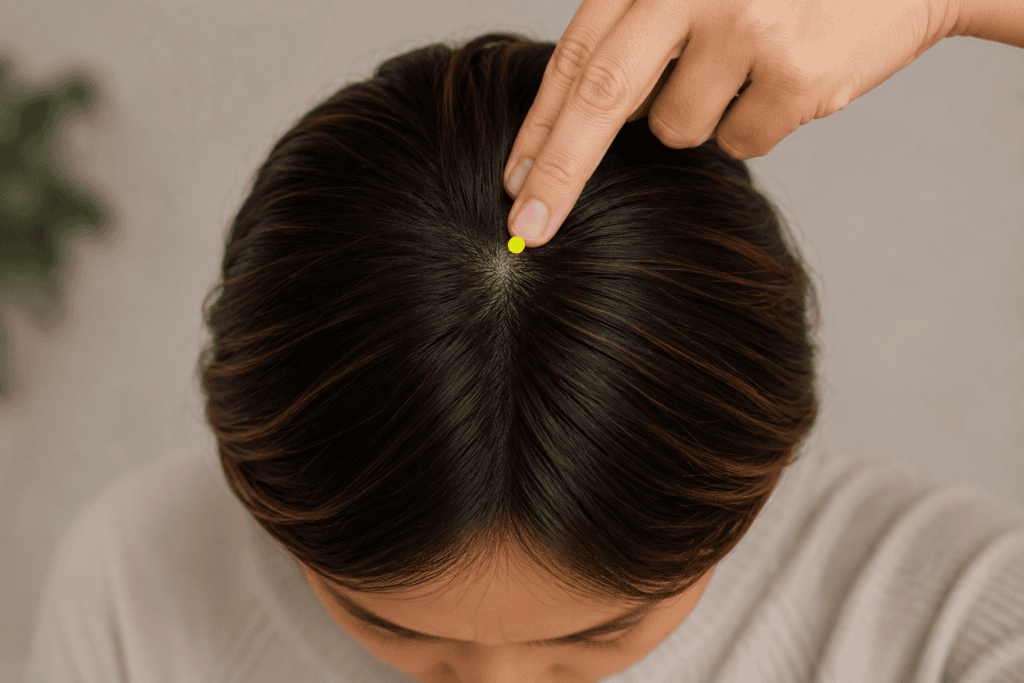
4. Press on GV20 at the top of the head to lift the spirit. GV20 sits at the very top of the head, on the midline, on a line drawn up from the tops of both ears. Press straight down, or make small circles, with your fingertip for one to two minutes. GV20 is called “Baihui,” the “Hundred Meetings,” where many channels converge at the crown.
GV20 elevates the spirit and alleviates the heaviness that heartbreak brings, clearing the mind and uplifting what has fallen inward. Unlike other points that calm and open, this one lifts, making it particularly effective for the low, flattened sensation after a loss. For those overwhelmed by heartbreak, it gently restores mental buoyancy, and its clearing effect mitigates the foggy, heavy head caused by excessive crying and lack of sleep.
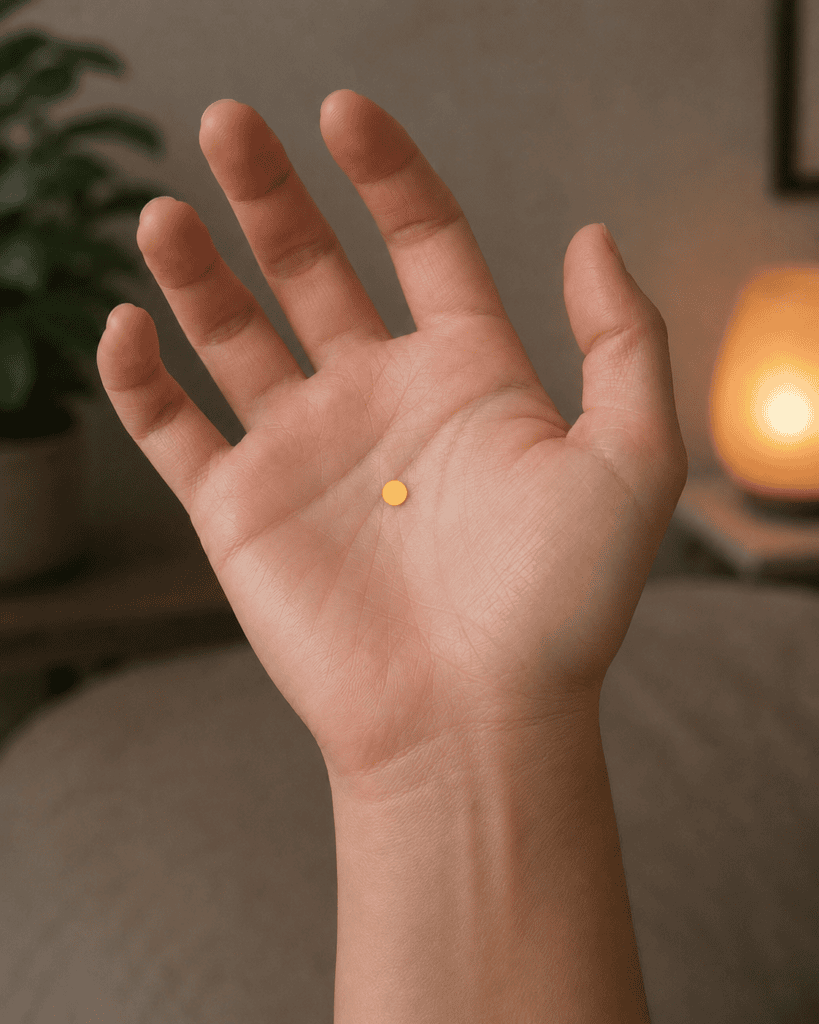
5. Press on PC8 in the palm to ease agitation and restlessness. PC8 sits in the center of the palm, where the tip of the middle finger touches when you make a loose fist. Press firmly with the thumb of your other hand for one to two minutes on each hand. PC8 is called “Laogong,” and it clears heat from the Heart and calms an agitated spirit.
PC8 alleviates the hot, restless, and agitated sensations caused by heartbreak, calming the churning that prevents stillness. It reduces the flushed and frantic quality often associated with intense emotional pain, clearing excess heat from the Heart and restoring a cool calm to an overwhelmed Shen. For those whose heartbreak feels more agitated than heavy, this point softens the intensity, making it easy to apply discreetly whenever the sensation intensifies.
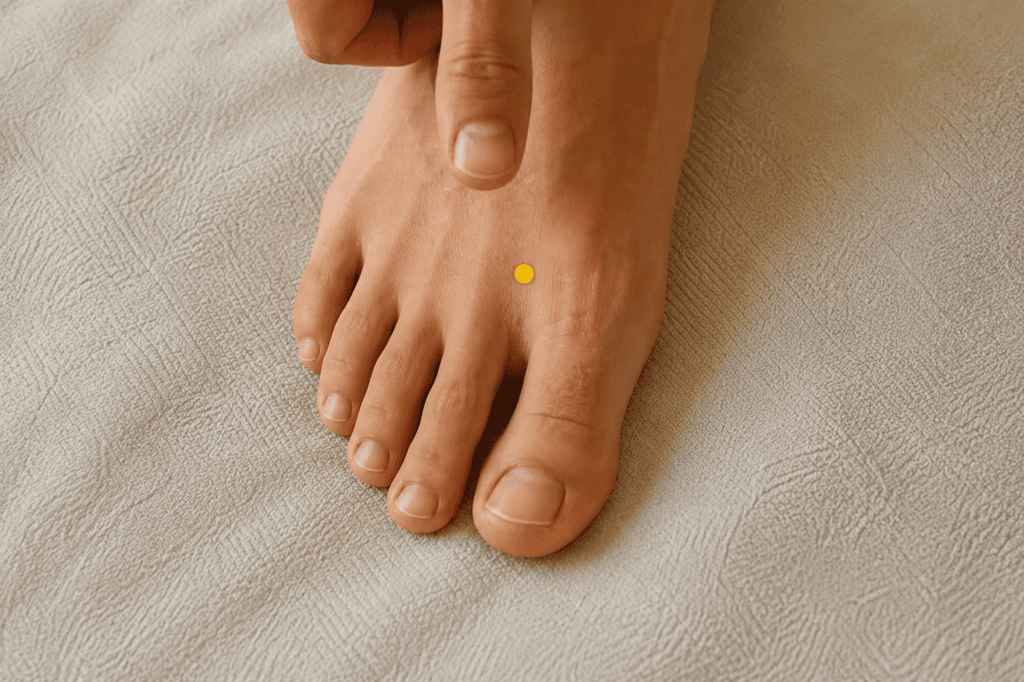
6. Press on LR3 on the top of the foot to move what is stuck. LR3 sits on the top of the foot, in the webbing between the big toe and second toe, about two finger-widths back where the bones meet in a small hollow. Press firmly with the thumb for one to two minutes on each foot. LR3 is called “Taichong,” and it is the primary point for moving stuck Liver Qi.
Heartbreak often feels like being stuck in a cycle, with a lingering inability to let go, accompanied by sighs, frustration, and sudden flashes of anger during grief. In Chinese medicine, this is seen as Liver Qi stagnation. Activating LR3 helps release this stagnation, allowing feelings to move instead of fester. For those stuck replaying their loss and unable to move on, this point aids the slow process of letting go by grounding the emotional turmoil and directing energy downward toward the feet.
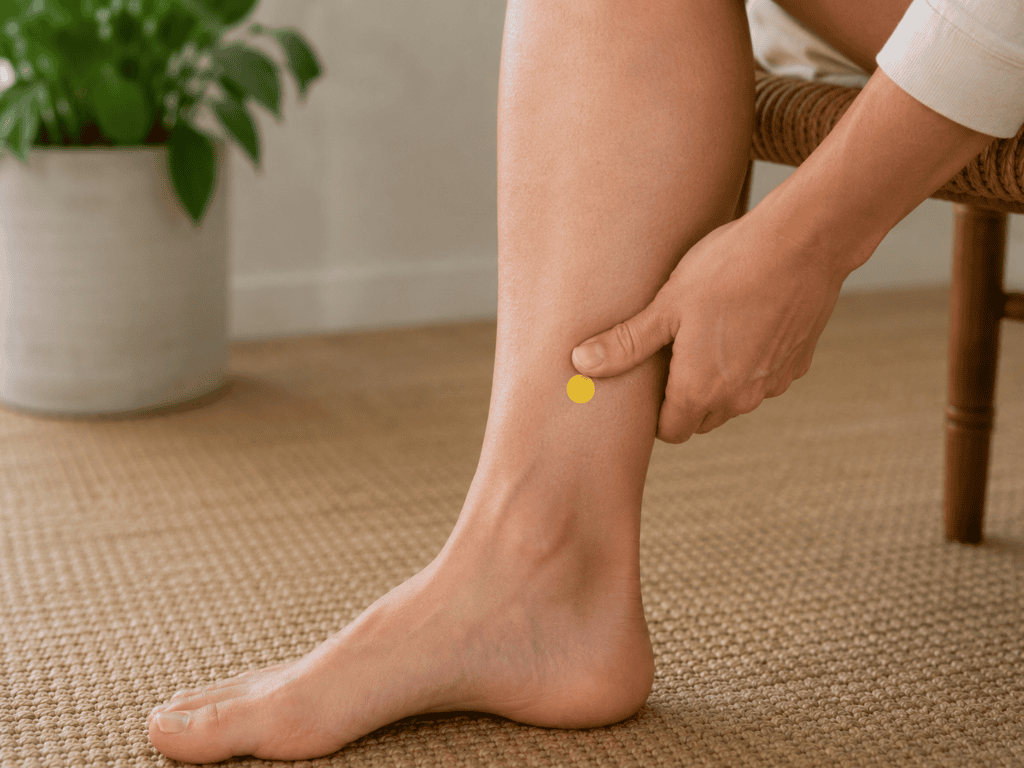
7. Press on SP6 above the inner ankle to rebuild and restore sleep. SP6 sits four finger-widths up from the tip of the inner ankle bone, just behind the back edge of the shinbone. Press firmly for one to two minutes on each leg. SP6 is called “Sanyinjiao,” the “Three Yin Intersection,” where the Spleen, Liver, and Kidney channels meet. SP6 is avoided during pregnancy.
Heartbreak weakens the body, and SP6 helps restore what is lost by nourishing the Blood and Yin, which emotional exhaustion depletes, while also calming the mind to facilitate sleep. Since it influences three channels simultaneously, it is one of the most nourishing and calming points in the body, especially helpful for insomnia caused by heartbreak. On nights when sleep is elusive, this point helps the body relax, and its related treatments for trouble falling asleep and staying asleep become more effective if sleeplessness is the main issue.
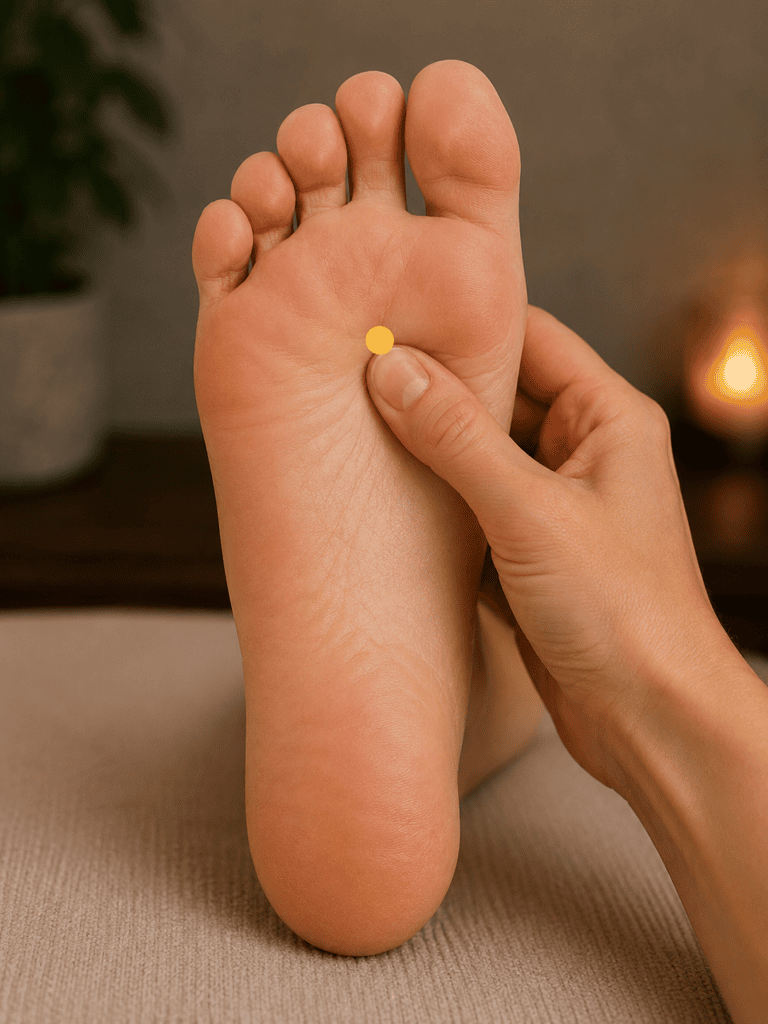
8. Press on KI1 on the sole of the foot to ground the frantic feeling. KI1 sits on the sole of the foot, in the hollow that forms in the center of the ball of the foot when you curl the toes, about a third of the way down from the toes to the heel. Press firmly with your thumb for one to two minutes on each foot. KI1 is called “Yongquan,” the “Bubbling Spring,” and it is the lowest point on the body.
KI1 channels energy downward, grounding feelings of panic and unanchored chaos that heartbreak triggers. It pulls frantic energy from the head and chest, directing it toward the earth. As the lowest point of the body, it provides deep anchoring. In this tradition, the Kidney corresponds to the emotion of fear, helping to calm fear and insecurity stirred by loss. For someone feeling unmoored and adrift after heartbreak, this point restores a sense of groundedness.
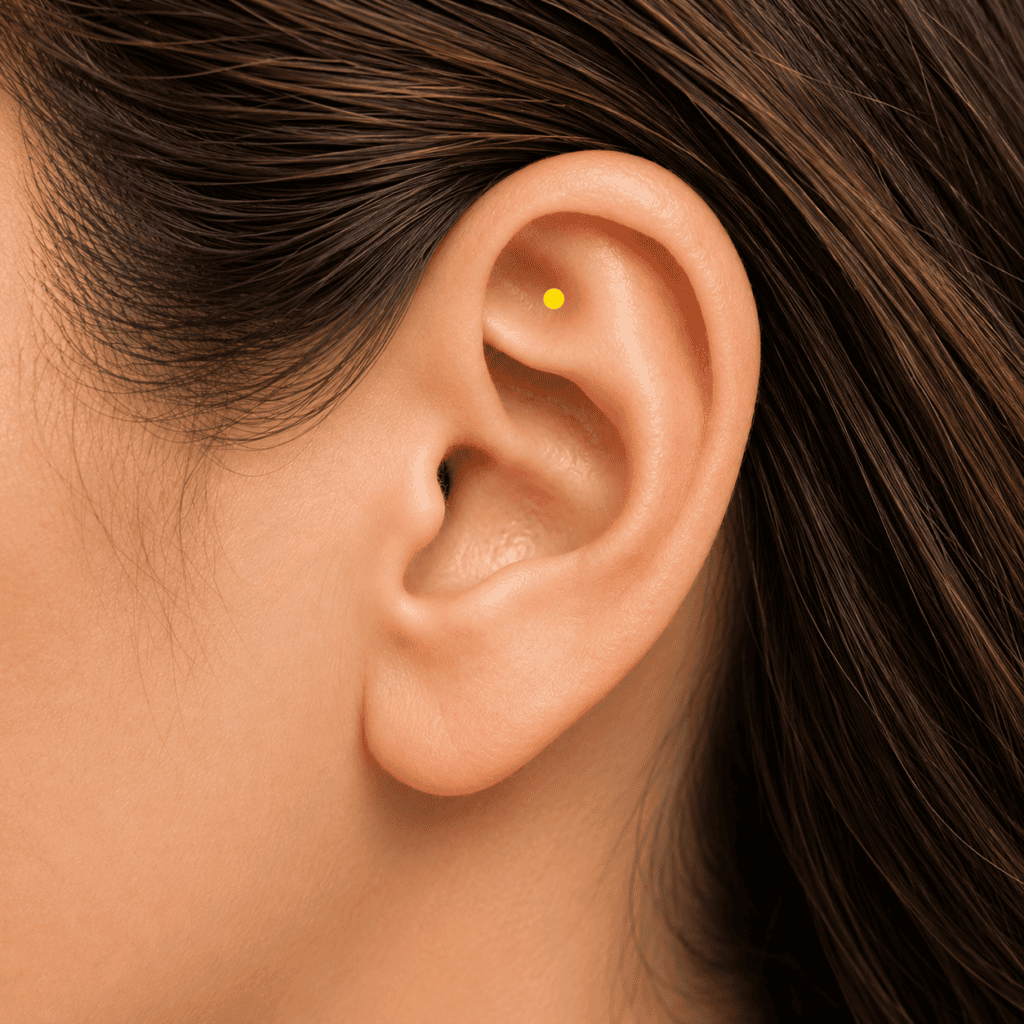
9. Press on Ear Shenmen for deep emotional calm. Ear Shenmen sits in the upper part of the ear, in the triangular hollow near the top, at the apex of that hollow. Press gently with your fingertip or squeeze between finger and thumb for about a minute on each ear. Ear Shenmen is one of the most calming points on the ear and shares its name, “Spirit Gate,” with the Heart point HT7.
Ear Shenmen is a highly effective calming point on the body, commonly used to alleviate emotional distress, anxiety, and insomnia. It is particularly suitable for the acute pain of heartbreak. This point quickly and deeply soothes the Shen, is discreet, and easily accessible whenever such feelings increase during the day. During moments when heartbreak intensifies and immediate steadiness is needed, this point calms the entire system and concludes the routine by mirroring the Spirit-Gate serenity introduced by Buddha’s Triangle.
Why These Acupressure Points Work
In Chinese medicine, heartbreak affects the Heart and disturbs the Shen it houses. It causes chest tightness due to Qi stagnation, traps Liver Qi in a cycle of grief, and depletes the Blood and Yin that sustain stability. The nine points address this entire pattern.
- The Heart-and-Shen calming points (Buddha’s Triangle of HT7, PC6, and LU9, plus Yintang, PC8, and Ear Shenmen) anchor the wounded spirit and quiet the restless, agitated, sleepless mind.
- The chest point (CV17) releases the physical ache and the emotional Qi held in the center of the chest.
- The lifting point (GV20) raises the sunken spirit and clears the heavy head.
- The moving point (LR3) frees the stuck Liver Qi behind the circling, cannot-let-go feeling.
- The rebuilding and grounding points (SP6, KI1) restore what heartbreak depletes and bring a sense of ground back to an unmoored body.
How to Properly Use These Acupressure Points
Reach for these points whenever the feeling is heavy, as often as you need them through the day.
- Begin with Buddha’s Triangle at the wrist and CV17 at the chest, the two that most directly calm the heart and ease the ache, and return to them whenever the feeling surges.
- Add Yintang, PC8, and Ear Shenmen to quiet a racing, agitated mind, GV20 to lift a sunken spirit, and LR3 and KI1 to move what is stuck and ground what feels unmoored.
- Work SP6 in the evening to help the body settle toward sleep on the hard nights.
- Hold each point for one to two minutes with firm, steady pressure, breathing slowly, and let the pressure be something calming to focus on rather than a task to rush.
Acupressure can comfort you, especially when paired with grounding activities like resting, light exercise, spending time in nature, or with loved ones. Be patient with the healing process; heartbreak often diminishes over time. Taking gentle care of your mind, body, and spirit during this period is essential.
When to Reach Out for Support
Heartbreak can be painful, and experiencing its full impact during the healing process is normal, not an indication of something wrong. Sometimes, the pain can stick around longer than we’d like.
If the sadness turns into a persistent heaviness, if you lose interest in everything for weeks, or if you struggle to function, sleep, or eat, or if the low mood feels like more than just heartbreak, it’s important to seek help from a doctor or therapist. The anxiety, stress, and depression that can follow a loss often respond well to additional support and treatment.
If you ever think about harming yourself, please contact the 988 Suicide and Crisis Lifeline immediately by calling or texting, available 24/7. Asking for help is a sign of strength, and you don’t have to face this alone.
Above and Beyond Acupuncture offers acupuncture, cupping, and lifestyle coaching at the North Frank Lloyd Wright Boulevard location in Scottsdale.
Schedule an appointment online or call us today to start your healing journey.
The points above are only as effective as the technique used to apply them. Where to press, how firmly, and for how long all affect the result. For a full breakdown of how to perform acupressure properly at home, read Performing Acupressure in 3 Easy Steps.

About the Publisher
Paul Kerzner, L.Ac., is a licensed acupuncturist and board-certified herbalist, as well as the founder of Above and Beyond Acupuncture in Scottsdale. His own journey from chronic patient to practicing acupuncturist shapes his commitment to providing honest, clinically grounded information about acupuncture and Traditional Chinese Medicine. Learn more about Paul and his clinical approach on the About Us page.