Key Takeaways
- Hot flashes are common during perimenopause and menopause, causing discomfort and sleep disturbances.
- Traditional Chinese Medicine approaches hot flashes as a Kidney Yin deficiency issue, leading to empty heat rising.
- Acupressure can help alleviate hot flashes by using specific points to nourish Yin, clear heat, and calm the heart.
- Eight acupressure points, including KI3 and HT6, can be pressed to manage the intensity and frequency of hot flashes.
- Consult a physician for severe or sudden hot flashes, and consider professional support when needed.
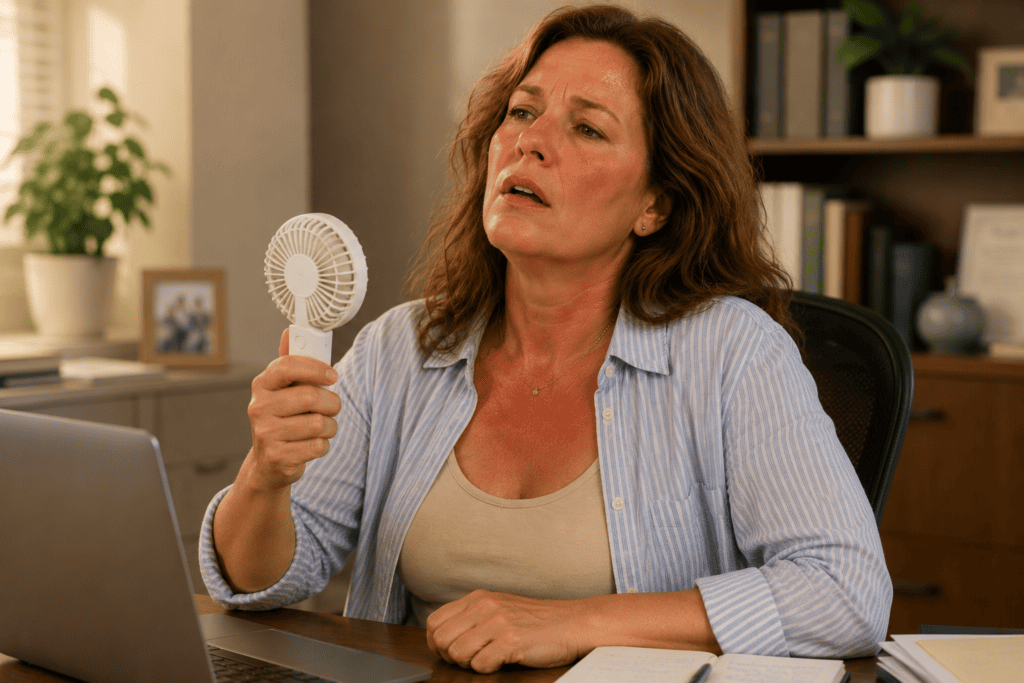
If you’ve experienced hot flashes, you know the pattern: a sudden surge of heat spreading through your chest, neck, and face, often followed by flushing and sweating. These episodes can happen unexpectedly during the day or at night, soaking the sheets and waking you up. Sometimes, a racing heart or brief anxiety accompanies the heat. Hot flashes are common during perimenopause and menopause, generally indicating normal hormonal changes, but understanding this doesn’t necessarily make it any easier.
Traditional Chinese Medicine has long recognized hot flashes as a sign of Kidney Yin deficiency and rising empty heat. During menopause, the body’s cooling, moistening Yin diminishes, leaving heat uncontained. This causes heat to flare up, resulting in flushes and sweating. Acupressure includes points that nourish Yin and clear empty heat, giving you simple tools to use at home, at the office, in the car, or whenever you have hot flashes.
An important note before beginning: Acupressure can support the patterns underlying hot flashes and may alleviate their intensity and frequency for many individuals. However, it does not serve as a substitute for medical care concerning menopausal symptoms, nor is it a treatment for other conditions that may cause flushing and sweating. If your hot flashes are severe, commence suddenly, occur outside the typical menopausal period, or are accompanied by other unexplained symptoms, it is advisable to consult your physician to exclude thyroid conditions and other potential causes.
Here are eight acupressure points that can help provide relief:
What Acupressure Points to Press and Why
Each point focuses on a specific aspect of the hot flash pattern. You can apply them one at a time during a hot flash or follow the full protocol daily to gradually reduce how often and how severe they are.
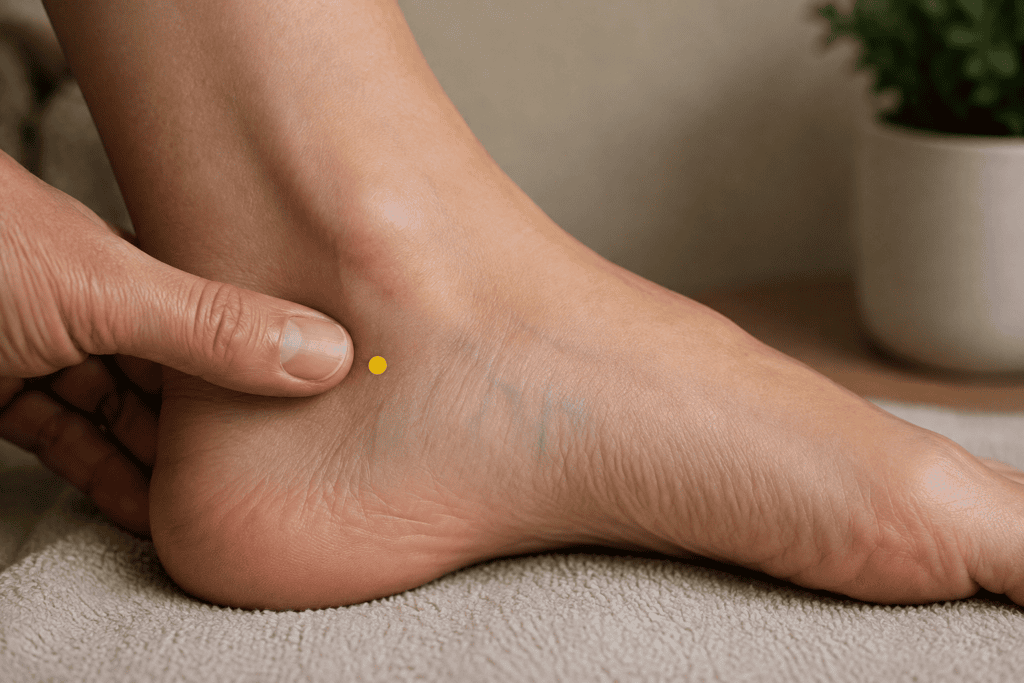
1. Press on KI3 behind your inner ankle for Kidney Yin. KI3 sits in the depression behind the inner ankle bone, between the ankle bone and the Achilles tendon. Press firmly with your thumb for two to three minutes on each ankle. KI3 is called “Taixi” or “Great Ravine” and is the Source point of the Kidney meridian.
KI3 nourishes the Kidney Yin that sits at the root of the hot flash pattern. In Chinese medicine, the declining Yin of menopause is the underlying cause of the empty heat that produces flashes, and KI3 is the primary point for tonifying that Yin. This is a foundational point to include in daily practice.
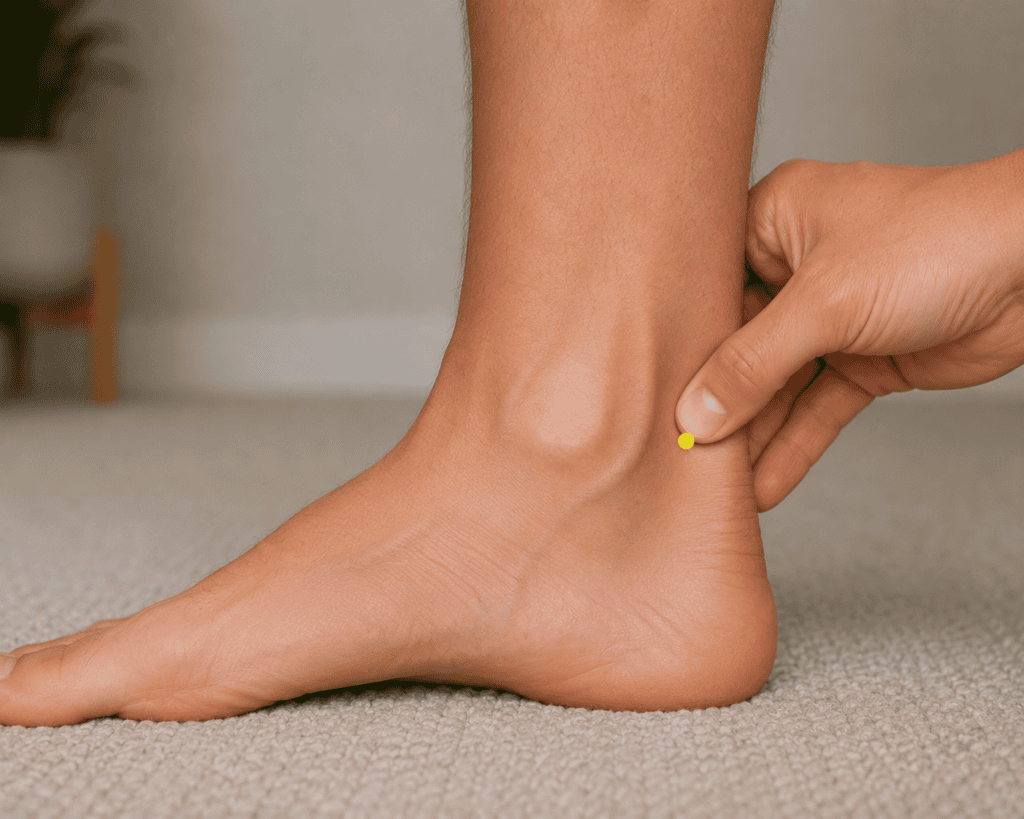
2. Press on KI6 below your inner ankle for cooling empty heat. KI6 sits directly below the inner ankle bone, in the depression on the underside of the ankle bone. Press firmly with your thumb for two to three minutes on each ankle. KI6 is called “Zhaohai” or “Shining Sea.”
KI6 nourishes Yin and specifically cools the empty heat that rises when Yin is deficient. It works well combined with KI3, addressing both the root deficiency and the heat that deficiency produces. KI6 is also useful for the night sweats and disturbed sleep that often accompany hot flashes.
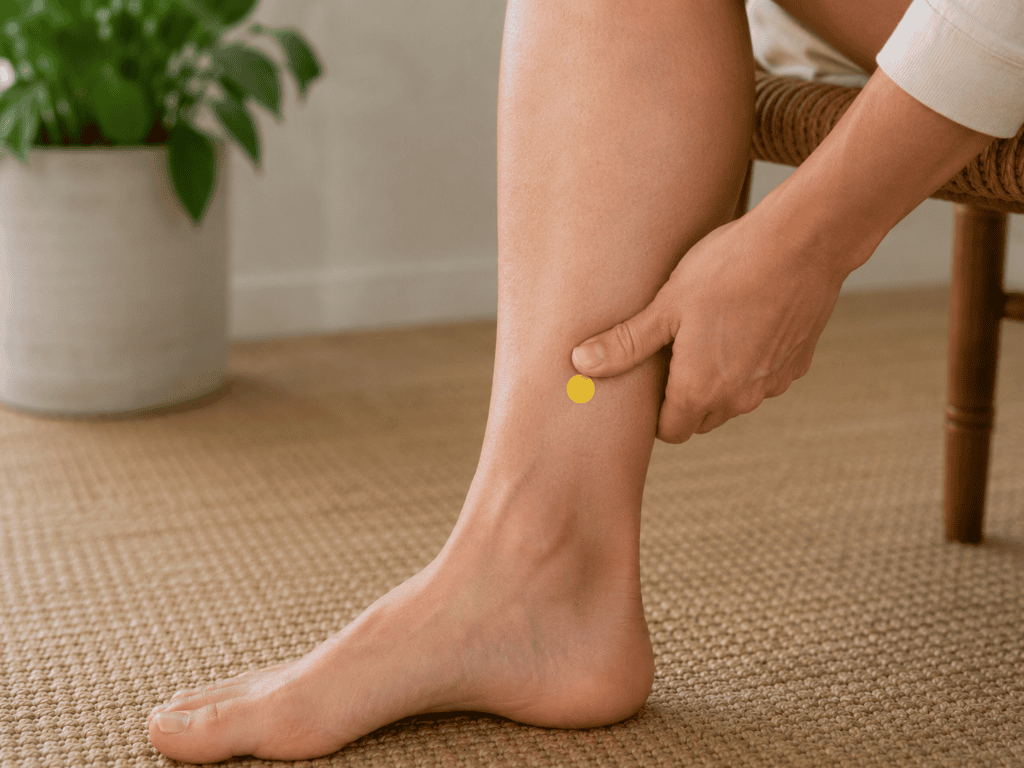
3. Press on SP6 above your inner ankle for nourishing Yin and Blood. SP6 sits about four finger-widths above the inner ankle bone, just behind the shinbone. Press firmly with your thumb for two to three minutes on each leg. SP6 is called “Sanyinjiao” or “Three Yin Intersection,” where the Spleen, Liver, and Kidney meridians meet.
SP6 nourishes Yin and Blood across three meridians at once, which supports the deep reserves that the menopausal transition depletes. It is one of the most important points for women’s health across the lifespan and is particularly relevant to the hormonal patterns underlying hot flashes.
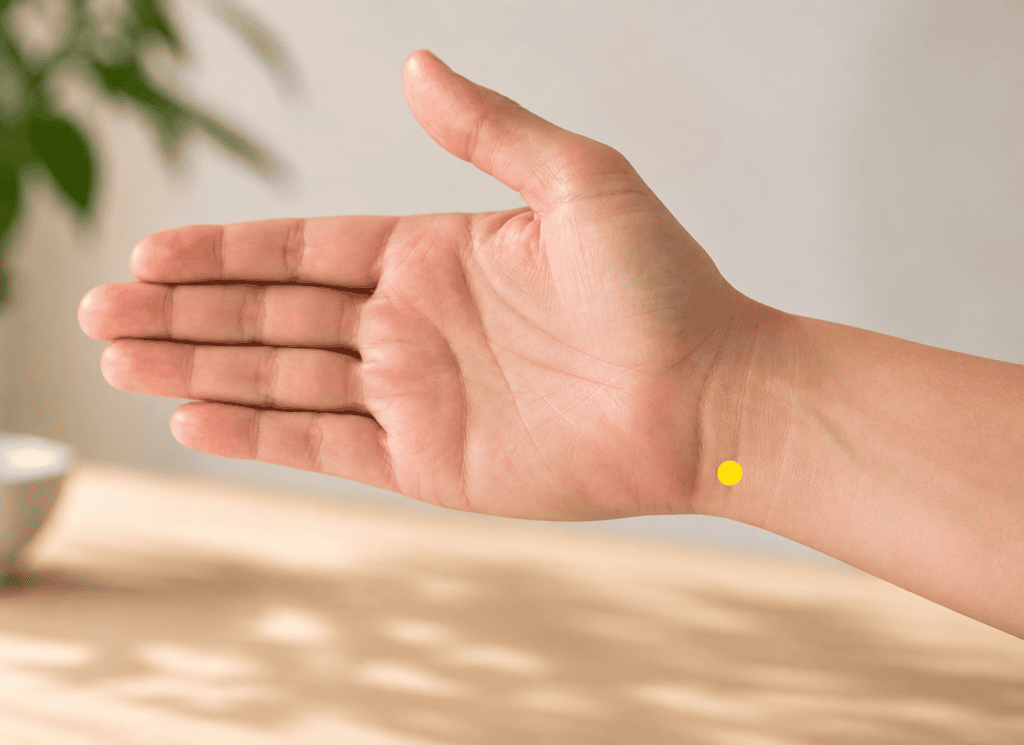
4. Press on HT6 on your inner forearm for night sweats. HT6 sits on the inner forearm, about half a thumb-width above the wrist crease on the pinky side, just inside the tendon there. Press gently with your thumb for two to three minutes on each arm. HT6 is called “Yinxi” and is the Xi-cleft point of the Heart meridian.
HT6 is the classical point for night sweats and the empty-heat sweating that defines hot flashes. Where the Kidney points address the root, HT6 addresses the sweating symptom directly. It is particularly useful for the night sweats that soak the sheets and disrupt sleep, and it works well pressed before bed.
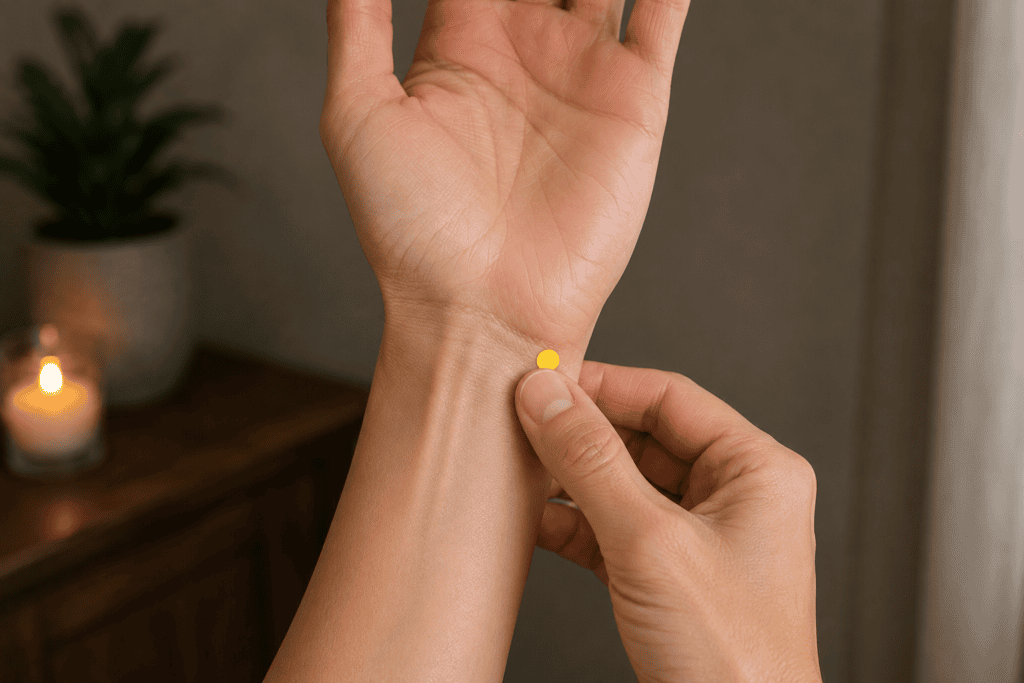
5. Press on HT7 at the pinky-side wrist crease for calming the Heart. HT7 sits at the wrist crease on the pinky side, in the small depression just above the wrist bone. Press gently with your thumb for two to three minutes on each hand. HT7 is called “Shenmen” or “Spirit Gate” and calms the Heart and the Shen.
Hot flashes frequently come with a racing heart, palpitations, or a flicker of anxiety as the heat rises. HT7 calms the Heart heat and settles the Shen, addressing the emotional and cardiac component that rides along with the flush. It also supports the sleep that night sweats disrupt.
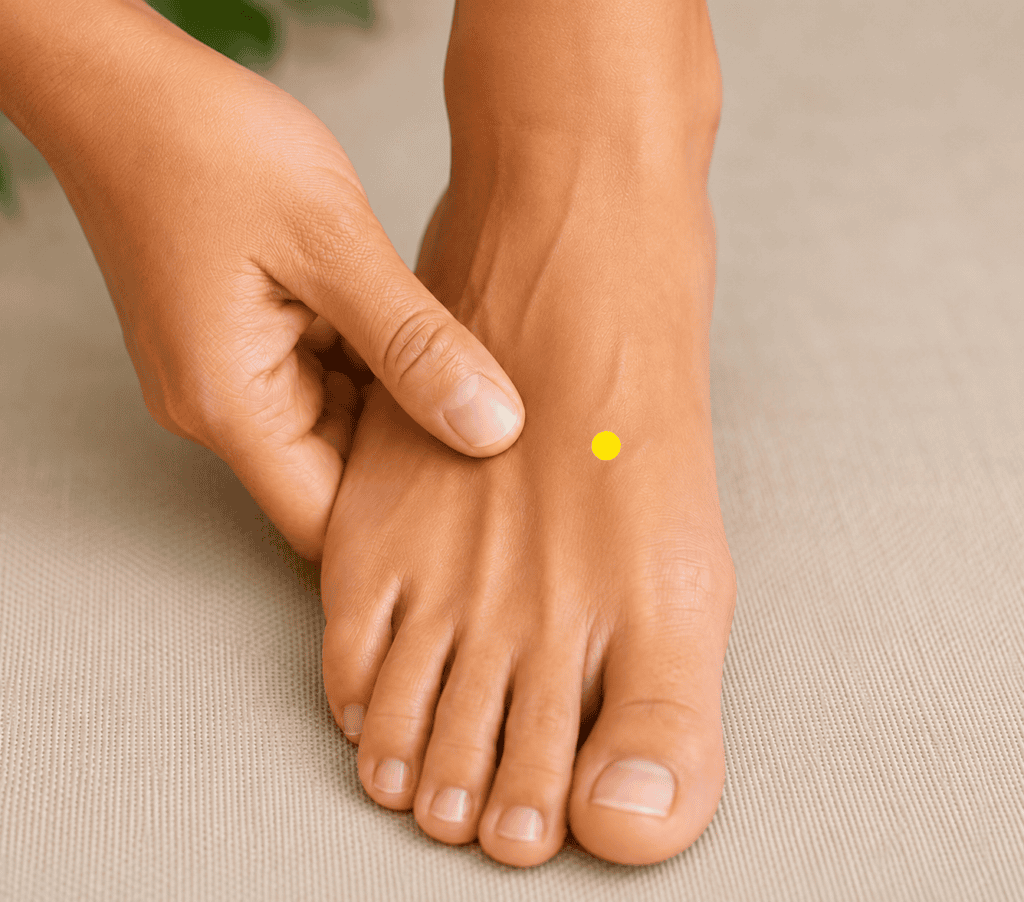
6. Press on LR3 on the top of your foot for Liver heat. LR3 sits on the top of the foot in the webbing between the first and second toes, about two finger-widths back from the web. Press firmly with your thumb for two to three minutes on each foot. LR3 is called “Taichong” or “Great Rushing.”
The Liver component of hot flashes shows up as irritability, tension, and the heat that comes with frustration. LR3 moves Liver Qi and clears the Liver heat that can intensify flashes, particularly for those who notice their flashes worsen with stress and emotional intensity.
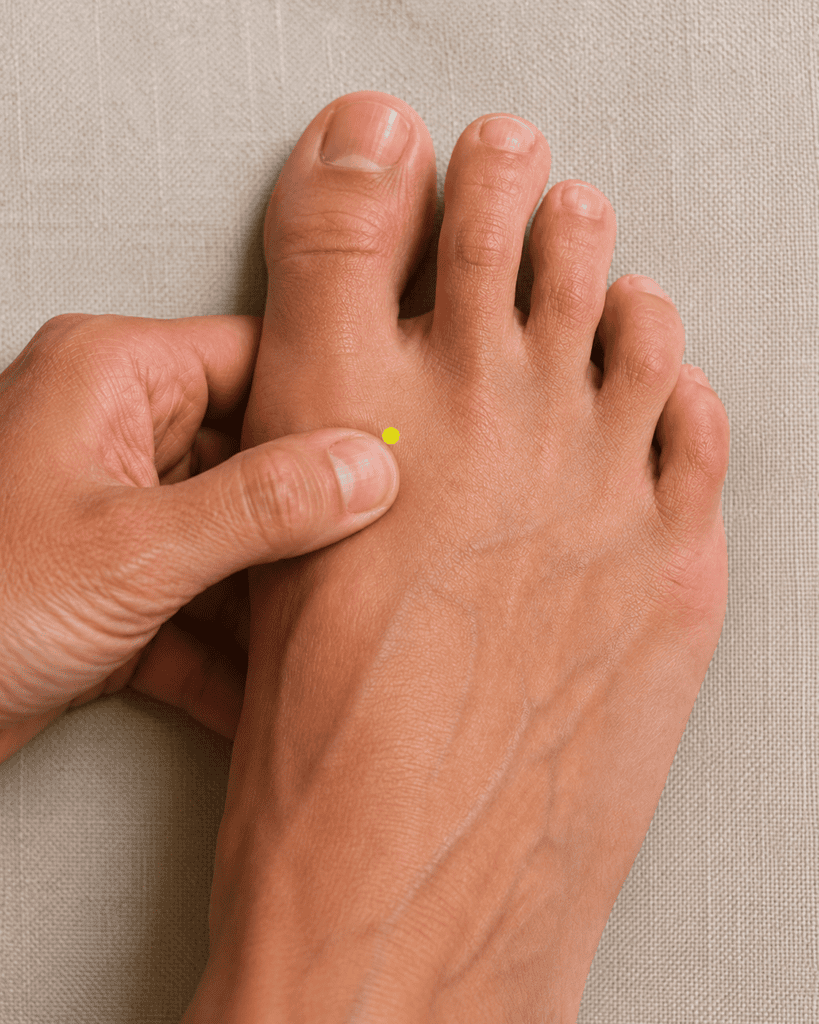
7. Press on Huo Zhu on the top of your foot for clearing heat. Huo Zhu sits on the top of the foot just above LR3, in the depression between the first and second metatarsal bones, about one thumb-width closer to the ankle than LR3. Press firmly with your thumb for two to three minutes on each foot. Huo Zhu is a point from the Master Tung lineage of acupuncture, distinct from the classical channel points, and its name carries the character for fire.
Huo Zhu is used in Tung acupuncture for heat patterns, palpitations, and heat rising toward the Heart, which maps directly onto the empty-heat-rising picture of hot flashes. Because it sits just above LR3 on the same stretch of the foot, you can press LR3 and Huo Zhu together to cover the whole line. It adds the Tung-system heat-clearing angle on top of the classical Liver work of LR3.
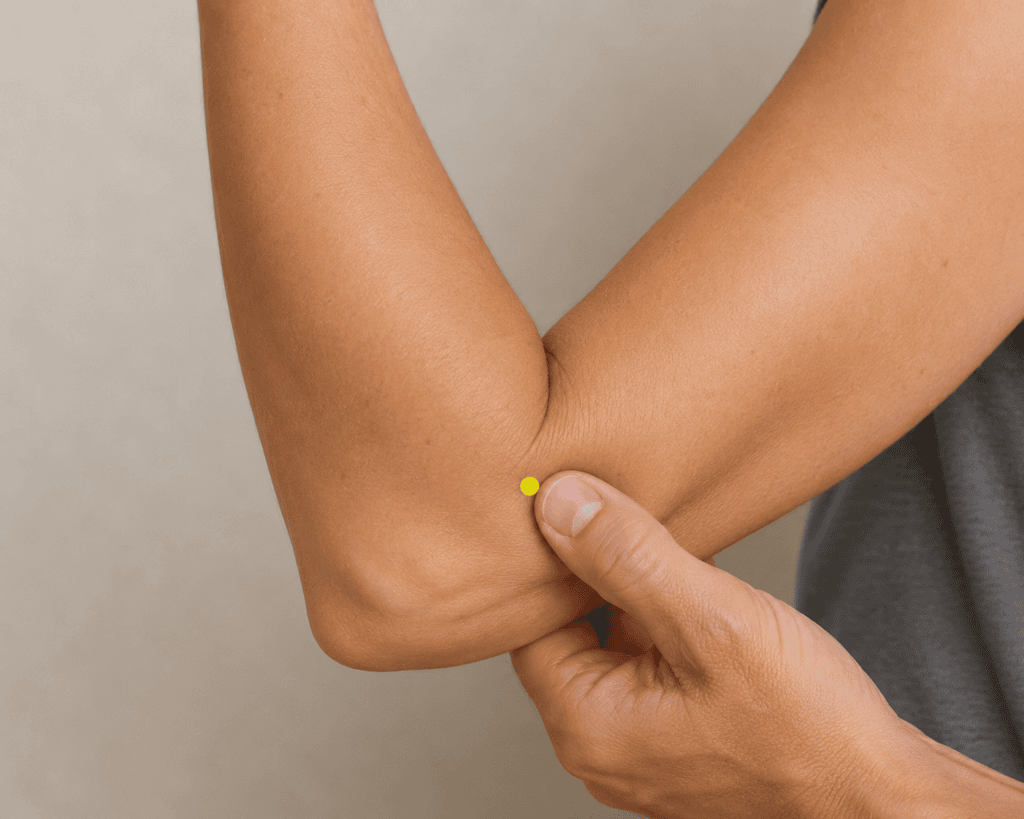
8. Press on LI11 at your elbow crease for clearing heat. LI11 sits at the outer end of the elbow crease when the arm is bent, in the depression at the end of the crease. Press firmly with the thumb of the opposite hand for two to three minutes on each arm. LI11 is called “Quchi” or “Pool at the Bend.”
LI11 is one of the strongest points for clearing heat from the body and is especially useful for hot conditions. For the acute heat of a flash in progress, LI11 pressed firmly helps clear the heat and bring the body back toward balance.
Why These Acupressure Points Work
In Chinese medicine, hot flashes indicate a specific pattern and imbalance. During menopause, Kidney Yin, responsible for cooling and moistening the body, declines. This deficiency weakens the body’s ability to anchor heat, allowing it to rise as empty heat. This results in symptoms like flushing, sweating, and a sensation of heat moving upward through the upper body. The Heart often plays a role, which is why palpitations and anxiety occur alongside the flushes. The Liver is also involved, which may explain increased stress and irritability.
Acupressure addresses several aspects of this condition simultaneously:
- The Yin-nourishing points (KI3, KI6, SP6) address the root deficiency that underlies the whole pattern.
- The empty-heat and sweating points (KI6, HT6) address the heat and the sweating it produces, with HT6 being the classical point for night sweats specifically.
- The Heart points (HT7) calm the palpitations and anxiety that accompany flashes.
- The Liver and heat-clearing points (LR3, Huo Zhu, LI11) clear the heat and address the stress component that intensifies flashes.
Chronic cortisol from stress can intensify hot flashes, highlighting the importance of calming and Liver points alongside Yin-nourishing ones.
For relief when a hot flash occurs, ‘How to Stop a Hot Flash‘ discusses immediate cooling strategies. For a comprehensive understanding of menopausal symptoms, ‘Alleviating Menopausal Symptoms With Traditional Chinese Medicine‘ addresses the broader pattern.
How to Use These Acupressure Points
For a flash in progress, LI11, HT7, and KI6 pressed together help clear the acute heat and settle the racing heart. Press firmly and breathe slowly through the wave.
- For daily prevention, working through the full eight-point protocol once or twice a day nourishes the Yin and clears the heat that produce flashes over time. Consistency matters more than intensity for the root pattern.
- For night sweats specifically, HT6, KI6, and HT7 pressed before bed address the empty-heat sweating and support the sleep that night sweats disrupt.
- For flashes that worsen with stress and irritability, LR3 and Huo Zhu pressed together address the Liver heat component.
- For the underlying deficiency, KI3, KI6, and SP6 are the daily foundation, best pressed consistently over weeks rather than only during flashes.
- Firm pressure works well for the leg, foot, and arm points. Gentle pressure is better for the wrist and inner forearm points (HT6, HT7).
Combining acupressure with basic management improves the protocol’s effectiveness:
- Wear layers you can easily remove as the heat rises.
- Keep the bedroom cool to prevent night sweats.
- Identify and minimize personal triggers such as alcohol, caffeine, spicy foods, and stress.
- Stay well-hydrated. Engage in regular gentle exercise.
- Cut down on refined sugar and processed foods that can aggravate hot flashes.
- Practice stress management techniques because stress can directly worsen flashes.
When to Get Professional Help
Acupressure can be a helpful way to manage hot flashes that women commonly experience during menopause. In some specific situations, seek medical intervention.
Seek medical care for hot flashes that are severe enough to significantly disrupt your daily life or sleep, hot flashes that begin suddenly or well outside the typical perimenopausal and menopausal window, flushing or sweating accompanied by unexplained weight loss, a racing heart that persists beyond the flash, or other unexplained symptoms. Thyroid conditions, certain medications, and other medical causes can produce flushing and sweating that resemble menopausal hot flashes and require different treatment. A physician can rule these out and discuss options including hormone therapy for those whose symptoms warrant it.
Many women experiencing menopause also experience anxiety, stress, and depression that overlap with hormonal changes.
Above and Beyond Acupuncture offers acupuncture, cupping, and lifestyle coaching at the North Frank Lloyd Wright Boulevard location in Scottsdale.
Schedule an appointment online or call us today to start your healing journey.
The points above are only as effective as the technique used to apply them. Where to press, how firmly, and for how long all affect the result. For a full breakdown of how to perform acupressure properly at home, read Performing Acupressure in 3 Easy Steps.

About the Publisher
Paul Kerzner, L.Ac., is a licensed acupuncturist and board-certified herbalist, as well as the founder of Above and Beyond Acupuncture in Scottsdale. His own journey from chronic patient to practicing acupuncturist shapes his commitment to providing honest, clinically grounded information about acupuncture and Traditional Chinese Medicine. Learn more about Paul and his clinical approach on the About Us page.