Key Takeaways
- Hot flashes are uncomfortable waves of heat that can disrupt daily activities and sleep.
- To manage a hot flash, cool your wrists, breathe slowly, press on Kidney 1, sip cool water, and remove a layer if possible.
- Identify personal triggers, dress in layers, keep the bedroom cool, manage stress, and exercise moderately to reduce hot flash frequency.
- Consider professional help if hot flashes occur more than ten times a day or disturb sleep significantly.
- Acupuncture can effectively address the underlying issues related to hot flashes and improve overall well-being.
You know the feeling before it fully arrives. A wave of warmth starts in the chest. The heat moves up into the neck and face. Sweat begins to bead at the hairline. Within seconds, you are uncomfortable, flushed, and looking for relief.
Hot flashes can happen anywhere. The middle of a meeting. The grocery store checkout line. The middle of the night, waking you out of a sound sleep. For some, they pass in a minute or two. For others, they linger for ten or fifteen minutes and leave you wrung out.
Here is what to do when one starts, why it works, and how to bring the frequency down over time.
What to Do When You Feel One Starting
The first few seconds matter. The faster you respond, the more you can shorten the duration and reduce the intensity.
1. Cool your wrists and hands. Run cool water over the inside of your wrists for thirty to sixty seconds. The blood vessels close to the surface here cool quickly, and the cooled blood travels through the rest of your body within a minute or two. This works better than cooling your face. Cooling the wrists affects the autonomic nervous system in a way that helps shut down the heat response. If you cannot get to water, pressing a cool object (a metal pen, a cold can, a glass of cool water) against the inside of the wrist works in a pinch.

2. Breathe slowly through your nose. Take a slow breath in through the nose for four counts. Hold it briefly. Breathe out slowly through the nose for six counts. Do this for at least four cycles. Slow nasal breathing activates the parasympathetic nervous system, which is the part of the nervous system that calms the heat response. The longer exhale matters more than the inhale.

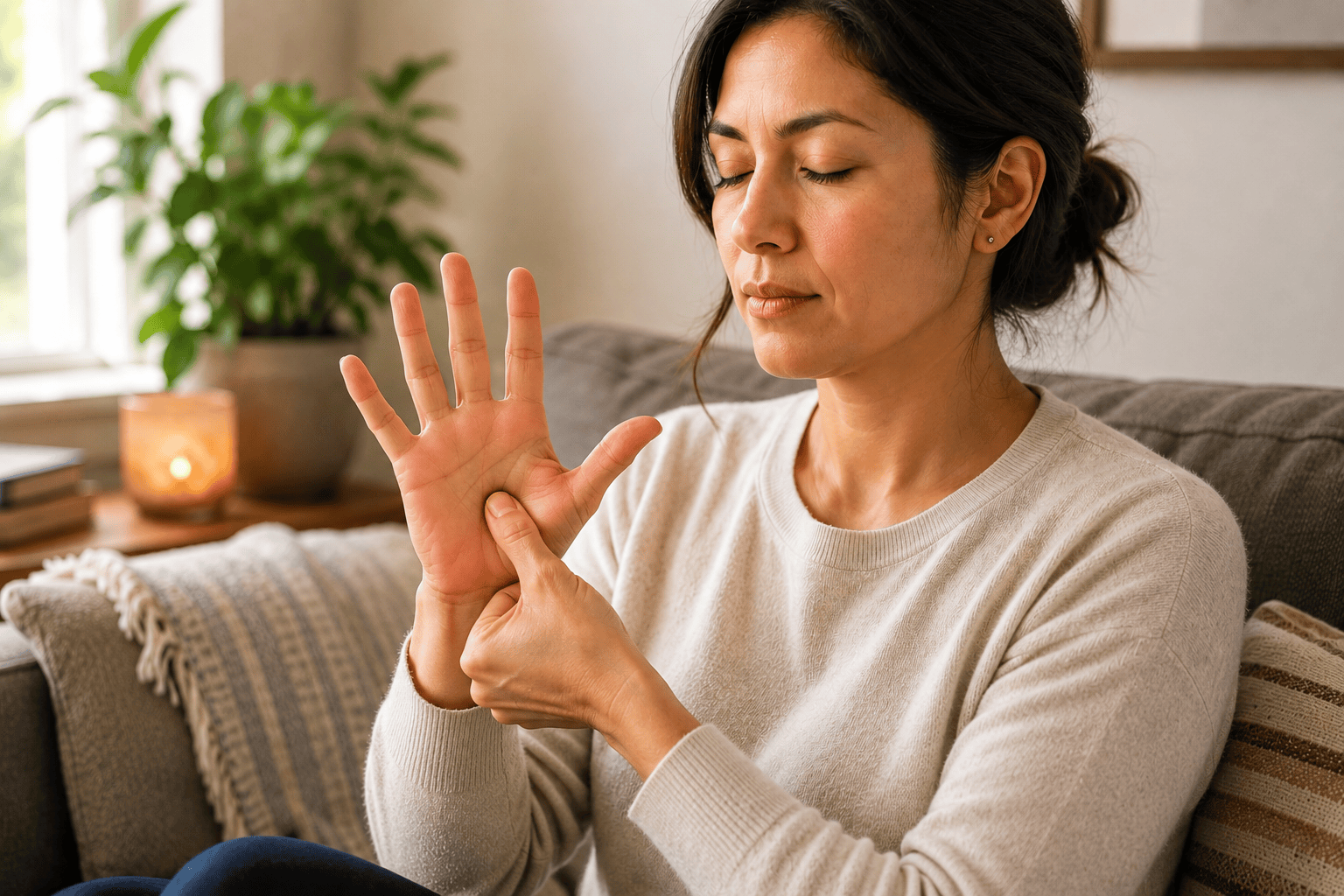
3. Press on Kidney 1. This is an acupressure point on the bottom of the foot, in the center of the ball, just behind where the toes meet the foot. Press firmly for one minute on each foot. In Traditional Chinese Medicine, Kidney 1 is one of the strongest points for grounding rising heat. You may not be able to reach your feet during the actual flash if you are out in public, but doing this when you can, especially before bed, can reduce the night sweats that often come with hot flashes.
4. Sip cool water, not ice water. Cool water on the inside of the body helps. Ice water creates a counterproductive cold-shock response that the body then has to work against. Room temperature to cool is the sweet spot.

5. Remove a layer if you can. A light layer that comes off easily can help shed heat faster than removing nothing or trying to remove too much at once. Dressing in adjustable layers during the day is one of the most practical changes you can make.

Why This Works
A hot flash is your body’s heat-regulation system misfiring. The thermostat in your hypothalamus has become more sensitive to small temperature changes, and when it detects what it interprets as overheating, it triggers a full cooling response. Blood vessels dilate, blood rushes to the surface of the skin, and sweating begins. The result is the wave of heat you feel.
The hormonal shift that drives this is real. Estrogen helps regulate the temperature-sensing function of the hypothalamus, and when estrogen drops during perimenopause and menopause, the system becomes hypersensitive. The same internal conditions that used to feel fine now register as overheating. The body’s response is technically working correctly. It is just responding to triggers that should not be triggers.
In Traditional Chinese Medicine, hot flashes are typically a sign of Kidney Yin deficiency. The Yin energy (cooling, moistening, grounding) has become depleted, often through aging, chronic stress, overwork, or the natural shifts of perimenopause. With less Yin to hold it down, the Yang energy (warming, active, rising) escapes upward in waves. This is why the heat moves up from the chest into the face rather than spreading evenly throughout the body. The Yin can no longer contain it.
The acute response tools work because they directly address what is happening. Cooling the wrists pulls the rising heat back down. Slow breathing calms the nervous system that is amplifying the response. Acupressure on Kidney 1 grounds the energy back into the lower body where it belongs.
How to Reduce How Often They Come
The acute tools handle individual flashes. The frequency comes down through a different set of changes.
- Identify your triggers. Most patients have a personal set of triggers that may differ from anyone else’s. Common ones include spicy food, alcohol (especially red wine), caffeine, sugar, hot environments, hot showers and baths, and stress. Keep a simple log for two weeks. Note what you ate, how you slept, and when flashes happened. The patterns usually become clear.
- Dress in layers. A cotton tank under a lightweight button-down means you can shed the outer layer quickly. Synthetic fabrics that trap heat make flashes worse. Natural fibers that breathe are your friend.
- Keep the bedroom cool. A cooler bedroom temperature, lighter bedding, and a fan if needed reduce the nighttime flashes that often disrupt sleep. The sleep disruption from hot flashes is often more damaging than the flashes themselves. More on the broader sleep picture is in Do I Have “Sleep PTSD”?.
- Manage chronic stress. Stress drives cortisol, and chronic cortisol elevation makes the hot flash pattern worse. The full picture of how chronic stress affects the body is in What Is Cortisol and Why Do I Have So Much of It?.
- Move regularly without overheating. Moderate exercise reduces hot flash frequency over time. Intense exercise that produces its own heat surge can trigger them. Walking, swimming, gentle yoga, and similar activities work better than high-intensity workouts for most patients dealing with active hot flashes.
- Address the broader hormonal picture. Hot flashes are often part of a larger pattern of perimenopause symptoms including sleep disruption, mood changes, brain fog, and anxiety. The fuller picture is covered in Perimenopause, Anxiety, and Brain Fog.
When to Get Clinical Help
Self-care tools are useful, but they have limits. If your hot flashes are happening more than ten times a day, waking you up multiple times a night, lasting more than fifteen minutes, or coming with other symptoms that concern you, professional help is worth pursuing.
Acupuncture has substantial research support for reducing hot flash frequency and severity. Treatment addresses the underlying Yin deficiency pattern rather than just managing the surface response. The fuller treatment picture is in Suffering with Hot Flashes? Try Acupuncture.
Where to Start
If hot flashes have been affecting your sleep, your work, or your daily life, the next step is a clinical conversation about your specific situation.
Reach out to Above and Beyond Acupuncture on North Frank Lloyd Wright Boulevard in Scottsdale to schedule a consultation.
Schedule an appointment online or call us today to start your journey to relief.
The points above are only as effective as the technique used to apply them. Where to press, how firmly, and for how long all affect the result. For a full breakdown of how to perform acupressure properly at home, read Performing Acupressure in 3 Easy Steps.