Key Takeaways
- Leg cramps can be quite painful and tend to happen more often at night, especially as we get older.
- Acupressure can relieve cramps by stimulating specific points to soothe muscles and enhance blood flow.
- Key acupressure points include BL57 for calf cramps, as well as GB34, LR3, and SP6, which nourish blood and alleviate tension.
- To relieve discomfort effectively, apply firm pressure on these points for one to two minutes while stretching the affected muscle.
- Get medical help if cramps are intense, happen often, or come with signs of serious issues like blood clots.
Leg cramps can be miserable.
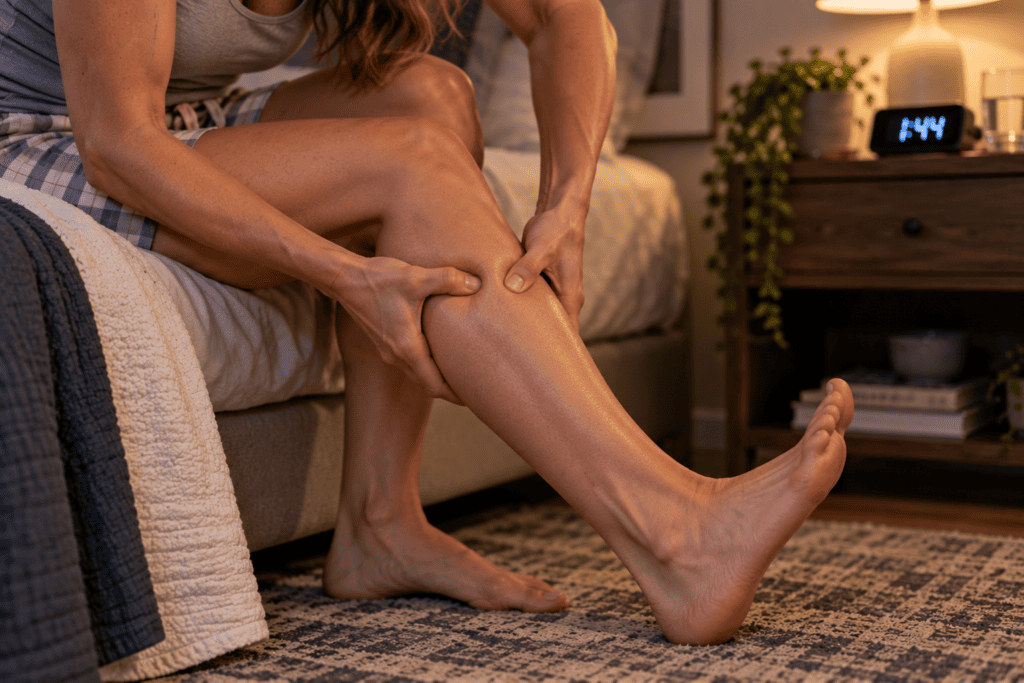
The calf muscle suddenly tightens into a knot, causing sharp, intense pain. They often wake you at night, and the soreness can last a day. Leg cramps are very common, especially as we age, and tend to happen at night. Although usually harmless, these cramps can be painful and disruptive. Acupressure may provide relief by relaxing the affected muscle, reducing pain, and, with regular use, preventing future cramps.
In Traditional Chinese Medicine, leg cramps occur when muscles and tendons lack proper nourishment or relaxation. The Liver is thought to store Blood and regulate tendons, while Blood maintains muscle health and flexibility. Low Blood levels can cause tendons to tighten, increasing the risk of cramps, especially at night when Blood is meant to nourish the body. Cold muscles or poor Qi and Blood circulation in the legs may lead to cramps. The following points help relax tense muscles, improve Blood circulation, warm the legs, and reduce pain, both during cramps and over time to prevent future occurrences.
Here are nine acupressure points that can help alleviate leg cramps.
What Acupressure Points to Press and Why
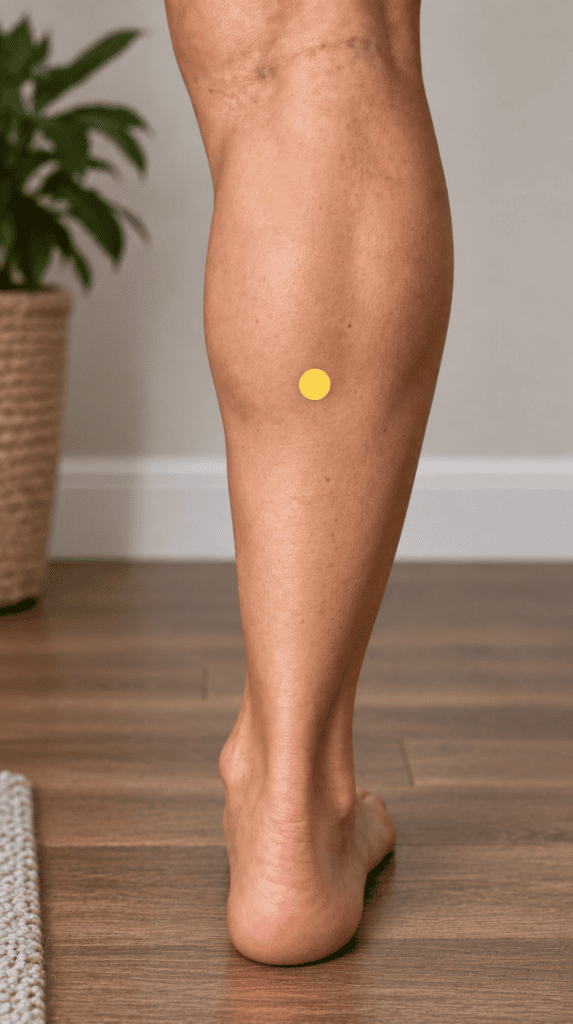
1. Press on BL57 in the calf, the primary point for calf cramps. BL57 sits in the center of the back of the lower leg, in the hollow where the calf muscle bulges meet the Achilles tendon, about midway between the back of the knee and the heel. Press firmly with your thumb for one to two minutes, and press harder during an active cramp. BL57 is called “Chengshan,” and it is the single most important point for calf cramps.
This point is crucial for relieving leg cramps because it is situated in the calf muscle, where most cramps occur. Applying firm pressure on it during a cramp can help the muscle relax, and consistent stimulation may prevent future cramps. When a calf cramp strikes, this is the first point to target, pressing firmly into the tense muscle. For sudden calf cramps, activating this point is especially important.
2. Press on GB34 below the outer knee to relax the sinews. GB34 sits on the outer lower leg, in the hollow just below and in front of the head of the fibula, the bony knob below the outer side of the knee. Press firmly with your thumb for one to two minutes on each leg. GB34 is called “Yanglingquan,” and it is the influential point for the sinews and tendons of the whole body.
GB34 is a key point for the body’s tendons, making it especially effective for cramps caused by tight tendons. It helps relax muscle tension and alleviates leg cramps. You can use it to release a cramp as it occurs and to prevent future ones. Whether in the calf, foot, or thigh, this point promotes muscle relaxation and complements the main calf point effectively.
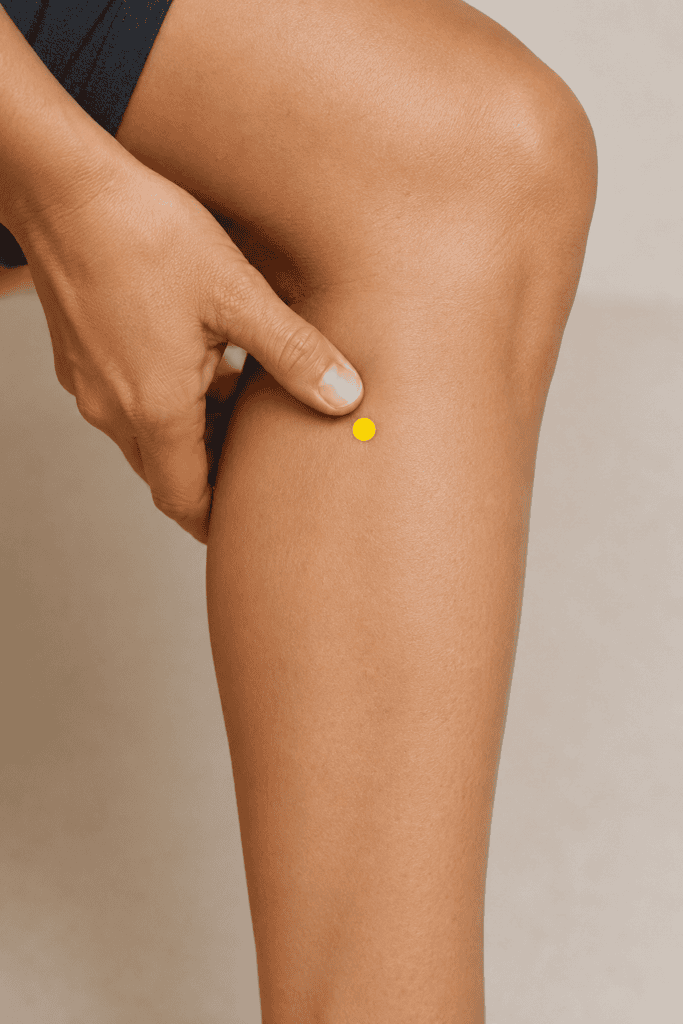
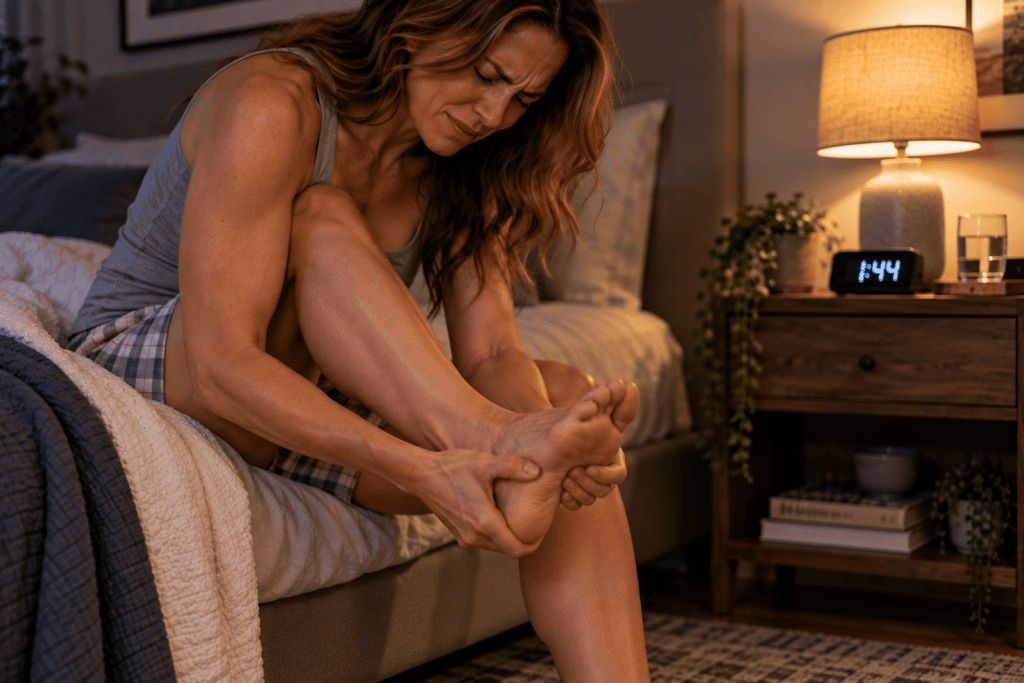
3. Press and stretch the cramping muscle directly during a cramp. During an active cramp, firmly press your thumb or hand into the hard, knotted area of the muscle, the spot that is sore and tight. Simultaneously, gently stretch the muscle. For a calf cramp, you can pull your toes toward your shin or stand against a wall with the leg straight, leaning forward. Maintain both pressure and stretch until the cramp subsides. These points are known as Ashi points, the tender areas where the cramp is most intense.
When a cramp occurs, the best response is to immediately press firmly into the tense muscle while stretching it. Applying pressure on the sore spot, known as the Ashi point, helps release tension, and stretching the muscle in the opposite direction of the cramp usually relieves it. For example, a calf cramp can be eased by pulling your toes toward your shin, and pressing on BL57 and the tight muscle during the stretch can speed up relief. Combining both pressure and stretching is essential for quickly stopping a leg cramp.
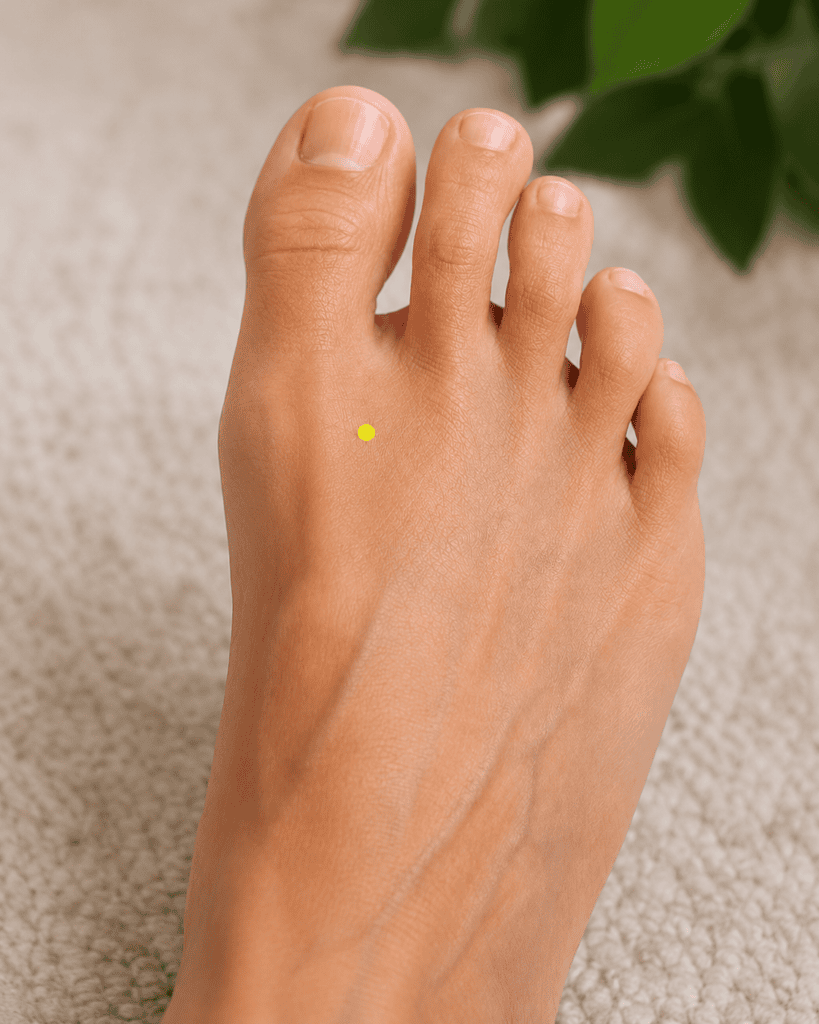
4. Press on LR3 on the top of the foot to nourish the sinews. LR3 sits on the top of the foot, in the webbing between the big toe and second toe, about two finger-widths back where the bones meet in a small hollow. Press firmly with the thumb for one to two minutes on each foot. LR3 is called “Taichong,” the primary point for the Liver.
Since the Liver is believed to store Blood and control tendons, LR3, its main point, targets the root cause of leg cramps. It promotes blood circulation and nourishment, helping muscles stay flexible and easing tight tendons. This reduces the likelihood of cramps and addresses the underlying issues, not just the pain. It also helps calm the body and reduce tension that can trigger cramps. For those frequently experiencing cramps, especially due to Blood and tendon problems, regularly stimulating this point can help prevent episodes.
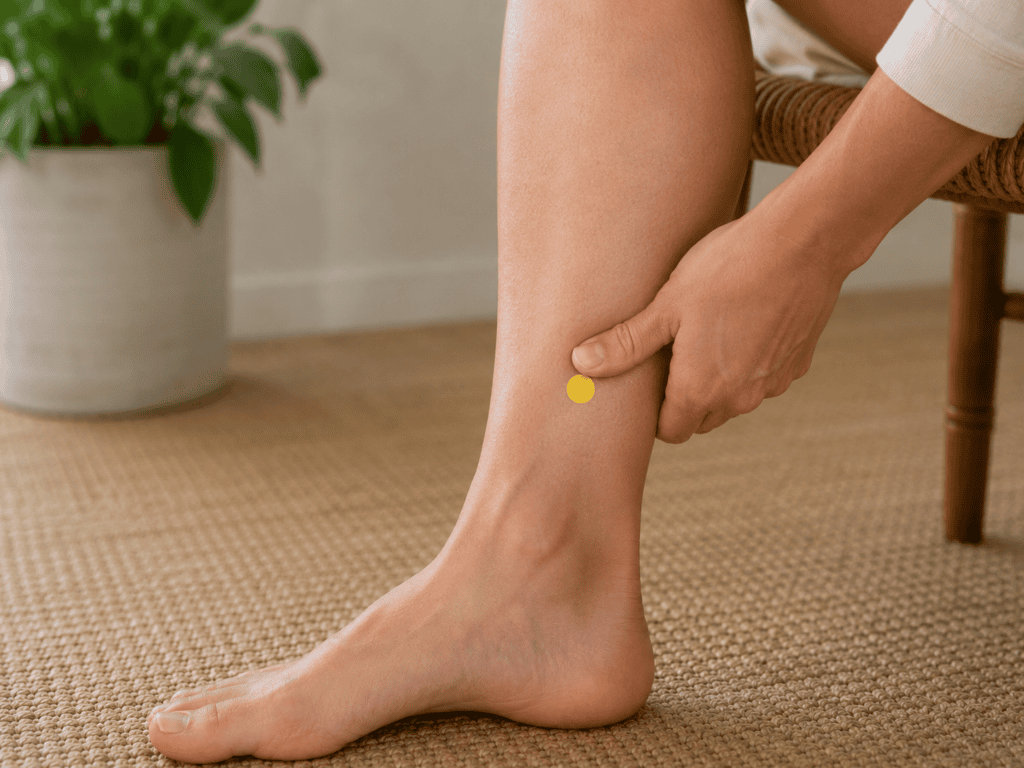
5. Press on SP6 above the inner ankle to nourish the Blood. SP6 sits four finger-widths up from the tip of the inner ankle bone, just behind the back edge of the shinbone. Press firmly for one to two minutes on each leg. SP6 is called “Sanyinjiao,” the “Three Yin Intersection,” where the Spleen, Liver, and Kidney channels meet. SP6 is avoided during pregnancy.
SP6 is a vital point for nourishing the body, as it connects three key channels in the leg. It helps build Blood, which supports muscle health and reduces nighttime cramps. If leg cramps stem from low energy or Blood deficiency, this point can help restore strength. However, because leg cramps are common during pregnancy, avoid SP6. Pregnant individuals should instead focus on local calf points, stretch, and follow their doctor’s guidance.
6. Press on ST36 below the knee to rebuild the Qi and Blood. ST36 sits four finger-widths below the lower edge of the kneecap and one finger-width to the outside of the shinbone, on the muscle that rises when you flex your foot. Press firmly with your thumb for one to two minutes on each leg. ST36 is called “Zusanli,” the “Leg Three Miles,” and it is the master point for building Qi and Blood.
ST36 supports the Spleen and Stomach, which are essential for producing energy and Blood. This point helps restore Blood, improve circulation, and support leg health. While local points can temporarily relieve cramps, ST36 targets underlying issues such as low energy or inadequate nutrition that cause frequent cramps. If your cramps come with fatigue or weakness, regular use of this point can help keep your legs healthy and cramp-free.
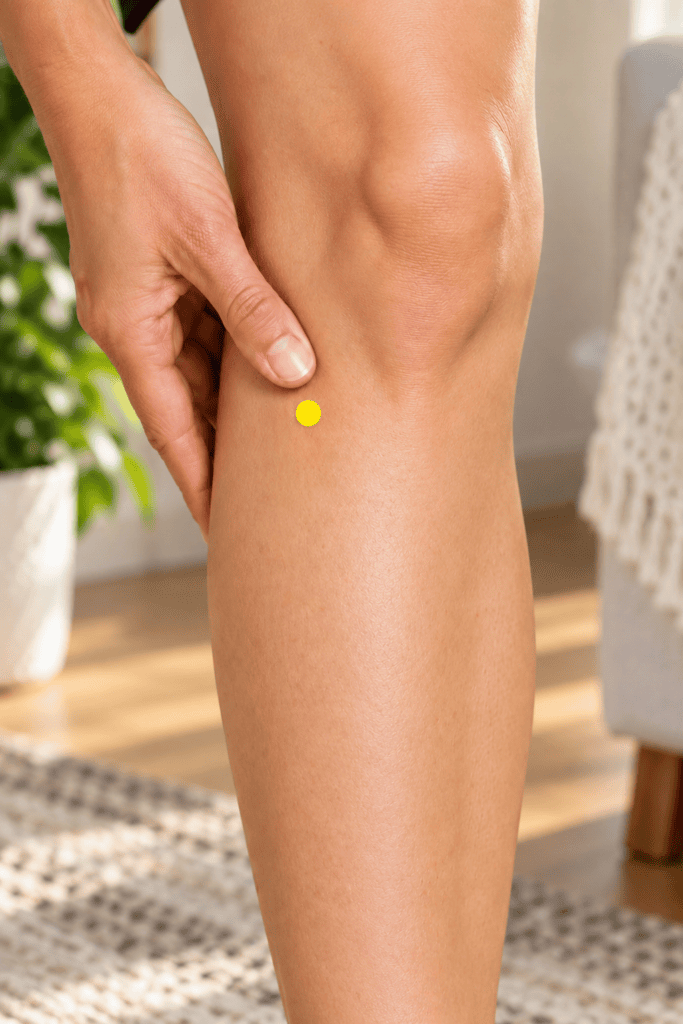
7. Press on SP10 above the knee to nourish and move the Blood. SP10 sits on the inner thigh, about three finger-widths above the inner top corner of the kneecap, on the muscle bulge there. Press firmly with your thumb for one to two minutes on each leg. SP10 is called “Xuehai,” which means the “Sea of Blood.”
SP10, known as the Sea of Blood, is an important acupoint that nourishes and promotes the flow of Blood in the body. It helps Blood reach the leg muscles and clears blockages that may cause cramps. Positioned on the thigh, it is especially effective for thigh and hamstring cramps. For individuals experiencing recurrent cramps related to Blood deficiencies, this point, together with SP6 and ST36, plays a central role in prevention.
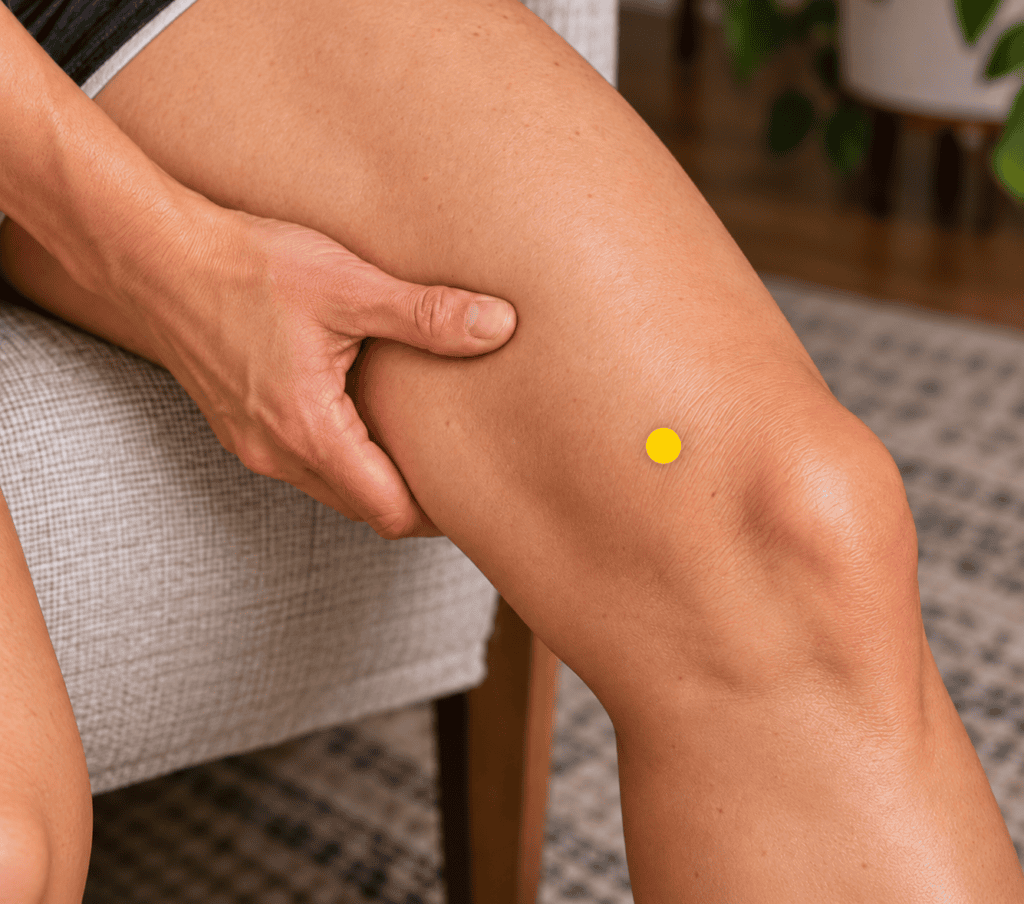
8. Press on BL40 behind the knee to relax the whole leg. BL40 sits in the center of the crease at the back of the knee, in the hollow midway across. Press firmly with your fingers for one to two minutes on each leg. BL40 is called “Weizhong,” and it is the command point for the back and the legs.
BL40 is situated at the back of the knee on the Bladder channel, which runs down the calf. It’s an important point for calming the legs and alleviating pain, stiffness, and cramps. As a key point for the lower back and legs, it helps release tension along the back of the leg, including the calf. For calf cramps or pain in the back of the leg, this point relaxes the entire area and pairs effectively with BL57 to ease leg discomfort.
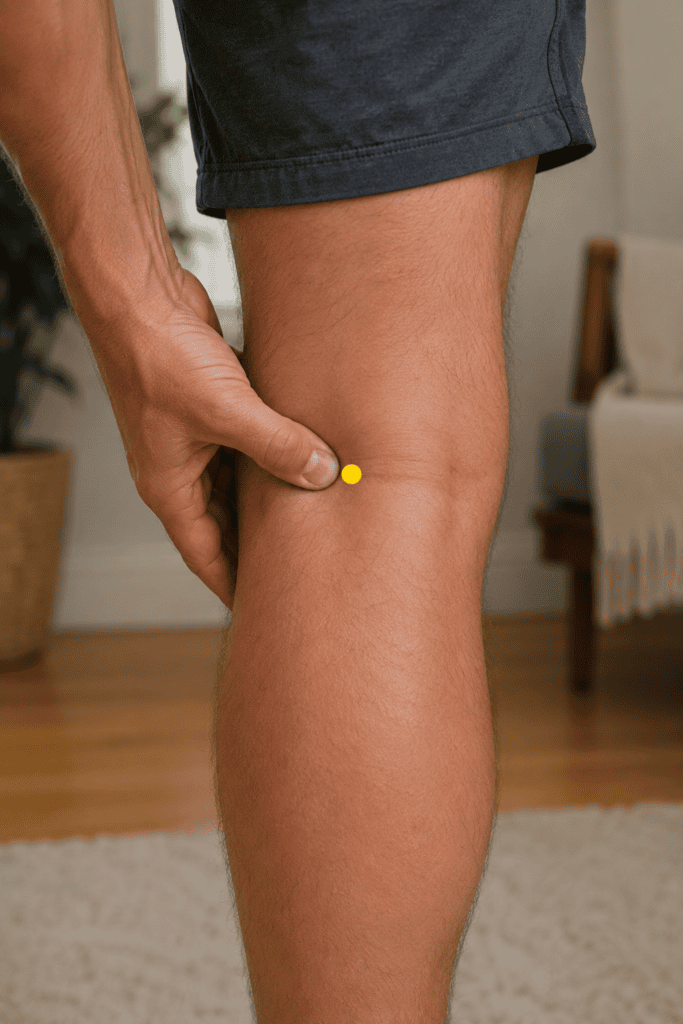
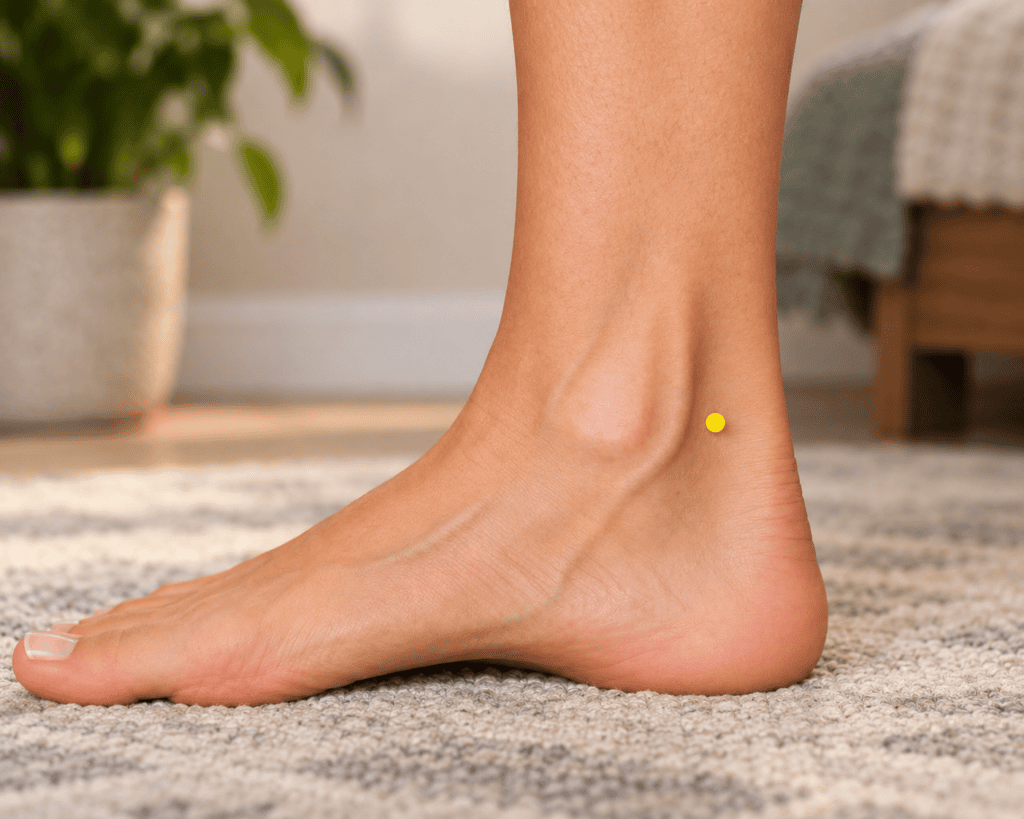
9. Press on KI3 above the inner ankle for night cramps and the reserves. KI3 sits in the hollow between the inner ankle bone and the Achilles tendon, level with the tip of the ankle bone. Press firmly with your thumb for one to two minutes on each ankle. KI3 is called “Taixi,” the Kidney’s source point.
Leg cramps tend to become more frequent with age and often occur at night. In Traditional Chinese Medicine, the Kidney is believed to store the body’s deep reserves, which gradually decline over time. KI3, a primary Kidney point, helps rebuild this foundation and can reduce recurring night cramps. It supports the body’s deep energy and, located near the ankle, directly aids the lower leg. For those experiencing more cramps with age or feeling run-down, this point, combined with SP6, can help strengthen and nourish the lower leg.
Why These Acupressure Points Work
In Traditional Chinese Medicine, leg cramps occur when tendons tighten due to insufficient Blood nourishment. The Liver, which stores Blood and governs the tendons, is key to this process. Cold or poor circulation in the legs can also contribute. The nine points discussed aim to target these underlying causes.
- The cramp-releasing points (BL57, GB34, the cramping muscle, BL40) help relax the tense sinews and alleviate the immediate cramp at its exact location.
- The Blood-nourishing points (LR3, SP6, ST36, SP10) restore and stimulate the Blood flow to maintain muscle suppleness and target the root causes of recurring cramps.
- The deep-reserve point (KI3) helps support the foundation for preventing age-related and nighttime cramps.
The primary approach involves relaxing the tight muscle during a cramp and nourishing the Blood gradually. That’s why applying firm pressure and stretching provides quick relief, while consistent acupressure can help prevent future cramps.
How to Properly Use These Acupressure Points
Use these points both to quickly relieve a cramp and to prevent future ones through regular use.
- During a cramp, press firmly into the affected muscle and BL57 while stretching. For calf cramps, pull the toes toward the shin or stand and lean into the stretch until it releases. GB34 and BL40 can also help relax the leg.
- To reduce the risk of recurring cramps, regularly work on acupressure points LR3, SP6, ST36, SP10, and KI3, especially in the evening. Additionally, massage and stretch your calves before going to bed.
- Apply firm pressure, and during a cramp, don’t hesitate to press hard into the knotted muscle, as the combination of firm pressure and stretching helps break the spasm.
- Hold each point for one to two minutes, combining it with gentle leg massage. This helps release cramps and keeps muscles relaxed.
Acupressure may help, and simple habits can prevent cramps. Stay properly hydrated, since dehydration is a common trigger. Stretch your calves and legs regularly, especially before bed, as this can help prevent cramps. Avoid prolonged sitting by staying active during the day, and keep your legs warm, because cold temperatures can induce cramps. Make sure your diet includes enough magnesium, potassium, and calcium; magnesium supplements are common, but their effectiveness varies, so consult your doctor first. Additionally, at night, keep your bedding loose over your feet to prevent your toes from pointing downward.
When to Get Professional Help
Most leg cramps are harmless and resolve quickly. Acupressure and the tips mentioned generally help relieve common cramps. Some cases require medical attention. If you experience cramp-like pain in your calf along with swelling, warmth, redness, or tenderness, especially if it affects only one leg and occurs without exercise, it could be a blood clot, a medical emergency. Seek urgent care right away. Also, see a doctor if your leg cramps happen frequently, are severe, disrupt your sleep or daily activities, don’t improve with self-care, or are accompanied by muscle weakness, numbness, or changes in your leg. These symptoms might indicate circulation issues, nerve problems, or other underlying conditions. Certain medications, such as statins and some diuretics, can cause leg cramps, so tell your doctor if you’re taking these drugs, as adjusting doses might help.
While acupressure and healthy habits can help manage daily cramps, they should not replace professional medical assessment when needed.
Above and Beyond Acupuncture offers acupuncture, cupping, and lifestyle coaching at the North Frank Lloyd Wright Boulevard location in Scottsdale.
Schedule an appointment online to start your healing journey.
The points above are only as effective as the technique used to apply them. Where to press, how firmly, and for how long all affect the result. For a full breakdown of how to perform acupressure properly at home, read Performing Acupressure in 3 Easy Steps.
Because leg cramps are sometimes mistaken for the restless, crawling sensation of restless legs, which is an urge to move rather than a painful spasm, acupressure for restless legs is the article to read if that fits your experience.
About the Publisher
Paul Kerzner, L.Ac., is a licensed acupuncturist and board-certified herbalist, as well as the founder of Above and Beyond Acupuncture in Scottsdale. His own journey from chronic patient to practicing acupuncturist shapes his commitment to providing honest, clinically grounded information about acupuncture and Traditional Chinese Medicine. Learn more about Paul and his clinical approach on the About Us page.