Key Takeaways
- Low blood pressure is a reading under 90/60. It’s often harmless on its own, but it can be concerning if it causes dizziness, fainting, fatigue, nausea, blurred vision, or confusion.
- Common causes include dehydration, prolonged standing or bed rest, pregnancy, certain medications, heart problems, and hormone conditions. Fainting accompanied by chest pain or shortness of breath is an emergency.
- In Traditional Chinese Medicine, low blood pressure accompanied by dizziness and fatigue is seen as a sign of weak Qi and Blood, which fail to rise to the head. It is often linked to a weakened Spleen, Heart, and Kidney.
- Nine acupressure points across the head, face, wrists, abdomen, legs, and feet can help lift Qi, ease lightheadedness, and gradually build energy.
- Rising slowly, maintaining adequate fluid intake, eating smaller, regular meals, and keeping a record of symptoms can help prevent low blood pressure from interfering with daily activities.

Most advice about blood pressure focuses on lowering it. But for people with low blood pressure, the challenge is the opposite. Getting up from the couch can make the edges of your vision go gray. Standing in a long grocery line may leave your legs heavy and your head light. Afternoons can drag on; your hands and feet may feel cold, and a hot shower can make the room spin for a moment.
The American Heart Association (AHA) defines low blood pressure, or hypotension, as a reading below 90/60 mm Hg and says a low reading is usually harmless on its own. It becomes a concern if it remains low and causes symptoms such as dizziness, fainting, fatigue, nausea, confusion, blurred vision, headache, neck or back pain, or heart palpitations. The AHA lists prolonged bed rest or standing, dehydration, pregnancy, certain medicines, heart problems, thyroid or adrenal conditions, low blood sugar, and vitamin B-12 or folic acid deficiency as possible causes. It recommends contacting a healthcare professional about symptoms and keeping a record of when they occur.
When you stand up, gravity draws blood down toward your legs. Normally, your blood vessels tighten and your heart beats faster within seconds to keep blood flowing to your brain. If you’re low on fluids, your blood vessels respond slowly, or a medicine slows this response, your brain briefly receives less blood. This can cause lightheadedness, blurred vision, or even fainting.
In Traditional Chinese Medicine, low blood pressure is usually viewed as a sign of deficiency. The Spleen makes Qi and Blood from food, the Heart circulates Blood through the vessels, and the Kidney supplies deep reserves for both. Overwork, poor sleep, irregular meals, illness, or blood loss can weaken these organs, making it difficult for Qi to raise Blood to the head. This can cause dizziness when standing, fatigue, a pale face, cold hands and feet, and a weak pulse. The most severe form is called “sinking Qi,” when energy descends and the body struggles to stay upright.
The points below begin at the top of the head and face, continue to the wrists and abdomen, and end with the legs and feet.
What Acupressure Points to Press and Why
1. Press on GV20 at the top of the head to lift Qi. GV20 sits on the top of the head, at the midpoint of an imaginary line that runs from the top of one ear over the head to the top of the other ear. Press gently with the fingertips of one hand, or tap the point lightly, for one to two minutes. GV20 is called “Baihui,” the “Hundred Meetings.”
GV20 is where all the Yang channels meet and is one of the most important points in Traditional Chinese Medicine for lifting sinking Qi. It helps draw Qi and Blood up to the head and ease the floating, lightheaded sensation associated with low blood pressure.
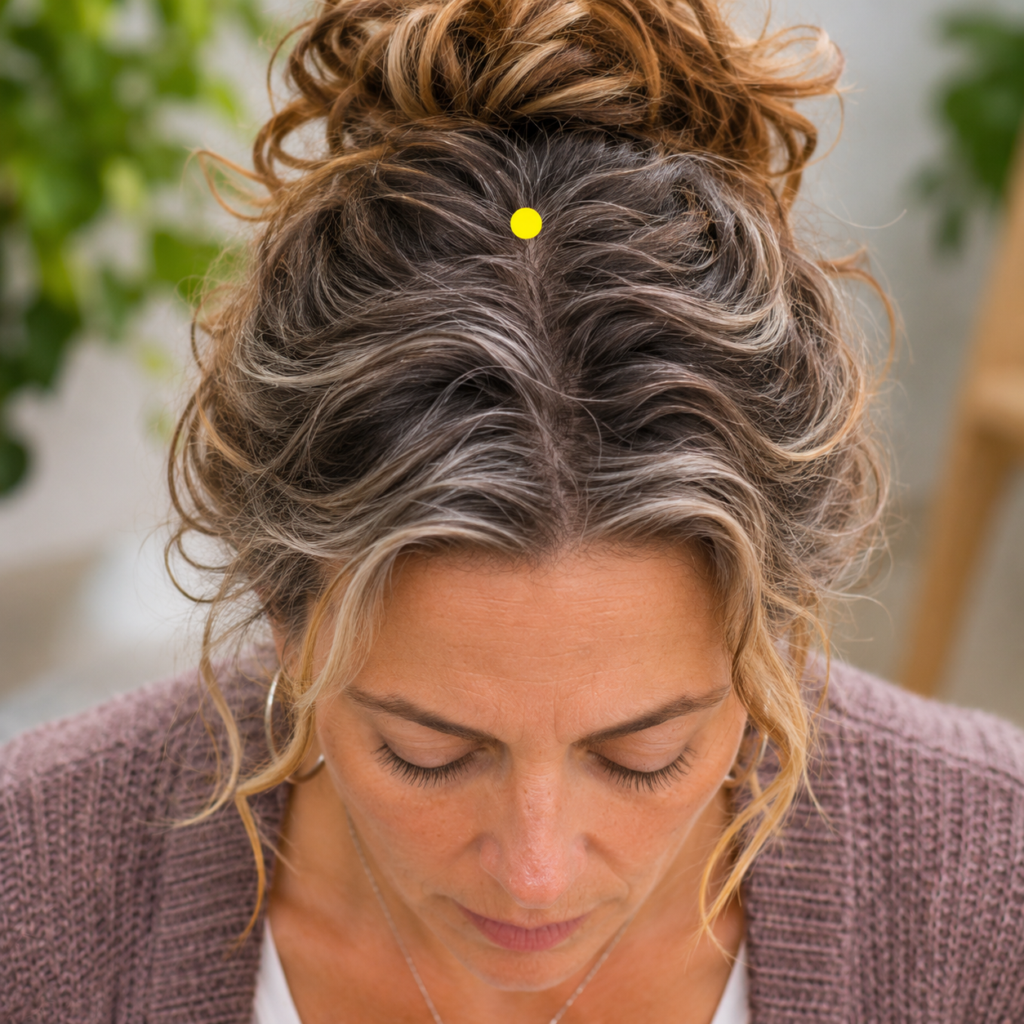
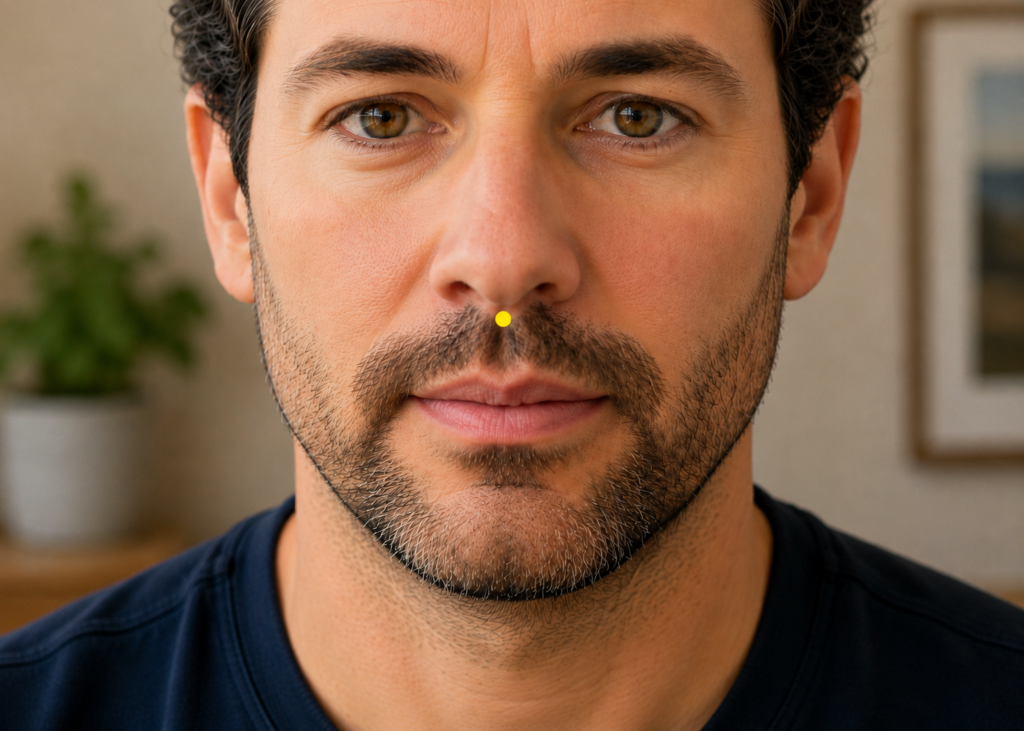
2. Press on GV26 below the nose to revive the senses. GV26 sits on the upper lip, in the groove below the nose, about one-third of the way down from the base of the nose to the edge of the lip. When lightheaded, press firmly with the tip of the index finger for 20 to 30 seconds. GV26 is called “Shuigou,” the “Water Trough.”
In Traditional Chinese Medicine, GV26 is the classic revival point for faintness and dizziness. If a wave of lightheadedness starts, it’s a quick point to use while sitting down.
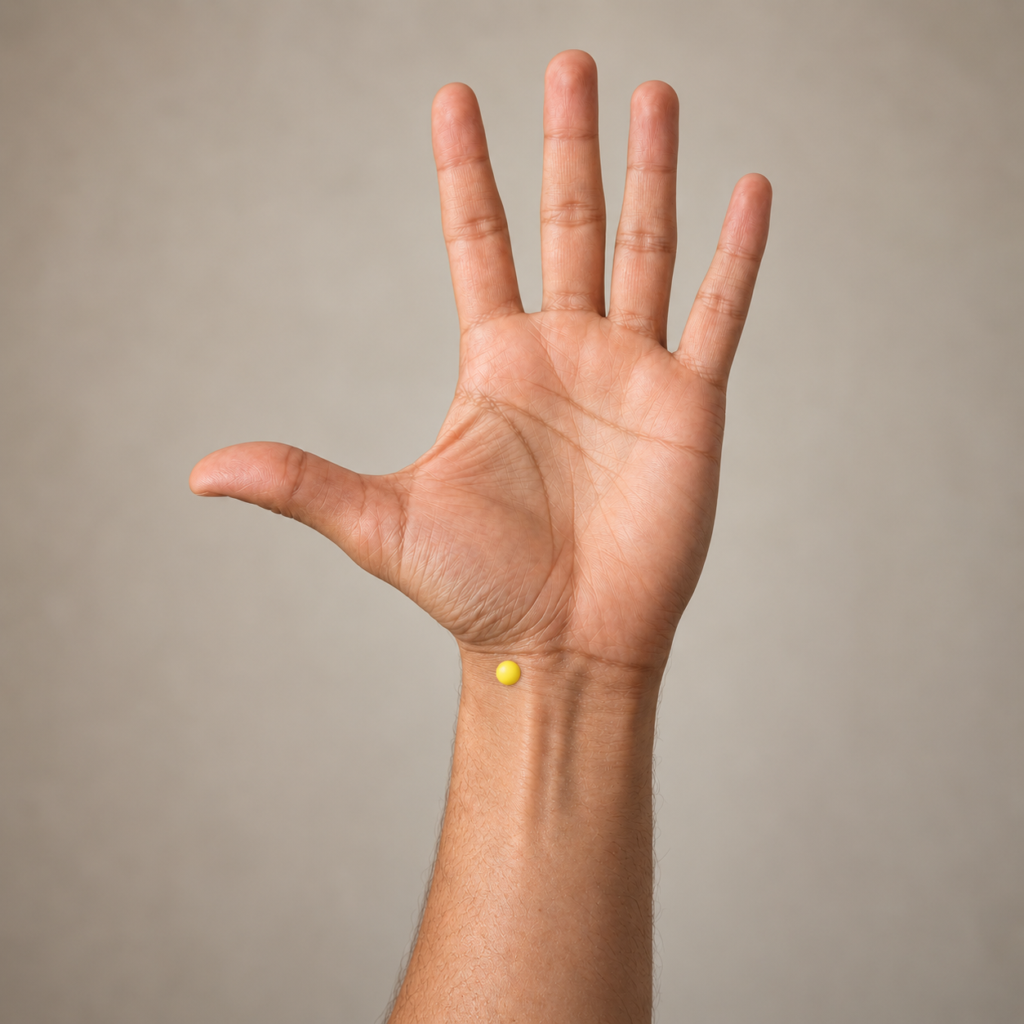
3. Press on LU9 at the wrist to support the vessels. LU9 sits on the inner wrist crease, on the thumb side, in the hollow just to the thumb side of the pulse. Press with moderate pressure using the thumb of your other hand for one to two minutes on each wrist. LU9 is called “Taiyuan,” the “Great Abyss.”
LU9 is the Lung’s source point and the influential point of the vessels. It strengthens Qi and supports the blood vessels, making it useful when the pulse feels weak and energy is low.
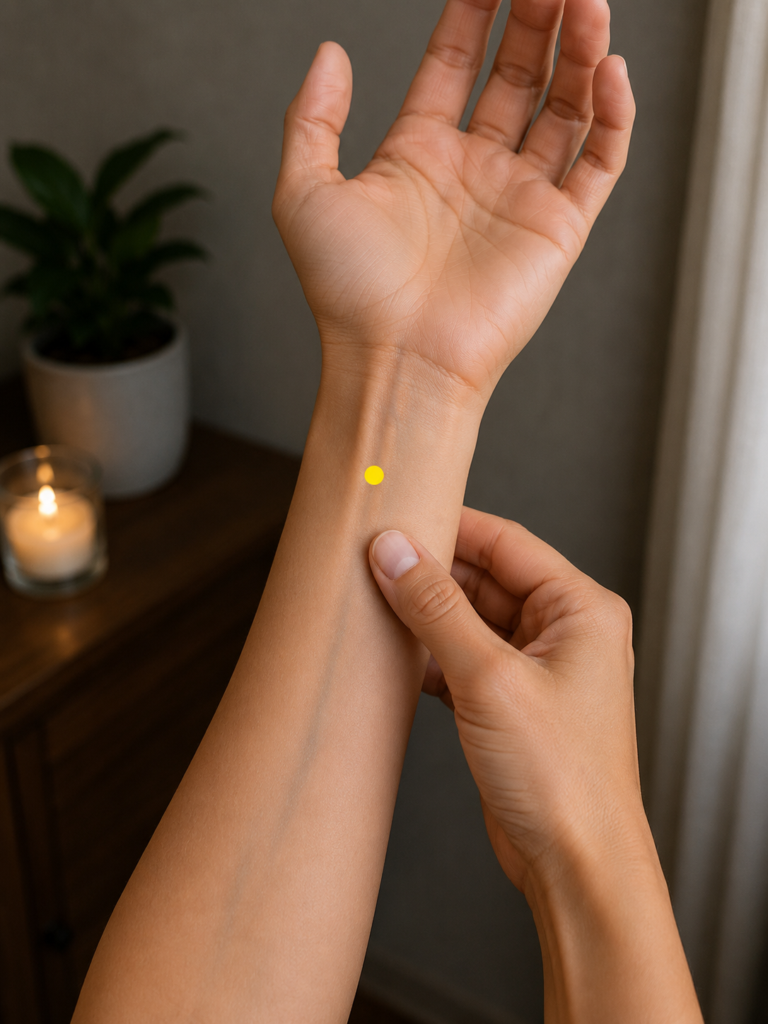
4. Press on PC6 on the inner forearm to steady the Heart. PC6 sits on the inner forearm, three finger-widths above the wrist crease, between the two tendons. Press firmly with the thumb of your other hand for one to two minutes on each arm while breathing slowly. PC6 is called “Neiguan,” the “Inner Pass.”
PC6 is the Pericardium’s connecting point. It steadies the Heart, calms palpitations, and eases nausea that may accompany a sudden drop in blood pressure.
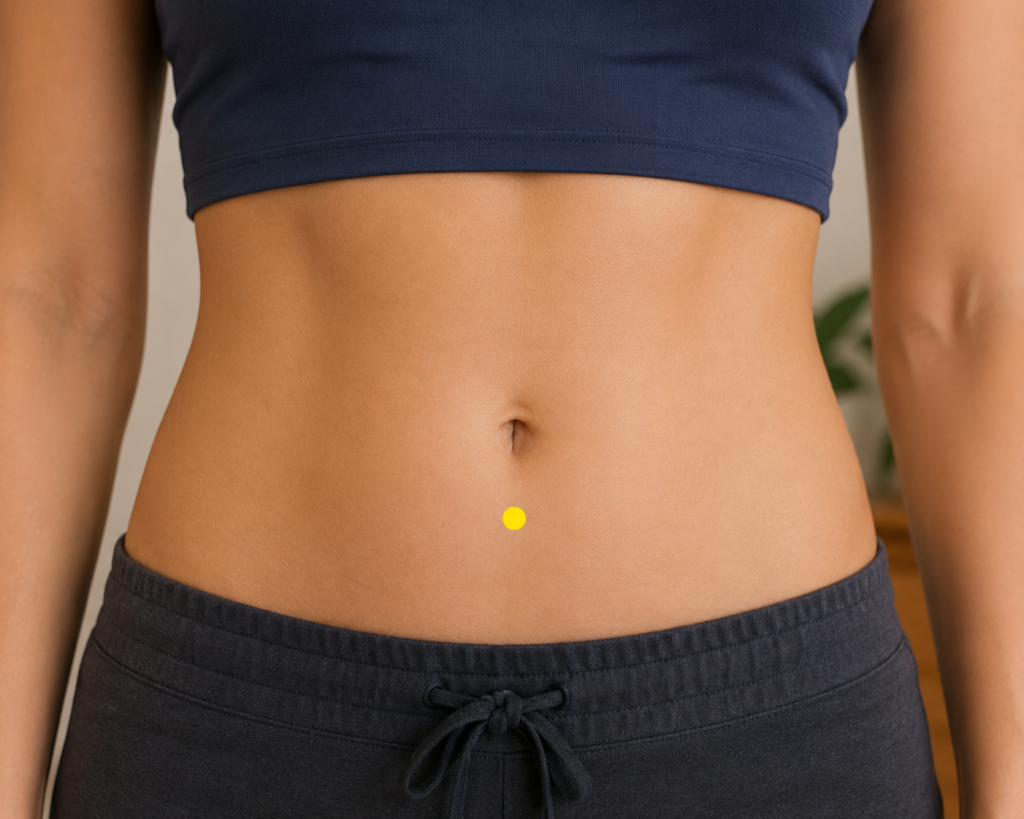
5. Hold CV6 below the navel to build Qi. CV6 sits on the midline of the lower abdomen, two finger-widths below the navel. Rest two or three fingertips on the point with light, steady pressure for one to two minutes while breathing slowly into the belly. CV6 is called “Qihai,” the “Sea of Qi.”
CV6 is traditionally used to build and gather Qi in the lower abdomen. It can help with the deep fatigue, cold hands and feet, and weakness often associated with low blood pressure.
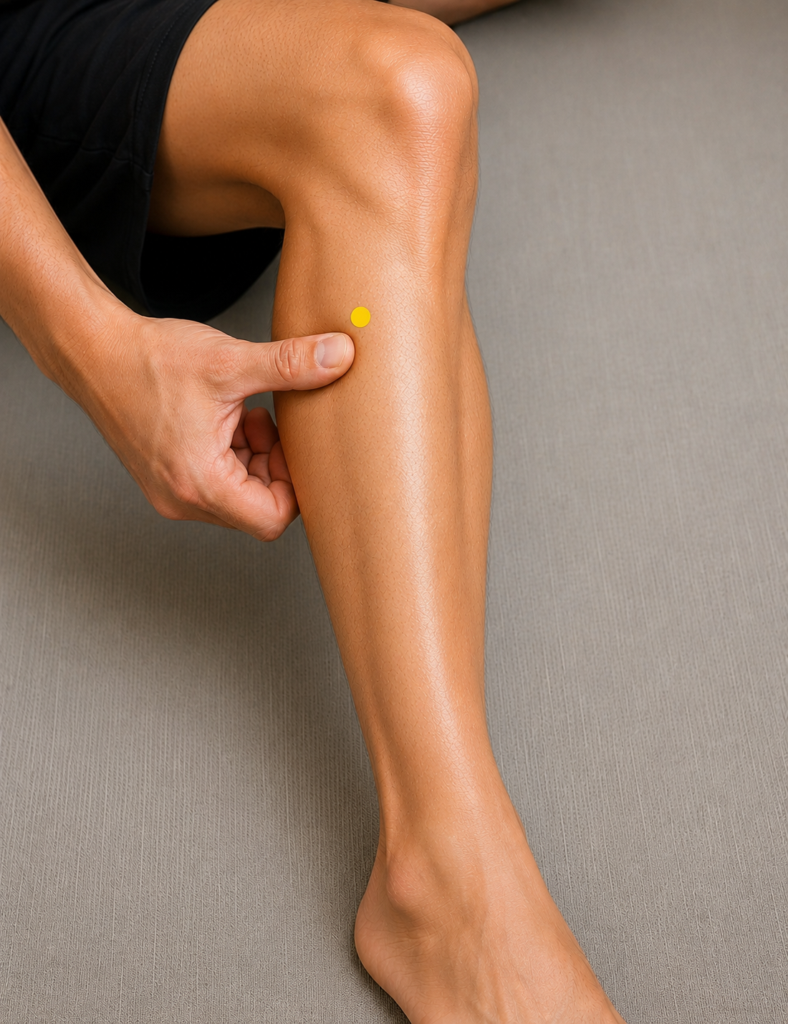
6. Press on ST36 below the knee to build Qi and Blood. ST36 sits on the front of the lower leg, four finger-widths below the bottom of the kneecap and one finger-width out from the edge of the shinbone. Press firmly with your thumb for one to two minutes on each leg. ST36 is called “Zusanli,” the “Leg Three Miles.”
ST36 is the Stomach’s sea point. It supports digestion, helping the body produce more Qi and Blood. Its name comes from an old saying that pressing the point gave a tired traveler enough energy to walk three more miles.
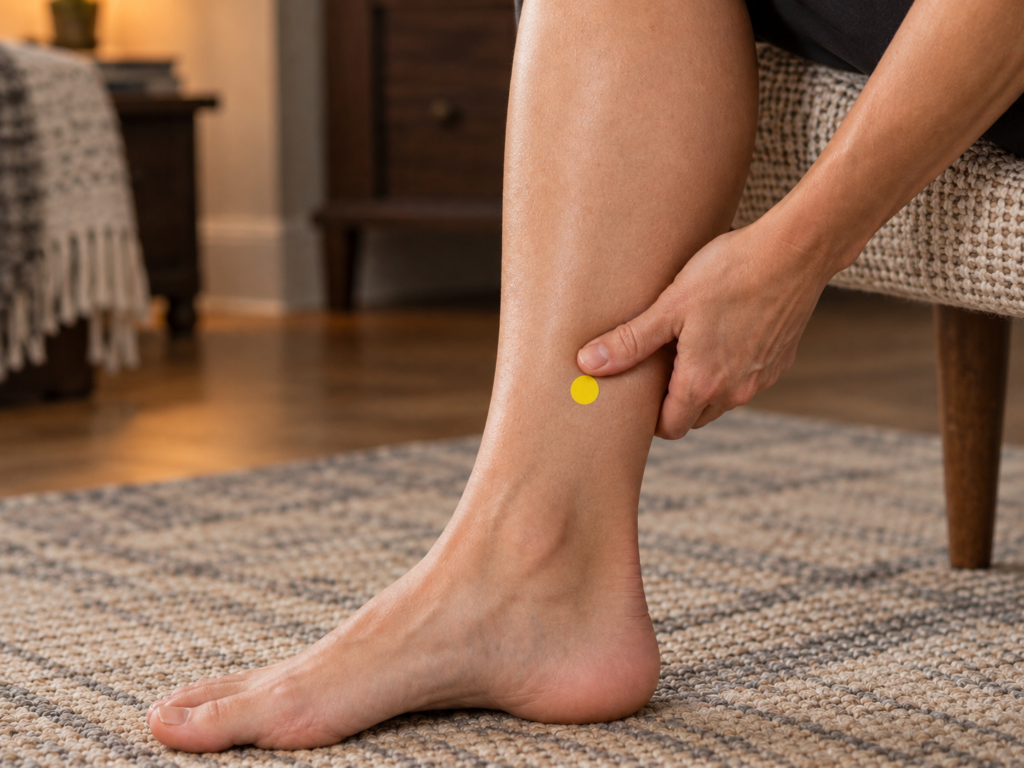
7. Press on SP6 above the inner ankle to nourish Blood. SP6 sits on the inner side of the lower leg, four finger-widths above the tip of the inner ankle bone, just behind the edge of the shinbone. Press firmly with your thumb for one to two minutes on each leg. SP6 is called “Sanyinjiao,” the “Three Yin Intersection.”
SP6 is where the Spleen, Liver, and Kidney channels of the leg meet. It nourishes Blood and supports all three organs, which may help when dizziness occurs alongside a pale face, poor sleep, or heavy menstrual periods. SP6 is avoided during pregnancy.
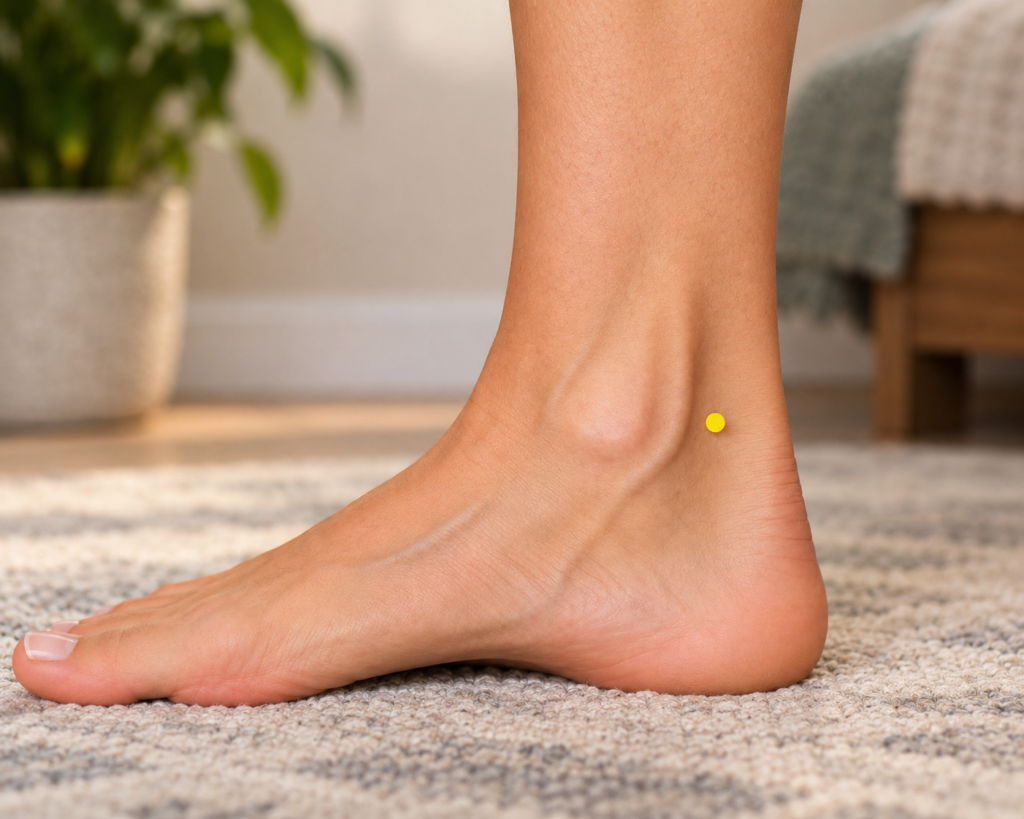
8. Press on KI3 behind the inner ankle to strengthen the Kidney. KI3 sits in the hollow between the inner ankle bone and the Achilles tendon. Press with moderate pressure for one to two minutes on each foot. KI3 is called “Taixi,” the “Great Ravine.”
KI3 is the Kidney’s source point. It builds deep reserves to support Qi and Blood and helps relieve weak, tired legs and lightheadedness that worsens with exhaustion.
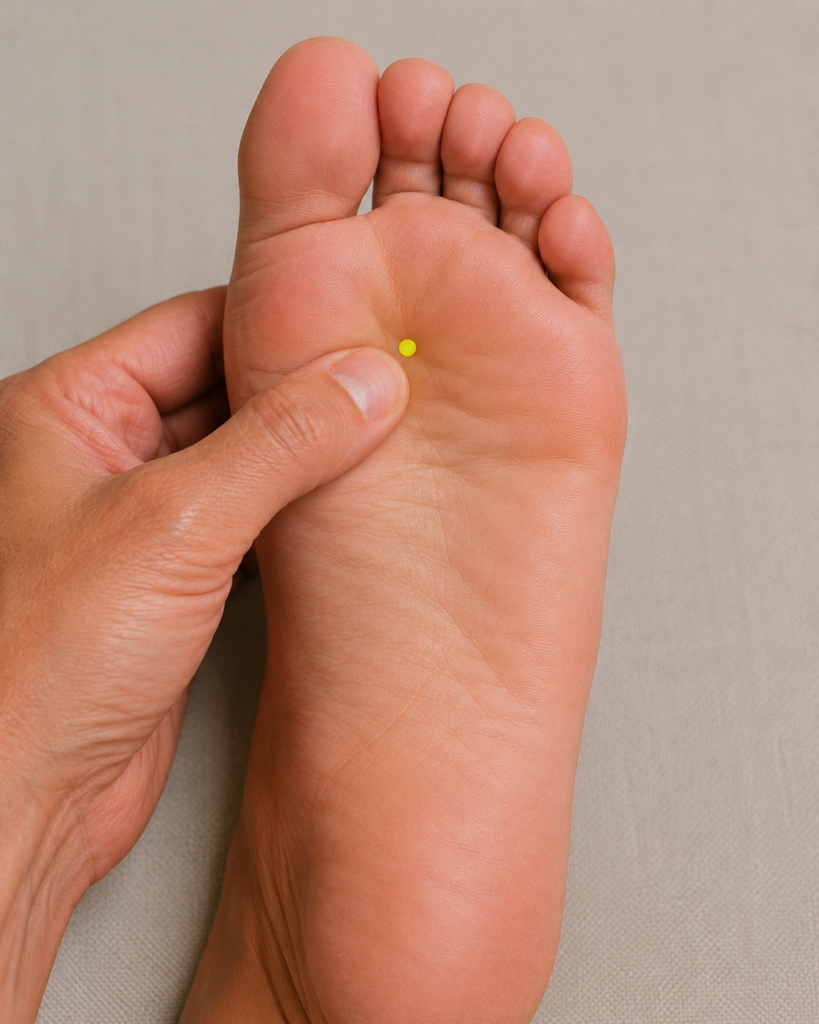
9. Press on KI1 on the sole of the foot to ground and revive. KI1 sits on the sole of the foot, in the hollow that forms near the front of the foot when the toes are curled, about one-third of the way from the base of the second toe to the back of the heel. Press firmly with your thumb for one to two minutes on each foot. KI1 is called “Yongquan,” the “Bubbling Spring.”
KI1 is the body’s lowest point and a traditional revival point. It helps reenergize the body when energy is low and steadies the legs when standing.
Why These Acupressure Points Work
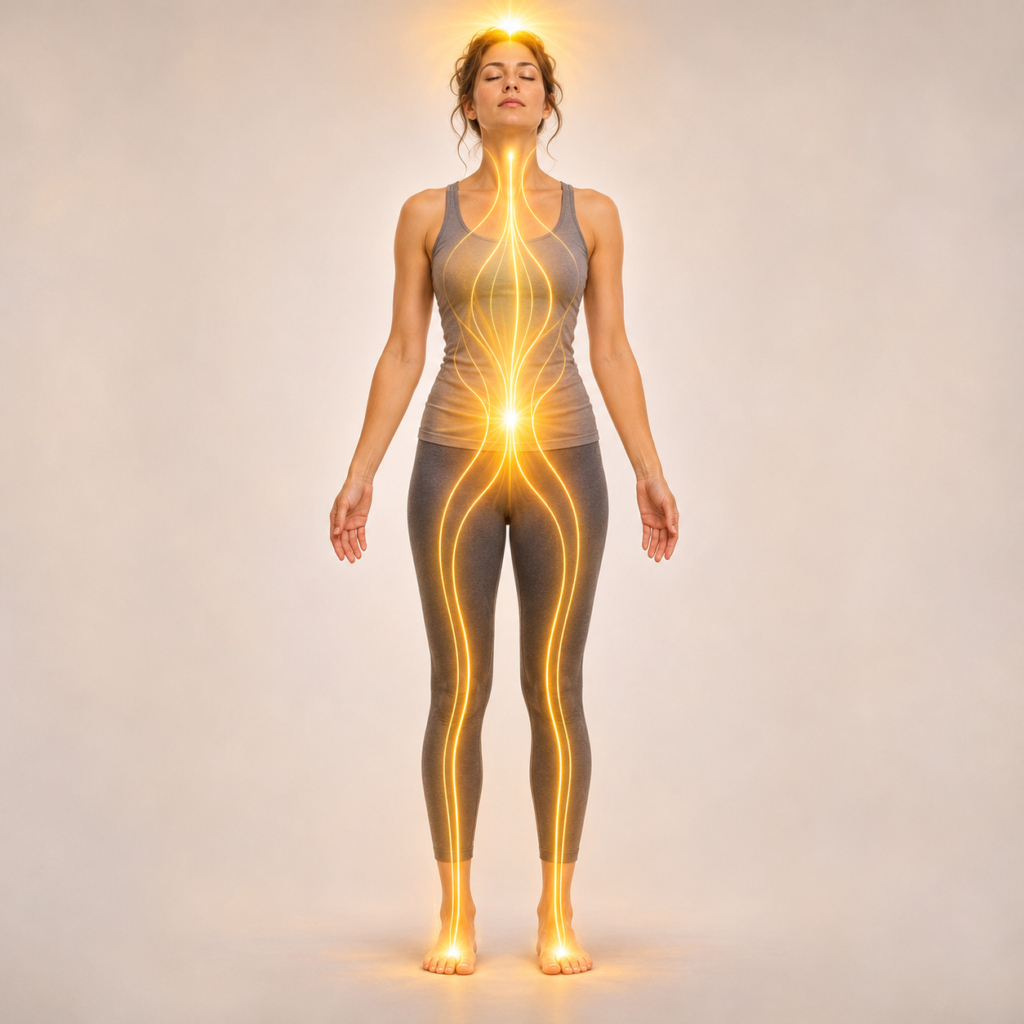
From a Traditional Chinese Medicine perspective, symptomatic low blood pressure means Qi and Blood are too weak to rise, leaving the head deprived of both. Points on the head and face raise Qi and revive the senses, while wrist points steady the Heart and support the vessels. Points on the abdomen and legs rebuild the Qi and Blood needed to stay upright, and points on the feet strengthen the underlying Kidney reserves.
The nine points work together to alleviate symptoms of low blood pressure:
- GV20 and GV26 lift Qi and ease lightheadedness.
- LU9 and PC6 support the vessels and steady the Heart.
- CV6, ST36, and SP6 build Qi and nourish Blood.
- KI3 and KI1 strengthen the Kidney and steady the legs.
How to Properly Use These Acupressure Points

For low blood pressure, acupressure works best as a daily routine to build energy over time, with a few quick points to use when you feel lightheaded.
- If you feel lightheaded, sit or lie down first. Then press GV26 and tap GV20 until the sensation passes.
- Each morning, apply pressure to ST36, SP6, KI3, and KI1 on both legs and feet before getting out of bed or while seated.
- During the afternoon energy dip, apply gentle pressure to LU9 and PC6 on both wrists, and hold CV6 while breathing slowly into the abdomen.
- Apply firm pressure to the legs and feet, moderate pressure to the wrists, gentle pressure to the crown of the head, and light contact with the abdomen. SP6 and CV6 are avoided during pregnancy.
Daily habits make a real difference with low blood pressure. As general guidance, rise slowly in stages: sit on the edge of the bed for a moment before standing, and stand still for a few seconds before walking. Drink fluids steadily through the day, especially in hot weather and after exercise. Eat smaller meals more often, since large meals can pull blood toward digestion and cause a dip afterward, and limit alcohol. Avoid standing still for long stretches, and flex the calves or shift weight from foot to foot when standing in line. Very hot showers and baths can lower blood pressure further, so keep the water warm instead. Ask a doctor before adding salt or using compression stockings, and keep a simple record of readings and symptoms, as the AHA recommends. Traditional Chinese Medicine adds eating warm, cooked meals at regular times, avoiding long stretches without food, and protecting sleep, since rest rebuilds Qi and Blood.
Learn more about how much water to drink each day.
When to Get Professional Help

Call 911 if someone faints and also experiences chest pain, trouble breathing, a fast or irregular heartbeat, confusion, or a severe headache. Call 911 as well if low blood pressure occurs with cold, sweaty skin and rapid breathing, signs of a serious allergic reaction, or heavy bleeding, as these may indicate shock. Get medical help right away for black or bloody stools, vomiting blood, or vomiting or diarrhea that makes it difficult to keep fluids down. See a doctor after any fainting, for frequent dizziness or falls, or if low blood pressure begins after starting a new medicine. Don’t stop or change any prescribed medicine without first talking to your doctor. Pregnant women who feel faint or very dizzy should contact their obstetric provider right away.
Acupressure is a gentle, supportive practice for low blood pressure. It complements, and does not replace, diagnosis and medical care.
For related health concerns, acupressure for dizziness, acupressure for POTS, and acupressure for high blood pressure are companion articles.
Above and Beyond Acupuncture offers acupuncture, cupping, and lifestyle coaching at the North Frank Lloyd Wright Boulevard location in Scottsdale.
Schedule an appointment online to start your healing journey.
The points above are only as effective as the technique used to apply them. Where to press, how firmly, and for how long all affect the result. For a full breakdown of how to perform acupressure properly at home, read Performing Acupressure in 3 Easy Steps.

About the Publisher
Paul Kerzner, L.Ac., is a licensed acupuncturist and board-certified herbalist, as well as the founder of Above and Beyond Acupuncture in Scottsdale. His own journey from chronic patient to practicing acupuncturist shapes his commitment to providing honest, clinically grounded information about acupuncture and Traditional Chinese Medicine. Learn more about Paul and his clinical approach on the About Us page.