
Key Takeaways
- Sea sickness can disrupt trips, causing nausea, dizziness, and disorientation, and standard medications often lead to side effects.
- Acupressure provides a drug-free solution to sea sickness, particularly the PC6 point, which effectively targets nausea and is supported by research.
- Seven key acupressure points help manage sea sickness: PC6, ST36, SP4, LI4, Yintang, GV20, and KI1, each addressing different symptoms.
- For prevention, use wristbands on PC6 before a trip, and apply pressure to the key points at the first sign of symptoms.
- Post-trip, GV20 and KI1 can help with lingering disorientation, while acupressure complements other sea sickness management techniques.
If you have ever dealt with sea sickness you already know how quickly it can ruin a trip. The nausea that begins slowly and builds. The cold sweat and pale complexion. The dizziness and disorientation as your inner ear fights with what your eyes are seeing. The overwhelming urge to lie down and shut everything out. Sea sickness can hit anyone regardless of maritime experience, and standard Western care with over-the-counter medications often produces significant drowsiness or side effects that ruin the trip in a different way.
Acupressure offers a natural alternative you can use anywhere without medications, side effects, or the drowsiness that anti-nausea drugs produce. This technique has some of the strongest research support of any acupressure application. PC6 in particular has been extensively studied for nausea including motion sickness, and pressure wristbands marketed for sea sickness specifically target this point.
For patients wanting the bigger picture on acupuncture for nausea, Can Acupuncture Help With Nausea? covers the Traditional Chinese Medicine treatment path. For general nausea beyond motion sickness please read: How to Stop Nausea With Acupressure.
Here are seven acupressure points that help:
What Acupressure Points to Press and Why
Each acupressure point addresses a different aspect of the sea sickness pattern. You can use them individually as symptoms begin or work through the full protocol as prevention before boarding the ship.
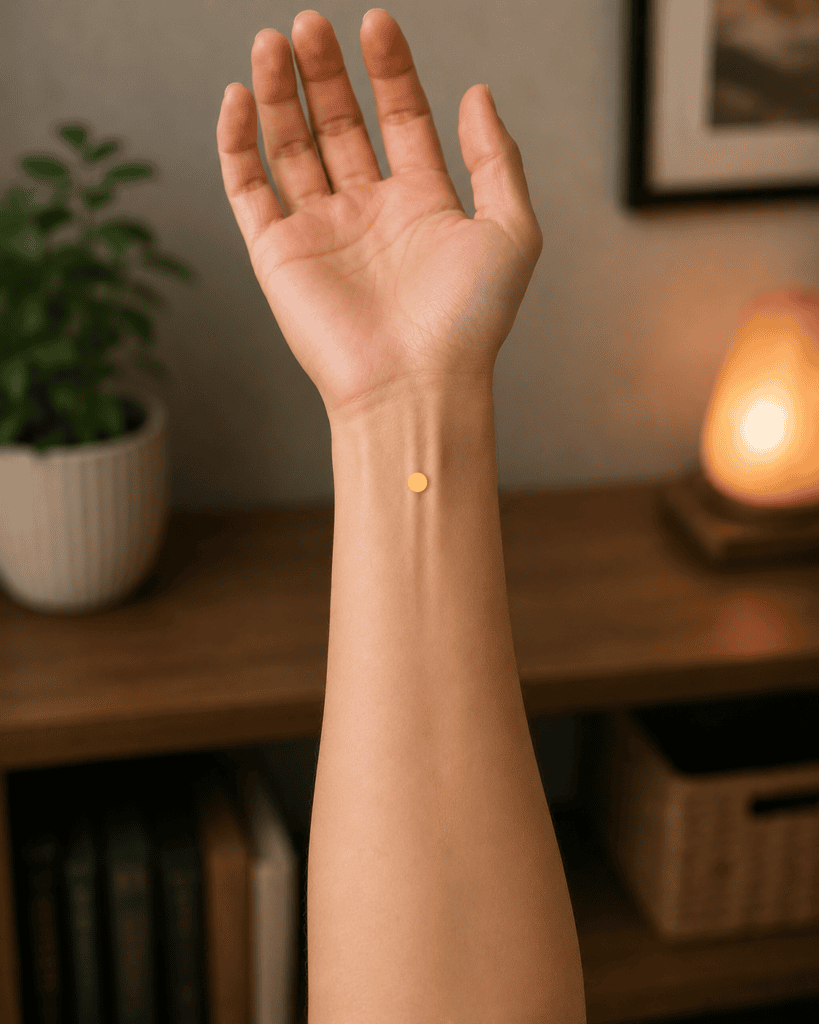
1. Press on PC6 on the inner forearm for the primary nausea point. PC6 sits about three finger-widths above the inner wrist crease, between the two tendons in the center of the forearm. Press firmly with your thumb for one to two minutes on each arm. PC6 is called “Neiguan” or “Inner Pass” in Chinese medicine and is the most researched acupressure point for nausea of all kinds.
PC6 is the point that pressure wristbands target. These wristbands work by maintaining continuous pressure on PC6 throughout your time at sea. For patients prone to sea sickness, wearing pressure bands on both wrists before boarding and throughout the trip provides ongoing prevention. PC6 can be pressed manually anytime symptoms begin to build.
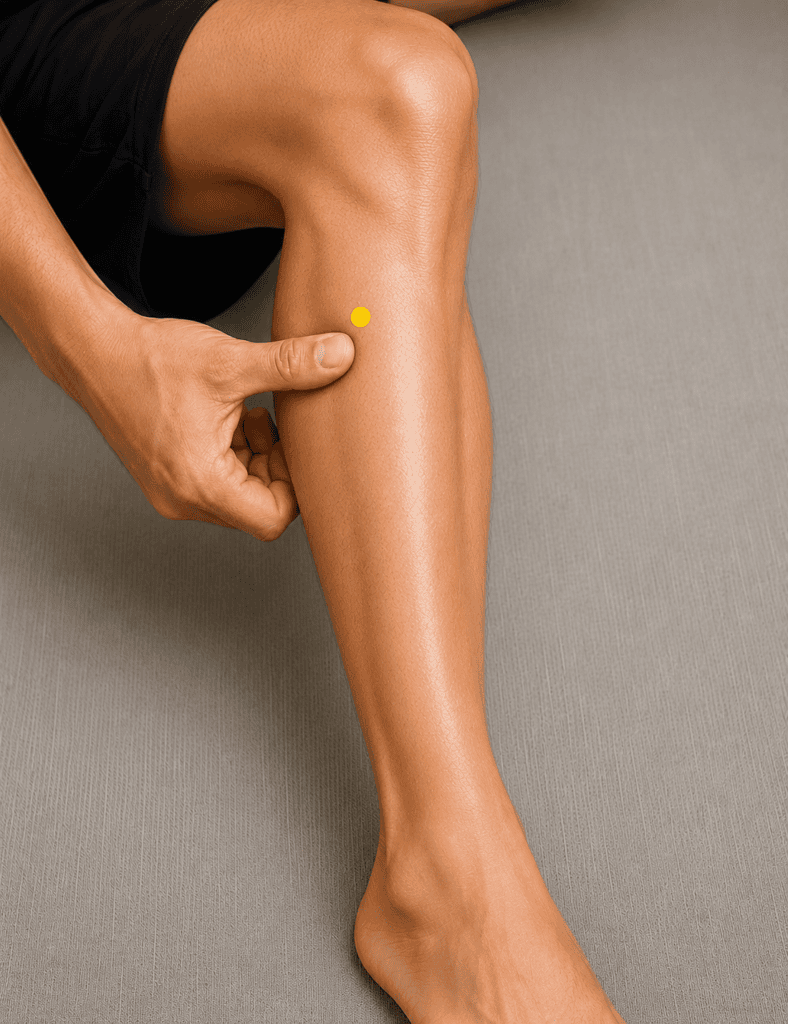
2. Press on ST36 below your knee for Stomach support. ST36 sits about four finger-widths below the kneecap, one finger-width to the outside of the shinbone in the muscular depression there. Press firmly with your thumb for one to two minutes on each leg. ST36 supports the Stomach function directly and addresses the digestive patterns that motion sickness disrupts.
ST36 works particularly well when combined with PC6. The two points together address the nausea from both the Pericardium meridian (PC6) and the Stomach meridian (ST36), providing more complete coverage than either point alone.
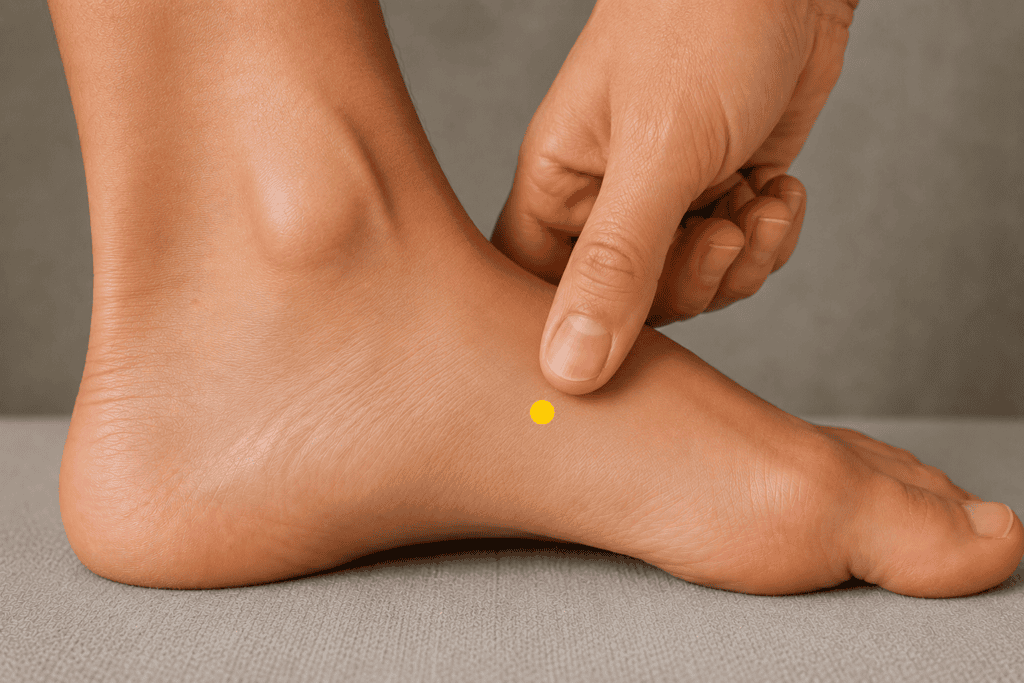
3. Press on SP4 on the inner arch of your foot for the digestive Confluence point. SP4 sits on the inner side of the foot, in the depression just below and in front of the base of the big toe joint, along the arch. Press firmly with your thumb for one to two minutes on each foot. SP4 is called “Gongsun” or “Grandfather Grandson” in Chinese medicine and is the Confluence point of the Chong meridian.
SP4 directly connects to PC6 through the Confluence point relationship. The two points work together as a paired combination for digestive and nausea patterns. This pairing is one of the classical combinations in Traditional Chinese Medicine and specifically applies to motion sickness patterns.
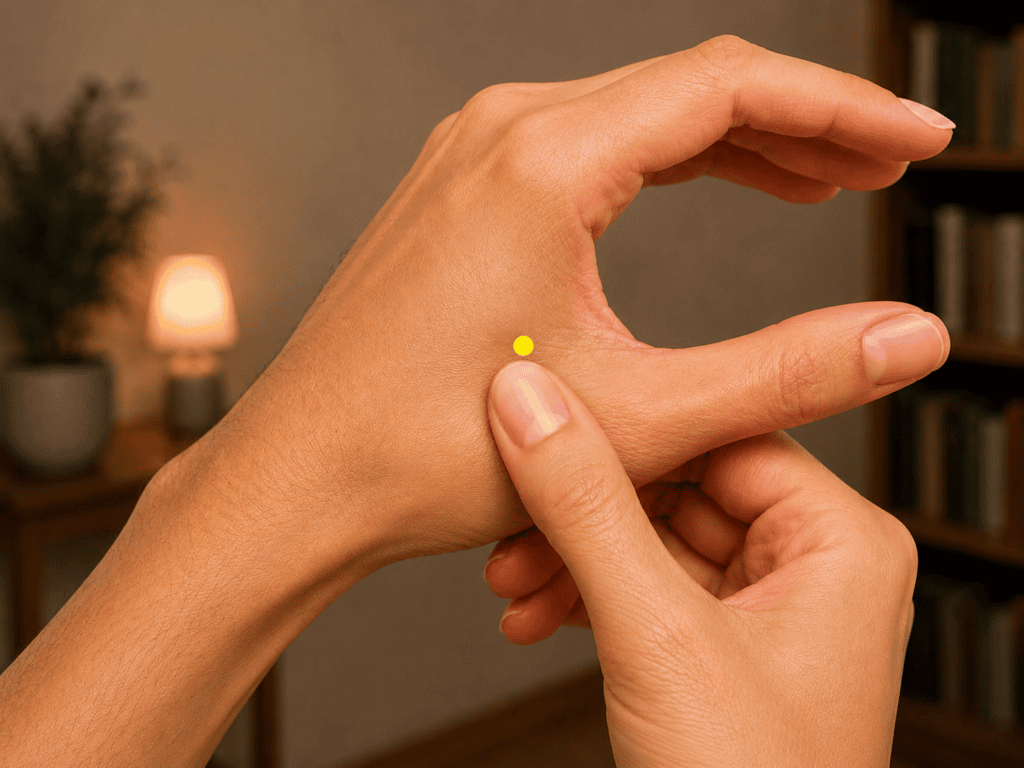
4. Press on LI4 in the webbing between your thumb and index finger for the command point. LI4 sits in the soft tissue webbing between the thumb and index finger, in the muscle that bulges when the thumb is pressed against the side of the index finger. Press firmly with the thumb of the opposite hand for one to two minutes on each hand. LI4 is the classical command point for the face and head.
The point provides general calming effects and addresses the headache patterns that often accompany sea sickness. LI4 is contraindicated during pregnancy.
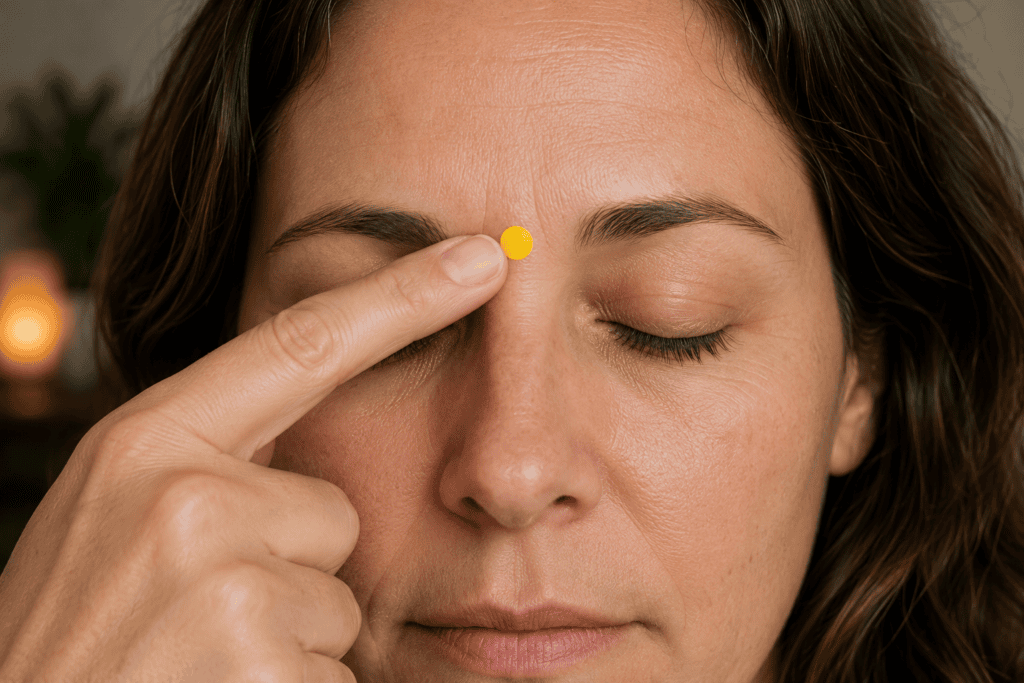
5. Press on Yintang between your eyebrows for calming the mind. Yintang sits in the small hollow directly between the eyebrows, above the bridge of the nose. Press gently with your fingertip for one to two minutes. Yintang activates the parasympathetic nervous system directly.
The point addresses the anxiety and mental unease that accompany sea sickness. Yintang works particularly well when combined with PC6 for the physical and mental components of the condition simultaneously.
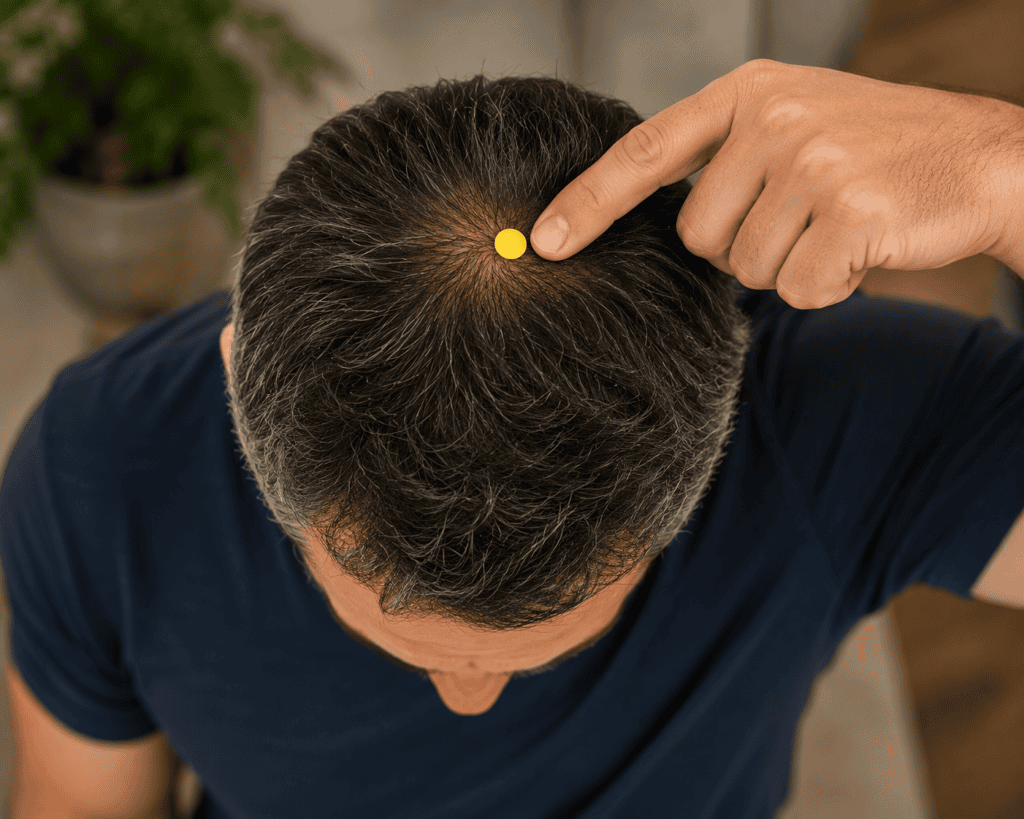
6. Press on GV20 at the crown of your head for grounding. GV20 sits at the crown of the head, in the small hollow at the top of the head roughly midway between the ears. Press gently with your fingertips for one to two minutes. GV20 grounds the nervous system and addresses the disorientation and mental fog that sea sickness produces.
The point works well for the specific dizziness and spinning sensations that maritime motion produces. GV20 pulls the nervous system back into balance when the vestibular system has been overwhelmed by the boat’s movement.
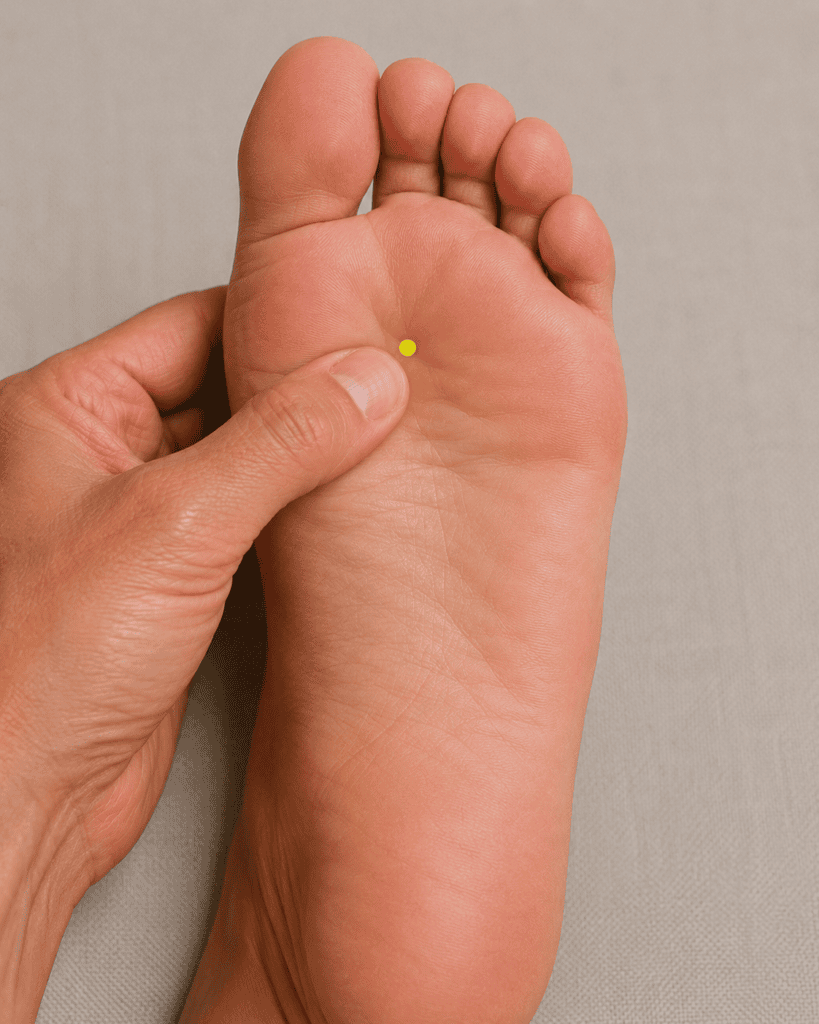
7. Press on KI1 on the sole of your foot for grounding the Spirit. KI1 sits on the sole of the foot in the depression that appears when you curl your toes downward, about one-third of the way from the base of the toes to the heel. Press firmly with your thumb for one to two minutes on each foot. KI1 is called “Yongquan” or “Bubbling Spring” and is the first point on the Kidney meridian.
The point directly grounds the nervous system and pulls energy downward. The disorientation and disconnection from the body that sea sickness produces respond directly to the grounding effect of KI1. Ending the acupressure protocol with KI1 provides a natural anchoring effect that reinforces all the calming and digestive work of the previous points.
Why These Acupressure Points Work
Sea sickness involves several overlapping patterns. The vestibular system in the inner ear becomes overwhelmed by the boat’s movement while the eyes provide conflicting information. The Stomach and digestive function get disrupted from the mixed sensory signals. The nervous system enters a stress response. The mental orientation to the environment gets disturbed.
Acupressure works on several of these patterns at once.
- The primary nausea point (PC6) is the most researched acupressure point for nausea of all kinds. This is the point pressure wristbands target.
- The Stomach support points (ST36, SP4) directly address the digestive function that motion sickness disrupts. SP4 combined with PC6 is a classical Chinese medicine combination for digestive patterns.
- The command point (LI4) provides general calming effects and addresses the headache patterns.
- The nervous system calming points (Yintang, GV20) address the anxiety and disorientation.
- The grounding point (KI1) pulls the nervous system back into balance when the vestibular system has been overwhelmed.
How to Use These Acupressure Points
For prevention before boarding, PC6 pressed for two to three minutes before the trip begins reduces the likelihood of symptoms developing. Pressure wristbands worn from before boarding through the entire trip provide ongoing prevention. Combining pressure wristbands with active pressing of the other points at the first sign of symptoms provides the strongest prevention.
- For acute symptoms once at sea, PC6 and ST36 pressed together produce the fastest response. Even a few minutes of intense pressure at the first sign of nausea can prevent the symptoms from building.
- For sustained symptoms during the trip, working through the full seven-point protocol every hour or two supports the ongoing patterns. Consistency matters. Continuing to press the points before symptoms fully develop is easier than trying to press them once nausea has peaked.
- For post-trip recovery when the disorientation continues after returning to land, GV20 and KI1 pressed together help ground the nervous system and reduce the “sea legs” feeling that persists after longer trips.
- For anxiety about future trips, Yintang and PC6 pressed together in the days before travel reduce the anticipatory anxiety that can worsen actual symptoms.
Firm sustained pressure works well for the wrist, forearm, hand, ankle, leg, and foot points. Gentle pressure works better for the head and face points.
Pairing acupressure with basic sea sickness management amplifies the results. Keep your eyes on the horizon whenever possible. Fresh air on deck rather than confined below decks. Ginger tea, ginger chews, or ginger capsules for additional nausea support. Adequate hydration. Simple foods rather than heavy meals. Rest when possible. Avoid alcohol and greasy foods before and during the trip.
When to Get Professional Help
Acupressure supports sea sickness management for most patients. It does not treat severe motion sickness that persists despite multiple interventions.
Seek medical evaluation for severe persistent motion sickness that is disrupting your ability to function normally, vomiting that continues after leaving the boat and returning to stable ground, symptoms accompanied by fever or severe headache, and any concerning symptoms that go beyond typical sea sickness patterns.
For patients dealing with chronic motion sensitivity or vestibular disorders beyond typical sea sickness, Can Acupuncture Treat Vertigo? covers the professional treatment approach for the underlying vestibular patterns.
Many patients dealing with chronic anxiety about travel also experience anxiety, stress, and depression that overlap with the anticipatory patterns of travel anxiety.
Above and Beyond Acupuncture offers acupuncture, cupping, and lifestyle coaching at the North Frank Lloyd Wright Boulevard location in Scottsdale.
Schedule an appointment online or call us today to start your healing journey.
The points above are only as effective as the technique used to apply them. Where to press, how firmly, and for how long all affect the result. For a full breakdown of how to perform acupressure properly at home, read Performing Acupressure in 3 Easy Steps.

About the Publisher
Paul Kerzner, L.Ac., is a licensed acupuncturist and board-certified herbalist, as well as the founder of Above and Beyond Acupuncture in Scottsdale. His own journey from chronic patient to practicing acupuncturist shapes his commitment to providing honest, clinically grounded information about acupuncture and Traditional Chinese Medicine. Learn more about Paul and his clinical approach on the About Us page.