
Key Takeaways
- Hand neuropathy can cause numbness, tingling, and weak grip, often due to diabetes or vitamin deficiencies.
- Acupressure for neuropathy in hands involves pressing specific points to improve circulation and nourish nerve health.
- Key acupressure points include ST36 for building Qi, LI11 for arm circulation, and LI4 for hand energy flow.
- Daily practice of these acupressure techniques can lead to significant symptom relief over weeks.
- Seek professional help for accurate diagnosis and treatment of underlying neuropathy causes.

Do your hands frequently feel numb or tingling, as if they are asleep?
Hand neuropathy can lead to symptoms like tingling, pins and needles, numbness that hinders buttoning or grasping, along with burning, electric sensations, cold sensitivity, and a weak grip causing dropped objects. These symptoms usually start at the fingertips and progress upward, making daily tasks more difficult. Causes include diabetes, chemotherapy, vitamin deficiencies, and autoimmune diseases. While nerve pain medications may relieve symptoms, they generally do not improve nerve function directly. Regular acupressure can promote circulation, support nerve health, and alleviate hand symptoms. Although it doesn’t replace treatment of the root causes, it can be helpful when standard therapies fall short.
In Traditional Chinese Medicine, hand neuropathy is linked to several patterns affecting the hands. When Qi and Blood are insufficient to nourish the hands, the nerves become deprived, leading to numbness and weakness. Blood stagnation in the fingers and hands can cause burning sensations and unusual feelings. Wind within the channels can produce unpredictable symptoms like tingling and pins and needles. Over time, the body’s deep reserves may become depleted. Six channels connect the arms to the hands, with three on the inner arm and three on the outer arm. Acupuncture points along the forearm, elbow, and wrist help promote the flow of Qi and Blood to the fingers, while points on the legs support strengthening Qi and Blood needed by the hands.
Here are nine acupressure points focusing on hands and arms that can help.
What Acupressure Points to Press and Why
1. Press on ST36 below the knee to build the Qi and Blood that the hands need. ST36 sits four finger-widths below the lower edge of the kneecap and one finger-width to the outside of the shinbone, on the muscle that rises when you flex your foot. Press firmly with your thumb for one to two minutes on each leg. ST36 is called “Zusanli,” the “Leg Three Miles,” and it is the master point for building Qi and Blood.
Starting with a leg point might seem unusual for hand problems, but ST36 boosts Qi and Blood at their source. This nourishment is vital for numb or weak hands. ST36 addresses the fundamental deficiency linked to chronic neuropathy and supports healing. Since sensation in the leg is usually normal, it can be pressed firmly. Use this point daily to build a solid foundation.
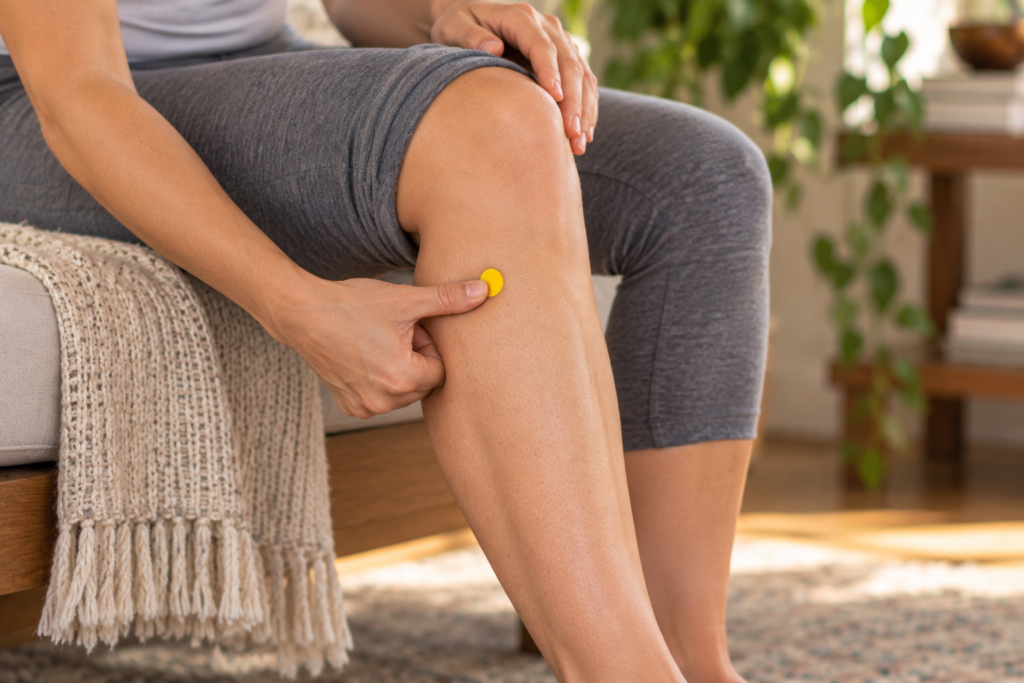
2. Press on SP6 above the inner ankle to nourish and move the Blood. SP6 sits four finger-widths up from the tip of the inner ankle bone, just behind the back edge of the shinbone. Press firmly for one to two minutes on each leg. SP6 is called “Sanyinjiao,” the “Three Yin Intersection,” where the Spleen, Liver, and Kidney channels meet. Avoid SP6 during pregnancy.
SP6 enhances blood nourishment and circulation. It supports the Spleen, which produces Blood; the Liver, which stores and transports it; and the Kidney, which holds deep reserves that prolonged neuropathy can deplete. When Blood flows freely and is well-nourished, nerve function in the hands improves. Therefore, SP6 is crucial for addressing numbness and burning sensations.
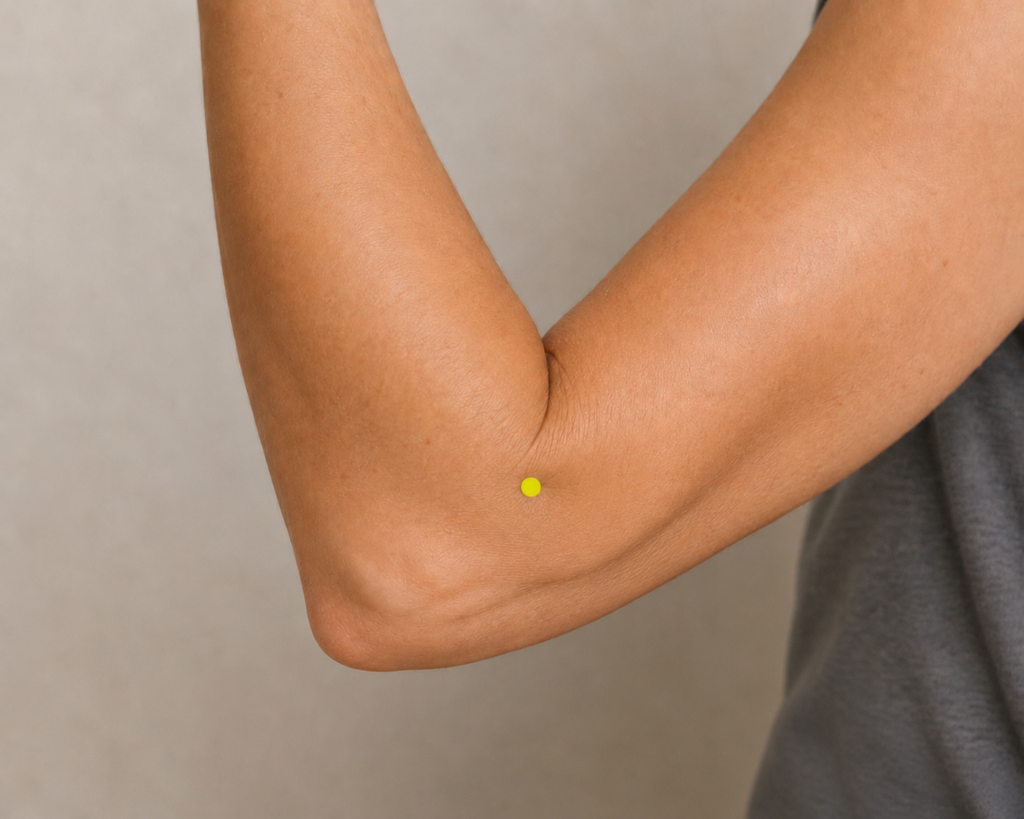
3. Press on LI11 at the elbow to open the path down the arm. LI11 sits at the outer end of the elbow crease, in the hollow that forms when you bend your elbow. Press firmly with your thumb for one to two minutes on each arm. LI11 is called “Quchi,” the “Pool at the Crook,” and it is one of the most important points for the arm.
The elbow serves as a gateway for circulation to the hand, and LI11 is the primary point for opening this pathway. It promotes the flow of Qi and Blood down the arm, clears heat, and is commonly used for numbness, weakness, and pain in the arm and hand. Its heat-clearing property is particularly beneficial for burning neuropathy. Since elbow sensation is typically normal, you can press this point firmly.
4. Press on SJ5 on the back of the forearm to move circulation to the fingers. SJ5 sits on the back of the forearm, about three finger-widths above the wrist crease, in the hollow between the two forearm bones. Press firmly with your thumb for one to two minutes on each arm. SJ5 is called “Waiguan,” the “Outer Pass.”
SJ5 helps open the outer arm channels, promoting Qi and Blood flow into the hand and fingers. It is commonly used to treat numbness, tingling, hand weakness, and finger stiffness. SJ5 also helps dispel wind that causes pins and needles. Situated directly opposite PC6 on the inner forearm, these points are often pressed simultaneously, with each thumb on one side.
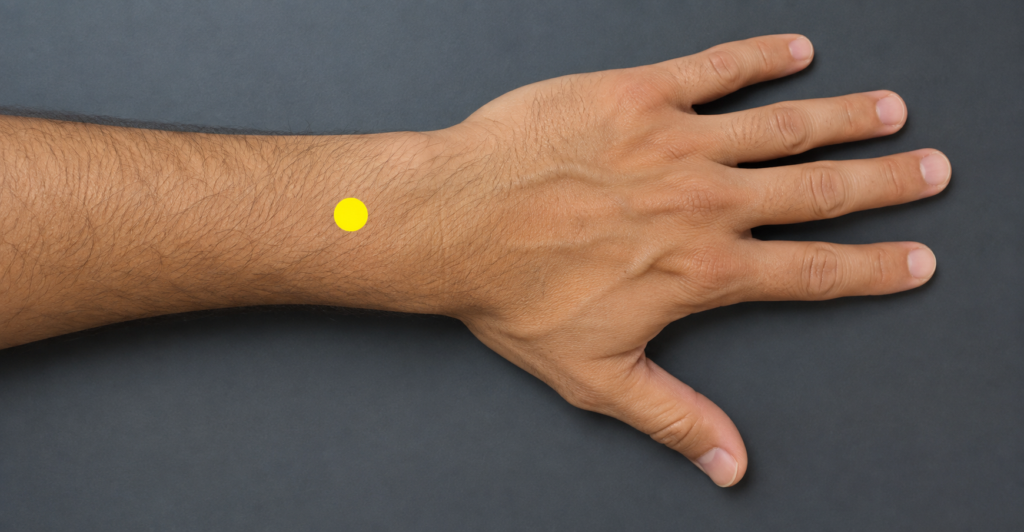
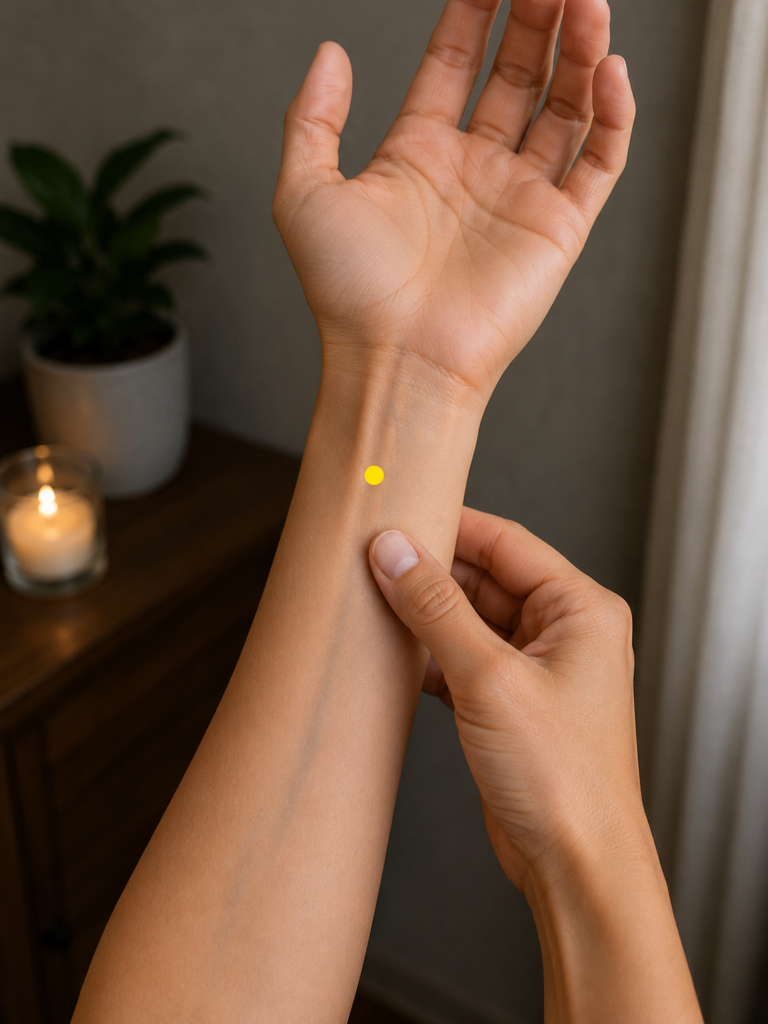
5. Press on PC6 on the inner forearm for the palm and fingers. PC6 sits three finger-widths above the inner wrist crease, in the center of the forearm between the two tendons. Press firmly with your thumb for one to two minutes on each arm. PC6 is called “Neiguan,” the “Inner Pass.”
PC6 is located at the center of the inner forearm and promotes the flow of Qi and Blood through the arm to the palm, thumb, and first fingers. It also helps calm the mind and ease anxiety or sleep problems often linked with nerve pain. To target both areas, apply pressure to PC6 and SJ5 at the same time by squeezing the forearm with your thumb and fingers.
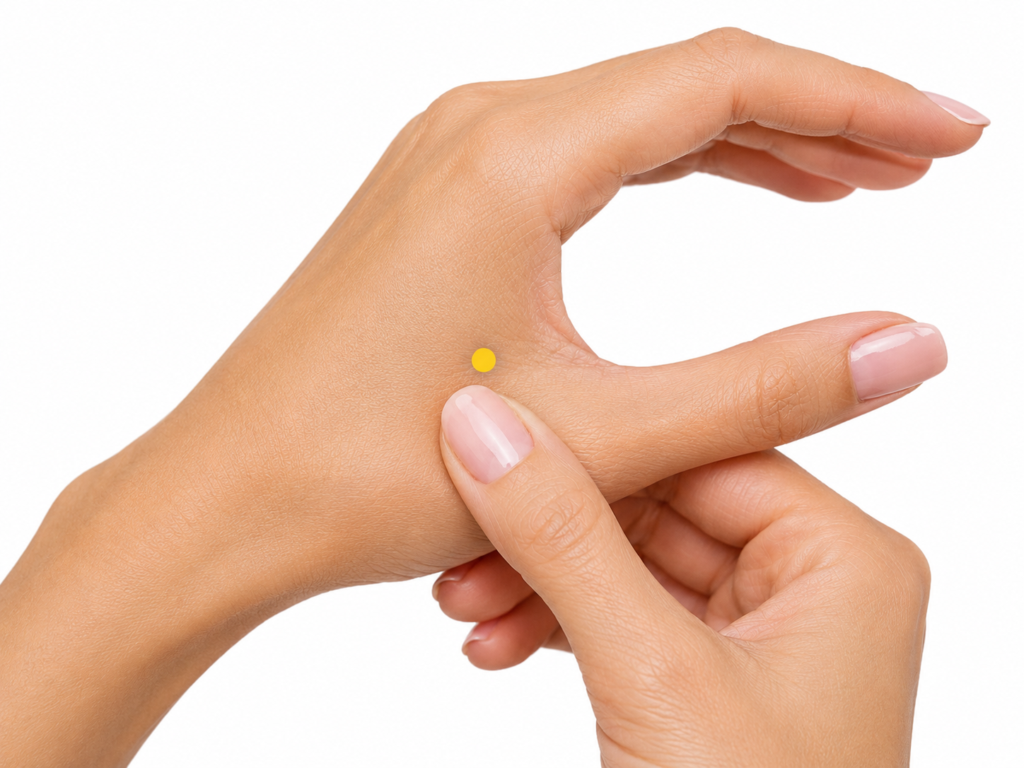
6. Press on LI4 in the hand to move the Qi through the hand. LI4 sits in the webbing between the thumb and index finger, at the highest point of the muscle when you bring the thumb and finger together. Press firmly with the thumb of your other hand for one to two minutes on each hand, adjusting pressure if sensation is reduced. LI4 is called “Hegu,” and it is one of the most powerful points for moving Qi. LI4 is contraindicated in pregnancy.
LI4 is located in the hand and helps move Qi through the area, relieving numbness, stiffness, and pain in the hand and fingers. It is also an important point for general pain relief. Since this point is on the affected region, use gentle pressure if you have reduced sensation in your hand.
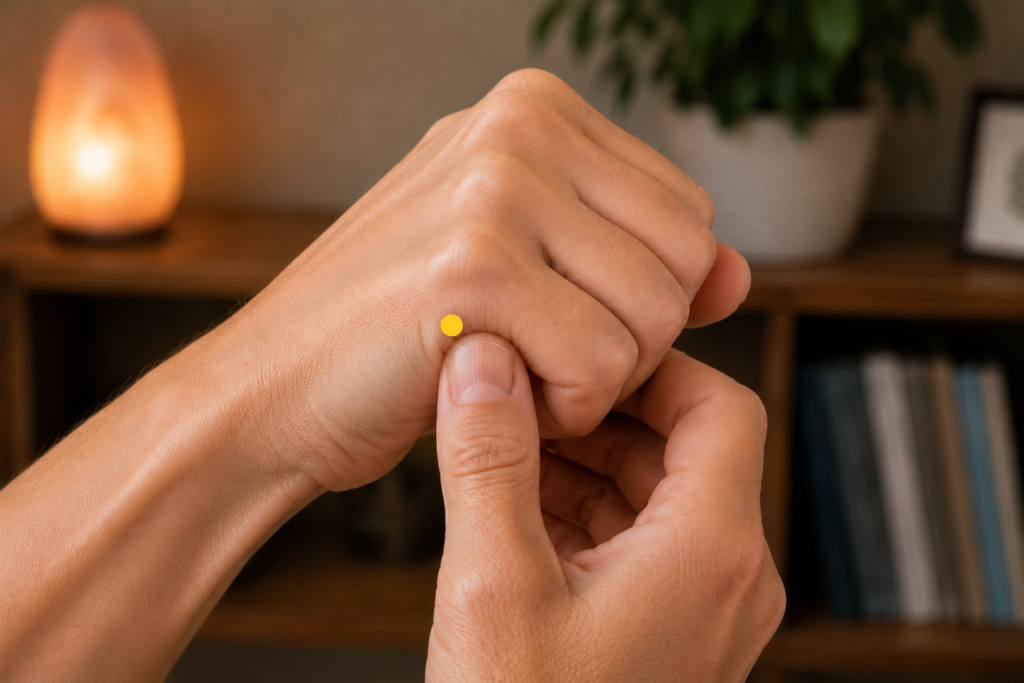
7. Press on SI3 on the side of the hand for the little-finger side. SI3 sits on the outer edge of the hand, on the little-finger side, in the crease just below the little-finger knuckle when you make a loose fist. Press firmly with your thumb for one to two minutes on each hand. SI3 is called “Houxi,” the “Back Stream.”
If numbness and tingling affect your ring and little fingers or the outer edge of your hand, SI3 directly targets that area by moving Qi and Blood through the outer hand and fingers. It also opens the channel running up the spine and neck, which is important because neck issues can lead to hand symptoms. SI3 works alongside LI4 by covering the opposite side of the hand.
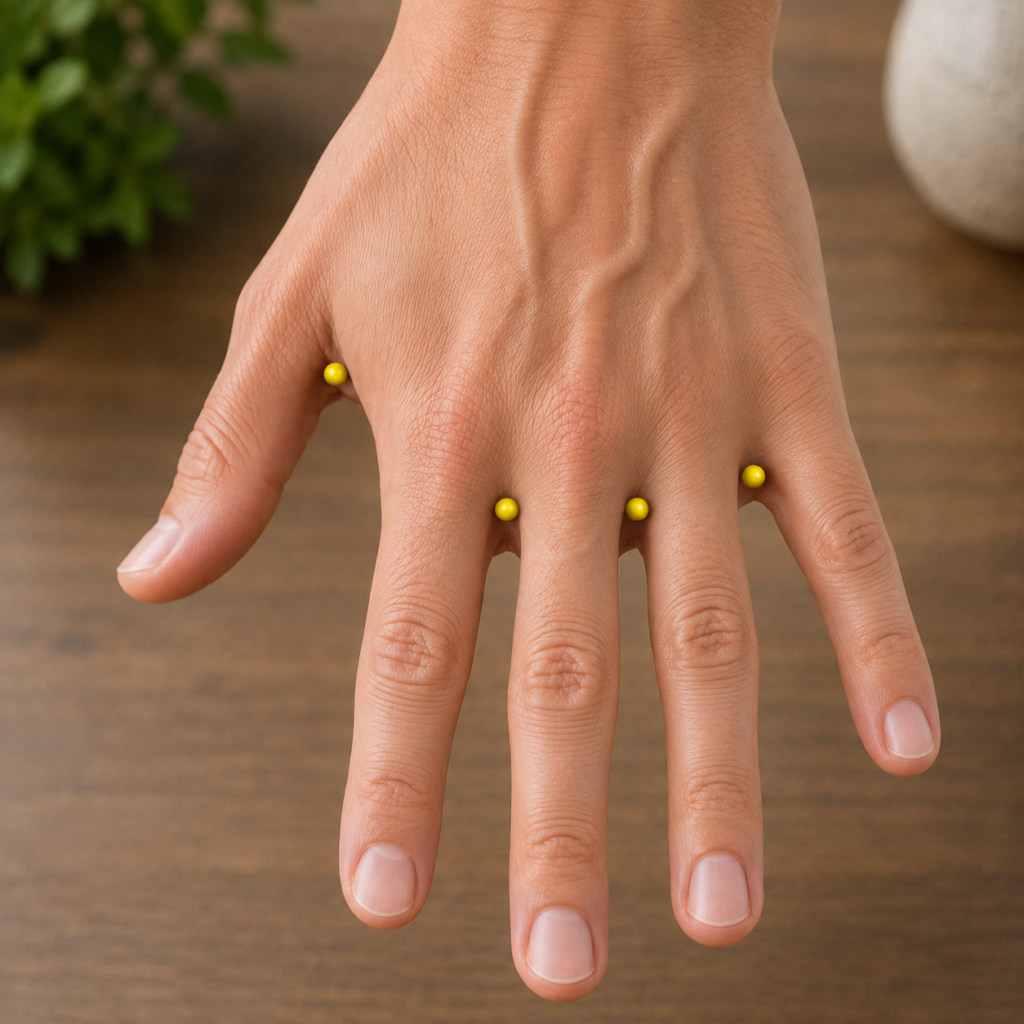
8. Press on Baxie between the knuckles, the classic points for hand neuropathy. Baxie are four points on the back of each hand, in the webbing between each pair of fingers, just behind where the fingers meet the hand. Press each one with your thumb and index finger for thirty seconds to a minute, working across the hand and paying attention to your pressure. Baxie translates to “Eight Evils,” and it is the classical point group for the fingers.
Baxie points are mainly used to address numbness, tingling, burning sensations, and stiffness in the fingers. They are the hand equivalent of the Ba Feng points between the toes, which target foot neuropathy. Situated between the fingers, where these symptoms often occur, they help relieve hand issues by improving blood circulation and dispelling wind that causes pins and needles. If sensation is reduced, apply gentle pressure, and using warm hand soaks alongside may improve results.
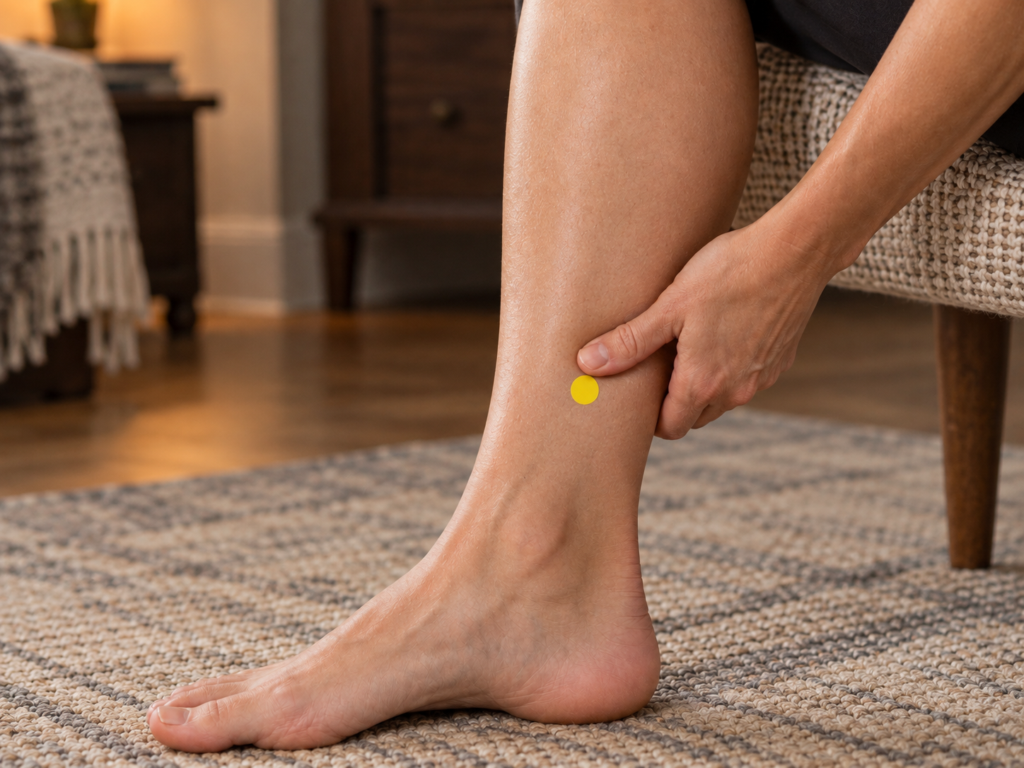
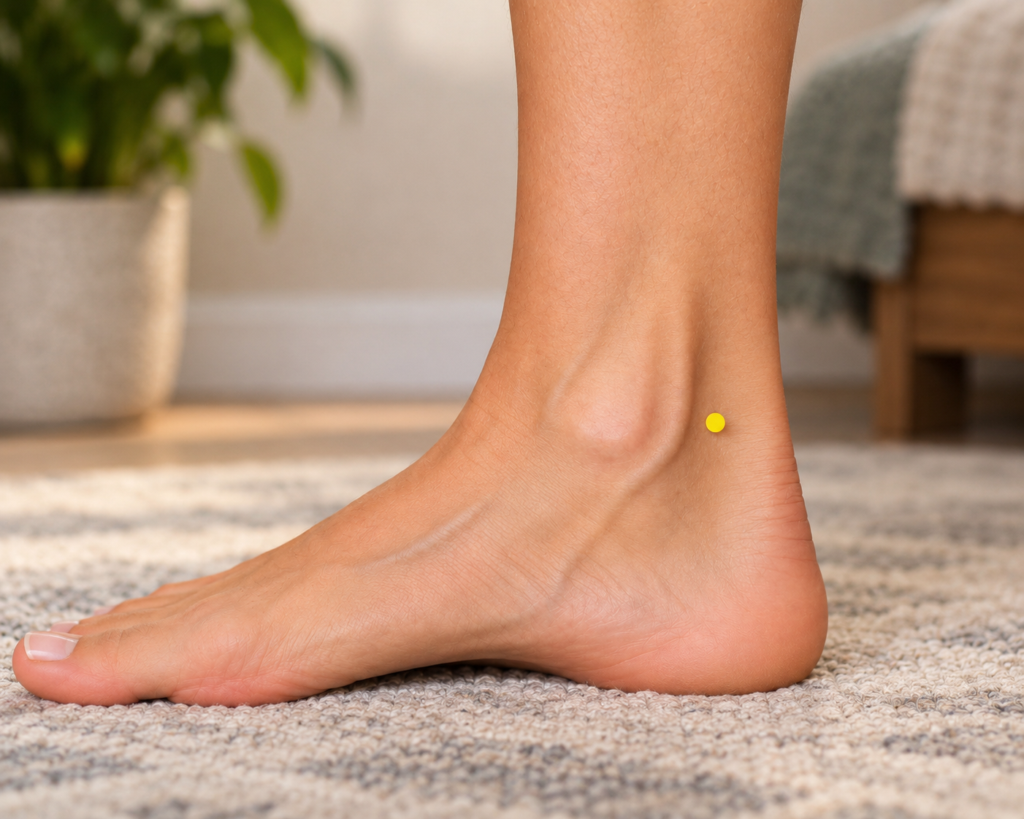
9. Press on KI3 above the inner ankle to rebuild the deep reserves. KI3 sits in the hollow between the inner ankle bone and the Achilles tendon, level with the tip of the ankle bone. Press firmly with your thumb for one to two minutes on each ankle. KI3 is called “Taixi,” the source point of the Kidney.
Chronic neuropathy can deplete the body’s vital resources, and KI3, the key point for the Kidney, helps restore this foundation. It is especially useful for longstanding neuropathy, age-related issues, or recovery after chemotherapy. When combined with ST36 and SP6, KI3 helps create a nourishing base that consistently promotes nerve health.
Why These Acupressure Points Work
In Traditional Chinese Medicine, hand neuropathy occurs when Qi and Blood fail to reach the hands, leading to Blood stagnation in the fingers. Wind causes tingling and pins and needles, and long-term cases can deplete the body’s reserves. The nine points target all of these issues.
- The constitutional points (ST36, SP6, KI3) strengthen the Qi and Blood, restoring the deep reserves that the hands rely on.
- The arm points (LI11, SJ5, PC6) facilitate opening the elbow and forearm, allowing circulation to flow down to the hands from both the inner and outer sides.
- The hand points (LI4, SI3, Baxie) facilitate the flow of Qi and Blood through the hand and fingers, with Baxie serving as the traditional group for the fingers.
How to Properly Use These Acupressure Points
Begin with points on the body and progress toward the hands. Practice this routine daily, as neuropathy typically responds best to consistent effort over several weeks.
- Start with ST36, SP6, and KI3 on the legs, then work down each arm from LI11 at the elbow to SJ5 and PC6 on the forearm, and finish with LI4, SI3, and Baxie in the hand.
- For numbness and weakness, emphasize ST36, SP6, LI11, and Baxie. For burning pain, emphasize LI11, SJ5, and Baxie. For tingling and pins and needles, emphasize SJ5, LI4, and Baxie.
- If your hand sensation is reduced, use lighter pressure on the hand points and watch what you are doing, since you may not feel how hard you are pressing. Press the arm and leg points firmly.
- Soak your hands in warm water for a few minutes before working the hand points, and test the water with your elbow or a thermometer first, since numb hands can’t safely judge temperature.
- Gently massage each finger from the base to the tip after the points, then slowly open and close your hands to keep them mobile.
- Hold each point for one to two minutes, and give it two to four weeks of consistent daily practice to gauge the benefit.
Acupressure works best when paired with proper neuropathy care. Gentle, consistent movements promote blood flow in your hands, and simple exercises like squeezing a soft ball or spreading your fingers help keep your hand strength and flexibility. Keep your hands warm in cold weather, and if your neuropathy developed after chemotherapy and is triggered by cold, wear gloves when touching cold items and avoid cold drinks. For diabetic neuropathy, managing blood sugar is essential. Talk to your doctor about checking your vitamin B12 levels, as a deficiency can cause nerve symptoms but can be treated. Protect your numb hands from injury by testing water temperature, using oven mitts and gloves, and checking your hands regularly for cuts or burns that might go unnoticed.
When to Get Professional Help
Getting an accurate diagnosis for neuropathy and addressing its underlying cause is crucial, so if you haven’t been checked, consult a doctor. Tingling and numbness in the hands may also result from compressed nerves at the wrist, elbow, or neck, which require different treatments. Seek emergency help immediately if you experience sudden numbness or weakness in one hand or arm, especially if accompanied by facial drooping, speech difficulties, or confusion, as these may indicate a stroke. Contact a doctor quickly if your weakness worsens, symptoms spread rapidly, hand function declines, or a wound on a numb hand becomes red, swollen, or refuses to heal.
While acupressure can be an effective daily method to ease hand neuropathy symptoms, it should supplement medical treatment for the underlying issue.
Above and Beyond Acupuncture offers acupuncture, cupping, and lifestyle coaching at the North Frank Lloyd Wright Boulevard location in Scottsdale.
Schedule an appointment online to start your healing journey.
The points above are only as effective as the technique used to apply them. Where to press, how firmly, and for how long all affect the result. For a full breakdown of how to perform acupressure properly at home, read Performing Acupressure in 3 Easy Steps.
For a complete overview, including the feet, acupressure for neuropathy covers both; acupressure for neuropathy in the feet is the companion to this piece, and can acupuncture treat neuropathy covers the clinical side.

About the Publisher
Paul Kerzner, L.Ac., is a licensed acupuncturist and board-certified herbalist, as well as the founder of Above and Beyond Acupuncture in Scottsdale. His own journey from chronic patient to practicing acupuncturist shapes his commitment to providing honest, clinically grounded information about acupuncture and Traditional Chinese Medicine. Learn more about Paul and his clinical approach on the About Us page.