Key Takeaways
- Shame can make you feel unworthy and lead to avoidance of situations or people.
- Unlike guilt, which focuses on actions, shame relates to one’s identity and can stem from various life experiences.
- Nine acupressure points address shame by lifting the spirit, opening the chest, calming the heart, and strengthening willpower.
- A daily acupressure practice can help alleviate feelings of shame, while positive self-talk and sharing one’s feelings are also essential.
- If shame persists and affects your quality of life, seek professional help. Acupressure may complement proper treatment, but it should not replace it.

Have you ever felt your face get hot and wished you could just vanish? Sometimes, a single mistake can make you feel like you are not good enough, not lovable, or that something is wrong with you. Maybe you keep replaying embarrassing moments for years, avoid situations where others might notice or judge you, or even hide parts of yourself from those closest to you. This is what shame feels like.
People often confuse shame and guilt, but they’re different. Guilt says, “I did something bad.” Shame says, “I am bad.” Guilt focuses on what you did and can help you make things right. Shame focuses on who you are and, rather than helping you improve things, makes you want to hide, withdraw, and shrink.
Shame often begins early in life, perhaps through criticism, comparisons with others, rejection, or feeling that some part of you wasn’t okay. It can also stem from trauma, body-image struggles, financial or work problems, illness, or a painful experience that never fully healed. You may feel shame in your body, like a flushed face, lowered gaze, slumped shoulders, a sinking feeling in your stomach, or tightness in your chest.
In Traditional Chinese Medicine, the Heart is said to house the Shen, or spirit, which shines through your eyes and gives you warmth and presence. Shame dims that light, while heat from the Heart may show up as blushing or a burning face. The Kidney is associated with the Zhi, or willpower, and with fear and the urge to withdraw when you feel threatened. Shame can weaken your will and make you want to hide. The Gallbladder is linked to courage; when it is weak, standing up for yourself can feel impossible.
The nine points below can lift your spirits, open your chest, calm your heart, and help you find the will and courage to stand tall again.
What Acupressure Points to Press and Why
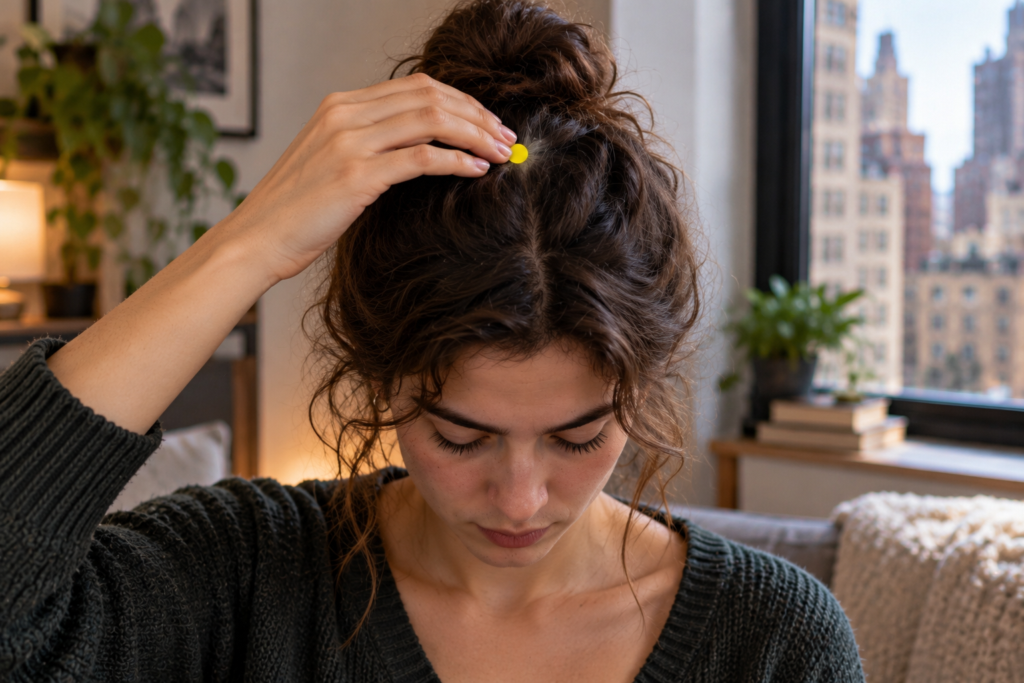
1. Press on GV20 at the top of the head to lift the spirit. GV20 sits on the top of the head, at the midpoint of an imaginary line drawn from the top of one ear to the top of the other. Press gently but steadily with your fingertips for one to two minutes while lengthening the back of the neck. GV20 is called “Baihui,” the “Hundred Meetings.”
GV20 is where many of the body’s channels converge and is the body’s highest point. It helps raise the Qi and spirit, countering shame’s heavy, sinking sensation and encouraging the head to lift rather than hang. Pressing this point while sitting or standing upright can help the body remember an upright posture.
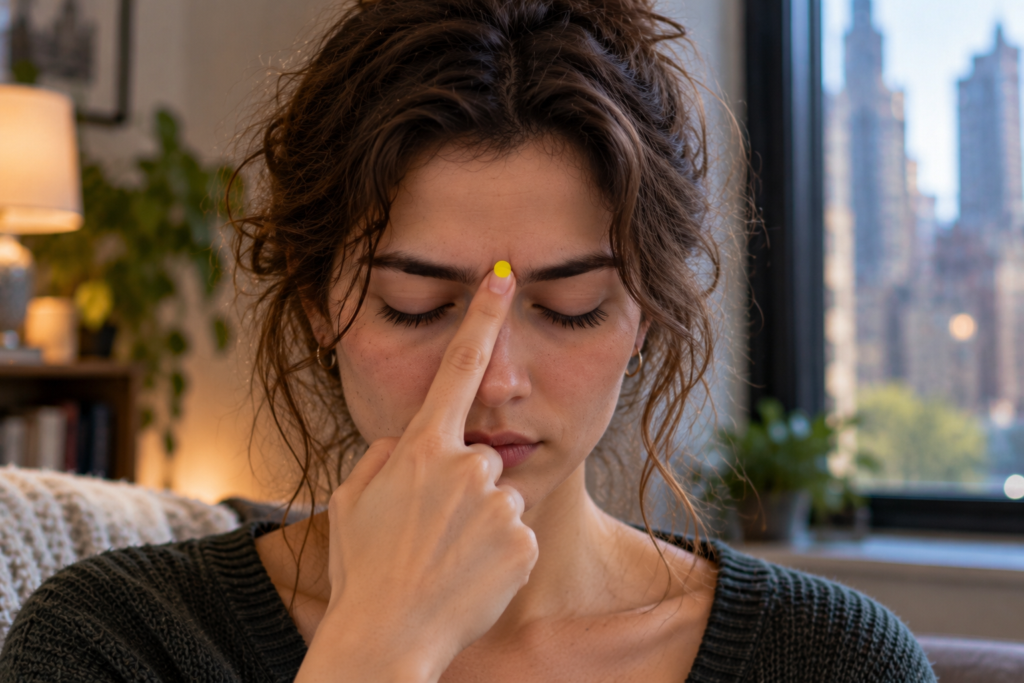
2. Press on Yintang between the eyebrows to quiet the inner critic. Yintang sits in the small hollow directly between the eyebrows. Press gently with your middle fingertip, or make slow circles for one to two minutes while closing your eyes. Yintang is called the “Hall of Impression.”
Yintang calms the mind and quiets the sharp, repetitive self-talk that sustains feelings of shame. It eases tension in the forehead and behind the eyes, helping the mind step back from its own judgments.
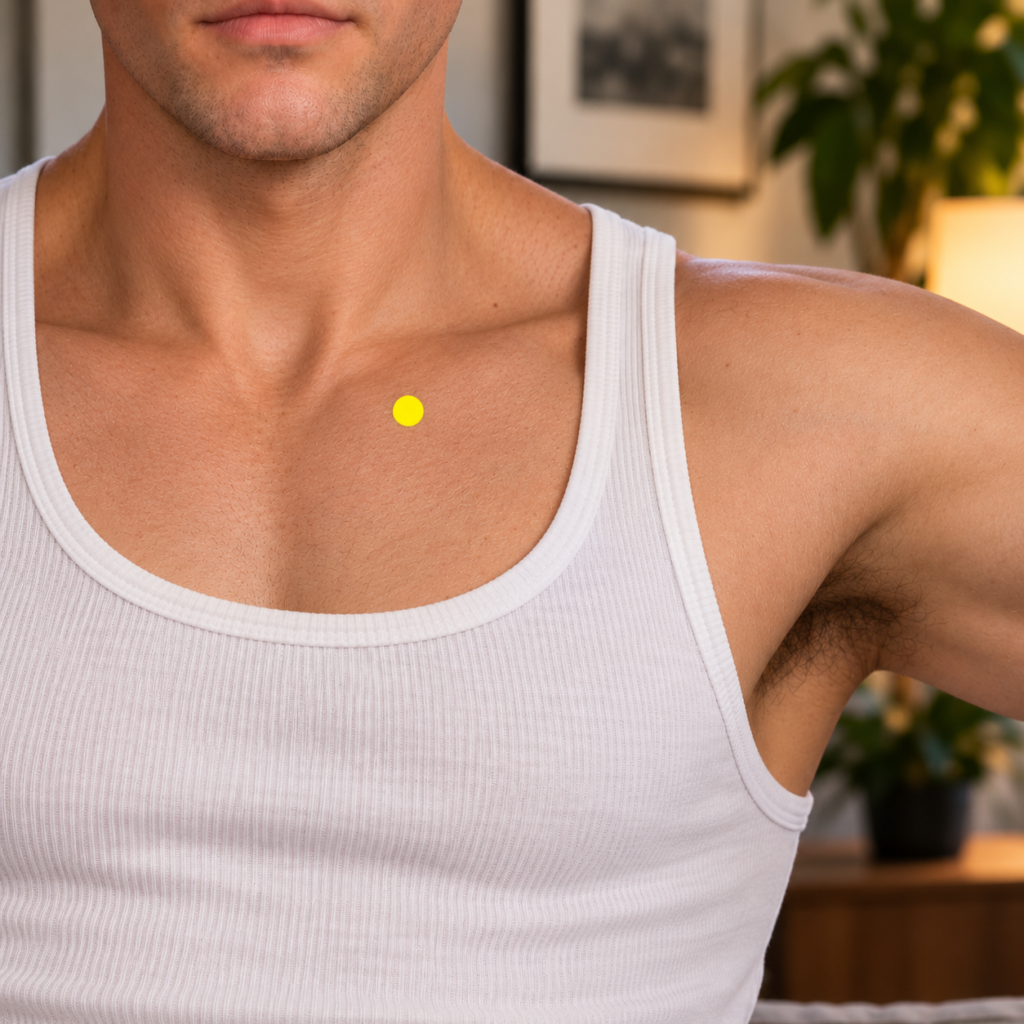
3. Press on KI27 below the collarbone to open the chest. KI27 sits in the small hollow just below the collarbone, about three finger-widths to each side of the center of the breastbone. Press both points at once with your fingertips, or rub them in small circles, for one to two minutes while breathing slowly. KI27 is called “Shufu,” the “Transport Mansion.”
KI27 is the Kidney channel’s final point, where it reaches the upper chest. It opens a chest that has folded inward, eases breathing, and connects the Kidney’s strength with the Heart’s warmth. People who press on it often notice their shoulders softening and settling back.
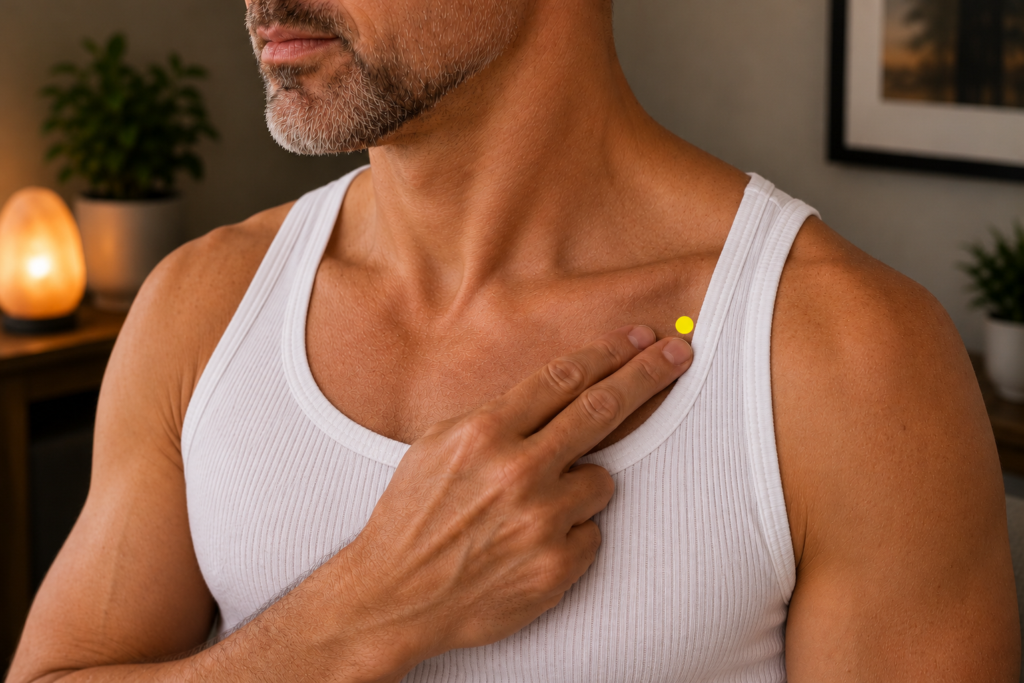
4. Press on LU1 on the front of the shoulder to expand the chest. LU1 sits on the front of the chest, about one finger-width below the hollow that forms under the outer end of the collarbone. Press firmly with your fingertips for one to two minutes on each side, or cross your arms and press both points at once. LU1 is called “Zhongfu,” the “Central Treasury.”
LU1 is the Lung channel’s first point and has traditionally been used to treat a feeling of tightness or closure in the chest. When shame causes the shoulders to round and posture to collapse, LU1 helps open the chest, allowing the breath to fill the lungs again and restoring a sense of space and dignity to the body.
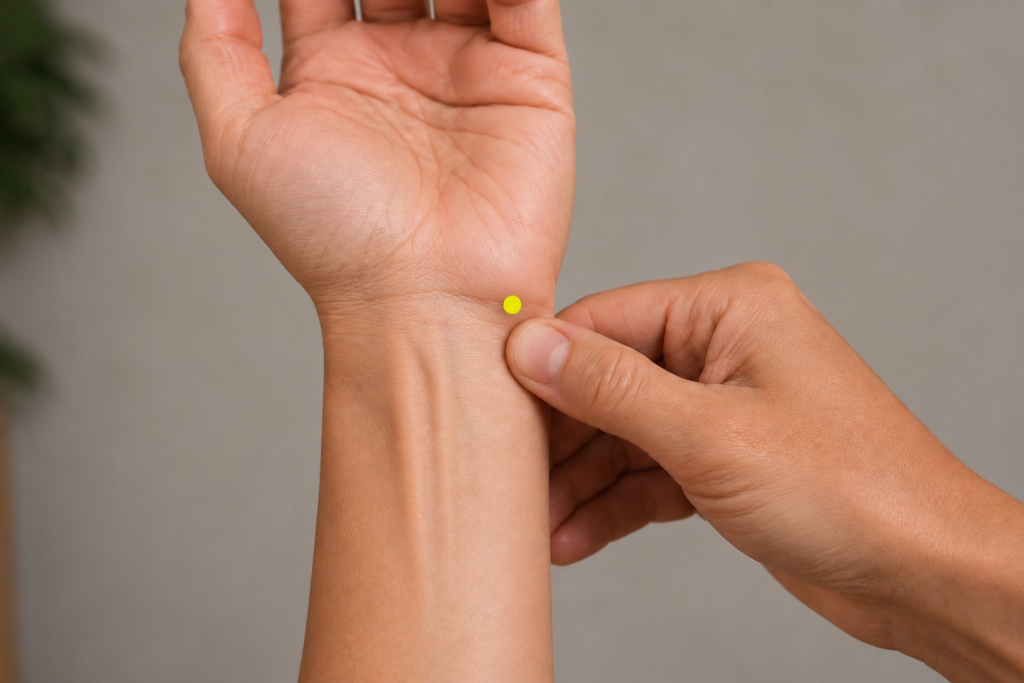
5. Press on HT7 on the wrist to settle the spirit. HT7 sits on the inner wrist crease, on the pinky side, in the small hollow just inside the tendon. Press gently with the thumb of your other hand for one to two minutes on each wrist. HT7 is called “Shenmen,” the “Spirit Gate.”
HT7 is the Heart’s source point and one of the most important points for calming the Shen. It eases the anxious, unsettled feeling caused by shame, steadies a racing heart, and helps restore the warm, steady presence that shame diminishes.
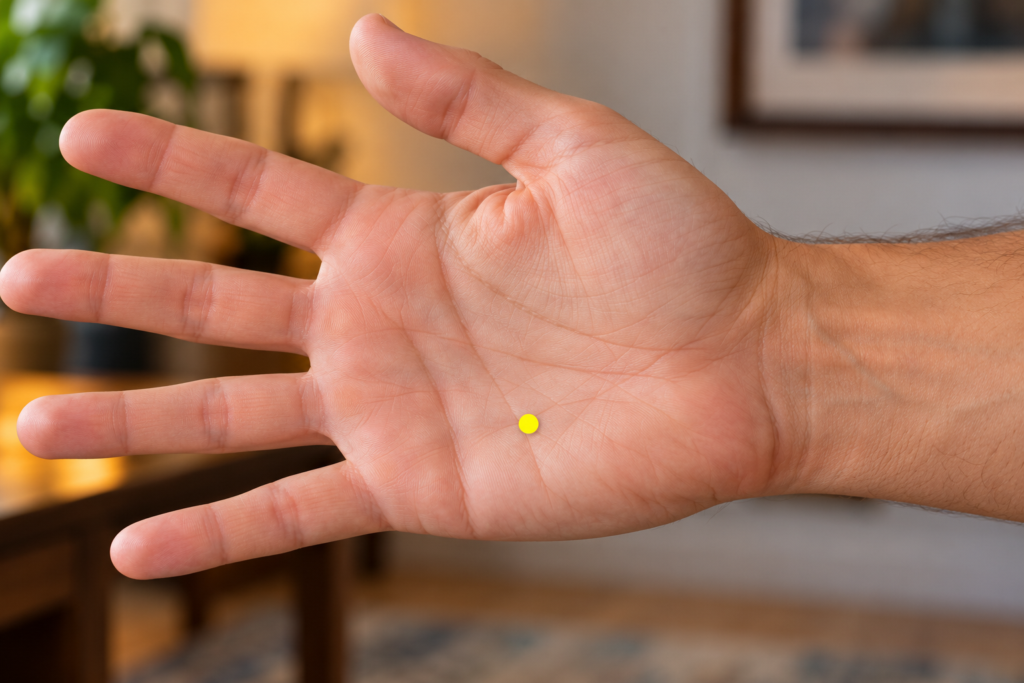
6. Press on HT8 in the palm to cool a burning face. HT8 sits in the palm, between the fourth and fifth hand bones, where the tip of the pinky finger lands when you make a loose fist. Press firmly with the thumb of your other hand for one to two minutes on each hand. HT8 is called “Shaofu,” the “Lesser Palace.”
In Traditional Chinese Medicine, HT8 is used to clear heat from the Heart. It may be particularly helpful for a flushed, burning face and rapid heartbeat during intense shame or embarrassment, and can be gently pressed in any situation.
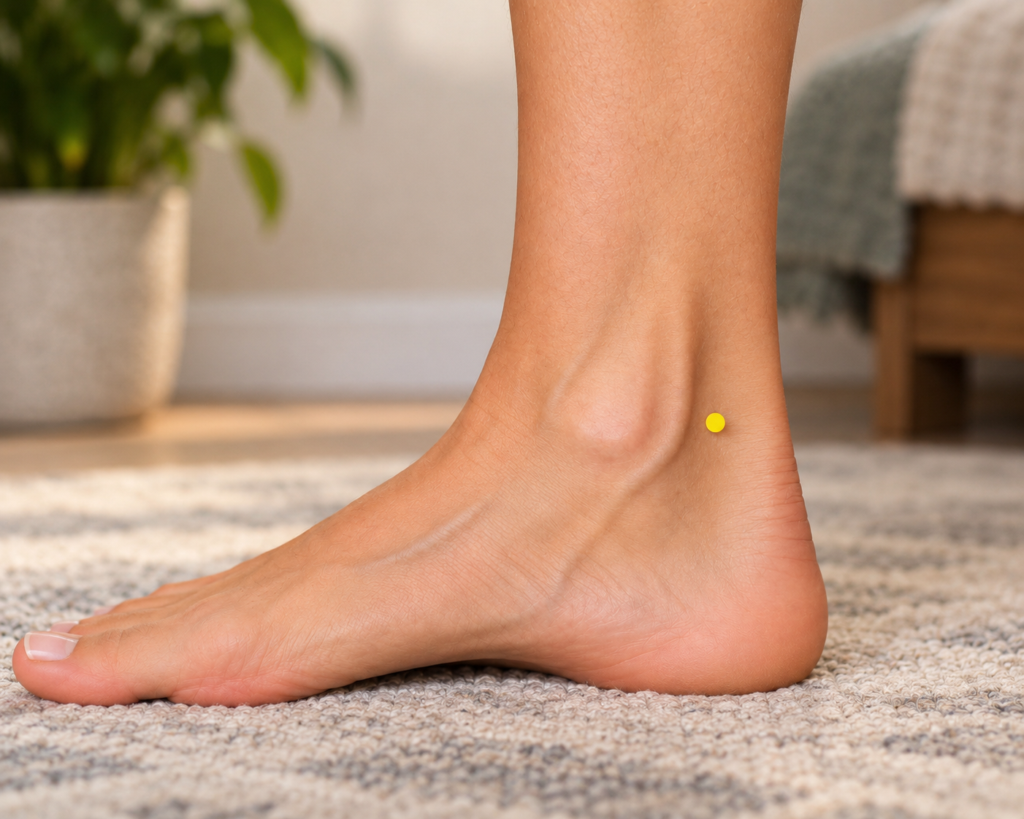
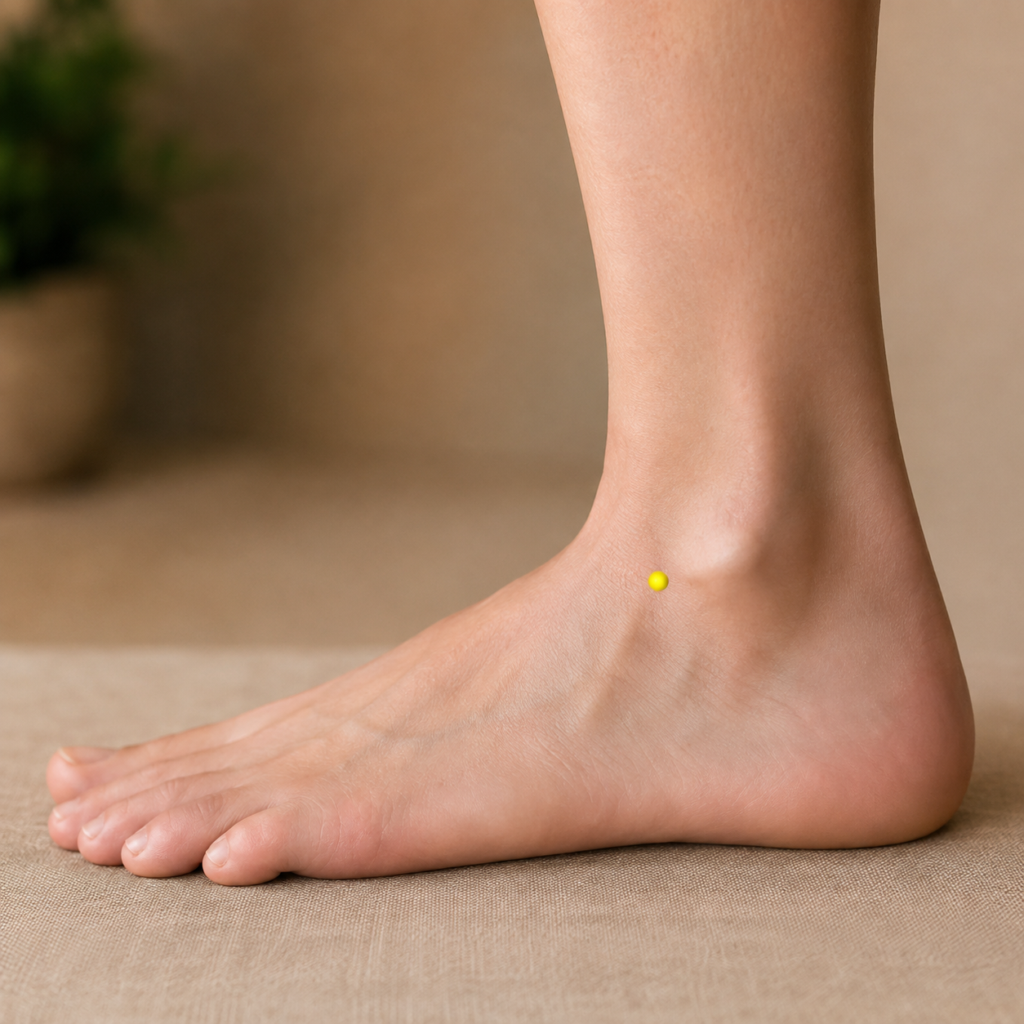
7. Press on KI3 behind the inner ankle to strengthen the will. KI3 sits in the hollow behind the inner ankle bone, between the ankle bone and the Achilles tendon, level with the tip of the ankle bone. Press firmly with your thumb for one to two minutes on each ankle. KI3 is called “Taixi,” the “Great Stream.”
KI3 is the source of the Kidney and contains the Zhi, or will. It strengthens the Kidney when a person’s sense of self is undermined, helps them find the strength to face difficult emotions, and eases the deep fear that drives the urge to hide.
8. Press on GB40 near the outer ankle to restore courage. GB40 sits in the hollow just in front of and below the outer ankle bone. Press firmly with your thumb for one to two minutes on each ankle. GB40 is called “Qiuxu,” the “Mound of Ruins.”
In Traditional Chinese Medicine, the Gallbladder is associated with courage and decisiveness. Its source point, GB40, supports the courage to be seen, speak up, and stop retreating. It pairs well with KI3, combining will and courage.
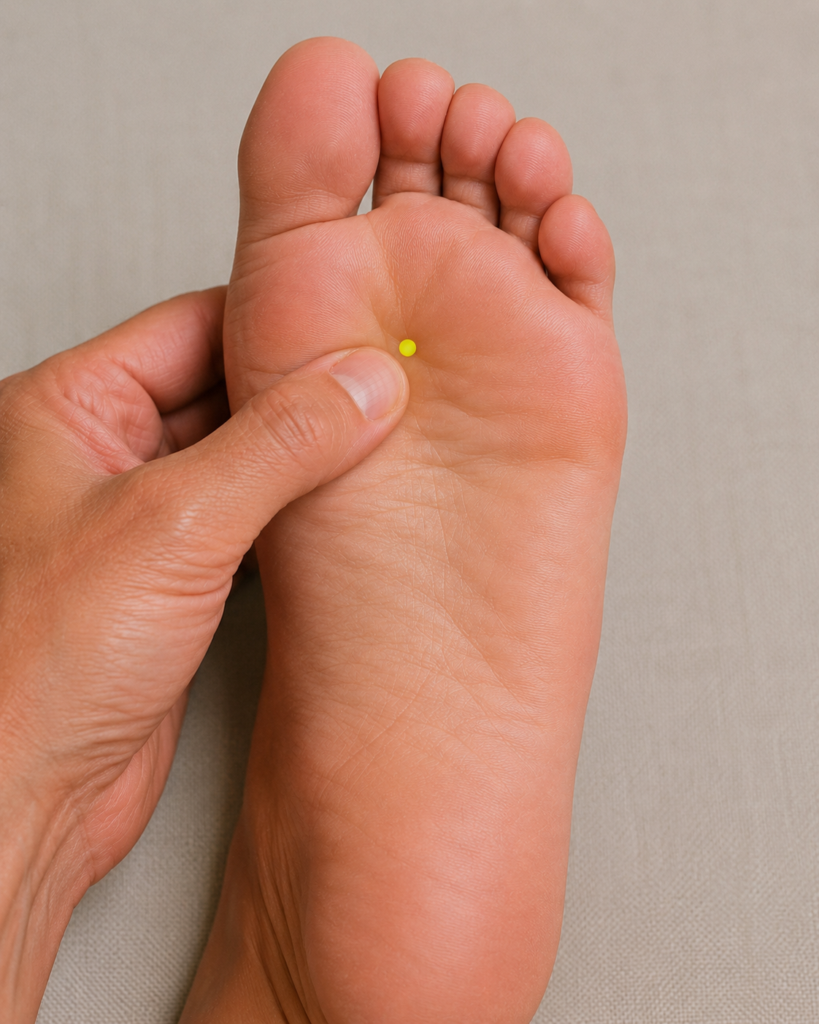
9. Press on KI1 on the sole of the foot to feel grounded and safe. KI1 sits on the sole of the foot, in the hollow that forms near the front of the foot when you curl the toes, about one-third of the way from the base of the second toe to the back of the heel. Press firmly with your thumb for one to two minutes on each foot, or roll the sole over a tennis ball. KI1 is called “Yongquan,” the “Bubbling Spring.”
KI1 is the body’s lowest point and one of its most grounding points, channeling the rising heat of shame away from the face and chest while anchoring the body firmly to the ground. Realizing that your feet are solidly beneath you is one of the simplest ways to feel safe enough to stay present rather than withdraw.
Why These Acupressure Points Work

In Traditional Chinese Medicine, a strong sense of self comes from a bright, calm Shen, an open chest, a firm will, and the courage to be seen. Shame, by contrast, dims the Shen, brings heat to the face, draws the chest inward, weakens the Kidney, and drains the Gallbladder’s courage.
The nine points apply to each component of that pattern.
- The head points (GV20, Yintang) lift the spirit and quiet the inner critic.
- The chest points (KI27, LU1) open a closed chest and restore breathing.
- The Heart points (HT7, HT8) settle the Shen and cool the burning heat of shame.
- The will and courage points (KI3, GB40, KI1) strengthen the Kidney and Gallbladder and ground the body.
How to Properly Use These Acupressure Points

A daily acupressure practice can help the body feel safe and upright again when working through shame.
- Do the full routine once daily, preferably in the morning, holding each point for one to two minutes.
- When feelings of shame arise, sit or stand upright. While breathing slowly, apply pressure to KI27 on both sides, then press HT8 to help cool facial warmth.
- Pair each point with an upright posture, allowing the shoulders to relax back and the chin to remain level.
- Practice regularly for several weeks, as shame patterns that took years to develop take time to heal.
How you speak to yourself matters just as much as using the acupressure points. Notice when your inner critic shifts from “I made a mistake” to “I am a failure,” and try to separate your actions from your identity. Treat yourself as you would a close friend facing the same situation. Shame thrives in secrecy, so sharing your feelings with someone you trust can help. If comparing yourself with others on social media makes you feel worse, consider limiting your time there and spending more time with people who accept you as you are.
Learn more about improving your inner dialogue.
When to Get Professional Help

If shame is always present, keeps you from relationships, work, or activities you once enjoyed, leads you to isolate yourself, or is associated with past trauma, it is important to consult a mental health professional. Persistent shame often co-occurs with depression, social anxiety, or post-traumatic stress, all of which can improve with treatment. Seek support promptly if shame comes with harsh self-punishment, an urge to disappear, or ongoing hopelessness.
If you’re thinking about harming yourself, call or text the 988 Crisis Lifeline right away.
Acupressure is a gentle, supportive practice for addressing shame. It complements, but does not replace, proper diagnosis or medical care.
For related health concerns, acupressure for self-esteem, acupressure for social anxiety, and acupressure for trauma are companion posts. If you are your own harshest critic, read stop being so hard on yourself.
If your feelings are focused on something you did and wish you could undo, learn how to use acupressure for guilt.
Above and Beyond Acupuncture offers acupuncture, cupping, and lifestyle coaching at the North Frank Lloyd Wright Boulevard location in Scottsdale.
Schedule an appointment online to start your healing journey.
The points above are only as effective as the technique used to apply them. Where to press, how firmly, and for how long all affect the result. For a full breakdown of how to perform acupressure properly at home, read Performing Acupressure in 3 Easy Steps.

About the Publisher
Paul Kerzner, L.Ac., is a licensed acupuncturist and board-certified herbalist, as well as the founder of Above and Beyond Acupuncture in Scottsdale. His own journey from chronic patient to practicing acupuncturist shapes his commitment to providing honest, clinically grounded information about acupuncture and Traditional Chinese Medicine. Learn more about Paul and his clinical approach on the About Us page.