
Key Takeaways
- Guilt can be a heavy emotion that affects your mood, sleep, and self-image, but acupressure for guilt provides a way to release it.
- Traditional Chinese Medicine connects guilt to various organs, suggesting that specific acupressure points can help ease the associated discomforts.
- The nine acupressure points include Yintang, CV17, HT7, PC6, LU9, LU7, LI4, SP3, and LR3, each addressing different aspects of guilt.
- Practicing acupressure daily, along with reflective exercises, can foster emotional healing and help manage guilt effectively.
- Seek professional help if guilt persists or interferes significantly with your life, as it may indicate deeper mental health issues.

Do you ever replay something you said or did, wishing you could take it back? Does a heaviness settle in your chest when a certain memory surfaces? Even after you’ve apologized or the moment has passed, guilt can linger, affecting your mood, sleep, and how you see yourself.
Guilt is a deeply human emotion. When it’s healthy, it serves as a moral compass, showing you when your actions don’t align with your values and encouraging you to apologize, make things right, or do better next time. Once you’ve taken these steps, healthy guilt usually fades.
But sometimes, guilt doesn’t fade. It may linger long after you’ve tried to make things right, attach to things you can’t control, or feel far bigger than the situation itself. Examples include survivor guilt, guilt about setting boundaries, and caregivers feeling they haven’t done enough. Lingering guilt can lead to rumination, with your mind circling the same thoughts again and again. It can also cause a heavy chest, a tight stomach, tense shoulders, and trouble sleeping.
In Traditional Chinese Medicine, the Heart is said to house the Shen, or spirit and mind, and is closely connected to your conscience and sense of self. Guilt can disturb the Shen, leaving your heart heavy and your mind uneasy. The Spleen is associated with thinking; when guilt keeps your mind stuck, it can block Spleen Qi and lead to worry, poor appetite, and tiredness. The Lung helps you let go, but holding onto guilt can weigh on it, making your chest feel tight and breathing more difficult. If guilt turns into frustration or anger toward yourself, Liver Qi can become tense as well.
The good news is that your body can help your mind let go.
The nine points below can calm your spirit, ease the heaviness in your chest, quiet a busy mind, and help your body release what it has been holding on to.
What Acupressure Points to Press and Why
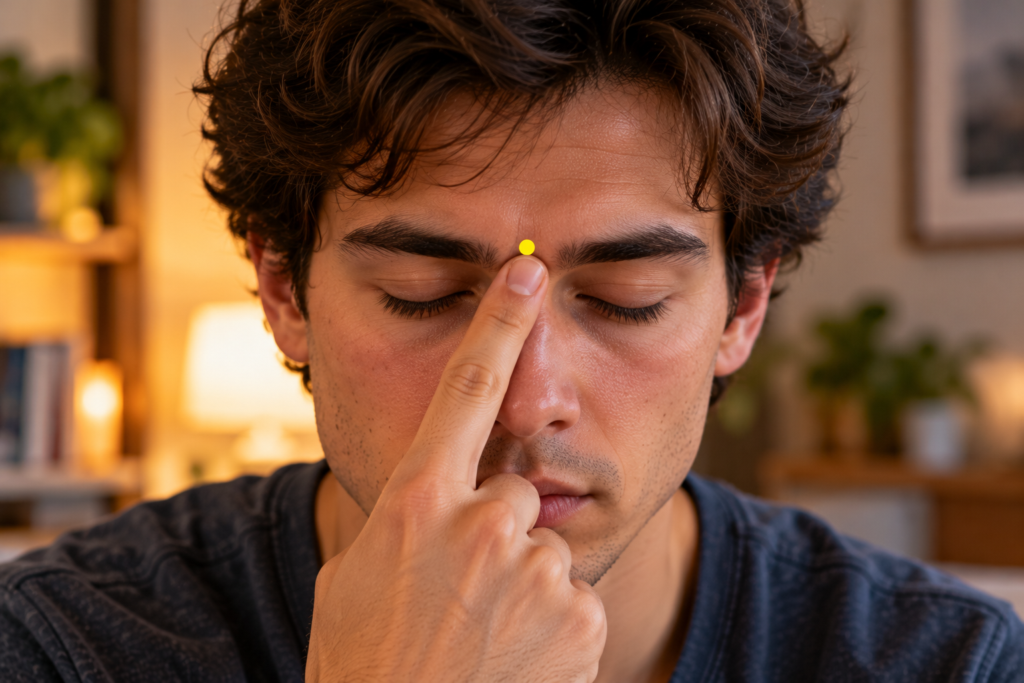
1. Press on Yintang between the eyebrows to quiet rumination. Yintang sits in the small hollow directly between the eyebrows. Press gently with your middle fingertip, or make slow circles for one to two minutes while closing your eyes. Yintang is called the “Hall of Impression.”
Yintang is one of the body’s most soothing points. It quiets the persistent thoughts that sustain guilt, eases tension behind the eyes and across the forehead, and helps the mind settle so you can rest.
2. Press on CV17 in the center of the chest to ease a heavy heart. CV17 sits in the center of the breastbone, level with the nipples. Rest two or three fingertips on the point and press gently, or make slow circles, for one to two minutes while breathing slowly into the chest. CV17 is called “Danzhong,” the “Chest Center.”
In Traditional Chinese Medicine, CV17 is the key point for Qi that gathers and knots in the chest. It eases the heavy, pressing sensation often associated with guilt, opens the breath, and helps release blocked emotions.

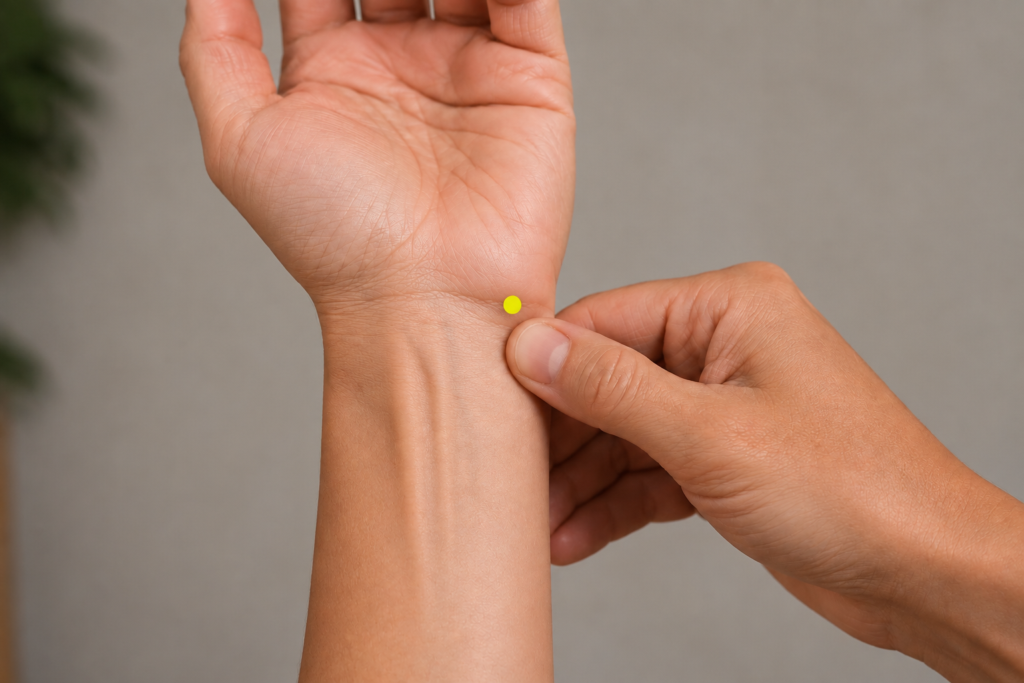
3. Press on HT7 on the wrist to settle the spirit. HT7 sits on the inner wrist crease, on the pinky side, in the small hollow just inside the tendon. Press gently with the thumb of your other hand for one to two minutes on each wrist. HT7 is called “Shenmen,” the “Spirit Gate.”
HT7 is the source point of the Heart and one of the most important points for calming the Shen. It eases feelings of guilt and unease, steadies a racing heart, and supports restful sleep when regret keeps the mind from settling. Along with two other points, it forms the Buddha’s Triangle, a combination traditionally used to promote peace in the Heart.
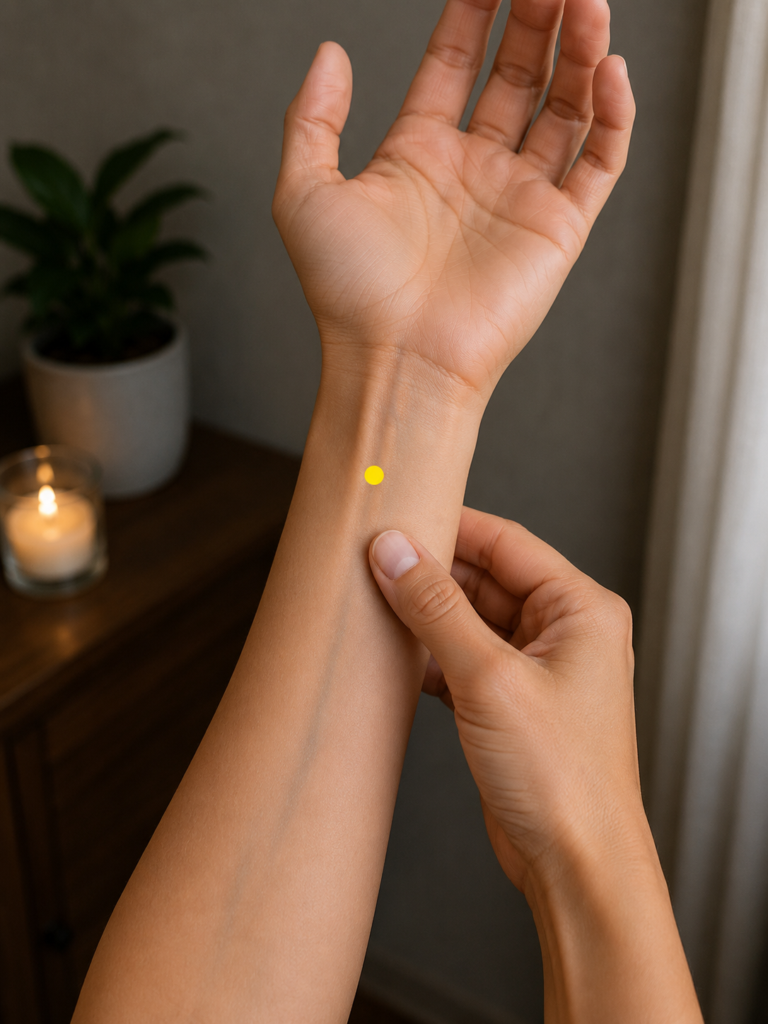
4. Press on PC6 on the inner forearm to open the chest. PC6 sits on the inner forearm, three finger-widths above the wrist crease, between the two tendons. Press firmly with the thumb of your other hand for one to two minutes on each arm. PC6 is called “Neiguan,” the “Inner Pass.”
The second point in the Buddha’s Triangle is PC6. The Pericardium protects the Heart, and PC6 opens the chest, eases anxiety, and calms the troubled stomach, which is usually caused by guilt. It is especially useful when guilt is accompanied by nausea or loss of appetite.
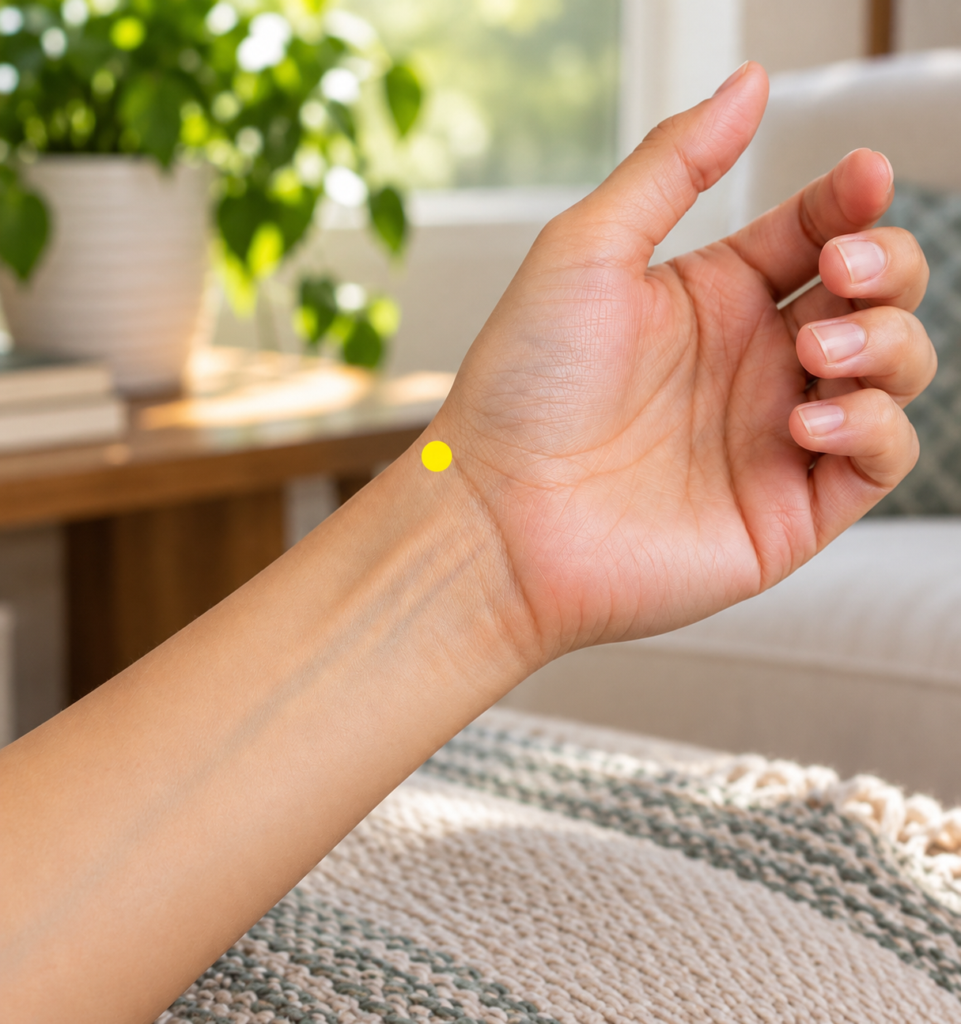
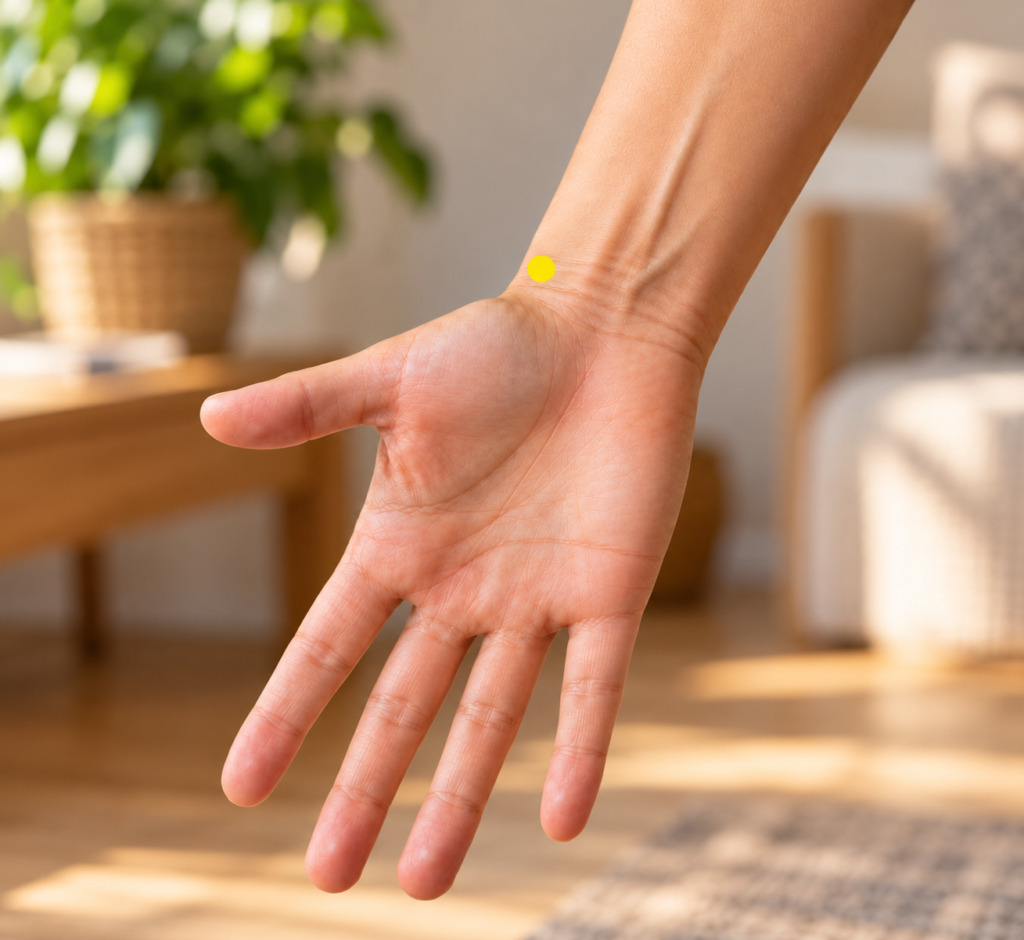
5. Press on LU9 on the wrist to support the Lung. LU9 sits on the inner wrist crease, on the thumb side, in the small hollow just beside the spot where the pulse can be felt. Press gently with the thumb of your other hand for one to two minutes on each wrist. LU9 is called “Taiyuan,” the “Great Abyss.”
LU9 completes the Buddha’s Triangle. As the Lung’s origin point, it helps regulate breathing and the ability to let go. Pressing LU9 strengthens the Lung, eases chest constriction, and supports the slow, deep breathing that helps the body release what it has been holding.
6. Press on LU7 on the forearm to help release what is held. LU7 sits on the thumb side of the forearm, about two finger-widths above the wrist crease. To find it, interlace the thumbs and index fingers of both hands, and the tip of the top index finger will rest in a small groove on the edge of the forearm, just above the bony bump of the wrist. Press gently with your fingertip for one to two minutes on each arm. LU7 is called “Lieque,” the “Broken Sequence.”
LU7 regulates the Lung and is commonly used for grief and suppressed emotions. When guilt has been silently carried for a long time, LU7 helps soften the chest and deepen the breath, allowing the emotion to move through rather than remain trapped inside.
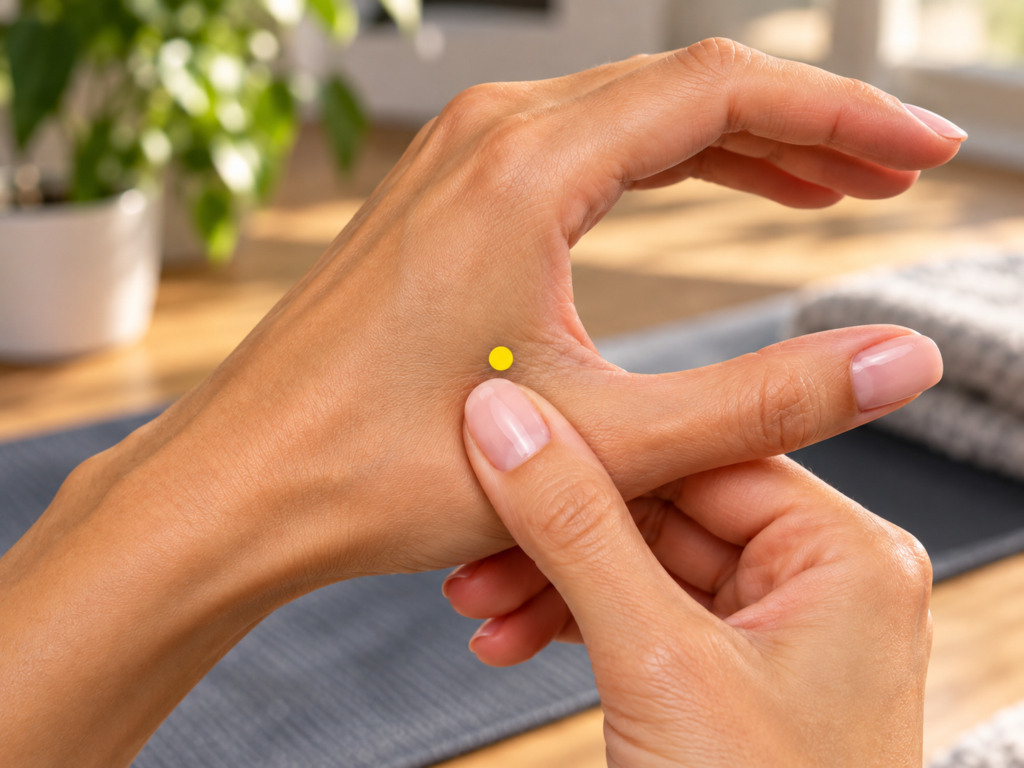
7. Press on LI4 in the hand to let go. LI4 sits in the webbing between the thumb and index finger, at the highest point of the muscle when you bring the thumb and index finger together. Press firmly with the thumb of your other hand for one to two minutes on each hand. LI4 is called “Hegu,” the “Joining Valley.” LI4 is avoided during pregnancy.
In Traditional Chinese Medicine, the Large Intestine is associated with the Lung. Together, they take in what nourishes the body and discharge what is no longer needed. LI4 promotes the flow of Qi throughout the body, relieves tension in the head, jaw, and shoulders, and supports the process of letting go.
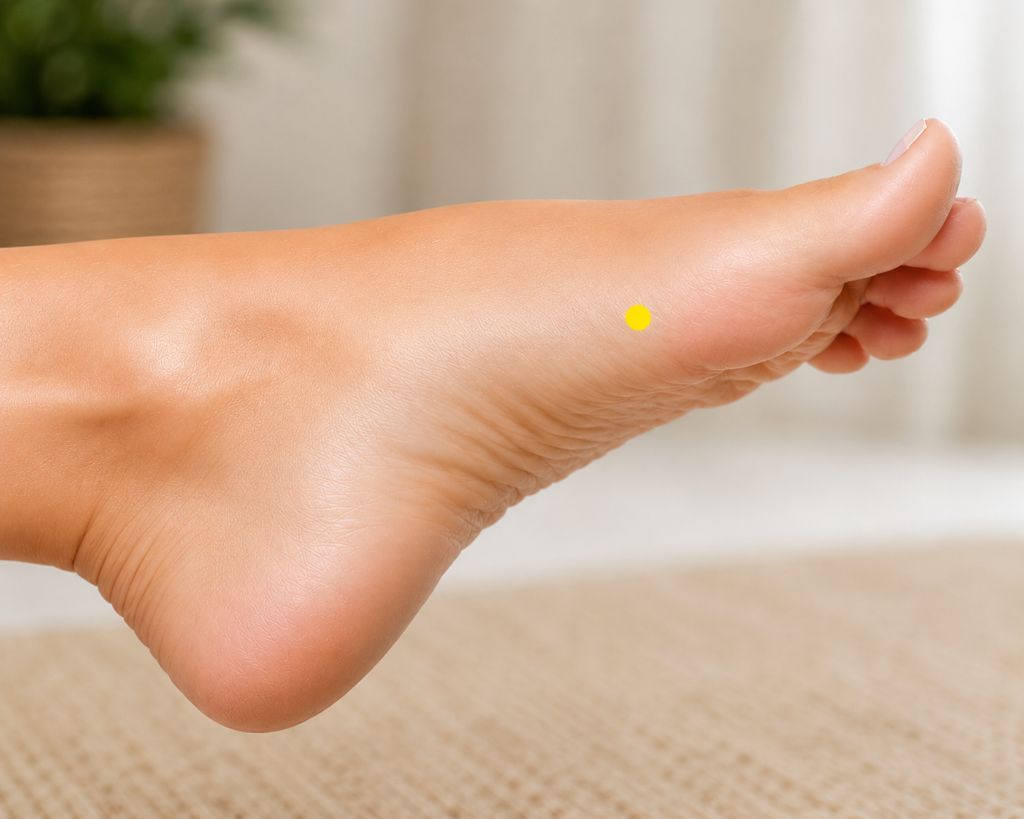
8. Press on SP3 on the inner edge of the foot to untie a looping mind. SP3 sits on the inner edge of the foot, just behind the big toe joint, in the hollow where the smooth skin of the sole meets the top of the foot. Press firmly with your thumb for one to two minutes on each foot. SP3 is called “Taibai,” the “Supreme White.”
In Traditional Chinese Medicine, SP3 is the Spleen’s source point and governs thought. When guilt causes the mind to repeat the same thoughts, Spleen Qi can become blocked, and SP3 may help clear the blockage. The point also supports digestion and energy, which can both suffer when the mind cannot rest.
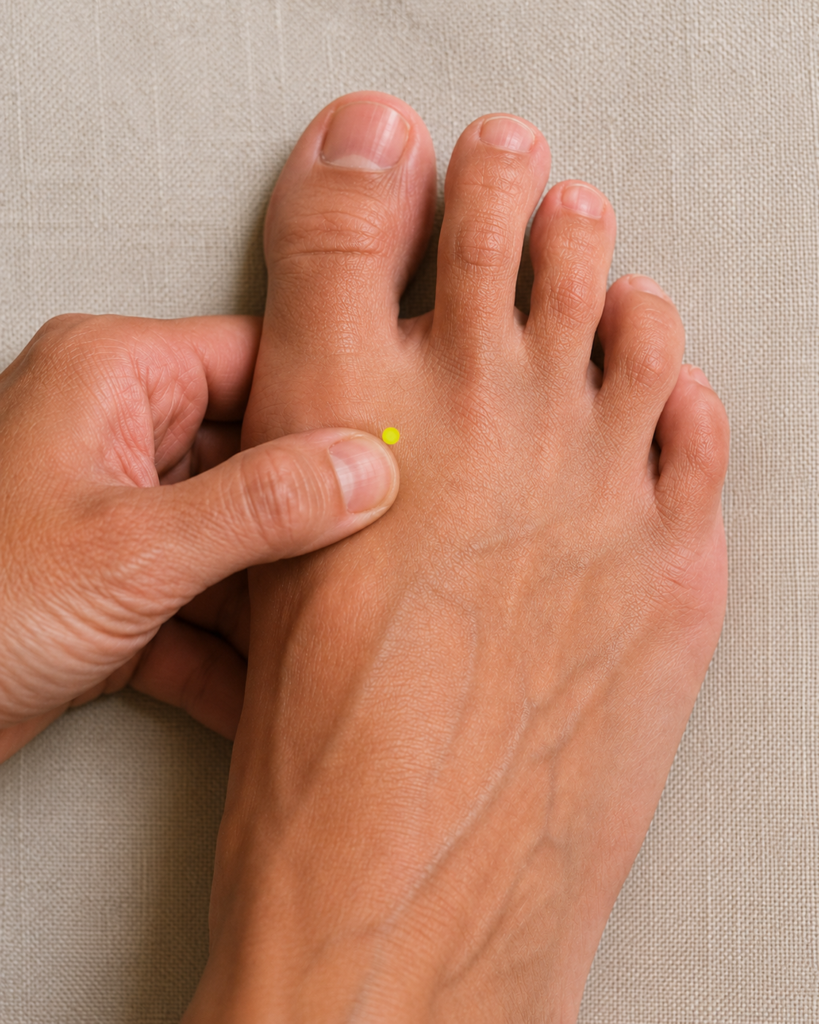
9. Press on LR3 on the top of the foot to release tension turned inward. LR3 sits in the webbing between the big toe and second toe, about two finger-widths back from the webbing, in the hollow just before the two bones meet. Press firmly with your thumb for one to two minutes on each foot. LR3 is called “Taichong,” the “Great Surge.”
Guilt is often accompanied by frustration or anger toward oneself. The LR3 point, the Liver’s source point, helps move Liver Qi that has become tight because of these emotions, reduce irritability, and relieve tension in the head and chest. Combined with LI4, it forms the ‘Four Gates,” a well-known pair of points used to promote the flow of Qi throughout the body.
Why These Acupressure Points Work

In Traditional Chinese Medicine, emotional ease comes from a calm Shen, Qi flowing freely through the chest, a mind able to rest rather than dwell on things, and the ability to let go of what no longer serves. Persistent guilt disturbs the Heart, binds the Spleen Qi, weighs heavily on the Lung, and tightens the Liver.
The nine points apply to each part of that pattern:
- The head and chest points (Yintang, CV17) quiet rumination and ease the heaviness in the chest.
- The Buddha’s Triangle (HT7, PC6, LU9) settles the Shen, opens the chest, and brings peace to the Heart.
- The letting-go points (LU7, LI4) support the Lung and Large Intestine in releasing what has been held.
- The rumination and tension points (SP3, LR3) untie a looping mind and release frustration turned inward.
How to Properly Use These Acupressure Points

Acupressure for guilt is most effective when practiced each day quietly and accompanied by honest, objective reflection.
- Complete the full routine once daily, preferably in the evening, holding each point for one to two minutes.
- When feelings of guilt arise, apply pressure to HT7, PC6, and LU9 on one wrist while breathing slowly, then repeat the process on the other wrist.
- Exhale slowly and completely with each point, imagining that your breath is carrying away anything you no longer need to hold on to.
- Practice consistently over several weeks, as long-held emotions tend to ease gradually.
Reflecting honestly is just as important as pressing the points. Ask yourself whether the guilt is pointing to something you can still make right. If so, take action, whether that means apologizing, having a conversation, or changing your behavior. If you’ve already made amends, or the situation was never truly within your control, focus on forgiving yourself. Writing down what happened, what you learned, and what you would do differently can help stop your mind from going in circles. Sometimes, talking things through with a reliable friend can offer a perspective that’s hard to gain on your own. Treat yourself with the same patience and kindness you would show someone you love.
Find out more about the power of forgiveness.
When to Get Professional Help

If feelings of guilt persist for weeks, repeatedly center on the same events, become attached to things you cannot control, or interfere with your sleep, work, relationships, or ability to care for yourself, it is important to see a mental health professional. Prolonged guilt may indicate depression, anxiety, or obsessive-compulsive tendencies, which can be effectively treated. Seek support as soon as possible if guilt follows a traumatic event or the loss of someone close, appears after giving birth, or comes with ongoing hopelessness or the belief that you deserve to suffer.
If you’re thinking about harming yourself, call or text 988 immediately to reach the Suicide and Crisis Lifeline.
Acupressure offers gentle support for managing guilt, but it does not replace diagnosis or medical treatment.
For related emotional health concerns, acupressure for self-esteem, acupressure for worry, and acupressure for resentment are companion pieces. If guilt has turned into harsh self-criticism, read stop being so hard on yourself.
If guilt has grown into a feeling that something is wrong with who you are, learn how to use acupressure for shame.
Above and Beyond Acupuncture offers acupuncture, cupping, and lifestyle coaching at the North Frank Lloyd Wright Boulevard location in Scottsdale.
Schedule an appointment online to start your healing journey.
The points above are only as effective as the technique used to apply them. Where to press, how firmly, and for how long all affect the result. For a full breakdown of how to perform acupressure properly at home, read Performing Acupressure in 3 Easy Steps.

About the Publisher
Paul Kerzner, L.Ac., is a licensed acupuncturist and board-certified herbalist, as well as the founder of Above and Beyond Acupuncture in Scottsdale. His own journey from chronic patient to practicing acupuncturist shapes his commitment to providing honest, clinically grounded information about acupuncture and Traditional Chinese Medicine. Learn more about Paul and his clinical approach on the About Us page.