
Key Takeaways
- Tarsal tunnel syndrome results in symptoms such as burning, tingling, and foot pain caused by nerve compression near the inner ankle.
- Acupressure for tarsal tunnel syndrome can help relieve symptoms and boost circulation by gently applying pressure to targeted points.
- Important acupressure points include KI3, KI6, and SP6, along with additional sites that help alleviate stagnation and nourish the foot.
- Ensuring proper shoe support and avoiding prolonged standing are essential for symptom management alongside acupressure treatments.
- Consult a healthcare professional if symptoms persist or worsen to ensure accurate diagnosis and appropriate treatment.

Do you feel a burning, tingling, or shooting pain on the inside of your ankle and under the sole of your foot, especially after standing or walking?
Symptoms like these can indicate tarsal tunnel syndrome, often called the carpal tunnel of the foot. This condition, similar to its wrist counterpart, occurs when a nerve gets compressed as it passes through a narrow space. Because its symptoms resemble other foot issues, many people treat the wrong condition for a long time before recognizing nerve compression. Acupressure can help relieve nerve symptoms, relax the tissues around the ankle, and improve foot circulation. This article explains what tarsal tunnel syndrome is, how it differs from plantar fasciitis, the Chinese medicine perspective, which points are helpful and why, and how to develop a routine to protect the nerve.
What Is Tarsal Tunnel Syndrome?
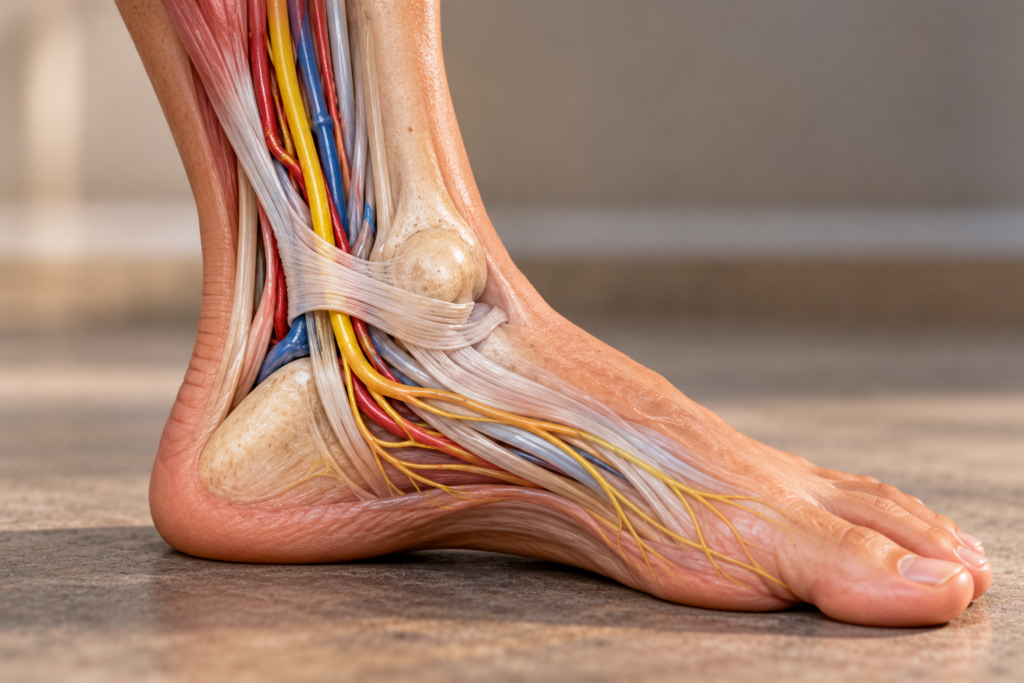
The tarsal tunnel is a narrow passage on the inner ankle, located behind and beneath the ankle bone, through which the tibial nerve travels under a tissue band on its way to the foot. This space also contains tendons, an artery, and veins. Nerve irritation happens when this space narrows or compresses the nerve, causing symptoms that follow the nerve’s path into the heel, arch, and sole.
Common symptoms include:
- Burning, tingling, or pins and needles along the inner ankle, heel, arch, or sole
- Shooting or electric pain that travels into the foot
- Numbness in parts of the sole or toes
- Symptoms that worsen with standing, walking, or running and ease with rest
- Symptoms at night, which can disturb sleep
- In longer-standing cases, weakness in the small muscles of the foot
Gently tapping behind the inner ankle bone often produces a tingling sensation in the foot, which doctors commonly check during examinations.
What Causes Tarsal Tunnel Syndrome?

Any obstruction in the tunnel or stimulation of the nerve may cause tarsal tunnel syndrome.
Common causes include flat feet or inward-rolling arches, which stretch and compress the nerve with each step. Other factors are previous ankle sprains or fractures, swelling from injury or prolonged standing, internal cysts or growths, bone spurs, varicose veins, arthritis, and health conditions like diabetes or thyroid issues that increase nerve vulnerability. Tight or high-top shoes can worsen the problem by pressing on the inside of the ankle.
The syndrome is more common in people who stand or walk for long hours, such as runners, hikers, and individuals with flat feet.
How it Differs From Plantar Fasciitis
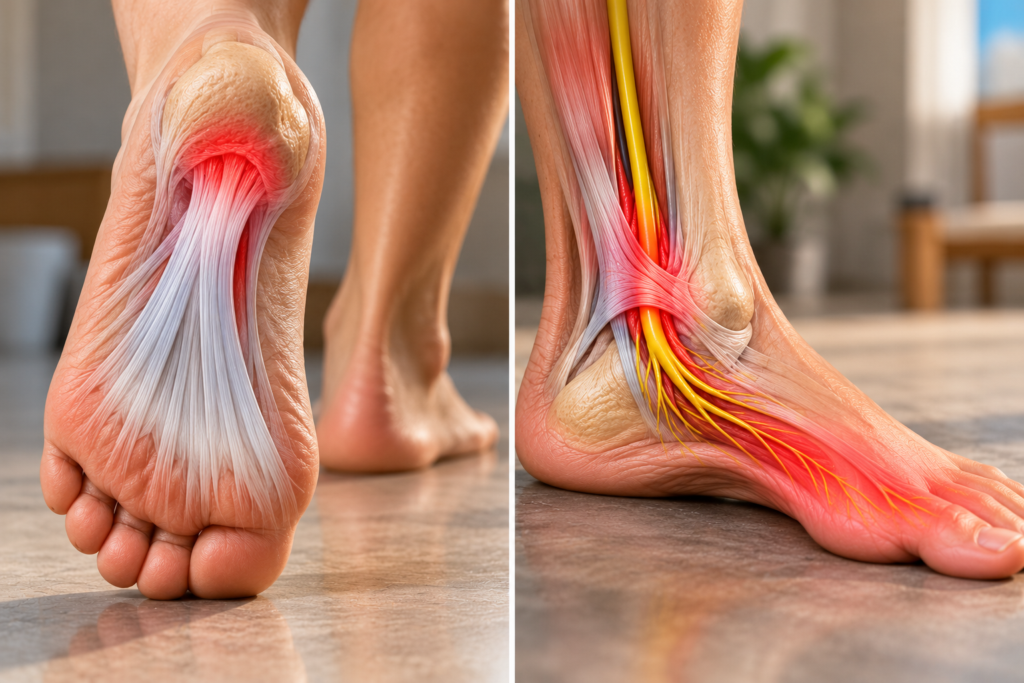
Understanding the difference between tarsal tunnel syndrome and plantar fasciitis is helpful, as people often confuse the two.
Plantar fasciitis usually causes a sharp, stabbing pain at the bottom of the heel, especially when taking the first steps in the morning, with the pain easing as you warm up. In contrast, tarsal tunnel syndrome causes nerve-related symptoms like burning, tingling, and numbness along the inner ankle and sole, which tend to worsen the longer you’re on your feet. Both conditions can occur simultaneously, and treating only one may leave the other untreated. That’s why an accurate diagnosis is essential.
How Traditional Chinese Medicine Views Tarsal Tunnel Syndrome
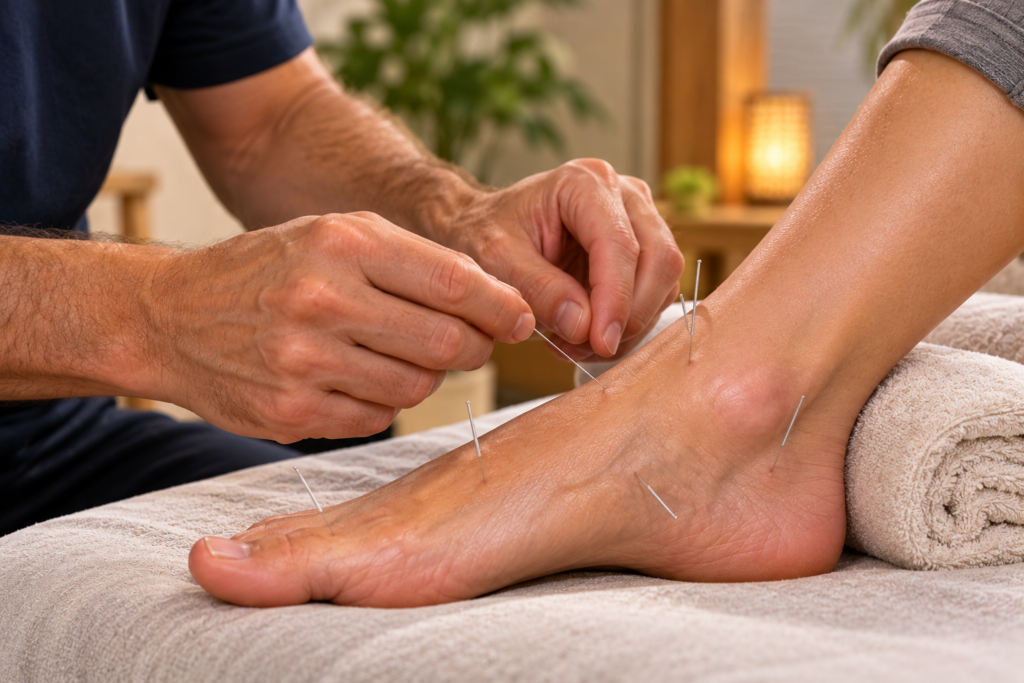
In Traditional Chinese Medicine, tarsal tunnel syndrome is seen as a blockage in the channels passing through the inner ankle. It mainly impacts the Kidney channel, which runs through the tarsal tunnel area, along with the Spleen and Liver channels that run parallel to it. Most people typically exhibit a combination of these patterns.
- Qi and Blood stagnation. Strain, injury, and long hours of standing cause Qi and Blood to stagnate around the inner ankle, bringing pain, burning, and tingling that worsen with activity. An old sprain that never fully settled often falls here. KI3, KI6, SP6, and LR3 address this pattern.
- Dampness and swelling. When fluids collect around the ankle, they crowd the tunnel. The ankle feels puffy and heavy; symptoms worsen after long hours on your feet, and socks may leave deep marks. SP4 and SP6 address this pattern.
- Heat in the channels. When burning is the dominant sensation, especially with warmth or redness, Chinese medicine sees heat lodged along the channels. KI2 and KI1 address this pattern.
- Depleted Kidney and Liver. With age, long illness, or conditions such as diabetes, the Kidney and Liver can no longer nourish the sinews and the foot well, bringing numbness, weakness, and slow recovery. KI3, GB34, and LR3 address this pattern.
What the Research Shows
Research on acupressure for tarsal tunnel syndrome is still emerging. Meanwhile, carpal tunnel syndrome has been studied more extensively, with evidence suggesting that acupuncture can relieve symptoms like tingling, numbness, and pain caused by nerve compression. Since tarsal tunnel syndrome involves a similar area in the foot, many practitioners use comparable techniques.
Acupressure should be part of a holistic treatment plan that also includes accurate diagnosis, proper footwear, and medical interventions to target any underlying causes of pressure.
Here are nine acupressure points that help move stagnation around the inner ankle, clear dampness and swelling, nourish sinews, and promote circulation in the foot.
What Acupressure Points to Press and Why
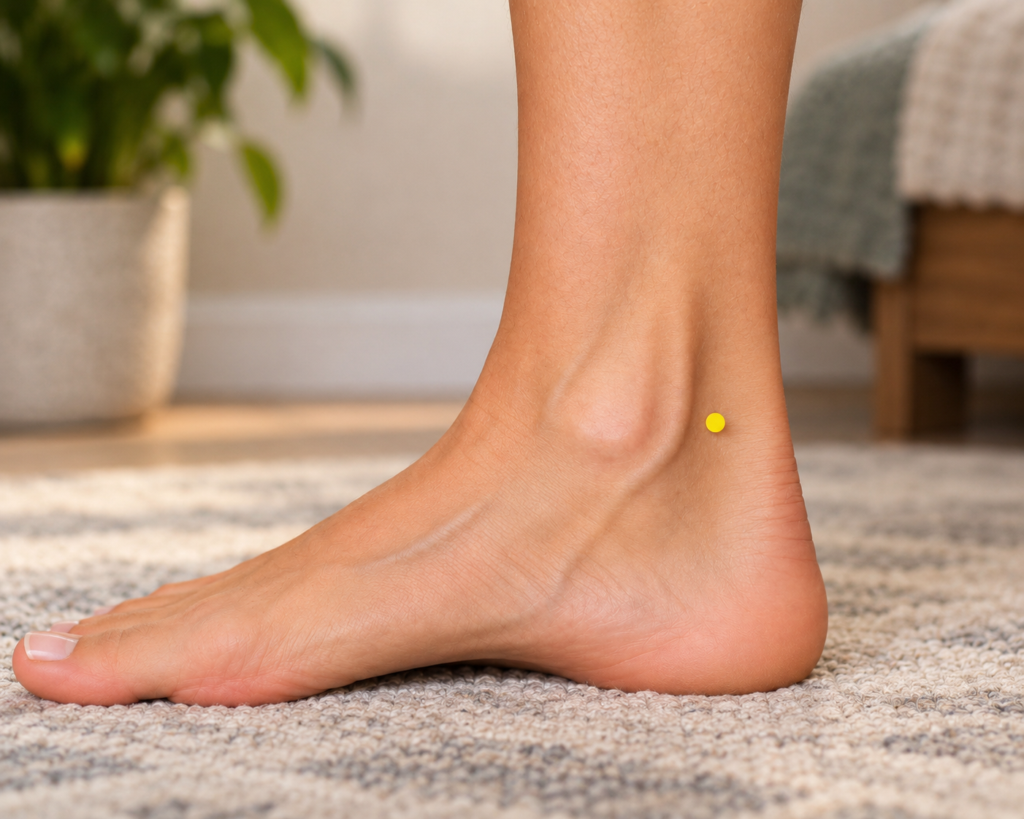
1. Press gently on KI3 behind the inner ankle bone. KI3 sits in the hollow between the inner ankle bone and the Achilles tendon, level with the tip of the ankle bone. Gently press the affected foot with your thumb for about a minute, easing off if it sends tingling into the foot. KI3, called “Taixi,” is the Kidney’s source point.
The KI3 point is situated at the upper part of the tarsal tunnel along the Kidney meridian, which runs directly through the affected area. Gentle pressure on this point can help move stagnation around the inside of the ankle and strengthen the Kidney, as it nourishing both the foot and sinews. Since the nerve is nearby, it’s important to use light pressure rather than deep pressure. Treat this as soothing the area rather than applying firm pressure.
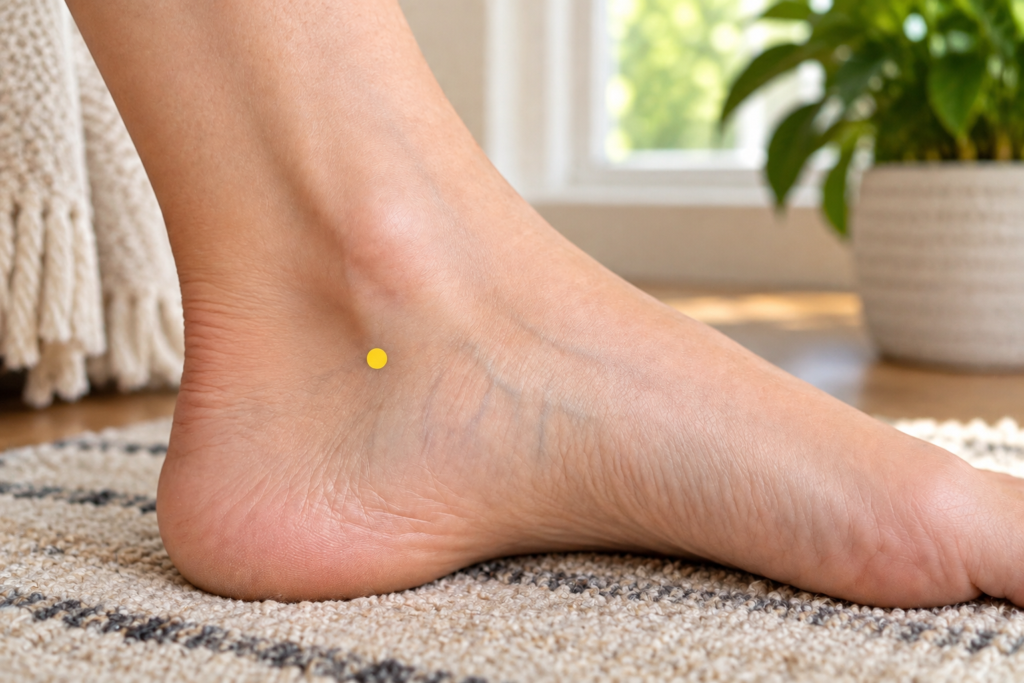
2. Press gently on KI6 below the inner ankle bone. KI6 sits in the hollow just below the tip of the inner ankle bone. Press gently with your thumb for about a minute on the affected foot, moving slightly if it triggers tingling. KI6 is called “Zhaohai,” the “Shining Sea.”
The KI6 point is situated at the tarsal tunnel and has been traditionally used to alleviate pain and swelling on the inner ankle. It promotes the flow of Qi locally and nourishes Yin and fluids, aiding tissues that are tight and irritated. Apply gentle pressure to this point as well. When combined with KI3, located just above, it influences the tunnel from both sides.
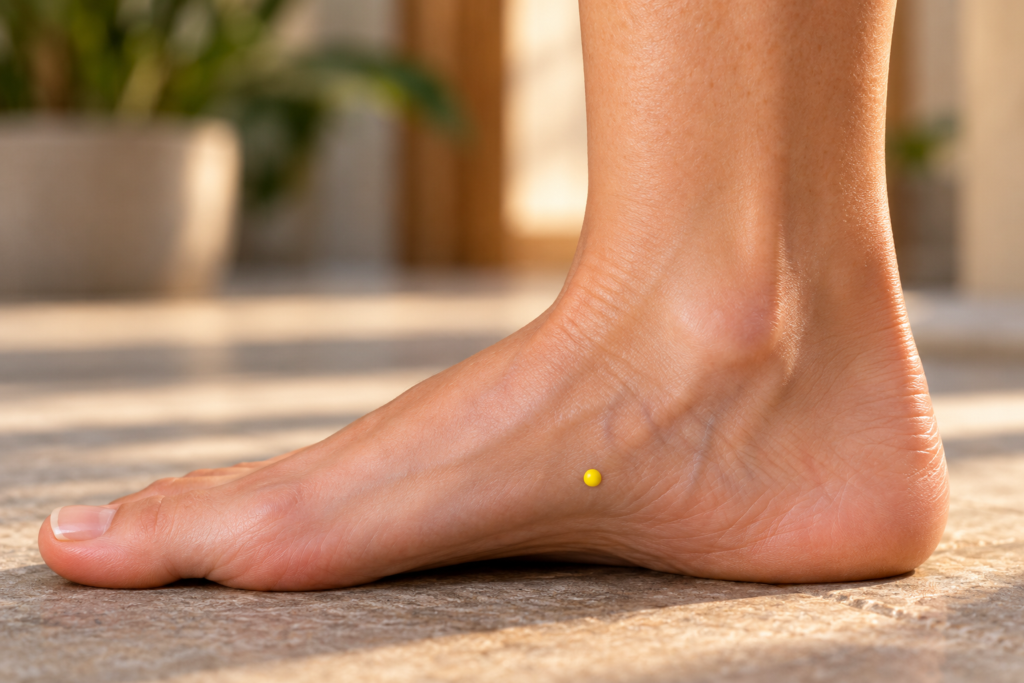
3. Press on KI2 on the inner arch to ease the sole. KI2 sits on the inner edge of the foot, in the hollow just below and in front of the bony bump in the middle of the arch, where the skin changes color. Press firmly with your thumb for one to two minutes on the affected foot. KI2 is called “Rangu,” the “Blazing Valley.”
KI2 is situated at the arch where the nerve’s branches travel into the sole and is mainly used to relieve foot burning and pain. Its name, which reflects its heat-dispelling ability, makes it suitable for addressing the burning sensation associated with tarsal tunnel issues. It is especially helpful after a long day when arch burning is at its worst.
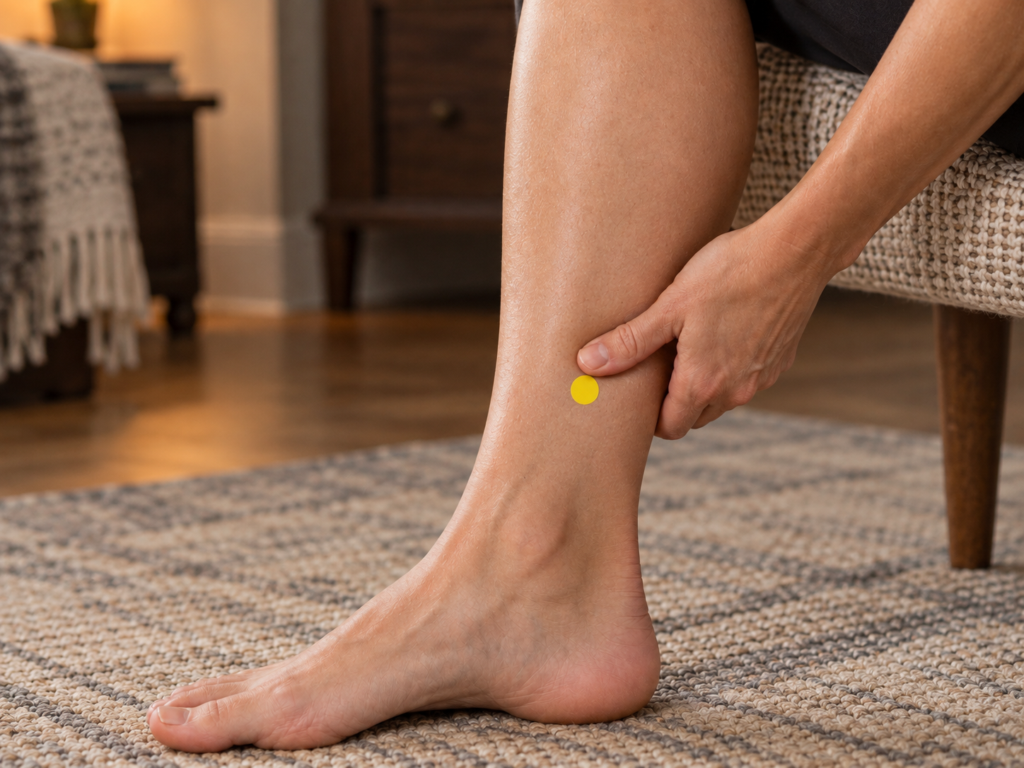
4. Press on SP6 above the inner ankle to move the Blood. SP6 sits four finger-widths up from the tip of the inner ankle bone, just behind the back edge of the shinbone. Press firmly for one to two minutes on each leg. SP6 is called “Sanyinjiao,” the “Three Yin Intersection.” SP6 is avoided during pregnancy.
The SP6 point is positioned just above the tarsal tunnel, where the Spleen, Liver, and Kidney meridians converge. It plays a key role in circulating and nourishing blood in the lower leg and foot. Located above the tunnel rather than on it, it can be pressed firmly to enhance circulation in the affected area. It also helps eliminate dampness that builds up in the lower leg after prolonged standing.
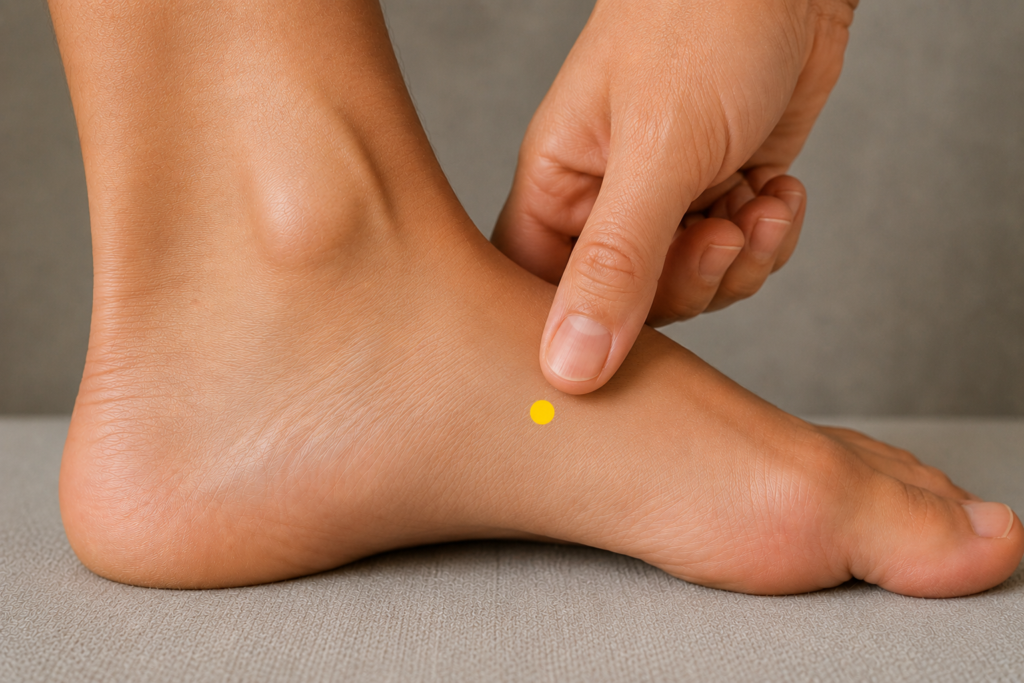
5. Press on SP4 on the arch to clear swelling and ease the foot. SP4 sits on the inner arch of the foot, in the depression just below and ahead of the bony bump behind the big-toe joint. Press firmly with your thumb for one to two minutes on the affected foot. SP4 is called “Gongsun.”
Swelling around the ankle can exert pressure on the tarsal tunnel. In Traditional Chinese Medicine, the Spleen is believed to play a role in removing dampness and swelling, so SP4 enhances Spleen function. Additionally, it alleviates pressure on the arch, which frequently causes pain alongside tarsal tunnel issues, especially in individuals with flat feet where the arch collapses with each step.
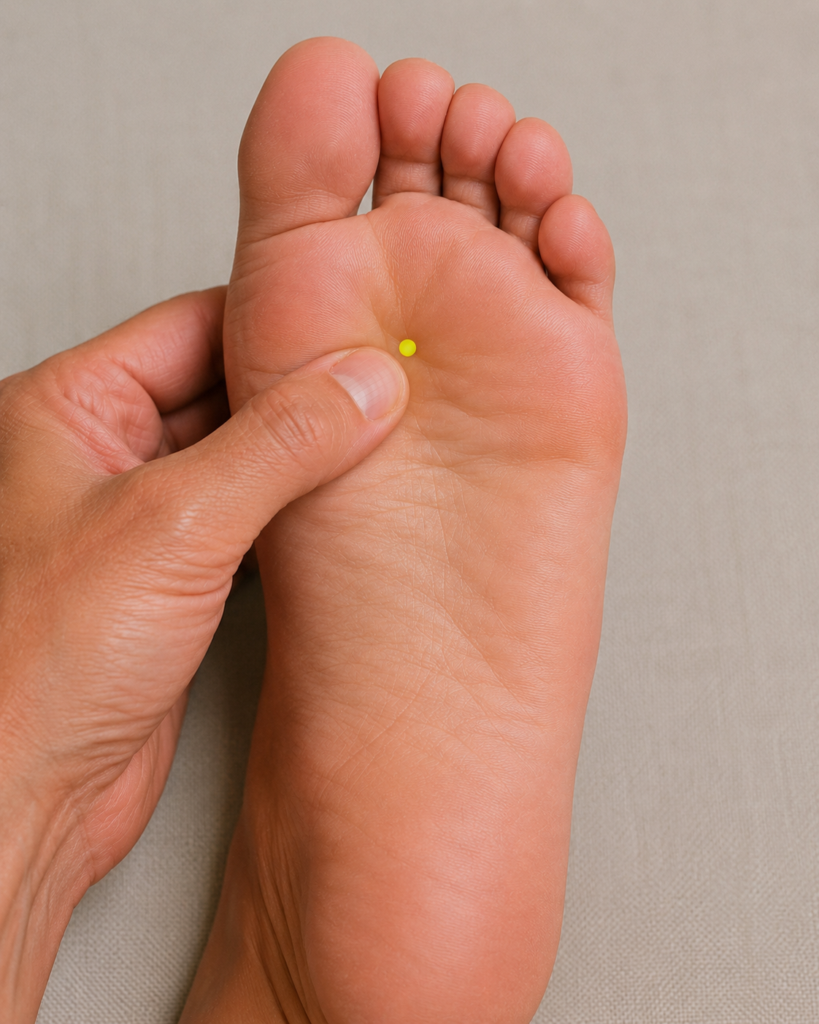
6. Press on KI1 on the sole to soothe burning feet. KI1 sits on the sole of the foot, in the hollow that forms in the center of the ball of the foot when you curl the toes. Press firmly with your thumb, or roll the sole gently over a ball, for one to two minutes on the affected foot. KI1 is called “Yongquan,” the “Bubbling Spring.”
KI1 is located at the beginning of the Kidney channel on the sole and is a common source of symptoms that spread from the tarsal tunnel. It is typically used to address burning sensations and heat in the soles and to promote circulation in the lower foot. A simple way to activate KI1 is to roll the sole over a ball before bedtime, especially if the burning sensation prevents sleep.
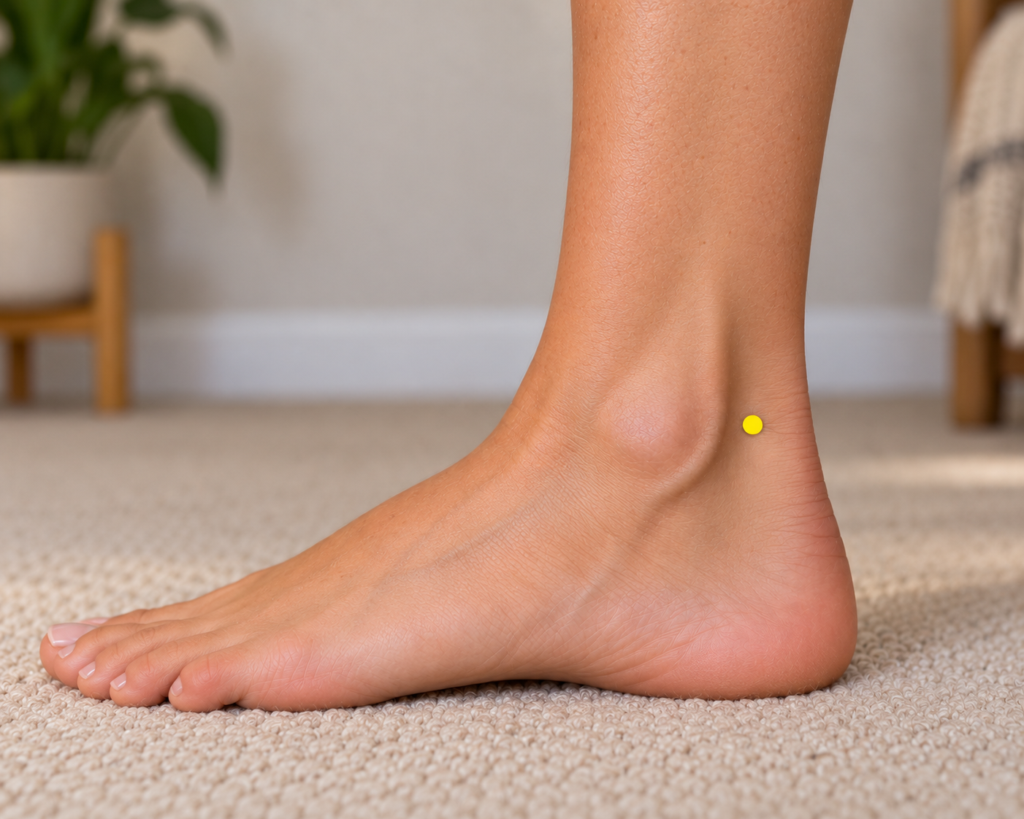
7. Press on BL60 behind the outer ankle to relieve the ankle on the other side. BL60 sits in the hollow between the outer ankle bone and the Achilles tendon, level with the tip of the ankle bone. Press firmly with your thumb for one to two minutes on the affected foot. BL60 is called “Kunlun.” BL60 is avoided during pregnancy.
The BL60 point is situated on the outer ankle, opposite the tarsal tunnel, allowing firm pressure without nerve irritation. It is crucial for alleviating pain in the ankle and heel and helps relax the entire ankle joint. A straightforward method to treat the joint effectively, without harming the nerve, is to apply firm pressure to the outer ankle while gently pressing the inner ankle.
8. Press on GB34 below the outer knee to relax the sinews. GB34 sits on the outer lower leg, in the hollow just below and in front of the head of the fibula, the bony knob below the outer side of the knee. Press firmly with your thumb for one to two minutes on each leg. GB34 is called “Yanglingquan,” the influential point for the sinews.
The tissue band forming the roof of the tarsal tunnel, along with the tendons passing through it, is called the sinews. GB34 helps relax and nourish these sinews throughout the body, which can relieve tightness around the ankle even from afar. It is a good choice on days when the ankle is too irritated for direct treatment.

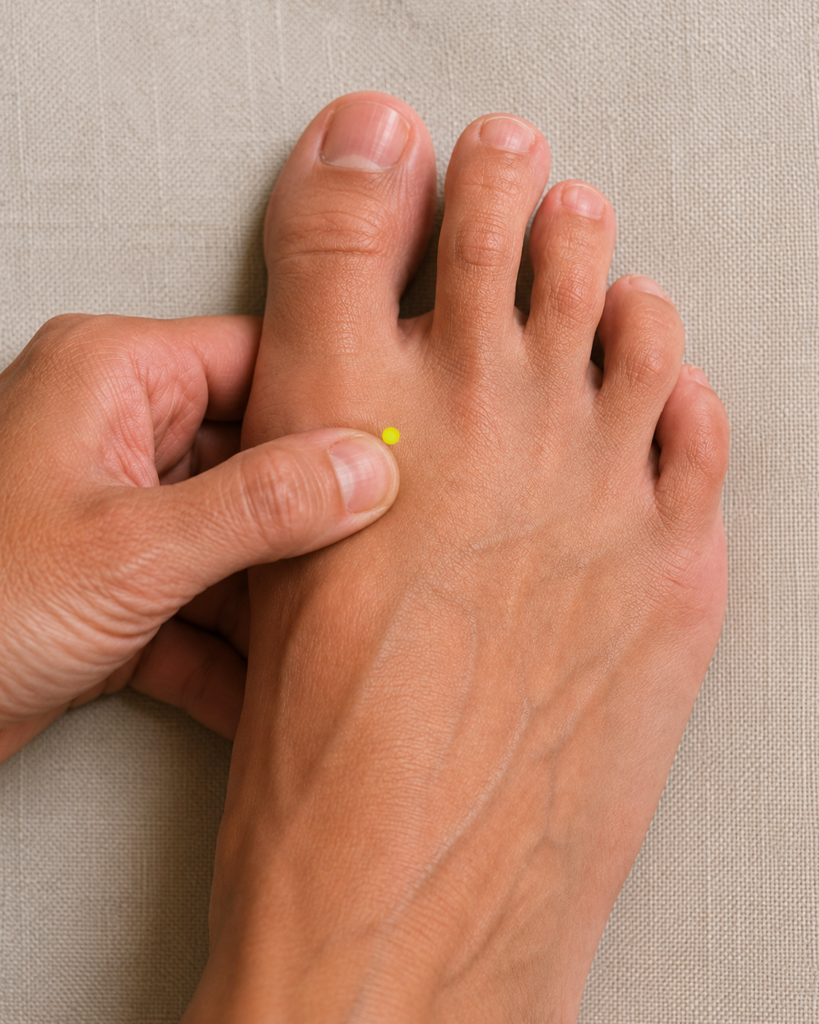
9. Press on LR3 on the top of the foot to move the Qi through the foot. LR3 sits on the top of the foot, in the webbing between the big toe and second toe, about two finger-widths back from the webbing, in the hollow just before the two bones meet. Press firmly with your thumb for one to two minutes on each foot. LR3 is called “Taichong.”
LR3 promotes Qi and Blood circulation in the foot and strengthens the sinews via the Liver connection; it reduces burning and tension in the foot. It’s ideal as a finishing point, working from the top of the foot after treating the sole and arch.
Why These Acupressure Points Work
In Traditional Chinese Medicine, tarsal tunnel syndrome is viewed as a blockage of Qi and Blood around the inner ankle, often associated with dampness, swelling, and poorly nourished sinews. The nine points target this condition.
- The inner ankle points (KI3, KI6, SP6) gently move stagnation at and around the tarsal tunnel.
- The arch and sole points (KI2, SP4, KI1) ease burning, swelling, and tingling where symptoms spread.
- The supporting points (BL60, GB34, LR3) relax the ankle and sinews and move Qi through the foot.
How to Properly Use These Acupressure Points
- Begin by soaking your foot in warm water, and test the water first if your foot feels numb.
- Apply gentle pressure to KI3 and KI6, located at the tarsal tunnel. Avoid pressing deeply on the hollow area behind or below the inner ankle bone. If pressing causes tingling in your foot, shift slightly away from the spot.
- Apply firm pressure to SP6, SP4, KI2, KI1, BL60, GB34, and LR3, located away from the nerve.
- Hold each point for one to two minutes and perform the routine once or twice daily, particularly after extended periods of standing.
- If you notice reduced sensation in your foot, be mindful of your actions and inspect your skin afterward.
Sample routines
- After a long day on your feet (ten minutes): A warm foot soak, then the full routine, finishing with the foot elevated for a few minutes.
- At work or between errands (three minutes): Sit, slip off your shoes, and press SP6, BL60, and LR3 on the affected side.
- During a flare: Skip direct pressure on KI3 and KI6. Use SP6, BL60, GB34, and LR3 to work around the tunnel, and rest the foot.
- At bedtime: Roll the sole over a ball to work KI1, then press KI2 and LR3 to settle burning before sleep.
Caring for Your Feet
Supporting your feet is as important as focusing on the acupressure points.
Select shoes that provide good arch support and consult a podiatrist about custom or over-the-counter orthotics, especially if you have flat feet. Avoid footwear, socks, or high-top boots that limit ankle movement. Rest from activities that worsen your symptoms and refrain from long periods of standing. Gentle calf stretches and nerve-gliding exercises recommended by a physical therapist can be beneficial. During swelling, elevate your foot while resting.
Certain habits unique to Arizona can be beneficial. Since flat sandals and barefoot walking on hard tiled floors offer minimal arch support, it’s advisable to wear supportive shoes indoors if you have flat feet. When hiking, choose footwear with good arch support and gradually extend your hiking distances. Staying well hydrated is essential, as swelling and heat tend to worsen during long, hot days.
Traditional Chinese Medicine recommends several helpful practices. Soaking your feet in warm water in the evening can increase circulation in your lower legs and promote relaxation before sleep. Avoid standing on cold floors for extended periods and keep your ankles covered if the air conditioning is intense. If swelling occurs, reduce intake of greasy, sugary, or heavy foods, as they are believed to contribute to dampness, and opt for warm, cooked meals instead.
How Acupuncture Can Help
If home care doesn’t alleviate your tarsal tunnel symptoms, visiting a clinic for acupuncture might be more effective. The treatment involves stimulating points around the ankle, along the affected nerve pathways, and points that boost overall health. Gentle electroacupuncture is frequently used to address nerve-related symptoms. Many patients experience reduced burning and tingling sensations and improved sleep after several weekly sessions, especially when they also adopt footwear and activity modifications to lessen nerve pressure.
When to Get Professional Help
Consult a doctor or podiatrist to confirm the correct diagnosis, as tarsal tunnel syndrome can resemble conditions like plantar fasciitis, a pinched nerve in your back, or peripheral neuropathy. Sometimes, it results from treatable issues such as a cyst. Seek prompt medical attention if you experience weakness in your toes or foot, notice your foot dragging or slapping when walking, see worsening symptoms, or if both feet are affected, as this might indicate neuropathy. Visit urgent care if your ankle or calf suddenly becomes swollen, red, warm, and painful, signs of a blood clot or infection, or if you have a wound on a numb foot that isnt healing.
While acupressure can assist in recovery, it should serve as a complement to the treatment recommended by your healthcare provider.
For heel pain from other causes, acupressure for heel pain and acupressure for plantar fasciitis are the companion posts, and if burning and tingling affect both feet, acupressure for neuropathy in the feet may be more suitable.
Above and Beyond Acupuncture offers acupuncture, cupping, and lifestyle coaching at the North Frank Lloyd Wright Boulevard location in Scottsdale.
Schedule an appointment online to start your healing journey.
The points above are only as effective as the technique used to apply them. Where to press, how firmly, and for how long all affect the result. For a full breakdown of how to perform acupressure properly at home, read Performing Acupressure in 3 Easy Steps.

About the Publisher
Paul Kerzner, L.Ac., is a licensed acupuncturist and board-certified herbalist, as well as the founder of Above and Beyond Acupuncture in Scottsdale. His own journey from chronic patient to practicing acupuncturist shapes his commitment to providing honest, clinically grounded information about acupuncture and Traditional Chinese Medicine. Learn more about Paul and his clinical approach on the About Us page.