Key Takeaways
- Trigger finger happens when swelling causes tendons in the fingers to become stuck, leading to pain and movement issues.
- Acupressure for trigger finger involves nine specific points that help restore tendon movement and promote Qi and Blood flow.
- Tendon pathway points help reduce tension along the tendons, whereas moving and nourishing points promote overall tendon health and relaxation.
- Daily habits like warm water dips and taking pauses from gripping are key for managing trigger finger.
- Seek professional assistance if symptoms continue or intensify, as options like splinting or steroid injections might be required.

Does a finger catch, lock when bent, and then suddenly snap straight with a painful click? This is called trigger finger, a condition in which a finger or thumb gets stuck in a bent position.
Normally, tendons that enable finger movement glide smoothly through small channels in your hand. However, if either the tendon or its tunnel near the finger’s base becomes swollen or thickened, the tendon cannot slide easily and may get stuck, like a thread caught in a needle. You might notice a sore bump at the finger’s base, increased morning stiffness, clicking or popping sounds, or difficulty straightening the finger without help. Trigger finger mainly affects the ring finger or thumb and is more common in frequent tool users, women over forty, and individuals with diabetes or rheumatoid arthritis. Acupressure can alleviate pain and stiffness, aiding tendon movement. The points below may help.
In Traditional Chinese Medicine, trigger finger is regarded as a blockage in the sinews, which include tendons and connective tissues associated with the Liver. Repetitive gripping and strain can cause Qi and Blood to stagnate around the tendon at the finger’s base, leading to the painful bump and catching sensation. When Liver Blood deficiency occurs, often due to aging or chronic illness, the sinews lose nourishment and moisture, resulting in stiff tendons. Cold and damp conditions can worsen this stiffness, making trigger finger especially painful on cold mornings.
Here are nine acupressure points to promote Qi and Blood flow, relax sinews, warm the hand, and restore tendon movement.
What Acupressure Points to Press and Why
1. Press the Ashi point at the base of the affected finger gently. The Ashi point is the tender spot or small bump in the palm, right at the crease where the affected finger meets the hand, over the tendon. Press gently with the thumb of your other hand and make slow, small circles for about a minute, staying within comfort. “Ashi” means “that’s it,” the sound people make when the sore point is found.
This is the point where the tendon becomes trapped. In Traditional Chinese Medicine, the aching spot indicates where Qi and Blood are most blocked. Applying gentle circular pressure can help release the blockage and relax the tissue around the tendon. Be careful to avoid pressing too hard, as it can worsen an inflamed tendon.
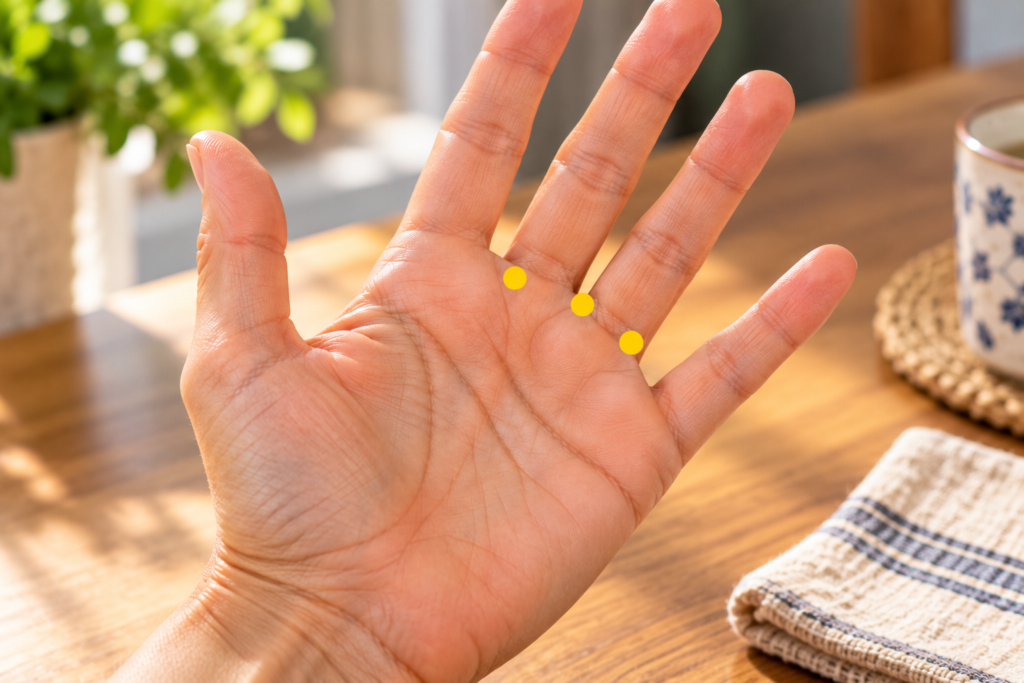
2. Press on PC8 in the center of the palm to relax the hand. PC8 sits in the center of the palm, where the tip of the middle finger lands when you make a loose fist. Press firmly with the thumb of your other hand for one to two minutes, or rub the palms together until warm. PC8 is called “Laogong,” the “Palace of Labor.”
PC8 is located at the center of your palm, surrounded by tendons, and helps relax your entire hand, reducing stiffness and tension in your palm and fingers. Its name reflects its traditional use for hands that are tired from work, aligning with trigger finger caused by repetitive gripping. Beginning your day by rubbing your palms together to warm this point is beneficial.

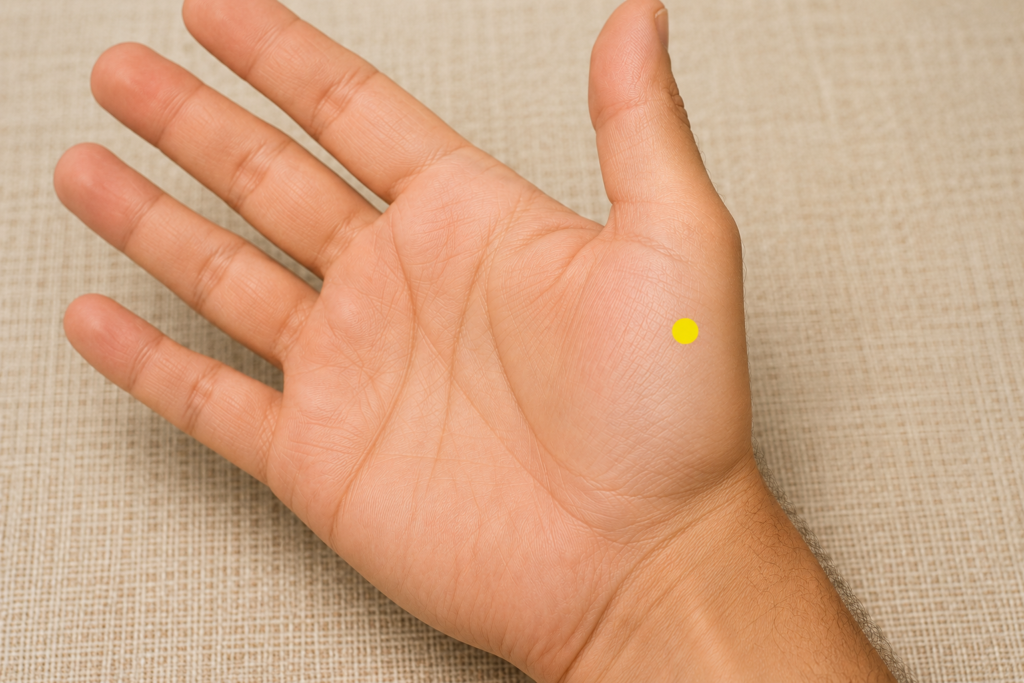
3. Press on LU10 on the thumb pad for trigger thumb. LU10 sits on the palm side of the hand, in the middle of the fleshy mound at the base of the thumb, where the skin changes color along the edge. Press firmly with the thumb of your other hand for one to two minutes. LU10 is called “Yuji,” the “Fish Border.”
If your trigger finger involves your thumb, LU10 is located on the fleshy pad at its base. It can reduce pain and stiffness, improving thumb mobility. This point also helps those who hold tools, phones, or steering wheels for extended periods.
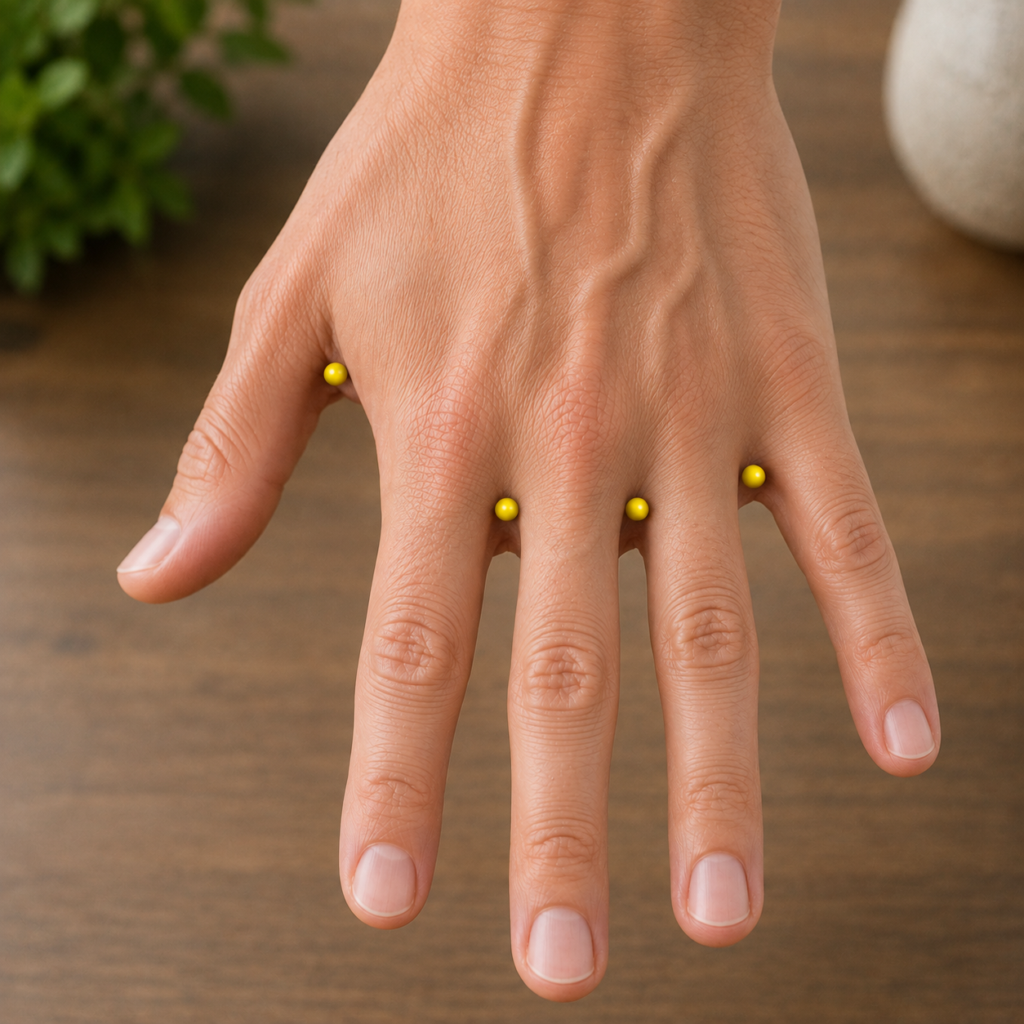
4. Press on Baxie between the knuckles to free the fingers. Baxie are four points on the back of each hand, in the webbing between each pair of fingers, just behind where the fingers meet the hand. Press each with your thumb and index finger for thirty seconds to a minute, working across the hand. Baxie means “Eight Evils.”
Baxie points are traditional finger points utilized to address stiffness, pain, swelling, and restricted movement. Applying pressure to the webbing on both sides of the affected finger stimulates the flow of Qi and Blood through the finger, originating from the back of the hand and working in conjunction with the points on the palm side.
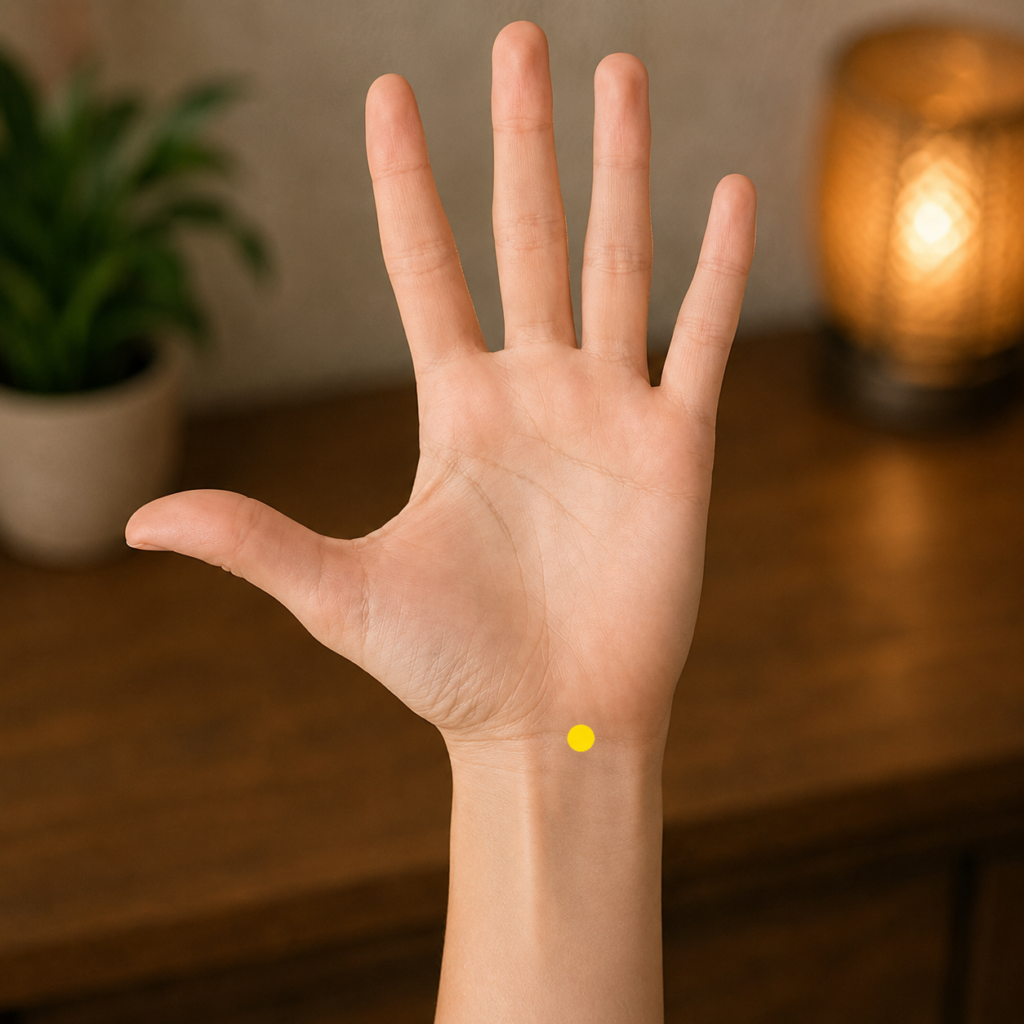
5. Press on PC7 at the center of the wrist crease to open the tendon pathway. PC7 sits in the middle of the inner wrist crease, between the two tendons you can see when you make a fist and bend the wrist slightly. Press gently but firmly with your thumb for one to two minutes on the affected hand. PC7 is called “Daling,” the “Great Mound.”
The tendons responsible for bending your fingers pass through the wrist just below PC7 before extending to your fingers. Applying pressure to this point can help relax these tendons and reduce tension in your hand. It also pairs effectively with PC8, located in your palm.
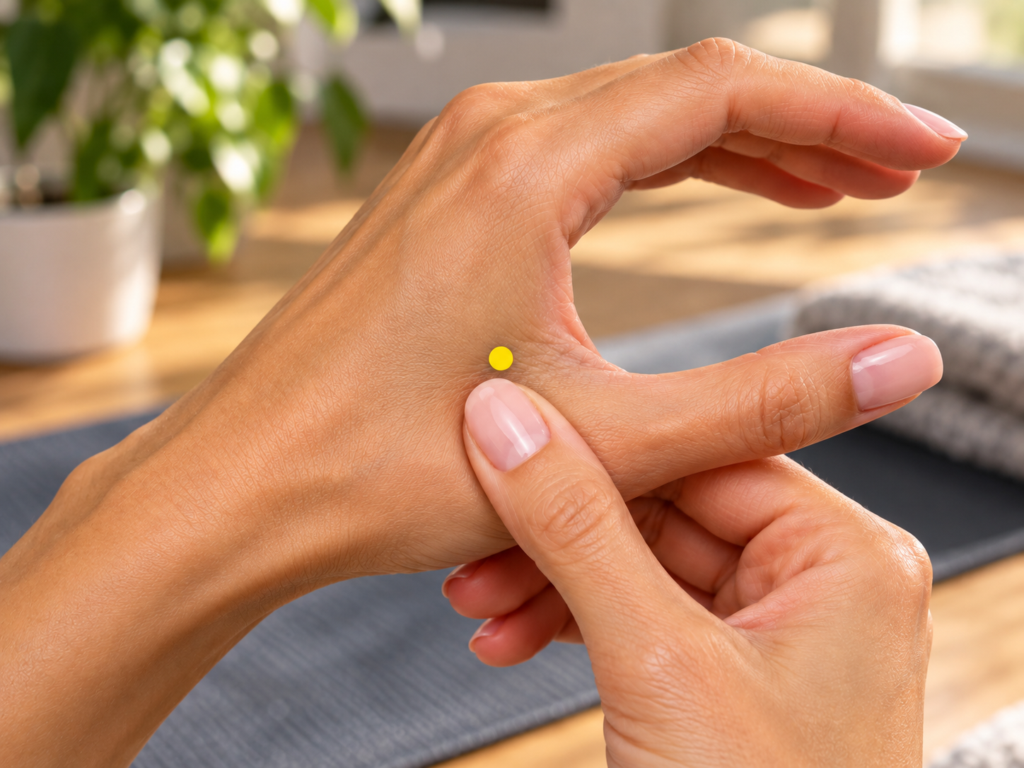
6. Press on LI4 in the hand to ease pain and move the Qi. LI4 sits in the webbing between the thumb and index finger, at the highest point of the muscle when you bring them together. Press firmly with the thumb of your other hand for one to two minutes on each hand. LI4 is called “Hegu.” LI4 is avoided during pregnancy.
LI4 is a key point for relieving hand pain. It promotes the flow of Qi in the entire hand and reduces stiffness. When combined with LR3, it creates the Four Gates, a traditional duo for unblocking Qi throughout the body.
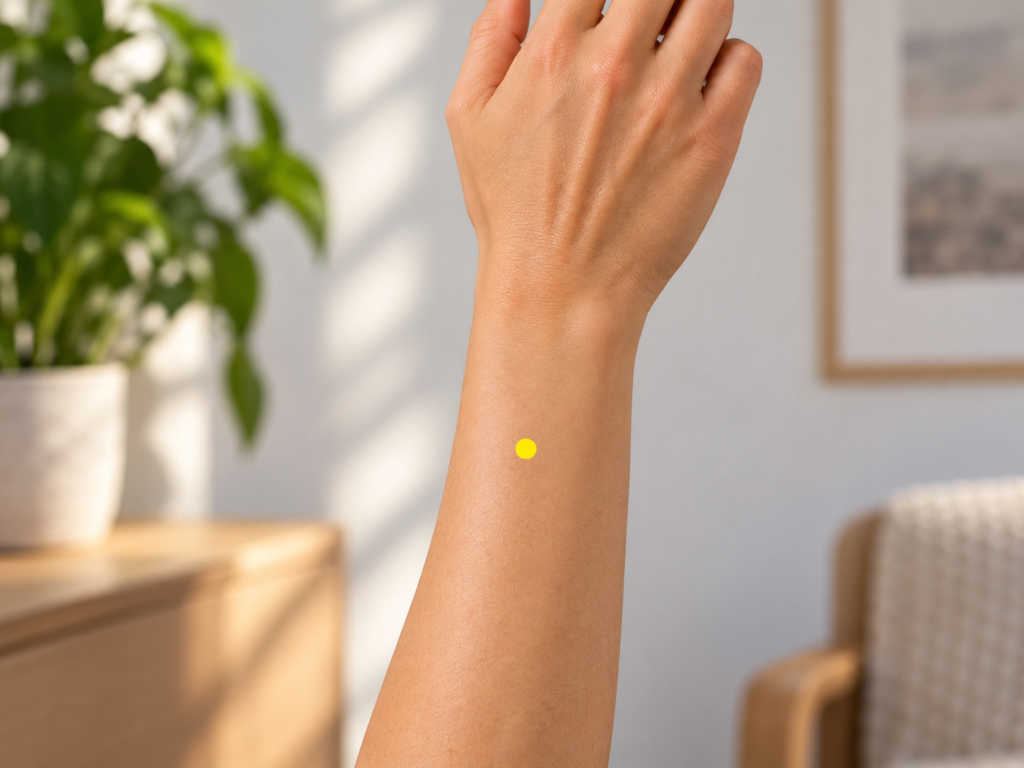
7. Press on SJ5 on the back of the forearm to support the hand. SJ5 sits on the back of the forearm, about three finger-widths above the wrist crease, in the hollow between the two forearm bones. Press firmly with your thumb for one to two minutes on the affected arm. SJ5 is called “Waiguan,” the “Outer Pass.”
SJ5 promotes the flow of Qi and Blood through your forearm, reaching your hand and fingers to reduce stiffness and discomfort. It also releases tension in the forearm muscles that tighten from gripping, which can pull on the finger tendons.
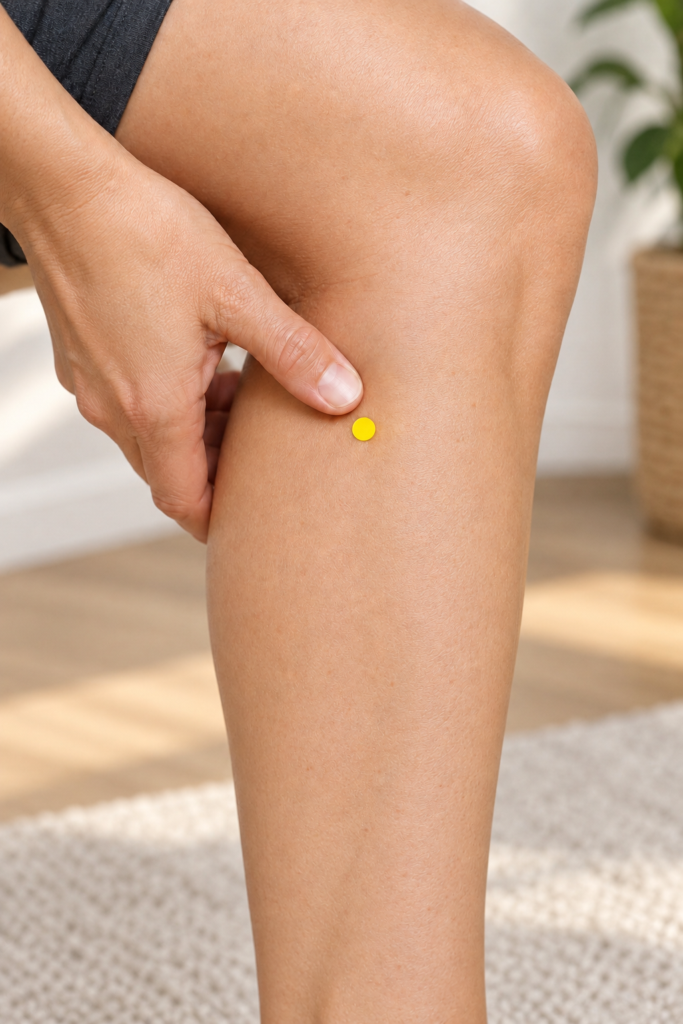
8. Press on GB34 below the outer knee to relax the sinews. GB34 sits on the outer lower leg, in the hollow just below and in front of the head of the fibula, the bony knob below the outer side of the knee. Press firmly with your thumb for one to two minutes on each leg. GB34 is called “Yanglingquan,” the influential point for the sinews.
Trigger finger involves issues with the sinews, and GB34 is the primary point for sinews, tendons, and ligaments. It helps relax and nourish tendons throughout the body, promoting healing of the inflamed tendon in your finger, even from afar.
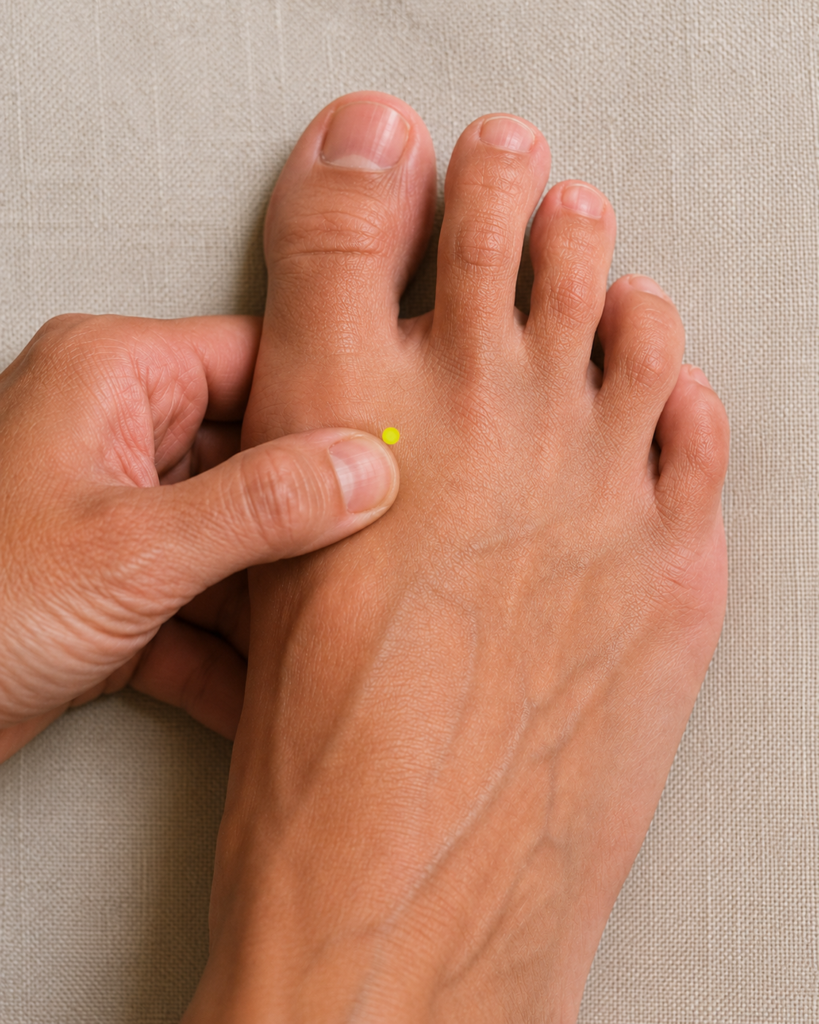
9. Press on LR3 on the top of the foot to nourish the sinews. LR3 sits on the top of the foot, in the webbing between the big toe and second toe, about two finger-widths back where the bones meet in a small hollow. Press firmly with your thumb for one to two minutes on each foot. LR3 is called “Taichong,” the source point of the Liver.
Since the Liver is connected to the sinews, LR3, its primary point, supports the Liver in nourishing and relaxing tendons. This point is particularly beneficial if your trigger finger recurs or involves multiple fingers. When combined with LI4, it forms the complete Four Gates.
Why These Acupressure Points Work
In Traditional Chinese Medicine, trigger finger results from Qi and Blood becoming trapped in the hand’s sinews, causing tendons to stiffen and lose nourishment from cold and repetitive strain. The nine points above target these problems.
- The hand points (Ashi point, PC8, LU10, Baxie) help move stagnation around the stuck tendon and relax your palm and fingers.
- The tendon pathway points (PC7, SJ5) help ease tension along the tendons and forearm muscles that bend your fingers.
- The moving and nourishing points (LI4, GB34, LR3) help move Qi, nourish, and relax the sinews throughout your body.
Research on acupuncture for trigger finger is ongoing, and acupressure is most effective when combined with standard treatments like splinting and activity modifications.
How to Properly Use These Acupressure Points
- Begin each morning by soaking your hand in warm water for a few minutes. This helps soften stiff tendons and is especially helpful on cold mornings.
- Next, rub your palms together over PC8, gently press the Ashi point, and use LU10 if your thumb is affected. Then move on to Baxie, PC7, and LI4.
- Finish by pressing SJ5 on your forearm and GB34 and LR3 on your legs and feet.
- After working these points, gently bend and straighten each finger slowly through a comfortable range a few times to help your tendon move smoothly.
- Never try to force a locked finger straight. If your finger locks, let it rest, warm your hand, and move it gently.
- Hold each point for one to two minutes. Use gentle pressure on sore spots and firmer pressure on other areas.
Daily habits are important. Take breaks to rest your hand from constant gripping, and if you can’t avoid it, wear padded gloves and use tools with thicker, cushioned handles. Avoid squeezing tightly on one area of your palm for extended periods. Wearing a splint at night can help keep your finger gently straight, reducing morning locking. Keep your hands warm in cold weather and air conditioning. For people with diabetes, stable blood sugar levels support tendon health.
When to Get Professional Help
See a doctor or hand specialist if your trigger finger doesn’t improve, locks, or gets stuck and won’t straighten. Treatments such as splinting, steroid injections, or a simple release procedure may help. Seek urgent care if your finger becomes red, hot, swollen, and very painful to move, especially if you have a fever or it follows a cut or puncture. This could signal an infection in the tendon sheath that spreads rapidly and needs immediate treatment. See a doctor if you have numbness or tingling in your fingers, which might indicate carpal tunnel syndrome; trigger finger in multiple fingers with swollen, painful joints, which could suggest rheumatoid arthritis; or symptoms that appear after an injury.
Acupressure offers a natural, low-risk way to relieve trigger finger and can be used alongside care from a hand specialist.
Above and Beyond Acupuncture offers acupuncture, cupping, and lifestyle coaching at the North Frank Lloyd Wright Boulevard location in Scottsdale.
Schedule an appointment online to start your healing journey.
The points above are only as effective as the technique used to apply them. Where to press, how firmly, and for how long all affect the result. For a full breakdown of how to perform acupressure properly at home, read Performing Acupressure in 3 Easy Steps.

About the Publisher
Paul Kerzner, L.Ac., is a licensed acupuncturist and board-certified herbalist, as well as the founder of Above and Beyond Acupuncture in Scottsdale. His own journey from chronic patient to practicing acupuncturist shapes his commitment to providing honest, clinically grounded information about acupuncture and Traditional Chinese Medicine. Learn more about Paul and his clinical approach on the About Us page.